
Agriculture & Agritech / Market Segment
Vertical Farming
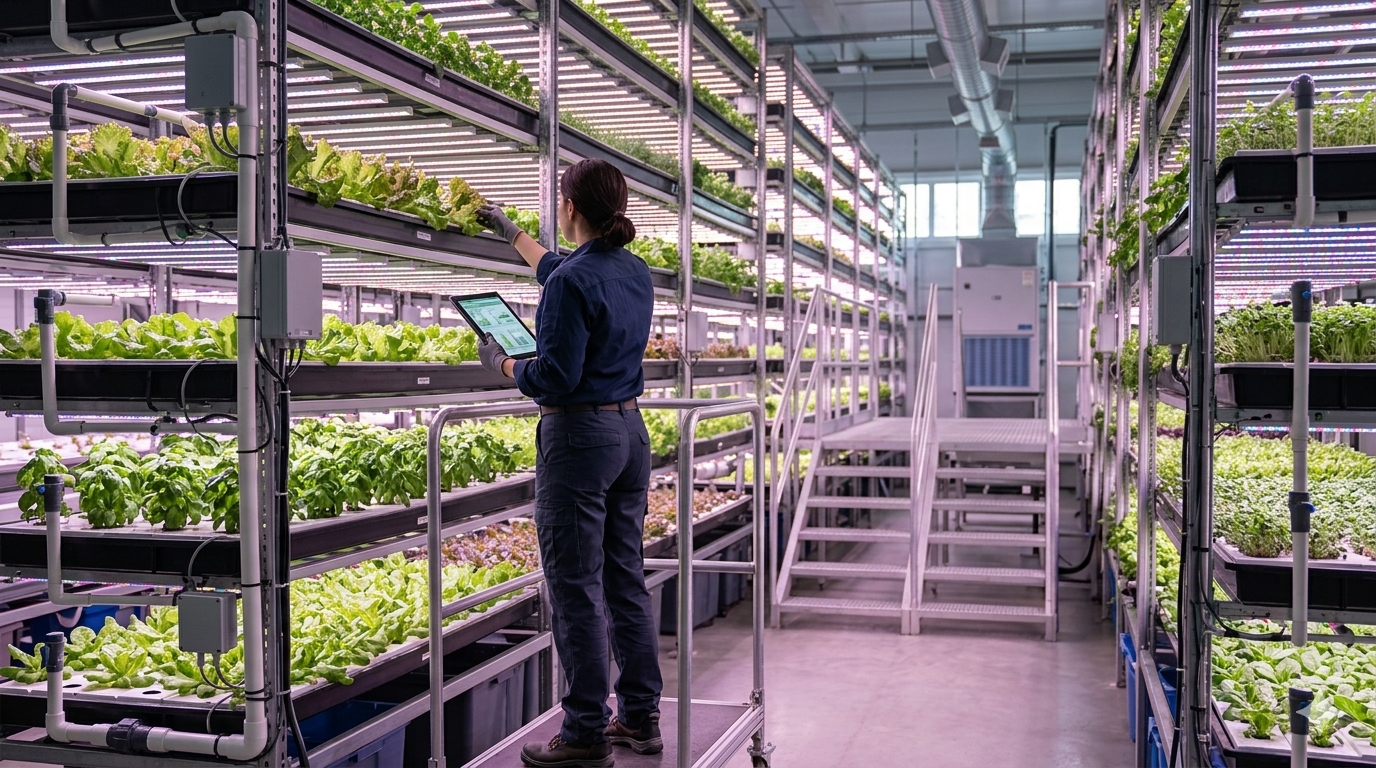
Segment Overview
The Vertical Farming segment covers the cultivation of crops in vertically stacked layers or controlled indoor environments using advanced agricultural technologies. These systems are designed to optimize land utilization, reduce dependency on external climatic conditions, and enable year-round crop production through controlled environmental agriculture (CEA).
This segment operates at the intersection of agriculture, environmental control systems, hydroponics, automation, and urban infrastructure, making it a technology-intensive and resource-optimized area within the agricultural industry.
Scope of the Vertical Farming Segment
This segment includes, but is not limited to:
Hydroponic farming systems
Soilless cultivation systems using nutrient-rich water solutions for crop growth.
Aeroponic and aquaponic systems
Advanced cultivation methods using mist-based nutrient delivery or integrated fish-farming ecosystems.
Indoor controlled-environment agriculture (CEA)
Climate-controlled facilities equipped with lighting, humidity, temperature, and COâ‚‚ management systems.
LED grow lighting systems
Specialized lighting technologies optimized for plant growth cycles and energy efficiency.
Automated farming and monitoring systems
Sensors, robotics, and software platforms for crop monitoring, irrigation, and environmental control.
Urban and modular farming infrastructure
Container farms, rooftop farms, and modular indoor farming units integrated into urban environments.
Market Characteristics
The Vertical Farming segment is defined by several structural characteristics:
- High dependence on controlled environmental systems and energy infrastructure
- Intensive use of automation, sensors, and monitoring technologies
- Reduced reliance on arable land and seasonal weather conditions
- High capital expenditure for facility development and operational setup
- Focus on water efficiency and optimized resource utilization
- Preference for high-value, short-cycle crops such as leafy greens and herbs
- Demand influenced by urbanization, food security concerns, and local food production initiatives
Value Chain Overview
The segment spans the full vertical farming value chain:
- Infrastructure Development: Construction of indoor facilities, modular systems, and environmental control setups
- Technology Integration: Installation of lighting, irrigation, climate control, and automation systems
- Crop Cultivation: Controlled growth cycles using hydroponic, aeroponic, or aquaponic methods
- Monitoring & Optimization: Real-time data collection for nutrient delivery, lighting, and crop health management
- Harvesting & Distribution: Packaging and supply of fresh produce to retail, foodservice, and local distribution networks
Each stage combines agricultural production with advanced engineering and operational management systems.
Key Market Drivers
- Rising urbanization and demand for local food production
- Limited availability of arable land in densely populated regions
- Increasing focus on sustainable and resource-efficient agriculture
- Need for year-round crop production independent of climate conditions
- Advancements in LED lighting, automation, and environmental control technologies
- Growing interest in food traceability and controlled production environments
Strategic Importance within Agriculture
Vertical Farming plays a critical role in modernizing food production through controlled, space-efficient, and technology-driven agricultural systems. It supports local supply chains, reduces transportation dependency, and enables consistent crop quality and production cycles.
Upstream, the segment drives demand for agricultural technologies, lighting systems, sensors, and automation infrastructure. Downstream, it supports urban food distribution, retail freshness requirements, and sustainable agricultural initiatives.
As agricultural systems adapt to urban growth, climate pressures, and resource limitations, Vertical Farming is becoming an increasingly important component of future food production infrastructure.