
Global Tyres Market Report Size and Forecast 2026 – 2033

Market Size (Base Year) USD 525.4 Billion
Forecast Value USD 742.8 Billion
CAGR 4.4%
Forecast Period 2026 - 2033
Coverage Global - Asia Pacific, Europe, Middle East & Africa, North America, South America
The Global Tyres Market is characterized by a moderately competitive landscape with strong participation from global tier-1 manufacturers alongside regional and niche players. The market operates through a dual-channel structure: OEM supply to vehicle manufacturers and a significantly larger aftermarket segment driven by replacement demand. Operationally, the aftermarket dominates due to the consumable lifecycle of tyres, influenced by driving conditions, load intensity, and regulatory compliance. Supply chains are extensive and globally interconnected, involving raw material sourcing, manufacturing, distribution, and retail networks. Technological evolution is a defining feature of the market. Innovations such as smart tyres with embedded sensors, IoT-enabled monitoring systems, and eco-friendly materials are transforming traditional tyre manufacturing into a high-tech domain. These advancements are particularly relevant in EV applications, where tyre performance directly impacts vehicle range and efficiency. Regionally, Asia-Pacific leads the market due to high vehicle production and dense vehicle parc, while Europe is emerging as a high-growth region driven by premium tyre demand and strict environmental regulations.

Global Tyres Market Forecast Snapshot: 2026–2033

Parameter Value
Base Year 2025
Base Year Market Size USD 525.4 Billion
Forecast Period 2026–2033
Forecasted CAGR ~4.4%
Forecasted Market Size (2033) USD 742.8 Billion

Market Size & Forecast

The Global Tyres Market is projected to grow from USD 525.4 billion in 2025 to approximately USD 742.8 billion by 2033, reflecting a steady CAGR of ~4.4% over the forecast period. This growth is underpinned by the fundamental role tyres play in global mobility, safety, and vehicle performance across passenger, commercial, and specialty vehicles.

The market expansion is structurally driven by the increasing global vehicle parc, which continuously fuels replacement demand due to tyre wear and regulatory safety requirements. Unlike many automotive components, tyres operate within a recurring consumption model, making the aftermarket segment the dominant revenue contributor.

Additionally, the rapid expansion of logistics, e-commerce delivery networks, and ride-hailing services is increasing vehicle utilization rates, thereby accelerating tyre replacement cycles. Simultaneously, the transition toward electric vehicles (EVs) is reshaping tyre engineering, as EVs require specialized tyres with higher durability, lower rolling resistance, and enhanced noise reduction capabilities.

Technological innovation is further reinforcing market growth, with advancements in smart tyres, sensor integration, and sustainable materials driving product differentiation and premiumization. However, the market remains sensitive to raw material price volatility, particularly natural rubber and petrochemical derivatives, which can impact margins.

Overall, the projected CAGR reflects a balance between stable replacement-driven demand and evolving technological and mobility trends that are reshaping the tyre ecosystem.
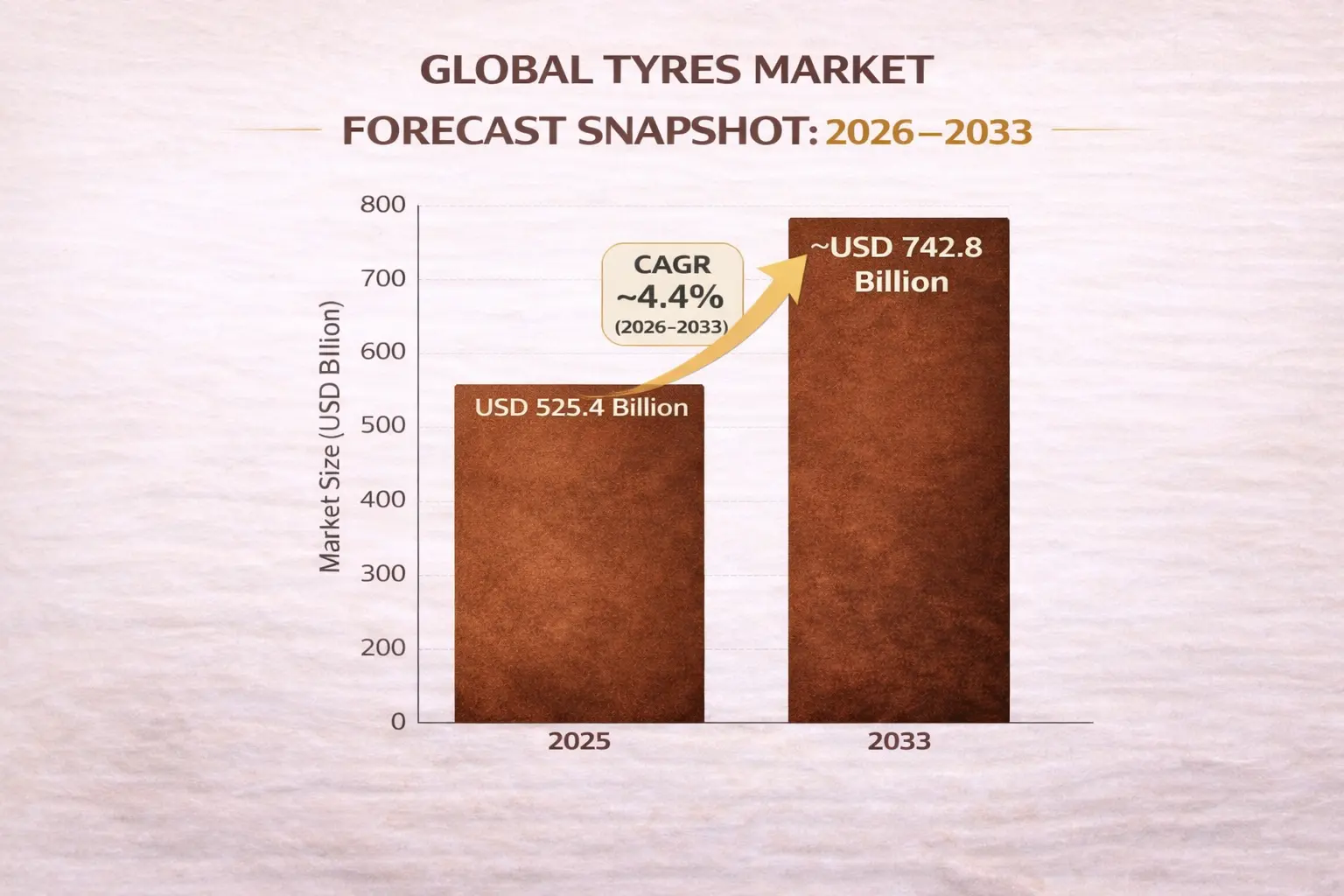

Global tyre market
Global tyre market

Market Overview

The Global Tyres Market is characterized by a moderately competitive landscape with strong participation from global tier-1 manufacturers alongside regional and niche players. The market operates through a dual-channel structure: OEM supply to vehicle manufacturers and a significantly larger aftermarket segment driven by replacement demand.

Operationally, the aftermarket dominates due to the consumable lifecycle of tyres, influenced by driving conditions, load intensity, and regulatory compliance. Supply chains are extensive and globally interconnected, involving raw material sourcing, manufacturing, distribution, and retail networks.

Technological evolution is a defining feature of the market. Innovations such as smart tyres with embedded sensors, IoT-enabled monitoring systems, and eco-friendly materials are transforming traditional tyre manufacturing into a high-tech domain. These advancements are particularly relevant in EV applications, where tyre performance directly impacts vehicle range and efficiency.

Regionally, Asia-Pacific leads the market due to high vehicle production and dense vehicle parc, while Europe is emerging as a high-growth region driven by premium tyre demand and strict environmental regulations.


Structural Drivers of Market Growth

1. Expansion of Global Vehicle Parc

The continuous increase in passenger vehicles, commercial fleets, and two-wheelers globally expands the installed base, directly driving recurring replacement demand.

2. Strong Replacement & Aftermarket Dynamics

Tyres require periodic replacement due to wear, ensuring stable and predictable revenue streams. This recurring demand forms the backbone of market resilience.

3. Growth in Logistics & E-commerce Fleets

The surge in last-mile delivery, freight transportation, and ride-hailing services significantly increases vehicle usage intensity, accelerating tyre wear cycles.

4. Electric Vehicle (EV) Adoption

EVs require advanced tyre designs with higher load capacity, reduced rolling resistance, and optimized noise performance, creating a premium sub-segment.

5. Rising Demand for SUVs & Premium Vehicles

The increasing popularity of SUVs and high-performance vehicles is boosting demand for larger rim-size tyres and premium product categories.

6. Technological Innovation & Sustainability

Advancements in smart tyres, sustainable materials, and eco-friendly manufacturing processes are driving differentiation and long-term market evolution.


Market Segmentation Analysis

Top-Level Segment Share Split

  1. By Vehicle Type: 30%
  2. By Tyre Construction: 20%
  3. By Seasonality: 10%
  4. By Rim Size: 15%
  5. By Sales Channel: 15%
  6. By Technology: 10%

The market exhibits strong segmentation across vehicle categories, construction types, and technology adoption levels, enabling targeted product strategies and regional customization.


Regional Market Dynamics

Asia-Pacific – Largest Market

Driven by high vehicle production, large vehicle parc, and strong replacement demand in countries such as China and India.

Europe – Fastest Growing Region

Growth fueled by EV adoption, premium tyre demand, and stringent environmental and safety regulations.

North America

Stable demand supported by a large vehicle base, strong SUV segment, and well-established aftermarket distribution.

Latin America

Growth supported by rising vehicle ownership and improving transportation infrastructure.

Middle East & Africa

Demand driven by fleet expansion, infrastructure projects, and challenging climatic conditions requiring durable tyre solutions.


Competitive Landscape

The Global Tyres Market features moderate competitive intensity with several dominant global players, including:

  1. Michelin
  2. Bridgestone Corporation
  3. Goodyear Tire & Rubber Company
  4. Continental AG
  5. Pirelli & C. S.p.A.
  6. Sumitomo Rubber Industries
  7. Hankook Tire
  8. Yokohama Rubber Company
  9. Apollo Tyres
  10. Toyo Tires

Competition is primarily driven by innovation, brand strength, distribution networks, and pricing strategies. Premiumization and EV-focused product development are emerging as key differentiators.


Strategic Outlook

The future of the Global Tyres Market will be shaped by three converging forces:

1. EV-Centric Innovation
Manufacturers investing in EV-optimized tyres will capture emerging high-margin segments.

2. Sustainability & Regulatory Compliance
Eco-friendly materials and low-emission manufacturing processes will become critical due to tightening regulations.

3. Digital & Smart Tyre Ecosystem
Integration of sensors and IoT technologies will enable predictive maintenance, fleet optimization, and enhanced safety.

Additionally, companies expanding digital sales channels and strengthening aftermarket networks will gain competitive advantage.


Final Market Perspective

The Global Tyres Market represents a resilient and essential industry with stable long-term growth driven by replacement demand and evolving mobility trends. While the CAGR remains moderate, the market’s recurring revenue model ensures consistent performance across economic cycles.

Emerging trends such as electric vehicle adoption, smart tyre integration, and sustainability transformation are redefining competitive dynamics and product innovation. Companies that successfully align with these trends—while optimizing supply chains and managing raw material volatility—will be best positioned to capture future growth.


Research Methodology

This study employs a comprehensive mixed-methods approach integrating primary and secondary research.

Primary research includes insights from manufacturers, distributors, automotive OEMs, fleet operators, and industry experts, providing real-world perspectives on demand trends, innovation, and competitive dynamics.

Secondary research involves data triangulation from industry reports, automotive databases, regulatory frameworks, and economic analyses. This ensures accurate market sizing, trend validation, and strategic forecasting.

The combined methodology delivers a robust and actionable market intelligence framework, supporting decision-making across stakeholders in the Global Tyres Market ecosystem.

Table of Contents

Executive Summary

1.1 Market Forecast Snapshot (2026–2033)
1.2 Global Market Size & CAGR Analysis
1.3 Largest & Fastest-Growing Segments
1.4 Region-Level Leadership & Growth Trends
1.5 Key Market Drivers
1.6 Competitive Landscape Overview
1.7 Strategic Outlook Through 2033

Introduction & Market Overview

1.1 Definition of the Global Tyres Market
1.2 Scope of the Study
1.3 Industry Evolution & Market Development
1.4 Supply Chain & Distribution Infrastructure
1.5 Impact of Consumer Trends
1.6 Regulatory & Compliance Landscape
1.7 Technology & Innovation Landscape

Research Methodology

1.1 Primary Research
1.2 Secondary Research
1.3 Market Size Estimation Model
1.4 Forecast Assumptions (2026–2033)
1.5 Data Validation & Triangulation

Market Dynamics

1.1 Drivers
1.1.1 Expansion of Global Vehicle Parc
1.1.2 Strong Replacement & Aftermarket Demand
1.1.3 Growth in Logistics & E-Commerce Fleets
1.1.4 Electric Vehicle (EV) Adoption
1.1.5 Rising Demand for SUVs & Premium Vehicles
1.1.6 Technological Innovation & Sustainability

1.2 Restraints
1.2.1 Raw Material Price Volatility
1.2.2 Supply Chain Disruptions
1.2.3 Regulatory & Environmental Compliance Costs
1.2.4 Pricing Pressure in Competitive Markets

1.3 Opportunities
1.3.1 EV-Specific Tyre Innovation
1.3.2 Smart Tyres & IoT Integration
1.3.3 Sustainable Material Development
1.3.4 Expansion in Emerging Markets

1.4 Challenges
1.4.1 Supply Chain Complexity
1.4.2 Margin Pressure from Input Costs
1.4.3 Market Fragmentation
1.4.4 Competitive Differentiation through Technology

Global Tyres Market Analysis (USD Billion), 2026–2033

1.1 Market Size Overview
1.2 CAGR Analysis
1.3 Regional Revenue Distribution
1.4 Segment Revenue Analysis
1.5 Sales Channel Analysis
1.6 Technology Adoption Analysis

Market Segmentation (USD Billion), 2026–2033

1.1 By Vehicle Type
1.1.1 Passenger Vehicles
1.1.1.1 Hatchbacks & Sedans
1.1.1.1.1 Premium Passenger Vehicles
1.1.2 Commercial Vehicles
1.1.2.1 Light Commercial Vehicles
1.1.2.1.1 Heavy Commercial Vehicles
1.1.3 Two-Wheelers
1.1.3.1 Motorcycles
1.1.3.1.1 Scooters
1.1.4 Off-The-Road (OTR) Vehicles
1.1.4.1 Agricultural Vehicles
1.1.4.1.1 Construction Equipment

1.2 By Tyre Construction
1.2.1 Radial Tyres
1.2.1.1 Steel-Belted Radial Tyres
1.2.1.1.1 High-Performance Radials
1.2.2 Bias Tyres
1.2.2.1 Cross-Ply Tyres
1.2.2.1.1 Heavy-Duty Bias Tyres

1.3 By Seasonality
1.3.1 Summer Tyres
1.3.1.1 High-Performance Summer Tyres
1.3.1.1.1 Touring Summer Tyres
1.3.2 Winter Tyres
1.3.2.1 Studded Winter Tyres
1.3.2.1.1 Studless Winter Tyres
1.3.3 All-Season Tyres
1.3.3.1 Standard All-Season Tyres
1.3.3.1.1 Premium All-Season Tyres

1.4 By Rim Size
1.4.1 Up to 15 Inches
1.4.1.1 Economy Segment
1.4.1.1.1 Compact Passenger Vehicles
1.4.2 16–18 Inches
1.4.2.1 Mid-Range Vehicles
1.4.2.1.1 SUVs & Crossovers
1.4.3 Above 18 Inches
1.4.3.1 Premium Vehicles
1.4.3.1.1 Performance Vehicles

1.5 By Sales Channel
1.5.1 OEM (Original Equipment Manufacturer)
1.5.1.1 Passenger Vehicle OEMs
1.5.1.1.1 Commercial Vehicle OEMs
1.5.2 Aftermarket
1.5.2.1 Replacement Tyres
1.5.2.1.1 Retail & Dealer Networks

1.6 By Technology
1.6.1 Conventional Tyres
1.6.1.1 Standard Performance Tyres
1.6.1.1.1 Cost-Efficient Tyres
1.6.2 Smart Tyres
1.6.2.1 Sensor-Embedded Tyres
1.6.2.1.1 IoT-Enabled Monitoring Tyres
1.6.3 Eco-Friendly Tyres
1.6.3.1 Sustainable Material Tyres
1.6.3.1.1 Low Rolling Resistance Tyres

Market Segmentation by Geography

1.1 Asia-Pacific
1.2 Europe
1.3 North America
1.4 Latin America
1.5 Middle East & Africa

Competitive Landscape

1.1 Market Share Analysis
1.2 Product Portfolio Benchmarking
1.3 Product Positioning Mapping
1.4 Distribution & Supply Chain Partnerships
1.5 Competitive Intensity & Differentiation

Company Profiles

Strategic Intelligence & Pheonix AI Insights

1.1 Pheonix Demand Forecast Engine
1.2 Supply Chain & Infrastructure Analyzer
1.3 Technology & Innovation Tracker
1.4 Product Development Insights
1.5 Automated Porter’s Five Forces Analysis

Future Outlook & Strategic Recommendations

1.1 EV-Centric Tyre Innovation Strategies
1.2 Sustainability & Regulatory Alignment
1.3 Smart Tyre & Digital Ecosystem Integration
1.4 Aftermarket Network Expansion
1.5 Long-Term Market Outlook (2033+)

Appendix

About Pheonix Research

Disclaimer

Competitive Landscape

Structure: Moderately_consolidated Tier 1 Players: 9 Intensity: Moderate

Global Tyres Market Competitive Intensity & Market Structure Overview

The Global Tyres Market is characterized by a moderately consolidated structure with a moderate level of competitive intensity, where a group of dominant global manufacturers coexist with a wide base of regional and niche players. Unlike highly fragmented markets, the presence of established Tier 1 players creates a structured competitive hierarchy, enabling scale-driven advantages in manufacturing, distribution, and brand positioning.

Leading companies such as Michelin, Bridgestone Corporation, Goodyear Tire & Rubber Company, Continental AG, and Pirelli & C. S.p.A. play a significant role in shaping market dynamics through technological innovation, global distribution networks, and strong OEM relationships.

Competitive intensity is driven by continuous product innovation, pricing strategies, raw material cost management, and increasing demand for EV-specific and premium tyres. While Tier 1 players dominate high-value segments, regional manufacturers compete aggressively in price-sensitive markets, creating a balanced yet competitive ecosystem.


Global Tyres Market Competitive Intensity & Market Structure Current Scenario

Leading Company Profiles

  1. Michelin: Premium tyre manufacturer. Leader in sustainable and high-performance tyre innovation.
  2. Bridgestone Corporation: Global leader with strong OEM partnerships and diversified product portfolio.
  3. Goodyear Tire & Rubber Company: Major player with advanced mobility solutions and strong aftermarket presence.
  4. Continental AG: Technology-driven company focusing on smart tyres and mobility systems.
  5. Pirelli & C. S.p.A.: Premium and high-performance tyre specialist with strong motorsport positioning.
  6. Sumitomo Rubber Industries: Key player in global tyre manufacturing with diversified offerings.
  7. Hankook Tire: Fast-growing player with strong presence in mid-range and premium segments.
  8. Yokohama Rubber Company: Known for performance tyres and global expansion strategies.
  9. Apollo Tyres: Expanding global footprint with strong presence in emerging markets.
  10. Toyo Tires: Focused on performance and specialty tyre segments.

Key Competitive Intensity & Market Structure Signals in Global Tyres Market

Several key signals define the competitive intensity and structure of the Global Tyres Market:

The dominance of Tier 1 manufacturers highlights a scale-driven competitive advantage, where companies leverage global production capabilities, R&D investments, and extensive distribution networks to maintain leadership. This creates high entry barriers for new players, particularly in premium and OEM segments.

At the same time, the strong presence of regional manufacturers introduces price-based competition, especially in emerging markets. These players often compete through cost efficiency and localized distribution, intensifying competition at the mid- and low-tier segments.

The market’s dependence on raw materials such as natural rubber introduces cost volatility, requiring companies to adopt strategic sourcing and pricing models. This dynamic adds complexity to competitive positioning, as companies must balance margin protection with competitive pricing.

Technological innovation serves as a major competitive lever. The development of smart tyres, IoT-enabled monitoring systems, and EV-optimized designs is reshaping competition, with companies investing heavily in R&D to differentiate their offerings.

Additionally, the strong aftermarket dominance creates a recurring revenue structure, where brand loyalty, service networks, and replacement cycles play a crucial role in sustaining competitive advantage.


Strategic Implications of Competitive Intensity & Market Structure in Global Tyres Market

The moderately consolidated structure and competitive intensity of the market create several strategic implications:

Firstly, innovation is critical for differentiation, particularly in high-margin segments such as EV tyres and premium performance tyres. Companies must continuously invest in advanced materials, sensor technologies, and sustainable manufacturing processes.

Secondly, scale and distribution strength are key competitive advantages. Tier 1 players benefit from global supply chains and established OEM relationships, while smaller players must focus on niche markets or regional dominance.

Thirdly, pricing strategy and cost management are essential, given the volatility of raw material costs and competitive pressure from regional manufacturers. Companies must optimize procurement and production efficiency to maintain margins.

Furthermore, aftermarket positioning is crucial, as recurring replacement demand provides stability and long-term revenue visibility. Strengthening dealer networks and digital sales channels can enhance competitive positioning.

Finally, sustainability and regulatory compliance are becoming strategic priorities, particularly in Europe and developed markets, where environmental standards influence product development and market access.


Global Tyres Market Competitive Intensity & Market Structure Forward Outlook

Looking ahead, the Global Tyres Market is expected to maintain its moderately consolidated structure with sustained competitive intensity, driven by technological transformation and evolving mobility trends.

The shift toward electric vehicles will accelerate competition in EV-specific tyre innovation, creating new growth opportunities for companies that can meet performance and efficiency requirements.

Sustainability will become a core competitive factor, with increasing emphasis on eco-friendly materials, circular economy practices, and low-emission manufacturing processes.

Digital transformation will further reshape the market, as smart tyre ecosystems, predictive maintenance, and IoT integration enhance value propositions and operational efficiency.

Additionally, the market may witness selective consolidation through mergers and acquisitions, as companies seek to strengthen their technological capabilities and expand global presence.

In conclusion, the Global Tyres Market represents a structured yet competitive landscape, where scale, innovation, and operational efficiency determine long-term success. Companies that effectively integrate technology, optimize supply chains, and align with sustainability trends will be best positioned to maintain a competitive edge in this evolving industry.

Value Chain

Model: Vertically_integrated Distribution: Direct_to_consumer Supply Complexity: Low

Global Tyres Market Value Chain & Supply Chain Evolution Overview

The Global Tyres Market is undergoing a structural transformation, driven by evolving value chain dynamics, increasing technological integration, and shifting mobility patterns. The market’s value chain is characterized by a hybrid operational model, supported by a hybrid distribution structure that integrates OEM supply with a dominant aftermarket ecosystem. This evolution is critical in shaping pricing strategies, operational efficiency, and competitive positioning across global tyre manufacturers and distributors.

A defining feature of this value chain is its recurring consumption model, where tyre replacement cycles ensure continuous demand independent of new vehicle sales. This places strong emphasis on aftermarket distribution networks, making supply chain efficiency a key determinant of margins and scalability. The expansion of logistics fleets, e-commerce delivery networks, and ride-hailing services is further intensifying tyre wear cycles, increasing pressure on supply chains to ensure rapid product availability and efficient last-mile distribution.

The supply chain complexity remains moderate but globally interconnected, driven by dependence on raw materials such as natural rubber and petrochemical derivatives. Volatility in these inputs introduces cost uncertainty and margin pressure, requiring strategic sourcing and procurement optimization. Additionally, the transition toward electric vehicles (EVs) and the rise of smart tyre technologies are adding new layers of complexity, transforming traditional manufacturing into a technology-driven ecosystem.

In this context, companies are increasingly leveraging innovations such as IoT-enabled smart tyres, sustainable materials, and digital supply chain systems to enhance efficiency, reduce waste, and improve product differentiation. These advancements are not only reshaping product offerings but also necessitating a more agile and responsive value chain capable of adapting to evolving mobility and regulatory trends.


Global Tyres Market Value Chain & Supply Chain Evolution Current Scenario

Market-Specific Value Chain

  1. Raw Material Sourcing: Natural rubber, synthetic rubber, petrochemical inputs
  2. Manufacturing: Tyre production, compounding, and engineering
  3. Technology Integration: Smart tyres, sensors, IoT-enabled systems
  4. Distribution: OEM supply chains and aftermarket logistics networks
  5. Retail & Aftermarket Sales: Dealers, service centers, digital platforms
  6. End User Utilization: Passenger vehicles, commercial fleets, industrial vehicles

Company-to-Stage Mapping

  1. Raw Material Sourcing: Global rubber and chemical suppliers
  2. Manufacturing: Michelin, Bridgestone Corporation, Goodyear Tire & Rubber Company
  3. Technology Integration: Continental AG, Pirelli & C. S.p.A.
  4. Distribution: OEM partnerships, global dealer and distributor networks
  5. Retail & Aftermarket: Multi-brand retailers, service chains, online platforms
  6. End User Utilization: Fleet operators, individual consumers, automotive OEMs

Key Value Chain & Supply Chain Evolution Signals in Global Tyres Market

The evolution of the tyre value chain is driven by several key signals:

1. Aftermarket Dominance and Recurring Demand

The replacement-driven consumption model ensures stable demand, making aftermarket networks critical for revenue generation and supply chain planning.

2. Raw Material Price Volatility

Fluctuations in natural rubber and petrochemical prices directly impact manufacturing costs, influencing pricing strategies and supplier negotiations.

3. Growth of EV-Specific Tyres

Electric vehicles require specialized tyres, increasing demand for advanced materials and design innovation within the value chain.

4. Integration of Smart Tyre Technologies

IoT-enabled tyres with embedded sensors are transforming products into data-driven assets, enabling predictive maintenance and fleet optimization.

5. Expansion of Logistics and Fleet Utilization

Increased vehicle usage in logistics and ride-hailing sectors accelerates replacement cycles, intensifying pressure on supply chain responsiveness.

6. Digitalization of Sales and Distribution Channels

Online tyre sales platforms and digital service ecosystems are enhancing demand visibility and improving inventory planning.


Strategic Implications of Value Chain & Supply Chain Evolution

The evolving value chain signals lead to several strategic implications:

1. Strengthening Aftermarket Distribution Networks

Companies must expand dealer and service networks to capture recurring demand and improve customer retention.

2. Managing Raw Material Risk

Diversified sourcing strategies and long-term supplier contracts are essential to mitigate cost volatility and stabilize margins.

3. Investing in EV and Smart Tyre Innovation

Manufacturers must align product development with EV requirements and digital technologies to remain competitive.

4. Enhancing Supply Chain Digitization

Data-driven supply chain systems improve forecasting accuracy, reduce inventory costs, and enhance operational efficiency.

5. Optimizing Logistics for High-Utilization Markets

Localized inventory hubs and efficient distribution systems are critical for meeting demand in high-usage segments.

6. Integrating Sustainability into the Value Chain

Eco-friendly materials and low-emission production processes are becoming essential due to regulatory pressures and consumer expectations.


Global Tyres Market Value Chain & Supply Chain Evolution Forward Outlook

Looking ahead, the Global Tyres Market value chain is expected to evolve into a digitally integrated, sustainability-driven, and innovation-focused ecosystem.

Key future developments:

  1. Adoption of smart tyres with real-time monitoring and predictive analytics
  2. Increased alignment with EV-specific performance requirements
  3. Advanced supply chain digitization for predictive demand planning
  4. Greater use of sustainable and recyclable materials
  5. Expansion of digital and direct aftermarket sales channels

As the market evolves, value chain efficiency, technological integration, and supply resilience will define competitive advantage.

Companies that successfully integrate:

  1. advanced manufacturing capabilities,
  2. robust aftermarket networks, and
  3. data-driven supply chain systems

will achieve superior margin stability, scalability, and long-term growth in the Global Tyres Market.

Investment Activity

Trend: Rising Capital Intensity: High Recent M&A: Yes

Global Tyres Market Investment & Funding Dynamics Overview

The investment and funding landscape within the Global Tyres Market is characterized by steadily rising investment activity and a high level of capital intensity, driven by the essential and recurring nature of tyre demand across global mobility ecosystems. Structural drivers such as the expansion of the global vehicle parc, increasing logistics and e-commerce fleet utilization, and the rapid transition toward electric vehicles (EVs) are attracting sustained capital inflows into the market. These investments are primarily directed toward enhancing manufacturing capabilities, advancing tyre technology, and strengthening distribution networks.

A critical factor shaping investment dynamics in this sector is the evolving technological complexity of tyres. Modern tyres are no longer purely mechanical products but are increasingly integrated with smart sensors, IoT-enabled monitoring systems, and sustainable materials. This technological shift necessitates significant capital allocation toward research and development, advanced manufacturing infrastructure, and digital integration. As a result, leading manufacturers and new entrants are investing heavily to develop EV-optimized tyres, low rolling resistance designs, and environmentally sustainable products.

Additionally, the strategic allocation of capital is influenced by the need to address operational challenges such as raw material price volatility, particularly in natural rubber and petrochemical derivatives. Companies are increasingly investing in supply chain optimization, alternative materials, and sustainable sourcing strategies to mitigate cost pressures and ensure long-term profitability.


Global Tyres Market Investment & Funding Dynamics Current Scenario

In the current scenario, the Global Tyres Market is witnessing a stable yet substantial flow of investment, supported by its resilient aftermarket-driven revenue model and consistent replacement demand. The high capital intensity of the market reflects the significant financial commitments required for large-scale manufacturing facilities, automation technologies, and continuous product innovation.

Investment activity is particularly concentrated in areas such as EV tyre development, smart tyre technologies, and premium product segments. Manufacturers are allocating capital toward advanced production technologies, including automation, digital quality control systems, and sensor-integrated tyre solutions. These investments are aimed at improving performance, safety, and efficiency while aligning with evolving regulatory and environmental standards.

The market is also experiencing active merger and acquisition (M&A) activity, as established players seek to expand their technological capabilities, geographic presence, and product portfolios. Strategic acquisitions and partnerships are being utilized to strengthen positioning in high-growth segments such as EV tyres, connected mobility solutions, and digital aftermarket platforms.

Furthermore, the funding landscape is supported by long-term strategic investments rather than short-term speculative capital, given the industry’s infrastructure-heavy nature. Companies are focusing on capacity expansion, modernization of production facilities, and strengthening distribution channels, particularly in emerging markets where vehicle ownership and replacement demand are increasing.


Key Investment & Funding Dynamics Signals in Global Tyres Market

The investment and funding dynamics in the Global Tyres Market are shaped by several key signals that reflect the evolving priorities of industry stakeholders. One of the primary signals is the strong dependence on replacement demand, which provides predictable and recurring revenue streams. This stability encourages continuous investment in manufacturing capacity, distribution networks, and aftermarket services.

Another critical signal is the rapid adoption of electric vehicles, which is driving a new wave of investment in specialized tyre technologies. EVs require tyres with enhanced durability, lower rolling resistance, and noise optimization, prompting manufacturers to allocate significant resources toward innovation and product differentiation. This trend is creating a premium sub-segment within the market, attracting both capital investment and strategic focus.

The increasing importance of sustainability is also influencing investment decisions. Companies are investing in eco-friendly materials, circular manufacturing processes, and low-emission production technologies to comply with regulatory requirements and meet consumer expectations. These sustainability-driven investments are becoming a key differentiator in the competitive landscape.

Additionally, the integration of smart technologies into tyres is emerging as a major investment signal. Sensor-enabled tyres and IoT-based monitoring systems are enabling predictive maintenance, fleet optimization, and enhanced safety, driving capital allocation toward digital and connected solutions.


Strategic Implications of Investment & Funding Dynamics in Global Tyres Market

The current investment dynamics have significant strategic implications for companies operating in the Global Tyres Market. One of the primary implications is the need for continuous innovation to remain competitive. As technological advancements accelerate, companies must invest in R&D to develop differentiated products that meet evolving consumer and regulatory demands.

High capital intensity also necessitates efficient capital allocation and cost management strategies. Companies must balance large upfront investments in manufacturing and technology with long-term returns driven by aftermarket demand and premium product segments. This creates a strategic focus on operational efficiency, supply chain optimization, and margin management.

Moreover, the increasing role of M&A activity highlights the importance of strategic consolidation and capability enhancement. Companies are leveraging acquisitions and partnerships to access new technologies, expand into high-growth regions, and strengthen their competitive positioning in emerging segments such as EV and smart tyres.

The shift toward digital and connected tyre ecosystems further emphasizes the need for companies to integrate technology into their business models. Investments in digital platforms, data analytics, and connected solutions are becoming critical for enhancing customer engagement, improving operational efficiency, and unlocking new revenue streams.


Global Tyres Market Investment & Funding Dynamics Forward Outlook

Looking ahead, the investment and funding dynamics in the Global Tyres Market are expected to remain strong, driven by ongoing transformation in mobility, technology, and sustainability. The transition toward electric vehicles will continue to be a major catalyst for investment, as manufacturers develop specialized tyres tailored to EV performance requirements.

Technological innovation will remain a central focus, with increasing investment in smart tyres, AI-driven analytics, and connected mobility solutions. These advancements are expected to enhance product performance, improve safety, and enable predictive maintenance, creating new value propositions for both consumers and fleet operators.

Sustainability will also play a critical role in shaping future investment trends. Companies are likely to increase investments in sustainable materials, recycling technologies, and low-carbon manufacturing processes to align with global environmental goals and regulatory frameworks.

Furthermore, the expansion of digital aftermarket channels and e-commerce platforms will attract investment aimed at strengthening distribution networks and improving customer accessibility. This shift toward digitalization will enhance the efficiency of the tyre ecosystem and support long-term market growth.

In summary, the Global Tyres Market is positioned for sustained investment activity, supported by its resilient demand structure and ongoing technological evolution. Companies that strategically invest in innovation, sustainability, and digital transformation will be best positioned to capture future growth opportunities and maintain a competitive advantage in this evolving market landscape.

Technology & Innovation

Innovation: Moderate Patent Activity: Moderate Maturity: Growth

Global Tyres Market Technology & Innovation Landscape Overview

The Global Tyres Market is undergoing a technology-driven transformation, evolving from a conventional manufacturing industry into a data-enabled, performance-optimized mobility ecosystem. This landscape is characterized by a growth-stage technology maturity and a moderate-to-high level of innovation intensity, where advancements are increasingly focused on improving safety, efficiency, durability, and environmental sustainability.

At the core of this transformation is the emergence of smart tyres and sensor-integrated systems, which enable real-time monitoring of pressure, temperature, wear, and road conditions. These technologies are redefining tyre functionality from passive components to active data-generating assets, enhancing vehicle safety and enabling predictive maintenance.

Another key innovation pillar is the development of EV-optimized tyre technologies, designed to address higher torque loads, reduce rolling resistance, and minimize noise. As electric vehicles reshape mobility, tyre manufacturers are engineering advanced compounds and structural designs to improve energy efficiency and extend vehicle range.

Sustainability is also a major technological driver. The industry is witnessing increased adoption of bio-based materials, recycled rubber compounds, and low-emission manufacturing processes, aligning with global environmental regulations and carbon reduction goals. These innovations are not only enhancing product differentiation but also redefining long-term industry standards.

Additionally, AI-driven platforms and digital manufacturing systems are transforming tyre production and supply chain operations. These systems enable better demand forecasting, quality control, and production optimization, ensuring efficiency across the value chain.

Overall, the technology and innovation landscape in the tyres market is transitioning toward a connected, sustainable, and intelligence-driven ecosystem, where digital integration and material science advancements play a critical role.


Global Tyres Market Technology & Innovation Landscape Current Scenario

Currently, the Global Tyres Market reflects a moderate level of patent activity, indicating active innovation balanced with commercialization and scalability considerations. The market operates within a growth-stage maturity, where foundational technologies are well established, but next-generation innovations are still expanding.

A major feature of the current landscape is the increasing deployment of IoT-enabled smart tyre systems, particularly in commercial fleets. These systems provide real-time performance data, enabling fleet operators to optimize maintenance schedules, reduce downtime, and improve fuel efficiency.

The integration of AI and data analytics into manufacturing and distribution processes is also reshaping the market. Manufacturers are leveraging predictive analytics to optimize production cycles, manage inventory, and respond dynamically to demand fluctuations. This is particularly important in a market sensitive to raw material price volatility.

Another important development is the rapid evolution of EV-specific tyres, which require advanced engineering to handle unique performance requirements. These tyres are increasingly becoming a premium segment, driving higher margins and technological differentiation.

Furthermore, digital platforms and connected mobility ecosystems are influencing tyre lifecycle management. From monitoring usage patterns to enabling predictive replacement, digital integration is enhancing both customer experience and operational efficiency.

The current scenario also highlights the importance of supply chain optimization technologies, which help manufacturers manage global sourcing complexities and ensure consistent product availability despite fluctuations in raw material supply.

In summary, the current landscape is defined by incremental innovation with strong digital integration, setting the stage for more advanced, intelligence-driven tyre solutions in the future.


Key Technology & Innovation Landscape Signals in Global Tyres Market

The Global Tyres Market is shaped by several critical signals that reflect its ongoing technological evolution:

One of the most prominent signals is the rise of smart tyres and connected vehicle ecosystems, where tyres are integrated with sensors and IoT platforms to deliver real-time performance insights.

Another key signal is the growing importance of EV-focused innovation, as manufacturers develop specialized tyres tailored to electric vehicle requirements such as energy efficiency, durability, and noise reduction.

The shift toward sustainable materials and circular manufacturing processes is also a major indicator of industry transformation. Companies are investing in eco-friendly compounds and recycling technologies to meet regulatory and environmental expectations.

Additionally, the increasing use of AI and data analytics in manufacturing and supply chain operations highlights the industry’s move toward digitalization and operational efficiency.

The expansion of fleet management and predictive maintenance systems further signals the transition from product-based to service-oriented business models, where tyres play a role in broader mobility solutions.

These signals collectively indicate a market that is evolving beyond traditional manufacturing toward a technology-integrated mobility infrastructure.


Strategic Implications of Technology & Innovation Landscape in Global Tyres Market

The technological evolution of the tyres market carries significant strategic implications for industry stakeholders.

Product Differentiation & Premiumization
Advanced technologies such as smart tyres and EV-optimized designs are enabling manufacturers to create high-value, premium products. This shift supports margin expansion and competitive differentiation.

Operational Efficiency & Cost Optimization
AI-driven manufacturing and supply chain systems allow companies to optimize production, reduce waste, and manage raw material volatility more effectively. This improves overall profitability and resilience.

Shift Toward Service-Based Models
The integration of IoT and predictive analytics is transforming tyres into part of a broader mobility service ecosystem, enabling new revenue streams such as subscription-based maintenance and fleet optimization services.

Regulatory & Sustainability Pressure
Stricter environmental regulations are pushing companies to invest in sustainable materials and low-emission processes. Compliance is becoming a key competitive factor.

Competitive Dynamics
Large global players benefit from the ability to invest heavily in R&D and digital infrastructure, while smaller players must focus on niche innovation or cost competitiveness.


Global Tyres Market Technology & Innovation Landscape Forward Outlook

Looking ahead, the Global Tyres Market is expected to transition into a fully connected, sustainable, and intelligence-driven ecosystem.

One of the key future trends will be the widespread adoption of fully integrated smart tyre systems, capable of communicating directly with vehicles, infrastructure, and fleet management platforms.

The continued evolution of AI and machine learning will enhance predictive maintenance, optimize tyre performance, and improve lifecycle management, reducing operational costs for both consumers and fleet operators.

Sustainability will remain a central focus, with advancements in bio-materials, recyclable tyre components, and circular economy models becoming industry standards.

The development of autonomous vehicle ecosystems will further influence tyre innovation, requiring highly adaptive and sensor-integrated tyre solutions capable of supporting advanced driving systems.

Additionally, digital sales channels and direct-to-consumer platforms will expand, reshaping distribution models and improving customer engagement.


Conclusion

In conclusion, the Global Tyres Market is evolving into a technology-enhanced, sustainability-driven, and digitally integrated industry. Innovation is no longer limited to material improvements but extends across connectivity, data analytics, and ecosystem integration.

Companies that invest in:

  1. Smart tyre technologies
  2. EV-focused product innovation
  3. Sustainable materials and processes
  4. AI-driven manufacturing and supply chain systems

will be best positioned to capture long-term growth and maintain competitive advantage in an increasingly dynamic and technology-centric mobility landscape.

Market Risk

Overall Risk: Moderate Geopolitical Exposure: Moderate Substitution Risk: Low

Global Tyres Market Risk Factors & Disruption Threats Overview

The Global Tyres Market operates within a structurally resilient yet operationally sensitive ecosystem, where recurring replacement demand is balanced against input cost volatility, regulatory pressures, and evolving mobility trends. The overall market risk level is moderate, reflecting the essential nature of tyres in global transportation alongside exposure to cyclical automotive demand and raw material dependencies.

A key structural vulnerability lies in the market’s heavy reliance on natural rubber and petrochemical derivatives, making it highly sensitive to commodity price fluctuations, supply disruptions, and environmental constraints. These cost pressures directly influence pricing strategies, margin stability, and competitive positioning across both OEM and aftermarket segments.

Geopolitical exposure remains moderate, as the globalized supply chain for tyres involves cross-border sourcing of raw materials and manufacturing distribution networks. Trade restrictions, tariffs, and regional conflicts can disrupt supply continuity and increase operational costs.

Substitution risk is low, given the non-discretionary nature of tyres in vehicle operation. However, technological shifts such as mobility-as-a-service models, public transportation expansion, and extended tyre durability innovations could indirectly influence long-term demand patterns.


Global Tyres Market Risk Factors & Disruption Threats Current Scenario

Currently, the market is navigating a complex interplay of cost pressures, supply chain dependencies, and technological transitions. Raw material price volatility—particularly in natural rubber and crude oil derivatives—remains one of the most significant risk factors, creating margin uncertainty for manufacturers and influencing end-product pricing.

The transition toward electric vehicles (EVs) introduces both opportunity and risk. While EV-specific tyres create premium segments, they also require continuous R&D investment and adaptation to new performance standards such as higher load capacity and reduced rolling resistance. This increases capital intensity and technological risk for manufacturers unable to keep pace.

Supply chain disruptions continue to impact the market, driven by geopolitical tensions, logistics bottlenecks, and fluctuating global trade policies. These disruptions can lead to delays in production and distribution, affecting both OEM supply commitments and aftermarket availability.

Additionally, inflationary pressures and rising operational costs—including energy and labor—are impacting profitability, particularly in price-sensitive emerging markets. This creates challenges in maintaining competitive pricing while preserving margins.

The market is also experiencing increasing regulatory pressure related to sustainability, emissions, and recycling standards. Compliance with these regulations requires investment in eco-friendly materials and manufacturing processes, adding to operational complexity.


Key Risk Factors & Disruption Threats Signals in Global Tyres Market

Several key signals highlight the evolving risk landscape within the Global Tyres Market. One prominent signal is the increasing volatility in raw material supply chains, particularly natural rubber production, which is influenced by climatic conditions, agricultural constraints, and geopolitical factors.

Another critical signal is the rapid acceleration of EV adoption, which is reshaping product requirements and intensifying competition in specialized tyre segments. This shift requires continuous innovation and may disadvantage players lacking technological capabilities.

The expansion of e-commerce and logistics fleets is simultaneously a growth driver and a risk signal, as increased vehicle utilization accelerates tyre wear but also places pressure on supply chains to meet rising replacement demand.

Additionally, the emergence of smart tyres and IoT-enabled monitoring systems introduces cybersecurity and data integration risks, adding a new layer of complexity to the traditionally mechanical tyre industry.

Environmental and regulatory signals are also becoming more pronounced, with stricter global mandates on sustainable materials, recycling, and carbon emissions influencing production practices and cost structures.


Strategic Implications

The identified risk factors necessitate strategic adaptation across the tyre value chain. Manufacturers must prioritize raw material diversification and long-term supplier agreements to mitigate price volatility and ensure supply stability.

Investment in R&D is critical to address EV-specific requirements and maintain competitiveness in premium segments. Companies that fail to innovate risk losing market share as vehicle technologies evolve.

Supply chain resilience must be strengthened through regional manufacturing hubs, digital supply chain management, and risk diversification strategies to reduce dependency on single-source suppliers or regions.

Sustainability initiatives will play a central role in long-term positioning. Developing eco-friendly materials, improving recycling processes, and aligning with regulatory standards will not only ensure compliance but also enhance brand value.

Additionally, digital transformation—including smart tyre technologies and predictive maintenance systems—should be leveraged to create value-added services and differentiate offerings in a competitive market.


Forward Outlook

Looking ahead, the Global Tyres Market is expected to maintain stable growth, supported by its essential role in mobility and strong replacement demand dynamics. However, the market will increasingly be defined by efficiency, innovation, and sustainability.

Raw material volatility and geopolitical uncertainties will continue to influence cost structures, requiring ongoing risk management and strategic sourcing.

Technological advancements, particularly in EV tyres and smart tyre ecosystems, will reshape competitive dynamics, favoring players with strong innovation capabilities and digital integration.

Sustainability will emerge as a defining factor, with regulatory frameworks and consumer expectations driving the adoption of eco-friendly materials and circular economy practices.

In conclusion, while the Global Tyres Market presents a moderate risk profile, its structural importance and recurring demand model provide a strong foundation for growth. Companies that effectively manage input cost volatility, adapt to technological shifts, and build resilient supply chains will be best positioned to sustain long-term competitive advantage in an evolving global mobility landscape.

Regulatory Landscape

Complexity: High Approval Pathway: Compliance_driven

Global Tyres Market Regulatory & Policy Environment Overview

The regulatory and policy environment in the global tyres market plays a foundational role in shaping safety standards, environmental compliance, product innovation, and competitive dynamics. Unlike many other automotive components, tyres are directly linked to road safety, fuel efficiency, and environmental impact, making regulatory oversight a critical determinant of market structure and long-term sustainability.

Regulatory frameworks across major markets such as Europe, North America, and Asia-Pacific establish strict guidelines related to tyre performance, labeling, rolling resistance, wet grip, and noise emissions. These regulations are designed to ensure that tyres meet minimum safety and efficiency thresholds while also supporting broader environmental objectives such as carbon emission reduction. As global mobility systems evolve, regulatory bodies are increasingly aligning tyre standards with climate goals and vehicle efficiency benchmarks.

In addition, the rise of electric vehicles (EVs) and smart tyre technologies is prompting regulators to expand the scope of compliance frameworks. Policies are beginning to incorporate parameters related to energy efficiency, durability under higher torque conditions, and integration with digital monitoring systems. This evolving regulatory landscape is not only ensuring safety and sustainability but also influencing innovation pathways and competitive positioning within the global tyres market.


Global Tyres Market Regulatory & Policy Environment Current Scenario

The current regulatory scenario in the global tyres market is characterized by stringent compliance requirements, particularly around safety, environmental impact, and product performance. Governments and regulatory authorities are enforcing detailed standards covering tyre labeling, rolling resistance, wet braking performance, and external noise emissions.

In regions such as Europe, regulatory frameworks are among the most advanced, with mandatory tyre labeling systems that provide transparency to consumers regarding performance characteristics. These regulations directly influence purchasing behavior and compel manufacturers to invest in R&D to meet higher efficiency and safety benchmarks.

Environmental regulations are becoming increasingly central, with policies targeting reduced carbon emissions and sustainable manufacturing processes. Tyre manufacturers are required to adopt eco-friendly materials, optimize production processes, and reduce lifecycle emissions. This shift is particularly evident in Europe and gradually expanding into other regions.

Additionally, regulatory pressure linked to vehicle safety standards is reinforcing the importance of tyre quality and durability. Compliance with these standards is mandatory for both OEM and aftermarket segments, making regulatory adherence a continuous operational requirement rather than a one-time approval process.

The growing integration of smart tyres and IoT-enabled monitoring systems is also introducing new regulatory considerations related to data usage, system reliability, and safety validation. While still evolving, these regulations are expected to play a larger role as digital tyre ecosystems expand.


Key Regulatory & Policy Environment Signals in Global Tyres Market

Several key regulatory signals are shaping the trajectory of the global tyres market:

One of the most significant signals is the increasing enforcement of tyre labeling regulations, particularly in Europe, where standardized labeling for rolling resistance, wet grip, and noise levels is mandatory. This reflects a broader regulatory push toward transparency and consumer awareness.

Another critical signal is the tightening of environmental regulations, which are driving the adoption of sustainable materials and low-emission manufacturing processes. These policies are directly influencing product design, supply chain strategies, and long-term investment decisions.

The rise of EV-specific regulations is also emerging as a key signal. As electric vehicles require specialized tyres, regulatory frameworks are beginning to incorporate performance standards tailored to EV applications, including energy efficiency and durability.

Additionally, safety regulations related to vehicle performance continue to evolve, reinforcing the importance of tyre reliability and quality. Compliance with these standards is essential for maintaining market access and avoiding legal or financial penalties.

Finally, the gradual emergence of regulations around smart tyre technologies and connected systems indicates a shift toward digital compliance requirements, which will shape the next phase of innovation in the market.


Strategic Implications of Regulatory & Policy Environment in Global Tyres Market

The regulatory environment has significant strategic implications for companies operating in the global tyres market. One of the most prominent effects is the increase in barriers to entry, as compliance with safety, environmental, and performance standards requires substantial investment in R&D, testing, and certification processes.

For established players, these regulations create a competitive advantage by reinforcing brand credibility and limiting competition from low-cost, non-compliant manufacturers. However, they also increase operational costs, particularly in areas such as sustainable sourcing, manufacturing upgrades, and compliance monitoring.

Environmental regulations are reshaping cost structures and innovation priorities, pushing companies toward sustainable materials and energy-efficient production methods. This shift is not only a compliance requirement but also a strategic opportunity for differentiation and premium positioning.

The emergence of EV-specific regulations is creating new growth opportunities, particularly for manufacturers that can develop specialized tyres aligned with evolving standards. Companies that invest early in EV-focused innovation are likely to capture higher-margin segments.

Moreover, the integration of smart tyre technologies introduces new dimensions of compliance, requiring alignment with digital standards and data governance frameworks. This creates opportunities for differentiation but also adds complexity to product development and regulatory adherence.


Global Tyres Market Regulatory & Policy Environment Forward Outlook

Looking ahead to the 2026–2033 period, the regulatory landscape in the global tyres market is expected to become more stringent, sustainability-focused, and technologically integrated.

Environmental regulations will likely intensify, with stricter targets for carbon emissions, increased emphasis on circular economy practices, and greater adoption of recyclable and bio-based materials. These developments will require continuous innovation and investment from manufacturers.

EV-related regulatory frameworks are expected to become more defined, establishing clear standards for tyre performance in electric vehicles. This will further accelerate the development of specialized tyre segments and influence competitive dynamics.

Digital and smart tyre regulations are also expected to evolve, particularly in areas such as data security, real-time monitoring, and system reliability. As tyres become part of connected mobility ecosystems, regulatory oversight will expand to include digital performance parameters.

Additionally, global harmonization of standards may gradually improve, particularly in areas such as safety and environmental compliance, reducing complexity for multinational manufacturers while maintaining high performance benchmarks.

Overall, the regulatory and policy environment will remain a critical driver of innovation, competition, and market structure in the global tyres market. Companies that proactively align with evolving regulations, invest in sustainable and digital technologies, and integrate compliance into their core strategies will be best positioned to achieve long-term growth and competitive advantage.

Frequently Asked Questions

What is the projected size of the Global Tyres Market by 2033?
The Global Tyres Market is projected to reach approximately USD 742.8 billion by 2033, growing from USD 525.4 billion in 2025 at a CAGR of around 4.4% during 2026–2033.
What are the key drivers of growth in the Global Tyres Market?
Market growth is primarily driven by the expanding global vehicle parc, strong replacement demand in the aftermarket, rising logistics and e-commerce fleet activity, and increasing adoption of electric vehicles (EVs) requiring advanced tyre technologies.
Why is the aftermarket segment dominant in the tyre industry?
The aftermarket dominates because tyres are consumable products that require regular replacement due to wear, road conditions, and safety regulations, creating a recurring and stable revenue stream.
How are electric vehicles (EVs) influencing the tyre market?
EVs are driving demand for specialized tyres with features such as low rolling resistance, higher durability, and reduced noise, leading to innovation and the emergence of a premium tyre segment.