
Construction & Infrastructure / Market Segment
Construction Material
Segment Overview
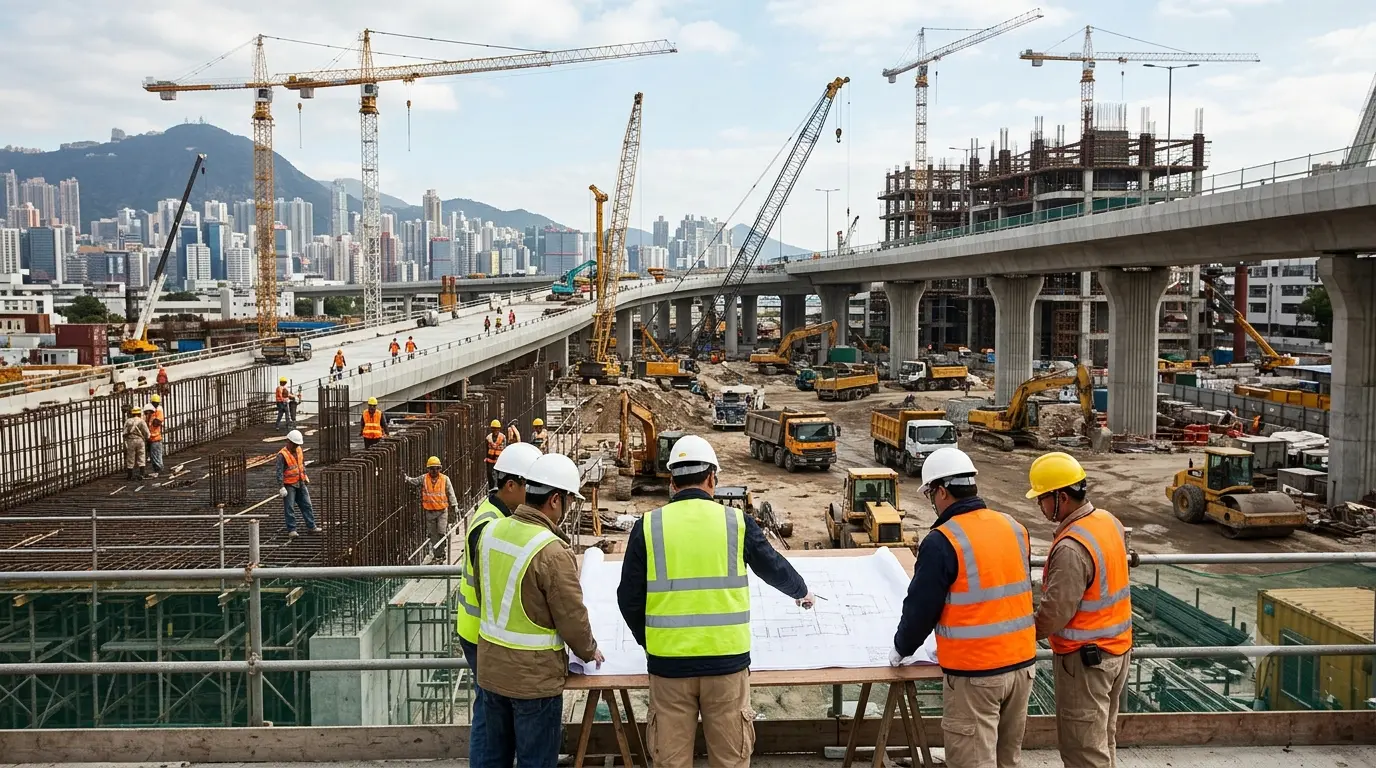
The Construction & Infrastructure segment covers the planning, design, development, construction, operation, and maintenance of residential, commercial, industrial, and public infrastructure projects. It includes buildings, transportation networks, utilities, energy facilities, and large-scale civil engineering projects that support economic development and urban growth.
This segment operates at the intersection of civil engineering, architecture, project management, construction technologies, and infrastructure development, making it a foundational sector for economic activity, industrial expansion, and societal progress.
Scope of the Construction & Infrastructure Segment
This segment includes, but is not limited to:
Residential and commercial construction
Housing developments, office buildings, retail centers, mixed-use projects, and hospitality facilities.
Industrial construction
Manufacturing plants, warehouses, logistics centers, industrial parks, and processing facilities.
Transportation infrastructure
Roads, highways, bridges, tunnels, railways, airports, ports, and public transit systems.
Utilities and public infrastructure
Water supply systems, wastewater treatment facilities, power distribution networks, and public service infrastructure.
Energy and renewable infrastructure
Power plants, transmission systems, solar farms, wind farms, and energy storage facilities.
Engineering, procurement, and construction (EPC) services
Project design, procurement management, construction execution, and commissioning activities.
Market Characteristics
The Construction & Infrastructure segment is defined by several structural characteristics:
- High capital investment requirements and long project lifecycles
- Strong dependence on economic growth, urbanization, and government spending
- Complex project management involving multiple stakeholders and contractors
- Significant regulatory, environmental, and safety compliance requirements
- Growing adoption of digital construction technologies and Building Information Modeling (BIM)
- Demand influenced by infrastructure modernization and industrial development initiatives
- Increasing focus on sustainability, resilience, and smart infrastructure solutions
Value Chain Overview
The segment spans the full construction and infrastructure value chain:
- Planning & Design: Feasibility studies, engineering design, and project approvals
- Procurement & Contracting: Material sourcing, contractor selection, and supply chain coordination
- Construction & Development: Site preparation, building activities, and infrastructure deployment
- Commissioning & Handover: Testing, validation, and project completion
- Operations & Maintenance: Asset management, repairs, and performance monitoring
- Modernization & Redevelopment: Upgrades, expansion projects, and infrastructure renewal
Each stage requires coordination among developers, contractors, engineering firms, suppliers, government agencies, and financial institutions.
Key Market Drivers
- Rapid urbanization and population growth
- Government investment in public infrastructure and transportation networks
- Expansion of industrial and commercial development projects
- Rising demand for sustainable and smart building solutions
- Growth in renewable energy and utility infrastructure investments
- Increasing adoption of advanced construction technologies and automation
Strategic Importance within Construction & Infrastructure
Construction & Infrastructure plays a critical role in enabling economic growth, urban development, industrial expansion, and public service delivery. It provides the physical assets required for transportation, energy, communications, housing, and commercial activities.
Upstream, the segment drives demand for construction materials, machinery, engineering services, and project financing. Downstream, it supports manufacturing, logistics, utilities, real estate, transportation, and public sector operations.
As economies continue to modernize and invest in long-term development, the Construction & Infrastructure segment remains essential for productivity, connectivity, sustainability, and national competitiveness.