
Construction & Infrastructure / Market Segment
Infrastructure
Segment Overview
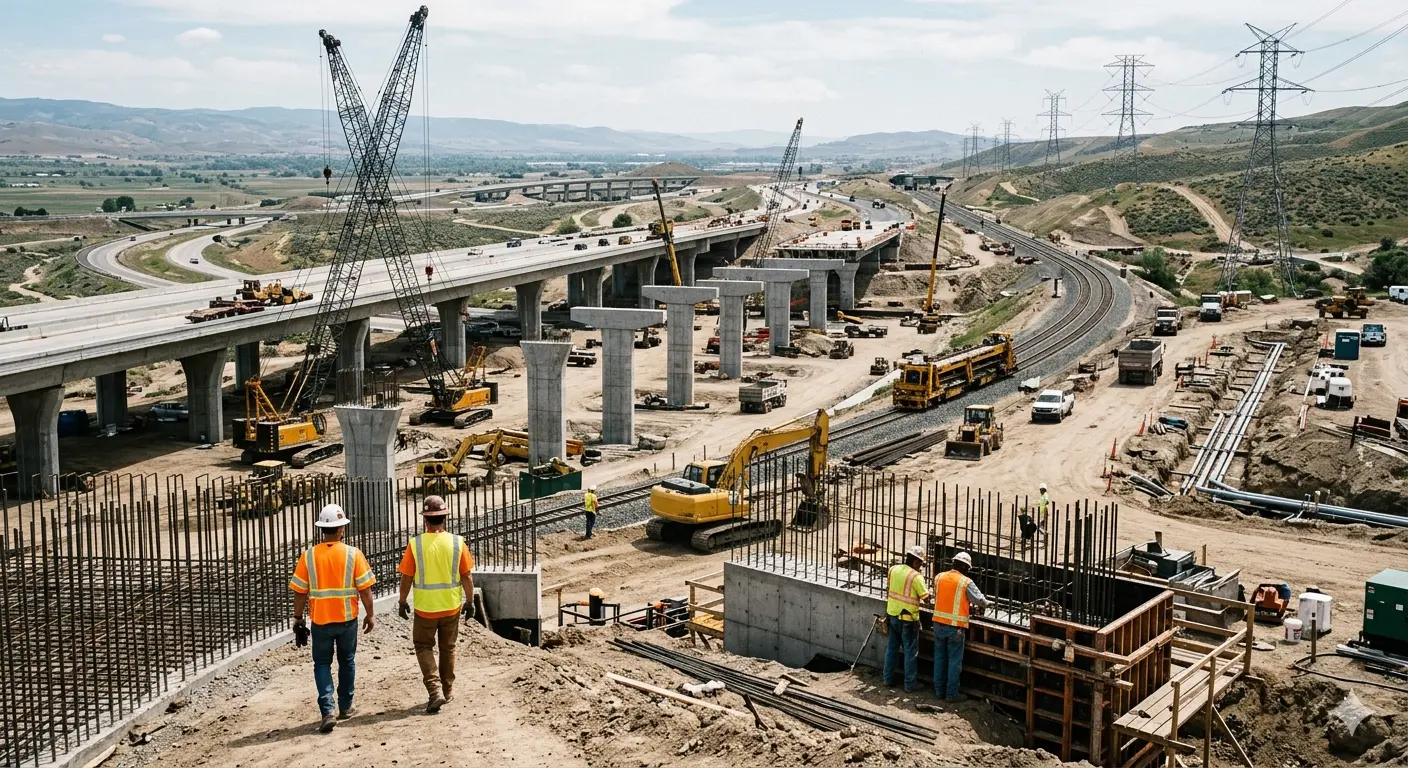
The Infrastructure segment covers the planning, development, construction, operation, and maintenance of physical systems and facilities that support economic activity, public services, and societal development. It includes transportation networks, utilities, energy systems, water infrastructure, communication networks, and public facilities that form the foundation of modern economies.
This segment operates at the intersection of civil engineering, construction, urban planning, public policy, and asset management, making it one of the most critical sectors for long-term economic growth and national development.
Scope of the Infrastructure Segment
This segment includes, but is not limited to:
Transportation infrastructure
Roads, highways, bridges, tunnels, railways, airports, ports, and transit systems.
Energy infrastructure
Power generation facilities, transmission networks, substations, and energy distribution systems.
Water and wastewater infrastructure
Water treatment plants, pipelines, reservoirs, sewage systems, and drainage networks.
Telecommunications infrastructure
Fiber-optic networks, communication towers, data centers, and digital connectivity systems.
Social infrastructure
Hospitals, schools, government buildings, public facilities, and community infrastructure projects.
Industrial and urban infrastructure
Industrial parks, logistics hubs, smart city systems, and urban development projects.
Market Characteristics
The Infrastructure segment is defined by several structural characteristics:
- High capital investment requirements and long project lifecycles
- Strong involvement of government agencies and public-private partnerships (PPPs)
- Long planning, approval, and construction timelines
- Dependence on economic development and urbanization trends
- Significant regulatory, environmental, and safety compliance requirements
- Growing adoption of digital technologies and smart infrastructure solutions
- Focus on sustainability, resilience, and long-term asset performance
Value Chain Overview
The segment spans the full infrastructure value chain:
Planning & Feasibility: Project assessment, design studies, and regulatory approvals
Engineering & Design: Civil engineering, architectural planning, and technical specifications
Construction & Development: Site preparation, construction, and infrastructure deployment
Operations & Maintenance: Asset management, monitoring, and performance optimization
Upgrades & Modernization: Capacity expansion, technology integration, and rehabilitation projects
End-of-Life & Redevelopment: Asset replacement, decommissioning, and redevelopment initiatives
Each stage requires coordination among governments, contractors, engineering firms, technology providers, and financial stakeholders.
Key Market Drivers
- Rapid urbanization and population growth
- Increasing investment in transportation and utility networks
- Expansion of smart city and digital infrastructure initiatives
- Rising demand for sustainable and resilient infrastructure systems
- Government stimulus programs and infrastructure modernization projects
- Growth in industrial development and global trade activities
Strategic Importance within Construction & Infrastructure
Infrastructure serves as the foundation for economic development, connectivity, public services, and industrial growth. It enables the movement of people, goods, energy, water, and information across regions and economies.
Upstream, the segment drives demand for construction materials, engineering services, heavy equipment, and financing. Downstream, it supports transportation, utilities, manufacturing, communications, healthcare, education, and urban development.
As nations invest in modernization, sustainability, and digital transformation, the Infrastructure segment remains essential for economic competitiveness, quality of life, and long-term societal progress.