
Global Canes and Crutches Market Report, Size and Forecast 2026 - 2033
Global Canes and Crutches Market Report Size and Forecast 2026???2033
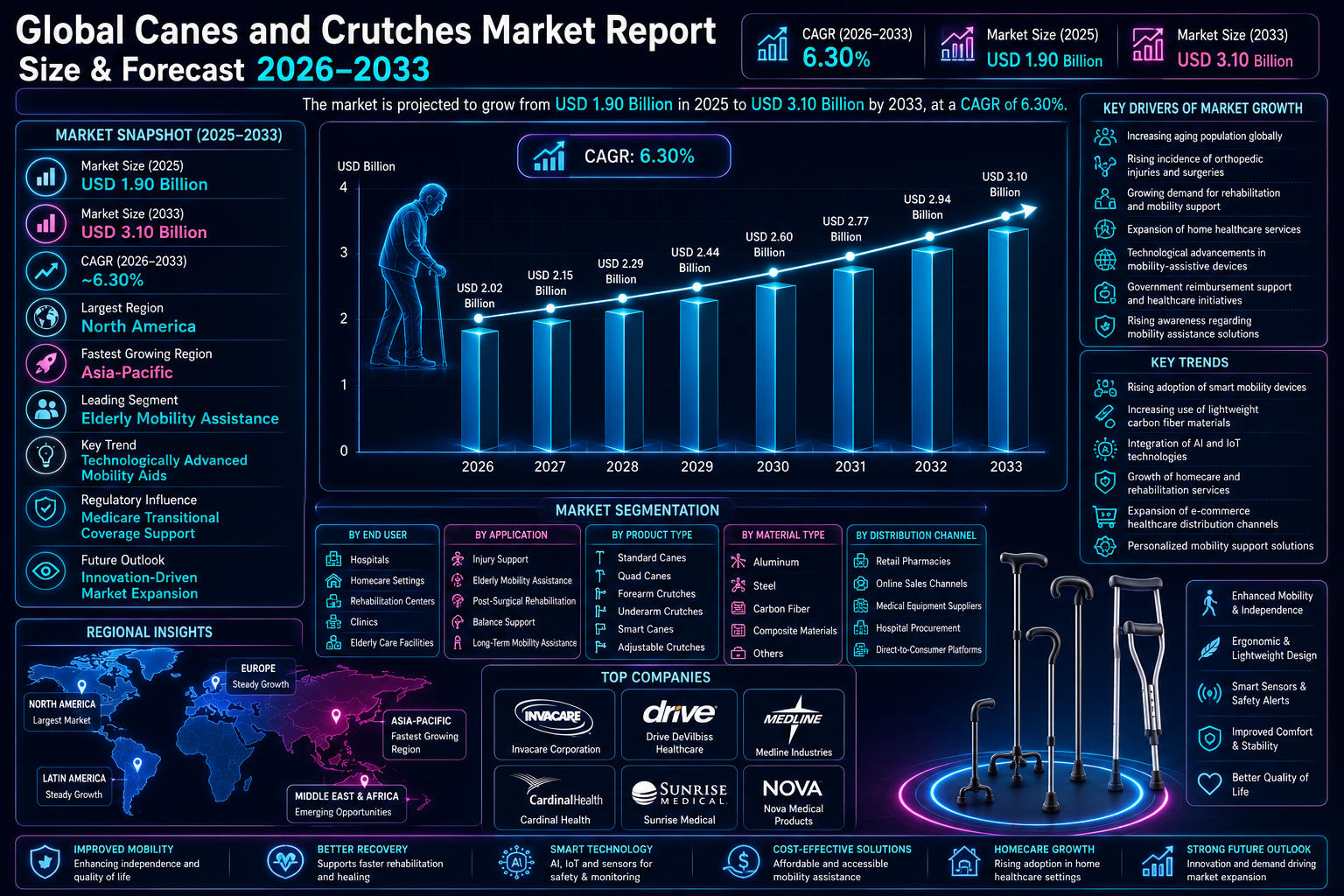
Market Forecast Snapshot (2025???2033)
| Metric | Value |
|---|---|
| Market Size (2025) | USD 1.90 Billion |
| Market Size (2033) | USD 3.10 Billion |
| CAGR (2026???2033) | ~6.30% |
| Largest Region | North America |
| Fastest Growing Region | Asia-Pacific |
| Leading Segment | Elderly Mobility Assistance |
| Key Trend | Technologically Advanced Mobility Aids |
| Regulatory Influence | Medicare Transitional Coverage Support |
| Future Outlook | Innovation-Driven Market Expansion |
Market Size & Forecast
The Global Canes and Crutches Market is projected to experience steady growth during the forecast period from 2026 to 2033. The market is expected to expand from USD 1.90 billion in 2025 to approximately USD 3.10 billion by 2033, registering a CAGR of nearly 6.30%. Growth is primarily driven by the rising global geriatric population, increasing orthopedic procedures, and growing demand for rehabilitation and mobility support products. The expansion of healthcare infrastructure and increasing awareness regarding mobility assistance solutions are further supporting market growth.Market Overview
The Global Canes and Crutches Market is characterized by a fragmented competitive structure with strong demand across hospitals, rehabilitation centers, and homecare settings. Increasing prevalence of mobility impairments, fractures, arthritis, and post-surgical rehabilitation needs are significantly boosting demand for mobility-assistive devices. Technological innovation is reshaping the industry through the development of smart canes, lightweight materials, ergonomic designs, and AI-enabled mobility solutions. Regulatory support programs such as Medicare transitional coverage policies and FDA breakthrough device initiatives are further accelerating product innovation and commercialization. The market is also witnessing increased investments in healthcare logistics, direct-to-consumer distribution, and advanced manufacturing technologies aimed at improving accessibility and supply chain efficiency.Key Drivers of Market Growth
- Increasing aging population globally
- Rising incidence of orthopedic injuries and surgeries
- Growing demand for rehabilitation and mobility support
- Expansion of home healthcare services
- Technological advancements in mobility-assistive devices
- Government reimbursement support and healthcare initiatives
- Rising awareness regarding mobility assistance solutions
Market Restraints
- High cost of advanced mobility aids
- Limited awareness in developing regions
- Underreporting of complications associated with mobility devices
- User discomfort and adaptation challenges
Structural Drivers of Market Growth
1. Innovation and Commercialization Acceleration
Rapid advancements in smart mobility technologies, ergonomic product design, and lightweight materials are accelerating product commercialization. Companies are increasingly developing connected mobility solutions with improved safety and comfort features.2. Compliance and Risk Repricing
Regulatory bodies such as the and European healthcare authorities are strengthening compliance standards for medical mobility devices. These regulations are improving product quality and patient safety while encouraging innovation.3. Competitive and Value-Chain Reconfiguration
Strategic investments in healthcare logistics, e-commerce platforms, and direct-to-consumer sales channels are reshaping market competition. Companies are repositioning portfolios toward lightweight, smart, and personalized mobility solutions.4. Capital and Capacity Scaling
Healthcare providers and manufacturers are increasing investments in production capacity, logistics infrastructure, and advanced materials technology to meet growing global demand for mobility aids.Market Segmentation
By End User
- Hospitals
- Homecare Settings
- Rehabilitation Centers
- Clinics
- Elderly Care Facilities
By Application
- Injury Support
- Elderly Mobility Assistance
- Post-Surgical Rehabilitation
- Balance Support
- Long-Term Mobility Assistance
By Product Type
- Standard Canes
- Quad Canes
- Forearm Crutches
- Underarm Crutches
- Smart Canes
- Adjustable Crutches
By Material Type
- Aluminum
- Steel
- Carbon Fiber
- Composite Materials
- Others
By Distribution Channel
- Retail Pharmacies
- Online Sales Channels
- Medical Equipment Suppliers
- Hospital Procurement
- Direct-to-Consumer Platforms
Regional Insights
1. North America
North America dominates the market due to advanced healthcare infrastructure, high adoption of technologically advanced mobility aids, and favorable reimbursement policies.2. Europe
Europe is witnessing steady growth supported by aging populations, strong healthcare systems, and regulatory support for rehabilitation products.3. Asia-Pacific
Asia-Pacific is expected to witness the fastest growth due to rising healthcare investments, growing elderly populations, and increasing awareness regarding mobility assistance devices.4. Latin America
The region is gradually expanding with improving healthcare access and rising investments in rehabilitation infrastructure.5. Middle East & Africa
Increasing healthcare modernization initiatives and growing awareness of elderly care solutions are creating new market opportunities across the region.Competitive Landscape
Key companies operating in the market include:- Invacare Corporation
- Drive DeVilbiss Healthcare
- Medline Industries
- Cardinal Health
- Sunrise Medical
- Nova Medical Products
Strategic Insights & Trends
- Rising adoption of smart mobility-assistive devices
- Increasing use of lightweight carbon fiber materials
- Growth of homecare and rehabilitation services
- Expansion of e-commerce healthcare distribution channels
- Integration of AI and IoT technologies into mobility aids
- Increasing demand for personalized mobility support solutions
Frequently Asked Questions (FAQs)
1. What is the projected growth rate of the Global Canes and Crutches Market?
The Global Canes and Crutches Market is projected to grow at a CAGR of approximately 6.30% during the forecast period from 2026 to 2033.2. What factors are driving the growth of the Canes and Crutches Market?
Major growth drivers include rising geriatric population, increasing orthopedic surgeries, growing rehabilitation needs, technological advancements in mobility aids, and expansion of home healthcare services.3. Which region dominates the Global Canes and Crutches Market?
North America currently dominates the market due to strong healthcare infrastructure, advanced rehabilitation services, and high adoption of innovative mobility-assistive devices.4. Who are the major companies operating in the Global Canes and Crutches Market?
Key market players include Invacare Corporation, Drive DeVilbiss Healthcare, Medline Industries, Cardinal Health, and Sunrise Medical.Final Market Perspective
The Global Canes and Crutches Market is expected to maintain stable long-term growth as aging populations, orthopedic procedures, and rehabilitation requirements continue to rise globally. Technological advancements, ergonomic innovations, and increasing adoption of smart mobility solutions are reshaping the market landscape. Companies investing in lightweight materials, digital healthcare integration, and patient-centric product development will be best positioned to capitalize on future market opportunities.Table of Contents
Executive Summary
1.1 Market Forecast Snapshot (2026???2033)
1.2 Global Market Size & CAGR Analysis
1.3 Largest & Fastest-Growing Segments
1.4 Region-Level Leadership & Growth Trends
1.5 Key Market Drivers
1.6 Competitive Landscape Overview
1.7 Strategic Outlook Through 2033
Introduction & Market Overview
1.1 Definition of the Global Canes and Crutches Market
1.2 Scope of the Study
1.3 Industry Evolution & Market Development
1.4 Supply Chain & Distribution Infrastructure
1.5 Impact of Consumer Trends
1.6 Regulatory & Compliance Landscape
1.7 Technology & Innovation Landscape
Research Methodology
1.1 Primary Research
1.2 Secondary Research
1.3 Market Size Estimation Model
1.4 Forecast Assumptions (2026???2033)
1.5 Data Validation & Triangulation
Market Dynamics
1.1 Drivers
1.1.1 Rising Geriatric Population & Mobility Needs
1.1.2 Increasing Orthopedic Injuries & Surgeries
1.1.3 Growth in Home Healthcare Adoption
1.1.4 Technological Advancements in Mobility Aids
1.1.5 Expanding Rehabilitation Services
1.2 Restraints
1.2.1 Price Sensitivity in Developing Markets
1.2.2 Limited Awareness of Advanced Mobility Aids
1.2.3 Infrastructure Constraints in Rural Areas
1.2.4 Product Durability & Maintenance Issues
1.3 Opportunities
1.3.1 Expansion of Home Care & Assisted Living
1.3.2 Lightweight & Ergonomic Product Innovation
1.3.3 Emerging Market Penetration
1.3.4 E-Commerce & Direct-to-Consumer Growth
1.4 Challenges
1.4.1 Supply Chain Disruptions
1.4.2 Regulatory Compliance & Quality Standards
1.4.3 Market Fragmentation
1.4.4 Competitive Pricing Pressure
Global Canes and Crutches Market Analysis (USD Billion), 2026???2033
1.1 Market Size Overview
1.2 CAGR Analysis
1.3 Regional Revenue Distribution
1.4 Segment Revenue Analysis
1.5 Distribution Channel Analysis
1.6 End-User Impact Analysis
Market Segmentation (USD Billion), 2026???2033
1.1 By End User
1.1.1 Hospitals
1.1.1.1 Orthopedic Departments
1.1.1.1.1 Post-Surgery Mobility Support
1.1.2 Home Care Settings
1.1.2.1 Elderly Home Care
1.1.2.1.1 Long-Term Mobility Support
1.1.3 Rehabilitation Centers
1.1.3.1 Physical Therapy Clinics
1.1.3.1.1 Mobility Training Programs
1.2 By Application
1.2.1 Injury Support
1.2.1.1 Fracture Support
1.2.1.1.1 Temporary Mobility Assistance
1.2.2 Elderly Mobility Assistance
1.2.2.1 Balance Support Devices
1.2.2.1.1 Long-Term Mobility Assistance
1.2.3 Post-Surgical Rehabilitation
1.2.3.1 Orthopedic Surgery Recovery
1.2.3.1.1 Lower Limb Rehabilitation
1.3 By Product Type
1.3.1 Canes
1.3.1.1 Standard Canes
1.3.1.1.1 Wooden Canes
1.3.1.1.1.1 Single-Tip Wooden Canes
1.3.2 Crutches
1.3.2.1 Axillary Crutches
1.3.2.1.1 Aluminum Axillary Crutches
1.3.2.1.1.1 Height Adjustable Axillary Crutches
1.3.3 Quad Canes
1.3.3.1 Small Base Quad Canes
1.3.3.1.1 Large Base Quad Canes
1.3.3.1.1.1 Adjustable Quad Canes
1.3.4 Forearm Crutches
1.3.4.1 Standard Forearm Crutches
1.3.4.1.1 Ergonomic Forearm Crutches
1.3.4.1.1.1 Adjustable Forearm Crutches
1.4 By Material Type
1.4.1 Steel Mobility Aids
1.4.1.1 Heavy-Duty Steel Frames
1.4.1.1.1 Reinforced Steel Crutches
1.4.2 Aluminum Mobility Aids
1.4.2.1 Lightweight Aluminum Frames
1.4.2.1.1 Adjustable Aluminum Canes
1.4.3 Composite Mobility Aids
1.4.3.1 Reinforced Composite Frames
1.4.3.1.1 Hybrid Material Canes
1.4.4 Carbon Fiber Mobility Aids
1.4.4.1 Lightweight Carbon Fiber Canes
1.4.4.1.1 Carbon Fiber Forearm Crutches
1.5 By Distribution Channel
1.5.1 Retail Pharmacies
1.5.1.1 Pharmacy-Based Medical Aids
1.5.1.1.1 Over-the-Counter Mobility Devices
1.5.2 Online Sales Channels
1.5.2.1 E-Commerce Platforms
1.5.2.1.1 Direct-to-Consumer Mobility Products
1.5.3 Medical Equipment Suppliers
1.5.3.1 Healthcare Mobility Equipment Providers
1.5.3.1.1 Institutional Procurement
Market Segmentation by Geography
1.1 North America
1.2 Europe
1.3 Asia-Pacific
1.4 Latin America
1.5 Middle East & Africa
Competitive Landscape
1.1 Market Share Analysis
1.2 Product Portfolio Benchmarking
1.3 Product Positioning Mapping
1.4 Distribution & Supply Chain Partnerships
1.5 Competitive Intensity & Differentiation
Company Profiles
Strategic Intelligence & Pheonix AI Insights
1.1 Pheonix Demand Forecast Engine
1.2 Supply Chain & Infrastructure Analyzer
1.3 Technology & Innovation Tracker
1.4 Product Development Insights
1.5 Automated Porter???s Five Forces Analysis
Future Outlook & Strategic Recommendations
1.1 Expansion of Home Healthcare Solutions
1.2 Lightweight & Ergonomic Product Innovation
1.3 E-Commerce & Distribution Expansion
1.4 Regional Expansion Strategies
1.5 Long-Term Market Outlook (2033+)
Appendix
About Pheonix Research
Disclaimer
Competitive Landscape
Global Canes and Crutches Market Competitive Intensity & Market Structure Overview
The Global Canes and Crutches Market is characterized by a fragmented market structure with moderate-to-high competitive intensity, driven by the presence of multiple regional manufacturers, medical device suppliers, and rehabilitation-focused healthcare companies. The market includes both established healthcare equipment providers and emerging mobility-assistance innovators competing across hospitals, rehabilitation centers, homecare settings, and direct-to-consumer channels.
Leading companies such as Invacare Corporation, Drive DeVilbiss Healthcare, Medline Industries, Cardinal Health, and Sunrise Medical are shaping market dynamics through ergonomic product innovation, lightweight material adoption, and expansion of rehabilitation-focused mobility solutions.
Competitive intensity is primarily driven by product innovation, pricing competition, ergonomic differentiation, smart mobility integration, and expansion of digital healthcare distribution channels. The increasing shift toward elderly care, rehabilitation services, and home healthcare ecosystems is further intensifying competition across the market.
Global Canes and Crutches Market Competitive Intensity & Market Structure Current Scenario
Leading Company Profiles
- Invacare Corporation: Global mobility and rehabilitation equipment provider focused on advanced patient support solutions.
- Drive DeVilbiss Healthcare: Major provider of mobility aids, rehabilitation products, and home healthcare solutions.
- Medline Industries: Leading healthcare supplier with strong distribution capabilities in mobility-assistive devices.
- Cardinal Health: Healthcare solutions provider supporting rehabilitation and mobility care markets.
- Sunrise Medical: Specialized manufacturer of mobility assistance and rehabilitation technologies.
- Nova Medical Products: Provider of lightweight canes, crutches, and ergonomic mobility products.
Key Competitive Intensity & Market Structure Signals in Global Canes and Crutches Market
Several signals define the competitive dynamics of the market:
- The presence of numerous regional and international mobility-aid manufacturers indicates a fragmented and highly diversified competitive structure.
- Increasing adoption of smart mobility devices, AI-enabled support systems, and ergonomic designs is intensifying innovation-driven competition.
- Rising demand for lightweight materials such as carbon fiber and aluminum is creating differentiation opportunities in premium product segments.
- Expansion of home healthcare and rehabilitation ecosystems is increasing competition across direct-to-consumer and online healthcare distribution channels.
- Regulatory support initiatives, including reimbursement programs and safety compliance standards, are strengthening market commercialization and product innovation.
- Pricing pressure remains significant in emerging markets, where regional manufacturers compete aggressively on affordability and accessibility.
Strategic Implications of Competitive Intensity & Market Structure in Global Canes and Crutches Market
The competitive structure leads to several strategic implications:
- Continuous ergonomic and technological innovation is essential, particularly in smart canes and lightweight mobility-assistance solutions.
- Distribution network expansion is a major competitive advantage, especially across online healthcare retail and direct-to-consumer platforms.
- Affordability and durability remain critical purchasing factors, particularly in cost-sensitive emerging markets.
- Homecare and elderly-care positioning are becoming increasingly important, driving long-term replacement demand and recurring revenue opportunities.
- Regulatory compliance and reimbursement alignment are essential for strengthening market penetration in developed healthcare systems.
- Product personalization and comfort optimization are emerging differentiators, particularly among elderly and rehabilitation-focused users.
Global Canes and Crutches Market Competitive Intensity & Market Structure Forward Outlook
Looking ahead, the Global Canes and Crutches Market is expected to maintain its fragmented structure with sustained moderate-to-high competitive intensity, supported by increasing healthcare demand and mobility-assistance adoption.
- AI-enabled smart mobility devices and connected healthcare integration will become increasingly important competitive differentiators.
- Growth in aging populations and orthopedic rehabilitation demand will continue to expand long-term market opportunities.
- Lightweight materials and ergonomic product innovation will drive premiumization across advanced mobility-aid categories.
- Expansion of digital healthcare ecosystems and e-commerce distribution will reshape competitive positioning and accessibility.
- Strategic collaborations between healthcare providers, rehabilitation centers, and mobility device manufacturers are expected to increase.
In conclusion, the Global Canes and Crutches Market represents a highly diversified and innovation-driven competitive landscape, where ergonomic innovation, accessibility, affordability, and smart healthcare integration determine long-term market success.
Value Chain
Global Canes and Crutches Market Value Chain & Supply Chain Evolution Overview
The global canes and crutches market is undergoing significant transformation, driven by value chain and supply chain evolutions that shape its structure and operational efficiency. The market’s value chain is characterized by a hybrid operational model, emphasizing a direct-to-consumer distribution structure that reduces intermediaries and enhances consumer engagement. This evolution in the value chain and supply chain is pivotal for manufacturers and suppliers to address bottlenecks, optimize margins, and adapt to shifting bargaining power dynamics.
One of the primary drivers of this evolution is the need to optimize medicinal drug distribution, reduce nursing staff costs, and effectively track inventory. As the global population ages, with those aged 60 and above projected to constitute a significant portion of the population, the demand for mobility aids like canes and crutches is expected to rise. This demographic shift necessitates a robust and efficient supply chain to meet growing demand and mitigate potential shortages.
Furthermore, the complexity of the supply chain is moderate, but it faces critical bottlenecks, such as shortages of respiratory care supplies and overcrowding in emergency departments. These challenges highlight the importance of efficient supply chain management to ensure timely delivery and availability of products. As technology advances, there is an increasing trend of services and tests being performed outside hospitals, which can free up hospital capacity and improve supply chain efficiency.
In this context, companies are leveraging innovative solutions to optimize their value chains. For instance, the development of smart canes that can proactively warn users of hazardous situations and send distress signals can enhance mobility and safety for older adults. Such innovations not only improve product offerings but also necessitate a more responsive and adaptive supply chain to support new product launches and meet consumer expectations.
Global Canes and Crutches Market Value Chain & Supply Chain Evolution Current Scenario
Market-Specific Value Chain
- Research and Development: Innovation
- Manufacturing: Production
- Regulatory Approval: Compliance
- Distribution: Logistics
- Retail: Sales
- Reimbursement: Financial
Company-to-Stage Mapping
- Research and Development: Batt and Terwiesch, Guangdong University of Technology
- Manufacturing: Niakan and Rahimi
- Regulatory Approval: FDA, European Commission
- Distribution: Kaw et al.
- Retail: smart canes
- Reimbursement: Medicare
Key Value Chain & Supply Chain Evolution Signals in Global Canes and Crutches Market
The evolution of the value chain and supply chain in the global canes and crutches market is underscored by several key signals that provide insights into the strategic direction and operational adjustments being made by companies. One of the most significant signals is the critical shortage of respiratory care supplies, a challenge exacerbated by environmental factors such as wildfires. This shortage highlights the need for a more resilient supply chain capable of withstanding external shocks and ensuring the availability of essential products.
Additionally, the integration of electronic dashboards to increase communication across hospital departments represents a strategic move to enhance supply chain efficiency. By improving communication and coordination, hospitals can better manage their inventory and capacity, ultimately leading to improved delivery performance and patient outcomes.
The development of smart canes with advanced safety features is another key signal of the market’s evolution. These innovations not only cater to the growing demand for mobility aids among older adults but also require a more adaptive supply chain to support the production and distribution of technologically advanced products.
Finally, the market’s focus on optimizing medicinal drug distribution through mathematical models demonstrates a commitment to reducing costs and improving supply chain efficiency. By minimizing inventory and transportation costs, companies can enhance their margins and better position themselves to meet the evolving needs of the market.
Key Value Chain & Supply Chain Evolution Signals in Global Canes and Crutches Market
As the global canes and crutches market evolves, several critical signals highlight the shifts in value chain and supply chain mechanisms that are reshaping the industry. These signals not only reveal the current state of the market but also provide insights into the strategic decisions being made by key players.
1. Technological Integration in Healthcare:
One of the most prominent signals is the increasing integration of technology in healthcare, which is transforming hospital operations and resource allocation. As technology advances, more medical services and tests are conducted outside of hospitals, freeing up capacity and allowing for more efficient resource utilization. This shift necessitates a robust supply chain capable of supporting remote diagnostics and treatments, ensuring timely delivery of medical supplies and equipment to patients’ homes. The use of electronic dashboards further enhances this transformation by improving communication across hospital departments, thus optimizing hospital capacity and reducing bottlenecks in patient care.
2. Optimizing Medicinal Drug Distribution:
The development of a multi-objective mathematical model to optimize medicinal drug distribution is another key signal in the market. This model aims to minimize total inventory and transportation costs while mitigating risks associated with product shortages and expired drugs. By leveraging such models, healthcare facilities can ensure a steady supply of essential medications, thereby improving patient care and reducing operational costs. This approach not only enhances supply chain efficiency but also enables companies to maintain competitive margins in a market characterized by fluctuating demand and supply chain complexities.
3. Response to Environmental and Emergency Challenges:
Environmental challenges, such as last year’s wildfires in Los Angeles, have exposed critical vulnerabilities in the supply chain, particularly concerning respiratory care supplies. The overwhelming demand for oxygen tanks, inhalers, and ventilators during such events underscores the need for a resilient supply chain capable of responding swiftly to emergencies. This has prompted companies to rethink their supply chain strategies, focusing on building robust networks that can withstand unforeseen disruptions and ensure the continuous availability of crucial medical supplies.
4. Tracking Inventory and Reducing Costs:
Effective supply chain management plays a vital role in tracking inventory and identifying potential shortages or availability issues. By implementing sophisticated inventory tracking systems, healthcare providers can proactively manage their supply chains, reducing the risk of stockouts and ensuring the availability of necessary medical products. This proactive approach not only improves delivery performance but also contributes to cost reduction, as evidenced by a 7% reduction in nursing staff costs achieved through better inventory management and optimized resource allocation.
5. Risk Management in Growth Strategies:
The risk associated with expected returns from de novo growth compared to potential acquisitions presents another significant signal in the market. Companies are increasingly evaluating their growth strategies, weighing the risks and returns of expanding through new ventures versus acquiring existing entities. This strategic consideration impacts bargaining power and market positioning, as companies seek to balance growth ambitions with prudent risk management.
Strategic Implications of Value Chain & Supply Chain Evolution in Global Canes and Crutches Market
The strategic implications of these value chain and supply chain evolution signals are profound, influencing market structure, competitive behavior, and operational efficiency.
1. Enhanced Bargaining Power and Market Positioning:
The transition to a direct-to-consumer distribution model enhances manufacturers’ bargaining power by reducing reliance on intermediaries and enabling direct engagement with consumers. This shift allows companies to capture greater value along the supply chain, improving margins and enhancing competitive positioning. By establishing closer relationships with consumers, manufacturers can also gain valuable insights into market preferences and trends, informing product development and marketing strategies.
2. Improved Operational Efficiency and Cost Management:
The optimization of medicinal drug distribution and the implementation of advanced inventory tracking systems contribute to improved operational efficiency and cost management. By minimizing inventory and transportation costs, companies can enhance their margins and allocate resources more effectively. This efficiency is crucial in a market where cost pressures and competitive dynamics continually challenge profit margins.
3. Resilience to Supply Chain Disruptions:
The focus on building resilient supply chains capable of withstanding environmental and emergency challenges underscores the importance of risk management in maintaining market stability. Companies that can quickly adapt to disruptions and ensure the continuous availability of critical supplies will enjoy a competitive advantage, strengthening their market position and customer trust.
4. Strategic Growth and Investment Decisions:
The evaluation of growth strategies, particularly the balance between de novo ventures and acquisitions, highlights the strategic considerations companies must navigate in an evolving market. By carefully assessing growth risks and opportunities, companies can make informed investment decisions that align with their long-term objectives and enhance their market presence.
Global Canes and Crutches Market Value Chain & Supply Chain Evolution Forward Outlook
Looking ahead, the global canes and crutches market is poised for further evolution, driven by ongoing advancements in technology, shifts in consumer behavior, and the need for resilient supply chains.
1. Continued Integration of Technology:
The integration of technology into healthcare operations is expected to continue, with advancements in remote diagnostics, telemedicine, and smart mobility aids leading the way. As these technologies become more prevalent, supply chains will need to adapt to support the production and distribution of increasingly sophisticated products, ensuring timely delivery to consumers worldwide.
2. Emphasis on Sustainability and Resilience:
The focus on building sustainable and resilient supply chains will remain a priority for companies seeking to mitigate risks associated with environmental and emergency challenges. Investments in sustainable practices, such as reducing carbon footprints and enhancing supply chain transparency, will be essential for companies aiming to meet regulatory requirements and consumer expectations.
3. Evolving Consumer Preferences:
As the population ages and consumer preferences shift, the demand for innovative mobility aids, such as smart canes with advanced features, will continue to grow. Companies that can anticipate and respond to these evolving preferences will be well-positioned to capture market share and drive growth.
4. Strategic Alliances and Partnerships:
Strategic alliances and partnerships will play a crucial role in navigating the complexities of the global canes and crutches market. By collaborating with technology providers, healthcare institutions, and logistics companies, manufacturers can enhance their supply chain capabilities and expand their market reach.
In conclusion, the global canes and crutches market is undergoing significant transformation, with value chain and supply chain evolutions shaping its future trajectory. By leveraging technology, optimizing operations, and building resilient supply chains, companies can navigate the complexities of the market and capitalize on emerging opportunities.
Investment Activity
Global Canes and Crutches Market Investment & Funding Dynamics Overview
The investment and funding landscape within the Global Canes and Crutches Market is characterized by steadily rising investment activity and moderate capital intensity, driven by increasing demand for mobility assistance products and the rapid evolution of rehabilitation-focused healthcare solutions. Structural drivers such as rising geriatric populations, increasing orthopedic procedures, and expanding home healthcare ecosystems are attracting sustained capital inflows into the market. These investments are primarily focused on product innovation, lightweight material development, smart mobility integration, and expansion of healthcare distribution infrastructure.
A key factor shaping investment dynamics in this market is the growing technological advancement of mobility-assistive devices. Traditional canes and crutches are increasingly being replaced by ergonomic, lightweight, and AI-enabled mobility solutions integrated with sensors and smart monitoring capabilities. This transformation requires capital allocation toward research and development, advanced manufacturing processes, and digital healthcare integration. As a result, manufacturers are investing heavily in carbon fiber materials, connected mobility technologies, and patient-centric product designs to enhance safety, comfort, and usability.
Additionally, capital allocation is influenced by the need to improve accessibility and healthcare logistics. Companies are investing in direct-to-consumer platforms, e-commerce healthcare channels, and scalable supply chain networks to meet rising global demand for mobility assistance products.
Global Canes and Crutches Market Investment & Funding Dynamics Current Scenario
In the current scenario, the Global Canes and Crutches Market is witnessing stable investment growth supported by increasing healthcare spending, rising rehabilitation demand, and growing adoption of technologically advanced mobility aids. The market???s moderate capital intensity reflects investments required for product innovation, manufacturing expansion, and healthcare distribution modernization.
Investment activity is particularly concentrated in areas such as smart mobility devices, lightweight material innovation, ergonomic product development, and homecare-focused mobility solutions. Companies are allocating capital toward AI-enabled mobility aids, advanced safety features, and digital healthcare connectivity to improve user experience and rehabilitation outcomes.
The market is also experiencing selective merger and acquisition (M&A) activity, as companies seek to strengthen product portfolios, expand regional presence, and enhance technological capabilities. Strategic collaborations between healthcare equipment manufacturers, rehabilitation providers, and digital health companies are further accelerating market development.
Furthermore, the funding landscape is supported by long-term healthcare investments and rehabilitation infrastructure expansion. Companies are focusing on increasing production capacity, improving distribution efficiency, and expanding access to mobility solutions across both developed and emerging markets.
Key Investment & Funding Dynamics Signals in Global Canes and Crutches Market
The investment and funding dynamics in the Global Canes and Crutches Market are shaped by several key signals reflecting evolving healthcare and mobility priorities. One of the primary signals is the rapid growth of aging populations globally, which is driving continuous investment in mobility assistance technologies and long-term rehabilitation solutions.
Another critical signal is the increasing prevalence of orthopedic injuries and post-surgical rehabilitation needs. Healthcare providers are investing in advanced mobility aids that improve patient recovery, comfort, and independence.
The expansion of home healthcare services is also significantly influencing investment patterns. As healthcare systems shift toward home-based and remote patient care models, companies are allocating resources toward portable, lightweight, and digitally connected mobility devices.
Regulatory support programs and reimbursement frameworks are another important investment signal. Policies such as Medicare transitional coverage support are encouraging commercialization of innovative mobility products while reducing market-entry risks for manufacturers.
Additionally, the growing integration of AI and IoT technologies into mobility devices is driving investment toward smart canes, connected rehabilitation tools, and personalized mobility support systems.
Strategic Implications of Investment & Funding Dynamics in Global Canes and Crutches Market
The current investment dynamics have significant strategic implications for companies operating in the Global Canes and Crutches Market. One of the primary implications is the need for continuous innovation to address evolving patient mobility and rehabilitation requirements. Companies must invest in ergonomic design, smart technologies, and advanced materials to maintain competitive advantage.
Moderate capital intensity also requires efficient capital allocation and operational scalability. Companies must balance investments in innovation and manufacturing with affordability and accessibility, particularly in emerging markets and cost-sensitive healthcare environments.
The increasing role of M&A activity highlights the importance of strategic expansion and capability enhancement. Companies are leveraging acquisitions and partnerships to strengthen technology portfolios, improve distribution networks, and expand into fast-growing regional markets.
Furthermore, the shift toward digital healthcare integration is reshaping business strategies. Companies are increasingly focusing on connected mobility ecosystems, telehealth compatibility, and personalized rehabilitation solutions to create differentiated value propositions.
Global Canes and Crutches Market Investment & Funding Dynamics Forward Outlook
Looking ahead, the investment and funding dynamics in the Global Canes and Crutches Market are expected to remain positive, driven by aging demographics, increasing rehabilitation needs, and ongoing healthcare modernization. Continued expansion of homecare services and patient-centric healthcare models will support sustained capital inflows into the sector.
Technological innovation will remain a central focus, with increasing investment in AI-enabled mobility aids, lightweight composite materials, and connected rehabilitation systems. These advancements are expected to improve patient safety, mobility independence, and rehabilitation outcomes.
Sustainability and accessibility will also shape future investment trends. Companies are likely to increase investments in durable, cost-efficient, and environmentally sustainable materials to enhance affordability and product lifespan.
Additionally, the expansion of digital healthcare and remote monitoring ecosystems will drive further investment in smart mobility technologies integrated with healthcare analytics and caregiver communication systems.
In summary, the Global Canes and Crutches Market is positioned for stable long-term investment growth, supported by increasing healthcare demand and ongoing technological evolution. Companies that strategically invest in innovation, patient-centric design, and digital integration will be best positioned to capture future market opportunities.
Technology & Innovation
Global Canes and Crutches Market Technology & Innovation Landscape Overview
The Global Canes and Crutches Market is undergoing a transformative phase driven by technology and innovation. This landscape is characterized by an emerging technology maturity stage and a high level of innovation intensity. The market???s trajectory is shaped by the integration of advanced technologies such as smart canes, AI-driven platforms, and electronic dashboards. These innovations promise to redefine mobility aids, enhancing safety, independence, and quality of life for users, particularly older adults.
At the heart of this transformation are smart canes, which leverage cutting-edge technology to provide proactive warnings of hazardous situations and send location-linked distress signals in emergencies. The ability of these devices to enhance mobility and safety is critical in addressing the needs of an aging population. The development and deployment of these innovations are further supported by global regulatory frameworks such as the FDA???s Breakthrough Devices Program, which seeks to expedite the development of medical devices offering more effective treatments or diagnoses for debilitating conditions.
Another crucial element in this landscape is the role of AI-driven platforms. These platforms streamline the collation, organization, and cross-referencing of documents, significantly reducing preparation time. This capability is essential in a market that is becoming increasingly reliant on precise and timely data to optimize operations and improve patient outcomes. Additionally, AI can collect and analyze regulatory updates from global agencies, ensuring that companies remain informed about evolving guidelines, thereby driving compliance and innovation.
The integration of electronic dashboards is also reshaping the landscape. These dashboards enhance communication across hospital departments, impacting hospital capacity and efficiency. By providing real-time data and analytics, electronic dashboards enable healthcare providers to make informed decisions that can optimize resource allocation and improve patient care.
The technology and innovation landscape in the canes and crutches market is further enriched by the emergence of AI-driven platforms that streamline processes and enhance decision-making. These platforms are instrumental in managing increasing complexities within the market, ensuring that stakeholders can effectively navigate the evolving landscape.
Global Canes and Crutches Market Technology & Innovation Landscape Current Scenario
Currently, the Global Canes and Crutches Market is experiencing a moderate level of patent activity, reflecting the ongoing efforts to protect and commercialize new technologies. This activity is indicative of a market that is striving to balance innovation with the practicalities of bringing new products to market. The market is characterized by an emerging technology maturity stage, which suggests that while the technologies are still in development, they hold significant potential for future growth and adoption.
A key player in this landscape is the Stanford Eye Laser Center, which is making strides in technology that enhances vision, indirectly impacting the development of mobility aids. Their advancements highlight the interconnectedness of various medical technologies and their potential to improve the efficacy of mobility devices.
The enthusiasm of older adults for technology-enabled canes or mobility devices underscores the market???s readiness for innovation. These devices, which incorporate safety and usability features, are poised to meet the growing demand for solutions that enhance independence and quality of life. This demand is further supported by studies that have identified safety concerns with traditional mobility devices, such as walkers or rollators with faulty brakes that increase the risk of falls.
The current scenario also highlights the importance of optimizing healthcare operations to support the adoption of new technologies. A multi-objective mathematical model developed to optimize medicinal drug distribution exemplifies the kind of innovative thinking that is necessary to streamline healthcare operations, minimize costs, and mitigate risks. Such models are crucial in ensuring that healthcare facilities can efficiently integrate new technologies, thereby enhancing patient care and operational efficiency.
As technology continues to evolve, the market is witnessing an increase in services and tests performed outside of traditional hospital settings. This shift is freeing up hospital capacity, allowing healthcare providers to focus on more complex cases and procedures. The use of electronic dashboards is a testament to this trend, as they facilitate better communication and coordination across departments, ultimately improving patient outcomes.
In summary, the current scenario of the Global Canes and Crutches Market is one of dynamic change and innovation. The integration of advanced technologies is driving improvements in safety, efficiency, and patient care, setting the stage for a future where mobility aids are more effective and accessible than ever before.
Key Technology & Innovation Landscape Signals in Global Canes and Crutches Market
The Global Canes and Crutches Market is characterized by several key signals that highlight the role of technology and innovation in shaping the market???s future. These signals underscore the market???s focus on enhancing safety, efficiency, and patient care through the adoption of advanced technologies.
One of the most prominent signals is the increasing complexity of surgical operations, which are becoming more reliant on specialized equipment and techniques. This trend necessitates increased investment by hospitals and healthcare organizations to ensure they are equipped with the latest technologies that can enhance surgical outcomes and patient care.
Another significant signal is the emergence of smart canes, which offer proactive safety features that are highly valued by older adults. These canes are equipped with sensors and communication capabilities that can detect and alert users to potential hazards, enhancing their safety and independence.
The use of electronic dashboards is another critical signal, as they facilitate improved communication and coordination across hospital departments. This capability is essential in optimizing hospital capacity and ensuring that resources are allocated efficiently, ultimately leading to better patient outcomes.
Additionally, the development of multi-objective mathematical models for optimizing medicinal drug distribution highlights the market???s focus on operational efficiency. These models aim to minimize inventory and transportation costs while mitigating the risks of product shortages and expired drugs, ensuring that healthcare facilities can effectively meet patient needs.
These signals collectively highlight the market???s commitment to leveraging technology and innovation to drive improvements in safety, efficiency, and patient care. As the market continues to evolve, these signals will play a crucial role in shaping its trajectory and ensuring that mobility aids are more effective and accessible to those who need them most.
Strategic Implications of Technology & Innovation Landscape in Global Canes and Crutches Market
The strategic implications of the ongoing technological advancements in the Global Canes and Crutches Market are profound, reshaping not only how mobility aids are designed and used but also influencing healthcare economics and patient care paradigms. As the market integrates advanced technologies like smart canes and AI-driven platforms, strategic considerations must focus on adoption, economic impacts, and the broader healthcare ecosystem.
Enhancing Safety and Independence
The integration of smart technologies into canes and crutches is a critical driver of market change, significantly enhancing safety and independence for users. Smart canes that can proactively warn of hazardous situations and send location-linked distress signals are particularly impactful for older adults, who often face mobility challenges. This technological enhancement not only improves user safety but also offers peace of mind to caregivers and family members. The implication for healthcare providers and manufacturers is the potential for increased demand for these advanced mobility solutions, prompting a shift towards more sophisticated product development and marketing strategies.
Economic Impacts and Healthcare Efficiency
The economic implications of these innovations are multifaceted. On one hand, the introduction of smart mobility aids could lead to higher initial costs for consumers and healthcare providers. However, the long-term benefits, such as reduced fall-related injuries and hospital admissions, could offset these costs by decreasing the overall burden on healthcare systems. For healthcare providers, the adoption of electronic dashboards and AI-driven platforms to streamline operations can lead to enhanced hospital efficiency. By increasing communication across departments, these technologies can help optimize resource allocation, ultimately leading to cost savings and improved patient throughput. For manufacturers, there is an opportunity to capitalize on these efficiencies by developing products that integrate seamlessly into existing healthcare workflows.
Regulatory and Competitive Landscape
The regulatory environment plays a crucial role in the adoption and diffusion of these technologies. Initiatives like the FDA’s Breakthrough Devices Program, which aims to expedite the development of innovative medical devices, are pivotal in accelerating market entry for new technologies. However, companies must navigate complex regulatory landscapes to ensure compliance and secure necessary approvals. This regulatory focus can serve as a competitive differentiator, with companies that successfully navigate these processes gaining a first-mover advantage. Furthermore, the European Commission???s rules for joint clinical assessments can facilitate faster access to these innovations across European markets, potentially leading to increased competition and market expansion.
Strategic Partnerships and Collaborations
The evolving technology landscape necessitates strategic partnerships and collaborations between technology developers, healthcare providers, and regulatory bodies. Companies like Stanford Eye Laser Center, known for their leadership in vision-enhancing technologies, could play a pivotal role in advancing smart cane technologies by applying their expertise in precision and innovation. Collaborations with AI developers and healthcare institutions can enhance product development and ensure that new technologies meet the practical needs of users and healthcare providers alike.
Market Dynamics and Competitive Behavior
As the market for canes and crutches evolves, competitive dynamics are likely to shift. Companies that invest in research and development of advanced mobility solutions will likely gain a competitive edge, capturing a larger share of the market. However, this requires significant investment in technology and innovation, as well as a deep understanding of user needs and regulatory requirements. The emergence of new players focused on AI and smart technologies could disrupt traditional market leaders, prompting a reevaluation of competitive strategies. Furthermore, the ability to successfully integrate new technologies into existing healthcare systems will be a key determinant of success, influencing market positioning and long-term growth prospects.
Global Canes and Crutches Market Technology & Innovation Landscape Forward Outlook
Looking ahead, the Global Canes and Crutches Market is poised for continued transformation driven by technological advancements and innovation. The future landscape will be characterized by several key trends and developments that will shape market dynamics and strategic priorities.
Continued Innovation and Product Development
The pace of innovation in mobility aids is expected to accelerate, with companies investing in the development of more sophisticated and user-friendly products. Smart canes and crutches with enhanced features such as real-time health monitoring, fall detection, and personalized user feedback will likely become increasingly common. These advancements will not only enhance user experience but also provide valuable data that can inform healthcare decisions and improve patient outcomes.
Expansion of AI and Digital Health Technologies
AI and digital health technologies will continue to play a crucial role in the evolution of the market. AI-driven platforms that streamline document collation and cross-referencing will enhance operational efficiency, while digital health solutions will provide new opportunities for remote monitoring and telehealth services. These technologies will enable healthcare providers to offer more personalized and proactive care, further cementing the role of technology in improving patient health and wellbeing.
Regulatory Evolution and Market Access
Regulatory frameworks will continue to evolve to keep pace with technological advancements. The FDA and European Commission???s initiatives to expedite access to innovative medical devices will be crucial in ensuring that new technologies reach the market quickly and safely. Companies that proactively engage with regulatory bodies and adapt to changing requirements will be well-positioned to capitalize on new market opportunities and expand their global footprint.
Strategic Focus on User-Centric Design
A key focus for companies in the future will be user-centric design, ensuring that mobility aids are not only technologically advanced but also accessible and easy to use. Understanding the needs and preferences of older adults and other user groups will be essential in developing products that truly enhance mobility and quality of life. Companies that prioritize user experience and incorporate feedback into product development will likely gain a competitive advantage and foster greater customer loyalty.
Conclusion
In conclusion, the Global Canes and Crutches Market is on the cusp of significant transformation driven by technology and innovation. As the market continues to evolve, strategic considerations around adoption, regulatory compliance, and user-centric design will be paramount. Companies that embrace these changes and invest in advanced technologies will be well-positioned to drive growth and deliver value to consumers and healthcare providers alike. The future landscape promises to be one where technology not only enhances mobility but also redefines the role of canes and crutches in improving healthcare outcomes and quality of life.
Market Risk
Global Canes and Crutches Market Risk Factors & Disruption Threats Overview
The global market for canes and crutches, integral components of mobility-assistive devices, is shaped by a complex set of risk factors and disruption threats. Structural constraints and market dynamics play a pivotal role in determining the trajectory of this market, affecting everything from operational resilience to pricing strategies. Understanding these risks is crucial for stakeholders aiming to navigate the market landscape between 2026 and 2033.
A moderate overall market risk level is indicative of the balance between potential opportunities and inherent vulnerabilities. Although the geopolitical exposure is low, the market is vulnerable to specific operational risks that could disrupt supply chains and affect product availability. Key risk factors include faulty brakes on mobility devices, underreporting of complications associated with their use, and financial and usability concerns that may deter users from investing in these essential products.
In this context, the market’s substitution risk is considered low, given the indispensable nature of mobility aids for a growing elderly population and individuals with mobility impairments. However, the reliance on these products means that any disruption in their supply or functionality can have significant repercussions on the market’s stability.
Global Canes and Crutches Market Risk Factors & Disruption Threats Current Scenario
Currently, the global canes and crutches market is navigating a landscape marked by both traditional and emerging risks. The underreporting of complications from mobility-assistive devices remains a critical challenge. This issue, observed across various medical devices, highlights the gap in effective post-market surveillance systems. Without accurate reporting, manufacturers and healthcare providers cannot fully assess the safety and effectiveness of their products, potentially leading to prolonged use of faulty devices and increased risk of injury.
Faulty brakes on walkers and rollators have been identified as a significant risk factor, as these defects increase the likelihood of falls among users. Such safety concerns could lead to heightened regulatory scrutiny, prompting manufacturers to invest in improved design and quality control measures. The need for patient and caregiver education on safety issues is becoming increasingly apparent as a mitigation signal, underscoring the importance of informed usage to prevent accidents and enhance user confidence in mobility aids.
Financial and usability concerns further complicate the market scenario. The cost of canes and crutches, coupled with their usability challenges, can deter potential users, particularly in regions with limited healthcare funding or inadequate insurance coverage. These factors contribute to a cautious approach among consumers, impacting overall demand elasticity.
Moreover, the market is influenced by broader healthcare system challenges, including emergency department overcrowding and technical problems in medical facilities. These systemic issues can exacerbate the difficulties faced by mobility device users, who may require timely medical attention and support to address injuries or complications arising from device use.
The risk associated with expected returns from de novo growth is higher compared to potential acquisitions. This reflects the uncertainties inherent in expanding market share through new product launches or geographic expansion, which may not always yield the expected financial returns due to unforeseen regulatory, operational, or competitive challenges.
Key Risk Factors & Disruption Threats Signals in Global Canes and Crutches Market
Several key signals illustrate the risk factors and disruption threats within the global canes and crutches market. One prominent signal is the development of a multi-objective mathematical model aimed at optimizing medicinal drug distribution to healthcare facilities. While this model primarily addresses the pharmaceutical sector, its implications for the mobility-assistive devices market are significant. By minimizing total inventory and transportation costs, the model highlights the potential for efficiency improvements in supply chain management, a critical area for mitigating risks associated with product shortages and distribution delays.
The risk associated with expected returns from de novo growth being higher than potential acquisitions underscores the challenges faced by companies in expanding their market presence. This signal emphasizes the need for strategic planning and risk assessment in pursuing growth opportunities, as unforeseen obstacles can undermine financial projections and operational stability.
In the context of healthcare system challenges, emergency department overcrowding and lack of beds in ordinary wards or intensive care units are leading causes of hospital-related incidents. These issues directly impact the canes and crutches market by complicating access to necessary medical support for individuals reliant on mobility aids. As healthcare facilities struggle to accommodate patients, the timely treatment of injuries or complications related to mobility device use may be compromised, affecting patient outcomes and satisfaction.
Another signal of disruption comes from the impact of environmental factors, as seen in last year’s wildfires in Los Angeles. These events led to critical shortages of respiratory care supplies, illustrating the vulnerability of healthcare supply chains to natural disasters. Although primarily related to respiratory care, this situation underscores the broader risks faced by the healthcare sector, including the mobility-assistive devices market, which may experience similar challenges in the face of environmental disruptions.
As the market continues to evolve, understanding these risk factors and disruption threats is essential for stakeholders to develop effective strategies for resilience and growth. By addressing safety concerns, optimizing supply chains, and mitigating financial and usability challenges, companies can better position themselves to navigate the uncertainties ahead and capitalize on emerging opportunities within the global canes and crutches market.
Global Canes and Crutches Market Risk Factors & Disruption Threats Current Scenario
The current landscape of the global canes and crutches market is defined by a confluence of risk factors and disruption threats that stakeholders must navigate to ensure sustained growth and resilience. A moderate overall market risk level suggests a balance between existing vulnerabilities and potential opportunities. However, the sector is not immune to challenges, with faulty products, underreporting of complications, and financial and usability concerns at the forefront.
One of the most pressing issues is the occurrence of faulty brakes in mobility-assistive devices such as walkers or rollators. This defect poses a significant safety risk, potentially leading to falls and injuries among users. The criticality of addressing these safety concerns is underscored by a study that created a novel dataset of safety issues from reviews on Amazon’s US website. This dataset highlights the user injury contexts and severity, providing valuable insights for manufacturers seeking to improve product design and functionality.
Underreporting of complications related to mobility-assistive devices further exacerbates the risk landscape. Similar to the observed underreporting in robotic surgeries, the lack of comprehensive data on device-related complications hinders the ability of manufacturers and healthcare providers to address safety issues effectively. This gap in reporting underscores the need for robust post-market surveillance to ensure that medical devices continue to be safe and well-performing.
Financial and usability concerns also play a critical role in shaping the market dynamics. Claims for canes, crutches, and walkers billed within the five-year reasonable useful lifetime of a previously reimbursed item are denied if the requirement is not met, posing a financial burden on patients and caregivers. Moreover, the usability challenges associated with these devices can affect demand elasticity, as consumers may opt for alternative solutions that offer better functionality and ease of use.
Key Risk Factors & Disruption Threats Signals in Global Canes and Crutches Market
Several key signals illustrate the current risk factors and disruption threats within the global canes and crutches market. For instance, the risk associated with expected returns from de novo growth is higher compared to potential acquisitions. This indicates a strategic shift towards mergers and acquisitions as a more viable growth strategy in a market characterized by moderate risk levels.
Another critical signal is the development of a multi-objective mathematical model to optimize medicinal drug distribution to healthcare facilities. This model aims to minimize total inventory and transportation costs while mitigating product shortage and expired drug risks. Although primarily focused on pharmaceutical distribution, this approach highlights the importance of efficient supply chain management in reducing operational vulnerabilities across the healthcare sector, including the canes and crutches market.
Additionally, emergency department overcrowding and technical problems at radiology departments are leading causes of hospital-related incidents. These operational challenges within healthcare facilities have a cascading effect on the demand for mobility-assistive devices, as patients with moderate to severe musculoskeletal injuries may face delays in receiving appropriate care, thereby impacting their quality of life and work capability.
Environmental disruptions, such as last year’s wildfires in Los Angeles, further compound the market’s risk profile. These events led to critical shortages of respiratory care supplies, emphasizing the need for robust contingency planning to mitigate the impact of natural disasters on supply chains. While primarily affecting respiratory care, the potential for similar disruptions in the mobility-assistive devices market cannot be overlooked.
Strategic Implications of Risk Factors & Disruption Threats in Global Canes and Crutches Market
The strategic implications of these risk factors and disruption threats are profound, necessitating a proactive approach from stakeholders to safeguard market resilience and capitalize on emerging opportunities. Addressing safety concerns through enhanced product design and rigorous post-market surveillance is paramount. Manufacturers must prioritize the identification and rectification of defects, such as faulty brakes, to enhance user safety and maintain consumer trust.
The underreporting of complications calls for the implementation of comprehensive reporting systems and collaborations with healthcare providers to gather accurate data on device safety. This approach will enable manufacturers to make informed decisions regarding product improvements and risk mitigation strategies.
Financial and usability concerns necessitate the development of innovative financing solutions and product enhancements that cater to consumer needs. Companies can explore partnerships with insurance providers to offer affordable payment plans and ensure that mobility-assistive devices remain accessible to a broader audience.
Supply chain optimization, as evidenced by the multi-objective mathematical model for medicinal drug distribution, offers a blueprint for improving operational efficiencies within the canes and crutches market. By leveraging data analytics and technology, manufacturers can streamline inventory management and transportation logistics, thereby reducing costs and enhancing resilience against supply chain disruptions.
Environmental preparedness is another critical area of focus. Developing contingency plans and diversifying supply sources can mitigate the impact of natural disasters on product availability. Companies must invest in resilient infrastructure and establish strategic partnerships with suppliers to ensure continuity of operations during unforeseen events.
Global Canes and Crutches Market Risk Factors & Disruption Threats Forward Outlook
Looking ahead, the global canes and crutches market is poised to navigate a complex landscape of risk factors and disruption threats. The moderate overall market risk level suggests a balanced outlook, with opportunities for growth tempered by existing vulnerabilities. Stakeholders must remain vigilant in addressing safety concerns, optimizing supply chains, and mitigating financial and usability challenges to position themselves for success in the coming years.
The strategic shift towards mergers and acquisitions presents a viable growth path, as companies seek to consolidate market share and enhance operational efficiencies. However, this approach must be complemented by continuous innovation and investment in product development to meet evolving consumer needs and regulatory requirements.
The integration of advanced technologies, such as data analytics and machine learning, will play a pivotal role in enhancing supply chain resilience and operational performance. Companies that invest in these technologies will be better equipped to anticipate and respond to market disruptions, thereby gaining a competitive edge.
In conclusion, the global canes and crutches market is at a critical juncture, with stakeholders facing a dynamic risk landscape that demands strategic foresight and adaptability. By addressing the key risk factors and disruption threats outlined in this analysis, companies can enhance their resilience, capitalize on emerging opportunities, and deliver value to consumers in an increasingly complex and competitive market environment.
Regulatory Landscape
Global Canes and Crutches Market Regulatory & Policy Environment Overview
The regulatory and policy environment plays a pivotal role in shaping the structure and dynamics of the global canes and crutches market. Regulatory frameworks establish the groundwork for market entry, compliance, and competition, thereby influencing the strategic operations of companies within this sector. With healthcare systems becoming increasingly complex, the regulatory landscape for medical devices, including canes and crutches, has undergone significant transformations. These changes are geared toward ensuring the safety, efficacy, and affordability of medical devices, which are crucial for both consumer protection and market sustainability.
As the market for canes and crutches expands, regulatory bodies such as the FDA and the European Commission have intensified their oversight to safeguard public health while fostering innovation. For instance, the FDA’s Breakthrough Devices Program aims to expedite the development and review of medical devices that address unmet medical needs, potentially fast-tracking more effective treatment options for life-threatening or debilitating conditions. This initiative not only accelerates the introduction of innovative devices into the market but also presents a competitive advantage for companies that can navigate these regulatory pathways successfully.
In Europe, the implementation of clear rules for joint clinical assessments by the European Commission facilitates faster access to medical devices, which could streamline the approval process for new entrants and existing firms looking to expand their product lines. Such regulatory harmonization enhances market accessibility and reduces the barriers for cross-border trade within the European Union, offering a fertile ground for growth and competition.
Global Canes and Crutches Market Regulatory & Policy Environment Current Scenario
Currently, the global canes and crutches market is navigating a complex regulatory environment marked by stringent compliance requirements and a focus on post-market surveillance. Regulatory bodies are emphasizing the need for ongoing compliance to ensure that medical devices maintain high standards of safety, quality, and performance after they are introduced to the market. This commitment to post-market surveillance is critical as it helps identify any potential risks associated with long-term device use and mandates corrective actions if necessary.
One of the key regulations impacting the market is the Medicare program’s provision for transitional coverage of emerging technologies. This policy allows for temporary reimbursement pending clinical trial results, thereby encouraging innovation by providing financial support to promising new technologies during their critical development phases. Such regulatory measures not only incentivize innovation but also alter the competitive landscape by enabling smaller companies with limited resources to bring their products to market more swiftly.
Furthermore, the Medicare policy of denying claims for canes, crutches, and walkers billed within the five-year reasonable useful lifetime of a previously reimbursed item underscores the importance of compliance with billing regulations. This rule is designed to prevent fraudulent claims and ensure that resources are allocated efficiently within the healthcare system. As a result, manufacturers and distributors must align their operations with these regulatory requirements to avoid financial penalties and maintain market credibility.
In addition to these compliance challenges, there is a growing demand for smart canes, which are designed to enhance user experience through advanced technology. Participants in the market have expressed a strong desire for potential reimbursement from federal payors for such devices, highlighting the need for regulatory frameworks to adapt to technological advancements. The integration of technology in mobility aids necessitates updated regulatory guidelines that address both the technical and clinical aspects of these innovations.
Key Regulatory & Policy Environment Signals in Global Canes and Crutches Market
The regulatory and policy landscape of the global canes and crutches market is characterized by several key signals that indicate its current and future directions. One prominent signal is the Medicare program’s transitional coverage for emerging technologies, which provides temporary reimbursement and encourages the development of innovative medical devices. This policy reflects a broader regulatory trend toward supporting technological advancements in healthcare, thereby fostering a competitive environment where companies can leverage government support to expedite product development and market entry.
Another critical signal is the approval by the Academic Ethics Review Committee of Guangdong University of Technology for a study related to medical devices. This approval, granted on 9 July 2024 with Approval No. GDUTXS2024128, underscores the importance of ethical oversight in clinical research, particularly in emerging markets such as China. Ethical considerations and compliance with local regulations are increasingly shaping the research and development strategies of companies operating in the global market, influencing their ability to innovate and compete effectively.
The guidance establishing a ‘recall ready’ approach is another significant regulatory signal that affects the market. This guidance mandates that organizations involved in product distribution must have general preparations and specific procedures for initiating recalls. Such regulatory requirements are essential for maintaining consumer trust and ensuring the safety and efficacy of medical devices. Companies must invest in robust recall management systems and processes to comply with these regulations, which can impact operational costs and resource allocation.
These regulatory signals highlight the dynamic nature of the canes and crutches market, where compliance and innovation are closely intertwined. Companies operating in this sector must navigate a complex web of regulations that dictate market entry, product development, and post-market surveillance. As regulatory bodies continue to evolve their policies to address emerging challenges and opportunities, the ability to adapt and comply with these changes will be crucial for market success.
Global Canes and Crutches Market Regulatory & Policy Environment Current Scenario
The current regulatory and policy environment in the global canes and crutches market is characterized by stringent compliance requirements and evolving standards that aim to ensure patient safety and product efficacy. Regulatory bodies such as the FDA and the European Commission play a crucial role in setting these standards, which influence the market dynamics significantly. The FDA’s Breakthrough Devices Program, for example, is designed to expedite the development and review of medical devices that offer more effective treatment or diagnosis for life-threatening or debilitating conditions. This program represents a significant opportunity for manufacturers of innovative cane and crutch products, as gaining expedited approval can provide a competitive edge in the market.
Moreover, the European Commission’s establishment of clear rules for joint clinical assessments facilitates faster access to medical devices by harmonizing evaluation processes across member states. This regulatory alignment can reduce the time and cost associated with bringing new products to market, thereby encouraging innovation and competition among manufacturers. However, these opportunities are coupled with the challenge of meeting the rigorous standards set by these regulatory bodies, which require substantial investment in research, development, and compliance.
Another critical aspect of the regulatory landscape is the Medicare program’s provisions for transitional coverage of emerging technologies. This program allows for temporary reimbursement of new medical devices pending clinical trial results, providing a financial incentive for companies to invest in innovative products. The potential for reimbursement from federal payors is particularly appealing for manufacturers of smart canes, which incorporate advanced technology to enhance user experience and safety. Participants in the market have expressed a strong desire for such reimbursement opportunities, highlighting the demand for innovative products that align with regulatory standards.
Post-market surveillance is also a significant component of the regulatory environment, ensuring that medical devices continue to perform safely and effectively after they are introduced to the market. Companies must implement robust monitoring systems to track product performance and address any issues that arise, which can increase operational costs but also enhance consumer trust and satisfaction. The emphasis on post-market surveillance underscores the importance of maintaining high-quality standards throughout the product lifecycle.
Key Regulatory & Policy Environment Signals in Global Canes and Crutches Market
Several key signals within the regulatory and policy environment are shaping the global canes and crutches market. One of the most impactful signals is the Medicare program’s transitional coverage provisions, which allow emerging technologies to receive temporary reimbursement while awaiting clinical trial outcomes. This policy encourages innovation by reducing the financial risk associated with developing new products. For companies investing in smart canes and other advanced mobility aids, this provides a pathway to market entry that aligns with regulatory requirements and enhances competitiveness.
The FDA’s Breakthrough Devices Program is another significant signal, offering a streamlined approval process for devices that address unmet medical needs. This program can reduce the time to market for innovative canes and crutches, providing a strategic advantage for manufacturers who can navigate the rigorous application process. The program also highlights the regulatory emphasis on fostering innovation and improving patient outcomes through advanced medical technologies.
Additionally, the European Commission’s rules for joint clinical assessments are pivotal in harmonizing regulatory evaluations across Europe, reducing barriers to market entry, and facilitating faster product availability. This regulatory alignment can benefit companies by minimizing duplication of efforts and expediting the approval process, thereby enhancing market access and competitive positioning.
The guidance on establishing a “recall ready” approach is another critical signal, emphasizing the importance of having robust systems in place for managing product recalls. This requirement ensures that companies can swiftly address any safety concerns, thereby protecting consumer safety and maintaining regulatory compliance. Companies must invest in comprehensive recall management strategies, which can impact operational costs but are essential for sustaining market credibility and consumer trust.
Strategic Implications of Regulatory & Policy Environment in Global Canes and Crutches Market
The strategic implications of the regulatory and policy environment in the global canes and crutches market are profound, influencing market entry, competition, and innovation. The stringent regulatory standards set by bodies such as the FDA and the European Commission necessitate significant investment in compliance and quality management systems. Companies that can successfully navigate these regulatory hurdles are better positioned to capitalize on market opportunities and gain a competitive edge.
The Medicare program’s transitional coverage provisions provide a strategic incentive for companies to invest in innovative products, particularly those incorporating advanced technologies such as smart canes. By offering temporary reimbursement, this policy reduces the financial risk associated with product development, encouraging manufacturers to pursue cutting-edge solutions that meet regulatory standards and consumer needs.
Participation in programs like the FDA’s Breakthrough Devices Program can offer a substantial competitive advantage by expediting the approval process for innovative products. Companies that can demonstrate the potential for their devices to provide more effective treatment or diagnosis are likely to benefit from earlier market entry and increased market share. This strategic advantage underscores the importance of aligning product development efforts with regulatory priorities and emerging healthcare needs.
Moreover, the emphasis on post-market surveillance and recall readiness highlights the need for ongoing investment in quality assurance and risk management. Companies must allocate resources to monitor product performance and address any issues that arise, ensuring compliance with regulatory requirements and maintaining consumer trust. This focus on post-market activities can differentiate companies in a competitive market, as consumers increasingly prioritize safety and reliability in their purchasing decisions.
Global Canes and Crutches Market Regulatory & Policy Environment Forward Outlook
Looking forward, the regulatory and policy environment in the global canes and crutches market is likely to continue evolving, driven by advancements in medical technology and changing healthcare priorities. Regulatory bodies are expected to further refine their standards and processes to accommodate emerging technologies and address new healthcare challenges. This evolution presents both opportunities and challenges for companies operating in the market.
One potential area of focus is the integration of digital health technologies into mobility aids, such as smart canes, which offer enhanced functionality and user experience. Regulatory frameworks will need to adapt to accommodate these innovations, ensuring that safety and efficacy standards are maintained while fostering innovation. Companies that can anticipate these regulatory trends and align their product development strategies accordingly will be well-positioned to capitalize on future market opportunities.
The emphasis on harmonizing regulatory processes, as seen with the European Commission’s joint clinical assessments, is likely to continue, reducing barriers to market entry and facilitating greater access to innovative products. This trend could lead to increased competition among manufacturers, driving further innovation and potentially reducing costs for consumers.
Overall, the regulatory and policy environment will play a pivotal role in shaping the future of the global canes and crutches market. Companies that can effectively navigate the complex regulatory landscape, invest in compliance and quality assurance, and align with emerging healthcare trends will be best positioned to succeed in this dynamic and competitive market. As regulatory bodies continue to evolve their standards and processes, the ability to adapt and innovate will be key to achieving long-term success and maintaining a competitive edge.