
MOLECULAR IMAGING & NUCLEAR DIAGNOSTICS
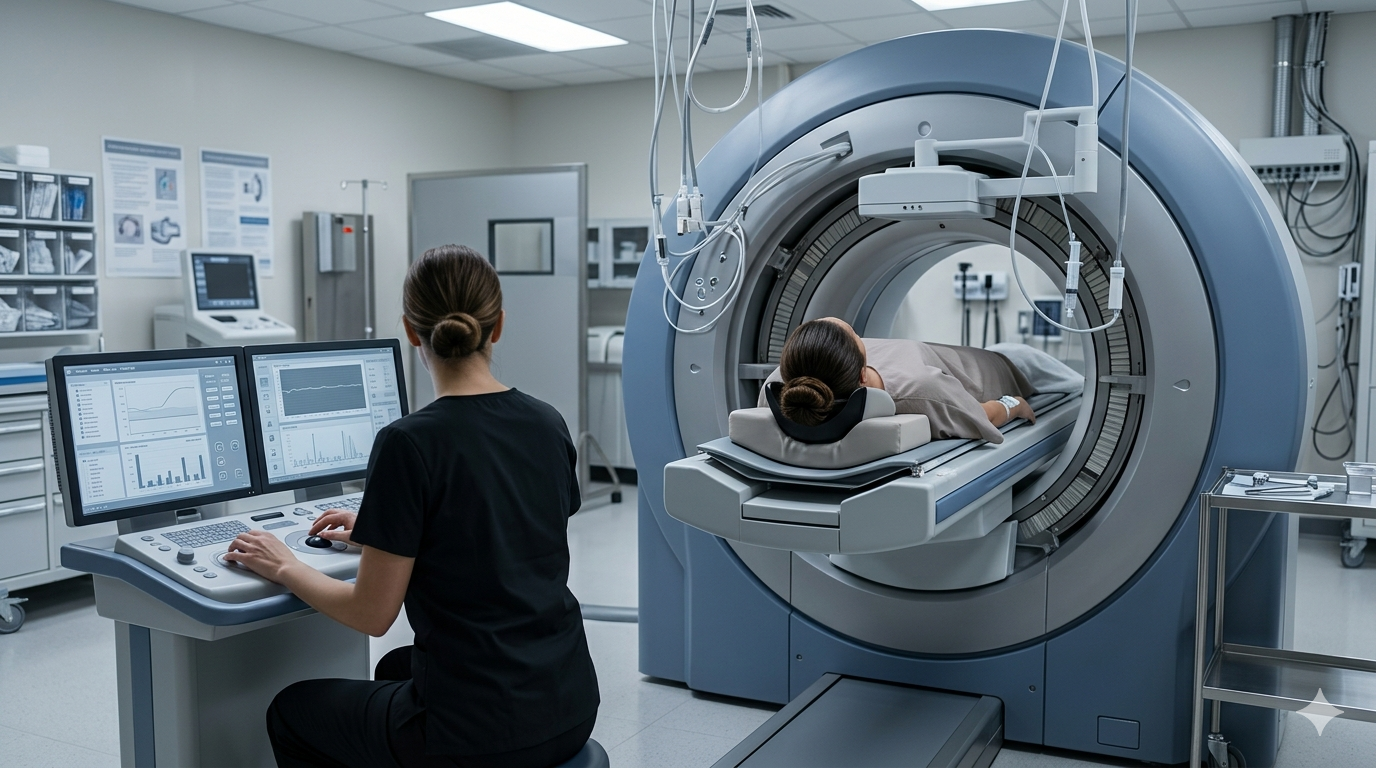
This segment operates at the intersection of nuclear medicine, diagnostic imaging, radiochemistry, and clinical oncology, making it a highly specialized and regulation-intensive area within the healthcare industry.
Scope of the Molecular Imaging & Nuclear Diagnostics Segment
This segment includes, but is not limited to:
Nuclear imaging systems
Positron emission tomography (PET), single-photon emission computed tomography (SPECT), and hybrid imaging systems such as PET/CT and SPECT/CT.
Radiopharmaceuticals and tracers
Radioisotopes and biologically targeted tracers used for diagnostic imaging and functional assessment.
Cyclotron and radioisotope production systems
Infrastructure for generating medical isotopes used in nuclear diagnostics.
Imaging software and analysis platforms
Quantification tools, image reconstruction systems, and clinical interpretation software.
Theranostic applications
Integrated diagnostic and therapeutic approaches using targeted radiopharmaceuticals.
Market Characteristics
The Molecular Imaging & Nuclear Diagnostics segment is defined by several structural characteristics:
Strong regulatory oversight governing radiopharmaceutical safety and handling
High dependency on specialized infrastructure such as cyclotrons and radiopharmacies
Short half-life of isotopes requiring time-sensitive production and distribution
Integration of imaging hardware, software, and radiochemical inputs
High capital and operational requirements for imaging systems and facilities
Close alignment with oncology, cardiology, and neurology clinical pathways
Demand is influenced by disease prevalence, diagnostic accuracy requirements, healthcare infrastructure availability, and clinical adoption of advanced imaging technologies.
Value Chain Perspective
The segment spans the full molecular imaging value chain:
Isotope production and radiochemistry development
Radiopharmaceutical formulation and quality control
Imaging system manufacturing and installation
Distribution and logistics of time-sensitive isotopes
Clinical imaging procedures and diagnostic interpretation
Post-procedure analysis, reporting, and follow-up care
Each stage introduces regulatory, logistical, and technical constraints that shape operational efficiency and clinical outcomes.
Strategic Importance Within Healthcare
Molecular Imaging & Nuclear Diagnostics plays a critical role in modern healthcare systems by:
Enabling early and precise disease detection at the molecular level
Supporting accurate staging and monitoring of disease progression
Enhancing treatment planning and response evaluation
Facilitating personalized and targeted therapeutic approaches
As healthcare systems increasingly prioritize precision medicine and early diagnosis, this segment continues to expand in importance, supported by advancements in imaging technology, radiopharmaceutical development, and integrated diagnostic-therapeutic solutions.
This segment aggregates market intelligence related to medical devices across design, manufacturing, regulation, and clinical adoption.