
Information Technology (IT) & Software / Market Segment
Digital Human Technology
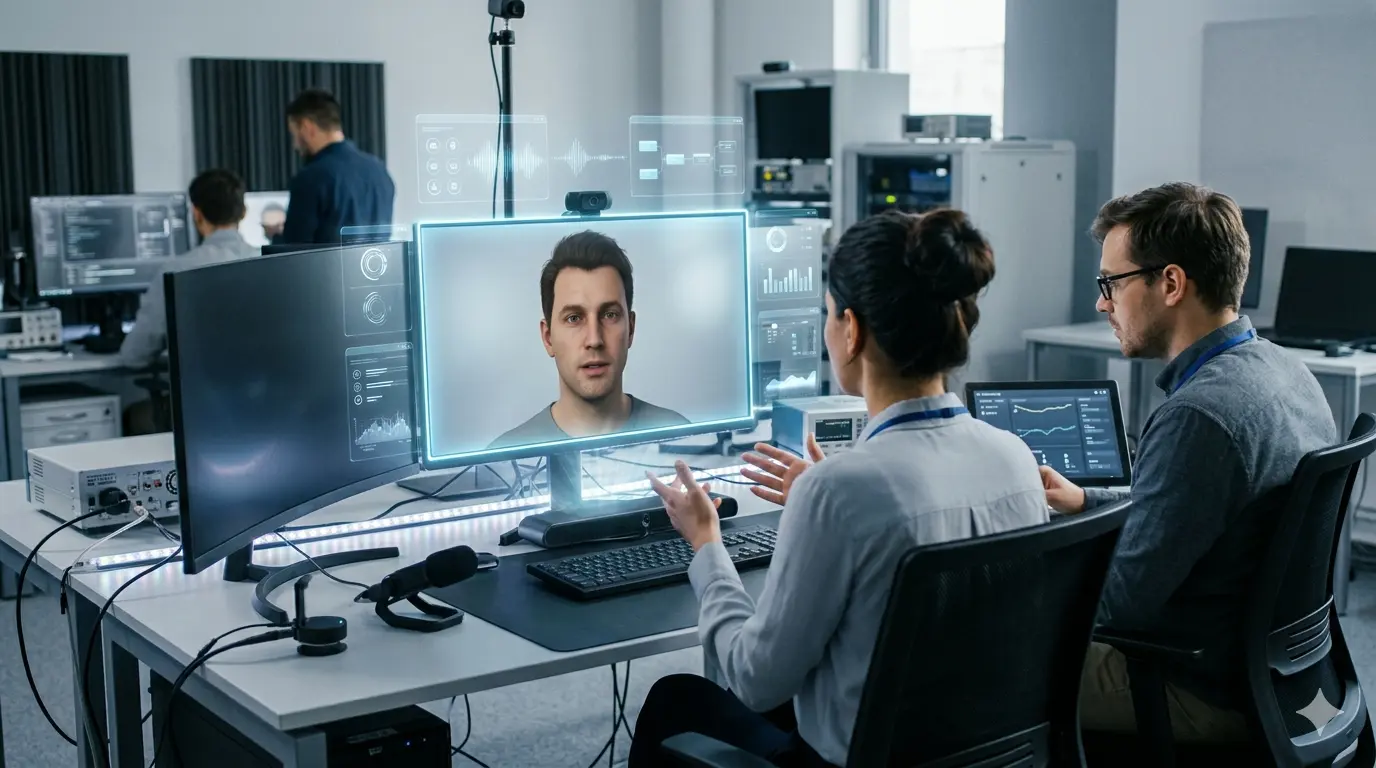
Segment Overview
The Digital Human Technology segment covers AI-powered virtual humans, digital avatars, conversational agents, and synthetic personas designed to interact with users through natural language, facial expressions, voice, gestures, and emotional intelligence capabilities. These technologies combine artificial intelligence, computer graphics, natural language processing (NLP), speech synthesis, and real-time rendering to create human-like digital interactions across physical and virtual environments.
This segment operates at the intersection of artificial intelligence, computer vision, 3D animation, extended reality (XR), and human-computer interaction, making it one of the most innovative and rapidly evolving areas within the digital technology ecosystem.
Scope of the Digital Human Technology Segment
This segment includes, but is not limited to:
AI-Powered Virtual Assistants
Human-like conversational agents used for customer support, information delivery, and digital engagement.
Digital Avatars and Virtual Humans
Photorealistic or stylized digital characters designed for communication, training, entertainment, and brand representation.
Conversational AI Platforms
Natural language processing systems enabling real-time voice and text interactions.
Virtual Influencers and Digital Personalities
AI-generated personas used for marketing, social media engagement, and brand promotion.
Metaverse and Extended Reality (XR) Humans
Interactive digital humans used in virtual worlds, augmented reality (AR), and virtual reality (VR) environments.
Healthcare, Education, and Enterprise Digital Humans
Virtual healthcare assistants, training facilitators, learning companions, and workplace support agents.
Market Characteristics
The Digital Human Technology segment is defined by several structural characteristics:
- Rapid advancements in generative AI, NLP, and computer graphics technologies
- Strong integration with cloud computing, AI platforms, and real-time rendering engines
- Increasing demand for personalized and human-like digital experiences
- High dependence on data, machine learning models, and computing infrastructure
- Continuous innovation in emotional intelligence and multimodal interaction capabilities
- Growing adoption across customer service, healthcare, education, retail, and entertainment sectors
- Increasing focus on ethical AI, transparency, and digital identity governance
Value Chain Overview
The segment spans the full digital human technology value chain:
- AI & Character Development: Model training, avatar creation, and personality design
- Platform & Engine Development: Conversational AI, rendering engines, and interaction systems
- Content & Experience Integration: Deployment into applications, websites, and digital platforms
- Cloud & Infrastructure Support: Data processing, model hosting, and real-time computing
- User Interaction & Engagement: Human-AI communication and experience delivery
- Performance Optimization & Analytics: Behavior analysis, personalization, and continuous improvement
Each stage requires expertise in AI development, digital design, software engineering, and user experience management.
Key Market Drivers
- Growing demand for automated yet human-like customer interactions
- Advancements in generative AI, speech synthesis, and computer vision
- Expansion of virtual assistants and conversational AI applications
- Rising adoption of digital engagement solutions across industries
- Growth of metaverse, AR, and VR ecosystems
- Increasing need for scalable customer service and digital workforce solutions
Strategic Importance within Information Technology & Artificial Intelligence
Digital Human Technology plays a critical role in transforming how organizations engage, support, educate, and communicate with users. It enables scalable, personalized, and immersive interactions while improving operational efficiency and customer experiences.
Upstream, the segment drives demand for AI models, cloud infrastructure, graphics technologies, and software platforms. Downstream, it supports applications in healthcare, retail, banking, education, telecommunications, media, and enterprise services.
As organizations increasingly adopt AI-driven engagement and immersive digital experiences, the Digital Human Technology segment remains essential for the future of human-computer interaction and intelligent digital communication.