
Global AI-Based Radiology Solutions Market size and share Analysis 2026-2033
Global AI-Based Radiology Solutions Market Size & Forecast
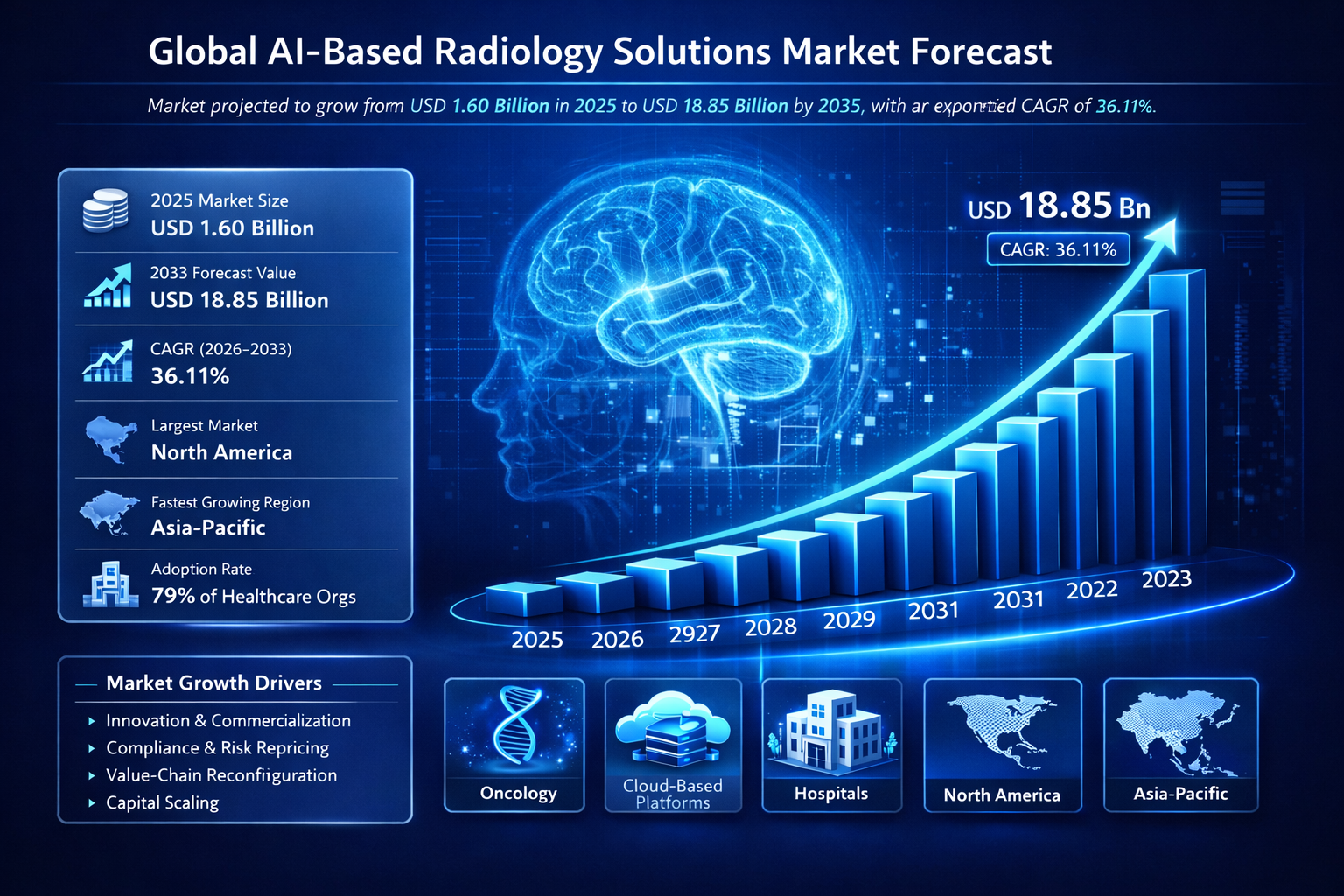
The Global AI Based Radiology Solutions Market is poised for significant expansion in the coming years, driven by a compound annual growth rate (CAGR) of 36.11% during the forecast period of 2026 to 2033. This high growth trajectory, starting from a base year market size of USD 1.60 billion in 2025, is anticipated to culminate in a forecasted market size of USD 18.85 billion by 2033. Such exponential growth underscores the transformative potential of AI technologies in enhancing radiological practices worldwide.
This rapid advancement is fueled by increasing demand for efficient and accurate diagnostic tools, as evidenced by the rising adoption of AI technologies by 79% of healthcare organizations. The burgeoning interest in AI radiology solutions is largely attributed to their capability to alleviate the workload of radiologists and improve diagnostic accuracy, which is critical given the global shortage of skilled radiologists. The forecasted growth reflects the industry's readiness to integrate cutting-edge AI solutions that promise to accelerate diagnostic processes and enhance patient care outcomes.
Global AI-Based Radiology Solutions Market Overview
The Global AI Based Radiology Solutions Market is characterized by a dynamic interplay of technological innovation, investment inflow, and regulatory evolution. The market is moderately consolidated, with ten prominent tier-1 players, including industry giants like Siemens Healthineers, Koninklijke Philips N.V., Canon Medical, and GE Healthcare, along with emerging AI-focused companies such as Aidoc and Qure.ai. These players are at the forefront of leveraging AI to transform radiology practices through strategic partnerships and technological advancements.
The market structure is shaped by intense competition, with companies vying to expand their AI capabilities through mergers and acquisitions, strategic alliances, and investment in research and development (R&D). For instance, GE HealthCare's strategic agreements and acquisitions, such as its USD 2.30 billion acquisition of Intelerad, underscore the competitive maneuvers designed to bolster AI offerings and expand market presence.
Moreover, the regulatory landscape is evolving to better support AI integration in healthcare. Regulatory changes, such as the European Health Data Space Regulation and increased government support, provide a conducive environment for innovation. These regulatory frameworks are critical in ensuring AI solutions meet stringent healthcare standards, thereby facilitating their widespread adoption.
Structural Drivers of Global AI-Based Radiology Solutions Market
Growth
The Global AI Based Radiology Solutions Market is driven by four primary structural drivers that collectively influence its trajectory: Innovation and Commercialization Acceleration, Compliance and Risk Repricing, Competitive and Value-Chain Reconfiguration, and Capital and Capacity Scaling.
Innovation and Commercialization Acceleration
The rapid maturity of AI technology is compressing the development-to-commercialization cycle, enabling faster adoption of AI radiology solutions across varied applications. This acceleration is largely facilitated by significant funding allocations, which are directed towards both technology development and deployment. Partnerships between AI vendors and healthcare providers, alongside increased government investments in healthcare infrastructure, further amplify this effect. Regulatory changes, such as the European Health Data Space Regulation, provide an additional impetus by offering clear guidelines for AI integration. The mechanism at play here is one where technology readiness and financial backing ensure a swift transition from innovation to market-ready solutions, broadening the scope of applications and accelerating adoption rates.
Compliance and Risk Repricing
The tightening of regulatory frameworks and a heightened focus on risk management are reshaping product roadmaps and raising operational standards across the market. This phenomenon is evident through increased funding from entities like the National Institutes of Health (NIH), which has invested USD 130.00 million to accelerate AI adoption in biomedical research. Enhanced regulatory clarity and government support are pivotal in lowering barriers to entry for new AI solutions, as evidenced by the growing number of partnerships between technology companies and healthcare institutions. This driver signifies a market shift towards higher compliance and safety standards, which, while presenting challenges, also create opportunities for companies to differentiate through superior quality and reliability.
Competitive and Value-Chain Reconfiguration
Competitive dynamics and value-chain constraints are leading to a reallocation of bargaining power within the market. Key players are reconfiguring their portfolios to focus on high-margin, high-growth areas, as highlighted by GE HealthCare's expansion into AI-powered ultrasound for trauma care. The competitive intensity is further underscored by the moderate market consolidation and high capital intensity level, which serves as a barrier to entry for smaller players. The expansion of multi-vendor PACS interoperability standards exemplifies the ongoing reconfiguration of value chains to support seamless integration of AI solutions into existing radiology systems, thus facilitating broader adoption.
Capital and Capacity Scaling
The deployment of capital into capacity and process upgrades is crucial for scaling AI radiology solutions to meet growing demand. Government investments in healthcare infrastructure and technology are pivotal in this regard, as they lower deployment friction and enable faster scaling. The rapid expansion of multi-vendor PACS interoperability standards, combined with regulatory support, signifies a conducive environment for AI integration. By expanding throughput and reducing implementation barriers, this driver enables the market to effectively meet the rising demand for AI-driven diagnostic tools, particularly in high-demand segments like oncology and cardiology.
Global AI-Based Radiology Solutions Market Segmentation Analysis
The Global AI Based Radiology Solutions Market can be segmented across various dimensions, each reflecting unique industry dynamics and growth opportunities.
By End User
Hospitals, diagnostic imaging centers, and research institutions are the primary end users of AI radiology solutions. Within hospitals, radiology departments benefit significantly from AI-assisted imaging interpretation systems and clinical decision support systems, which streamline diagnostic workflows and enhance accuracy. Diagnostic imaging centers, particularly advanced imaging facilities focused on oncology and cardiology, are increasingly adopting AI to improve diagnostic precision and efficiency. Research and academic institutions play a crucial role in developing AI models and algorithms, fostering innovation and driving the market forward.
By Component
The market's offerings are diversified across services, software solutions, and hardware infrastructure. AI deployment services, including model integration and system monitoring, are essential for ensuring seamless operation and maintenance of AI systems. Software solutions, such as AI image analysis and workflow automation platforms, provide the necessary tools for enhancing clinical efficiency and diagnostic accuracy. Hardware infrastructure, including GPU-accelerated imaging servers and AI processing hardware, supports the computational demands of advanced AI applications.
By Application
AI radiology solutions find applications across various medical fields, with oncology, neurology, cardiology, and orthopedics being prominent areas of focus. In oncology, AI systems are leveraged for early cancer screening and metastasis detection, offering significant improvements in patient outcomes. Neurology applications, such as stroke detection systems, highlight AI's potential in addressing critical health conditions. Similarly, cardiology and orthopedics benefit from AI's ability to enhance diagnostic precision and facilitate early intervention.
By Deployment Mode
The market is divided between on-premise AI radiology systems and cloud-based AI platforms. On-premise solutions, favored by hospitals with established IT infrastructure, offer control and customization, while cloud-based platforms provide scalability and remote accessibility. The shift towards cloud solutions is indicative of the growing demand for flexible, cost-effective AI radiology tools that can be accessed across multiple healthcare facilities.
By Imaging Modality
AI technologies are applied across various imaging modalities, including X-ray, ultrasound, computed tomography (CT), nuclear medicine imaging, and magnetic resonance imaging (MRI). Each modality presents unique opportunities for AI integration, with applications ranging from lung disease detection in X-ray imaging to brain tumor detection in MRI. The growing adoption of AI in these modalities underscores its potential to revolutionize radiological practice by enhancing diagnostic accuracy and efficiency.
In summary, the Global AI Based Radiology Solutions Market is witnessing rapid growth, driven by technological advancements, regulatory support, and strategic investments. Segmentation across end users, components, applications, deployment modes, and imaging modalities highlights the diverse opportunities and challenges within the market, setting the stage for continued innovation and transformation in the radiology landscape.
Regional Market Dynamics
The Global AI Based Radiology Solutions Market is experiencing varied growth dynamics across different regions, influenced by technological adoption rates, regulatory environments, and healthcare infrastructure maturity. North America stands at the forefront, driven by robust healthcare infrastructure, significant investments in AI technology, and a strong presence of key industry players like GE Healthcare and Aidoc. The United States, in particular, benefits from favorable policies and substantial government funding, such as the USD 130.00 million investment by the NIH to boost AI adoption in biomedical research. This region's early adoption of AI technologies and regulatory clarity, as seen with the FDA's progressive stance on AI-driven diagnostic tools, accelerates market growth.
In Europe, the market exhibits a strong growth trajectory, bolstered by regulatory frameworks like the European Health Data Space Regulation. This regulation enhances data accessibility, crucial for AI development and use in healthcare. The region's emphasis on data privacy through regulations like GDPR also influences AI deployment strategies, ensuring that compliance is a key consideration. The presence of leading companies such as Siemens Healthineers and Philips further strengthens the market, as these entities drive innovation and technological integration across the continent.
The Asia-Pacific region is emerging as a significant growth area, characterized by rapid healthcare digitization and increasing investments in AI technologies. Countries like China and India are witnessing a surge in AI adoption due to government initiatives supporting digital health and AI integration. For instance, the Chinese government's focus on AI as part of its national strategy has led to increased investments and partnerships aimed at enhancing radiological services. The region's large patient population and growing healthcare demands present ample opportunities for AI-based radiology solutions.
In contrast, the Middle East and Africa face challenges related to healthcare infrastructure and regulatory environments. However, initiatives like Saudi Vision 2030 and the UAE National Artificial Intelligence Strategy 2031 highlight a growing interest in AI-driven healthcare solutions. These initiatives aim to modernize healthcare systems and integrate advanced technologies, providing a foundation for future market growth.
Competitive Landscape
The Global AI Based Radiology Solutions Market is moderately consolidated, with major players leveraging their technological and strategic capabilities to maintain a competitive edge. Companies like Siemens Healthineers and GE Healthcare are capitalizing on their strong research and development capabilities to introduce innovative AI solutions, evidenced by GE's USD 35.00 million expansion with BARDA for AI-powered ultrasound technologies. Philips enhances its competitive position through strategic partnerships, such as its collaboration with NVIDIA to advance AI-driven MRI technology, showcasing its commitment to integrating cutting-edge AI capabilities.
Companies like Aidoc and Viz.ai are at the forefront of AI-driven diagnostics, focusing on enhancing clinical workflows through specialized algorithms and platforms. These players' ability to quickly adapt and integrate AI into radiology practices positions them well within the market. The acquisition of Intelerad by GE Healthcare for USD 2.30 billion underscores the strategic moves to consolidate market presence and expand AI capabilities across the radiology solutions landscape.
Barriers to entry in this market are significant, given the high capital intensity and the need for regulatory compliance. Smaller companies face challenges related to scaling and integration with existing healthcare infrastructure. However, the rising demand for AI solutions, coupled with growing partnerships between healthcare providers and AI vendors, offers opportunities for new entrants to carve out niche segments within the market.
Strategic Outlook
The strategic outlook for the Global AI Based Radiology Solutions Market is shaped by several transformative trends. The acceleration of innovation and commercialization due to technology maturity and funding is likely to compress development cycles, thereby expanding the market's addressable applications. As regulatory environments evolve, compliance and risk repricing will become central to strategic planning, driving companies to align product roadmaps with heightened execution standards.
The market is poised for competitive and value-chain reconfiguration, as players reposition portfolios to capitalize on shifting bargaining powers and margin concentrations. This reconfiguration is driven by technological advancements, regulatory clarity, and increased demand for AI-integrated solutions. Partnerships and collaborations will continue to play a critical role, with companies like Bristol Myers Squibb and Microsoft setting precedents for leveraging cross-industry expertise to advance AI diagnostics.
Capital and capacity scaling will enable faster deployment in high-demand segments, with government investments and regulatory support lowering barriers to adoption. The focus on enhancing scalability and reducing deployment friction will drive growth, particularly in underserved areas with high healthcare needs.
Final Market Perspective
The Global AI Based Radiology Solutions Market is on a trajectory of robust growth driven by technological innovation, strategic investments, and evolving regulatory landscapes. As AI technologies continue to mature, their integration into radiology will enhance diagnostic accuracy and efficiency, meeting the rising demand for early and precise medical interventions. This growth is further supported by strategic collaborations and partnerships, which are crucial in navigating regulatory complexities and optimizing value-chain dynamics.
Ultimately, the market will see a shift towards more scalable, interoperable, and compliant AI solutions, with regional dynamics influencing the pace and nature of adoption. As the industry navigates these changes, stakeholders must strategically position themselves to leverage emerging opportunities, address challenges, and sustain competitive advantage in this rapidly evolving landscape.
Table of Contents
Table of Contents
- 1. Executive Summary
- 1.1 Market Forecast Snapshot (2026-2033)
- 1.2 Global Market Size & CAGR Analysis
- 1.3 Largest & Fastest-Growing Segments
- 1.4 Region-Level Leadership & Growth Trends
- 1.5 Key Market Drivers
- 1.6 Competitive Landscape Overview
- 1.7 Strategic Outlook Through 2033
- 2. Introduction & Market Overview
- 2.1 Definition of the Global AI Based Radiology Solutions Market
- 2.2 Scope of the Study
- 2.3 Industry Evolution & Market Development
- 2.4 Supply Chain & Distribution Infrastructure
- 2.5 Impact of Consumer Trends
- 2.6 Sustainability & Regulatory Landscape
- 2.7 Technology & Innovation Landscape
- 3. Research Methodology
- 3.1 Primary Research
- 3.2 Secondary Research
- 3.3 Market Size Estimation Model
- 3.4 Forecast Assumptions (2026-2033)
- 3.5 Data Validation & Triangulation
- 4. Market Dynamics
- 4.1 Drivers
- 4.1.1 Increasing Demand Drivers
- 4.1.2 Industry Innovation Drivers
- 4.1.3 Market Expansion Factors
- 4.1.4 Regulatory or Policy Support
- 4.1.5 Technology Adoption Drivers
- 4.2 Restraints
- 4.2.1 Cost Constraints
- 4.2.2 Infrastructure Limitations
- 4.2.3 Regulatory Challenges
- 4.2.4 Market Awareness Barriers
- 4.3 Opportunities
- 4.3.1 Emerging Market Opportunities
- 4.3.2 Product Innovation Opportunities
- 4.3.3 Technology Expansion Opportunities
- 4.3.4 Supply Chain Improvements
- 4.4 Challenges
- 4.4.1 Supply Chain Complexity
- 4.4.2 Quality Control & Compliance
- 4.4.3 Regional Market Fragmentation
- 4.4.4 Competitive Pressure
- 4.1 Drivers
- 5. Global AI Based Radiology Solutions Market Analysis (USD Billion), 2026-2033
- 5.1 Market Size Overview
- 5.2 CAGR Analysis
- 5.3 Regional Revenue Distribution
- 5.4 Segment Revenue Analysis
- 5.5 Distribution Channel Analysis
- 5.6 Consumer Impact Analysis
- 6. Market Segmentation (USD Billion), 2026-2033
- 6.1 By End User
- 6.1.1 Diagnostic Imaging Centers
- 6.1.1.1 Independent Imaging Facilities
- 6.1.1.1.1 Advanced Imaging Centers
- 6.1.1.1.1.1 Oncology Imaging Facilities
- 6.1.1.1.1.2 Cardiac Imaging Centers
- 6.1.1.1.1 Advanced Imaging Centers
- 6.1.1.1 Independent Imaging Facilities
- 6.1.2 Hospitals
- 6.1.2.1 Hospital Radiology Departments
- 6.1.2.1.1 Diagnostic Imaging Units
- 6.1.2.1.1.1 AI Assisted Imaging Interpretation Systems
- 6.1.2.1.1.2 Clinical Radiology Decision Support Systems
- 6.1.2.1.1 Diagnostic Imaging Units
- 6.1.2.1 Hospital Radiology Departments
- 6.1.3 Research and Academic Institutions
- 6.1.3.1 Medical AI Research Programs
- 6.1.3.1.1 Radiology AI Model Development
- 6.1.3.1.1.1 Clinical Imaging Dataset Research
- 6.1.3.1.1.2 Medical Imaging Algorithm Development
- 6.1.3.1.1 Radiology AI Model Development
- 6.1.3.1 Medical AI Research Programs
- 6.1.1 Diagnostic Imaging Centers
- 6.2 By Component
- 6.2.1 Hardware Infrastructure
- 6.2.1.1 AI Computing Infrastructure
- 6.2.1.1.1 Dedicated AI Processing Hardware
- 6.2.1.1.1.1 Medical Imaging AI Accelerators
- 6.2.1.1.1.2 AI Embedded Imaging Workstations
- 6.2.1.1.2 GPU Accelerated Imaging Servers
- 6.2.1.1.2.1 Hospital Data Center AI Servers
- 6.2.1.1.2.2 Edge AI Imaging Processing Systems
- 6.2.1.1.1 Dedicated AI Processing Hardware
- 6.2.1.1 AI Computing Infrastructure
- 6.2.2 Services
- 6.2.2.1 AI Deployment Services
- 6.2.2.1.1 AI Model Integration Services
- 6.2.2.1.1.1 PACS Integration Services
- 6.2.2.1.1.2 RIS Integration Services
- 6.2.2.1.1 AI Model Integration Services
- 6.2.2.2 AI Support and Maintenance
- 6.2.2.2.1 AI System Monitoring Services
- 6.2.2.2.1.1 Performance Optimization Services
- 6.2.2.2.1.2 Model Updating and Retraining Services
- 6.2.2.2.1 AI System Monitoring Services
- 6.2.2.1 AI Deployment Services
- 6.2.3 Software Solutions
- 6.2.3.1 AI Image Analysis Software
- 6.2.3.1.1 Automated Image Interpretation Platforms
- 6.2.3.1.1.1 Tumor Detection Algorithms
- 6.2.3.1.1.2 Lesion Detection Algorithms
- 6.2.3.1.2 Quantitative Imaging Analysis Platforms
- 6.2.3.1.2.1 Organ Volume Measurement Systems
- 6.2.3.1.2.2 Disease Progression Analysis Systems
- 6.2.3.1.1 Automated Image Interpretation Platforms
- 6.2.3.2 Clinical Decision Support Systems
- 6.2.3.2.1 AI Diagnostic Assistance Platforms
- 6.2.3.2.1.1 Differential Diagnosis Recommendation Systems
- 6.2.3.2.1.2 Risk Stratification Algorithms
- 6.2.3.2.2 Predictive Radiology Analytics Platforms
- 6.2.3.2.2.1 Disease Outcome Prediction Models
- 6.2.3.2.2.2 Patient Risk Assessment Systems
- 6.2.3.2.1 AI Diagnostic Assistance Platforms
- 6.2.3.3 Workflow Automation Software
- 6.2.3.3.1 Radiology Scheduling and Resource Management
- 6.2.3.3.1.1 Smart Appointment Scheduling Systems
- 6.2.3.3.1.2 Imaging Department Resource Optimization Platforms
- 6.2.3.3.2 Radiology Workflow Optimization Platforms
- 6.2.3.3.2.1 Automated Report Generation Systems
- 6.2.3.3.2.2 AI Prioritization and Triage Systems
- 6.2.3.3.1 Radiology Scheduling and Resource Management
- 6.2.3.1 AI Image Analysis Software
- 6.2.1 Hardware Infrastructure
- 6.3 By Application
- 6.3.1 Cardiology
- 6.3.1.1 Cardiovascular Imaging Analysis
- 6.3.1.1.1 Coronary Artery Disease Detection Systems
- 6.3.1.1.1.1 Plaque Detection Algorithms
- 6.3.1.1.1.2 Cardiac Risk Prediction Systems
- 6.3.1.1.1 Coronary Artery Disease Detection Systems
- 6.3.1.1 Cardiovascular Imaging Analysis
- 6.3.2 Neurology
- 6.3.2.1 Neurological Disease Diagnosis
- 6.3.2.1.1 Stroke Detection Systems
- 6.3.2.1.1.1 Ischemic Stroke Detection Algorithms
- 6.3.2.1.1.2 Hemorrhagic Stroke Detection Algorithms
- 6.3.2.1.1 Stroke Detection Systems
- 6.3.2.1 Neurological Disease Diagnosis
- 6.3.3 Oncology
- 6.3.3.1 Cancer Detection Systems
- 6.3.3.1.1 Tumor Identification Algorithms
- 6.3.3.1.1.1 Early Cancer Screening Systems
- 6.3.3.1.1.2 Metastasis Detection Systems
- 6.3.3.1.1 Tumor Identification Algorithms
- 6.3.3.1 Cancer Detection Systems
- 6.3.4 Orthopedics
- 6.3.4.1 Bone and Joint Analysis
- 6.3.4.1.1 Fracture Detection Systems
- 6.3.4.1.1.1 Trauma Imaging Analysis Algorithms
- 6.3.4.1.1.2 Bone Density Assessment Systems
- 6.3.4.1.1 Fracture Detection Systems
- 6.3.4.1 Bone and Joint Analysis
- 6.3.1 Cardiology
- 6.4 By Deployment Mode
- 6.4.1 Cloud-Based AI Radiology Platforms
- 6.4.1.1 Cloud Imaging Analytics Systems
- 6.4.1.1.1 Multi-Hospital Radiology Cloud Platforms
- 6.4.1.1.1.1 Remote Diagnostic Imaging Platforms
- 6.4.1.1.1.2 AI Radiology Collaboration Systems
- 6.4.1.1.1 Multi-Hospital Radiology Cloud Platforms
- 6.4.1.1 Cloud Imaging Analytics Systems
- 6.4.2 On-Premise AI Radiology Systems
- 6.4.2.1 Hospital Installed AI Infrastructure
- 6.4.2.1.1 On-Site Radiology AI Servers
- 6.4.2.1.1.1 Imaging Department AI Processing Systems
- 6.4.2.1.1.2 Hospital Data Center AI Imaging Platforms
- 6.4.2.1.1 On-Site Radiology AI Servers
- 6.4.2.1 Hospital Installed AI Infrastructure
- 6.4.1 Cloud-Based AI Radiology Platforms
- 6.5 By Imaging Modality
- 6.5.1 AI for Computed Tomography (CT)
- 6.5.1.1 CT Image Analysis
- 6.5.1.1.1 Brain CT Analysis Systems
- 6.5.1.1.1.1 Stroke Detection Algorithms
- 6.5.1.1.1.2 Brain Hemorrhage Detection Systems
- 6.5.1.1.2 Lung CT Analysis Systems
- 6.5.1.1.2.1 Lung Cancer Detection Algorithms
- 6.5.1.1.2.2 Pulmonary Disease Detection Systems
- 6.5.1.1.1 Brain CT Analysis Systems
- 6.5.1.1 CT Image Analysis
- 6.5.2 AI for Magnetic Resonance Imaging (MRI)
- 6.5.2.1 MRI Image Interpretation
- 6.5.2.1.1 Musculoskeletal MRI Analysis
- 6.5.2.1.1.1 Joint Damage Detection Algorithms
- 6.5.2.1.1.2 Ligament Injury Analysis Systems
- 6.5.2.1.2 Neurology MRI Analysis
- 6.5.2.1.2.1 Brain Tumor Detection Systems
- 6.5.2.1.2.2 Neurodegenerative Disease Detection Algorithms
- 6.5.2.1.1 Musculoskeletal MRI Analysis
- 6.5.2.1 MRI Image Interpretation
- 6.5.3 AI for Nuclear Medicine Imaging
- 6.5.3.1 PET Image Analysis
- 6.5.3.1.1 Oncology PET Analysis Systems
- 6.5.3.1.1.1 Tumor Metabolic Activity Detection Algorithms
- 6.5.3.1.1.2 Cancer Staging Analysis Systems
- 6.5.3.1.1 Oncology PET Analysis Systems
- 6.5.3.2 SPECT Image Analysis
- 6.5.3.2.1 Cardiac SPECT Analysis Systems
- 6.5.3.2.1.1 Myocardial Perfusion Analysis Algorithms
- 6.5.3.2.1.2 Cardiac Risk Assessment Systems
- 6.5.3.2.1 Cardiac SPECT Analysis Systems
- 6.5.3.1 PET Image Analysis
- 6.5.4 AI for Ultrasound Imaging
- 6.5.4.1 Cardiac Ultrasound Analysis
- 6.5.4.1.1 Echocardiography AI Systems
- 6.5.4.1.1.1 Cardiac Function Assessment Algorithms
- 6.5.4.1.1.2 Heart Valve Disease Detection Systems
- 6.5.4.1.1 Echocardiography AI Systems
- 6.5.4.2 Obstetric Ultrasound Analysis
- 6.5.4.2.1 Fetal Growth Monitoring Systems
- 6.5.4.2.1.1 Automated Fetal Measurement Algorithms
- 6.5.4.2.1.2 Prenatal Risk Detection Systems
- 6.5.4.2.1 Fetal Growth Monitoring Systems
- 6.5.4.1 Cardiac Ultrasound Analysis
- 6.5.5 AI for X-Ray Imaging
- 6.5.5.1 Chest X-Ray Analysis
- 6.5.5.1.1 Lung Disease Detection Systems
- 6.5.5.1.1.1 Pneumonia Detection Algorithms
- 6.5.5.1.1.2 Tuberculosis Detection Systems
- 6.5.5.1.1 Lung Disease Detection Systems
- 6.5.5.2 Orthopedic X-Ray Analysis
- 6.5.5.2.1 Bone Fracture Detection Systems
- 6.5.5.2.1.1 Trauma Detection Algorithms
- 6.5.5.2.1.2 Bone Density Analysis Systems
- 6.5.5.2.1 Bone Fracture Detection Systems
- 6.5.5.1 Chest X-Ray Analysis
- 6.5.1 AI for Computed Tomography (CT)
- 6.1 By End User
- 7. Market Segmentation by Geography
- 7.1 North America
- 7.2 Europe
- 7.3 Asia-Pacific
- 7.4 Latin America
- 7.5 Middle East & Africa
- 8. Competitive Landscape
- 8.1 Market Share Analysis
- 8.2 Product Portfolio Benchmarking
- 8.3 Product Positioning Mapping
- 8.4 Supply Chain & Distribution Partnerships
- 8.5 Competitive Intensity & Differentiation
- 9. Company Profiles
- 10. Strategic Intelligence & Pheonix AI Insights
- 10.1 Pheonix Demand Forecast Engine
- 10.2 Supply Chain & Infrastructure Analyzer
- 10.3 Technology & Innovation Tracker
- 10.4 Product Development Insights
- 10.5 Automated Porter’s Five Forces Analysis
- 11. Future Outlook & Strategic Recommendations
- 11.1 Emerging Market Expansion
- 11.2 Technology Innovation Strategies
- 11.3 Product Development Roadmap
- 11.4 Regional Expansion Strategies
- 11.5 Long-Term Market Outlook (2033+)
- 12. Appendix
- 13. About Pheonix Research
- 14. Disclaimer
Competitive Landscape
Competitive Landscape of the Global AI-Based Radiology Solutions Market
Executive Framing
The competitive landscape of the Global AI-Based Radiology Solutions Market is undergoing significant transformation, driven by factors that influence market structure and competitive intensity. This dimension is particularly important as it impacts strategic positioning, consolidation efforts, and differentiation strategies among key players. With a moderately consolidated market dominated by ten Tier 1 players—including Siemens Healthineers, Koninklijke Philips N.V., Canon Medical, Fujifilm, GE Healthcare, and others—the competitive intensity remains high.
The drive for competitive advantage is fueled by rapid technological advancements, strategic partnerships, and substantial investments in AI-driven radiology solutions. Companies must continuously adapt and innovate, fostering an environment where strategic moves significantly influence market dynamics and long-term positioning.
Current Market Reality
The market is characterized by robust activity among leading players pursuing strategic initiatives to capture market share. GE Healthcare, for example, announced a USD 35 million expansion with the Biomedical Advanced Research and Development Authority (BARDA) to advance AI-powered ultrasound technologies for trauma care and emergency preparedness. Similarly, in January 2026, Konica Minolta Healthcare partnered with deepc to bring AI to the Exa Platform, exemplifying the trend of collaborations between healthcare technology providers and AI specialists.
Regulatory developments, such as the European Health Data Space (EHDS) Regulation published on March 5, 2025, are also shaping the market. By facilitating cross-border data sharing and interoperability, the EHDS is expected to accelerate AI adoption in radiology, intensifying competition and innovation among market players. However, adoption disparities remain; rural medical centers often lag behind urban centers in AI integration, presenting both a challenge and an opportunity for market expansion.
Key Signals and Evidence
- Strategic acquisitions: GE Healthcare’s USD 2.3 billion acquisition of Intelerad strengthens its comprehensive imaging solutions, reflecting a broader trend of market consolidation to enhance technological capabilities and expand presence.
- Investments in AI adoption: The NIH’s USD 130 million investment in accelerating AI in biomedical research validates AI’s transformative potential and stimulates competition and collaboration in the market.
- Partnerships for integration: Collaborations like Konica Minolta Healthcare and deepc illustrate the trend of integrating AI into existing platforms to enhance diagnostic accuracy and operational efficiency.
- Regulatory developments: EHDS Regulation enhances cross-border data sharing in Europe, providing regulatory clarity and facilitating faster AI adoption, while necessitating compliance with data privacy and security standards.
- Adoption disparities: Rural healthcare centers lag in AI integration, indicating untapped market potential for scalable, cost-effective solutions tailored to underserved regions.
Strategic Implications
The evolving competitive landscape carries several strategic implications for stakeholders:
- Market consolidation: Acquisitions and partnerships increase barriers to entry for smaller players, emphasizing the importance of differentiation and niche strategies.
- Regulatory adaptation: Companies must quickly adapt to initiatives like the EHDS Regulation to capitalize on data-sharing opportunities and maintain competitive advantage.
- Innovation and differentiation: Investment in AI-driven solutions, platform integration, and operational enhancements is critical to meet growing demand for efficiency, accuracy, and patient outcomes.
- Rural market opportunity: Companies developing cost-effective, scalable solutions for rural healthcare providers can unlock untapped market potential while addressing accessibility gaps.
- Operational efficiency: As AI adoption intensifies, pressure to optimize workflow, reduce radiologist workload, and improve diagnostic accuracy will continue shaping product development and market strategy.
Forward Outlook
Looking ahead, the Global AI-Based Radiology Solutions Market is expected to witness further consolidation, driven by strategic acquisitions, partnerships, and investments in AI technology. Rising demand for AI-driven solutions to improve diagnostic efficiency and accuracy will continue to stimulate innovation and competition.
Regulatory developments, particularly in Europe, will play a pivotal role in shaping market growth. Companies capable of rapidly adapting to evolving standards while ensuring compliance and data security will enjoy a competitive advantage. Additionally, addressing adoption disparities in rural areas presents an opportunity for expansion and market penetration.
Overall, market leaders who effectively leverage AI technologies, strategic partnerships, and regulatory insights will be well-positioned to capture growth, differentiate offerings, and maintain long-term market leadership in the AI-based radiology solutions sector.
Value Chain
Value Chain and Supply Chain Dynamics in the global AI-based radiology solutions market
Executive Framing
The global AI-based radiology solutions market is at a pivotal juncture, with its value chain dynamics being reshaped by a series of interrelated forces. As the healthcare industry grapples with a shortage of radiologists and increasing imaging volumes, AI-driven solutions are emerging as a critical tool to enhance diagnostic efficiency and accuracy. At the core of this evolution is the value chain, where bottlenecks, power distribution, and margin effects are playing crucial roles in determining the pace and extent of AI integration into radiology practices.
In this context, understanding the value chain’s complexity is essential not just for stakeholders aiming to navigate the current landscape, but also for those seeking to capitalize on emerging opportunities. The hybrid distribution structure and the moderate complexity level of the supply chain necessitate a nuanced understanding of the operational model, particularly platform-based solutions that facilitate seamless integration across diverse radiology systems. The value chain is marked by distinct stages, including R&D and algorithm design, data collection and management, AI model integration, and regulatory compliance. Each stage presents unique challenges and opportunities that influence market structure and competitive dynamics, making it imperative for stakeholders to stay informed and agile.
Current Market Reality
The current market reality is shaped by several critical factors that are influencing the AI-based radiology solutions value chain. A key aspect is the hybrid distribution structure, which combines traditional and digital channels to deliver AI solutions effectively. Companies like GE HealthCare are making strategic moves to enhance their platform capabilities, as evidenced by their USD 2.3 billion acquisition of Intelerad. This acquisition underscores the significance of platform-based models in enhancing interoperability and expanding market reach.
Moreover, the value chain is characterized by a moderate level of complexity, largely due to the intricate stages involved in AI solution development and deployment. The R&D and algorithm design phase is crucial, as it determines the efficacy and applicability of AI models. However, this stage is often hampered by bottlenecks such as data privacy and interoperability issues, which can delay development timelines and inflate costs. Companies are also grappling with high implementation expenses, particularly when integrating AI solutions with legacy radiology systems. These challenges are compounded by the necessity for robust IT infrastructure, especially in smaller hospitals that may lack the resources needed for seamless AI adoption.
The regulatory landscape further complicates the value chain, as companies must navigate rigorous approval processes to ensure compliance. However, there is a growing trend of increased regulatory clarity and accelerated approvals, driven by government support for digital healthcare transformation. This is exemplified by initiatives like the European Health Data Space (EHDS) Regulation, which aims to streamline data sharing and enhance interoperability across EU countries. Such regulatory developments are pivotal in mitigating bottlenecks and facilitating smoother transitions across the value chain.
Additionally, the market is witnessing rising investments from major cloud and healthcare companies, which are recognizing the potential of AI to alleviate the workload of radiologists. These investments are not only bolstering the financial viability of AI solutions but also enhancing their technological sophistication. For instance, GE HealthCare’s USD 35 million expansion with BARDA to advance AI-powered ultrasound for trauma care highlights the strategic importance of such investments in driving innovation and improving healthcare outcomes.
Key Signals and Evidence
The value chain of the AI-based radiology solutions market is influenced by several key signals that provide insights into the current and future dynamics of the industry. A primary signal is the rapid expansion of multi-vendor Picture Archiving and Communication Systems (PACS) interoperability standards. This development is pivotal as it addresses one of the major bottlenecks in the value chain—interoperability challenges with existing radiology systems. By facilitating seamless data exchange and integration, these standards are enhancing operational efficiency and enabling faster deployment of AI solutions.
Another significant signal is the growing shortage of radiologists, which is driving the demand for teleradiology and AI-based solutions. The increasing imaging volumes, coupled with a limited workforce, are compelling healthcare providers to adopt AI technologies that can augment radiologists’ capabilities and improve diagnostic accuracy. This trend is further supported by rising investments from cloud and healthcare companies, which are focused on developing advanced AI models that can handle large-scale imaging data efficiently.
The regulatory environment is also evolving, with increased clarity and government support for AI adoption. This is exemplified by initiatives such as large-scale national AI diagnostics grants, which aim to accelerate the integration of AI solutions into clinical practice. These grants not only provide financial support but also encourage innovation and collaboration among stakeholders, thereby enhancing the overall value chain dynamics.
Furthermore, the accelerating oncology screening mandates in Asia are creating additional pressure on the value chain. As countries in the region prioritize early detection and treatment of cancer, there is a growing demand for AI-based imaging solutions that can support these efforts. This demand is driving investments in R&D and algorithm design, as companies strive to develop AI models that are tailored to regional needs and comply with local regulatory requirements.
The limited reimbursement for AI-based radiology solutions remains a critical challenge, impacting margins and pricing strategies across the value chain. While there is a clear demand for these solutions, the uncertainty surrounding reimbursement policies is hindering widespread adoption. This challenge underscores the importance of strategic partnerships and collaborations, as companies seek to navigate the complex reimbursement landscape and ensure the financial viability of their AI offerings.
Strategic Implications
The strategic implications of these developments are profound, impacting stakeholders across the AI-based radiology solutions market. For healthcare providers, the increased regulatory clarity and interoperability standards offer an opportunity to streamline the integration of AI solutions, thereby enhancing diagnostic efficiency and reducing costs. However, providers must also contend with the significant implementation expenses and the necessity for IT infrastructure, particularly in smaller hospitals where resources may be limited.
For technology companies, the rising investments and strategic acquisitions signal an intensifying competitive landscape. Companies must differentiate themselves by offering solutions that not only meet regulatory requirements but also address the specific needs of healthcare providers, such as data privacy and interoperability. Collaborations with cloud providers and healthcare entities can facilitate access to multi-modal data and enhance the scalability of AI solutions.
The growing shortage of radiologists and the rising demand for AI to alleviate their workload highlight the need for workforce training and development. Healthcare systems must invest in training programs to equip radiologists and clinicians with the skills to effectively utilize AI tools, thereby building trust and acceptance among users. Addressing the limited clinician trust and explainability demands is crucial for driving adoption and maximizing the benefits of AI solutions.
From a financial perspective, the limited reimbursement policies present a significant hurdle. Companies must advocate for policy changes and work closely with regulatory bodies to establish reimbursement frameworks that reflect the value of AI in improving patient outcomes and reducing healthcare costs. Additionally, exploring alternative revenue models, such as subscription-based offerings or value-based pricing, could enhance financial sustainability.
Forward Outlook
Looking ahead, the AI-based radiology solutions market is poised for significant evolution. As regulatory frameworks continue to mature and interoperability standards become more entrenched, the integration of AI into radiology practices is likely to accelerate. This trend will be further bolstered by ongoing investments from major cloud and healthcare companies, driving innovation and expanding the capabilities of AI solutions.
In the near-to-medium term, the shortage of radiologists will continue to be a critical driver of AI adoption, particularly in regions with high imaging volumes and limited healthcare resources. Teleradiology, supported by AI, will play an increasingly important role in addressing this shortage, enabling remote diagnostic capabilities and improving access to care in underserved areas. However, the challenges associated with reimbursement and implementation costs will persist, necessitating ongoing advocacy and collaboration among stakeholders.
Investment Activity
Investment Activity of the Global AI-Based Radiology Solutions Market
Executive Framing
The global AI-based radiology solutions market is experiencing a critical juncture, with investment dynamics shaping the future trajectory of healthcare innovation. As the world grapples with healthcare challenges, the infusion of capital into AI-driven radiological solutions is not just a financial maneuver but a strategic pivot aimed at redefining medical imaging and diagnostic accuracy.
This dimension of investment and funding dynamics is paramount now because it directly influences the pace and direction of advancements within the healthcare sector. The rising trend in investments, coupled with high capital intensity, underscores the importance of strategic allocation to leverage AI’s transformative potential in radiology.
Investment in AI-based radiology solutions is not merely about acquiring cutting-edge technology; it is about addressing fundamental healthcare needs. The shortage of skilled radiologists, increasing demand for accurate diagnoses, and a shift toward preventive care are driving the need for innovative solutions.
This investment landscape is further energized by recent mergers and acquisitions (M&A) and the active involvement of significant players such as Koninklijke Philips N.V., Microsoft, GE HealthCare, and others. These entities are not only providing capital but are also actively engaging in partnerships and collaborations, signaling a concerted effort to integrate AI into the core of radiological practices.
Current Market Reality
In the current market environment, several factors are conspiring to make AI-based radiology solutions a focal point for investment. The landscape is characterized by a high capital intensity level, as substantial funding is required to develop and implement advanced AI technologies in healthcare settings.
This is further compounded by recent M&A activity, indicating a consolidation trend where larger entities are absorbing smaller, innovative companies to enhance their AI capabilities and market reach.
Koninklijke Philips N.V. and Microsoft are among the active investors in this space, showcasing their commitment to advancing AI technologies through strategic investments and partnerships. For instance, GE HealthCare’s agreement to acquire Intelerad for USD 2.30 billion highlights the significant capital flows directed toward enhancing AI capabilities in medical imaging.
Such moves not only expand the technological repertoire of these companies but also position them as leaders in the integration of AI in radiology.
The involvement of government entities, such as the National Institutes of Health (NIH), further reinforces the market’s trajectory. An investment of USD 130.00 million by NIH to accelerate AI adoption in biomedical research exemplifies government support for AI-driven healthcare solutions.
This financial backing provides a foundation for further advancements and encourages private sector investment by reducing perceived risks and enhancing confidence in the technology’s potential.
The market reality is further shaped by the increasing demand for AI solutions, driven by the need for accurate diagnoses and the shortage of skilled radiologists. This demand is catalyzing investment in AI technologies that promise to enhance diagnostic accuracy and efficiency.
The expansion of preventive care and the focus on telemedicine are also contributing to the growing adoption of AI in healthcare, as these technologies offer scalable solutions that can reach underserved areas and improve healthcare delivery.
Key Signals and Evidence
The investment landscape in the AI-based radiology solutions market is underpinned by several key signals that highlight the strategic directions of capital allocation. Increased government investments in healthcare infrastructure and technology are pivotal in propelling the adoption of AI in medical imaging.
These investments are not only enhancing the technological capabilities of healthcare systems but also providing a conducive environment for private sector investments.
Regulatory approvals are playing a crucial role in accelerating the adoption of AI technologies. As regulatory bodies provide clearer guidelines and approvals for AI applications in healthcare, the perceived risks associated with AI adoption are diminishing.
This regulatory clarity is fostering an environment conducive to innovation and investment, as companies are more willing to allocate capital when they have a clearer understanding of compliance requirements and potential returns.
The market is also witnessing an increase in partnerships and collaborations, which are essential for driving innovation and expanding the reach of AI solutions.
Companies are increasingly partnering with technology providers to integrate AI into existing platforms, as evidenced by the partnership between Konica Minolta Healthcare and deepc to bring AI to the Exa Platform.
Such collaborations are not only enhancing the technological capabilities of healthcare providers but are also facilitating the seamless integration of AI into clinical workflows.
Moreover, the growing adoption of AI technologies is a testament to their transformative potential in healthcare. The increasing demand for accurate diagnoses and the shift toward AI-native precision in medical imaging are driving investments in AI solutions that promise to enhance diagnostic accuracy and reduce the burden on healthcare systems.
This trend is further supported by strategic partnerships and product launches, which are expanding the availability and accessibility of AI-driven radiological solutions.
In summary, the investment and funding dynamics in the global AI-based radiology solutions market are shaped by a confluence of factors, including increased government investments, regulatory approvals, partnerships, and the growing adoption of AI technologies.
These elements are driving capital flows and strategic allocations, positioning AI as a cornerstone of future healthcare innovation. The next segment of the analysis will delve deeper into the strategic implications of these developments and the forward outlook for this market dimension.
Strategic Implications
The strategic implications of the burgeoning investment in AI-based radiology solutions are multifaceted and transformative, reshaping the healthcare landscape in profound ways. As capital continues to pour into this sector, several key themes and consequences emerge for stakeholders.
Enhanced Diagnostic Capabilities and Healthcare Efficiency
The influx of investment into AI-driven radiological solutions is fundamentally altering the diagnostic landscape. With companies like GE HealthCare and Microsoft leading the charge, the integration of AI technologies is enhancing diagnostic accuracy and efficiency.
For instance, GE HealthCare’s USD 35.00 million expansion with BARDA to advance AI-powered ultrasound for trauma care is a testament to the strategic emphasis on improving emergency response and preparedness.
This move not only highlights the potential for AI to revolutionize diagnostic procedures but also underscores the importance of strategic partnerships in accelerating technological adoption.
Furthermore, the increasing adoption of AI technologies is streamlining workflows, reducing the burden on healthcare professionals, and addressing the shortage of skilled radiologists.
The AI-driven automation of routine tasks allows radiologists to focus on more complex cases, thereby improving overall healthcare delivery. This shift towards AI-native precision is a key driver in enhancing healthcare efficiency and improving patient outcomes.
Cross-Industry Collaborations and Strategic Partnerships
The current investment landscape is characterized by a surge in cross-industry collaborations and strategic partnerships. Companies like Konica Minolta Healthcare and deepc are forging alliances to integrate AI into existing platforms, exemplified by their partnership to bring AI to the Exa Platform.
Such collaborations not only facilitate the integration of cutting-edge technologies but also foster innovation by leveraging the expertise of different sectors.
These partnerships are crucial for overcoming the challenges associated with data quality and high implementation costs. By pooling resources and expertise, stakeholders can develop more robust AI solutions that meet the stringent demands of the healthcare industry.
Additionally, these collaborations are instrumental in accelerating the regulatory approval process, as evidenced by the growing number of regulatory clearances for AI-driven products.
This symbiotic relationship between technology providers and healthcare entities is paving the way for more seamless and rapid adoption of AI solutions.
Government Support and Regulatory Advancements
Government investments in healthcare infrastructure and technology are playing a pivotal role in shaping the investment dynamics of the AI-based radiology solutions market.
The USD 130.00 million investment by the National Institutes of Health (NIH) to accelerate AI adoption in biomedical research underscores the strategic importance of governmental support in driving innovation.
Such investments not only provide the necessary funding but also signal a commitment to fostering an environment conducive to technological advancement.
Moreover, regulatory advancements, such as the European Health Data Space (EHDS) Regulation, are facilitating the adoption of AI technologies by providing a clear framework for data sharing and usage.
These regulatory developments are crucial for mitigating the risks associated with AI implementation and ensuring compliance with ethical and legal standards.
As regulatory clarity improves, stakeholders can allocate resources more effectively and confidently invest in AI-driven solutions.
Market Disruption and Competitive Dynamics
The strategic implications of increased investment in AI-based radiology solutions extend to market dynamics and competitive behavior.
As AI technologies become more prevalent, traditional players in the radiology sector must adapt to the changing landscape or risk obsolescence.
This shift is prompting established companies to invest heavily in AI research and development, as demonstrated by GE HealthCare’s recent acquisition of Intelerad for USD 2.30 billion.
Such acquisitions reflect a strategic move to bolster AI capabilities and maintain a competitive edge.
Furthermore, the growing number of startups entering the market is intensifying competition and driving innovation.
These agile, tech-savvy companies are leveraging AI to develop novel solutions that challenge the status quo, forcing incumbents to reconsider their strategies and business models.
This dynamic is fostering a more competitive environment, where differentiation and innovation are key to capturing market share.
Forward Outlook
As we look towards the future, the investment and funding dynamics in the global AI-based radiology solutions market are poised for continued evolution.
The strategic implications discussed above paint a picture of a sector undergoing rapid transformation, with several likely near-to-medium-term consequences.
Continued Growth and Expansion
The rising trend in investments is expected to persist, driven by the increasing demand for accurate diagnoses and the ongoing shortage of skilled radiologists.
As AI technologies continue to prove their value in enhancing diagnostic capabilities, more capital will flow into developing and deploying these solutions.
This growth trajectory is likely to be bolstered by government initiatives aimed at supporting AI in healthcare, further cementing AI’s role as a cornerstone of future healthcare innovation.
Integration and Interoperability Challenges
Despite the positive outlook, challenges remain in achieving seamless integration and interoperability of AI solutions within existing healthcare systems.
The complexity of medical imaging demands and the variability in data quality pose significant hurdles that must be addressed.
Stakeholders will need to invest in developing standardized protocols and frameworks to ensure that AI technologies can be effectively integrated and utilized across different platforms and settings.
Ethical and Regulatory Considerations
As AI adoption accelerates, ethical and regulatory considerations will become increasingly prominent.
Ensuring the ethical use of AI technologies, particularly in sensitive areas like healthcare, requires robust governance frameworks and continuous monitoring.
Regulatory bodies will need to keep pace with technological advancements to address potential risks and ensure compliance with ethical standards.
This will require ongoing collaboration between regulators, industry players, and other stakeholders to create a balanced approach that fosters innovation while safeguarding public trust.
Evolving Competitive Landscape
The competitive landscape of the AI-based radiology solutions market is set to evolve further, with new entrants and established players vying for
Technology & Innovation
Technology and Innovation Landscape in the Global AI-Based Radiology Solutions Market
Executive Framing
The technology and innovation landscape within the Global AI-Based Radiology Solutions Market is at a pivotal point, driven by significant advancements in artificial intelligence (AI) technologies and their integration into radiological practices. This dimension is crucial now because it directly influences the efficiency, precision, and scalability of radiological diagnostics, which are foundational to modern healthcare. The fusion of AI with radiology is expected to transform how diagnostic imaging is performed, analyzed, and utilized across various healthcare settings. Given the current pressures on healthcare systems, including increasing imaging volumes and a shortage of radiologists, the adoption of AI-driven solutions presents a necessary evolution to enhance clinical efficiency and patient outcomes.
Moreover, the high innovation intensity and patent activity levels indicate a competitive and rapidly evolving market where technology maturity is in the growth stage. Companies like Siemens Healthineers AG, GE HealthCare, and Philips Healthcare are not only investing in but also actively implementing AI technologies to push the boundaries of what’s possible in diagnostic imaging. As AI continues to mature, the integration of machine learning, deep learning, and computer vision into radiological workflows is not just an opportunity but a necessity for staying competitive and meeting the growing demand for enhanced diagnostic capabilities.
Current Market Reality
The present state of the Global AI-Based Radiology Solutions Market is characterized by dynamic technological advancements and strategic moves by key players aimed at fortifying their positions in an increasingly AI-driven ecosystem. Companies like Siemens Healthineers AG and GE HealthCare are at the forefront, leveraging AI to enhance diagnostic accuracy and operational efficiency. Siemens Healthineers AG, for example, is heavily investing in AI-driven diagnostics and AI integration into clinical workflows, which are crucial for addressing the increasing imaging volumes and the shortage of radiologists.
GE HealthCare is making significant strides with its acquisition of Intelerad for USD 2.3 billion, signaling a strategic move to bolster its AI capabilities in imaging diagnostics. This acquisition aligns with the broader industry trend of moderate merger and acquisition activities aimed at consolidating AI expertise and expanding technological offerings. Similarly, partnerships between AI vendors and healthcare providers are becoming more prevalent, as evidenced by the collaboration between Konica Minolta Healthcare and deepc to integrate AI into the Exa Platform, enhancing the accessibility and efficiency of radiological diagnostics.
The regulatory environment is also evolving to support the integration of AI into healthcare. The European Health Data Space Regulation, officially published on March 5, 2025, exemplifies regulatory changes designed to facilitate the secure and efficient use of health data across Europe. This regulation is expected to streamline the approval process for AI-enabled imaging devices, thereby accelerating their adoption and integration into clinical workflows. Regulatory approvals for AI-enabled imaging devices are critical, as they provide a framework for ensuring safety and efficacy, thereby building trust among healthcare providers and patients.
Key Signals And Evidence
The key signals shaping the technology and innovation landscape in AI-based radiology solutions are multifaceted, each contributing to the overall transformation of the market. One of the primary signals is the growing demand for AI to address radiologist shortages, which is driving the adoption of AI-driven diagnostics and AI triage solutions. The increasing workload on radiologists, coupled with the complexity of interpreting large volumes of imaging data, necessitates the deployment of AI technologies that can streamline workflows and improve diagnostic accuracy.
Regulatory approvals for AI-enabled imaging devices are another crucial signal, reflecting a growing confidence in AI technologies to meet stringent safety and efficacy standards. These approvals not only facilitate the market entry of new AI solutions but also encourage continued innovation and investment in AI-driven medical imaging technologies. The expansion of portable devices with AI integration is further enhancing the accessibility and utility of diagnostic imaging, particularly in underserved areas and during emergencies.
Partnerships between AI vendors and healthcare providers are also playing a significant role in advancing the adoption of AI technologies. These collaborations are essential for integrating AI solutions into existing clinical workflows, ensuring interoperability, and maximizing the value of AI-driven diagnostics. The partnership between GE HealthCare and BARDA, involving a USD 35 million expansion to advance AI-powered ultrasound for trauma care and emergency preparedness, exemplifies the strategic alliances that are driving innovation and adoption in the market.
Strategic Implications
The current landscape presents several strategic implications for stakeholders in the Global AI-Based Radiology Solutions Market. For healthcare providers, the integration of AI into radiological practices offers a pathway to enhance clinical efficiency and diagnostic accuracy. However, this transition requires careful planning and investment in infrastructure, workforce training, and interoperability solutions.
For technology developers and AI vendors, the emphasis should be on creating scalable, interoperable solutions that align with regulatory standards and address the specific needs of healthcare providers. This includes focusing on user-friendly interfaces, robust data security measures, and seamless integration with existing clinical workflows. Companies that can successfully navigate these challenges will be well-positioned to capture market share and drive the adoption of AI-based radiology solutions.
Regulatory bodies play a crucial role in shaping the market environment by providing clear guidelines and support for AI innovations. As regulations such as the European Health Data Space come into effect, regulators must continue to engage with industry stakeholders to ensure that policies facilitate innovation while safeguarding patient privacy and data security.
Investors and financial stakeholders should closely monitor the market for emerging opportunities, particularly in areas where AI technologies can address unmet needs or enhance operational efficiency. The increasing investments in AI in healthcare, coupled with government funding for AI technologies, signal a favorable environment for investment in this sector.
Forward Outlook
Looking ahead, the Global AI-Based Radiology Solutions Market is poised for significant transformation as technological advancements continue to accelerate. The integration of AI into clinical workflows is expected to become increasingly sophisticated, driven by innovations in machine learning, deep learning, and computer vision. These technologies will enable more precise diagnostics, early detection of diseases, and personalized treatment plans, ultimately improving patient outcomes.
As AI solutions become more entrenched in radiology practices, the market is likely to see a proliferation of startups and established companies vying for leadership in this space. This competition will drive further innovation, resulting in a diverse array of AI-driven diagnostic tools tailored to various clinical needs.
However, the market’s evolution will also be shaped by challenges such as data privacy concerns and interoperability issues. Addressing these challenges will require ongoing collaboration between technology developers, healthcare providers, and regulators to ensure that AI solutions are both effective and secure.
In the near-to-medium term, stakeholders can expect continued regulatory support for AI innovations, as evidenced by initiatives like the European Health Data Space Regulation. This regulatory clarity will provide a stable foundation for the growth of AI-based radiology solutions, encouraging further investment and adoption across global healthcare systems.
In conclusion, the Global AI-Based Radiology Solutions Market is at a critical juncture, with technology and innovation playing a central role in its evolution. By strategically navigating the opportunities and challenges presented by AI integration, stakeholders can unlock new possibilities in radiological diagnostics and contribute to the advancement of modern healthcare.
Market Risk
Risk Factors and Disruption Threats in the The global AI-based radiology solutions market
Executive Framing
The global AI-based radiology solutions market is perched at a critical juncture, where structural constraints and potential market disruptions necessitate a comprehensive examination. This dimension is paramount as it highlights vulnerabilities within the market infrastructure that could impede growth and operational resilience over the forecast period from 2026 to 2033. In an era marked by rapid technological advancements and increased healthcare demands, understanding these risks is crucial not only for maintaining market stability but also for capitalizing on emerging opportunities. Stakeholders must navigate a landscape where interoperability issues, high implementation costs, and regulatory complexities intersect with the transformative potential of AI, shaping the competitive dynamics in unpredictable ways.
As healthcare systems worldwide grapple with aging populations and rising disease burdens, the demand for efficient, precise diagnostic solutions intensifies. AI-based radiology offers a promising avenue to alleviate the strain on overburdened radiologists, yet this promise is tempered by significant risk factors. Data privacy concerns and integration challenges with legacy systems pose formidable barriers, threatening to stall adoption rates and erode trust in AI solutions. Moreover, the high initial investment costs and ROI uncertainties make it imperative for stakeholders to strategically assess and mitigate these risks to sustain momentum in this burgeoning market.
Current Market Reality
At present, the global AI-based radiology solutions market is characterized by a complex interplay of market forces and structural challenges that affect its trajectory. Key players in the market are navigating a landscape shaped by both promising trends and daunting hurdles. Partnerships between tech companies and healthcare institutions are emerging as a crucial strategy to overcome interoperability issues and enhance the integration of AI into existing workflows. For instance, Konica Minolta Healthcare’s partnership with deepc to incorporate AI into the Exa Platform exemplifies the industry’s move towards collaborative integration efforts.
However, one cannot overlook the persistent shortage of radiologists, which exacerbates the operational vulnerabilities within healthcare systems. This shortage not only limits the capacity to meet growing imaging volumes but also underscores the urgency for AI solutions that can augment human expertise. Despite the potential of AI to fill this gap, clinician trust and demands for explainability remain significant barriers. The healthcare industry is traditionally risk-averse, and the perceived opacity of AI algorithms can hinder clinician adoption, thus impacting market penetration.
Furthermore, regulatory complexity and infrastructure gaps present formidable obstacles. Regulatory frameworks vary significantly across regions, creating an uneven playing field that can stifle innovation and slow down market entry for AI vendors. The European Health Data Space (EHDS) Regulation, published in 2025, represents a step towards increased regulatory clarity, yet the path to compliance remains arduous for many companies. This regulatory landscape, coupled with the high implementation costs, particularly in smaller hospitals, necessitates strategic investments and partnerships to navigate successfully.
Key Signals And Evidence
In synthesizing the primary and secondary signals, a coherent narrative emerges that underscores the critical risk factors and disruption threats in the AI-based radiology solutions market. Notably, the rapid growth in imaging volumes, juxtaposed with a shortage of radiologists, highlights a pressing need for AI integration. This dynamic creates a dual-edged sword: while AI can alleviate workload pressures, the lack of skilled personnel may impede the effective deployment and utilization of these solutions. As such, investments under national healthcare modernization programs are pivotal, providing the necessary financial backing to enhance infrastructure and support AI adoption.
Rising investments by major cloud and healthcare companies further illustrate the market’s evolution and the strategic importance of AI solutions. Companies such as GE HealthCare are making significant moves, exemplified by their $2.3 billion acquisition of Intelerad, signaling a robust commitment to expanding their AI capabilities. Such investments not only bolster market confidence but also drive competitive behavior, as companies vie to establish leadership in AI-driven diagnostics.
Partnerships between AI vendors and healthcare providers are another critical signal, reflecting an industry-wide recognition of the need for collaborative approaches to surmount integration challenges. These partnerships facilitate the sharing of expertise and resources, enabling more seamless integration of AI technologies into clinical settings. Moreover, increased regulatory clarity and government support provide a conducive environment for innovation, reducing barriers to market entry and fostering a more robust adoption of AI solutions.
Despite these positive signals, significant implementation expenses and the necessity for IT infrastructure in smaller hospitals pose ongoing challenges. The financial burden of AI integration, alongside the need for specialized IT capabilities, limits the accessibility of advanced radiology solutions to larger, more resource-endowed institutions. As a result, smaller hospitals may struggle to keep pace, exacerbating disparities in healthcare quality and access.
Overall, while the market for AI-based radiology solutions is poised on the brink of transformative growth, it is imperative to address the underlying structural risks that threaten to undermine its potential. Through strategic collaborations, targeted investments, and a concerted effort to enhance regulatory frameworks, stakeholders can navigate these challenges and unlock the full value of AI in healthcare diagnostics. As the market evolves, maintaining a focus on operational resilience and systemic fragilities will be crucial to ensuring sustainable growth and innovation.
Strategic Implications
The strategic implications of these signals are profound for market stakeholders. Increased regulatory clarity and government support provide a more predictable environment for businesses to invest in AI technologies. This stability allows companies to focus on innovation and market expansion without the looming threat of regulatory setbacks.
For tech companies and healthcare institutions, partnerships are not just strategic but essential. These collaborations allow for shared expertise and resources, enabling smoother integration of AI solutions into clinical workflows. They also foster trust among clinicians, who may initially be skeptical of AI’s role in diagnostics. Overcoming this barrier is crucial for widespread adoption.
However, the shortage of radiologists and the high cost of implementation pose significant challenges. Stakeholders must invest in training programs to upskill existing professionals and develop new talent pipelines. Simultaneously, addressing the cost barrier requires innovative pricing models and financial support mechanisms, potentially in the form of public-private partnerships.
The push for modernization in healthcare infrastructure, supported by national programs, suggests that countries are recognizing the long-term benefits of AI integration. This provides an opportunity for companies to align their strategies with national priorities, ensuring they are well-positioned to benefit from government-funded initiatives.
Forward Outlook
Looking ahead, the global AI-based radiology solutions market is likely to experience transformative growth, driven by technological advancements and strategic collaborations. However, stakeholders must remain vigilant against the structural risks that could undermine this potential. The disparity in healthcare access, particularly for smaller hospitals, remains a critical issue that could exacerbate inequalities if not addressed.
In the near to medium term, we can expect increased consolidation in the market as companies seek to bolster their capabilities through acquisitions and partnerships. This consolidation will likely lead to enhanced operational efficiencies and a more robust competitive landscape. For example, GE HealthCare’s recent acquisition of Intelerad for USD 2.3 billion underscores the value of expanding technological capabilities and market reach.
Moreover, the emphasis on regulatory support and accelerated approvals will continue to play a vital role in shaping market dynamics. As more countries implement supportive regulatory frameworks, companies will have greater opportunities to innovate and expand their offerings.
In conclusion, while the AI-based radiology solutions market holds immense potential for growth, stakeholders must navigate the complex landscape of structural risks and operational challenges. By leveraging strategic partnerships, investing in talent development, and aligning with national healthcare priorities, companies can unlock the full potential of AI in radiology, ultimately enhancing healthcare outcomes on a global scale.
Regulatory Landscape
Regulatory and Policy Landscape of the Global AI Based Radiology Solutions Market
Executive Framing
The regulatory and policy environment surrounding the Global AI Based Radiology Solutions Market is a driving force that cannot be overlooked. With rapid technological advancements and increasing adoption of AI-driven diagnostic tools, the framework of regulations and compliance requirements is both a gatekeeper and a catalyst for market evolution. This dimension is particularly critical now as governments and regulatory bodies are intensifying their scrutiny on AI technologies, especially in sensitive sectors like healthcare. As agencies like the FDA, European Union, and others expand their regulatory frameworks to address the unique challenges posed by AI, stakeholders must navigate a complex landscape where approvals, compliance, and patient safety are paramount.
The significance of this dimension is accentuated by the burgeoning investment and interest in AI integration within healthcare. Notably, the USD 130 million investment by the National Institutes of Health (NIH) underscores the strategic prioritization of AI in biomedical research, signaling a substantial shift towards AI-enhanced healthcare solutions. Meanwhile, the European Union’s Medical Device Regulation (MDR) serves as a stringent benchmark for AI-based medical solutions, demanding rigorous compliance. These regulatory dynamics not only shape market access and operational timelines but also influence innovation pathways, cost structures, and competitive dynamics. Understanding these regulatory intricacies is vital for businesses aiming to capitalize on the growing demand for AI-based radiology solutions.
Current Market Reality
The current landscape of AI-based radiology solutions is shaped by a confluence of regulatory developments and market dynamics that are redefining industry standards. Key players in the market, such as GE HealthCare, are actively positioning themselves to leverage these opportunities. GE HealthCare’s recent USD 35 million expansion with the Biomedical Advanced Research and Development Authority (BARDA) to advance AI-powered ultrasound for trauma care exemplifies how companies are aligning with regulatory frameworks to expand their footprint in AI-driven healthcare. Such strategic moves highlight the interplay between regulatory compliance and market expansion.
The market is also experiencing a surge in regulatory approvals for AI-driven diagnostic tools, which is a testament to the increasing validation and acceptance of AI technologies within healthcare. The FDA’s growing number of approvals for AI algorithms signifies a shift towards embracing innovation while ensuring patient safety and efficacy. This trend is mirrored across the Atlantic, where the European Union’s MDR imposes rigorous requirements for AI-based medical devices, emphasizing the need for extensive clinical validation and adherence to safety standards.
Moreover, the regulatory landscape is not just about compliance; it is a catalyst for innovation. The increased scrutiny on data privacy and protection, as highlighted by the General Data Protection Regulation (GDPR), compels companies to adopt robust data handling and privacy measures. This heightened focus on data protection is crucial in an era where unencrypted data and weak password policies pose significant risks. Consequently, organizations are investing in advanced cybersecurity measures and internal audits to ensure compliance, thereby enhancing their credibility and trustworthiness in the market.
The NIH’s substantial investment of USD 130 million to accelerate AI adoption in biomedical research further illustrates the intertwined nature of regulatory frameworks and market momentum. This investment not only fuels innovation but also signals a commitment to developing AI solutions that meet the stringent requirements of regulatory bodies. As a result, companies are increasingly incentivized to align their R&D efforts with regulatory expectations, fostering a culture of compliance-driven innovation.
Key Signals And Evidence
The regulatory and policy environment is replete with signals that underscore its pivotal role in shaping the market trajectory. Foremost among these is the increasing approval of AI-driven diagnostic tools, reflecting the growing confidence of regulatory bodies in the efficacy and safety of AI technologies. This trend is particularly significant as it reduces barriers to entry for new market players, accelerates time-to-market for innovative solutions, and enhances competitive dynamics.
The European Union’s MDR is another critical signal that exemplifies the rigorous regulatory landscape. As companies strive to meet these stringent requirements, they are compelled to invest in comprehensive clinical validation and robust quality management systems. This regulatory pressure not only ensures safety and efficacy but also drives companies to innovate and differentiate their offerings in a competitive market.
Additionally, the growing number of FDA approvals for AI algorithms is a clear indicator of the evolving regulatory landscape in the United States. This trend highlights the FDA’s proactive approach in fostering innovation while safeguarding public health. By establishing clear pathways for AI-based medical devices, the FDA is facilitating market entry and encouraging the integration of AI technologies into mainstream healthcare.
In parallel, the NIH’s USD 130 million investment in AI adoption within biomedical research serves as a powerful catalyst for market growth. This financial commitment underscores the strategic importance of AI in advancing healthcare solutions and signals a broader government endorsement of AI-driven innovation. By channeling funds into AI research and development, the NIH is fostering an environment conducive to regulatory compliance and market expansion.
Moreover, the increased funding for AI-based start-ups by private players is a noteworthy development that complements these regulatory signals. This influx of capital not only accelerates innovation but also enables start-ups to navigate the complex regulatory landscape more effectively. By aligning their business strategies with regulatory expectations, these start-ups can unlock new opportunities and gain a competitive edge in the burgeoning AI-based radiology market.
Strategic Implications
The strategic implications of these regulatory developments are profound and multifaceted. For stakeholders in the AI-based radiology solutions market, understanding and adapting to the evolving regulatory landscape is crucial for maintaining a competitive edge. The growing investment in AI technologies, both from public and private sectors, signals a robust demand for innovative diagnostic solutions. However, navigating the complex web of regulations requires a strategic approach that balances innovation with compliance.
One significant implication is the potential alteration of barriers to entry. As regulatory frameworks become more defined and supportive of AI innovations, the barriers for new entrants may lower, encouraging more companies to explore this market. However, the requirement for rigorous compliance with data protection laws and medical device regulations could also raise the cost and complexity of market entry. Companies need to strategically invest in regulatory expertise and compliance infrastructure to overcome these challenges and capitalize on emerging opportunities.
Timelines for product development and market entry are also impacted by regulatory factors. With increasing approvals of AI-driven diagnostic tools and a growing number of FDA approvals for AI algorithms, companies can expect a more predictable regulatory pathway. This predictability allows for more efficient planning and resource allocation, enabling quicker adaptation to market demands. However, the need for thorough clinical validation and compliance with evolving standards may extend development timelines, necessitating strategic planning and agile project management.
Furthermore, the emphasis on data privacy and security has strategic implications for pricing and competitive behavior. Companies that invest in robust data protection measures and demonstrate compliance with regulations like HIPAA and GDPR can differentiate themselves in the market. This differentiation can justify premium pricing for their solutions, as stakeholders are likely to prioritize data security and regulatory compliance when selecting AI-based radiology tools.
Forward Outlook
Looking ahead, the regulatory and policy environment for AI-based radiology solutions is poised for continued evolution. As regulatory bodies like the FDA and European Union refine their frameworks to accommodate the unique challenges and opportunities of AI technologies, the market landscape will likely become more dynamic and competitive. The ongoing investment by entities like the NIH and increased funding for AI start-ups suggest a sustained focus on innovation and development in this sector.
In the near-to-medium term, we can anticipate a more streamlined approval process for AI-driven diagnostic tools, enabling faster market entry and broader adoption of these technologies. The emphasis on compliance with data protection laws will remain a critical consideration, with companies investing in advanced cybersecurity measures to safeguard patient data and maintain regulatory compliance.
Stakeholders must remain agile and forward-thinking, leveraging regulatory insights to drive strategic decision-making and competitive advantage. By aligning their business strategies with evolving regulatory standards, companies can unlock new growth opportunities and sustain their position in the global AI-based radiology solutions market. As the regulatory landscape continues to unfold, stakeholders must stay informed and adaptable, embracing innovation while ensuring compliance with the rigorous standards that govern this transformative market.