
Global Alpaca Fiber Market Size and Share Analysis 2025-2033
Global Alpaca Fiber Market Overview
The Global Alpaca Fiber Market is growing rapidly, driven by rising consumer interest in sustainable fashion, eco-friendly textiles, and luxury natural fibers. Alpaca fiber — known for its soft texture, warmth, and strength — has become a preferred choice in premium clothing, accessories, and home textiles.
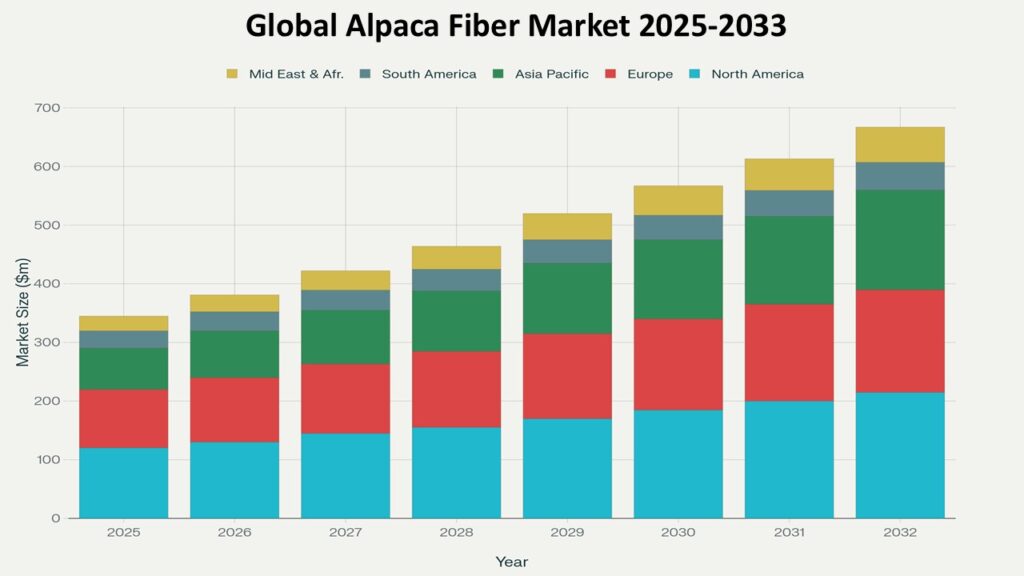
As fashion brands and textile producers move away from synthetic fabrics, alpaca fiber stands out for being biodegradable, renewable, and hypoallergenic. Its natural shine, durability, and comfort make it popular in high-end fashion, sportswear, and handcrafted products.According to Phoenix’s Demand Forecast Engine, the Global Alpaca Fiber Market size is estimated at USD 3.1 billion in 2025 and is projected to reach approximately USD 5.6 billion by 2033, growing at a CAGR of 7.2% (2025–2033).
The Global Alpaca Fiber Market is reshaping the global textile industry with sustainable fashion innovation, fair-trade sourcing, and eco-conscious consumer behavior, creating reliable opportunities for both producers and global brands.
Key Drivers of Global Alpaca Fiber Market Growth
1. Rising Demand for Sustainable and Ethical Fashion
Consumers are shifting toward eco-friendly and cruelty-free fashion alternatives. Alpaca fiber, being naturally sourced and biodegradable, fits perfectly with the global slow fashion movement.
2. Growing Use in Luxury and High-Performance Apparel
The soft, lightweight, and warm nature of alpaca fiber makes it ideal for premium clothing, winter wear, and designer accessories, attracting major fashion houses and eco-conscious brands.
3. Increasing Popularity in Home Textiles
Rising demand for eco-luxury home décor items such as blankets, rugs, and cushions made from alpaca fiber is expanding the market beyond apparel.
4. Expanding Export Opportunities from South America
Countries like Peru and Bolivia are increasing alpaca fiber exports through sustainable farming practices, government support, and traceable supply chains, ensuring global market reliability.
5. Growth of Online and Direct-to-Consumer Channels
E-commerce platforms and ethical fashion websites are providing small producers and artisan brands direct access to global customers, helping to spread awareness about natural and sustainable fibers.
Global Alpaca Fiber Market Segmentation
By Type
-
Suri Alpaca Fiber
-
Huacaya Alpaca Fiber
By Application
-
Apparel (Sweaters, Jackets, Scarves)
-
Home Textiles (Blankets, Rugs, Cushions)
-
Industrial Use (Insulation, Upholstery)
-
Others (Accessories, Yarn, Craftwork)
By Grade
-
Ultra-Fine
-
Superfine
-
Medium
-
Coarse
By Distribution Channel
-
Online Retail / E-commerce
-
Specialty Boutiques
-
Supermarkets & Department Stores
-
Direct Sales / Artisans
By End User
-
Fashion & Apparel Industry
-
Home Furnishing Manufacturers
-
Textile Designers & Artisans
-
Industrial and Commercial Buyers
By Region
-
South America
-
North America
-
Europe
-
Asia-Pacific
-
Middle East & Africa
Regional Insights of the Global Alpaca Fiber Market
South America – Leading Producer and Export Hub
Peru, Bolivia, and Chile are the main producers of alpaca fiber, accounting for more than 80% of global output. The region’s favorable climate and centuries-old herding traditions support large-scale yet sustainable production.South America is the largest share of the Global Alpaca Fiber Market.
Europe – Growing Luxury Consumption
Countries such as Italy, France, and the U.K. are major importers of alpaca fiber for luxury fashion houses and designer labels, supporting premium textile innovation and eco-fashion growth.
North America – Expanding Ethical Fashion Market
The U.S. and Canada are seeing increasing demand for organic, handmade, and premium alpaca garments, supported by ethical sourcing initiatives and eco-conscious consumers.
Asia-Pacific – Rising Textile Manufacturing and Exports
China and Japan are expanding their alpaca fiber imports for blended yarns and luxury knitwear production, supporting industrial-scale textile manufacturing.
Middle East & Africa – Emerging Niche Market
Growing interest in luxury and winter apparel segments is opening niche opportunities for high-quality alpaca wool products across premium retail chains.
Leading Companies in the Global Alpaca Fiber Market
-
Plymouth Yarn Company
-
Malabrigo Yarn
-
Pacomarca Sustainable Alpaca Network
-
Alpaca Collections
-
Kuna (Grupo Inca)
-
Peruvian Link Co.
-
Quechua Benefit
These companies are focusing on traceability, animal welfare, and innovative fiber processing technologies to ensure quality, sustainability, and ethical fashion leadership.
Inca Tops S.A. is the largest market share, backed by its integrated production network and strong export footprint.
Strategic Intelligence and AI-Backed Insights
-
Phoenix Demand Forecast Engine predicts strong growth supported by eco-fashion trends and rising export activities.
-
AI-Driven Consumer Tracker reveals increasing global interest in sustainable winter wear and handcrafted alpaca accessories.
-
Innovation Index highlights developments in fiber softening technology and biodegradable dyeing processes.
-
Porter’s Five Forces Analysis shows moderate competition but growing opportunities for ethical and luxury-focused brands.
Global Alpaca Fiber Market Forecast Snapshot: 2025–2033
| Metric | Value |
|---|---|
| 2025 Market Size | USD 3.1 Billion |
| 2033 Market Size | ~USD 5.6 Billion |
| CAGR (2025–2033) | 7.2% |
| Largest Market | South America |
| Fastest Growing Region | North America |
| Top Product Type | Huacaya Fiber |
| Key Trend | Sustainable and Ethical Fashion |
| Future Focus | Traceability, Fair Trade, and Luxury Apparel |
Why the Global Alpaca Fiber Market Remains Critical
-
Increasing consumer preference for eco-friendly and sustainable clothing.
-
Rising popularity of natural luxury textiles among fashion brands.
-
Expansion of online artisan markets and ethical retail platforms.
-
Strong export growth from Peru and Bolivia.
-
Technological advancements in fiber processing and natural dyeing.
Final Takeaway of the Global Alpaca Fiber Market
The Global Alpaca Fiber Market represents a sustainable, high-value opportunity in the textile and fashion industry. As consumers around the world demand eco-conscious, natural, and durable clothing, alpaca fiber is emerging as a key solution for a cleaner, softer, and greener future.
Companies that invest in ethical sourcing, digital marketing, and innovative fiber processing will build lasting trust and leadership in the growing sustainable fashion movement.
At Phoenix Research, our AI-powered forecasting and strategic insights help businesses, investors, and designers discover profitable, planet-friendly growth pathways in the evolving natural fiber and textile economy.
Table of Contents
1. Global Alpaca Fiber Market Overview
2. Key Drivers of Global Alpaca Fiber Market Growth
-
Rising demand for sustainable and ethical fashion
-
Increasing use in luxury and high-performance apparel
-
Expanding popularity in home textiles and décor
-
Growing export opportunities from South America
-
Rise of online and direct-to-consumer (D2C) channels
3. Global Alpaca Fiber Market Segmentation
By Type
-
Suri Alpaca Fiber
-
Huacaya Alpaca Fiber
By Application
-
Apparel (Sweaters, Jackets, Scarves)
-
Home Textiles (Blankets, Rugs, Cushions)
-
Industrial Use (Insulation, Upholstery)
-
Others (Accessories, Yarn, Craftwork)
By Grade
-
Ultra-Fine
-
Superfine
-
Medium
-
Coarse
By Distribution Channel
-
Online Retail / E-commerce
-
Specialty Boutiques
-
Supermarkets & Department Stores
-
Direct Sales / Artisans
By End User
-
Fashion & Apparel Industry
-
Home Furnishing Manufacturers
-
Textile Designers & Artisans
-
Industrial and Commercial Buyers
By Region
-
South America
-
North America
-
Europe
-
Asia-Pacific
-
Middle East & Africa
4. Regional Insights of the Global Alpaca Fiber Market
-
South America: Leading global producer and export hub (Peru, Bolivia, Chile)
-
Europe: Rising luxury consumption and sustainable textile innovation
-
North America: Expanding ethical fashion and handmade apparel trends
-
Asia-Pacific: Growing manufacturing and export demand from China and Japan
-
Middle East & Africa: Emerging premium and luxury apparel markets
5. Leading Companies in the Global Alpaca Fiber Market
-
Inca Tops S.A.
-
Michell Group
-
The Alpaca Company
-
Plymouth Yarn Company
-
Malabrigo Yarn
-
Pacomarca Sustainable Alpaca Network
-
Alpaca Collections
-
Kuna (Grupo Inca)
-
Peruvian Link Co.
-
Quechua Benefit
Leading Player: Inca Tops S.A. — strong export base and vertically integrated production
6. Strategic Intelligence and AI-Backed Insights
-
Phoenix Demand Forecast Engine – Predicting steady 7.2% CAGR growth
-
AI-Driven Consumer Tracker – Rising global demand for eco-fashion
-
Innovation Index – Fiber softening and biodegradable dyeing advancements
-
Porter’s Five Forces Analysis – Moderate competition, growing ethical focus
7. Global Alpaca Fiber Market Forecast Snapshot: 2025–2033
-
2025 Market Size: USD 3.1 Billion
-
2033 Market Size: ~USD 5.6 Billion
-
CAGR (2025–2033): 7.2%
-
Largest Market: South America
-
Fastest Growing Region: North America
-
Top Product Type: Huacaya Fiber
-
Key Trend: Sustainable and Ethical Fashion
-
Future Focus: Traceability, Fair Trade, and Luxury Apparel
8. Why the Global Alpaca Fiber Market Remains Critical
-
Growing demand for eco-friendly and sustainable clothing
-
Rising preference for natural luxury textiles
-
Expansion of online artisan markets and ethical retail
-
Strong export growth from Peru and Bolivia
-
Technological innovation in fiber processing and natural dyeing