
Global Antibody Drug Conjugates (ADC) Market Size and Share Analysis 2025-2033
Global Antibody Drug Conjugates (ADC) Market Overview
The Global Antibody Drug Conjugates (ADC) Market is witnessing significant growth as pharmaceutical and biotechnology companies increasingly focus on targeted cancer therapies. ADCs combine the precision of monoclonal antibodies with potent cytotoxic drugs, enabling highly selective treatment that minimizes damage to healthy cells. This innovation is revolutionizing oncology treatment, particularly for breast cancer, hematological malignancies, and other solid tumors.
The Global Antibody Drug Conjugates (ADC) Market size for ADCs is expanding rapidly due to rising incidence of cancer worldwide, increasing investment in oncology research, and regulatory approvals of new ADC therapies. Additionally, advancements in linker technology, payload optimization, and antibody engineering are making ADCs more effective, safe, and commercially viable. The growing adoption of precision medicine and combination therapies further strengthens the market outlook.
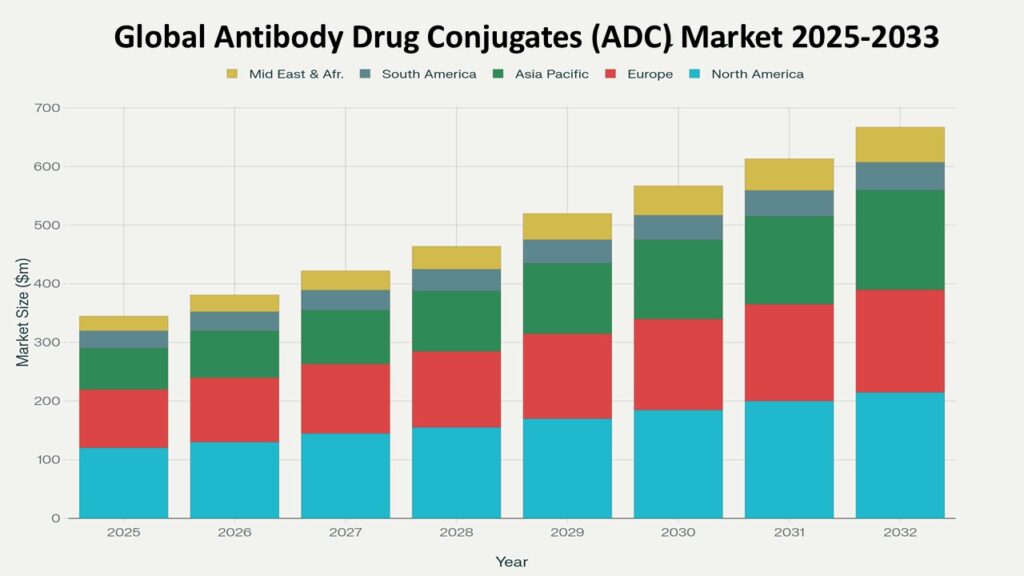
According to Phoenix Research’s Demand Forecast Engine, the Global Antibody Drug Conjugates (ADC) Market size is estimated at USD 6.7 billion in 2025 and is projected to reach approximately USD 15.8 billion by 2033, growing at a CAGR of 10.8% during 2025–2033. North America currently leads the Global Antibody Drug Conjugates (ADC) Market due to the presence of advanced R&D infrastructure, established pharmaceutical companies, and high adoption of targeted cancer therapies. Meanwhile, the Asia-Pacific region is the fastest-growing market, driven by increasing oncology awareness, expanding healthcare infrastructure, rising cancer prevalence, and growing adoption of precision medicine and innovative ADC therapies
The Global Antibody Drug Conjugates (ADC) Market is also being shaped by biosimilars, novel ADC formats, and partnerships between pharmaceutical and biotech firms, which are expanding global access and therapeutic reach.
Key Drivers of Global Antibody Drug Conjugates (ADC) Market Growth
-
Rising Cancer Prevalence and Demand for Targeted Therapies
The increasing global incidence of cancers, particularly breast, lung, and hematological malignancies, is driving the adoption of ADCs, as these therapies offer more precise and safer treatment options for patients. -
Technological Advancements in ADC Development
Innovations in linker chemistry, antibody engineering, and cytotoxic payloads are fueling market growth by improving drug efficacy, reducing off-target effects, and expanding indications. -
Expanding R&D and Pipeline Approvals
Higher investment in ADC research and faster regulatory approvals are bringing new therapies to market, increasing treatment availability and therapeutic options. -
Strategic Collaborations and Partnerships
Collaborations between biotech firms, research institutions, and pharmaceutical companies are accelerating the development and commercialization of innovative ADCs. -
Adoption of Precision Medicine and Combination Therapies
The growing integration of ADCs with personalized medicine approaches and combination regimens is driving market growth through improved clinical outcomes and patient-specific treatments. -
Rising Awareness and Access to Oncology Treatments
Educational initiatives and expanding healthcare infrastructure in emerging markets are enhancing market growth by increasing patient access to innovative ADC therapies.
Global Global Antibody Drug Conjugates (ADC) Market Segmentation
By Product Type
-
Trastuzumab-Based ADCs
-
Brentuximab Vedotin
-
Inotuzumab Ozogamicin
-
Others
By Application
-
Breast Cancer
-
Hematologic Cancers
-
Lung Cancer
-
Other Solid Tumors
By Distribution Channel
-
Hospital Pharmacies
-
Specialty Clinics
-
Retail Pharmacies
-
Online / Direct Sales
By End User
-
Hospitals
-
Oncology Centers
-
Research Institutes
By Region
-
North America
-
Europe
-
Asia-Pacific
-
Latin America
-
Middle East & Africa
Regional Insights of the Global Antibody Drug Conjugates (ADC) Market
North America – Largest Market
North America leads the largest share of the ADC market due to high cancer prevalence, robust R&D infrastructure, favorable reimbursement policies, and the presence of major biotech and pharmaceutical companies.
Europe – Strong Oncology and Biotech Focus
Europe maintains significant market share, with Germany, France, and the U.K. leading in clinical trials, regulatory approvals, and adoption of advanced cancer therapies.
Asia-Pacific – Fastest Growing Region
Rapidly expanding healthcare infrastructure, increasing awareness of cancer treatments, and rising oncology R&D in China, Japan, and India are contributing to strong market growth.
Latin America – Emerging Market
Growth in Latin America is driven by increasing healthcare investments, improved access to oncology care, and rising awareness among patients and healthcare providers.
Middle East & Africa – Gradual Expansion
The market in MEA is growing steadily due to expanding healthcare facilities, government initiatives for cancer treatment, and increasing collaboration with global pharmaceutical companies.
Leading Companies in the Global Antibody Drug Conjugates (ADC) Market
-
Daiichi Sankyo Company, Limited
-
AbbVie Inc.
-
ImmunoGen, Inc.
-
Amgen Inc.
-
Mersana Therapeutics, Inc.
These companies are focusing on innovative ADC designs, strategic collaborations, and clinical pipeline expansion to strengthen market presence and provide next-generation therapies.
Strategic & Technological Insights
-
Novel ADC Formats: Development of next-generation ADCs with optimized linkers and payloads improves efficacy and safety.
-
Precision Oncology Integration: ADCs are increasingly incorporated into personalized medicine strategies for targeted cancer treatment.
-
Regulatory Support and Accelerated Approvals: Governments and regulatory agencies are fast-tracking approvals for breakthrough ADC therapies.
-
Collaborative R&D Efforts: Partnerships between biotech startups and large pharmaceutical companies enhance innovation and market penetration.
Global Global Antibody Drug Conjugates (ADC) Market Forecast Snapshot (2025–2033)
| Metric | Value |
|---|---|
| 2025 Market Size | USD 6.7 Billion |
| 2033 Market Size | USD 15.8 Billion |
| CAGR (2025–2033) | 10.8% |
| Leading Region | North America |
| Fastest Growing Region | Asia-Pacific |
| Top Product Segment | Trastuzumab-Based ADCs |
| Major Trend | Next-Generation ADCs & Precision Oncology Integration |
| Market Outlook | Strong Growth Driven by R&D and Oncology Adoption |
Why the Global Antibody Drug Conjugates (ADC) Market Remains Critical
-
Offers highly targeted cancer treatment with reduced side effects.
-
Supports innovation in oncology and personalized medicine.
-
Encourages collaboration between biotech and pharmaceutical companies.
-
Expands treatment access for cancer patients worldwide.
-
Drives R&D investment and clinical advancement in advanced therapies.
Final Takeaway of Global Antibody Drug Conjugates (ADC) Market
The Global Antibody Drug Conjugates Market represents a pivotal advancement in oncology, combining scientific innovation with therapeutic precision. With growing cancer prevalence, enhanced R&D capabilities, and new ADC approvals, the market is poised for sustained growth.
The market outlook remains promising, driven by technological innovation, regulatory support, and strategic collaborations, ensuring that ADCs continue to provide life-changing therapies and significant commercial opportunities.
At Phoenix Research, our market analytics help stakeholders identify emerging trends, evaluate investment opportunities, and optimize strategies in the evolving ADC landscape.
Table of Contents
1. Global Antibody Drug Conjugates (ADC) Market Overview
2. Key Drivers of Global ADC Market Growth
– Rising Cancer Prevalence and Demand for Targeted Therapies
– Technological Advancements in ADC Development
– Expanding R&D and Pipeline Approvals
– Strategic Collaborations and Partnerships
– Adoption of Precision Medicine and Combination Therapies
– Rising Awareness and Access to Oncology Treatments
3. Global ADC Market Segmentation
By Product Type
• Trastuzumab-Based ADCs
• Brentuximab Vedotin
• Inotuzumab Ozogamicin
• Others
By Application
• Breast Cancer
• Hematologic Cancers
• Lung Cancer
• Other Solid Tumors
By Distribution Channel
• Hospital Pharmacies
• Specialty Clinics
• Retail Pharmacies
• Online / Direct Sales
By End User
• Hospitals
• Oncology Centers
• Research Institutes
By Region
• North America
• Europe
• Asia-Pacific
• Latin America
• Middle East & Africa
4. Regional Insights of the Global ADC Market
– North America – Largest Market
– Europe – Strong Oncology and Biotech Focus
– Asia-Pacific – Fastest Growing Region
– Latin America – Emerging Market
– Middle East & Africa – Gradual Expansion
5. Leading Companies in the Global ADC Market
– Seattle Genetics, Inc. (Seagen)
– Roche Holding AG
– Pfizer Inc.
– Daiichi Sankyo Company, Limited
– AbbVie Inc.
– ImmunoGen, Inc.
– Amgen Inc.
– Mersana Therapeutics, Inc.
6. Strategic & Technological Insights
– Novel ADC Formats
– Precision Oncology Integration
– Regulatory Support and Accelerated Approvals
– Collaborative R&D Efforts
7. Global ADC Market Forecast Snapshot (2025–2033)
– 2025 Market Size – USD 6.7 Billion
– 2033 Market Size – USD 15.8 Billion
– CAGR (2025–2033) – 10.8%
– Leading Region – North America
– Fastest Growing Region – Asia-Pacific
– Top Product Segment – Trastuzumab-Based ADCs
– Major Trend – Next-Generation ADCs & Precision Oncology Integration
– Market Outlook – Strong Growth Driven by R&D and Oncology Adoption
8. Why the Global ADC Market Remains Critical
– Offers highly targeted cancer treatment with reduced side effects
– Supports innovation in oncology and personalized medicine
– Encourages collaboration between biotech and pharmaceutical companies
– Expands treatment access for cancer patients worldwide
– Drives R&D investment and clinical advancement in advanced therapies
9. Final Takeaway of Global ADC Market