
Global Beauty Devices Market Size and Share Analysis 2025-2033
Global Beauty Devices Market Overview
The Global Beauty Devices Market is rapidly evolving as consumers worldwide embrace smart skincare technologies, at-home self-care routines, and personalized cosmetic solutions. The growing fusion of technology and beauty is transforming how individuals care for their skin, hair, and overall appearance — driving exceptional market growth across both personal and professional segments.
Beauty devices — including facial cleansing systems, hair removal tools, LED light therapy devices, anti-aging massagers, and microdermabrasion equipment — have become essential components of modern beauty and wellness routines. Social media trends, influencer marketing, and rising awareness about skincare have further accelerated demand for dermatologist-approved, easy-to-use, and tech-driven beauty solutions.
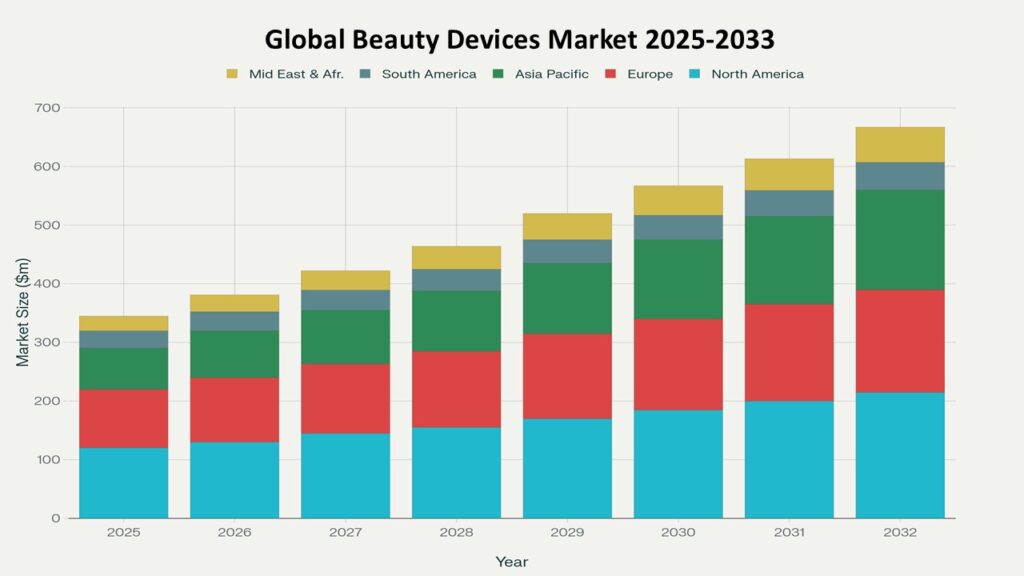
According to Phoenix Research’s Demand Forecast Engine, the Global Beauty Devices Market size is estimated at USD 74.6 billion in 2025 and is projected to reach USD 158.3 billion by 2033, expanding at a CAGR of 9.8% during 2025–2033. The beauty devices market continues to flourish as North America and Asia-Pacific dominate due to high consumer spending power, technological innovations, and increasing skincare consciousness.
Key Drivers of Global Beauty Devices Market Growth
1. Rising Focus on Personalized and At-Home Beauty Care
The growing global shift toward DIY skincare and haircare is a primary growth catalyst. Consumers increasingly prefer portable, smart, and affordable beauty tools that deliver salon-quality results at home, reflecting the broader trend of convenience-driven personal care.
2. Technological Advancements and Smart Device Integration
Integration of AI, machine learning, and IoT technologies is reshaping the beauty landscape. Devices with real-time skin analysis, adaptive settings, and app connectivity enhance both engagement and precision, offering data-driven skincare personalization.
3. Growing Popularity of Anti-Aging and Skin Rejuvenation Treatments
With an aging global population and increased focus on youthful appearance, the demand for LED light therapy, microcurrent, and ultrasonic facial devices continues to rise. These non-invasive rejuvenation tools appeal to consumers seeking safe, long-term skincare benefits.
4. Influence of Social Media and Digital Beauty Campaigns
Instagram, TikTok, and YouTube have become powerful platforms shaping beauty standards and driving awareness of home-use skincare gadgets. Influencer marketing and digital tutorials are directly influencing consumer purchase intent and brand loyalty.
5. Expanding Men’s Grooming and Unisex Beauty Segment
The men’s grooming revolution and the rise of gender-neutral beauty devices are expanding the market base. This inclusivity is encouraging brands to design versatile, multi-functional beauty tools, driving innovation across categories.
6. Rising Adoption in Professional Aesthetic Clinics and Salons
Aesthetic clinics, spas, and dermatology centers are increasingly investing in laser, RF, and cryotherapy-based devices. These technologies enable high-precision, results-driven treatments, reinforcing the professional segment’s contribution to global market growth.
Global Beauty Devices Market Segmentation
By Product Type
-
Hair Removal Devices
-
Cleansing Devices
-
Acne Devices
-
Anti-Aging Devices
-
Light/LED Therapy Devices
-
Microdermabrasion Devices
-
Others
By Usage Area
-
Facial
-
Body
-
Hair
-
Oral Care
By Application
-
Home/Personal Use
-
Professional Use (Salons, Spas, Dermatology Clinics)
By Technology
-
LED/Light-Based
-
Laser-Based
-
Radiofrequency (RF)
-
Infrared
-
Others
By Distribution Channel
-
Online Retail
-
Specialty Beauty Stores
-
Hypermarkets & Supermarkets
-
Dermatology Clinics & Salons
By Region
-
North America
-
Europe
-
Asia-Pacific
-
Latin America
-
Middle East & Africa
Regional Insights of the Global Beauty Devices Market
North America – The Innovation Leader
North America leads the largest share of the global market due to high beauty awareness, disposable income, and advanced cosmetic technology integration. The U.S. remains dominant with strong e-commerce penetration and high demand for FDA-approved beauty devices.
Asia-Pacific – Fastest Growing Market
Asia-Pacific is the fastest-growing region, driven by urbanization, K-beauty trends, and the popularity of online beauty platforms across China, Japan, South Korea, and India.
Europe – Focused on Clean Beauty and Sustainability
European consumers increasingly prefer eco-friendly, cruelty-free, and rechargeable beauty devices. France, Germany, and the U.K. are leading in the adoption of sustainable luxury skincare tools.
Latin America – Emerging Beauty Hub
Brazil and Mexico are experiencing rising beauty consciousness and disposable incomes, boosting demand for salon-grade and portable beauty devices.
Middle East & Africa – Growing Awareness and Luxury Demand
The region’s premium beauty and aesthetic clinic segment is growing rapidly, led by countries like UAE, Saudi Arabia, and South Africa, where consumers seek luxury skincare experiences.
Leading Companies in the Global Beauty Devices Market
-
FOREO AB
-
Philips Beauty
-
Conair Corporation
-
YA-MAN Ltd.
-
TRIA Beauty, Inc.
-
MTG Co., Ltd.
-
Beurer GmbH
These companies are focusing on AI integration, eco-conscious product design, and digital customer engagement to align with the global shift toward sustainable and personalized beauty technology. L’Oréal S.A. is the largest company in the Global Beauty Devices Market.
Strategic Intelligence and AI-Backed Insights
-
Phoenix Demand Forecast Engine identifies consistent market growth driven by AI-powered personalization and skin-type–specific product innovation, enabling brands to develop tailored and effective beauty solutions.
-
AI-Driven Analytics reveal the growing adoption of IoT-enabled smart mirrors and app-connected skincare tools, which enhance consumer engagement through real-time analysis and personalized recommendations.
-
Innovation Tracker highlights significant advancements in sustainable materials, rechargeable systems, and eco-friendly packaging, improving environmental compliance and supporting the clean beauty movement.
-
Porter’s Five Forces Analysis indicates intensifying competition, with key market players adopting subscription-based business models and forming strategic collaborations to ensure recurring revenues and stronger customer retention.
Global Beauty Devices Market Forecast Snapshot (2025–2033)
| Metric | Value |
|---|---|
| 2025 Market Size | USD 74.6 Billion |
| 2033 Market Size | USD 158.3 Billion |
| CAGR (2025–2033) | 9.8% |
| Leading Region | North America |
| Fastest Growing Region | Asia-Pacific |
| Top Product Segment | Anti-Aging & Hair Removal Devices |
| Major Trend | AI-Powered and Sustainable Beauty Devices |
| Market Outlook | Strong Consumer Engagement & Digital Beauty Innovation |
Why the Global Beauty Devices Market Remains Critical
-
Rising global emphasis on personal grooming, skincare, and wellness technology.
-
Rapid adoption of AI-based and connected beauty devices.
-
Expanding accessibility through e-commerce and digital beauty platforms.
-
Growing demand for non-invasive, at-home aesthetic treatments.
-
Essential in promoting confidence, wellness, and self-expression worldwide.
Final Takeaway of Global Beauty Devices Market
The Global Beauty Devices Market represents a convergence of technology, wellness, and self-expression. As consumers pursue smart, safe, and sustainable beauty solutions, the sector continues to evolve through innovation, connectivity, and inclusivity.
With AI-powered personalization, digital retail expansion, and eco-friendly device innovations, the beauty device market promises not just commercial success — but a global transformation in how people perceive and practice beauty.
At Phoenix Research, our advanced analytics and forecast intelligence empower stakeholders to identify emerging product categories, evolving consumer behaviors, and cross-border opportunities shaping the future of beauty technology.
Table of Contents
1. Global Beauty Devices Market Overview
2. Key Drivers of Global Beauty Devices Market Growth
– Rising Focus on Personalized and At-Home Beauty Care
– Technological Advancements and Smart Device Integration
– Growing Popularity of Anti-Aging and Skin Rejuvenation Treatments
– Influence of Social Media and Digital Beauty Campaigns
– Expanding Men’s Grooming and Unisex Beauty Segment
– Rising Adoption in Professional Aesthetic Clinics and Salons
3. Global Beauty Devices Market Segmentation
By Product Type
• Hair Removal Devices
• Cleansing Devices
• Acne Devices
• Anti-Aging Devices
• Light/LED Therapy Devices
• Microdermabrasion Devices
• Others
By Usage Area
• Facial
• Body
• Hair
• Oral Care
By Application
• Home/Personal Use
• Professional Use (Salons, Spas, Dermatology Clinics)
By Technology
• LED/Light-Based
• Laser-Based
• Radiofrequency (RF)
• Infrared
• Others
By Distribution Channel
• Online Retail
• Specialty Beauty Stores
• Hypermarkets & Supermarkets
• Dermatology Clinics & Salons
By Region
• North America
• Europe
• Asia-Pacific
• Latin America
• Middle East & Africa
4. Regional Insights of the Global Beauty Devices Market
– North America – The Innovation Leader
– Asia-Pacific – Fastest Growing Market
– Europe – Focused on Clean Beauty and Sustainability
– Latin America – Emerging Beauty Hub
– Middle East & Africa – Growing Awareness and Luxury Demand
5. Leading Companies in the Global Beauty Devices Market
– L’Oréal S.A.
– Nu Skin Enterprises, Inc.
– Panasonic Corporation
– FOREO AB
– Philips Beauty
– Conair Corporation
– YA-MAN Ltd.
– TRIA Beauty, Inc.
– MTG Co., Ltd.
– Beurer GmbH
6. Strategic & Technological Insights
– AI-powered personalization and skin-type–specific devices
– IoT-enabled smart mirrors and connected skincare tools
– Sustainable materials and rechargeable design innovations
– Subscription-based models enhancing recurring revenue
7. Global Beauty Devices Market Forecast Snapshot (2025–2033)
– 2025 Market Size – USD 74.6 Billion
– 2033 Market Size – USD 158.3 Billion
– CAGR (2025–2033) – 9.8%
– Leading Region – North America
– Fastest Growing Region – Asia-Pacific
– Top Product Segment – Anti-Aging & Hair Removal Devices
– Major Trend – AI-Powered and Sustainable Beauty Devices
– Outlook – Strong Consumer Engagement & Digital Beauty Innovation
8. Why the Global Beauty Devices Market Remains Critical
– Rising emphasis on personal grooming and wellness technology
– Rapid adoption of AI-based and connected devices
– Expanding digital and e-commerce accessibility
– Growing demand for non-invasive, home-based beauty treatments
– Strengthening self-expression and confidence through technology
9. Final Takeaway of the Global Beauty Devices Market