
Global Consumer Electronics Market Size and Share Analysis 2025-2033
Global Consumer Electronics Market Overview
The Global Consumer Electronics Market is vibrantly transforming, driven by digital lifestyle expansion, smart device integration, and the rapid adoption of connected technologies across homes, workplaces, and entertainment ecosystems. With accelerating advancements in AI-powered devices, IoT-enabled ecosystems, and 5G connectivity, consumer electronics have evolved from traditional appliances into intelligent, interactive, and data-driven solutions that redefine convenience and connectivity worldwide.
This Global Consumer Electronics Market is being energized by the growing demand for smartphones, wearables, home automation devices, and immersive entertainment systems that seamlessly integrate with users’ digital lives. Manufacturers are leveraging AI, AR/VR, and voice-enabled technology to create personalized, responsive, and energy-efficient consumer devices that enhance productivity, entertainment, and wellness. Furthermore, the rise of sustainability-focused electronics and eco-friendly manufacturing is transforming the industry’s long-term direction.
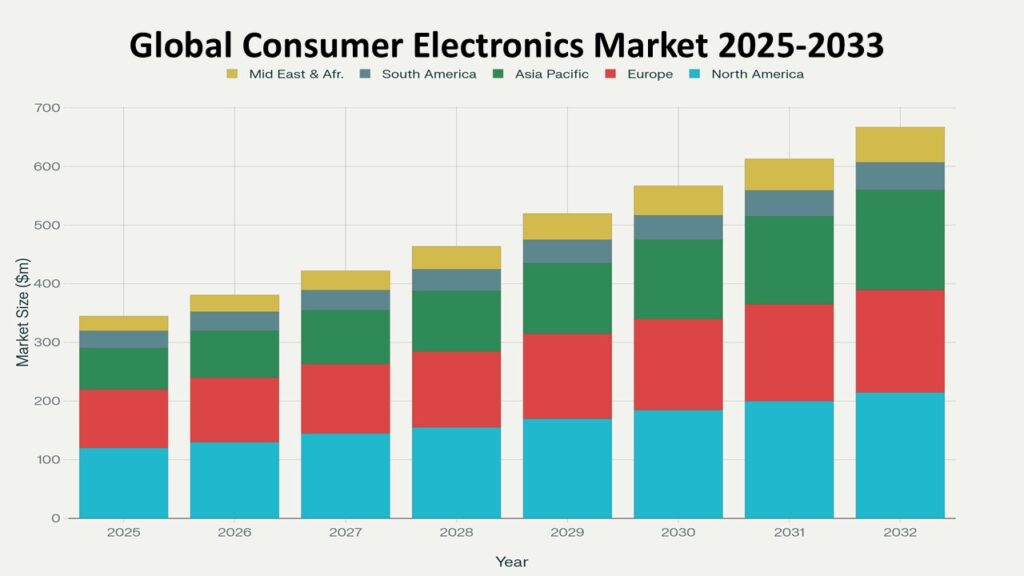
According to Phoenix’s Demand Forecast Engine, the Global Consumer Electronics Market size is estimated at USD 1,285.4 billion in 2025 and is projected to reach approximately USD 2,047.8 billion by 2033, registering a proven CAGR of 6.0% (2025–2033). Asia-Pacific currently dominates the Global Consumer Electronics Market size due to large-scale manufacturing in China, South Korea, and Japan, while North America and Europe are witnessing accelerated growth driven by premium device demand, digital infrastructure development, and smart living adoption.
The Global Consumer Electronics Market size continues to empower brands, technology providers, and retailers to discover new customer engagement models, overcome supply chain challenges, and create innovative, connected ecosystems that ensure efficiency, reliability, and user satisfaction.
Key Drivers of Global Consumer Electronics Market Growth
-
Rising Adoption of Smart and Connected Devices
The integration of IoT, AI, and cloud computing is transforming everyday appliances into intelligent, self-learning systems that provide real-time insights and automation. -
Proliferation of Smartphones and Wearables
Continuous technological evolution in 5G smartphones, fitness trackers, and smartwatches is boosting consumer adoption across all age groups and income levels. -
Emergence of Smart Home and Entertainment Technologies
Growing demand for smart TVs, home assistants, and AR/VR-enabled entertainment systems is redefining in-home digital experiences. -
Sustainability and Green Electronics Initiatives
The industry is energized by eco-conscious consumers demanding energy-efficient, recyclable, and responsibly sourced electronics. -
AI and Automation in Consumer Devices
Artificial Intelligence is enabling predictive performance, voice and gesture recognition, and personalized content delivery — driving next-gen innovation.
Global Consumer Electronics Market Segmentation
By Product Type
-
Smartphones & Tablets
-
Laptops & PCs
-
Smart TVs & Displays
-
Wearables (Smartwatches, Fitness Bands, AR Glasses)
-
Audio Devices (Headphones, Speakers, Sound Systems)
-
Smart Home Devices (Assistants, Security, Appliances)
-
Cameras & Imaging Devices
-
Gaming Consoles & Accessories
-
Others (Peripheral & Emerging Tech)
By Connectivity
-
Wired Devices
-
Wireless & IoT-Enabled Devices
By Distribution Channel
-
Online (E-commerce, Brand Portals)
-
Offline (Retail Stores, Specialty Electronics Stores)
By End User
-
Individual Consumers
-
Enterprises & Offices
-
Hospitality & Entertainment
-
Healthcare & Fitness
-
Education & Public Institutions
By Region
-
North America
-
Europe
-
Asia-Pacific
-
Latin America
-
Middle East & Africa
Regional Insights of Global Consumer Electronics Market
Asia-Pacific – Largest Market
Asia-Pacific leads the largest share of the global market landscape, driven by strong manufacturing hubs, consumer affordability, and rapid adoption of digital ecosystems in China, India, Japan, and South Korea.
North America
The U.S. and Canada are witnessing high penetration of premium electronics, supported by advanced 5G infrastructure, AI integration, and sustainability-focused innovation.
Europe
Europe’s market growth is fueled by eco-design regulations, energy efficiency mandates, and consumer demand for smart, connected appliances with low environmental footprints.
Latin America
Rising disposable incomes, digital inclusion programs, and e-commerce expansion are enhancing accessibility to affordable and mid-range electronics.
Middle East & Africa
The region is emerging as a lucrative market with growing urbanization, smart city initiatives, and youth-driven digital lifestyles.
Leading Companies in the Global Consumer Electronics Market
-
LG Electronics Inc.
-
Panasonic Holdings Corporation
-
Xiaomi Corporation
-
Huawei Technologies Co., Ltd.
-
HP Inc.
-
Dell Technologies Inc.
-
TCL Technology Group Corporation
These industry leaders are discovering new technological synergies, expanding production capabilities, and creating AI-integrated, energy-efficient, and sustainable products to empower global consumers with smart, connected experiences. Samsung Electronics Co., Ltd. Leads the Market with Largest Market share.
Strategic Insights and AI-Powered Forecast Intelligence
-
Phoenix’s Consumer Tech Forecast Model evaluates adoption trends across devices, price segments, and demographics — highlighting growing momentum in wearables and home automation.
-
Sustainability Readiness Index monitors leading manufacturers’ progress in eco-friendly design, recyclability, and carbon footprint reduction.
-
Retail Digitalization Tracker identifies the acceleration of AI-enabled inventory systems, personalized e-commerce, and virtual try-on experiences.
-
Technology Convergence Analyzer reveals cross-sector integration among electronics, automotive, and health-tech industries.
Global Consumer Electronics Market Forecast Snapshot: 2025–2033
| Metric | Value |
|---|---|
| 2025 Market Size | USD 1,285.4 Billion |
| 2033 Market Size | ~USD 2,047.8 Billion |
| CAGR (2025–2033) | 6.0% |
| Largest Region | Asia-Pacific |
| Fastest Growing Region | North America |
| Top Product Segment | Smartphones & Smart TVs |
| Key Trend | AI-Driven Smart Devices & Sustainable Manufacturing |
| Future Focus | Connected Ecosystems, Green Tech, and Personalization |
Why the Global Consumer Electronics Market Remains Critical
-
Empowers Smart Living — devices enhance lifestyle convenience and connectivity.
-
Accelerates Digital Transformation — integration with IoT and cloud enables intelligent automation.
-
Drives Global Economic Growth — a core pillar of global manufacturing and trade.
-
Supports Sustainability Goals — through energy efficiency and eco-conscious innovation.
-
Enhances User Experience — through personalization, reliability, and intuitive design.
Final Takeaway of Global Consumer Electronics Market
The Global Consumer Electronics Market is evolving into a hyperconnected, AI-driven ecosystem where innovation, personalization, and sustainability define success. Companies that create seamless digital experiences, discover efficiency through automation, and ensure environmental responsibility will continue to succeed in this vibrant, fast-paced global industry.
At Phoenix Research, our AI-powered demand forecasting and strategic intelligence tools help global stakeholders learn quickly, adapt effectively, and act confidently — ensuring clarity, competitiveness, and long-term growth in the ever-evolving Global Consumer Electronics Market.
Table of Contents
1. Market Overview
-
Introduction to Global Consumer Electronics Market
-
Market Definition and Scope
-
Market Dynamics and Trends
-
Market Size & Forecast (2025–2033)
-
Strategic Importance of the Market
2. Key Market Drivers
-
Rising Adoption of Smart and Connected Devices
-
Proliferation of Smartphones and Wearables
-
Emergence of Smart Home and Entertainment Technologies
-
Sustainability and Green Electronics Initiatives
-
AI and Automation in Consumer Devices
3. Market Segmentation
3.1 By Product Type
-
Smartphones & Tablets
-
Laptops & PCs
-
Smart TVs & Displays
-
Wearables (Smartwatches, Fitness Bands, AR Glasses)
-
Audio Devices (Headphones, Speakers, Sound Systems)
-
Smart Home Devices (Assistants, Security, Appliances)
-
Cameras & Imaging Devices
-
Gaming Consoles & Accessories
-
Others (Peripheral & Emerging Tech)
3.2 By Connectivity
-
Wired Devices
-
Wireless & IoT-Enabled Devices
3.3 By Distribution Channel
-
Online (E-commerce, Brand Portals)
-
Offline (Retail Stores, Specialty Electronics Stores)
3.4 By End User
-
Individual Consumers
-
Enterprises & Offices
-
Hospitality & Entertainment
-
Healthcare & Fitness
-
Education & Public Institutions
3.5 By Region
-
North America
-
Europe
-
Asia-Pacific
-
Latin America
-
Middle East & Africa
4. Regional Insights
-
Asia-Pacific – Largest Market
-
North America – Fastest Growing Region
-
Europe – Eco-Design and Smart Appliance Adoption
-
Latin America – Emerging Market Opportunities
-
Middle East & Africa – Urbanization and Smart City Drivers
5. Competitive Landscape
-
Leading Companies and Market Share Analysis
-
Samsung Electronics Co., Ltd.
-
Apple Inc.
-
Sony Group Corporation
-
LG Electronics Inc.
-
Panasonic Holdings Corporation
-
Xiaomi Corporation
-
Huawei Technologies Co., Ltd.
-
HP Inc.
-
Dell Technologies Inc.
-
TCL Technology Group Corporation
-
-
Competitive Strategies and Innovations
-
Mergers, Acquisitions, and Partnerships
6. Strategic Intelligence and AI-Powered Insights
-
Consumer Tech Forecast Model
-
Sustainability Readiness Index
-
Retail Digitalization Tracker
-
Technology Convergence Analyzer
7. Market Forecast and Analysis (2025–2033)
-
2025 Market Size
-
2033 Market Size
-
CAGR (2025–2033)
-
Largest Region
-
Fastest Growing Region
-
Top Product Segments
-
Key Market Trends
8. Market Significance
-
Empowers Smart Living and Lifestyle Convenience
-
Accelerates Digital Transformation
-
Drives Global Economic Growth
-
Supports Sustainability Goals
-
Enhances User Experience
9. Key Challenges and Opportunities
-
Supply Chain and Manufacturing Challenges
-
Environmental Compliance and Sustainability Barriers
-
Opportunities in Smart Devices and Wearables
-
Innovation Potential in AI-Integrated Consumer Electronics
10. Final Takeaway
-
Strategic Implications for Stakeholders
-
Future Outlook and Growth Opportunities
-
Role of AI, IoT, and Sustainability in Market Expansion