
Global Essential Oils Market Size and Share Analysis 2026-2033
Global Essential Oils Market Size & Forecast
The global essential oils market is projected to witness strong and sustained growth during the forecast period from 2026 to 2033. The market was valued at approximately USD 12.8 billion in 2025 and is expected to reach nearly USD 23.6 billion by 2033, expanding at a CAGR of around 7.9%. The market???s growth is driven by rising consumer preference for natural and plant-based products, increasing demand in aromatherapy and wellness applications, expanding use in personal care and cosmetics, and growing adoption in food, beverages, and pharmaceutical formulations. Essential oils are highly concentrated plant extracts obtained through processes such as steam distillation, cold pressing, or solvent extraction. These oils capture the natural aroma, flavor, and therapeutic properties of plants and are widely used across wellness, healthcare, cosmetics, and industrial applications. The market is experiencing significant expansion due to increasing awareness of holistic health practices, rising stress-related disorders, and growing inclination toward natural alternatives to synthetic chemicals in personal care and household products. Additionally, the growing popularity of aromatherapy, spa culture, organic lifestyle trends, and clean-label consumer products is further accelerating demand for essential oils globally.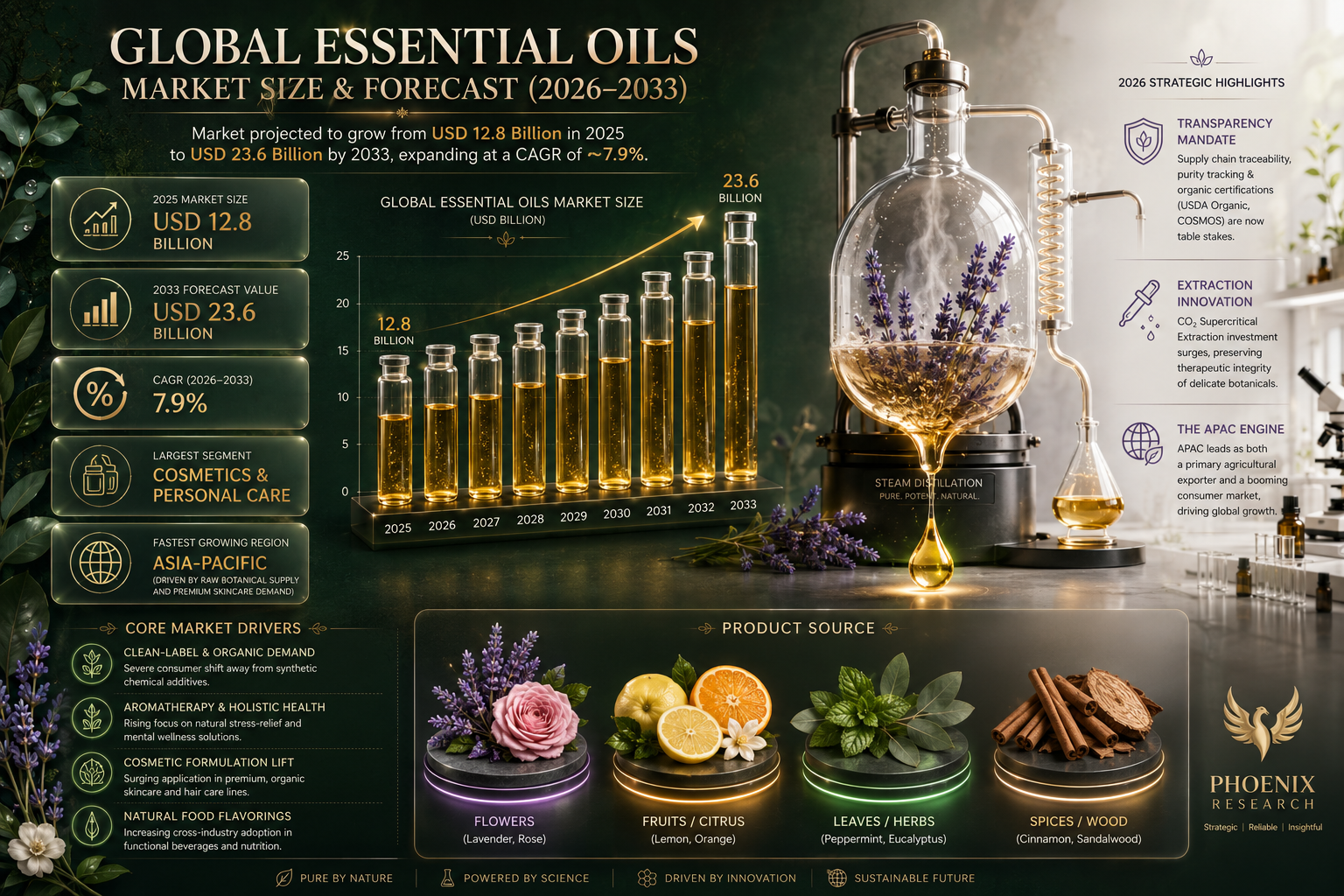
Global Essential Oils Market Overview
The essential oils market is a key segment of the global natural ingredients, wellness, and personal care industry. These oils are derived from botanical sources such as lavender, peppermint, eucalyptus, tea tree, lemon, rosemary, orange, and chamomile. The market includes pure essential oils, blended oils, organic essential oils, and therapeutic-grade oils used in aromatherapy, cosmetics, pharmaceuticals, food flavoring, and household cleaning products. Technological advancements in extraction techniques, quality standardization, and sustainable farming practices are improving yield efficiency and product purity. The increasing integration of essential oils into functional foods, dietary supplements, and pharmaceutical formulations is expanding their commercial applications beyond traditional wellness uses. Major market participants include doTERRA International, Young Living Essential Oils, Symrise AG, Givaudan, International Flavors & Fragrances (IFF), Firmenich (DSM-Firmenich), Plant Therapy, Mountain Rose Herbs, Rocky Mountain Oils, and Aromaaz International.Key Drivers of Global Essential Oils Market Growth
Rising Demand for Natural and Organic Products
Consumers are increasingly shifting toward natural, chemical-free, and plant-based alternatives in personal care, cosmetics, and household products. Essential oils are widely used as natural fragrances, preservatives, and therapeutic agents in clean-label formulations.Growth of Aromatherapy and Wellness Industry
The increasing prevalence of stress, anxiety, and lifestyle-related disorders is driving demand for aromatherapy-based wellness solutions. Essential oils such as lavender, peppermint, and eucalyptus are widely used for relaxation, stress relief, and sleep improvement.Expansion of Personal Care and Cosmetics Sector
Essential oils are increasingly incorporated into skincare, haircare, perfumes, and body care products due to their natural fragrance and therapeutic benefits. The rising demand for organic and premium beauty products is significantly boosting market growth.Increasing Use in Food and Beverage Industry
Essential oils are used as natural flavoring agents in beverages, confectionery, bakery products, and functional foods. Growing demand for clean-label and natural ingredients is supporting their adoption in food processing.Pharmaceutical and Therapeutic Applications
Essential oils are used in traditional medicine, topical formulations, and inhalation therapies due to their antimicrobial, anti-inflammatory, and analgesic properties. Research into plant-based bioactive compounds is further expanding pharmaceutical applications.Global Essential Oils Market Segmentation
By Product Type
The market is segmented into single essential oils and blended essential oils. Single essential oils dominate the market due to widespread use in aromatherapy and personal care applications.By Source
The market includes flowers, fruits, leaves, herbs, spices, and wood-based essential oils. Flower-based oils such as lavender and rose account for a major share due to high demand in cosmetics and wellness applications.By Application
Applications include aromatherapy, cosmetics & personal care, food & beverages, pharmaceuticals, household cleaning, and industrial applications. Cosmetics and personal care represent the largest segment due to extensive use in skincare and fragrance formulations.By Distribution Channel
The market includes direct sales, specialty stores, online retail, pharmacies, and supermarkets/hypermarkets. Online retail channels are growing rapidly due to increasing consumer preference for natural wellness products and global accessibility.Regional Market Dynamics
North America
North America holds a significant share of the essential oils market due to strong wellness culture, high disposable income, and widespread adoption of aromatherapy practices. The United States is the largest market supported by leading essential oil brands and strong demand for organic products.Europe
Europe is a major market driven by strict regulations on synthetic ingredients and growing preference for natural and organic personal care products. Germany, France, the United Kingdom, Italy, and Switzerland are key contributors to regional growth. The region has a strong tradition of aromatherapy and herbal medicine usage.Asia-Pacific
Asia-Pacific is the fastest-growing region due to increasing awareness of natural wellness products, expanding cosmetics industry, and rising disposable incomes. India and China are major producers of botanical raw materials, while Japan and South Korea are leading consumers of premium essential oils.Latin America
Latin America is witnessing steady growth driven by abundant availability of medicinal plants and increasing exports of natural oils. Brazil is a key contributor due to its rich biodiversity and essential oil production capacity.Middle East & Africa
The region is experiencing gradual growth supported by rising demand for luxury fragrances, traditional medicine, and natural wellness products. Countries in the Middle East are major consumers of high-quality aromatic oils and perfumes.Competitive Landscape
The global essential oils market is highly competitive and fragmented, with the presence of multinational fragrance companies, natural product brands, and regional producers. Key players include doTERRA International, Young Living Essential Oils, Symrise AG, Givaudan, International Flavors & Fragrances (IFF), DSM-Firmenich, Plant Therapy, Mountain Rose Herbs, Rocky Mountain Oils, and Aromaaz International. Companies are focusing on sustainable sourcing, organic certification, advanced extraction technologies, and product purity enhancement. Strategic collaborations with cosmetic, food, and pharmaceutical manufacturers are becoming increasingly common.Strategic Outlook
The strategic outlook for the global essential oils market remains highly positive due to rising demand for natural wellness products and expanding applications across industries. Future opportunities include AI-driven botanical extraction optimization, personalized aromatherapy solutions, pharmaceutical-grade essential oil formulations, and expansion into functional nutrition products. Sustainability, traceability, and organic certification will play a critical role in shaping competitive advantage in the market. Companies investing in vertical integration, global supply chain expansion, and premium product innovation are expected to strengthen their market positioning.Final Market Perspective
The global essential oils market continues to expand as consumers increasingly prioritize natural, plant-based, and holistic wellness solutions. Growing adoption across personal care, food, pharmaceuticals, and aromatherapy applications will continue to drive strong market growth throughout the forecast period. Organizations that successfully combine sustainability, product purity, and innovation-driven product development will remain strongly positioned in the evolving essential oils market.Table of Contents
Table of Contents
- 1. Executive Summary
- 1.1 Global Essential Oils Market Snapshot (2026-2033)
- 1.2 Market Size & CAGR Analysis
- 1.3 Largest & Fastest-Growing Segments
- 1.4 Key Regional Insights
- 1.5 Market Growth Drivers
- 1.6 Competitive Landscape Overview
- 1.7 Future Industry Outlook
- 2. Introduction & Market Overview
- 2.1 Definition of Essential Oils
- 2.2 Scope of the Study
- 2.3 Evolution of Essential Oils Industry
- 2.4 Essential Oils Industry Ecosystem
- 2.5 Value Chain Analysis
- 2.6 Consumer Trends in Wellness & Natural Products
- 2.7 Regulatory & Quality Standards Framework
- 3. Research Methodology
- 3.1 Primary Research
- 3.2 Secondary Research
- 3.3 Market Estimation Methodology
- 3.4 Forecast Assumptions (2026-2033)
- 3.5 Data Validation & Market Triangulation
- 4. Market Dynamics
- 4.1 Drivers
- 4.1.1 Rising Demand for Natural & Plant-Based Products
- 4.1.2 Growth of Aromatherapy & Wellness Industry
- 4.1.3 Expansion of Personal Care & Cosmetics Sector
- 4.1.4 Increasing Use in Food & Beverages
- 4.1.5 Pharmaceutical & Therapeutic Applications
- 4.2 Restraints
- 4.2.1 High Cost of Pure Essential Oils
- 4.2.2 Quality & Adulteration Concerns
- 4.2.3 Supply Chain Volatility of Raw Materials
- 4.2.4 Regulatory Compliance Challenges
- 4.3 Opportunities
- 4.3.1 AI-Driven Botanical Extraction Optimization
- 4.3.2 Personalized Aromatherapy Solutions
- 4.3.3 Expansion into Functional Foods & Nutraceuticals
- 4.3.4 Growth in Organic & Premium Product Demand
- 4.4 Challenges
- 4.4.1 Climate Dependency of Raw Material Supply
- 4.4.2 Price Fluctuations of Botanical Inputs
- 4.4.3 Market Fragmentation
- 4.4.4 Standardization & Authenticity Issues
- 4.1 Drivers
- 5. Global Essential Oils Market Analysis (2026-2033)
- 5.1 Market Size Overview
- 5.2 CAGR Analysis
- 5.3 Regional Revenue Breakdown
- 5.4 Segment-Wise Analysis
- 5.5 Demand & Adoption Trends
- 5.6 Technology & Extraction Innovation Trends
- 6. Market Segmentation
- 6.1 By Product Type
- 6.1.1 Single Essential Oils
- 6.1.2 Blended Essential Oils
- 6.2 By Source
- 6.2.1 Flowers
- 6.2.2 Fruits
- 6.2.3 Leaves
- 6.2.4 Herbs
- 6.2.5 Spices
- 6.2.6 Wood-Based Sources
- 6.3 By Application
- 6.3.1 Aromatherapy
- 6.3.2 Cosmetics & Personal Care
- 6.3.3 Food & Beverages
- 6.3.4 Pharmaceuticals
- 6.3.5 Household Cleaning
- 6.3.6 Industrial Applications
- 6.4 By Distribution Channel
- 6.4.1 Direct Sales
- 6.4.2 Specialty Stores
- 6.4.3 Online Retail
- 6.4.4 Pharmacies
- 6.4.5 Supermarkets & Hypermarkets
- 6.1 By Product Type
- 7. Market Segmentation by Geography
- 7.1 North America
- 7.2 Europe
- 7.3 Asia-Pacific
- 7.4 Latin America
- 7.5 Middle East & Africa
- 8. Competitive Landscape
- 8.1 Market Share Analysis
- 8.2 Product Innovation Benchmarking
- 8.3 Sustainability & Certification Trends
- 8.4 Strategic Partnerships & Collaborations
- 8.5 Brand Positioning Strategies
- 9. Company Profiles
- 9.1 doTERRA International
- 9.2 Young Living Essential Oils
- 9.3 Symrise AG
- 9.4 Givaudan
- 9.5 International Flavors & Fragrances (IFF)
- 9.6 DSM-Firmenich
- 9.7 Plant Therapy
- 9.8 Mountain Rose Herbs
- 9.9 Rocky Mountain Oils
- 9.10 Aromaaz International
- 10. Strategic Intelligence & Pheonix AI Insights
- 10.1 AI-Based Extraction Optimization
- 10.2 Smart Personalization Systems
- 10.3 Supply Chain Intelligence
- 10.4 Innovation Tracking System
- 10.5 Competitive Benchmarking Tools
- 11. Future Outlook & Strategic Recommendations
- 11.1 Functional Wellness Expansion
- 11.2 Organic Product Growth
- 11.3 AI & Precision Extraction Adoption
- 11.4 Sustainable Sourcing & Traceability
- 11.5 Long-Term Outlook (2033+)
- 12. Appendix
- 13. About Pheonix Research
- 14. Disclaimer
Competitive Landscape
Global Essential Oils Market Competitive Intensity & Market Structure Overview
The global essential oils market is highly fragmented, brand-driven, and supply-chain intensive, characterized by the presence of multinational fragrance conglomerates, wellness-focused direct-to-consumer brands, and a large base of regional botanical extract producers. Competition is primarily shaped by raw material sourcing capabilities, extraction technology efficiency, product purity standards, organic certification, and brand trust in wellness and personal care applications.
The market structure spans upstream agricultural cultivation of aromatic plants, midstream extraction and distillation processes, and downstream applications across cosmetics, aromatherapy, food and beverages, pharmaceuticals, and household care products. While global fragrance giants dominate high-value industrial applications, wellness brands and niche players compete strongly in retail aromatherapy and direct consumer segments.
The industry is increasingly influenced by sustainability expectations, clean-label demand, and traceability requirements. Consumers are placing greater emphasis on ethically sourced, organic, and adulteration-free essential oils, making quality assurance and transparency key competitive differentiators.
Global Essential Oils Market Competitive Intensity & Market Structure Current Scenario
Leading Essential Oils Manufacturers, Fragrance Companies & Wellness Brands
doTERRA International: A leading direct-selling wellness brand specializing in therapeutic-grade essential oils with a strong global distribution network and consumer-focused aromatherapy positioning.
Young Living Essential Oils: One of the most established essential oil brands globally, known for its vertically integrated ???Seed to Seal??? sourcing model emphasizing purity and quality control.
Symrise AG: Major global flavor and fragrance company supplying essential oils and aromatic compounds for cosmetics, food, and industrial applications.
Givaudan: A dominant player in fragrances and flavors, leveraging advanced extraction and formulation technologies to serve premium personal care and food industries.
International Flavors & Fragrances (IFF): Global leader in aroma chemicals and natural extracts with strong integration into essential oils used across industrial and consumer applications.
DSM-Firmenich: A key innovator in fragrance and wellness ingredients focusing on sustainable sourcing and advanced bio-based aroma solutions.
Plant Therapy: A growing wellness-focused brand offering affordable, high-purity essential oils with strong online retail presence and transparency positioning.
Mountain Rose Herbs: Specialty natural products company emphasizing organic certification, sustainable sourcing, and herbal wellness products including essential oils.
Rocky Mountain Oils: Direct-to-consumer essential oil brand focusing on purity, testing standards, and aromatherapy-based wellness solutions.
Aromaaz International: Major supplier of natural essential oils and botanical extracts catering to global B2B markets including cosmetics, pharmaceuticals, and aromatherapy industries.
Key Competitive Intensity & Market Structure Drivers
One of the most important competitive factors in the essential oils market is raw material sourcing control. Companies with strong agricultural networks, contract farming systems, and sustainable cultivation practices maintain significant advantages in quality consistency and supply stability.
Product authenticity and purity testing are critical competitive differentiators, as concerns over adulteration and synthetic blending continue to influence consumer trust and regulatory scrutiny across global markets.
Vertical integration???from cultivation and extraction to branding and distribution???enables companies to maintain higher margins and stricter quality control, particularly in the premium aromatherapy and wellness segments.
Brand positioning plays a major role, especially in consumer-facing markets where wellness narratives, organic certification, and therapeutic claims strongly influence purchasing decisions.
Technological advancements in steam distillation, CO??? extraction, and solvent-free processing are improving yield efficiency and aroma profile consistency, creating further differentiation among manufacturers.
Strategic Implications of Competitive Intensity & Market Structure
Companies are increasingly investing in sustainable agriculture partnerships, organic farming initiatives, and regenerative cultivation practices to secure long-term raw material supply and enhance ESG compliance.
Traceability systems, including blockchain-based supply chain tracking and lab-based purity verification, are becoming essential for building consumer confidence and supporting premium pricing strategies.
Direct-to-consumer wellness brands are expanding rapidly, leveraging digital marketing, influencer ecosystems, and subscription-based aromatherapy models to strengthen customer retention and brand loyalty.
Multinational fragrance companies are focusing on R&D-driven innovation in natural aroma compounds, hybrid formulations, and functional fragrance applications across food, cosmetics, and pharmaceuticals.
Emerging demand for personalized wellness solutions, including customized aromatherapy blends and therapeutic formulations, is creating new product differentiation opportunities in the retail segment.
Global Essential Oils Market Competitive Intensity & Market Structure Forward Outlook
The global essential oils market is expected to remain highly fragmented yet increasingly professionalized, with stronger emphasis on certification, traceability, and scientific validation of product benefits.
Future competition will be shaped by sustainable sourcing models, bio-based innovation, and integration of essential oils into functional health, nutrition, and pharmaceutical applications.
Digital transformation will continue to influence the market, with AI-assisted formulation, precision agriculture for botanical cultivation, and data-driven wellness personalization becoming emerging growth enablers.
Consolidation is likely among mid-sized fragrance and natural ingredient companies as larger players acquire niche organic and wellness-focused brands to expand their product portfolios.
Overall, companies that successfully combine sustainable sourcing, scientific credibility, premium branding, and global distribution strength will remain strongly positioned in the evolving global essential oils market.
Value Chain
Global Essential Oils Market Value Chain & Supply Chain Evolution Overview
The global essential oils market value chain is evolving into a highly integrated, sustainability-driven, and quality-sensitive ecosystem, shaped by rising consumer demand for natural wellness products, increasing adoption of aromatherapy, and expanding applications across cosmetics, food & beverages, and pharmaceuticals. The industry is transitioning from traditional plant harvesting and small-scale distillation toward a more industrialized, traceable, and technology-enabled supply network.
The value chain begins with upstream cultivation and raw botanical sourcing, where aromatic plants such as lavender, peppermint, eucalyptus, citrus fruits, rosemary, and tea tree are cultivated across diverse geographies. Agricultural producers, herb farmers, and plantation operators play a critical role in ensuring raw material quality, yield consistency, and sustainable harvesting practices. Increasing demand for organic certification and pesticide-free cultivation is reshaping farming standards globally.
The extraction and processing segment forms the core of the value chain and includes steam distillation, cold pressing, solvent extraction, and advanced CO??? extraction methods. Distillation units and processing facilities convert raw plant materials into concentrated essential oils while maintaining chemical integrity, aroma profile, and therapeutic properties. Technological advancements in extraction efficiency, yield optimization, and energy-efficient processing systems are improving production scalability and purity levels.
Post-extraction refining, blending, and standardization activities are increasingly important within the value chain. Manufacturers are focusing on chemical profiling, quality grading, adulteration testing, and formulation of single and blended essential oils for different end-use industries. Laboratory testing, chromatography analysis, and certification processes ensure compliance with pharmaceutical, cosmetic, and food-grade standards.
The distribution and commercialization layer includes fragrance companies, cosmetic manufacturers, wellness brands, food ingredient suppliers, pharmaceutical firms, and aromatherapy product distributors. Global supply chains are highly dependent on international trade of botanical raw materials, with major sourcing hubs in India, China, Brazil, France, and Mediterranean regions, while consumption is concentrated in North America and Europe.
Sustainability and traceability are becoming central pillars of the essential oils supply chain. Companies are increasingly adopting organic farming partnerships, fair-trade sourcing models, regenerative agriculture practices, and blockchain-based traceability systems to ensure transparency and ethical sourcing. Environmental concerns such as overharvesting, biodiversity loss, and land-use pressure are driving stricter sustainability governance across the industry.
Global Essential Oils Market Value Chain & Supply Chain Evolution Current Scenario
The current essential oils supply chain is characterized by fragmented production, strong dependence on agricultural cycles, and increasing consolidation among global fragrance and flavor companies. While small and medium-sized distillers dominate upstream production, multinational companies control downstream processing, branding, and global distribution networks.
Asia-Pacific and Latin America serve as major raw material sourcing regions due to favorable climatic conditions and rich biodiversity, while North America and Europe dominate value-added processing, formulation, and end-user consumption. This geographic imbalance creates logistical dependencies and price volatility based on agricultural output fluctuations and climate variability.
Digital transformation is gradually reshaping the supply chain, with AI-based crop monitoring, precision agriculture technologies, and data-driven demand forecasting improving production planning and supply efficiency. Companies are increasingly adopting digital platforms for inventory management, supplier tracking, and quality control documentation.
E-commerce expansion has significantly influenced distribution patterns, enabling direct-to-consumer sales of essential oils and aromatherapy products. Online platforms have reduced dependency on traditional retail channels and allowed niche wellness brands to reach global consumers more efficiently.
However, the industry still faces challenges related to adulteration risks, inconsistent quality standards, and supply chain fragmentation, making certification systems and regulatory oversight increasingly important for market credibility.
Key Value Chain & Supply Chain Evolution Signals in Global Essential Oils Market
One of the most significant transformation signals is the rapid shift toward organic and sustainably sourced essential oils, driven by rising consumer awareness regarding chemical-free and eco-friendly products. This is pushing producers to adopt certified farming and environmentally responsible extraction practices.
Another key signal is the increasing integration of advanced extraction technologies such as supercritical CO??? extraction and low-temperature distillation, which enhance oil purity, preserve volatile compounds, and improve overall product quality.
Supply chain digitalization is also accelerating, with companies adopting blockchain traceability systems, AI-powered quality assurance tools, and automated laboratory testing processes to ensure authenticity and prevent adulteration.
The growing convergence of essential oils with pharmaceuticals, nutraceuticals, and functional foods is reshaping product development pipelines and expanding value-added applications beyond traditional aromatherapy and cosmetics.
Additionally, climate change and biodiversity conservation pressures are driving geographic diversification of cultivation zones and encouraging investment in sustainable agroforestry and regenerative farming models.
Strategic Implications of Value Chain & Supply Chain Evolution in Global Essential Oils Market
The evolving value chain presents significant strategic implications for growers, distillers, fragrance companies, and global wellness brands. Companies that secure reliable access to high-quality botanical raw materials through long-term farming partnerships are gaining a competitive advantage in pricing stability and supply continuity.
Vertical integration is becoming increasingly important, with leading companies expanding control across cultivation, extraction, formulation, and branding to ensure quality consistency and margin optimization.
Investment in sustainability certification, organic labeling, and traceability systems is becoming a key differentiator in premium market segments, particularly in Europe and North America where regulatory and consumer scrutiny is high.
Technological adoption in extraction, quality testing, and supply chain management is improving operational efficiency and reducing production variability, enabling companies to scale while maintaining product integrity.
Long-term competitiveness in the essential oils market will depend on balancing sustainability, quality assurance, cost efficiency, and global distribution capabilities while adapting to evolving regulatory frameworks and consumer preferences.
Global Essential Oils Market Value Chain & Supply Chain Evolution Forward Outlook
Between 2026 and 2033, the essential oils value chain is expected to become increasingly digitized, sustainable, and vertically integrated. Advanced agricultural technologies, including AI-driven crop monitoring, climate-resilient farming systems, and precision irrigation, will enhance raw material productivity and stability.
Extraction technologies will continue to evolve toward higher efficiency, lower environmental impact, and improved preservation of bioactive compounds. This will support the development of pharmaceutical-grade and functional wellness applications for essential oils.
The expansion of clean-label products, natural cosmetics, and plant-based food ingredients will significantly increase downstream demand, strengthening the position of essential oils within global wellness and personal care ecosystems.
Blockchain-enabled traceability, automated quality assurance systems, and AI-powered supply chain optimization will further enhance transparency, reduce fraud risks, and improve operational efficiency across global networks.
Ultimately, the future essential oils value chain will evolve into a highly transparent, sustainability-focused, and technology-enabled global ecosystem where quality, traceability, and ethical sourcing define long-term market competitiveness.
Market-Specific Value Chain
- Botanical Cultivation & Raw Material Sourcing: Herb farmers, plantation operators, organic growers, agroforestry systems, wild-harvest suppliers
- Extraction & Processing: Distillation units, CO??? extraction facilities, cold-press operations, solvent extraction plants, processing cooperatives
- Quality Testing & Standardization: Chromatography labs, certification agencies, purity testing laboratories, regulatory compliance organizations
- Blending & Product Formulation: Fragrance companies, cosmetic formulators, aromatherapy product manufacturers, food ingredient processors
- Distribution & Retail Channels: Wellness brands, e-commerce platforms, specialty stores, cosmetic companies, pharmaceutical distributors
- End-Use Applications: Aromatherapy, cosmetics & personal care, food & beverages, pharmaceuticals, household care, wellness centers
Investment Activity
Global Essential Oils Market Investment & Funding Dynamics Overview
Investment and funding activity in the Global Essential Oils Market is accelerating steadily due to rising global demand for natural, plant-based ingredients, expanding aromatherapy and wellness applications, and increasing use of essential oils across cosmetics, food & beverages, and pharmaceutical industries. Between 2026 and 2033, capital inflows are expected to strengthen across sustainable sourcing, organic farming, advanced extraction technologies, and value-added product development.
The market is attracting strong participation from private equity firms, strategic corporate investors, and natural ingredient companies focusing on expanding botanical supply chains and improving production efficiency. Growing consumer preference for clean-label, chemical-free, and eco-friendly products is also pushing investors toward vertically integrated essential oil production models.
A major investment trend shaping the industry is the shift toward certified organic cultivation and sustainable sourcing practices. Companies are increasingly investing in contract farming, traceability systems, and regenerative agriculture to ensure consistent raw material supply and meet global regulatory and consumer expectations.
At the same time, funding is increasing in advanced extraction technologies such as supercritical CO??? extraction, cold-press systems, and molecular distillation, which enhance purity, yield efficiency, and product standardization for high-value applications.
Global Essential Oils Market Investment & Funding Current Scenario
Current investment activity is concentrated in expanding production capacity, strengthening global supply chains, and developing premium-grade essential oils for cosmetics, aromatherapy, and pharmaceutical applications. Companies are also investing heavily in product diversification, including blends, therapeutic-grade oils, and customized wellness formulations.
- North America: Attracts significant investments due to strong demand for aromatherapy, dietary supplements, and organic personal care products, along with a mature wellness industry ecosystem.
- Europe: Investment growth is supported by strict regulations on synthetic chemicals and increasing consumer shift toward natural and sustainable cosmetic ingredients.
- Asia-Pacific: Emerging as a key investment hub due to abundant botanical resources, low-cost production capabilities, and expanding cosmetics and traditional medicine industries in India and China.
- Latin America & Middle East & Africa: Gradually attracting funding for raw material cultivation, export-oriented essential oil production, and biodiversity-driven ingredient sourcing.
Key Investment & Funding Drivers in Global Essential Oils Market
- Rising demand for natural and organic personal care products is driving investments in certified organic essential oil production.
- Growth of aromatherapy and wellness industries is attracting funding into therapeutic-grade and premium essential oil formulations.
- Expanding use in cosmetics and skincare is encouraging investment in fragrance innovation, botanical blends, and specialty oils.
- Increasing application in food & beverage industries is supporting funding for food-grade essential oils and flavoring solutions.
- Pharmaceutical and therapeutic applications are driving investments in research for antimicrobial, anti-inflammatory, and bioactive plant compounds.
- Technological advancements in extraction and purification are attracting capital toward high-efficiency and scalable processing facilities.
- Sustainability initiatives are encouraging investments in regenerative farming, traceability systems, and carbon-neutral production models.
Strategic Implications of Investment & Funding Dynamics
- Companies with vertically integrated supply chains???from cultivation to extraction and packaging???are gaining strong investor preference.
- Innovation in extraction technologies and product standardization is becoming a key competitive differentiator for attracting long-term funding.
- Strategic partnerships between fragrance houses, cosmetic brands, and agricultural producers are strengthening global supply stability.
- Asia-Pacific is emerging as a cost-efficient production base, while North America and Europe remain key demand and innovation centers.
- Premiumization of essential oils, including therapeutic-grade and certified organic categories, is improving profitability and investment attractiveness.
- Environmental sustainability and ethical sourcing are becoming critical investment criteria across institutional funding decisions.
- Companies investing in branding, traceability, and direct-to-consumer wellness channels are capturing higher market value.
Global Essential Oils Market Investment & Funding Forward Outlook
Looking ahead, investment in the Global Essential Oils Market is expected to remain strong, supported by long-term demand for natural wellness products, expanding applications in functional foods and pharmaceuticals, and rising global awareness of holistic health practices.
Future capital allocation will increasingly focus on organic cultivation expansion, AI-driven agriculture monitoring, advanced botanical extraction systems, and personalized wellness product development. Digital commerce platforms and direct-to-consumer wellness brands are also expected to attract significant funding.
- North America: Will continue leading in wellness innovation, premium product development, and branded essential oil commercialization.
- Europe: Will strengthen investments in sustainability-driven production systems and regulatory-compliant natural ingredient sourcing.
- Asia-Pacific: Will remain a major production and export hub supported by large-scale cultivation and cost advantages.
Overall, the market is expected to witness sustained funding momentum due to strong consumer demand for natural products, expanding industrial applications, and increasing integration of essential oils into global wellness ecosystems. Companies that successfully combine sustainable sourcing, product innovation, and global distribution capabilities will remain strongly positioned in the evolving essential oils investment landscape.
Technology & Innovation
Global Essential Oils Market Technology & Innovation Landscape Overview
The global essential oils market is increasingly shaped by advancements in extraction technologies, biotechnology integration, precision agriculture, and sustainability-driven production systems. While essential oils remain rooted in traditional botanical processing, the industry is undergoing rapid modernization to improve yield efficiency, purity, consistency, and traceability. Innovation is primarily focused on optimizing extraction methods, enhancing bioactive compound preservation, and enabling scalable, eco-friendly production.
Technologies such as advanced steam distillation systems, supercritical CO??? extraction, molecular fractionation, and cold-press optimization are significantly improving oil quality and reducing environmental impact. These methods allow manufacturers to obtain higher purity essential oils while minimizing solvent use, energy consumption, and botanical waste.
Biotechnology and agricultural innovation are also playing an increasingly important role in the essential oils ecosystem. Precision farming techniques, genetic selection of high-yield aromatic plants, and controlled cultivation environments are helping improve consistency in raw material supply. This is particularly important for high-demand botanicals such as lavender, peppermint, eucalyptus, and tea tree.
Global Essential Oils Market Technology & Innovation Current Scenario
Currently, the essential oils industry is transitioning from traditional artisanal extraction toward semi-industrial and technologically optimized production systems. Large-scale producers are investing in automated distillation units, real-time quality monitoring systems, and AI-assisted process optimization to improve efficiency and standardization.
Supercritical CO??? extraction is gaining strong traction as a premium technology due to its ability to produce highly concentrated, solvent-free essential oils with superior aromatic profiles. This method is increasingly used in pharmaceutical-grade and high-end cosmetic applications where purity and bioactivity are critical.
Quality control technologies are also becoming more sophisticated. Gas chromatography???mass spectrometry (GC-MS) is widely used to analyze chemical composition, ensure authenticity, and detect adulteration. This is particularly important in a fragmented market where product purity and origin verification are major competitive concerns.
Digital traceability systems are emerging across the supply chain, enabling blockchain-based tracking of botanical sourcing, farming practices, and processing methods. These systems are helping brands strengthen transparency and meet growing consumer demand for ethical and organic certification.
Sustainability-focused innovation is also gaining momentum, with producers adopting water-efficient distillation systems, renewable energy-powered extraction facilities, and circular waste utilization methods such as biomass recycling from botanical residues.
Key Technology & Innovation Trends in Global Essential Oils Market
- Advanced Extraction Technologies: Supercritical CO??? extraction, molecular distillation, and optimized steam distillation systems for higher purity and yield efficiency.
- Precision Agriculture: Smart farming, soil monitoring, and climate-controlled cultivation improving consistency of aromatic plants.
- AI-Driven Process Optimization: Machine learning models used to optimize extraction parameters and improve chemical yield profiles.
- GC-MS Quality Analysis: Advanced chemical profiling to ensure authenticity, purity, and standardization of essential oils.
- Blockchain Traceability Systems: End-to-end supply chain tracking for ethical sourcing and certification validation.
- Sustainable Distillation Technologies: Low-energy, water-efficient extraction systems reducing environmental footprint.
- Biotechnology Integration: Genetic improvement of aromatic plants for higher oil yield and enhanced bioactive content.
- Automation in Processing Units: Automated distillation and blending systems improving production scalability and consistency.
- Microencapsulation Technology: Encapsulation of essential oils for controlled release in cosmetics, food, and pharmaceutical applications.
- Green Chemistry Innovations: Eco-friendly solvent alternatives and waste minimization techniques in oil processing.
Strategic Implications of Technology & Innovation
Technological innovation is transforming the essential oils market from a traditional agricultural commodity industry into a highly standardized, quality-driven, and technology-enabled global supply chain. Companies investing in advanced extraction systems and analytical technologies are achieving stronger differentiation through product purity and consistency.
The adoption of GC-MS testing and blockchain traceability is significantly improving trust and transparency in the market, particularly in premium aromatherapy and cosmetic segments where authenticity is a key purchasing factor. This is also helping brands strengthen compliance with global organic and sustainability certifications.
At the same time, automation and AI-driven optimization are improving operational efficiency and reducing dependency on manual processing, enabling scalable production while maintaining quality standards. However, high capital investment requirements for advanced extraction infrastructure remain a barrier for smaller producers.
Sustainability technologies are becoming a major competitive factor as global buyers increasingly prioritize low-carbon, ethically sourced, and environmentally responsible ingredients. Producers adopting green extraction methods and renewable energy integration are gaining stronger access to international markets.
Global Essential Oils Market Technology & Innovation Forward Outlook
Looking ahead, the essential oils market is expected to become more science-driven, digitally traceable, and sustainability-oriented. The convergence of biotechnology, AI, and green chemistry will redefine how aromatic compounds are extracted, processed, and commercialized.
Future innovation will focus on personalized aromatherapy solutions powered by AI-based wellness diagnostics, enabling customized blends based on individual health and behavioral data. This will significantly expand the role of essential oils in preventive healthcare and wellness ecosystems.
Pharmaceutical-grade essential oils and clinically validated bioactive formulations are expected to gain prominence as research into plant-derived compounds accelerates. This will open new opportunities in therapeutic applications, nutraceuticals, and functional foods.
Digital supply chain ecosystems, including blockchain-enabled certification and AI-powered demand forecasting, will further improve transparency, reduce fraud, and optimize global distribution networks.
Overall, the technology and innovation landscape of the global essential oils market is evolving toward a highly integrated system combining advanced extraction science, digital traceability, and sustainable production practices, enabling long-term growth across wellness, cosmetics, food, and pharmaceutical industries.
Market Risk
Global Essential Oils Market Risk Factors & Disruption Threats Overview
The global essential oils market is experiencing strong growth driven by rising consumer preference for natural and plant-based products, expanding applications in aromatherapy, cosmetics, food & beverages, and pharmaceuticals, and increasing demand for clean-label wellness solutions. Despite this positive outlook, the market faces several structural and operational risks including raw material supply volatility, climate dependency, quality standardization issues, regulatory uncertainty, adulteration risks, and increasing competition from synthetic fragrance alternatives and bio-engineered ingredients.
One of the primary risk factors in the essential oils market is the high dependency on agricultural and botanical raw materials. Essential oils are derived from plants such as lavender, peppermint, eucalyptus, citrus fruits, and herbs, making production highly sensitive to climate conditions, seasonal variations, pest infestations, and agricultural yield fluctuations. Any disruption in crop production can directly impact supply availability, pricing stability, and downstream manufacturing consistency.
Quality inconsistency and adulteration risks represent another major challenge for the industry. The high value of certain essential oils creates incentives for dilution, synthetic blending, or mislabeling, particularly in fragmented supply chains. Lack of uniform global quality standards further complicates product authentication, potentially affecting consumer trust and brand reputation.
Regulatory complexity is also increasing across key markets, particularly in cosmetics, food additives, and pharmaceutical applications. Different countries impose varying standards on safety, labeling, permissible usage levels, and therapeutic claims. Non-compliance or sudden regulatory changes may result in product recalls, restricted market access, and increased compliance costs for manufacturers.
The market also faces growing competition from synthetic fragrance compounds and biotechnology-derived aroma ingredients. These alternatives often offer lower cost, higher consistency, and scalable production advantages compared to natural essential oils. As a result, essential oil producers may face pricing pressure and margin constraints in industrial and mass-market applications.
Supply chain fragmentation and geopolitical disruptions further add to market risk. The essential oils industry relies heavily on global sourcing networks spanning developing agricultural regions and developed consumer markets. Logistics disruptions, trade restrictions, and currency fluctuations can significantly affect procurement costs and export competitiveness.
Global Essential Oils Market Risk Factors & Disruption Threats Current Scenario
The current essential oils market environment reflects strong consumer-driven demand for natural wellness products alongside increasing pressure for transparency, authenticity, and sustainability. While aromatherapy and personal care applications continue to expand, manufacturers are facing heightened scrutiny regarding product purity, sourcing ethics, and environmental impact.
Rising demand has also intensified raw material competition among fragrance companies, cosmetic brands, and food ingredient manufacturers, leading to price volatility in key essential oils such as lavender, rose, sandalwood, and citrus-based oils. This volatility is further amplified by fluctuating agricultural output and climate-related disruptions in major producing regions.
Sustainability expectations are becoming increasingly important in shaping consumer and regulatory behavior. Concerns related to overharvesting of certain plant species, land usage, water consumption, and biodiversity impact are influencing sourcing strategies and certification requirements. Companies are under growing pressure to adopt traceable, organic, and ethically sourced supply chains.
At the same time, technological advancements in synthetic biology and aroma chemical engineering are reshaping competitive dynamics. Bio-identical fragrance molecules produced through fermentation and lab-based synthesis are emerging as scalable alternatives, challenging traditional essential oil supply chains in industrial applications.
The rise of e-commerce and global retail platforms has expanded market access but also increased exposure to counterfeit and low-quality products. This is creating reputational risks for established brands and increasing the need for stronger authentication and certification mechanisms.
Global Essential Oils Market Key Risk Factors & Disruption Threat Signals
- Raw Material Supply Volatility: Dependence on agricultural production exposed to climate change, seasonal variation, and crop disease risks.
- Quality Inconsistency & Adulteration: Risk of dilution, synthetic blending, and mislabeling affecting product trust and brand credibility.
- Regulatory Complexity: Differing global standards for cosmetics, food, and pharmaceutical applications increasing compliance burden.
- Price Volatility: Fluctuations in raw botanical inputs leading to unstable pricing across supply chains.
- Competition from Synthetic Alternatives: Growing adoption of synthetic and bio-engineered fragrance compounds offering cost and scalability advantages.
- Supply Chain Fragmentation: Multi-region sourcing networks exposed to logistics disruptions and geopolitical instability.
- Sustainability & Environmental Concerns: Pressure related to land use, biodiversity protection, and ethical sourcing practices.
- Counterfeit Products: Expansion of low-quality or fake essential oils in online and unregulated markets.
- Technological Disruption: Advancements in synthetic biology and lab-created aroma compounds reducing reliance on natural extraction.
- Market Fragmentation: Presence of numerous small producers leading to inconsistent quality and pricing inefficiencies.
Strategic Implications of Risk Factors
Essential oil producers must prioritize supply chain integration, agricultural partnerships, and long-term sourcing contracts to reduce raw material volatility and ensure consistent supply. Investment in sustainable farming practices, crop diversification, and climate-resilient cultivation will become increasingly important.
Companies will also need to strengthen quality control systems, authentication technologies, and certification frameworks to address adulteration risks and enhance consumer trust. Advanced analytical testing and traceability solutions will play a key role in differentiating premium products.
Regulatory preparedness and compliance standardization across multiple regions will be essential for global expansion. Firms that proactively align with cosmetic, food safety, and pharmaceutical regulations will gain stronger international market access.
Strategic positioning will also depend on balancing natural product positioning with innovation in hybrid formulations, blending essential oils with bio-based aroma molecules to maintain competitiveness against synthetic alternatives.
Global Essential Oils Market Forward Risk Outlook
Looking ahead to 2026???2033, the essential oils market is expected to remain growth-oriented but increasingly competitive and regulated. Demand for natural wellness products, aromatherapy, and clean-label ingredients will continue to expand, but supply-side constraints and technological disruption will shape long-term market structure.
Future market dynamics will be influenced by climate variability, agricultural sustainability practices, biotechnology advancements, and evolving consumer expectations around transparency and ethical sourcing. The integration of digital traceability systems and AI-based agricultural optimization is expected to improve supply chain resilience.
However, increasing competition from synthetic biology and cost-efficient fragrance alternatives will continue to challenge traditional essential oil producers, particularly in mass-market and industrial applications.
Overall, the essential oils market will remain structurally fragmented yet strategically valuable, with long-term success dependent on sustainability integration, quality assurance, supply chain resilience, and innovation in product differentiation.
Regulatory Landscape
Global Essential Oils Market Regulatory & Policy Environment Overview
The regulatory and policy environment governing the global essential oils market is shaped by a combination of food safety regulations, cosmetic ingredient standards, pharmaceutical compliance frameworks, and agricultural sourcing policies. As essential oils are widely used across aromatherapy, personal care, food & beverage, and therapeutic applications, regulatory oversight focuses heavily on product safety, purity, labeling accuracy, and permissible usage levels across end-use industries.
Regulatory requirements differ significantly depending on whether essential oils are used as cosmetic ingredients, food flavoring agents, or therapeutic substances. This multi-industry applicability makes compliance complex, requiring manufacturers to adhere to multiple overlapping standards related to chemical composition, toxicity thresholds, allergen labeling, and quality assurance protocols.
In addition, increasing consumer demand for organic, natural, and clean-label products is influencing policy development, encouraging stricter certification frameworks for organic farming, sustainable sourcing, and environmentally responsible production practices.
Global Essential Oils Market Regulatory & Policy Environment Current Scenario
The current regulatory landscape for the essential oils market is characterized by strict quality control requirements, ingredient safety regulations, and growing emphasis on transparency in labeling and sourcing. Regulatory bodies across regions enforce compliance based on intended product application.
In North America, the U.S. Food and Drug Administration (FDA) regulates essential oils used in food and pharmaceutical applications, while the Environmental Protection Agency (EPA) oversees certain antimicrobial and industrial uses. The Federal Trade Commission (FTC) also monitors labeling claims, particularly for therapeutic and wellness-related products.
In Europe, the European Food Safety Authority (EFSA) and the European Medicines Agency (EMA) regulate essential oils used in food flavoring and medicinal products, while the Cosmetics Regulation (EC No. 1223/2009) governs their use in personal care formulations. The REACH regulation further ensures chemical safety and environmental compliance.
Asia-Pacific regulatory frameworks vary widely, with countries such as India, China, Japan, and South Korea implementing evolving standards for herbal extracts, cosmetic ingredients, and food additives. Japan and South Korea maintain particularly stringent safety and purity standards for cosmetic and therapeutic applications.
Latin America and the Middle East are gradually strengthening regulatory oversight, focusing on import standards, product quality certification, and alignment with international food and cosmetic safety guidelines to support export-oriented production and domestic consumption.
Key Regulatory & Policy Environment Signals in Global Essential Oils Market
- Food Safety & Flavoring Standards: Essential oils used in food and beverages must comply with maximum residue limits, GRAS listings, and approved flavoring substance regulations.
- Cosmetic Ingredient Regulations: Strict guidelines govern permissible concentrations, allergen labeling, and safety assessments under global cosmetic regulatory frameworks.
- Pharmaceutical & Therapeutic Compliance: Essential oils used in medicinal formulations must meet pharmacopoeia standards and clinical safety validation requirements.
- Organic & Sustainability Certifications: Increasing adoption of organic farming standards, fair-trade certifications, and sustainable sourcing verification systems.
- Chemical Safety & Environmental Regulations: Compliance with REACH, hazardous substance controls, and environmental impact regulations related to extraction and processing.
- Labeling & Traceability Requirements: Mandatory disclosure of origin, purity, composition, and usage instructions to ensure consumer transparency and safety.
Strategic Implications of Regulatory & Policy Environment
The evolving regulatory framework is significantly influencing product formulation, sourcing strategies, and global trade practices in the essential oils market. Manufacturers are increasingly investing in advanced testing laboratories, quality assurance systems, and certification processes to ensure compliance with multi-regional regulations.
Rising demand for organic and clean-label products is driving companies to adopt certified sustainable farming practices and transparent supply chains, particularly in premium personal care and aromatherapy segments. This is strengthening brand differentiation and consumer trust.
Regulatory restrictions on synthetic additives and chemical-based ingredients are also accelerating the shift toward natural formulations, boosting demand for high-purity essential oils across cosmetics and wellness applications.
At the same time, increasing scrutiny of therapeutic claims is requiring companies to invest in scientific validation and clinical research to support product efficacy claims in wellness and pharmaceutical markets.
Global Essential Oils Market Regulatory & Policy Environment Forward Outlook
Between 2026 and 2033, the regulatory environment for the global essential oils market is expected to become more standardized, safety-driven, and sustainability-focused. Governments and international regulatory bodies are likely to strengthen oversight of chemical composition, allergen disclosure, and therapeutic claims associated with essential oil products.
Harmonization of global standards is expected to improve trade efficiency and reduce compliance complexity, particularly for companies operating across food, cosmetic, and pharmaceutical applications.
Sustainability regulations will play an increasingly important role, with stronger emphasis on organic certification, environmentally responsible extraction methods, and biodiversity protection in botanical sourcing regions.
Overall, regulatory and policy developments will continue to shape competitive dynamics in the essential oils market. Companies that prioritize compliance, product transparency, and sustainable sourcing practices will remain strongly positioned in the evolving global natural wellness industry.