
Global Islamic Clothing Market Size and Share Analysis 2025 -2033
Global Islamic Clothing Market Overview
The Global Islamic Clothing Market is experiencing strong growth as modest fashion gains global recognition and acceptance across faiths and regions. Islamic clothing represents not only cultural identity and religious expression but also a growing part of the global fashion industry,fueled by rising incomes, increased awareness, and social media influence.
The Global Islamic Clothing Market size is it right valued at billions, includes abaya, hijab, thobe, jilbab, kaftan, and modest sportswear, blending tradition with modern style. Fashion-conscious modestwear is reshaping global apparel dynamics, with leading brands catering to younger, urban, and globally connected consumers. E-commerce is expanding access, especially among millennials and Gen Z in Muslim-majority and Western countries. Sustainable and ethically produced modestwear, along with women designers and entrepreneurs, is giving the market a strong cultural and commercial identity
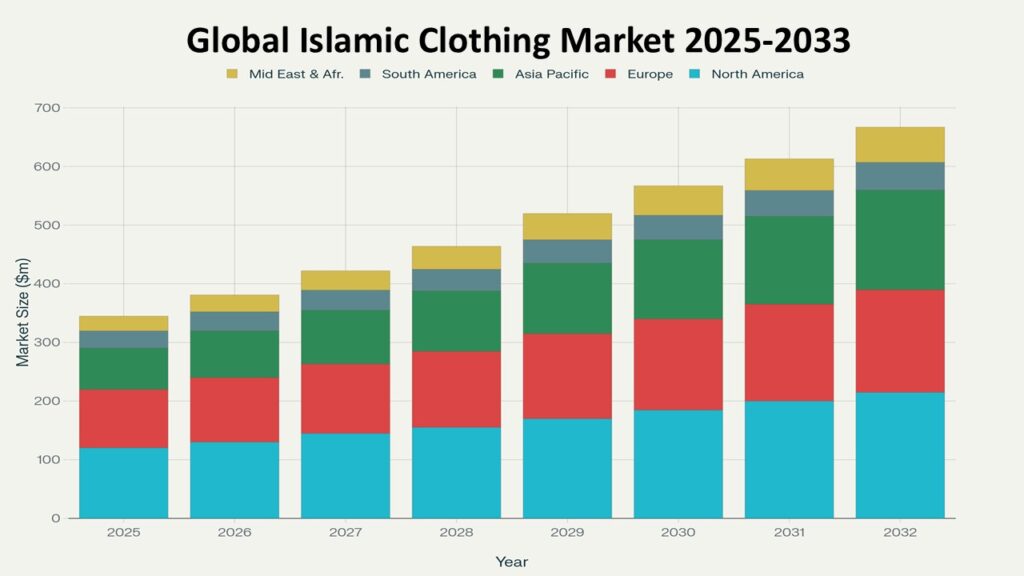
According to Phoenix Research’s Demand Forecast Engine, the Global Islamic Clothing Market size is valued at USD 72.4 billion in 2025 and is projected to reach approximately USD 130.6 billion by 2033, growing at a CAGR of 7.6% during 2025–2033. The Middle East & North Africa (MENA) region holds the largest market share due to deep-rooted cultural adoption, while Asia-Pacific — especially Indonesia and Malaysia — is the fastest-growing region, supported by a youthful population and rising modest fashion demand.
The Global Islamic Clothing Market is a vibrant, inclusive, and creative industry that blends tradition and modernity, showcasing faith, culture, and fashion on a global scale.
Key Drivers of the Global Islamic Clothing Market Growth
-
Rising Global Acceptance of Modest Fashion
Modest fashion is being accepted not only in Muslim-majority regions but also in Western countries, attracting consumers who value elegance, comfort, and conservative styles, regardless of their cultural background. -
Influence of Social Media and Modest Fashion Influencers
Digital platforms and influencers are showcasing modern Islamic fashion, inspiring people worldwide to try new styles that blend tradition and modernity. -
Growing Purchasing Power and Urbanization
The growing middle class and increasing number of women joining the workforce are driving the growth of the modestwear market, with consumers seeking stylish, high-quality clothing that meets their values and lifestyle. -
Expansion of E-Commerce and Online Retail Channels
Online platforms are revolutionizing the way people shop, offering a vast array of Islamic fashion brands and styles, and fuelling growth in global trade and customization. -
Emergence of Sustainable and Ethical Modestwear
Consumers are going green, inspiring brands to make sustainable choices. Eco-friendly fabrics and responsible production practices are becoming major priorities, driving innovation in organic and sustainable materials. -
Fashion Brand Collaborations and Inclusivity Initiatives
Global fashion houses and modestwear brands are teaming up to drive growth, expanding their collections and tapping into diverse consumer bases with inclusive design campaigns that cater to a broader audience..
Global Islamic Clothing Market Segmentation
By Product Type
-
Abayas & Hijabs
-
Thobes & Jubbas
-
Jilbabs & Kaftans
-
Modest Tops & Dresses
-
Modest Sportswear
-
Others (Scarves, Accessories)
By End User
-
Men
-
Women
-
Children
By Distribution Channel
-
Online Retail
-
Specialty Stores
-
Supermarkets & Department Stores
-
Boutiques & Designer Stores
By Fabric Type
-
Cotton
-
Silk
-
Polyester
-
Linen
-
Others
By Region
-
Middle East & North Africa (MENA)
-
Asia-Pacific
-
Europe
-
North America
-
Latin America
Regional Insights of the Global Islamic Clothing Market
Middle East & North Africa (MENA) – Market Leader
The MENA region dominates due to strong cultural adherence, high spending power, and luxury-focused modestwear collections. Countries like Saudi Arabia and the UAE are home to major modest fashion brands and events.Middle East & North Africa (MENA) leads the largest share of the Global Islamic Clothing Market.
Asia-Pacific – Fastest Growing Market
Countries such as Indonesia, Malaysia, and Pakistan are driving the market through local production, youth-oriented fashion lines, and expanding online retail networks.
Europe – Rising Trend Toward Inclusivity
European fashion brands are increasingly introducing modest fashion lines to appeal to diverse audiences and reflect cultural inclusivity.
North America – Expanding Diaspora Demand
A growing Muslim population and fashion-conscious diaspora communities are fueling demand for modern Islamic wear in the U.S. and Canada.
Latin America – Emerging Niche Market
Gradual awareness and increasing cultural diversity are encouraging demand for modestwear in emerging urban centers.
Leading Companies in the Global Islamic Clothing Market
-
Annah Hariri
-
Artizara
-
House of Fraser (Modest Lines)
-
Louella by Ibtihaj Muhammad
-
Inayah Ltd.
-
The Modist (Dubai-based)
These companies are emphasizing design innovation, sustainable sourcing, and online expansion to meet growing demand and enhance brand reach globally.The largest company in the Global Islamic Clothing Market is Modanisa.com.
Strategic and Technological Insights
-
AI-Powered Fashion Analytics to track emerging style preferences and forecast demand.
-
Digital Modestwear Platforms connecting local artisans to global consumers.
-
Sustainability Initiatives promoting eco-friendly textiles and ethical supply chains.
-
Luxury Segment Growth with increasing demand for premium modest fashion brands.
-
Collaborations with Global Fashion Houses to enhance inclusivity and visibility.
Global Islamic Clothing Market Forecast Snapshot (2025–2033)
| Metric | Value |
|---|---|
| 2025 Market Size | USD 72.4 Billion |
| 2033 Market Size | ~USD 130.6 Billion |
| CAGR (2025–2033) | 7.6% |
| Largest Market | Middle East & North Africa |
| Fastest Growing Region | Asia-Pacific |
| Leading Segment | Abayas & Hijabs |
| Major Trend | Sustainable & Inclusive Modest Fashion |
| Market Outlook | Expanding Global Reach & Brand Innovation |
Why the Global Islamic Clothing Market Remains Critical
-
Reflects the fusion of tradition, culture, and global fashion innovation.
-
Encourages inclusivity and diversity in mainstream fashion.
-
Supports ethical production and sustainability in apparel design.
-
Enhances women’s empowerment through entrepreneurship and creativity.
-
Offers growing opportunities for brands, designers, and investors worldwide.
Final Takeaway of the Global Islamic Clothing Market
The Global Islamic Clothing Market stands at the crossroads of faith, fashion, and global commerce — combining modesty with creativity, innovation, and inclusivity. As modern consumers demand both spiritual and style alignment, the market continues to evolve as a thriving, value-driven segment of the apparel industry.
With increasing online accessibility, sustainable design practices, and cross-cultural collaborations, the future of Islamic fashion is bright, diverse, and globally influential.
At Phoenix Research, our AI-driven market intelligence helps businesses identify trends, consumer preferences, and growth opportunities shaping the future of the modestwear industry.
Table of Contents
1. Global Islamic Clothing Market Overview
2. Key Drivers of the Global Islamic Clothing Market Growth
-
Rising Global Acceptance of Modest Fashion
-
Influence of Social Media and Modest Fashion Influencers
-
Growing Purchasing Power and Urbanization
-
Expansion of E-Commerce and Online Retail Channels
-
Emergence of Sustainable and Ethical Modestwear
-
Fashion Brand Collaborations and Inclusivity Initiatives
3. Global Islamic Clothing Market Segmentation
By Product Type
-
Abayas & Hijabs
-
Thobes & Jubbas
-
Jilbabs & Kaftans
-
Modest Tops & Dresses
-
Modest Sportswear
-
Others (Scarves, Accessories)
By End User
-
Men
-
Women
-
Children
By Distribution Channel
-
Online Retail
-
Specialty Stores
-
Supermarkets & Department Stores
-
Boutiques & Designer Stores
By Fabric Type
-
Cotton
-
Silk
-
Polyester
-
Linen
-
Others
By Region
-
Middle East & North Africa (MENA)
-
Asia-Pacific
-
Europe
-
North America
-
Latin America
4. Regional Insights of the Global Islamic Clothing Market
-
Middle East & North Africa (MENA) – Market Leader
-
Asia-Pacific – Fastest Growing Market
-
Europe – Rising Trend Toward Inclusivity
-
North America – Expanding Diaspora Demand
-
Latin America – Emerging Niche Market
5. Leading Companies in the Global Islamic Clothing Market
-
Aab Collection Ltd.
-
SHUKR Islamic Clothing
-
Haute Elan Ltd.
-
Modanisa.com
-
Annah Hariri
-
Artizara
-
House of Fraser (Modest Lines)
-
Louella by Ibtihaj Muhammad
-
Inayah Ltd.
-
The Modist (Dubai-based)
Largest Company: Modanisa.com
6. Strategic and Technological Insights
-
AI-Powered Fashion Analytics to forecast emerging trends
-
Digital Modestwear Platforms for global accessibility
-
Sustainability Initiatives promoting eco-friendly textiles
-
Luxury Segment Growth driven by premium modest brands
-
Collaborations with Global Fashion Houses for inclusivity
7. Global Islamic Clothing Market Forecast Snapshot (2025–2033)
| Metric | Value |
|---|---|
| 2025 Market Size | USD 72.4 Billion |
| 2033 Market Size | ~USD 130.6 Billion |
| CAGR (2025–2033) | 7.6% |
| Largest Market | Middle East & North Africa |
| Fastest Growing Region | Asia-Pacific |
| Leading Segment | Abayas & Hijabs |
| Major Trend | Sustainable & Inclusive Modest Fashion |
| Market Outlook | Expanding Global Reach & Brand Innovation |
8. Why the Global Islamic Clothing Market Remains Critical
-
Reflects fusion of culture, tradition, and global fashion innovation
-
Promotes inclusivity and diversity in modern apparel design
-
Encourages ethical and sustainable fashion practices
-
Empowers women through entrepreneurship and creativity
-
Creates global opportunities for designers and investors