
Global Minimally Invasive Surgery Market Size And Share Analysis 2025-2033
Global Minimally Invasive Surgery Market Overview
The Global Minimally Invasive Surgery (MIS) Market is witnessing a transformative evolution, driven by advancements in surgical robotics, imaging technologies, and precision instruments. This shift from conventional open procedures to minimally invasive surgical techniques is enabling faster recovery, reduced post-operative pain, and shorter hospital stays—factors that are increasingly appealing to both patients and healthcare providers worldwide.
The Global Minimally Invasive Surgery Market encompasses a broad spectrum of applications, including laparoscopy, arthroscopy, endoscopy, cardiovascular, neurological, urological, and orthopedic procedures. Surgeons are increasingly adopting robot-assisted systems, AI-guided imaging, and real-time navigation tools to enhance accuracy, safety, and procedural outcomes. Growing investments in healthcare infrastructure, medical device innovation, and training programs are helping hospitals and ambulatory centers adopt these advanced techniques effectively.
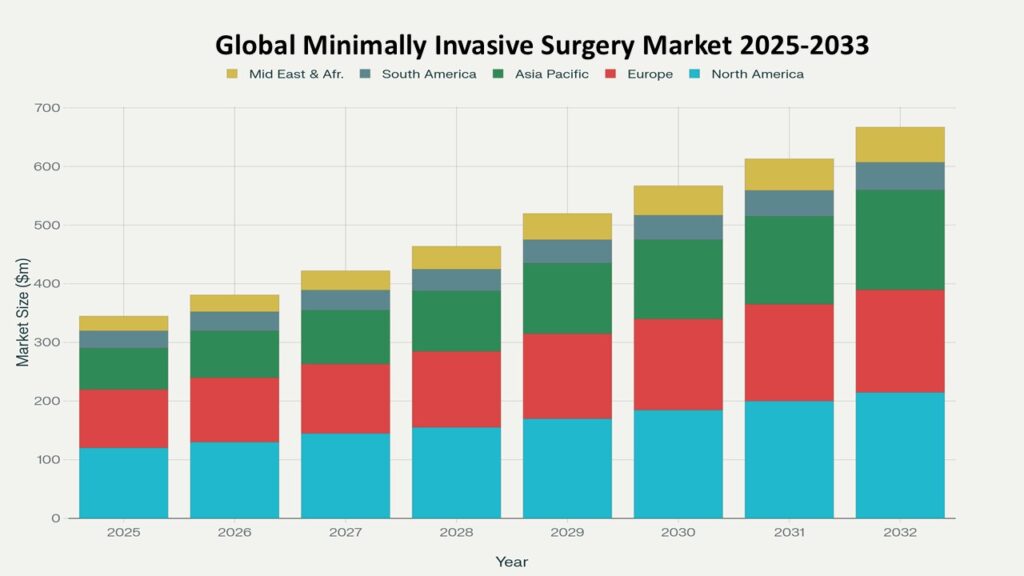
According to Phoenix’s Demand Forecast Engine, the Global Minimally Invasive Surgery Market size is estimated at USD 57.8 billion in 2025 and projected to reach approximately USD 98.5 billion by 2033, reflecting a CAGR of 6.8% during the forecast period. North America dominates due to high technology adoption, while Asia-Pacific is emerging as the fastest-growing region, supported by improving healthcare accessibility, medical tourism, and increasing government investments in advanced surgical care.
The ongoing shift toward precision medicine, coupled with growing demand for cost-efficient and patient-friendly procedures, continues to drive innovation in minimally invasive surgical devices and imaging systems. With enhanced ergonomics, automation, and digital integration, the Global Minimally Invasive Surgery Market is poised to become a cornerstone of modern surgical care—safe, effective, and sustainable.
Key Drivers of Global Minimally Invasive Surgery Market Growth
Technological Advancements
Integration of robotic-assisted platforms, 3D visualization, and AI-based surgical imaging enables greater precision and efficiency, instantly improving patient outcomes.
Rising Prevalence of Chronic Diseases
Increasing cases of cardiovascular disorders, cancers, and orthopedic conditions are fueling demand for minimally invasive surgical interventions that reduce recovery time and hospital burden.
Growing Preference for Outpatient and Ambulatory Procedures
The shift toward day-care and minimally invasive treatments helps healthcare systems lower costs and increase patient throughput.
Aging Population and Healthcare Awareness
An expanding geriatric population and growing awareness of less invasive treatment options are propelling market growth worldwide.
Cost-Efficiency and Recovery Benefits
MIS procedures offer shorter hospital stays, fewer complications, and reduced overall healthcare expenses, making them attractive to both providers and payers.
Global Minimally Invasive Surgery Market Segmentation
By Product Type
-
Surgical Devices & Instruments
-
Endoscopic & Laparoscopic Equipment
-
Robotic Surgical Systems
-
Imaging & Visualization Systems
-
Accessories and Consumables
By Surgery Type
-
Cardiovascular Surgery
-
Gastrointestinal & Bariatric Surgery
-
Orthopedic Surgery
-
Gynecological Surgery
-
Urological Surgery
-
Cosmetic and Plastic Surgery
-
Others
By End User
-
Hospitals & Clinics
-
Ambulatory Surgical Centers (ASCs)
-
Specialty Centers
-
Research & Academic Institutes
By Region
-
North America
-
Europe
-
Asia-Pacific
-
Latin America
-
Middle East & Africa
Global Minimally Invasive Surgery Market Region-Level Insights
North America –Global Minimally Invasive market Leader
Dominates the Global Minimally Invasive market due to high adoption of surgical robotics, advanced healthcare systems, and strong presence of key medical device manufacturers.
Europe – Rapid Digital Integration
Adoption of AI-enabled minimally invasive surgery technologies and growing focus on patient safety and cost control drive regional demand.
Asia-Pacific – Fastest Growing Region (CAGR 2025–2033: 7.5%)
Rapid healthcare modernization, rising medical tourism, and government initiatives supporting advanced surgical infrastructure are fueling exponential growth.
Latin America & Middle East/Africa – Emerging Regions
Improving healthcare access, increased private investments, and growing awareness of minimally invasive treatment options are opening new opportunities for market participants.
Leading Companies in the Global Minimally Invasive Surgery Market
-
Intuitive Surgical, Inc.
-
Boston Scientific Corporation
-
Olympus Corporation
-
Karl Storz SE & Co. KG
-
Zimmer Biomet Holdings, Inc.
-
Smith & Nephew plc
-
CONMED Corporation
These companies are investing in robotic-assisted platforms, AI-powered visualization systems, ergonomic laparoscopic tools, and smart imaging devices to expand their global footprint and maintain a competitive advantage.
Strategic Intelligence and AI-Backed Insights
-
Phoenix Demand Forecast Engine combines procedure volume data, hospital adoption rates, and device innovation metrics to provide high-accuracy forecasts.
-
Sentiment Analyzer Tool indicates growing preference for robotic and image-guided surgical systems in high-volume hospitals.
-
Technology Readiness Mapping identifies emerging opportunities in AI-driven minimally invasive surgical navigation.
-
Porter’s Five Forces Analysis highlights moderate supplier power, increasing buyer expectations, and high potential for innovation-led disruption.
Global Minimally Invasive Surgery Market Forecast Snapshot: 2025–2033
| Metric | Value |
|---|---|
| 2025 Market Size | USD 57.8 Billion |
| 2033 Market Size | ~USD 98.5 Billion |
| CAGR (2025–2033) | 6.8% |
| Largest Region (2024) | North America (~38%) |
| Fastest Growing Region | Asia-Pacific (7.5% CAGR) |
| Top Segment | Robotic Surgical Systems |
| Key Trend | AI-enabled, image-guided, and robotic-assisted surgeries |
| Future Growth Focus | Precision surgery, outpatient MIS centers, digital integration |
Why the Global Minimally Invasive Surgery Market Remains Critical
Final Takeaway of Global Minimally Invasive Surgery Market
The Global Minimally Invasive Surgery Market is vibrantly transforming, driven by robotic advancements, precision imaging, and patient-centric care. As healthcare systems embrace innovation and sustainability, minimally invasive surgical techniques are becoming the standard of modern medicine, ensuring faster recovery, reduced complications, and enhanced patient satisfaction. Growing collaboration between medical device innovators, healthcare providers, and technology firms is further accelerating the market’s maturity and global accessibility.
At Phoenix Research, our AI-powered forecasting tools and strategic insights help stakeholders identify opportunities immediately, optimize market strategies, and succeed confidently in the evolving Global Minimally Invasive Surgery Market, ensuring informed decisions that drive sustainable, long-term growth.
Table of Contents
-
Market Overview
-
Key Drivers of Global Minimally Invasive Surgery Market Growth
2.1 Technological Advancements
• Integration of robotic-assisted platforms, 3D visualization, and AI-based surgical imaging enhances precision and efficiency.
• Real-time navigation and automation ensure improved patient outcomes and reduced surgical errors.2.2 Rising Prevalence of Chronic Diseases
• Increase in cardiovascular, orthopedic, and oncological disorders boosts demand for MIS procedures.
• Hospitals prefer MIS for faster recovery and lower post-operative complications.2.3 Growing Preference for Outpatient and Ambulatory Procedures
• Shift toward day-care surgeries reduces healthcare costs and hospital occupancy.
• ASCs are becoming key enablers of accessible and efficient MIS adoption.2.4 Aging Population and Healthcare Awareness
• Rising elderly population drives demand for less invasive and safer surgical solutions.
• Growing awareness about faster recovery and minimal scarring enhances patient preference.2.5 Cost-Efficiency and Recovery Benefits
• Reduced hospitalization time and fewer complications improve overall cost efficiency.
• Providers gain higher patient throughput and sustainable healthcare delivery. -
Market Segmentation
3.1 By Product Type
• Surgical Devices & Instruments
• Endoscopic & Laparoscopic Equipment
• Robotic Surgical Systems
• Imaging & Visualization Systems
• Accessories and Consumables3.2 By Surgery Type
• Cardiovascular Surgery
• Gastrointestinal & Bariatric Surgery
• Orthopedic Surgery
• Gynecological Surgery
• Urological Surgery
• Cosmetic & Plastic Surgery
• Others3.3 By End User
• Hospitals & Clinics
• Ambulatory Surgical Centers (ASCs)
• Specialty Centers
• Research & Academic Institutes3.4 By Region
• North America
• Europe
• Asia-Pacific
• Latin America
• Middle East & Africa -
Region-Level Insights
4.1 North America – Market Leader
• High adoption of robotic-assisted platforms and advanced surgical systems.
• Strong ecosystem of global device manufacturers and research institutions.4.2 Europe – Rapid Digital Integration
• AI-enabled surgical adoption and growing patient-safety focus drive growth.
• Cost-control initiatives enhance adoption of minimally invasive techniques.4.3 Asia-Pacific – Fastest Growing Region (7.5% CAGR)
• Rising medical tourism, healthcare modernization, and public–private investments.
• Expanding access to advanced robotic surgery platforms across major economies.4.4 Latin America & Middle East/Africa – Emerging Regions
• Growing private investments and awareness of MIS procedures.
• Improving surgical infrastructure enables broader adoption. -
Leading Companies in the Global Minimally Invasive Surgery Market
• Medtronic plc
• Johnson & Johnson (Ethicon, Inc.)
• Stryker Corporation
• Intuitive Surgical, Inc.
• Boston Scientific Corporation
• Olympus Corporation
• Karl Storz SE & Co. KG
• Zimmer Biomet Holdings, Inc.
• Smith & Nephew plc
• CONMED Corporation -
Strategic Intelligence and AI-Backed Insights
• Phoenix Demand Forecast Engine models procedure volumes and technology adoption.
• Sentiment Analyzer Tool tracks surgeon and patient confidence in robotic platforms.
• Technology Readiness Mapping identifies key innovation hotspots.
• Porter’s Five Forces Analysis reveals high innovation potential and moderate supplier power. -
Forecast Snapshot (2025–2033)
• 2025 Market Size: USD 57.8 Billion
• 2033 Market Size: ~USD 98.5 Billion
• CAGR (2025–2033): 6.8%
• Largest Region (2024): North America (~38%)
• Fastest Growing Region: Asia-Pacific (7.5% CAGR)
• Top Segment: Robotic Surgical Systems
• Key Trend: AI-enabled, image-guided, and robotic-assisted surgeries
• Future Focus: Precision surgery, outpatient MIS centers, digital integration -
Why the Global Minimally Invasive Surgery Market Remains Critical
• Enhances patient safety, precision, and recovery outcomes.
• Supports sustainable, cost-efficient healthcare systems.
• Expanding access across emerging markets through AI and robotics.
• Empowers hospitals with reliable, modern surgical capabilities. -
Final Takeaway