
Global Thermal Interface Material Market Size and Share Analysis 2025-2033
Global Thermal Interface Material Market Overview
The Global Thermal Interface Material Market is vibrantly evolving, driven by the rapid expansion of electric vehicles (EVs), 5G infrastructure, high-performance computing, and renewable energy systems. As electronic devices become more compact and powerful, effective thermal management has emerged as a critical and proven solution for ensuring reliability, performance stability, and long-term product efficiency.
Thermal interface materials — including thermal pads, greases, adhesives, phase change materials, and gap fillers — play a vital role in transferring heat between components and heat sinks in automotive electronics, data centers, consumer electronics, and LED lighting. This market is being energized by AI-integrated design optimization, nanotechnology-based materials, and eco-friendly TIM formulations, empowering manufacturers to create smarter, cooler, and more energy-efficient systems.
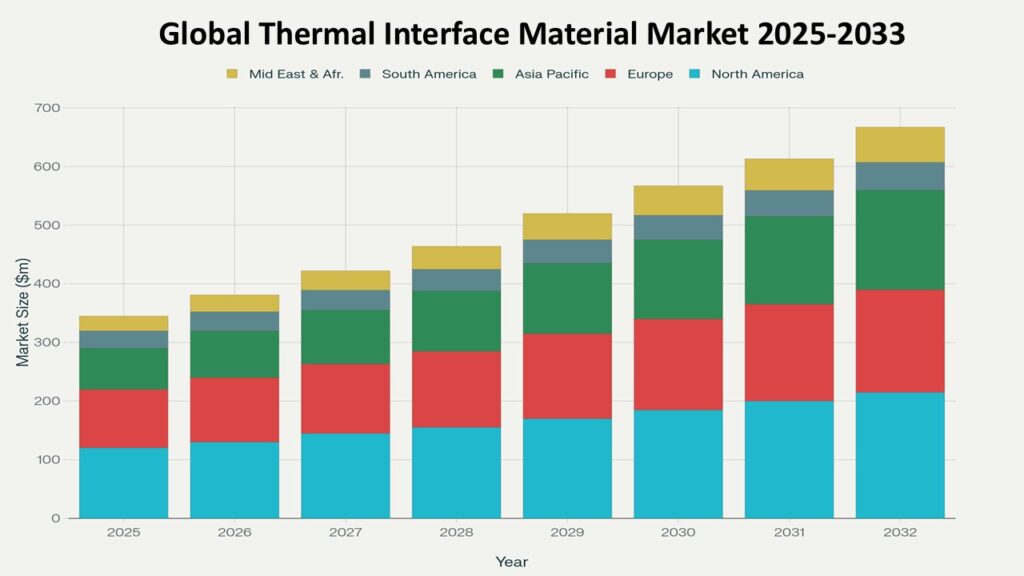
According to Phoenix Research’s Demand Forecast Engine, the Global Thermal Interface Material Market size is estimated at USD 3.5 billion in 2025 and is projected to reach approximately USD 6.9 billion by 2033, growing at a CAGR of 8.5% (2025–2033).
Asia-Pacific currently leads the market, driven by mass-scale electronics manufacturing in China, Japan, and South Korea, while North America and Europe are accelerating adoption in EVs, data centers, and high-speed computing applications.
The Thermal Interface Material Market remains a proven and essential enabler of modern electronics innovation, energy efficiency, and system safety—empowering industries to achieve reliable performance, long-term durability, and assured heat management solutions worldwide.
Key Drivers of Global Thermal Interface Material Market Growth
-
Explosive Growth in Electric Vehicles (EVs)
Increasing production of electric and hybrid vehicles demands high-performance TIMs for battery packs, power modules, and charging systems to maintain thermal stability. -
Rising Demand from Consumer Electronics & 5G Devices
Smartphones, tablets, and telecom infrastructure require advanced heat dissipation materials to support faster processing speeds and energy-efficient performance. -
Data Center & High-Performance Computing Expansion
Growing investments in AI, cloud computing, and server infrastructure create strong demand for reliable and long-lasting thermal solutions. -
Technological Innovation in Nanomaterials and Phase-Change TIMs
Development of graphene-based, carbon nanotube, and metal oxide composites delivers superior thermal conductivity and mechanical flexibility. -
Sustainability and Eco-Friendly Formulations
Manufacturers are investing in non-toxic, recyclable, and silicone-free materials to align with global sustainability and environmental compliance standards. -
Miniaturization and Compact System Design Trends
The trend toward smaller, denser electronic assemblies amplifies the need for ultra-thin, high-efficiency thermal management interfaces.
Global Thermal Interface Material Market Segmentation
By Product Type
-
Thermal Greases & Pastes
-
Thermal Pads & Tapes
-
Phase Change Materials (PCM)
-
Thermal Adhesives & Films
-
Metal-Based TIMs
-
Gap Fillers
By Application
-
Automotive Electronics
-
Computers & Data Centers
-
Telecom & 5G Infrastructure
-
Consumer Electronics
-
LED Lighting Systems
-
Industrial Equipment
-
Renewable Energy Systems (Solar, Wind, etc.)
By Material Type
-
Silicone-Based
-
Graphite-Based
-
Metal-Based (Silver, Aluminum, Copper)
-
Ceramic-Based
-
Carbon Nanotube / Graphene-Based
By End User
-
Automotive
-
Consumer Electronics
-
IT & Telecom
-
Energy & Power
-
Aerospace & Defense
-
Healthcare Devices
By Region
-
Asia-Pacific
-
North America
-
Europe
-
Latin America
-
Middle East & Africa
Regional Insights of the Global Thermal Interface Material Market
Asia-Pacific – The Manufacturing Powerhouse
Asia-Pacific dominates global demand due to China’s electronics production ecosystem, Japan’s advanced material innovation, and South Korea’s semiconductor leadership. The region continues to expand TIM capacity for EVs, 5G, and renewable systems.Asia -Pacific leads a largest share of the Global Thermal Interface Material Market.
North America – Innovation and AI-Driven Growth
The U.S. and Canada lead in AI-enabled design systems, autonomous vehicles, and EV thermal management, supported by strong semiconductor and data center infrastructure investments.
Europe – Sustainable and Premium Thermal Solutions
Europe’s focus on eco-friendly, high-conductivity, and recyclable TIMs is driven by automotive electrification, aerospace innovation, and energy efficiency regulations.
Latin America – Emerging Industrial Demand
Countries like Mexico and Brazil are adopting TIMs for EV manufacturing, electronics assembly, and renewable energy systems.
Middle East & Africa – Renewable Energy and Smart Infrastructure
The region’s solar energy projects, smart grid expansion, and industrial automation growth are creating new opportunities for thermal interface materials.
Leading Companies in the Global Thermal Interface Material Market
-
Parker Hannifin Corporation
-
Honeywell International Inc.
-
Shin-Etsu Chemical Co., Ltd.
-
Laird Performance Materials (DuPont)
-
Indium Corporation
-
Fujipoly America Corporation
-
Momentive Performance Materials
-
Aavid Thermalloy (Boyd Corporation)
These leading players are empowering market transformation with AI-optimized formulations, nano-enhanced TIMs, and eco-compliant innovations that ensure efficiency, safety, and performance assurance across sectors. 3M Company currently leads with the largest global market share.
Strategic Intelligence and AI-Backed Insights
-
Phoenix Demand Forecast Engine identifies strong expansion across EV battery systems, high-speed data centers, and 5G network devices.
-
AI-Powered Innovation Tracker highlights new patents in graphene, phase-change TIMs, and carbon-based nano-composites.
-
Cost–Performance Analyzer projects increased ROI in silicone-free and recyclable TIMs with higher durability and lower maintenance.
-
Porter’s Five Forces indicate high competitive intensity but strong differentiation potential via material innovation and strategic OEM partnerships.
Global Thermal Interface Material Market Forecast Snapshot: 2025–2033
| Metric | Value |
|---|---|
| 2025 Market Size | USD 3.5 Billion |
| 2033 Market Size | ~USD 6.9 Billion |
| CAGR (2025–2033) | 8.5% |
| Largest Market | Asia-Pacific |
| Fastest Growing Region | North America |
| Top Segment | Automotive & Data Center Applications |
| Key Trend | Graphene-Based & Eco-Friendly TIMs |
| Future Outlook | AI-Driven Design, Energy Efficiency, and Sustainable Cooling Solutions |
Why the Global Thermal Interface Material Market Remains Critical
-
Essential for heat dissipation and reliability in all modern electronic and automotive systems.
-
Drives performance, safety, and lifespan of semiconductors, EV batteries, and power electronics.
-
Enables next-gen innovation in AI hardware, 5G devices, and renewable energy systems.
-
Supports sustainability and energy efficiency, reducing system power losses and carbon emissions.
-
Empowers industries to achieve thermal stability, essential for data integrity, product safety, and operational trust.
Final Takeaway
The Global Thermal Interface Material Market is a fast-growing, innovation-driven industry powering the next wave of electrification, computing, and renewable technologies. Companies that invest in AI-powered design, advanced materials, and sustainable manufacturing will succeed in building resilient, high-value TIM portfolios for the decade ahead.
At Phoenix Research, our AI-enhanced market intelligence tools and forecast analytics empower stakeholders to analyze, adapt, and act confidently—unlocking reliable, efficient, and future-ready solutions in the global thermal management ecosystem.
Table of Contents
• Global Thermal Interface Material Market Overview
• Key Drivers of Global Thermal Interface Material Market Growth
– Explosive Growth in Electric Vehicles (EVs)
– Rising Demand from Consumer Electronics & 5G Devices
– Data Center & High-Performance Computing Expansion
– Technological Innovation in Nanomaterials and Phase-Change TIMs
– Sustainability and Eco-Friendly Formulations
– Miniaturization and Compact System Design Trends
• Global Thermal Interface Material Market Segmentation
– By Product Type
• Thermal Greases & Pastes
• Thermal Pads & Tapes
• Phase Change Materials (PCM)
• Thermal Adhesives & Films
• Metal-Based TIMs
• Gap Fillers
– By Application
• Automotive Electronics
• Computers & Data Centers
• Telecom & 5G Infrastructure
• Consumer Electronics
• LED Lighting Systems
• Industrial Equipment
• Renewable Energy Systems (Solar, Wind, etc.)
– By Material Type
• Silicone-Based
• Graphite-Based
• Metal-Based (Silver, Aluminum, Copper)
• Ceramic-Based
• Carbon Nanotube / Graphene-Based
– By End User
• Automotive
• Consumer Electronics
• IT & Telecom
• Energy & Power
• Aerospace & Defense
• Healthcare Devices
– By Region
• Asia-Pacific
• North America
• Europe
• Latin America
• Middle East & Africa
• Regional Insights of the Global Thermal Interface Material Market
– Asia-Pacific – The Manufacturing Powerhouse
– North America – Innovation and AI-Driven Growth
– Europe – Sustainable and Premium Thermal Solutions
– Latin America – Emerging Industrial Demand
– Middle East & Africa – Renewable Energy and Smart Infrastructure
• Leading Companies in the Global Thermal Interface Material Market
– 3M Company
– Henkel AG & Co. KGaA
– Dow Corning Corporation
– Parker Hannifin Corporation
– Honeywell International Inc.
– Shin-Etsu Chemical Co., Ltd.
– Laird Performance Materials (DuPont)
– Indium Corporation
– Fujipoly America Corporation
– Momentive Performance Materials
– Aavid Thermalloy (Boyd Corporation)
• Strategic Intelligence and AI-Backed Insights
– Phoenix Demand Forecast Engine
– AI-Powered Innovation Tracker
– Cost–Performance Analyzer
– Porter’s Five Forces Analysis
• Global Thermal Interface Material Market Forecast Snapshot (2025–2033)
– 2025 Market Size – USD 3.5 Billion
– 2033 Market Size – ~USD 6.9 Billion
– CAGR (2025–2033) – 8.5%
– Largest Market – Asia-Pacific
– Fastest Growing Region – North America
– Top Segment – Automotive & Data Center Applications
– Key Trend – Graphene-Based & Eco-Friendly TIMs
– Future Outlook – AI-Driven Design, Energy Efficiency, and Sustainable Cooling Solutions
• Why the Global Thermal Interface Material Market Remains Critical
– Essential for Heat Dissipation and Reliability in Modern Electronics
– Drives Performance, Safety, and Lifespan of EV Batteries & Semiconductors
– Enables Next-Gen Innovation in AI Hardware and 5G Devices
– Supports Sustainability and Energy Efficiency
– Ensures Thermal Stability, Product Safety, and Operational Integrity
• Final Takeaway of the Global Thermal Interface Material Market