
Global Urticaria Market Size and Share Analysis 2025-2033
Global Urticaria Market Overview
The Global Urticaria Market is experiencing dynamic transformation, driven by the rising prevalence of chronic allergic skin conditions, advancements in biologic and immunotherapy treatments, and increasing awareness of dermatological health. Urticaria — commonly known as hives — is a skin disorder characterized by red, itchy welts triggered by allergies, autoimmune reactions, or environmental factors. It has emerged as a significant global healthcare concern, particularly among patients with chronic spontaneous urticaria (CSU) and inducible urticaria forms.
The market is being energized by AI-assisted diagnosis platforms, monoclonal antibody innovations (such as Omalizumab and Ligelizumab), and personalized dermatology treatments that ensure faster relief, improved efficacy, and reduced recurrence. Growing healthcare expenditure, expanding tele-dermatology adoption, and awareness of early allergy management are further driving the market’s rapid development.
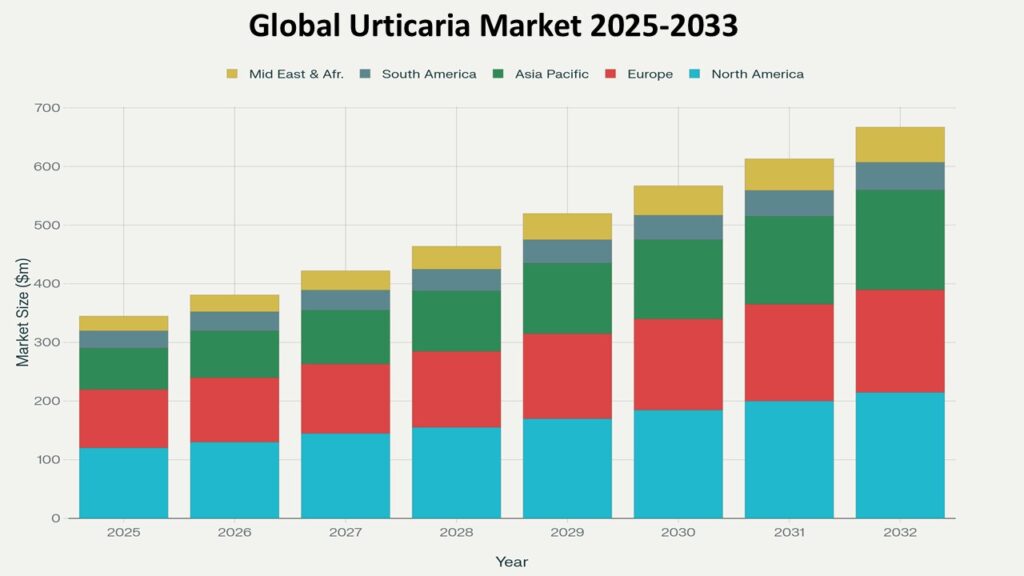
According to Phoenix Research’s Demand Forecast Engine, the Global Urticaria Market size is estimated at USD 2.1 billion in 2025 and is projected to reach approximately USD 3.9 billion by 2033, growing at a CAGR of 8.2% (2025–2033). North America currently leads the global urticaria market, followed by Europe and Asia-Pacific, with emerging economies in Asia showing strong patient base expansion and rising healthcare access.
The Urticaria Market continues to be a critical healthcare segment, empowering pharmaceutical and biotechnology companies to develop innovative, patient-centric, and high-efficacy therapies that ensure improved quality of life, faster remission, and reliable allergy control worldwide.
Key Drivers of Global Urticaria Market Growth
-
Rising Global Prevalence of Chronic Allergic and Autoimmune Conditions
Growing exposure to environmental allergens, stress, and pollution is significantly increasing the incidence of chronic urticaria and spontaneous skin hypersensitivity disorders worldwide. -
Breakthrough Advancements in Biologic and Targeted Therapies
Development of next-generation biologics — including anti-IgE and anti-IL-5 monoclonal antibodies — ensures enhanced efficacy, reduced flare-ups, and long-term relief for patients unresponsive to traditional antihistamines. -
Increased Awareness and Early Diagnosis of Skin Disorders
Public health campaigns, social media education, and digital health tools are boosting early recognition and treatment adoption, driving steady market expansion. -
AI-Powered and Personalized Dermatology
AI-based diagnostic imaging, predictive analytics, and tele-dermatology platforms enable clinicians to deliver accurate diagnosis and individualized treatment regimens with higher success rates. -
Growth of OTC and Prescription Allergy Medications
Expanding consumer access to over-the-counter antihistamines, topical corticosteroids, and oral therapies supports continued revenue growth across retail and online pharmacy channels. -
Rising Healthcare Expenditure and Dermatology Infrastructure
Government and private healthcare investments are strengthening dermatology services, research funding, and biologic treatment availability across emerging economies.
Global Urticaria Market Segmentation
By Type
-
Acute Urticaria
-
Chronic Spontaneous Urticaria (CSU)
-
Physical/Inducible Urticaria
-
Autoimmune Urticaria
By Treatment Type
-
Antihistamines
-
Corticosteroids
-
Biologics (e.g., Omalizumab, Ligelizumab)
-
Leukotriene Antagonists
-
Immunosuppressants
-
Others
By Route of Administration
-
Oral
-
Injectable
-
Topical
By Distribution Channel
-
Hospital Pharmacies
-
Retail Pharmacies
-
Online Pharmacies
By End User
-
Hospitals & Clinics
-
Specialty Dermatology Centers
-
Research & Academic Institutes
-
Home Care Settings
By Region
-
North America
-
Europe
-
Asia-Pacific
-
Latin America
-
Middle East & Africa
Regional Insights of the Global Urticaria Market
North America – The Largest and Most Advanced Market
North America dominates due to high prevalence of allergic diseases, strong healthcare infrastructure, and early adoption of biologics like Omalizumab. U.S.-based biotech firms lead in clinical research and regulatory approvals for novel therapies.North America leads a largest share of the Global Urticaria Market.
Europe – Expanding Biologics Accessibility and Awareness
Europe’s focus on precision medicine, allergy management, and healthcare affordability is boosting urticaria treatment adoption, particularly across Germany, France, and the U.K.
Asia-Pacific – Fastest-Growing Regional Market
Rising pollution, urbanization, and allergic disease prevalence are creating significant demand for advanced skin therapies. China, India, and Japan are witnessing strong clinical trial activity and biosimilar launches.
Latin America – Emerging Market for Dermatology Solutions
Countries like Brazil and Mexico are increasing investment in public health allergy programs and pharma R&D, improving accessibility to urticaria treatment options.
Middle East & Africa – Gradual Adoption and Specialty Care Expansion
With growing awareness and improved dermatology facilities, nations such as Saudi Arabia, UAE, and South Africa are adopting advanced biologic therapies for chronic urticaria.
Leading Companies in the Global Urticaria Market
-
Pfizer Inc.
-
GlaxoSmithKline plc (GSK)
-
Teva Pharmaceutical Industries Ltd.
-
Johnson & Johnson
-
Sun Pharmaceutical Industries Ltd.
-
AstraZeneca plc
-
Regeneron Pharmaceuticals, Inc.
These companies are continuously investing in next-gen biologic development, clinical trials, and digital dermatology platforms to enhance patient outcomes. Novartis AG leads the global market with its flagship biologic therapy Xolair (Omalizumab) for chronic urticaria treatment.
Strategic Intelligence and AI-Backed Insights
-
Phoenix Demand Forecast Engine highlights consistent growth fueled by rising chronic urticaria cases and biologic innovation.
-
AI-Powered Drug Discovery Tracker identifies breakthrough molecules under Phase II and Phase III trials for improved therapeutic outcomes.
-
Consumer Insight Analyzer reveals growing demand for personalized, non-steroidal, and long-acting therapies.
-
Porter’s Five Forces Analysis indicates moderate competition, high innovation intensity, and growing barriers to entry for new biologic manufacturers.
Global Urticaria Market Forecast Snapshot: 2025–2033
| Metric | Value |
|---|---|
| 2025 Market Size | USD 2.1 Billion |
| 2033 Market Size | ~USD 3.9 Billion |
| CAGR (2025–2033) | 8.2% |
| Largest Region | North America |
| Fastest Growing Region | Asia-Pacific |
| Top Therapy Type | Biologics (Anti-IgE & Anti-IL-5) |
| Key Trend | Personalized & AI-Assisted Dermatology Solutions |
| Future Outlook | Expansion in Biologic Accessibility & Precision Medicine |
Why the Global Urticaria Market Remains Critical
-
Rising global incidence of chronic allergic skin disorders and autoimmune triggers.
-
Increasing demand for safe, fast-acting, and personalized biologic therapies.
-
Expanding adoption of AI-enabled diagnosis and tele-dermatology platforms.
-
Continuous innovation in anti-IgE and immunomodulatory treatments.
-
Essential role in improving patient comfort, life quality, and treatment outcomes.
Final Takeaway
The Global Urticaria Market stands as a vital, innovation-led segment of the global dermatology and immunology landscape, driven by biologic therapy advancements, AI-powered diagnostics, and increasing healthcare access. Companies that emphasize precision medicine, digital health integration, and affordability will lead the next phase of market transformation.
At Phoenix Research, our AI-enhanced forecasting frameworks and strategic intelligence models enable healthcare leaders, investors, and policymakers to analyze, anticipate, and act effectively — ensuring that urticaria care evolves toward more effective, reliable, and patient-centered solutions worldwide.
Table of Contents
1. Global Urticaria Market Overview
2. Key Drivers of Global Urticaria Market Growth
– Rising Global Prevalence of Chronic Allergic and Autoimmune Conditions
– Breakthrough Advancements in Biologic and Targeted Therapies
– Increased Awareness and Early Diagnosis of Skin Disorders
– AI-Powered and Personalized Dermatology
– Growth of OTC and Prescription Allergy Medications
– Rising Healthcare Expenditure and Dermatology Infrastructure
3. Global Urticaria Market Segmentation
By Type
• Acute Urticaria
• Chronic Spontaneous Urticaria (CSU)
• Physical/Inducible Urticaria
• Autoimmune Urticaria
By Treatment Type
• Antihistamines
• Corticosteroids
• Biologics (e.g., Omalizumab, Ligelizumab)
• Leukotriene Antagonists
• Immunosuppressants
• Others
By Route of Administration
• Oral
• Injectable
• Topical
By Distribution Channel
• Hospital Pharmacies
• Retail Pharmacies
• Online Pharmacies
By End User
• Hospitals & Clinics
• Specialty Dermatology Centers
• Research & Academic Institutes
• Home Care Settings
By Region
• North America
• Europe
• Asia-Pacific
• Latin America
• Middle East & Africa
4. Regional Insights of the Global Urticaria Market
– North America – The Largest and Most Advanced Market
– Europe – Expanding Biologics Accessibility and Awareness
– Asia-Pacific – Fastest-Growing Regional Market
– Latin America – Emerging Market for Dermatology Solutions
– Middle East & Africa – Gradual Adoption and Specialty Care Expansion
5. Leading Companies in the Global Urticaria Market
– Novartis AG
– Genentech, Inc. (Roche Group)
– Sanofi S.A.
– Pfizer Inc.
– GlaxoSmithKline plc (GSK)
– Teva Pharmaceutical Industries Ltd.
– Johnson & Johnson
– Sun Pharmaceutical Industries Ltd.
– AstraZeneca plc
– Regeneron Pharmaceuticals, Inc.
6. Strategic Intelligence and AI-Backed Insights
– Phoenix Demand Forecast Engine
– AI-Powered Drug Discovery Tracker
– Consumer Insight Analyzer
– Porter’s Five Forces Analysis
7. Global Urticaria Market Forecast Snapshot (2025–2033)
– 2025 Market Size – USD 2.1 Billion
– 2033 Market Size – ~USD 3.9 Billion
– CAGR (2025–2033) – 8.2%
– Largest Region – North America
– Fastest Growing Region – Asia-Pacific
– Top Therapy Type – Biologics (Anti-IgE & Anti-IL-5)
– Key Trend – Personalized & AI-Assisted Dermatology Solutions
– Future Outlook – Expansion in Biologic Accessibility & Precision Medicine
8. Why the Global Urticaria Market Remains Critical
– Rising global incidence of allergic and autoimmune skin disorders
– Growing demand for targeted biologic and immunotherapy treatments
– Expansion of AI-enabled diagnosis and tele-dermatology platforms
– Continuous R&D in anti-IgE and non-steroidal innovations
– Essential role in improving patient quality of life and outcomes
9. Final Takeaway of the Global Urticaria Market