
Oil & Gas / Market Segment
Gas
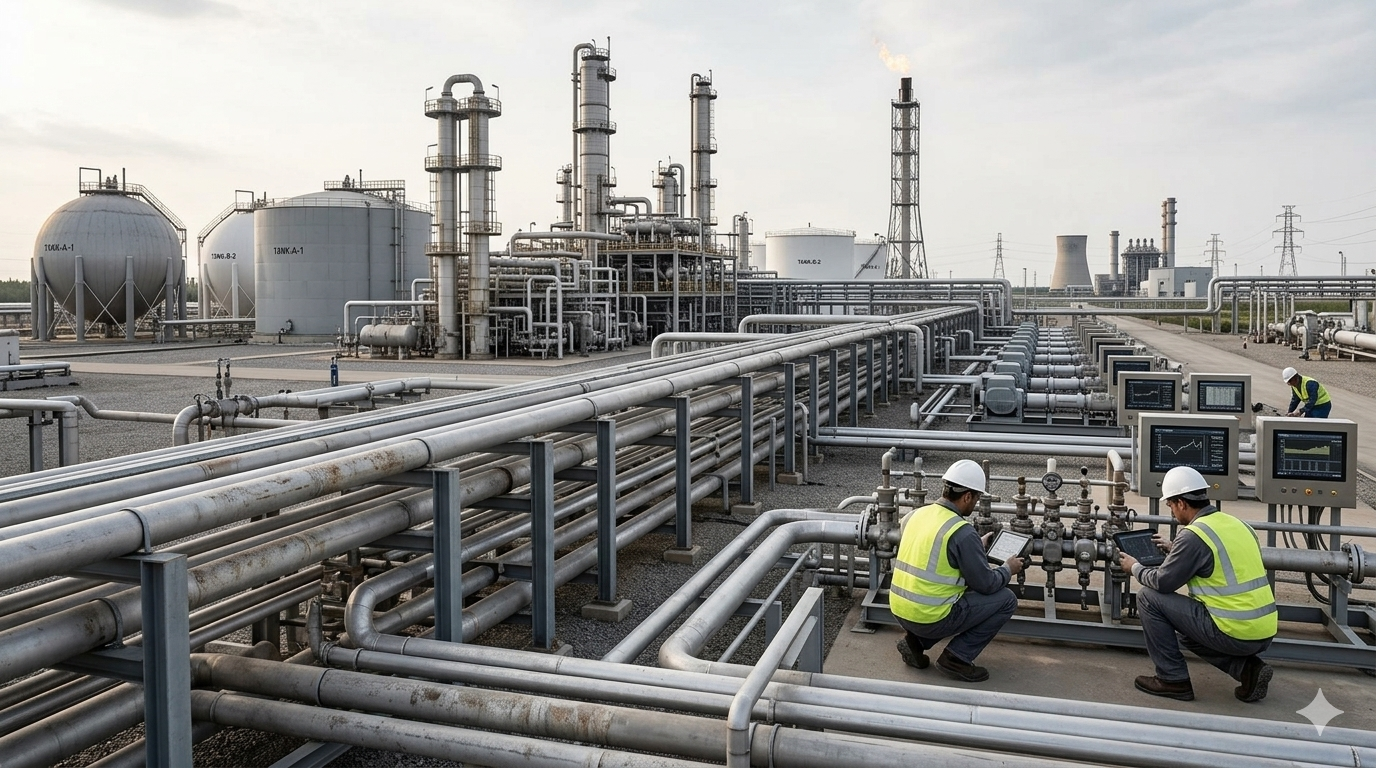
Segment Overview
The Gas segment covers the production, processing, transportation, storage, and distribution of natural gas and related gaseous hydrocarbons used for energy generation, industrial operations, residential heating, and commercial applications. It includes upstream gas extraction, midstream pipeline networks, liquefaction systems, and downstream distribution infrastructure.
This segment operates at the intersection of energy production, chemical processing, infrastructure engineering, and utility distribution systems, making it a critical transitional fuel and foundational energy source within the global energy ecosystem.
Scope of the Gas Segment
This segment includes, but is not limited to:
Natural gas production and extraction
Onshore and offshore gas drilling, shale gas production, and conventional gas recovery systems.
Gas processing and treatment
Separation, purification, dehydration, and conditioning of raw natural gas.
Liquefied Natural Gas (LNG) systems
Liquefaction, regasification terminals, and cryogenic storage infrastructure.
Gas transportation infrastructure
Pipeline networks, compressor stations, and long-distance transmission systems.
Gas distribution systems
Urban and regional distribution networks supplying residential, commercial, and industrial users.
Industrial and power generation gas usage
Use of natural gas in electricity generation, manufacturing processes, and heating systems.
Market Characteristics
The Gas segment is defined by several structural characteristics:
- Strong dependence on global energy demand and industrial consumption patterns
- High capital intensity in extraction, pipeline networks, and LNG infrastructure
- Long-term infrastructure lifecycle with stable operational requirements
- Price sensitivity influenced by supply-demand balance and geopolitical factors
- Increasing integration with power generation and transition energy systems
- Regulatory oversight across safety, environmental impact, and emissions control
- Growing role as a transitional fuel in energy decarbonization strategies
Value Chain Overview
The segment spans the full gas value chain:
- Exploration & Production: Identification and extraction of natural gas reserves
- Processing & Refinement: Removal of impurities and conditioning for transport
- Transportation & Storage: Pipeline systems, LNG shipping, and underground storage facilities
- Distribution & Supply: Delivery to industrial, commercial, and residential users
- End-Use Consumption: Power generation, heating, manufacturing, and petrochemical applications
- Decommissioning & Infrastructure Management: Maintenance and lifecycle management of gas assets
Each stage involves complex engineering systems, safety protocols, and large-scale infrastructure coordination.
Key Market Drivers
- Rising global energy demand across industrial and residential sectors
- Expansion of LNG trade and international gas markets
- Increasing adoption of natural gas for power generation
- Industrial demand for cleaner-burning fuel alternatives
- Growth in urbanization and residential energy consumption
- Energy transition strategies favoring lower-emission fossil fuels
Strategic Importance within Energy & Utilities
Gas plays a central role in global energy systems as a flexible and relatively lower-emission fossil fuel that supports power generation, industrial operations, and heating demand.
Upstream, the segment drives exploration, drilling, and gas field development. Midstream, it enables large-scale transportation and LNG infrastructure. Downstream, it supports electricity generation, industrial manufacturing, and residential energy supply.
As global energy systems transition toward lower-carbon models, the Gas segment remains strategically important as a balancing fuel that supports grid stability, industrial energy needs, and transitional energy infrastructure.