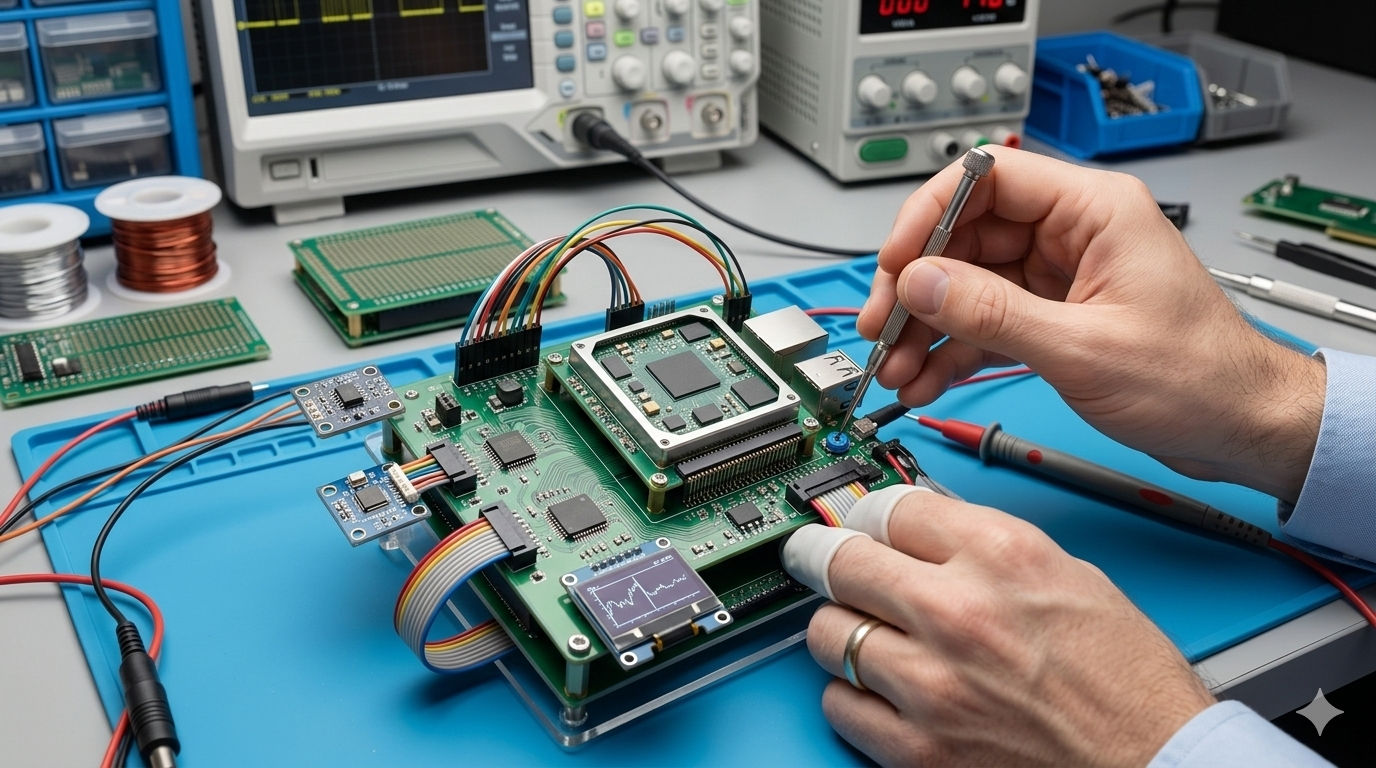

Semiconductors & Electronics / Market Segment
Embedded Computing Modules
1. Segment Overview
The Embedded Computing Modules segment comprises compact computing units designed to perform dedicated processing tasks within larger electronic systems. Within the Semiconductor and Electronics industry, this segment functions as an integration layer that enables processing, control, and communication capabilities inside industrial, commercial, and consumer devices.
The segment exists to provide standardized computing platforms that can be embedded into equipment such as industrial machines, medical devices, vehicles, telecommunications systems, and smart infrastructure. These modules combine processors, memory, connectivity interfaces, and power management components into compact form factors that can be integrated directly into host systems.
2. Structural Scope of the Segment
-
System-on-Module (SoM) platforms
-
Computer-on-Module (COM) architectures
-
Single-board embedded computers
-
Industrial embedded processor boards
-
Edge computing modules for connected devices
-
Embedded GPU and AI accelerator modules
-
Ruggedized embedded computing modules for industrial environments
-
Modular embedded computing platforms for OEM integration
3. Core Market Characteristics
-
Designed for long lifecycle availability and hardware stability
-
Integration-focused demand from original equipment manufacturers (OEMs)
-
High emphasis on reliability, thermal management, and power efficiency
-
Compatibility with standardized form factors and interface specifications
-
Deployment across diverse application environments including industrial, automotive, and medical systems
-
Strong dependency on semiconductor supply chains for processors and memory components
-
Regular firmware and software support required for system maintenance and security
4. Value Chain Overview
-
Inputs: Microprocessors, memory chips, printed circuit boards, power management components, connectivity modules
-
Manufacturing & Assembly: PCB fabrication, component integration, firmware installation, hardware testing
-
Integration: Installation by OEMs into machines, devices, control systems, and connected equipment
-
Operational Phase: Continuous computing, control processing, and data communication within host systems
-
Lifecycle & End-of-Life: Firmware updates, module replacement during system upgrades, electronic component recycling
5. Key Market Drivers
-
Expansion of connected devices and embedded systems across industries
-
Growth of edge computing and localized data processing
-
Increasing automation in industrial and infrastructure environments
-
Demand for compact, energy-efficient computing platforms
-
Development of artificial intelligence and machine vision capabilities at the device level
-
Standardization of embedded module form factors and development frameworks
6. Strategic Importance within Parent Industry
Embedded Computing Modules serve as a critical bridge between semiconductor components and end-use electronic systems within the Semiconductor and Electronics industry. Upstream, they drive demand for processors, memory chips, and connectivity semiconductors. Downstream, they enable equipment manufacturers to integrate computing intelligence into a wide range of devices without designing complete computing platforms from scratch.
This segment supports the scalability of embedded electronics across industrial automation, transportation systems, medical devices, and digital infrastructure, making it structurally important to the broader electronics ecosystem.