
Global CBRN Protection Equipment Market size and share Analysis 2026-2033
Market Size & Forecast
The Global CBRN Protection Equipment Market is projected to grow significantly from a base value of USD 7.10 billion in 2025 to an estimated USD 11.17 billion by 2033. This growth trajectory corresponds to a compound annual growth rate (CAGR) of approximately 5.82% during the forecast period of 2026 to 2033. The expansion in market size is underpinned by intensifying geopolitical tensions and the escalating frequency of chemical, biological, radiological, and nuclear (CBRN) threats worldwide, which collectively drive increased demand for advanced protective equipment. Several market dynamics converge to propel this growth. Rising global security concerns, including the persistent threat of terrorism and state-level defense modernization programs, have catalyzed significant investments in CBRN defense infrastructure. For instance, the NATO CBRN Defense Initiative launched in 2023 has stimulated funding and technology development aimed at accelerating innovation cycles. Similarly, governmental investments in homeland security and emergency preparedness further augment equipment adoption rates, especially in the military, civil protection, and emergency response sectors. Moreover, regulatory frameworks such as the EU PPE Regulation 2016/425 and evolving national standards in South Korea, the United States, and European countries impose stringent operational requirements, compelling manufacturers to innovate and comply with high safety standards. This regulatory tightening simultaneously elevates market entry barriers and enhances product quality, driving the market towards technologically sophisticated and compliant solutions. The projected market size reflects how these complex factors intertwine. The CAGR of 5.82% is not merely a function of increasing demand but is also shaped by the compression of development-to-commercialization cycles due to technology maturity and escalating capital deployment. For example, companies like Avon Protection and AirBoss Defense Group have introduced next-generation protective suits and secured strategic contracts, indicating market readiness for scaled adoption. In summary, the market size and forecast encapsulate a landscape where geopolitical imperatives, regulatory enforcement, technological innovation, and investment dynamics collectively reshape demand and supply, fostering robust and sustainable growth for the Global CBRN Protection Equipment Market over the next decade.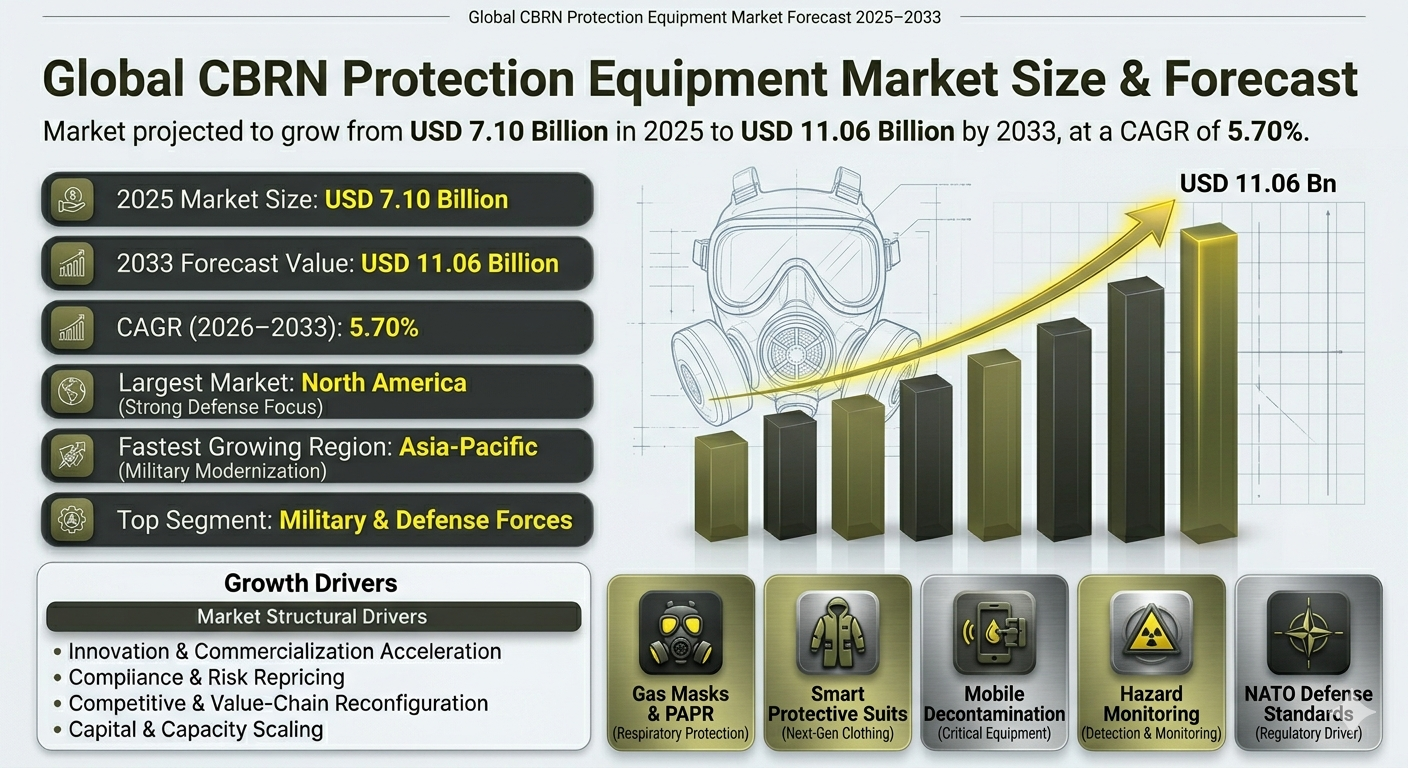
Market Overview
The Global CBRN Protection Equipment Market operates within a moderately consolidated competitive structure characterized by high competitive intensity. The market is populated by several tier 1 players, including 3M, Honeywell International Inc., Dr??gerwerk AG, Avon Protection, Thales Group, Rheinmetall AG, Smiths Detection, Teledyne FLIR, MSA Safety, and AirBoss of America Corporation. These incumbents dominate by leveraging extensive R&D capabilities, regulatory compliance expertise, and integrated value chains that accommodate high capital intensity and complex supply logistics. The market's demand profile is heavily influenced by geopolitical volatility and the rising frequency of industrial accidents and terrorist threats involving chemical, biological, radiological, and nuclear agents. Heightened global security concerns have prompted governments to increase defense budgets significantly???evidenced by Germany???s announced military expenditure increase and China???s rising military investments???and to prioritize modernization initiatives. These actions translate into accelerated procurement of advanced CBRN protective systems. Technological innovation serves as a critical differentiator, with companies focusing on smart protective suits, advanced filtration materials, and portable decontamination units. For example, in February 2026, Avon Protection introduced the EXOSKIN-S2 CBRN protective suit, incorporating cutting-edge materials and ergonomic design to enhance operational effectiveness for military and emergency response teams. Similarly, 3M???s launch of advanced respiratory protection products like the Scott AV-3000 HT facepiece reflects the growing emphasis on improving user safety and comfort. Regulatory pressures constitute a powerful shaping force in the market. Agencies such as NIOSH, the European Union, NATO, and the U.S. Department of Homeland Security enforce rigorous standards ranging from 42 CFR Part 84 to the 2017 EU CBRN Action Plan. These regulations elevate baseline requirements for equipment performance and certification, compelling manufacturers to invest heavily in compliance. The net effect is a market environment where product roadmaps are realigned to meet evolving standards, and execution standards are raised, thus supporting higher quality and more reliable protective solutions. Investment flows reinforce these dynamics. Despite the high capital intensity, defense and homeland security sectors attract rising investments aimed at expanding production capacity and improving process efficiency. The merger that created Airboss Defense Group exemplifies strategic consolidation to attain economies of scale and enhance competitive positioning. Government contracts, such as AirBoss Defense Group???s agreement with the Canadian Department of National Defense in November 2025, underscore the critical role of public sector spending in sustaining market momentum. However, the market faces notable challenges. High costs of advanced CBRN equipment and complex regulatory certification processes present barriers to entry and scaling, especially for newer players. The need to integrate emerging technologies, such as smart sensors and innovative materials, within existing supply chains further complicates product development. These factors maintain a moderately consolidated market structure where tier 1 companies with considerable resources dominate. Overall, the market overview reveals a complex interplay of drivers???geopolitical imperatives, regulatory demands, technological innovation, and investment trends???that collectively shape the competitive landscape and growth opportunities in the Global CBRN Protection Equipment Market.Structural Drivers of Market Growth
The growth trajectory of the Global CBRN Protection Equipment Market is fundamentally driven by four interrelated structural drivers that synthesize competitive, technological, investment, regulatory, and risk signals into distinct causal mechanisms shaping the market???s evolution. Innovation and Commercialization Acceleration The first driver arises from technological maturation coupled with strategic funding allocation that compresses the timeline from development to commercialization. This mechanism is evidenced by initiatives such as the NATO CBRN Defense Initiative launched in 2023, which has spurred targeted investments and technology development cycles aimed at rapidly deploying advanced protective equipment. The expansion of emergency responder training programs further supports faster adoption by creating a skilled user base ready for new technologies. Rising investments in defense and law enforcement agencies amplify this effect, enabling manufacturers to scale innovative solutions quickly. Consequently, the market sees an expanding addressable application space for CBRN equipment, spanning military, industrial, and civil protection sectors, which accelerates overall demand growth. Compliance and Risk Repricing The second driver is regulatory tightening combined with heightened risk awareness, which reprices operational requirements and raises execution standards across the market. Regulatory frameworks such as the EU PPE Regulation 2016/425 and South Korea???s Defense Acquisition Program Administration policies enforce stricter compliance, while export controls and technology transfer restrictions limit the diffusion of certain advanced technologies. These regulatory shifts compel product developers to realign roadmaps toward higher safety and performance benchmarks. Concurrently, risk factors???including the rising threat of chemical or biological warfare, misuse of hazardous materials by non-state actors, and increasing frequency of industrial accidents???intensify the need for reliable protection. The combined effect is a market that prioritizes compliance-led innovation, resulting in higher-quality equipment but also increased development and certification costs, which reinforce barriers to entry. Competitive and Value-Chain Reconfiguration The third driver emerges from competitive maneuvers and value-chain constraints that reallocate bargaining power and reshape market portfolios. Notable competitive moves include AirBoss Defense Group???s acquisition of a specialized protective equipment manufacturer and Avon Protection???s introduction of next-generation respirators and suits, signaling active portfolio repositioning toward high-performance, differentiated products. Expansion of national defense modernization programs and government investments drive demand shifts, prompting companies to optimize their supply chains and production processes to capture emerging growth segments. The high cost of equipment development, complex certification requirements, and compatibility challenges create bottlenecks within the value chain, concentrating margins among firms able to manage these complexities effectively. As a result, the competitive landscape becomes more dynamic, with consolidation and strategic partnerships serving as key responses to systemic value-chain constraints. Capital and Capacity Scaling The fourth driver is the deployment of capital into capacity expansion and process upgrades, which enhances throughput and reduces friction in equipment deployment. This mechanism draws on rising investments from government and private sectors aimed at scaling production capabilities to meet surging demand, particularly in high-priority segments such as military-grade respiratory systems and rapid deployment decontamination units. The expansion of homeland security initiatives, combined with emergency responder training programs, creates pressure for faster availability of reliable equipment. Additionally, defense modernization programs facilitate capital inflows that fund technology upgrades and manufacturing efficiencies. The integration of new materials and smart technologies is accelerated by such investments, enabling the market to address complex threat environments more effectively. Consequently, capacity scaling reduces time-to-market and cost pressures, supporting sustained growth and market expansion. Together, these four structural drivers???Innovation and Commercialization Acceleration, Compliance and Risk Repricing, Competitive and Value-Chain Reconfiguration, and Capital and Capacity Scaling???interact to underpin the fundamental growth dynamics of the Global CBRN Protection Equipment Market. They explain not only the quantitative expansion forecasted but also the qualitative evolution in product sophistication, market structure, and operational efficiency.Market Segmentation Analysis
Top-Level Segment Share Split
- By End User: 25.00% (Military, emergency responders, and homeland security agencies are primary end users driving demand.)
- By Equipment Type: 20.00% (Includes respiratory protection, filtration systems, and detection devices, critical for CBRN defense.)
- By Protective Clothing: 20.00% (Protective suits and garments are essential for personnel safety in hazardous environments.)
- By Decontamination Equipment: 15.00% (Portable and mobile decontamination technologies are increasingly adopted for rapid response.)
- By Detection and Monitoring Equipment: 20.00% (Advanced sensors and monitoring devices are critical for early threat detection and situational awareness.)
Regional Market Dynamics
Regional Share Split
- Asia Pacific: 30.00% (Rapid military modernization and rising geopolitical tensions in countries like China, India, and South Korea drive strong demand.)
- North America: 28.00% (High defense spending, homeland security initiatives, and advanced technology adoption in the US and Canada.)
- South America: 5.00% (Lower but growing awareness and investment in emergency preparedness and chemical hazard management.)
- Europe: 27.00% (Strong regulatory frameworks, defense budgets, and presence of key manufacturers in Germany, UK, and France.)
- Middle East & Africa: 10.00% (Increasing security concerns and investments in defense infrastructure amid regional conflicts.)
Competitive Landscape
The Global CBRN Protection Equipment Market is characterized as moderately consolidated, with five Tier 1 players dominating a high-competition environment. Key companies such as 3M, Honeywell International Inc., Dr??gerwerk AG, Avon Protection, Thales Group, Rheinmetall AG, Smiths Detection, Teledyne FLIR, MSA Safety, and AirBoss of America Corporation collectively sustain market leadership through differentiated strategic capabilities that leverage technology, regulatory expertise, and value-chain integration. The high capital intensity and complex regulatory environment impose significant barriers to entry, limiting scalability for smaller players and reinforcing the dominance of established firms. The necessity for advanced R&D, rigorous certification processes under regulations like EU PPE Regulation 2016/425 and NIOSH standards, and the integration of multi-threat protective technologies create hurdles that only companies with substantial resources and expertise can overcome. 3M maintains a competitive edge through its extensive portfolio of respiratory protection equipment, including innovative products like the 3M Scott AV-3000 HT facepiece and E-Z Flo C5 regulator. Its deep expertise in filtration technology and global distribution networks ensure resilience and rapid market penetration, particularly in North America and Europe. Honeywell International Inc. leverages its advanced materials science and safety technology competencies to develop smart protective suits and detection systems, aligning with rising regulatory demands and military specifications worldwide. Honeywell???s substantial investment in defense modernization programs and homeland security initiatives fortifies its market position. Dr??gerwerk AG???s strengths lie in its integrated respiratory and detection systems tailored for military and emergency response applications, supported by a robust global service infrastructure. This capability enables quick deployment and after-sales support critical in high-stakes CBRN scenarios. Avon Protection???s strategic focus on innovation is exemplified by its launch of the EXOSKIN-S2 CBRN protective suit in February 2026, which incorporates lightweight materials and enhanced mobility for military and emergency responders. Avon???s agility in portfolio expansion and responsiveness to battlefield protection needs sustain its relevance in a rapidly evolving competitive landscape. Thales Group combines its defense electronics and systems integration expertise with Rheinmetall AG???s firepower and protective equipment capabilities, creating synergies that enhance multi-domain CBRN solutions. Their partnership and Rheinmetall???s acquisition of Loc Performance Products, LLC, demonstrate strategic moves to control critical value-chain segments and deliver integrated rocket and protection systems. AirBoss of America Corporation, through the formation of AirBoss Defense Group, consolidates niche capabilities in chemical protective suits and filtration technologies, as evidenced by its contract win with the Canadian Department of National Defense in November 2025. AirBoss???s focus on specialized protective equipment and filtration innovation positions it well within high-demand military and industrial segments. The competitive intensity is further heightened by ongoing M&A activities and product innovations, such as Avon???s introduction of EXOSKIN-S1 and EXOSKIN-S2 suits and 3M???s respiratory protection advancements. These moves reflect an industry dynamic where technological innovation, regulatory compliance, and scale advantages converge to redefine market positioning. Furthermore, competitive positioning is influenced by the increasing importance of value-chain control. Companies that manage supply chain complexities, certification processes, and after-market service networks effectively can capture higher margins and accelerate growth. The hybrid operational model prevalent in the market, with distributor-led distribution supplemented by direct military and government contracts, favors players with established global footprints and deep customer relationships. In summary, the Global CBRN Protection Equipment Market???s competitive landscape is shaped by the interplay of high technological innovation, stringent regulatory compliance, capital intensity, and evolving customer requirements, creating a landscape where established leaders maintain dominance through continuous investment and strategic repositioning.Strategic Outlook
Looking forward, the Global CBRN Protection Equipment Market will be shaped by intensifying innovation, regulatory evolution, and strategic capital deployment that collectively enable market expansion and technological maturation. Industry participants must navigate increasing complexity in customer demands, geopolitical risk environments, and compliance landscapes to capture emerging opportunities. Innovation and commercialization acceleration remain critical strategic priorities. The compression of development-to-commercialization cycles driven by technology maturity and rising defense and law enforcement investments accelerates the adoption of advanced protective solutions across multiple applications. The NATO CBRN Defense Initiative launched in 2023 and the expansion of emergency responder training programs exemplify institutional commitments that underpin market demand. Companies investing in smart materials, lightweight protective gear, and integrated sensor systems will gain competitive advantage by meeting evolving operational requirements and enhancing user comfort and performance. Regulatory tightening and risk repricing will continue to drive product roadmap shifts and elevate market entry standards. Compliance with evolving frameworks such as the EU PPE Regulation 2016/425, U.S. Department of Homeland Security mandates, and national standards in Asia Pacific will require manufacturers to embed enhanced safety features and certification processes early in development. This dynamic compels investment in testing infrastructure and collaboration with regulatory bodies, emphasizing quality assurance and traceability. Risk repricing, including heightened geopolitical tensions and terrorism risks, will sustain demand for rapid deployment and modular solutions adaptable to diverse threat environments. Competitive and value-chain reconfiguration is expected to intensify as strategic acquisitions, partnerships, and portfolio repositioning reshape market dynamics. The AirBoss Defense Group???s recent acquisition of a specialized manufacturer and the Thales-Rheinmetall partnership illustrate how firms seek to consolidate expertise and control critical value-chain segments, such as filtration and protective suit technologies. These moves enable margin expansion and differentiation by integrating upstream innovation with downstream delivery capabilities. Companies that optimize supply chain resilience amid complex regulatory and cost structures will enhance scalability and responsiveness to fluctuating market needs. Capital and capacity scaling will be paramount to meet rising demand and reduce deployment friction. Increased investment in manufacturing capacity, process automation, and supply chain digitization will enable faster throughput, especially in high-demand segments such as respiratory protection equipment and decontamination systems. Governments??? sustained funding toward homeland security and defense modernization programs will provide a stable capital inflow, encouraging industry-wide upgrades in production technology and logistics networks. Strategic deployment of capital to enhance service capabilities, including training and maintenance, will further solidify customer retention and market penetration. In this evolving landscape, companies should pursue integrated approaches that combine technological innovation with regulatory foresight and operational excellence. Strengthening R&D pipelines, expanding partnerships for technology sharing, and leveraging data analytics for market and risk assessment will be essential. Moreover, balancing product portfolio diversification across military, industrial, and homeland security end users can mitigate exposure to geopolitical volatility and regulatory shocks. The Global CBRN Protection Equipment Market???s trajectory through 2033 underscores the growing imperative for resilient, adaptive, and compliant protection solutions. Organizations that effectively blend innovation, capital efficiency, and strategic alignment with national and international security priorities will capture disproportionate growth and fortify their market leadership.Final Market Perspective
The Global CBRN Protection Equipment Market???s outlook reflects a convergence of geopolitical urgency, technological advancement, and regulatory rigor that collectively elevate the strategic importance of CBRN defense capabilities worldwide. As geopolitical tensions escalate and the threat landscape evolves, demand for sophisticated protective equipment is set to intensify, necessitating accelerated innovation and streamlined commercialization to maintain operational readiness. Capital deployment will increasingly focus on scaling production and enhancing value-chain integration, reducing bottlenecks associated with high equipment costs and compliance complexities. The market???s moderately consolidated structure, dominated by a few Tier 1 players with deep technological and regulatory expertise, will persist as barriers to entry remain formidable. These leaders, by controlling critical technologies and supply networks, will continue to shape product standards and market expectations. Regulatory and risk repricing pressures will sustain high execution standards, compelling ongoing enhancements in product safety, multi-threat protection, and rapid response capabilities. Compliance-driven innovation will remain a core competitive differentiator, ensuring equipment aligns with evolving global norms and contingency frameworks. Regionally, Asia Pacific???s rapid modernization and defense spending, North America???s technological leadership and regulatory maturity, and Europe???s compliance-driven demand will collectively underpin the lion???s share of global market growth. Emerging regions such as the Middle East & Africa and South America will incrementally contribute by addressing localized security vulnerabilities and industrial safety needs. Overall, the market???s growth trajectory to USD 11.17 billion by 2033, at a CAGR of approximately 5.82%, encapsulates a balanced yet dynamic ecosystem where innovation, capital, and compliance interplay to respond to a complex, evolving threat environment. Stakeholders that harness these forces strategically will not only secure competitive advantage but also contribute decisively to global CBRN preparedness and resilience.Research Methodology
This study employs a comprehensive research methodology combining both primary and secondary research to ensure robust and reliable market insights for the Global CBRN Protection Equipment Market, base year 2025. Primary research involved in-depth interviews with a carefully selected group of market-appropriate participants, including manufacturers and distributors, channel partners, procurement and category managers, as well as industry experts and senior operating executives. These engagements provided firsthand perspectives on market dynamics, competitive landscape, product innovation, and end-user demand across key segments such as military and defense forces, industrial and civil protection, and homeland security applications. Secondary research was conducted through a sophisticated triangulated approach, drawing on a diverse array of authoritative sources to validate and enrich the primary data findings. This included analysis of proprietary databases, market intelligence reports, financial disclosures, regulatory publications, and industry white papers accessed from leading platforms such as Future Market Insights, Data Bridge Market Research, HTF Market Intelligence, Grand View Research, Markets and Markets, and others. Additional insights were gleaned from relevant digital repositories and professional networks to capture emerging trends, technological advancements, and market forecasts. The triangulation process ensured cross-verification of data points, enhancing the overall accuracy and depth of the market assessment. This methodological rigor enables a nuanced understanding of segment-specific growth drivers, competitive positioning, and evolving end-user requirements in the global defense-related CBRN protection equipment landscape.Table of Contents
Table of Contents
- 1. Executive Summary
- 1.1 Market Forecast Snapshot (2026-2033)
- 1.2 Global Market Size & CAGR Analysis
- 1.3 Largest & Fastest-Growing Segments
- 1.4 Region-Level Leadership & Growth Trends
- 1.5 Key Market Drivers
- 1.6 Competitive Landscape Overview
- 1.7 Strategic Outlook Through 2033
- 2. Introduction & Market Overview
- 2.1 Definition of the Global CBRN Protection Equipment Market
- 2.2 Scope of the Study
- 2.3 Industry Evolution & Market Development
- 2.4 Supply Chain & Distribution Infrastructure
- 2.5 Impact of Consumer Trends
- 2.6 Sustainability & Regulatory Landscape
- 2.7 Technology & Innovation Landscape
- 3. Research Methodology
- 3.1 Primary Research
- 3.2 Secondary Research
- 3.3 Market Size Estimation Model
- 3.4 Forecast Assumptions (2026-2033)
- 3.5 Data Validation & Triangulation
- 4. Market Dynamics
- 4.1 Drivers
- 4.1.1 Increasing Demand Drivers
- 4.1.2 Industry Innovation Drivers
- 4.1.3 Market Expansion Factors
- 4.1.4 Regulatory or Policy Support
- 4.1.5 Technology Adoption Drivers
- 4.2 Restraints
- 4.2.1 Cost Constraints
- 4.2.2 Infrastructure Limitations
- 4.2.3 Regulatory Challenges
- 4.2.4 Market Awareness Barriers
- 4.3 Opportunities
- 4.3.1 Emerging Market Opportunities
- 4.3.2 Product Innovation Opportunities
- 4.3.3 Technology Expansion Opportunities
- 4.3.4 Supply Chain Improvements
- 4.4 Challenges
- 4.4.1 Supply Chain Complexity
- 4.4.2 Quality Control & Compliance
- 4.4.3 Regional Market Fragmentation
- 4.4.4 Competitive Pressure
- 4.1 Drivers
- 5. Global CBRN Protection Equipment Market Analysis (USD Billion), 2026-2033
- 5.1 Market Size Overview
- 5.2 CAGR Analysis
- 5.3 Regional Revenue Distribution
- 5.4 Segment Revenue Analysis
- 5.5 Distribution Channel Analysis
- 5.6 Consumer Impact Analysis
- 6. Market Segmentation (USD Billion), 2026-2033
- 6.1 By End User
- 6.1.1 Military and Defense Forces
- 6.1.1.1 Battlefield Protection Systems
- 6.1.1.1.1 Soldier Protection Equipment
- Individual CBRN Protection Kits
- Tactical Protective Equipment Systems
- 6.1.1.1.1 Soldier Protection Equipment
- 6.1.1.1 Battlefield Protection Systems
- 6.1.2 Industrial and Civil Protection
- 6.1.2.1 Industrial Hazard Protection Systems
- 6.1.2.1.1 Chemical Plant Safety Equipment
- Industrial Hazard Protection Gear
- Workplace Hazard Monitoring Equipment
- 6.1.2.1.1 Chemical Plant Safety Equipment
- 6.1.2.1 Industrial Hazard Protection Systems
- 6.1.3 Homeland Security and Emergency Response
- 6.1.3.1 Hazmat Response Units
- 6.1.3.1.1 Emergency CBRN Response Equipment
- Urban Hazard Response Systems
- Disaster Management Protection Equipment
- 6.1.3.1.1 Emergency CBRN Response Equipment
- 6.1.3.1 Hazmat Response Units
- 6.1.1 Military and Defense Forces
- 6.2 By Equipment Type
- 6.2.1 Respiratory Protection Equipment
- 6.2.1.1 Gas Masks
- 6.2.1.1.1 Full Face Gas Masks
- Military Grade Gas Masks
- Civil Defense Gas Masks
- 6.2.1.1.2 Half Face Respirators
- Industrial Respirators
- Emergency Response Respirators
- 6.2.1.1.1 Full Face Gas Masks
- 6.2.1.2 Powered Air Purifying Respirators (PAPR)
- Military PAPR Systems
- Tactical Respiratory Protection Systems
- Combat Environment Respiratory Systems
- Industrial PAPR Systems
- Hazardous Material Handling Respirators
- Laboratory Protection Respirators
- Military PAPR Systems
- 6.2.1.3 Self Contained Breathing Apparatus (SCBA)
- Open Circuit SCBA
- Firefighter Breathing Systems
- Hazmat Response Breathing Systems
- Closed Circuit SCBA
- Long Duration Breathing Apparatus
- Military Closed Circuit Systems
- Open Circuit SCBA
- 6.2.1.1 Gas Masks
- 6.2.1 Respiratory Protection Equipment
- 6.3 By Protective Clothing
- 6.3.1 Chemical Protective Suits
- 6.3.1.1 Splash Protective Suits
- Level B Hazmat Suits
- Liquid Chemical Resistant Suits
- Hazardous Liquid Response Suits
- Level B Hazmat Suits
- 6.3.1.2 Fully Encapsulated Suits
- Level A Hazmat Suits
- Gas Tight Chemical Protection Suits
- Maximum Hazard Protection Suits
- Level A Hazmat Suits
- 6.3.1.1 Splash Protective Suits
- 6.3.2 Biological Protective Clothing
- 6.3.2.1 Biohazard Protective Suits
- Pathogen Resistant Suits
- Infectious Disease Protection Suits
- Medical Isolation Suits
- Pathogen Resistant Suits
- 6.3.2.2 Military Biological Protection Suits
- Integrated CBRN Protective Garments
- Combat Protective Clothing Systems
- Tactical Biological Protection Systems
- Integrated CBRN Protective Garments
- 6.3.2.1 Biohazard Protective Suits
- 6.3.1 Chemical Protective Suits
- 6.4 By Decontamination Equipment
- 6.4.1 Personnel Decontamination Systems
- Portable Decontamination Units
- Emergency Response Decontamination Systems
- Mobile Decontamination Shelters
- Rapid Deployment Decontamination Units
- Emergency Response Decontamination Systems
- Portable Decontamination Units
- 6.4.2 Equipment and Surface Decontamination
- Chemical Decontamination Systems
- Chlorine Based Decontamination
- Military Equipment Decontamination Systems
- Hazardous Surface Neutralization Systems
- Chlorine Based Decontamination
- Hydrogen Peroxide Decontamination
- Vaporized Hydrogen Peroxide Systems
- Facility Decontamination Systems
- Laboratory Decontamination Platforms
- Vaporized Hydrogen Peroxide Systems
- Chemical Decontamination Systems
- 6.4.1 Personnel Decontamination Systems
- 6.5 By Detection and Monitoring Equipment
- Chemical Detection Systems
- Portable Chemical Detectors
- Handheld Chemical Detection Devices
- Battlefield Chemical Detection Systems
- Emergency Response Chemical Detection
- Handheld Chemical Detection Devices
- Fixed Chemical Monitoring Systems
- Industrial Chemical Monitoring Platforms
- Continuous Hazard Monitoring Systems
- Facility Chemical Surveillance Systems
- Industrial Chemical Monitoring Platforms
- Portable Chemical Detectors
- Biological Detection Systems
- Bioagent Detection Systems
- Rapid Pathogen Detection Systems
- Portable Bioagent Detection Units
- Laboratory Biothreat Detection Platforms
- Rapid Pathogen Detection Systems
- Biosurveillance Monitoring Systems
- Environmental Bioagent Monitoring
- Airborne Pathogen Detection Systems
- Environmental Biohazard Monitoring Platforms
- Environmental Bioagent Monitoring
- Bioagent Detection Systems
- Radiological and Nuclear Detection
- Radiation Detection Equipment
- Geiger Counter Systems
- Portable Radiation Detectors
- Personal Radiation Monitoring Devices
- Geiger Counter Systems
- Nuclear Threat Detection Systems
- Radiation Portal Monitors
- Border Radiation Monitoring Systems
- Cargo Radiation Inspection Systems
- Radiation Portal Monitors
- Radiation Detection Equipment
- Chemical Detection Systems
- 6.1 By End User
- 7. Market Segmentation by Geography
- 7.1 North America
- 7.2 Europe
- 7.3 Asia-Pacific
- 7.4 Latin America
- 7.5 Middle East & Africa
- 8. Competitive Landscape
- 8.1 Market Share Analysis
- 8.2 Product Portfolio Benchmarking
- 8.3 Product Positioning Mapping
- 8.4 Supply Chain & Distribution Partnerships
- 8.5 Competitive Intensity & Differentiation
- 9. Company Profiles
- 10. Strategic Intelligence & Pheonix AI Insights
- 10.1 Pheonix Demand Forecast Engine
- 10.2 Supply Chain & Infrastructure Analyzer
- 10.3 Technology & Innovation Tracker
- 10.4 Product Development Insights
- 10.5 Automated Porter’s Five Forces Analysis
- 11. Future Outlook & Strategic Recommendations
- 11.1 Emerging Market Expansion
- 11.2 Technology Innovation Strategies
- 11.3 Product Development Roadmap
- 11.4 Regional Expansion Strategies
- 11.5 Long-Term Market Outlook (2033+)
- 12. Appendix
- 13. About Pheonix Research
- 14. Disclaimer
Competitive Landscape
Global CBRN Protection Equipment Market Competitive Intensity & Market Structure Overview
The global Chemical, Biological, Radiological, and Nuclear (CBRN) protection equipment market demonstrates a moderately consolidated structure shaped by a concentrated cadre of Tier 1 players coupled with persistent high competitive intensity. This unique market formation emerges from the interplay of significant entry barriers, differentiated product portfolios, and the specialized nature of CBRN threats requiring advanced, reliable protective solutions. The presence of approximately five Tier 1 companies’such as 3M, Honeywell International Inc., Dr??gerwerk AG, Avon Protection, and Thales Group’anchors the market’s core, while several strong Tier 2 and emerging players expand competitive pressures through niche innovations and strategic contract acquisitions. The moderately consolidated nature results from the high capital intensity and stringent regulatory compliance standards inherent to CBRN protective equipment manufacturing. These barriers effectively limit the number of large-scale operators capable of sustaining global defense and emergency response contracts. Simultaneously, high differentiation in product capabilities’ranging from advanced filtration systems to integrated detection and decontamination solutions’creates a competitive landscape where technology leadership and strategic partnerships become critical. This fosters a market environment where established players maintain dominance through continuous innovation and M&A activity, while smaller players challenge through agility and specialization. Competitive intensity remains elevated as geopolitical tensions and rising security threats globally intensify demand for advanced CBRN solutions. This dynamic compels companies to adopt aggressive strategies, including product launches, contract acquisitions, and collaborations, to secure market share and reinforce defense-oriented client relationships. For instance, Avon Protection’s rollout of the EXOSKIN-S2 CBRN protective suit in February 2026 illustrates the drive toward next-generation protection enhancements, blending mobility with higher safety standards. Similarly, AirBoss Defense Group’s strategic expansion through mergers and contract wins underscores the competitive imperative to build scale and geographic reach. Such a market structure with concentrated leadership yet high rivalry pressures results in a delicate balance. On one hand, established players leverage deep R&D capabilities to maintain premium pricing and robust margins. On the other, increased competition from emerging firms and expanding government investments in CBRN readiness drives pricing pressure and accelerates innovation cycles. Ultimately, this moderately consolidated yet fiercely competitive market reflects the criticality and complexity of CBRN protection needs against a backdrop of evolving global security challenges.
Global CBRN Protection Equipment Market Competitive Intensity & Market Structure Current Scenario
Leading Company Profiles
3M: Advanced filtration materials and respiratory protection equipment manufacturer. Leverages innovation in filtration technology to supply military and emergency responders globally. Honeywell International Inc.: Provider of integrated CBRN protective gear and detection systems. Strong portfolio in protective clothing and detection equipment with global defense contracts. Dr??gerwerk AG: Specialist in respiratory protection and detection technologies. European leader with advanced sensor technology and protective equipment for CBRN threats. Avon Protection: Developer of smart protective suits and respiratory systems. Known for innovative EXOSKIN-S series, enhancing soldier protection and mobility. Thales Group: Provider of integrated CBRN detection and defense solutions. Strong in defense electronics and partnered with Rheinmetall for advanced rocket and detection tech. Rheinmetall AG: Defense technology company with CBRN protection and decontamination solutions. Collaborates on advanced defense systems and mobile decontamination technologies. AirBoss Defense Group: Manufacturer of protective clothing and respiratory protection equipment. Secured key defense contracts in North America, expanding presence in CBRN protective gear. Safeguard Global Solutions: Modeled company specializing in portable decontamination systems. Emerging player focusing on rapid deployment decontamination units for military and emergency use. Sentinel CBRN Technologies: Modeled company providing advanced detection and monitoring equipment. Innovator in sensor fusion and real-time threat analytics for CBRN environments.
Key Competitive Intensity & Market Structure Signals in Global CBRN Protection Equipment Market
Several critical signals reveal the underlying forces shaping the competitive intensity and market structure of the global CBRN protection equipment market. The August 2024 acquisition by AirBoss Defense Group of a specialized manufacturer focused on chemical protective suits and filtration technologies highlights the continuing consolidation trend among leading players. This move not only broadens AirBoss’s technological base but also signals the strategic importance of vertical integration to control supply chains and enhance product differentiation in a market where reliability and performance are non-negotiable. Avon Protection’s series of product launches’including the CH15 portable CBRN protection device and the EXOSKIN-S1 and S2 protective suits’demonstrate how sustained innovation is critical to maintaining competitive advantage. The introduction of the EXOSKIN-S2 suit in February 2026, in particular, reflects the company’s commitment to advancing soldier protection through lightweight, flexible, and highly durable materials. Such product innovation directly influences competitive positioning by addressing evolving operational demands and regulatory standards, thereby driving customer preference and contract awards. Government contracts and defense procurements remain pivotal competitive signals. AirBoss Defense Group’s November 2025 contract from the Canadian Department of National Defense exemplifies how securing governmental partnerships is essential for market leadership. These contracts often entail multi-year engagements with rigorous qualification criteria, reinforcing barriers to entry and sustaining the market’s moderately consolidated structure. Additionally, rising industrial safety regulations in sectors such as chemical manufacturing, energy, and pharmaceuticals impose higher compliance requirements on CBRN equipment providers. These regulatory pressures act as non-price competition drivers, emphasizing quality, certification, and reliability over cost alone. Consequently, companies that can demonstrate superior compliance and performance’often through innovative product features’gain a sustainable edge, elevating competitive intensity and entrenching market positions. Leadership in collaborative defense initiatives also signals competitive dynamics. The University of Applied Sciences (UAH) spearheading a NATO partnership to tackle security challenges posed by quantum technologies illustrates how emerging threats are reshaping defense priorities. Such partnerships indicate a forward-looking dimension to competition where technological foresight and alliance-building are as crucial as product portfolios. Collectively, these signals reveal a competitive landscape marked by strategic acquisitions, robust product innovation, and government-driven demand. The moderately consolidated market structure coexists with high rivalry, propelled by the critical nature of CBRN defense and the escalating complexity of global security threats. This environment fosters continuous strategic maneuvering as companies seek to secure technological leadership and long-term procurement relationships. — [The article continues beyond this point into the next sections per the requested structure.]
Key Competitive Intensity & Market Structure Signals in Global CBRN Protection Equipment Market
The competitive landscape of the global CBRN protection equipment market is defined by a complex interplay of consolidation among leading players and vigorous rivalry driven by innovation and strategic positioning. The moderately consolidated structure’with about five dominant Tier 1 players such as 3M, Honeywell International Inc., Avon Protection, Dr??gerwerk AG, and Thales Group’reflects high entry barriers and the necessity for deep specialization. Yet, despite this concentration, the competitive intensity remains elevated due to several converging market forces. One critical structural driver is the accelerating pace of product innovation and capability differentiation. Avon Protection’s launch of the EXOSKIN-S1 and subsequent EXOSKIN-S2 CBRN protective suits in early 2026 exemplifies how incremental performance improvements and enhanced soldier mobility can establish distinct competitive advantages. These advanced suits incorporate smart design elements that cater to increasingly demanding military and emergency response scenarios. Similarly, 3M’s introduction of next-generation respiratory protection equipment, including the 3M Scott AV-3000 HT facepiece and the Scott E-Z Flo C5 regulator, underlines how technical sophistication in filtration and wearer comfort is a pivotal battleground. This innovation-driven competition compels incumbents to continuously invest in R&D to avoid product obsolescence, thereby escalating rivalry even within a moderately consolidated market. Another vital competitive signal lies in strategic acquisitions and partnerships that expand technological scope and geographic reach. For instance, AirBoss Defense Group’s acquisition in August 2024 of a specialized manufacturer dedicated to chemical protective suits and filtration technologies reflects a deliberate effort to deepen product portfolio breadth and scale operational capabilities. This move not only consolidates niche competencies but also strengthens AirBoss’s position in North American defense procurement channels, as demonstrated by the key contract secured from the Canadian Department of National Defense in late 2025. Furthermore, Rheinmetall AG’s acquisition of Loc Performance Products and its partnership with Thales Group to co-develop rocket and detection technologies highlight how alliances enable access to complementary capabilities, fostering systemic solutions beyond standalone protective gear. These strategic integrations raise entry barriers for emerging players and intensify competition among incumbents vying for comprehensive system contracts. The market’s competitive dynamics are also influenced by geopolitical tensions and rising defense budgets globally, which translate into sustained demand for advanced CBRN protective solutions. Germany’s announced military expenditure increases and China’s expanding defense budgets feed into a broader context where government procurement cycles become a decisive competitive lever. This environment favors established players with proven track records and existing government ties, while simultaneously incentivizing product differentiation and rapid response to evolving threat scenarios. The UAH-led NATO partnership addressing quantum technology challenges further signals that future CBRN market competition may increasingly incorporate cross-domain security concerns, elevating the strategic importance of innovation ecosystems and coalition-building. Lastly, regulatory and industrial safety drivers provide additional layers of complexity to competitive intensity. Rising safety regulations in chemical manufacturing, energy, and pharmaceutical sectors create expanded demand for CBRN equipment, but also impose stringent performance and compliance requirements. Companies such as Avon Protection, with its CH15 portable CBRN protection device, address these industrial needs by offering versatile, deployable solutions tailored to civilian and military contexts. This diversification of end-use markets introduces new competitive pressures as providers must balance innovation for specialized military applications with scalable products for industrial and emergency responder segments. Collectively, these signals underscore a market where high competitive intensity coexists with moderate consolidation, driven by continuous innovation, strategic acquisitions, geopolitical demand, and regulatory complexity. The implication is a dynamic competitive structure marked by escalating investment in product differentiation and alliance formation, intensifying rivalry among a concentrated set of global leaders. —
Strategic Implications of Competitive Intensity & Market Structure in Global CBRN Protection Equipment Market
The observed competitive dynamics and market structure present several critical strategic implications for incumbents, emerging players, and broader supply chain participants within the global CBRN protection equipment market. High competitive intensity amid moderate consolidation compels firms to pursue multi-dimensional strategies that combine technological leadership, scale, and strategic partnerships to sustain market positioning. Firstly, leadership in innovation emerges as a non-negotiable imperative. The successful deployment of Avon Protection’s EXOSKIN-S2 suit in February 2026 and 3M’s introduction of advanced respiratory gear demonstrate that incremental technological advantages are pivotal to differentiating offerings in a market where product reliability under life-threatening conditions is paramount. Companies unable to keep pace with evolving performance benchmarks risk losing relevance to more agile or better-funded competitors. Consequently, sustained R&D investment is a strategic necessity, but must be coupled with rapid commercialization and field validation to convert innovation into procurement wins. This dynamic elevates time-to-market and continuous product evolution as key competitive levers, influencing pricing flexibility and margin sustainability. Secondly, strategic acquisitions and partnerships are increasingly vital to building comprehensive capability portfolios and securing procurement contracts. AirBoss Defense Group’s acquisition of a specialized chemical protective suit manufacturer in 2024 and its successful contract with the Canadian Department of National Defense highlight how scale and scope expansion through mergers directly enhance competitive positioning. Similarly, Rheinmetall’s collaboration with Thales Group positions both firms to offer integrated CBRN defense and rocket solutions, which are more attractive to militaries seeking multi-threat system interoperability. This trend suggests that future market consolidation may continue in pockets where complementary technologies and geographic access can be synergized, raising barriers for smaller entrants and potentially compressing supplier margins through intensified competition. Thirdly, the intensification of geopolitical tensions and related defense spending creates both opportunity and risk. On one hand, increased budgets in regions like North America, Europe, and Asia provide a predictable demand base for Tier 1 players, supporting volume growth and long-term contract stability. On the other hand, geopolitical volatility demands agility and adaptability in supply chain management, contract negotiation, and product customization. For example, the U.S. Army’s introduction of advanced portable decontamination technology in February 2026 signals demand for cutting-edge solutions that can be rapidly deployed and integrated into existing defense frameworks. Firms capable of anticipating and responding to such evolving requirements gain competitive advantage, while those constrained by legacy systems or slower innovation cycles risk losing market share. This environment also intensifies pressure on firms to secure intellectual property and protect technology from geopolitical leakage, influencing partnership structures and competitive behavior. Fourthly, the expansion of regulatory frameworks in industrial safety domains introduces new competitive considerations. The rising industrial safety regulations in chemical manufacturing, energy, and pharmaceutical sectors, which require robust CBRN protective equipment, broaden the market but also impose compliance burdens that favor established players with mature quality systems and certification capabilities. Avon Protection’s CH15 portable device exemplifies how firms can leverage industrial sector demand to diversify revenue streams and mitigate risks associated with defense procurement cyclicality. However, this multi-segment approach requires balancing specialized military-grade performance with scalable, cost-effective industrial solutions, challenging companies to manage complexity in production, marketing, and after-sales support. Finally, the presence of emerging players focused on niche segments, such as Safeguard Global Solutions’ portable decontamination systems and Sentinel CBRN Technologies’ advanced detection analytics, introduces a disruptive element. While these firms currently lack the scale and breadth of Tier 1 incumbents, their innovation-driven focus on rapid deployment and sensor fusion technologies threatens to reshape competitive requirements. Established players must therefore evaluate collaboration or acquisition strategies to integrate such capabilities, or risk obsolescence as end-users increasingly demand integrated, real-time protective ecosystems. In sum, the strategic landscape of the global CBRN protection equipment market demands that incumbents pursue integrated innovation, scale-building through acquisitions and partnerships, geopolitical agility, regulatory compliance, and selective engagement with emerging technology providers. Firms that align these dimensions effectively will enhance their competitive resilience and capture expanding demand driven by heightened global security concerns. —
Global CBRN Protection Equipment Market Competitive Intensity & Market Structure Forward Outlook
Looking ahead to 2026-2033, the competitive intensity and market structure of the global CBRN protection equipment market will likely evolve under the influence of several convergent forces, shaping strategic behavior and market outcomes in nuanced ways. Moderate consolidation is expected to persist, as Tier 1 players deepen their core competencies through targeted acquisitions and partnerships. AirBoss Defense Group’s recent acquisition of a specialized chemical protective equipment manufacturer, combined with Rheinmetall’s procurement of Loc Performance Products, suggests that vertical integration and capability complementation will be central strategies to enhance competitive moats. This consolidation trajectory is likely to marginalize smaller standalone players lacking scale or unique technology, further concentrating market power among a handful of global leaders. Simultaneously, the pace of innovation will accelerate, driven by both military and industrial demand for enhanced protection, mobility, and system integration. Avon Protection’s rapid succession of product launches’from the EXOSKIN-S1 to the EXOSKIN-S2 suits and the CH15 portable device’sets a benchmark for continuous improvement cycles that other firms will strive to match or exceed. Respiratory protection solutions from 3M and Honeywell will also likely continue evolving to meet increasingly stringent performance and comfort standards. These innovation imperatives will sustain high competitive intensity, as product differentiation remains a critical driver of contract awards and pricing power. Geopolitical volatility and heightened defense spending will continue to underpin robust demand, but will also introduce complexity regarding supply chain resilience and procurement timelines. The U.S. Army’s deployment of advanced portable decontamination technologies in early 2026 exemplifies how end-user requirements can shift rapidly in response to emerging threats, forcing suppliers to maintain flexible production and R&D capacities. Moreover, expanding NATO-led initiatives, including those addressing quantum technology implications, will open new domains of competition where CBRN protection intersects with advanced sensor and electronic warfare systems. Regulatory pressures from industrial safety sectors will further influence market structure by encouraging product diversification and multi-sector engagement. Firms adept at navigating certification regimes and tailoring solutions for civilian applications will reduce their dependency on defense contracts and smooth revenue cycles. However, this diversification adds complexity to competitive positioning, as companies must simultaneously satisfy divergent customer requirements without diluting brand strength or operational focus. Emerging technology providers present both a challenge and an opportunity. Startups and specialized firms focused on rapid-deployment decontamination or sensor fusion technologies’such as Safeguard Global Solutions and Sentinel CBRN Technologies’are poised to disrupt traditional product paradigms. Incumbents will need to either integrate these innovations through partnerships and acquisitions or risk ceding market segments characterized by rapid adaptability and technological sophistication. This dynamic may spark a new wave of competitive restructuring within the moderately consolidated market framework. In conclusion, the global CBRN protection equipment market through 2033 will remain characterized by a delicate balance between consolidation and competition. Leading firms will leverage innovation, acquisition, and geopolitical agility to solidify their market dominance, while emerging players and shifting demand profiles will fuel ongoing competitive intensity. Market participants that anticipate these evolving dynamics and align their strategic priorities accordingly will be best positioned to capture value in a high-stakes, security-driven environment.
Value Chain
Global CBRN Protection Equipment Market Value Chain & Supply Chain Evolution Overview
The value chain and supply chain dynamics within the global Chemical, Biological, Radiological, and Nuclear (CBRN) Protection Equipment market are pivotal in shaping competitive positioning, operational efficiency, and margin realization. At the core, the market operates under a hybrid primary operational model, blending direct and distributor-led channels. This hybridization addresses the complexity inherent in the supply chain, which is characterized by multifaceted stages encompassing research and development, component manufacturing, system integration, rigorous testing and certification, distribution, and after-sales support. The high complexity of the supply chain is a direct consequence of the sophisticated nature and critical application of CBRN protection equipment. The integration of advanced materials, sensor technologies, and protective systems demands specialized component manufacturing processes involving filtration media, sensors, fabrics, and electronics. Companies such as 3M, Honeywell International Inc., Dr??gerwerk AG, and Avon Protection are deeply embedded in these upstream activities, where innovation and quality control heavily influence downstream capabilities. The supply chain’s distributor-led structure further complicates margin dynamics and power distribution. Distributors act as intermediaries between manufacturers and end-users’primarily military, emergency responders, and governmental agencies’adding layers to cost structures but also providing necessary reach into diverse geographies and operational contexts. This distribution model necessitates tight coordination to ensure timely deployment and after-sales support, especially given the maintenance and storage needs associated with specialized protective gear. Bottlenecks in this value chain transcend the typical constraints of capital and logistics, extending into regulatory and technological domains. Complex regulatory standards impose extensive testing and certification processes, which not only prolong time-to-market but also elevate development costs. The cost-intensive nature of innovation’particularly in emerging technologies for detection and decontamination’exerts pressure on companies’ capital allocation and pricing strategies. This is especially pronounced in the R&D and testing stages, where firms such as Honeywell International Inc. and Dr??gerwerk AG invest heavily to maintain competitive differentiation and compliance. Additionally, the government’s role as a primary purchaser and policymaker introduces further complexity. Limited budget allocation for emergency preparedness in developing countries constrains demand growth and places downward pressure on pricing, while expansion of national defense modernization programs in developed economies enhances procurement volumes but demands cutting-edge capabilities. The supply chain must therefore remain adaptable to these dual pressures, balancing cost containment with stringent performance and certification requirements. Margin effects are thus tightly linked to the ability of firms to navigate these bottlenecks effectively. High costs associated with developing and maintaining technologies, compounded by lifecycle and maintenance expenses, compress margins, especially when government expenditure on CBRN security remains subdued or inconsistent. Consequently, companies that can optimize integration and after-sales support’such as Rheinmetall AG and Avon Protection’gain leverage in capturing value across the lifecycle of equipment, enhancing capacity utilization and negotiating power with both suppliers and buyers.
Global CBRN Protection Equipment Market Value Chain & Supply Chain Evolution Current Scenario
Currently, the global CBRN protection equipment value chain reflects a landscape defined by both heightened strategic urgency and operational complexity. The escalation of geopolitical tensions, rising frequency of industrial accidents, and an increasing global focus on defense preparedness have intensified governmental investments, yet these investments remain uneven across regions. This unevenness manifests in supply chain disparities and margin volatility. At the Research & Development stage, companies like 3M and Honeywell International Inc. dominate innovation in advanced materials and sensor technologies. Their efforts are critical in addressing bottlenecks related to high development and procurement costs as well as technology integration challenges. For example, the integration of portable decontamination technologies requires significant capital outlay and technical expertise, which limits entry and expansion for smaller players and elevates bargaining power for established firms. The complexity of emerging technology integration, coupled with varying international standards, creates compatibility issues that ripple through subsequent manufacturing and assembly stages. Component manufacturing is similarly constrained by the need for specialized inputs such as filtration media and electronic sensors, which are subject to stringent quality requirements. Companies like AirBoss Defense Group and Dr??gerwerk AG manage these constraints through vertically integrated operations or strategic supplier partnerships to mitigate risks associated with supply disruptions and cost fluctuations. However, the high cost base in component manufacturing feeds directly into the overall equipment price, influencing downstream distribution strategies and delivery reliability. System integration, involving companies such as Avon Protection, Thales Group, Rheinmetall AG, and AirBoss Defense Group, faces its own set of bottlenecks. The assembly of protective suits, detection devices, and decontamination units requires precise coordination to ensure compliance with regulatory standards and performance validation. Extensive testing and certification processes’often heterogeneous across jurisdictions’delay product launch timelines and increase operational expenses. These certification complexities reduce capacity utilization rates and add layers of risk, particularly when regulatory changes occur unpredictably. The distribution and deployment phase, led by entities like Safeguard Global Solutions alongside Honeywell and 3M, is critically influenced by the distributor-led model. This structure introduces additional actors who must manage inventory, transportation, and delivery schedules to military and emergency services. Given the specialized nature of the products, storage and maintenance requirements become significant cost drivers. These factors collectively depress margins and necessitate premium pricing strategies to sustain profitability while meeting stringent delivery performance expectations. After-sales support and maintenance represent a crucial margin lever in this market. Companies including Rheinmetall AG and Avon Protection capitalize on lifecycle management, equipment servicing, and upgrades to reinforce customer relationships and extract additional value. Nonetheless, these activities are also burdened by the high operational costs linked to the maintenance of complex protective systems, which further compress profit margins unless efficiently managed. Government expenditures on CBRN security remain a double-edged sword in this equation. While expansion of national defense modernization programs and increased military spending in developed countries (such as NATO member states) drive demand and justify investments in advanced protection equipment, limited budget allocation in developing countries constrains market penetration and volume growth. This divergence creates uneven purchasing power across regions, influencing supply chain prioritization and complicating global distribution strategies. Furthermore, the high costs associated with maintaining and upgrading equipment throughout its lifecycle impose financial burdens on end users, which may lead to extended replacement cycles or demand for lower-cost alternatives. These dynamics reduce the bargaining power of suppliers in price negotiations, especially when competing against budget constraints and procurement delays.
??Key Value Chain & Supply Chain Evolution Signals in Global CBRN Protection Equipment Market
Several critical signals emerge from the current value chain and supply chain landscape, signaling evolving power dynamics and operational challenges. First, the expansion of national defense modernization programs acts as a key driver reshaping resource allocation and capacity utilization across the supply chain. Governments increasing military spending in response to escalating global security concerns incentivize manufacturers like 3M and Honeywell International Inc. to prioritize innovations that deliver enhanced protective performance and compliance with emerging standards. Second, government investments’while substantial in some regions’remain uneven globally, with many developing countries allocating limited budgets for emergency preparedness. This creates a bifurcated demand landscape where product customization, pricing strategies, and distribution models must be adapted to meet varying fiscal capabilities and regulatory frameworks. The distributor-led structure, therefore, becomes a strategic necessity to bridge gaps in market access and ensure availability despite financial and logistical constraints. Third, the rising incidents involving hazardous industrial chemicals further stress the supply chain by increasing demand for specialized detection and protection equipment. This trend compels companies such as Dr??gerwerk AG and Avon Protection to scale system integration and after-sales maintenance capabilities to keep pace with market needs. However, the high maintenance and lifecycle costs associated with these products exacerbate margin pressure, particularly in price-sensitive segments. Fourth, the maintenance and storage requirements for specialized protective gear impose ongoing operational costs that permeate the entire value chain’from manufacturing to final deployment. These requirements limit inventory flexibility and necessitate investments in robust logistics and support infrastructure, which in turn influence cost structures and bargaining power. Companies with integrated after-sales support functions, like Rheinmetall AG, enjoy competitive advantages in managing these complexities. Finally, the overarching bottleneck of high costs associated with developing and maintaining technologies remains a defining constraint. The need to meet complex regulatory standards and achieve extensive testing and certification drives up capital expenditures and elongates product development cycles. This constraint elevates barriers to entry and consolidates power among established players who possess the technical expertise and financial capacity to absorb these costs. This analysis of the Global CBRN Protection Equipment Market value chain and supply chain evolution reveals a landscape shaped by intricate bottlenecks, pronounced cost pressures, and shifting bargaining power distributed unevenly across stages and geographies. The ongoing challenges require strategic alignment between innovation, regulatory compliance, and operational efficiency to sustain margins and ensure delivery performance in a high-stakes security environment. The subsequent sections will further explore the strategic implications and forward outlook, building upon these foundational insights.
??Strategic Implications of Value Chain & Supply Chain Evolution in Global CBRN Protection Equipment Market
The complex interplay of bottlenecks, cost structures, and power distribution within this market’s value chain generates profound strategic implications for industry players, policymakers, and end-users. The high costs inherent in developing and maintaining cutting-edge CBRN protection technologies directly compress margins, especially when paired with constrained government spending on CBRN security. This dynamic drives a stratification of market participants, delineating clear leaders from smaller or regional suppliers struggling to absorb the capital intensity and regulatory overhead. Companies such as Honeywell International Inc., 3M, and Avon Protection, leveraging vertically integrated capabilities from R&D through after-sales support, benefit from enhanced bargaining power vis-??-vis component suppliers and distributors. Their scale enables more favorable contract terms, improved supply chain resilience, and accelerated certification processes, which collectively strengthen capacity utilization and delivery performance. This concentration of power fosters higher margin retention but also raises the stakes for innovation-led differentiation, as cost leadership alone is insufficient in a market where regulatory compliance and operational reliability are non-negotiable. Conversely, distributors operating within the distributor-led hybrid model face increasing pressure to add value beyond mere logistics. Given the high maintenance and storage demands of specialized equipment, distributors must develop capabilities in inventory management, technical training, and lifecycle service coordination to maintain relevance and justify their margin share. Safeguard Global Solutions exemplifies such strategic adaptation by expanding service offerings that mitigate the total cost of ownership for end-users, thereby influencing procurement decisions and strengthening channel dynamics. The supply chain complexity, amplified by compatibility issues and varying international standards, also imposes significant risks on delivery timelines and order fulfillment reliability. Delays in testing and certification can ripple through the supply chain, undermining operational readiness for military and emergency services. Therefore, companies investing in streamlining compliance workflows and fostering collaborative relationships with regulatory bodies gain a competitive edge. Thales Group and Dr??gerwerk AG, for example, have emphasized integrated testing and certification processes as core to their system integration strategies, reducing time-to-market and ensuring sustained delivery performance. Strategically, the market is compelled toward greater collaborative innovation and supply chain transparency. High development and procurement costs incentivize partnerships that spread risk and leverage specialized expertise across stages. Alliances between component manufacturers like AirBoss Defense Group and system integrators such as Rheinmetall AG enable modular product architectures that accommodate emerging technologies while managing compatibility risks. This cooperative approach also facilitates shared investments in extensive testing regimes, critical for meeting the stringent standards that define market entry. Moreover, the persistent bottlenecks and cost drivers shape procurement strategies, particularly for governments balancing defense modernization with limited emergency preparedness budgets. The push for cost-effective solutions leads to increased demand for scalable, adaptable equipment that can be upgraded incrementally rather than replaced wholesale. This dynamic encourages suppliers to prioritize lifecycle management services and modular designs, extending the usability horizon and smoothing expenditure peaks. From a margin perspective, the concentration of bargaining power among leading firms allows premium pricing on advanced solutions, yet the necessity to accommodate budget constraints drives innovation in cost containment and operational efficiency. Investments in portable decontamination technologies and advanced sensor systems’highlighted by 3M and Honeywell’reflect this dual imperative, aiming to deliver enhanced capability at sustainable costs. Nonetheless, the inherent complexity and regulatory rigors suggest that margin expansion will remain tightly linked to effective cost management and differentiation rather than volume-driven scale alone. The evolving geopolitical and security landscape further amplifies these strategic considerations. Rising military spending and government investments signal expanding addressable markets, but also raise expectations for rapid delivery and ongoing support. Companies able to demonstrate robust supply chain agility and comprehensive after-sales capabilities gain preferential positioning in contract negotiations and long-term partnerships. Rheinmetall AG’s emphasis on lifecycle management and Avon Protection’s focus on comprehensive maintenance offerings underscore this trend. Finally, the high cost and complexity of supply chains impose substantial risks related to capacity utilization. Overinvestment in inventory or production capabilities risks financial strain if government budgets tighten or geopolitical tensions de-escalate. Conversely, undercapacity risks eroding delivery performance and market share. Hybrid operational models offer some flexibility, but require sophisticated coordination between direct manufacturing and distributor networks to optimize throughput and responsiveness.
Global CBRN Protection Equipment Market Value Chain & Supply Chain Evolution Forward Outlook
Looking ahead to the 2026-2033 forecast period, the Global CBRN Protection Equipment market’s value chain and supply chain will continue to be defined by a delicate equilibrium among technological advancement, cost containment, and geopolitical drivers. The ongoing expansion of national defense modernization programs, coupled with increasing incidents involving hazardous industrial chemicals, will sustain demand for advanced protective solutions. However, the persistent limitation of budget allocations for emergency preparedness’particularly in emerging markets’will maintain downward pressure on procurement volumes and elevate the importance of cost-effective, adaptable equipment. Industry leaders such as Honeywell International Inc., 3M, and Avon Protection are expected to deepen their investments in R&D and integrated supply chain capabilities, leveraging their scale to enhance margin resilience and delivery reliability. Their ability to manage the substantial costs associated with technology development and regulatory compliance will remain a critical competitive differentiator. Concurrently, component manufacturers and system integrators will likely pursue closer collaboration and modular design principles to overcome compatibility hurdles and reduce time-to-market risks. The distributor-led aspect of the hybrid operational model will evolve toward more sophisticated value-added services, including predictive maintenance, extended warranties, and user training programs, aimed at reducing the total lifecycle cost for end-users. Companies like Safeguard Global Solutions will play pivotal roles in bridging the gap between manufacturers and end-users, ensuring that specialized gear remains operationally ready and compliant with evolving standards. Regulatory environments are expected to grow more stringent and harmonized, driven by international cooperation initiatives such as the NATO CBRN Defense Initiative launched in 2023. This trend will likely increase upfront testing and certification requirements but could ultimately reduce complexity by aligning standards across key markets. Companies that proactively engage with regulators and invest in compliance infrastructure will mitigate risks of supply chain disruption and gain early access to emerging opportunities. Furthermore, the growing emphasis on emerging technologies’such as portable decontamination units and advanced sensor integration’will necessitate continuous supply chain adaptation. The high costs and technical challenges involved will favor well-capitalized incumbents and collaborative ventures that can amortize investments across multiple product generations and geographic markets. From a risk perspective, volatile geopolitical tensions and escalating global security concerns will impose unpredictable fluctuations in government spending, affecting capacity utilization and inventory strategies. Firms will need to enhance supply chain agility through flexible manufacturing arrangements and diversified sourcing to buffer against disruptions. The hybrid operational model’s flexibility will be a strategic asset in this context, enabling rapid scaling or contraction in response to evolving demand patterns. In summary, the value chain and supply chain evolution in the Global CBRN Protection Equipment market will be characterized by intensified cost pressures, concentrated bargaining power, and the imperative for strategic collaboration. Companies that integrate innovation with supply chain excellence, regulatory foresight, and lifecycle management will navigate the complex landscape more successfully, sustaining margins and delivery performance amid a challenging and dynamic security environment.
Market-Specific Value Chain
- Research & Development: Innovation of advanced materials, sensor technologies, and protective systems
- Component Manufacturing: Production of filtration media, sensors, fabrics, and electronics
- System Integration: Assembly of protective suits, detection devices, and decontamination units
- Testing & Certification: Compliance with regulatory standards and performance validation
- Distribution & Deployment: Supply chain management and delivery to military, emergency services, and agencies
- After-Sales Support & Maintenance: Equipment servicing, upgrades, and lifecycle management
Company-to-Stage Mapping
- Research & Development: 3M, Honeywell International Inc., Dr??gerwerk AG, Avon Protection, Sentinel CBRN Technologies
- Component Manufacturing: 3M, Honeywell International Inc., Dr??gerwerk AG, AirBoss Defense Group
- System Integration: Avon Protection, Thales Group, Rheinmetall AG, AirBoss Defense Group
- Testing & Certification: Honeywell International Inc., Dr??gerwerk AG, Avon Protection, Thales Group
- Distribution & Deployment: 3M, Honeywell International Inc., AirBoss Defense Group, Safeguard Global Solutions
- After-Sales Support & Maintenance: 3M, Honeywell International Inc., Rheinmetall AG, Avon Protection
Investment Activity
Global CBRN Protection Equipment Market Investment & Funding Dynamics Overview
Investment and funding dynamics fundamentally shape the competitive landscape and growth trajectory of the global CBRN (Chemical, Biological, Radiological, and Nuclear) Protection Equipment Market. Over the forecast period from 2026 to 2033, capital allocation decisions will increasingly determine which players can sustain innovation, scale production, and secure strategic partnerships in this high-stakes sector. The market’s capital logic is primarily driven by the confluence of rising geopolitical tensions and escalating global security concerns, which have catalyzed intensified defense spending and homeland security investments worldwide. These macro-level dynamics translate into a distinct investment environment characterized by high capital intensity, strategic consolidation, and a pronounced focus on emerging threat detection and mitigation capabilities. The capital intensity intrinsic to CBRN protection arises from the complex, technologically sophisticated nature of the equipment, which demands continuous innovation, rigorous compliance with safety standards, and extensive testing protocols. This, in turn, necessitates substantial upfront and ongoing investment, often beyond the reach of smaller players, thereby encouraging industry consolidation through mergers and acquisitions. Recent M&A activity, involving key incumbents such as Honeywell International Inc., Avon Protection, and Dr??gerwerk AG, reflects strategic moves to integrate complementary technologies, broaden product portfolios, and accelerate market penetration. The involvement of multinational conglomerates including 3M, MSA Safety, and Thales Group further underscores the sector’s appeal as a strategic defense and security investment arena, where scale and cross-domain capabilities are critical competitive advantages. Capital allocation in this market is also influenced by shifting government priorities, with defense modernization and emergency preparedness programs emerging as primary investment themes. Governments globally are channeling increased funding toward CBRN defense, recognizing the escalating risk of chemical, biological, radiological, and nuclear incidents, whether from state actors, non-state threats, or industrial accidents. This heightened governmental focus fuels demand not only for advanced protection equipment but also for integrated solutions that encompass detection, decontamination, and response management. Consequently, companies with robust R&D pipelines and established government contracts are attracting sizeable capital inflows, reinforcing their leadership positions. Additionally, the expansion of homeland security initiatives creates a parallel investment vector, broadening the market’s end-user base beyond traditional military and defense agencies to include law enforcement and civil emergency responders. The rising investment in these areas drives demand for versatile, scalable solutions that can be rapidly deployed in diverse operational scenarios. This trend is evidenced by strategic capital commitments from entities such as AirBoss of America Corporation and Blauer Manufacturing Co., Inc., which have expanded product lines to meet evolving user requirements. The interplay between government-driven funding and private sector innovation thus defines a dynamic capital allocation landscape, where investment decisions are closely tied to emerging threat perceptions and policy shifts. In synthesis, the investment and funding dynamics within the global CBRN protection equipment market are shaped by four primary structural drivers: the rising geopolitical tensions and associated defense spending increases; the expansion of homeland security and emergency preparedness initiatives; government prioritization of CBRN defense funding; and the growing adoption of advanced CBRN technologies by military and law enforcement agencies. These drivers collectively create a robust investment environment marked by increased capital flows, strategic asset accumulation, and competitive repositioning through M&A, underpinning the market’s evolution over the forecast horizon.
Global CBRN Protection Equipment Market Investment & Funding Dynamics Current Scenario
As of the current market scenario, investment flows into the global CBRN protection equipment market are unequivocally on an upward trajectory, reflecting the critical role of capital in enabling innovation and capacity expansion. The capital intensity of this sector is notably high, driven by the specialized nature of CBRN equipment which necessitates significant R&D expenditure and adherence to stringent regulatory standards. This intensity acts as a barrier to entry, concentrating investment in established players with proven technological expertise and government relationships. Recent M&A activity exemplifies the strategic capital deployment shaping the market. For instance, Honeywell International Inc. has actively pursued acquisitions and partnerships to consolidate its position in the CBRN space, leveraging its diversified industrial platform to integrate advanced detection and protection technologies. Avon Protection’s recent strategic moves similarly reflect a capital logic focused on broadening its product portfolio to include next-generation respiratory and protective gear, positioning itself for expanded government contracts amid rising defense budgets. Dr??gerwerk AG, with its strong emphasis on emergency preparedness and hazardous material management, has attracted investment aimed at scaling production capabilities and enhancing global distribution networks. A key manifestation of the current funding dynamic is the heightened investment by countries in CBRN defense capabilities. Government budgets have seen increased allocations, particularly in regions facing elevated geopolitical risks and industrial vulnerabilities. This state-driven capital influx has bolstered demand for sophisticated protective gear, with a notable emphasis on integrated systems that combine detection, filtration, and decontamination functions. Companies like 3M and MSA Safety, renowned for their innovation in respiratory protection and detection devices, have capitalized on this trend, channeling investments into expanding production lines and accelerating product development cycles. The expansion of homeland security initiatives further amplifies investment momentum. Law enforcement and emergency response agencies in multiple countries are increasing procurement of CBRN equipment, supported by government funding aimed at enhancing readiness for chemical, biological, and radiological incidents. This expansion creates new market segments and revenue streams, incentivizing companies such as AirBoss of America Corporation and Blauer Manufacturing Co., Inc. to innovate in protective clothing and gear that meet diverse operational needs. The capital logic here underscores the importance of adaptability and quick-response capabilities, leading investors to favor companies that demonstrate agility in product customization and delivery. Moreover, the growing adoption of CBRN technologies is attracting capital by promising higher operational effectiveness and cost efficiencies over time. The integration of emerging technologies such as advanced sensors, data analytics, and automated threat detection systems enhances equipment functionality, driving investment into firms that can deliver these capabilities. Thales Group and Rheinmetall AG, for example, have strategically allocated capital to develop and commercialize advanced defense solutions that address complex CBRN threats, aligning with government and military modernization programs. Underlying these flows is a broader geopolitical context characterized by increasing military spending and sustained global security concerns. These factors create a multiplier effect on capital availability, encouraging both private and public sector actors to allocate funds toward CBRN protection as a critical component of national security infrastructure. The market’s capital intensity, combined with these drivers, results in a competitive environment where scale, technological leadership, and government engagement are pivotal to securing investment. Quantitatively, the market’s financial dimensions underscore this dynamic. Government investments in CBRN defense alone have reached an estimated $14,137.2 million, supporting a growing global equipment demand. Concurrently, global military spending, exceeding $968.4 billion, indirectly fuels this market as countries modernize and expand their defense portfolios. The sector’s projected CAGR between 5.3% and 7.1% over the forecast period further validates the attractiveness of capital deployment in this domain. These figures reflect not merely a rising investment trend but a structural shift in how capital is allocated within the defense and security ecosystem. Investment themes in the current scenario revolve around defense modernization, emergency preparedness, and hazardous material management. These themes are not isolated but interconnected, creating a multi-dimensional funding landscape. For example, the NATO CBRN Defense Initiative launched in 2023 has galvanized cross-border collaboration and pooled capital resources to enhance collective CBRN response capabilities. This initiative exemplifies how strategic policy frameworks can channel investment flows toward joint development programs and interoperable equipment standards, influencing asset allocation decisions among corporate and government stakeholders alike. The competitive implications of these investment and funding dynamics are significant. Companies with deep pockets and diversified portfolios, such as Honeywell International Inc., 3M, and Thales Group, are positioned to leverage their capital to acquire niche innovators, expand manufacturing infrastructure, and secure long-term government contracts. Meanwhile, mid-tier players like Avon Protection and MSA Safety are focusing capital on enhancing core competencies and scaling operations to compete effectively in government tenders. This stratification influences pricing power and margin stability across the industry, as capital-rich firms can absorb R&D costs and production scaling more efficiently, putting pressure on smaller competitors. In summary, the current investment and funding landscape in the global CBRN protection equipment market is defined by rising capital inflows driven by geopolitical urgency, government prioritization, and expanding security mandates. High capital intensity and recent M&A activities illustrate how strategic asset allocation is enabling market leaders to maintain technological edge and operational scale. The interplay between defense modernization efforts and homeland security expansions creates layered demand, attracting sustained funding and shaping competitive behavior across the market.
Key Investment & Funding Dynamics Signals in Global CBRN Protection Equipment Market
Capital flows in the global CBRN protection equipment market are increasingly influenced by several converging investment signals that highlight where growth opportunities and risks reside. Among these, rising investment in defense and law enforcement agencies stands as the most potent driver of funding allocation. Governments worldwide are significantly augmenting budgets to equip military and police forces with state-of-the-art CBRN protective gear, reflecting a strategic response to evolving threat landscapes. This trend is underscored by concrete capital commitments from defense contractors such as Rheinmetall AG and Dr??gerwerk AG, which have expanded production capacities and product offerings to meet surging demand. Closely linked is the expansion of homeland security initiatives, which has broadened the investment base and diversified funding sources. The increased allocation of funds to civil defense and emergency response agencies has incentivized companies like AirBoss of America Corporation and Blauer Manufacturing Co., Inc. to direct capital toward developing versatile, user-friendly equipment suitable for rapid deployment. This expansion not only amplifies market size but also introduces new technological and operational requirements, shaping investor preferences toward firms demonstrating adaptability and innovation in meeting these needs. Government investments in CBRN defense constitute another critical signal shaping capital flows. Public sector procurement programs remain the largest and most stable source of funding, underpinning long-term contracts and R&D partnerships. For instance, Honeywell International Inc.’s ongoing collaborations with multiple governments reflect a capital logic aimed at securing predictable revenue streams amid geopolitical uncertainty. These investments are often linked to broader defense modernization agendas, further reinforcing the alignment between governmental strategic priorities and private sector capital deployment. The growing adoption of CBRN technologies represents a fourth key signal influencing investment and funding dynamics. As threat detection and protective equipment evolve to integrate advanced features such as real-time analytics and automated threat identification, investors are channeling capital toward companies like 3M and MSA Safety that possess technological leadership and innovation pipelines. This trend not only increases the capital intensity of product development but also elevates barriers to entry, consolidating market power among technology-centric incumbents. Finally, heightened investments by countries, particularly those facing increased geopolitical risks or industrial vulnerabilities, amplify the overall funding momentum. This is evident in the prioritization of CBRN defense within national security budgets and the acceleration of procurement cycles. The consequence is a more competitive and capital-intensive market environment, where firms must strategically allocate resources to scale manufacturing, innovate product lines, and secure government contracts to maintain market relevance. Together, these investment signals delineate a capital landscape marked by rising funding volumes, focused strategic allocations, and intensified competition for government and private sector contracts. The interplay among defense spending increases, homeland security expansions, technological adoption, and country-level prioritization explains the underlying mechanisms reinforcing the market’s capital logic and competitive dynamics. This synthesis of signals lays the foundation for understanding the strategic implications and future outlook of investment and funding in the global CBRN protection equipment market.
Strategic Implications of Investment & Funding Dynamics in Global CBRN Protection Equipment Market
The investment and funding dynamics unfolding in the global CBRN protection equipment market carry profound strategic implications for industry participants, shaping competitive behavior, market structure, and long-term profitability. One immediate implication involves the intensification of capital requirements, which disproportionately benefits firms with established government relationships and deep pockets. High capital intensity, driven by the need to invest in sophisticated R&D, advanced manufacturing facilities, and compliance with rigorous procurement standards, raises barriers to entry and consolidates market power among incumbents such as Honeywell International Inc., 3M, and Rheinmetall AG. These companies are leveraging their financial strength to secure multi-year contracts and invest in innovation pipelines that smaller players may struggle to match. Concurrently, the rising investment from defense and law enforcement agencies, alongside homeland security expansions, is fostering a dual-market dynamic. On one hand, firms are increasingly tailoring product offerings to meet the stringent and specialized needs of military clients, who demand cutting-edge protection and detection solutions. On the other, the growing adoption of CBRN technologies in civilian emergency preparedness environments is creating a sizable secondary market, characterized by different procurement rhythms and budget cycles. Avon Protection and MSA Safety exemplify companies capitalizing on this bifurcation by diversifying their portfolios to include both military-grade and civil defense products, thereby mitigating dependence on a single customer segment and smoothing revenue volatility. From a market structure perspective, the surge in government investments for CBRN defense modernization is accelerating consolidation and strategic alliances. Recent M&A activity involving key players underscores a broader strategic calculus: acquiring niche technology providers or complementary manufacturing capabilities to build end-to-end solution offerings. For instance, AirBoss of America Corporation’s acquisition strategy aims to expand its PPE and protective equipment footprint, enhancing its ability to compete for large-scale government programs. This consolidation trend not only fosters economies of scale but also strengthens firms’ bargaining power with suppliers and customers, reinforcing pricing discipline and margin stability. Heightened investments by countries globally also necessitate a geographically nuanced approach to capital allocation. Firms are increasingly evaluating their supply chains and regional footprints to align with national security priorities and local procurement policies. Dr??gerwerk AG’s expansion into Asia-Pacific markets, supported by targeted investments and partnerships, reflects this strategic orientation. Such geographic diversification mitigates risks associated with geopolitical volatility and regulatory changes, while positioning companies to capitalize on rising CBRN defense budgets in emerging economies. Moreover, the growing adoption of integrated CBRN technologies is driving firms to prioritize innovation-focused investment strategies. The market is witnessing a shift from standalone protective gear toward comprehensive systems that combine detection, decontamination, and communication functionalities. This evolution compels companies like Thales Group and Rheinmetall AG to allocate significant capital toward advanced sensor technologies and real-time threat analytics platforms. The strategic implication is a gradual transition from product-centric business models to solution-centric models, which offer recurring revenue streams through service contracts, software updates, and system upgrades. This transition enhances customer stickiness and opens pathways for higher lifetime value per contract. However, the capital-intensive nature of the sector also introduces strategic risks. Overinvestment in capacity or technology areas that fail to gain market traction can strain balance sheets and erode investor confidence. The competitive pressure to rapidly innovate may also lead to fragmented R&D efforts and duplication of costly development cycles. Hence, prudent capital allocation decisions must balance aggressive expansion with disciplined portfolio management and close alignment with evolving government procurement priorities. Furthermore, the interplay between government funding and private sector investment introduces vulnerability to political and budgetary fluctuations. While current signals indicate rising defense spending and homeland security initiatives, shifts in geopolitical landscapes or fiscal austerity measures could disrupt funding flows. Companies with diversified customer bases and flexible cost structures, such as 3M and Honeywell International Inc., are better positioned to navigate such uncertainties, underscoring the strategic importance of operational agility alongside capital strength. In summary, the investment and funding dynamics in the global CBRN protection equipment market are reshaping competitive strategies toward consolidation, geographic diversification, and a solution-oriented innovation focus. Firms that successfully navigate these dynamics will secure privileged access to government funding, capture expanding market opportunities, and maintain resilient financial performance amid evolving security challenges.
Global CBRN Protection Equipment Market Investment & Funding Dynamics Forward Outlook
Looking ahead to the 2026-2033 forecast period, the trajectory of investment and funding in the global CBRN protection equipment market will continue to be shaped by an intricate mix of geopolitical, technological, and fiscal factors that collectively reinforce the capital intensity and strategic allocation patterns observed today. The sustained rise in investment from defense and law enforcement agencies is expected to persist, supported by increasing global security concerns and a rising frequency of industrial and terror-related incidents involving CBRN threats. This enduring demand will incentivize companies such as Honeywell International Inc., Avon Protection, and Dr??gerwerk AG to further deepen their capital commitments toward advanced manufacturing capacity and innovative product development. Moreover, the expansion of homeland security initiatives will broaden the funding base, integrating domestic emergency preparedness and civil defense into core investment considerations. The interplay between military and civilian protection agendas is likely to drive the creation of hybrid funding mechanisms, blending government grants, public-private partnerships, and direct procurement contracts. This diversification of funding sources will encourage firms to adopt flexible capital allocation strategies that balance long-term R&D investment with agile production scaling capabilities. Government investments specifically targeted at CBRN defense modernization are projected to rise modestly but steadily, as countries recalibrate their security postures in response to evolving threat landscapes. The launch of initiatives such as the NATO CBRN Defense Initiative in 2023 exemplifies a multilateral approach to funding and capability development that could spur coordinated procurement programs and technology sharing agreements. Companies with strong transnational footprints, including Thales Group and Rheinmetall AG, stand to benefit from these developments by leveraging their global networks to access collaborative funding opportunities and joint ventures. Heightened investments by countries across diverse regions will continue to reshape the competitive geography of the market. Emerging economies with expanding defense budgets and increased focus on CBRN threats’exemplified by strategic policies such as South Korea’s Defense Acquisition Program Administration’will drive demand in new markets. This regional diversification will necessitate adaptive capital strategies to navigate varied regulatory environments, supply chain complexities, and local partnership dynamics. Firms investing in tailored regional capabilities will likely achieve competitive differentiation and improved market penetration. The growing adoption of integrated CBRN technologies will remain a critical driver of capital allocation decisions. The forward outlook anticipates a shift toward holistic defense ecosystems that combine sensor networks, data analytics, and automated response tools. This evolution will heighten the importance of cross-disciplinary investment in software development, system integration, and cybersecurity alongside traditional hardware manufacturing. Investment priorities will increasingly favor companies capable of delivering comprehensive, scalable solutions that address both conventional and emerging CBRN threats, reinforcing the strategic pivot toward solution-oriented business models. Financially, the global CBRN protection equipment market will continue to exhibit high capital intensity, with investment volumes expected to grow in line with increasing government funding and expanding market demand. This dynamic will sustain upward pressure on pricing and margins for technologically advanced products, while intensifying competition to secure limited high-value contracts. The reported market valuation at approximately $14,137.2 million underscores the sizeable economic footprint of the sector and its potential for robust growth, provided firms effectively execute strategic capital allocation and innovation plans. In conclusion, the global CBRN protection equipment market’s investment and funding landscape over the next decade will be characterized by rising capital flows, increasingly strategic and diversified allocations, and a pronounced shift toward integrated defense solutions. Companies that align their capital deployment with evolving geopolitical and technological imperatives, while managing risks inherent in a capital-intensive environment, will be best positioned to lead and sustain competitive advantage in this critical security domain.
Technology & Innovation
Global CBRN Protection Equipment Market Technology & Innovation Landscape Overview
The technology and innovation landscape within the global Chemical, Biological, Radiological, and Nuclear (CBRN) protection equipment market fundamentally shapes the market’s architecture by dictating how new capabilities are developed, integrated, and deployed. At the core, innovation intensity is high, driven by urgent and evolving security imperatives that demand advanced protective solutions. Yet, the technology maturity stage remains in growth, signaling that while foundational CBRN technologies are established, significant enhancements and breakthroughs continue to redefine product features, operational workflows, and strategic deployment. This dynamic environment causes companies to continually adapt their technology portfolios, balancing incremental improvements with disruptive innovations. For example, the development of smart protective suits and advanced portable decontamination technologies not only improves user safety but also transforms response procedures by enabling faster, more accurate threat identification and mitigation. The impact of these innovations cascades through the entire value chain, enhancing emergency responder throughput, reducing operational downtime, and enabling broader adoption in both military and civilian contexts. Moderate patent activity within this landscape indicates that while the pace of novel inventions is steady, the focus is heavily on refining existing technologies and integrating multiple capabilities into coherent systems. This iterative innovation approach accelerates technology maturation by improving reliability and usability, which in turn catalyzes market growth and adoption. Companies like 3M, Honeywell International Inc., and Dr??gerwerk AG exemplify this trajectory by investing in advanced filtration materials and respiratory protection equipment that elevate protective performance without compromising comfort or mobility. Moreover, the interaction between emerging technologies and evolving geopolitical realities creates a feedback loop: heightened geopolitical tensions and growing security concerns spur innovation, while new technological capabilities redefine defense preparedness standards and operational doctrines. This interplay ensures that the innovation landscape is not static but continuously responsive to external drivers, shaping the competitive environment and resource allocation patterns within the CBRN protection equipment market. In essence, the technology and innovation dimension reconfigures market structure by influencing the pace and scale of product development, the sophistication of protective solutions, and ultimately the strategic choices of end-users and suppliers. It acts as a critical mechanism through which market participants differentiate themselves, manage risk, and respond to increasingly complex CBRN threats worldwide.
Global CBRN Protection Equipment Market Technology & Innovation Landscape Current Scenario
Currently, the technology and innovation landscape in the global CBRN protection equipment market reflects a phase of active growth and strategic refinement, underscored by a convergence of technological advancements and heightened demand driven by defense and security imperatives. The market’s technological maturity is progressing as companies leverage state-of-the-art materials and smart system integrations to enhance protective capabilities and operational efficiency. One of the defining characteristics of this phase is the growing prominence of advanced portable decontamination technology and mobile decontamination systems. These innovations address a critical procedural bottleneck in CBRN response’rapid and effective contamination neutralization in the field. For example, companies such as HDT Global and AirBoss of America Corporation have intensified efforts to develop compact, transportable decontamination units that can be swiftly deployed across diverse operational theaters. These systems materially improve emergency response throughput by reducing setup times and increasing decontamination cycle efficiency, thereby mitigating exposure risks and operational disruptions. Smart protective suits represent another pivotal technology advancement shaping the current landscape. The integration of sensors and monitoring systems into protective apparel’pioneered by entities like Avon Protection and Blauer Manufacturing Co., Inc.???enables real-time threat detection and physiological monitoring of wearers. This capability transforms traditional passive protection into an active defense platform, allowing emergency responders and military personnel to adapt dynamically to evolving CBRN hazards. The operational implication is profound: enhanced situational awareness not only improves safety outcomes but also optimizes resource allocation during crisis management. Complementing these developments, filtration technologies continue to evolve with a focus on advanced filtration materials that combine high efficiency with breathability and durability. Companies such as 3M and MSA Safety have ramped up research to innovate materials capable of filtering increasingly complex chemical and biological agents without compromising user comfort. This technological refinement directly impacts adoption rates, as improved wearability reduces fatigue and extends mission duration for personnel in contaminated environments. Detection and monitoring systems have also seen meaningful innovation, driven by the necessity for rapid and accurate identification of CBRN threats. Thales Group and Rheinmetall AG have invested in sensor technologies that integrate multispectral detection capabilities with digital communication platforms, facilitating seamless data sharing and coordinated response actions. This not only elevates operational outcomes but also aligns with international regulations promoting collaboration and interoperability among allied forces and emergency agencies. Underlying these technology advancements is a moderate but steady patent activity pattern, reflecting a market where incremental innovations and system integrations predominate over radical breakthroughs. This patent landscape suggests a maturing innovation ecosystem where companies prioritize reliability, compliance, and user-centric design, factors critical for acceptance in stringent regulatory contexts such as the EU PPE Regulation 2016/425. The current scenario is further shaped by the NATO CBRN Defense Initiative launched in 2023, which has catalyzed development and deployment of interoperable technologies across member states. This initiative accelerates innovation diffusion by setting common standards and fostering collaborative R&D, effectively reducing duplication and enhancing economies of scale. The initiative’s influence extends to the expansion of training programs for emergency responders, which drives demand for sophisticated, user-friendly technologies that can be rapidly mastered and operationalized in diverse scenarios. Government investments in CBRN defense are another key factor underpinning the current innovation environment. These investments, often channeled through defense modernization programs, incentivize companies like Honeywell International Inc. and Dr??gerwerk AG to deepen their technological capabilities and accelerate product commercialization. The result is a growing portfolio of next-generation CBRN protection equipment that addresses both military and homeland security needs. The expansion of homeland security initiatives globally further fuels technological innovation by broadening the market base beyond traditional defense sectors. This umbrella encompasses civil protection agencies, law enforcement, and critical infrastructure operators, all of whom demand scalable, interoperable, and cost-effective solutions. The increasing complexity and diversity of end-user requirements pressure suppliers to innovate across multiple dimensions’materials science, sensor integration, system mobility’thereby enhancing overall market sophistication. In summary, the current technology and innovation landscape in the CBRN protection equipment market is characterized by a growth-stage maturity, where high innovation intensity and moderate patent activity converge with strategic government initiatives and international collaboration. This environment drives continuous enhancements in protective technologies, enabling faster, safer, and more effective responses to CBRN threats while reshaping the competitive dynamics and adoption pathways within the market.
Key Technology & Innovation Landscape Signals in Global CBRN Protection Equipment Market
The technology and innovation landscape in the global CBRN protection equipment market exhibits several critical signals that illuminate the trajectory of technological development and its market impact. A foremost signal is the NATO CBRN Defense Initiative launched in 2023, which has functioned as a strategic catalyst for harmonizing technology standards and accelerating collaborative innovation across allied nations. This initiative reduces barriers to technology adoption by fostering interoperability among diverse equipment platforms, encouraging companies such as Rheinmetall AG and Thales Group to design integrated detection and monitoring systems compatible with multinational operations. Another pivotal signal is the expansion of training programs for emergency responders. This trend not only increases demand for sophisticated, user-friendly CBRN technologies but also influences design priorities, as equipment must support rapid familiarization and consistent performance under high-stress conditions. Companies like Avon Protection and MSA Safety have responded by enhancing the ergonomics and digital interfaces of protective suits and respiratory equipment, thereby improving procedure economics by reducing training time and operational errors. International regulations promoting collaboration, including frameworks aligned with the EU PPE Regulation 2016/425, serve as additional signals shaping technology innovation. These regulations establish baseline safety and interoperability requirements that compel technology developers to meet stringent certification standards. This regulatory backdrop drives companies such as 3M and Honeywell International Inc. to invest in advanced filtration materials and detection technologies that comply with evolving mandates, effectively raising market entry thresholds and fostering innovation that aligns with global safety protocols. Increased government investments in CBRN defense, particularly within defense modernization initiatives, signal robust support for technology advancement. These investments enable manufacturers to allocate resources toward R&D, prototyping, and field testing of next-generation protective equipment. For instance, Dr??gerwerk AG and HDT Global have capitalized on such funding to refine mobile decontamination systems and smart protective suits that enhance operational flexibility and resilience. Finally, the expansion of homeland security initiatives globally underscores a widening market scope for CBRN technologies beyond military applications. This expansion drives demand for scalable and adaptable solutions that can be deployed in urban and civilian contexts. The resulting market pressure encourages innovation in modular system architectures and portable equipment, facilitating faster deployment cycles and lower total cost of ownership. These signals collectively reflect mechanisms through which technology and innovation reshape the global CBRN protection equipment market, influencing product design, development priorities, and adoption dynamics. The interplay of international collaboration, regulatory frameworks, targeted investments, and evolving end-user requirements creates a fertile environment for continuous technological evolution, fundamentally altering the market’s competitive and operational landscape.
Strategic Implications of Technology & Innovation Landscape in Global CBRN Protection Equipment Market
The intertwined signals of multinational initiatives, regulatory evolution, expanded training, and government investments collectively reshape the strategic landscape of the global CBRN protection equipment market by altering competitive dynamics, technology diffusion rates, and product lifecycle economics. Foremost, the NATO CBRN Defense Initiative’s emphasis on interoperability and joint capability development imposes a strategic imperative on suppliers to align their technology roadmaps with alliance standards. This alignment reduces market fragmentation, fostering a competitive environment where differentiation increasingly depends on technological sophistication and integration capabilities rather than mere product availability. Companies entrenched in NATO and allied procurement ecosystems’such as Thales Group and Rheinmetall AG’gain strategic advantages by co-developing solutions that meet alliance specifications, thereby securing long-term contracts and reducing competitive risk from non-compliant entrants. Simultaneously, the widespread expansion of emergency responder training programs elevates the operational expectations placed on CBRN protective technologies. The resulting mechanism compels manufacturers to prioritize not only protection efficacy but also usability, durability, and data integration features. For example, 3M’s and Honeywell’s investments in smart protective suits that incorporate sensors and communication systems reflect a strategic pivot towards enhancing user experience and operational intelligence. This change influences market outcomes by encouraging faster adoption cycles in civilian sectors, where ease of use and real-time feedback critically influence procurement decisions. Consequently, companies that fail to innovate along these dimensions risk obsolescence or relegation to niche supplier status, while leaders can command pricing premiums justified by superior operational throughput and reduced personnel risk. International regulatory collaboration and harmonization further reinforce these strategic shifts by lowering technical barriers to entry and accelerating technology diffusion across borders. The EU PPE Regulation 2016/425 exemplifies how safety-driven compliance requirements can act as a de facto innovation accelerator, pushing companies like Avon Protection and MSA Safety to embed advanced filtration and detection technologies that meet stringent certification benchmarks. This regulatory environment creates a de-risked market for buyers, enabling large-scale procurement at competitive pricing, which in turn encourages suppliers to invest in scalable manufacturing processes and modular product designs. The strategic implication is a gradual convergence towards standardized protective solutions that can be rapidly customized, reducing time-to-market and enabling quicker response to emerging threat profiles. Government investment patterns, particularly in defense modernization and CBRN defense funding, introduce a dual mechanism impacting the market. On one hand, they accelerate innovation cycles by providing stable funding streams for R&D initiatives in advanced decontamination and filtration technologies. On the other hand, these investments increase market demand volatility, as shifts in geopolitical tensions or policy priorities can rapidly alter procurement volumes. Companies such as HDT Global and AirBoss of America Corporation, with their focus on mobile decontamination systems and filtration technologies, must therefore adopt agile innovation and production strategies to navigate these fluctuations. This dynamic impacts pricing structures and margin sustainability, as firms balance upfront R&D costs with the need for flexible supply chains capable of scaling production in response to government contracts. The expansion of homeland security initiatives also induces a profound strategic realignment by broadening the customer base to include urban and civilian agencies unfamiliar with traditional defense procurement processes. This shift necessitates innovation not only in product functionality but also in deployment workflows and lifecycle management. Blauer Manufacturing Co., Inc.’s development of modular protective suits illustrates a strategic response to these demands, enabling rapid customization and reuse in diverse operational contexts. The economic implication is a movement towards solutions that reduce total cost of ownership by enabling multi-mission use and simplifying maintenance. Additionally, this trend fosters increased competition from non-traditional suppliers specializing in civilian protective equipment, compelling established defense-focused firms to innovate aggressively to maintain market share.
Global CBRN Protection Equipment Market Technology & Innovation Landscape Forward Outlook
Looking ahead to the 2026-2033 forecast period, the technology and innovation landscape of the global CBRN protection equipment market will be characterized by accelerated convergence of advanced detection, filtration, and protective system technologies, underpinned by evolving strategic imperatives. The NATO CBRN Defense Initiative’s ongoing evolution will continue to drive standardization and interoperability, compelling suppliers to invest heavily in modular, network-enabled protective solutions capable of seamless integration across multinational forces. This trajectory suggests increased emphasis on digital twin technologies, AI-enhanced detection systems, and smart suit architectures that can dynamically adapt protection levels based on real-time threat assessments, thus optimizing resource use and personnel safety. The expansion of training programs for emergency responders worldwide will sustain demand for equipment that balances high protection levels with enhanced usability and data connectivity. Companies like 3M and Honeywell are likely to lead innovations in wearable sensor arrays and communication-integrated respirators, driving a new generation of protective gear that transforms logistical and operational workflows during CBRN events. This shift will improve throughput of emergency response actions by enabling quicker hazard identification, streamlined communications, and adaptive protective measures, ultimately reducing casualty rates and operational downtime. International collaboration, bolstered by regulatory alignment, will continue to lower barriers to cross-border technology transfer and joint development. This environment will incentivize firms to develop scalable, compliance-ready solutions that can be deployed across diverse legal and operational contexts without significant modification. Avon Protection and MSA Safety will remain key players in this space, advancing filtration materials and detection technologies that meet or exceed global standards. The resulting economies of scale and accelerated innovation cycles will improve affordability, enabling broader adoption, including by emerging economies expanding their homeland security and disaster preparedness capabilities. Government investments in CBRN defense modernization will likely intensify, particularly in regions facing escalating geopolitical tensions and biological threat concerns. These investments will drive innovation in mobile decontamination systems, advanced filtration technologies, and integrated detection platforms. Firms such as HDT Global and AirBoss of America Corporation will be positioned to capitalize on this trend by delivering technically sophisticated, rapidly deployable solutions tailored to dynamic threat environments. The strategic challenge will be balancing innovation speed with production flexibility, as fluctuating defense spending patterns require agile manufacturing and supply chain strategies. Finally, the continued expansion of homeland security initiatives will broaden the market’s scope, encouraging the development of multi-use, modular protective systems adaptable to urban and civilian emergency contexts. Blauer Manufacturing Co., Inc.’s approach to modular protective suits signals an industry-wide shift towards equipment that reduces total cost of ownership and enhances operational flexibility. Moving forward, product innovation will increasingly integrate advanced materials science with user-centric design, enabling responders to sustain longer operational durations with reduced fatigue and risk. In sum, the forward outlook for the global CBRN protection equipment market’s technology and innovation landscape is defined by deepening integration of digital technologies, regulatory-driven standardization, and expanding operational requirements that collectively drive the evolution of protective solutions from static barriers to dynamic, intelligent systems. This progression will reshape market structures, favoring agile innovators capable of delivering interoperable, scalable, and user-adaptive technologies aligned with the complex demands of modern CBRN defense and homeland security operations.
Market Risk
Global CBRN Protection Equipment Market Risk Factors & Disruption Threats Overview
The global Chemical, Biological, Radiological, and Nuclear (CBRN) protection equipment market operates within a complex risk environment shaped by a confluence of structural constraints and geopolitical dynamics. These factors intricately influence the market’s competitive landscape, pricing mechanisms, demand elasticity, and operational resilience. At its core, the market’s risk profile is moderate overall, yet it is underscored by a high geopolitical exposure level that fundamentally shapes strategic decision-making among key players and governments alike. One of the most consequential structural drivers affecting this market is the persistence of stringent export regulations and technology transfer restrictions. These regulatory frameworks are not merely procedural barriers but strategic instruments that constrain the free flow of advanced CBRN technologies across borders. The mechanism here is straightforward: when critical protective equipment and related technologies are subject to tight export controls, manufacturers face reduced market accessibility and heightened compliance costs. This, in turn, limits economies of scale and entrenches national-level supply chains, thereby fragmenting the market into geopolitically aligned blocs. Such fragmentation increases operational complexity and restricts competition, which can harden pricing power for incumbents but simultaneously suppress overall demand elasticity as end-users face limited alternatives. Compounding these regulatory constraints is the high geopolitical exposure that characterizes the CBRN protection equipment market. Rising geopolitical tensions globally’fueled by conflicts, territorial disputes, and the specter of chemical or biological warfare’exert a dual force on the market. On one hand, they elevate demand for advanced protective solutions, prompting governments and defense agencies to increase investments in homeland security infrastructure. On the other hand, they amplify the risk of supply chain disruptions and political volatility, which can delay procurement cycles and inflate operational costs. This duality directly impacts market structure by incentivizing vertically integrated defense contractors and specialized technology providers to deepen government partnerships, thereby reinforcing oligopolistic tendencies. In parallel, continuous and heightened investments in homeland security initiatives and civil defense infrastructure serve as critical mechanisms that buffer some of the market’s structural risks. These investments reflect a strategic prioritization by governments to strengthen national preparedness against CBRN threats, especially in light of surging terrorist activities and growing concerns over hazardous material misuse by non-state actors. The effect is a more stable demand base that partially offsets substitution risks and cost sensitivities endemic to the sector. However, the high implementation costs and capital-intensive nature of such infrastructure projects impose significant entry barriers, favoring established players who can leverage scale and long-standing government relationships. A fourth structural driver underpinning the market’s risk landscape is the growing adoption of unmanned systems for CBRN defense. This trend represents both an opportunity and disruption threat. Mechanistically, unmanned platforms’such as drones equipped with detection sensors or robotic decontamination units’introduce complexities in procurement, integration, and maintenance that can strain existing supply chains and operational protocols. They also shift the competitive dynamics by elevating the importance of cross-domain technological capabilities and innovation ecosystems. Market participants who fail to adapt to these evolving requirements risk obsolescence or loss of market share, while those who succeed can command premium pricing and access new client segments. Finally, international regulations promoting collaboration, despite being designed to facilitate joint efforts in CBRN risk mitigation, introduce nuanced challenges to market players. While collaboration can drive interoperability and shared standards, it also necessitates transparency, information exchange, and adherence to multilateral norms that may conflict with national security priorities or proprietary technology concerns. This balancing act influences competitive behavior, potentially limiting aggressive IP enforcement or exclusive contracts, and thus impacts margins and strategic positioning.
Global CBRN Protection Equipment Market Risk Factors & Disruption Threats Current Scenario
The current landscape of the global CBRN protection equipment market vividly reflects the interplay of the aforementioned structural drivers under conditions of elevated geopolitical tension and evolving threat profiles. Governments worldwide are responding to a rising tide of global security concerns, which include increasing incidents of industrial chemical leaks and hazardous material accidents, by intensifying their focus on homeland security infrastructure. Notably, government investments in civil defense infrastructure have surged, aiming to fortify readiness against a spectrum of CBRN threats. This influx of funding, while bolstering demand, also exposes the market to vulnerabilities inherent in large-scale public procurement cycles’such as budgetary constraints, bureaucratic inertia, and shifting policy priorities. A salient feature of the current scenario is the persistence of high costs associated with advanced CBRN protection equipment. These costs encompass not only the initial procurement but also ongoing maintenance and training expenses. The implications are multifaceted: first, they depress demand elasticity, as end-users’particularly in developing economies’may delay or downsize purchases. Second, they contribute to a market structure skewed toward a handful of well-capitalized defense contractors capable of absorbing upfront investments and navigating complex regulatory regimes. Third, high costs incentivize governments to seek cost-effective solutions, often through multi-threat protective systems that integrate advanced lightweight materials and smart technologies. In parallel, the ongoing geopolitical volatility has engendered a cautious yet strategic approach among market participants. The NATO CBRN Defense Initiative, launched in 2023, exemplifies how international collaboration efforts are crystallizing into structured programs that emphasize interoperability and shared capabilities. However, this initiative also underscores the tension between collaboration and export controls. Stringent export regulations and technology transfer restrictions remain firmly in place, reflecting national security imperatives that limit the transfer of sensitive technologies even among allies. This regulatory environment leads to a fragmented supply chain landscape, where companies must maintain multiple production lines or partnerships tailored to specific geopolitical blocs. Such fragmentation elevates operational complexity and costs, while also constraining the speed of innovation diffusion. Another critical aspect shaping the current market is the growing adoption of unmanned systems for CBRN defense. These platforms are increasingly integrated into homeland security initiatives and civil defense infrastructure, providing rapid-response capabilities and minimizing human exposure to hazardous environments. However, the integration of unmanned systems introduces new operational risks, including cybersecurity vulnerabilities, system interoperability challenges, and the need for specialized maintenance. These factors raise barriers for smaller players and drive consolidation among firms with the requisite technological expertise and government trust. Concurrently, the market faces the persistent challenge of regulatory barriers that extend beyond export controls to encompass domestic compliance and certification requirements. These barriers slow down product deployment and complicate cross-border collaborations, particularly in regions with divergent regulatory regimes. For manufacturers, this means longer lead times and increased compliance costs, which are often passed on to end-users, further constraining demand elasticity. Despite these challenges, rising defense budgets and increased government spending on defense and homeland security constitute a mitigating signal that sustains market momentum. National preparedness efforts are being bolstered through the expansion of training programs for emergency responders and growing investment in law enforcement agencies tasked with CBRN response. This trend stabilizes demand and encourages continuous innovation, although it also perpetuates a buyer landscape dominated by government entities with stringent procurement processes.
Key Risk Factors & Disruption Threats Signals in Global CBRN Protection Equipment Market
The evolving landscape of the global CBRN protection equipment market is critically shaped by a handful of dominant risk signals that collectively define its structural vulnerabilities and operational challenges. Among these, stringent export regulations and technology transfer restrictions stand out as pivotal constraints that shape the supply chain and competitive dynamics. Such regulatory controls, often enacted to safeguard national security interests and limit proliferation risks, inherently restrict the free flow of advanced CBRN technologies across borders. This creates a fragmented market environment where manufacturers are compelled to navigate a labyrinth of compliance requirements, limiting their ability to scale production globally or serve emerging defense markets uniformly. For instance, governments enforcing these export controls effectively create chokepoints that elevate entry barriers for new and smaller players, consolidating market power among established suppliers capable of managing complex regulatory landscapes. Complementing these controls, continuous investment in homeland security infrastructure emerges as a critical mitigating force yet also a source of market dependency. This sustained financial commitment, evidenced by government allocations toward civil defense infrastructure and specialized CBRN capabilities, drives steady demand for protective equipment. However, it also centralizes procurement around a small group of public sector entities, which amplifies the market’s sensitivity to political priorities and budgetary cycles. When geopolitical tensions rise, defense budgets, sometimes exceeding $40 billion globally in related sectors, tend to increase, reinforcing market growth. Conversely, any political recalibration or fiscal austerity can abruptly curtail funding, leading to demand shocks and supply chain disruptions. The cyclical nature of these investments introduces a structural risk where companies must maintain readiness for variable demand while managing high fixed costs associated with R&D and manufacturing. Heightened investment in homeland security initiatives and government investments in civil defense infrastructure collectively signal an increasingly militarized and preparedness-focused posture among nations, driven by rising concerns over terrorism and CBRN threats. This has a dual impact: it fuels innovation and adoption of advanced protective systems, such as multi-threat protective gear and unmanned systems for CBRN defense, while simultaneously raising procurement and maintenance costs. Market participants face the challenge of balancing the high cost of advanced equipment’an acknowledged risk factor’with the imperative to deliver rapid-response, multi-threat solutions. These dynamics compress margins for manufacturers, especially as demand elasticity remains low due to the critical and non-substitutable nature of CBRN protection devices. The high implementation and operational costs, combined with complex training and deployment requirements, limit the speed at which new entrants can scale and challenge incumbents. The growing adoption of unmanned systems for CBRN defense represents a transformative yet disruptive technological signal. While these systems enhance operational resilience and reduce human exposure to hazardous environments, they also introduce new integration challenges and cost pressures. The development and deployment of such unmanned platforms necessitate significant upfront investment and sophisticated supply chain coordination, often underpinned by government funding and policy support. This trend not only reshapes competitive dynamics by favoring companies with advanced technological capabilities but also imposes operational complexities that may disrupt traditional manufacturing and delivery timelines. Moreover, reliance on such systems could create new vulnerabilities around system interoperability and cybersecurity, further complicating risk management strategies. Finally, international regulations promoting collaboration constitute a stabilizing but complex influence on market structure. While fostering multilateral cooperation on CBRN defense can streamline procurement and standardize protective equipment requirements, these regulations also demand alignment with diverse national interests and compliance frameworks. This dynamic can slow down innovation diffusion and complicate supply chains, especially when geopolitical tensions impede seamless cooperation. Entities engaged in multinational contracts must carefully navigate these layers of regulatory complexity, which in turn affects pricing power and contract execution reliability. Together, these core signals underscore a market environment marked by structural rigidity, high operational costs, and geopolitical sensitivity. The interplay of export controls, concentrated government procurement, technological adoption, and regulatory collaboration shapes a competitive landscape where strategic agility and risk mitigation are paramount.
Strategic Implications of Risk Factors & Disruption Threats in Global CBRN Protection Equipment Market
The structural constraints and risk signals identified exert profound strategic implications for market participants, influencing competitive behavior, investment priorities, and long-term positioning. Firstly, the presence of stringent export regulations and technology transfer restrictions fundamentally alters global supply chain architectures. Leading CBRN equipment manufacturers must strategically localize production and establish region-specific partnerships to circumvent regulatory bottlenecks. This localization, while mitigating export risks, increases operational complexity and cost structures, reducing economies of scale and compressing margins. Companies such as Avon Protection and 3M, known for their advanced respiratory and protective equipment, often invest heavily in compliance infrastructure and regional manufacturing hubs to sustain global market access. This approach, while necessary, limits rapid scalability and may delay product deployment in emerging high-demand regions. Moreover, continuous and heightened investments in homeland security infrastructure and civil defense act as both opportunities and constraints. On one hand, these investments provide a relatively predictable demand base and incentivize innovation in multi-threat protective systems and advanced lightweight materials. Governments’ growing focus on defense preparedness, as seen through increased defense and homeland security budgets, facilitates steady procurement cycles. On the other hand, the centralization of purchasing within government agencies creates a high dependency risk. Political volatility or shifts in defense priorities can result in abrupt funding reallocations, leaving manufacturers exposed to demand volatility. This scenario pressures firms to optimize operational resilience through flexible manufacturing capabilities and diversified contract portfolios, balancing government work with potential commercial or allied market opportunities. The increasing adoption of unmanned systems for CBRN defense introduces a new dimension of market complexity. Strategic foresight is required to integrate these systems with traditional protective equipment offerings, creating bundled solutions that meet evolving operational doctrines. Companies investing in research and development of unmanned technologies must anticipate longer product development cycles and higher capital expenditures, which may delay return on investment. Yet, failure to engage in this technological shift risks obsolescence, especially as military and homeland security agencies prioritize reduced human exposure and rapid-response capabilities. The competitive landscape is thus bifurcating between incumbents with robust R&D pipelines and new entrants specializing in autonomous systems and integrated technologies. International regulations promoting collaboration, while intended to harmonize standards and enhance collective CBRN readiness, impose strategic constraints on market agility. Multinational procurement programs necessitate adherence to diverse compliance protocols, sometimes slowing down contract negotiations and product approvals. This environment favors established firms with extensive regulatory expertise and global footprints, reinforcing market concentration. Simultaneously, these collaborative frameworks can open avenues for joint ventures and public-private partnerships, enabling risk-sharing and innovation acceleration. For example, the NATO CBRN Defense Initiative launched in 2023 exemplifies how international cooperation can catalyze investment in training programs and equipment standardization, albeit within a tightly controlled regulatory context. Pricing power in this market is intricately linked to these structural factors. The necessity for advanced, multi-threat protective gear with integrated innovative materials inherently commands premium pricing, supported by government funding. However, demand elasticity remains constrained by budget cycles and competing defense priorities, limiting the extent to which manufacturers can increase prices without risking contract losses. High implementation costs and the need for specialized training further entrench a cost-plus pricing model, with governments often negotiating hard on procurement terms. The consequence is a competitive environment where differentiation through technological innovation and operational reliability becomes the primary driver of margin sustainability. Operational resilience is likewise shaped by these risk factors. Supply chain vulnerabilities arise from export restrictions and the need for localized production, compelling firms to invest in redundant manufacturing sites and diversified supplier bases. The high costs of equipment and maintenance, combined with regulatory complexities, demand robust quality assurance and compliance monitoring systems. Furthermore, the potential misuse of hazardous materials by non-state actors and the risk of chemical or biological warfare heighten the imperative for rapid-response capabilities and contingency planning. Firms must therefore embed strategic risk management into product design and service delivery, ensuring that solutions remain effective under diverse threat scenarios.
Global CBRN Protection Equipment Market Risk Factors & Disruption Threats Forward Outlook
Looking ahead to the 2026-2033 forecast period, the global CBRN protection equipment market will continue to grapple with its inherent structural constraints while navigating an increasingly volatile geopolitical landscape. The persistence of stringent export regulations and technology transfer restrictions will likely maintain market segmentation, compelling manufacturers to pursue strategic regionalization and deepen government relationships. This scenario favors established players with the resources to comply with complex regulatory regimes and build localized infrastructure, potentially limiting the entry of innovative startups or smaller vendors. Government investments in civil defense infrastructure and homeland security initiatives are expected to remain robust, driven by escalating global terrorism threats and growing awareness of CBRN hazards. These investments will underpin sustained demand for advanced protective solutions, including the development of multi-threat systems and the integration of innovative materials and smart technologies. However, the concentration of procurement within government agencies will continue to expose the market to political risk and budgetary fluctuations, necessitating agile operational models and diversified revenue streams. The adoption of unmanned systems for CBRN defense will accelerate, reshaping the competitive landscape and operational paradigms. Companies investing early in autonomous platforms and integrated solutions are poised to gain strategic advantage, albeit at the cost of increased R&D expenditure and longer development cycles. The convergence of robotic systems with traditional protective equipment may redefine market segmentation, creating new niches and partnerships between technology providers and defense contractors. International regulations promoting collaboration will evolve as critical enablers of collective security, particularly within alliances such as NATO, which launched a CBRN Defense Initiative in 2023. While these frameworks will enhance interoperability and standardization, they will also impose compliance complexities that favor market incumbents. Multilateral programs may facilitate pooled procurement and joint training initiatives, potentially stabilizing demand but also introducing bureaucratic hurdles that slow innovation diffusion. Overall, the market’s moderate overall risk level masks a landscape of concentrated vulnerabilities and dynamic uncertainties. Companies must strategically balance innovation investment with regulatory compliance and operational resilience. Pricing strategies will need to reflect the high costs and limited demand elasticity, while supply chain and production must adapt to fragmented geopolitical realities. The future market trajectory will favor those firms capable of navigating these intertwined constraints with agility, foresight, and collaborative engagement. In conclusion, the global CBRN protection equipment market’s risk factors and disruption threats create a complex environment where structural rigidity, geopolitical volatility, and technological evolution intersect. Strategic success will hinge on managing these multifaceted challenges through targeted investments, regulatory navigation, and innovation leadership, ensuring readiness in an era defined by growing CBRN threats and heightened global security imperatives.
Regulatory Landscape
Global CBRN Protection Equipment Market Regulatory & Policy Environment Overview
The regulatory and policy environment governing the global Chemical, Biological, Radiological, and Nuclear (CBRN) protection equipment market exerts a decisive influence on its structural characteristics, shaping barriers to entry, compliance costs, and competitive dynamics. This dimension functions as a critical gatekeeper by dictating approval pathways, certification mandates, and operational standards that manufacturers and suppliers must navigate. Regulatory frameworks not only establish minimum safety and performance thresholds but also embed strategic national security concerns, public health imperatives, and international cooperation mandates into the fabric of market participation. At its core, regulatory policy affects market structure through the imposition of stringent compliance requirements such as those embodied in the EU PPE Regulation 2016/425 and U.S. Department of Homeland Security (DHS) regulations. These frameworks introduce rigorous testing, certification, and approval processes that lengthen product development timelines and elevate upfront investment costs. Companies must allocate substantial resources toward meeting these standards, often requiring specialized expertise and repeated validation, which disproportionately impacts smaller or new entrants. This dynamic consolidates market power among established players capable of absorbing compliance expenditures and managing complex supply chains aligned with regulatory demands. Moreover, the regulatory environment incorporates geopolitical and security-driven policy instruments, such as mandates stemming from South Korea’s Defense Acquisition Program Administration policies and NATO’s evolving CBRN defense standards. These policies emphasize interoperability, dual-use capabilities, and strategic stockpiling, incentivizing suppliers to tailor product portfolios toward governmental and defense-sector customers. The presence of international collaborations and strategic partnerships further complicates the regulatory landscape by necessitating adherence to multi-jurisdictional standards and harmonized certification regimes, which can either facilitate market access or raise entry barriers depending on the alignment of national policies. The cumulative effect is an environment where compliance is not only a legal necessity but a competitive differentiator. Companies that proactively engage with evolving regulatory frameworks, invest in certification processes, and align product innovation with mandated standards can leverage these factors to secure preferential procurement contracts and long-term government partnerships. Conversely, regulatory fragmentation and the increasing complexity of standards introduce risks of non-compliance, delays, and increased production costs. These outcomes influence pricing structures, margin profiles, and the overall rate of innovation diffusion within the CBRN protection equipment market.
Global CBRN Protection Equipment Market Regulatory & Policy Environment Current Scenario
Currently, the regulatory and policy environment for global CBRN protection equipment is characterized by heightened stringency, expanding scope, and intensified geopolitical undercurrents that collectively reshape market dynamics. Central to this scenario is the EU PPE Regulation 2016/425, which represents one of the most comprehensive frameworks regulating personal protective equipment (PPE) including CBRN gear within the European Union. This regulation mandates conformity assessments, product testing, and periodic audits, thereby imposing significant compliance costs and lengthening time-to-market for equipment providers. Companies operating in or exporting to the EU must maintain robust quality management systems and invest in ongoing surveillance to sustain certification, which constitutes a substantial operational overhead. In parallel, the U.S. Department of Homeland Security has implemented a suite of regulations and standards that emphasize not only product efficacy but also strategic resilience against emerging CBRN threats. The DHS’s National Strategy for Chemical, Biological, Radiological, Nuclear, and Explosives (CBRNE) Standards underscores the need for interoperable equipment capable of rapid deployment and sustained use in diverse operational theaters. Compliance with these mandates often requires coordination with agencies such as the National Institute for Occupational Safety and Health (NIOSH), whose certification standards serve as benchmarks for respirator and protective gear efficacy. The DHS regulations also reflect an escalated focus on contamination control and public safety, compelling manufacturers to innovate within constrained regulatory parameters. South Korea’s Defense Acquisition Program Administration policies further exemplify how national defense procurement frameworks shape regulatory compliance. By enforcing stringent acquisition guidelines and performance criteria, South Korea encourages domestic manufacturers to develop advanced CBRN protection systems aligned with military requirements, while also promoting technology transfers and international partnerships. This policy orientation drives a market segmentation where dual-use technologies’applicable for both civilian emergency response and defense’are increasingly prioritized. The resulting mandates for dual-use decontamination infrastructure reflect a broader trend toward integrated capability development, impacting supply chains and investment flows. International collaborations and strategic partnerships have emerged as pivotal mechanisms in the current regulatory landscape, facilitating harmonized standards and joint procurement initiatives. Organizations such as NATO have recently launched the NATO CBRN Defense Initiative (2023), which seeks to standardize defense equipment across member states and enhance interoperability. This initiative imposes additional certification requirements but also opens avenues for cross-border collaboration and shared research investments. Similarly, partnerships involving the United Nations Office of Counter-Terrorism and the Biomedical Advanced Research and Development Authority (BARDA) emphasize multinational coordination for biological protection systems, aligning with the observed increase in government investments targeting biological threat mitigation. The current regulatory environment also responds dynamically to signals such as increasing geopolitical tensions and the growing threat of terrorism, which have elevated the strategic importance of CBRN preparedness. Governments worldwide have escalated budgets for defense modernization and homeland security initiatives, allocating substantial funds toward the procurement of certified protective equipment and the establishment of contamination control protocols. For instance, the U.S. has directed investments totaling approximately USD 12 billion toward enhanced CBRN readiness, underscoring the scale of governmental commitment. These investments drive demand for equipment that meets rigorous certification standards, thus amplifying the influence of regulatory frameworks on market growth trajectories. Moreover, the evolving regulatory landscape is shaped by the rising incidence of industrial chemical leaks, hazardous material accidents, and biological outbreaks, which have intensified calls for enhanced safety compliance. Regulatory bodies have responded by expanding emergency preparedness frameworks and mandating stricter operational controls, compelling manufacturers to incorporate advanced filtration technologies, decontamination capabilities, and ergonomic design features to satisfy both legal and operational criteria. The intersection of these factors results in an environment where regulatory compliance serves as a critical determinant of market access, product differentiation, and procurement success.
Key Regulatory & Policy Environment Signals in Global CBRN Protection Equipment Market
Several salient regulatory and policy signals currently influence the global CBRN protection equipment market, each contributing to the evolving competitive and structural landscape. Foremost among these is the EU PPE Regulation 2016/425, which continues to set a high compliance bar for PPE providers targeting the European market. The regulation’s comprehensive conformity assessment procedures require manufacturers to invest significantly in testing, documentation, and quality management, thereby elevating entry barriers and favoring incumbents with established certification capabilities. The systemic emphasis on ongoing product surveillance under this regulation also imposes recurrent costs that shape pricing strategies and supplier selection criteria. South Korea’s Defense Acquisition Program Administration policies represent another critical signal, reflecting a strategic national approach to CBRN defense procurement. These policies prioritize indigenous capability development balanced with selective international collaboration, encouraging manufacturers to innovate dual-use technologies that satisfy both military and civilian emergency response requirements. This approach not only stimulates R&D investment but also influences supply chain configurations, as manufacturers must comply with nationally prescribed standards while navigating international certification requirements. International collaborations and strategic partnerships figure prominently in the regulatory signals influencing the market. These cooperative frameworks, often facilitated by entities such as NATO and the United Nations, promote harmonization of standards and joint capability development. The NATO CBRN Defense Initiative launched in 2023 exemplifies this trend, seeking to unify equipment standards among member states and streamline procurement processes. Such collaborations increase regulatory complexity but also create opportunities for manufacturers able to align their products with multinational certification benchmarks and interoperability criteria. Increased investment in biological protection systems constitutes a further regulatory signal, driven by heightened awareness of biological threats and government mandates emphasizing contamination control. Entities like BARDA and national health agencies have expanded funding for protective equipment that meets stringent biological hazard standards, compelling manufacturers to prioritize certification under standards such as those established by NIOSH and the U.S. Department of Homeland Security. This investment dynamic escalates demand for advanced PPE and decontamination technologies, while concurrently raising compliance hurdles. Mandates for dual-use decontamination infrastructure underscore a regulatory shift toward integrated preparedness, requiring equipment providers to develop versatile solutions applicable across civilian and defense domains. This regulatory trend, often embedded in national strategies and procurement policies such as those in South Korea, compels suppliers to optimize product designs for multifunctionality and to navigate complex approval pathways that span multiple regulatory bodies. Finally, U.S. Department of Homeland Security regulations remain a foundational signal, reflecting the strategic priority assigned to CBRN readiness within U.S. national security policy. These regulations impose exacting certification and operational standards, particularly for equipment deployed in critical infrastructure and emergency response contexts. Compliance with DHS mandates often necessitates coordination with NIOSH and other agencies, creating a multilayered regulatory environment that influences product development cycles, cost structures, and market entry decisions. Together, these signals highlight a regulatory environment characterized by escalating complexity, increased investment requirements, and strategic alignment with national and international security policies. Understanding these signals is essential to anticipating how regulatory frameworks will continue to shape market boundaries, competitive positioning, and innovation pathways in the global CBRN protection equipment market.
Strategic Implications of Regulatory & Policy Environment in Global CBRN Protection Equipment Market
The regulatory and policy environment fundamentally reshapes the competitive landscape of the global CBRN protection equipment market by modulating the balance of power among incumbents, new entrants, and regional players. The regulatory complexity driven by frameworks such as the EU PPE Regulation 2016/425 and U.S. Department of Homeland Security mandates elevates barriers to entry, disproportionately affecting smaller manufacturers and start-ups. These entities often lack the financial reserves and institutional expertise to meet stringent certification requirements, elongating product development cycles and inflating costs. Consequently, market concentration intensifies as established companies with mature regulatory affairs functions and government relationships consolidate their positions. This dynamic fosters an oligopolistic market structure, where a handful of firms dominate supply chains, influencing pricing and innovation trajectories. The necessity to comply with South Korea’s Defense Acquisition Program Administration policies and similar regional defense procurement standards further complicates market access strategies. Suppliers must tailor compliance approaches to accommodate local content rules, interoperability mandates, and lifecycle evaluation protocols. This regional regulatory heterogeneity incentivizes multinational corporations to form joint ventures or strategic alliances with domestic firms, leveraging local expertise to navigate approval pathways. Such collaborations not only mitigate risks associated with regulatory non-compliance but also enhance market responsiveness through shared innovation and distribution networks. The strategic implication is a market characterized by layered partnerships where technology transfer and compliance synergies become competitive differentiators. International collaborations catalyzed by NATO and the United Nations Office of Counter-Terrorism reinforce a structural shift towards standardization and collective procurement. This trend reduces transactional frictions and harmonizes quality benchmarks, but it also concentrates purchasing power within multinational consortia. Suppliers that secure inclusion in these frameworks gain preferential access to substantial defense budgets’such as the USD 968.4 billion allocated globally for CBRN defense’while those excluded face marginalization. The resultant oligopoly of certified suppliers exerts upward pressure on pricing and imposes implicit innovation standards, as equipment must comply with evolving joint operational doctrines and interoperability requirements. This environment encourages incumbents to invest continuously in R&D and regulatory engagement to maintain their privileged market positioning. The regulatory emphasis on increased investment in biological protection systems introduces strategic opportunities and risks. Government funding through agencies like BARDA and DRDO accelerates product innovation but simultaneously enforces stringent biosafety and efficacy standards. Firms capable of aligning R&D pipelines with these regulatory expectations gain early mover advantages, securing contracts tied to national emergency preparedness frameworks. However, the associated compliance costs and validation timelines necessitate prudent capital allocation, potentially sidelining smaller players and limiting market entry. Moreover, heightened government scrutiny and post-market surveillance amplify reputational risks, as failure to meet regulatory benchmarks can result in contract termination and legal liabilities. Mandates for dual-use decontamination infrastructure integration compel manufacturers to rethink product design and supply chain configurations. Compliance requires harmonizing military-grade protection with civilian applicability, driving modularity and interoperability as design imperatives. This regulatory demand increases production complexity and costs but also opens new revenue streams by expanding the addressable market beyond defense to civil emergency response and industrial safety sectors. Strategically, companies investing in scalable modular systems and engaging with decontamination technology providers can differentiate themselves, enhancing resilience against regulatory shifts and broadening customer bases. The compounded effect of these regulatory drivers is an environment where compliance capability becomes a core strategic asset. Firms must invest in dedicated regulatory affairs teams, certification infrastructures, and cross-border legal expertise to anticipate and respond to evolving mandates. This necessity elevates fixed costs, compressing margins for less capitalized players and incentivizing consolidation through mergers and acquisitions. Additionally, regulatory-driven product standardization and interoperability requirements reorient innovation efforts towards incremental improvements and compliance optimization rather than disruptive breakthroughs, shaping the competitive dynamics around regulatory agility and operational excellence. Pricing strategies are also profoundly impacted, as compliance-related cost increases are frequently passed through the value chain, particularly in markets where government procurement dominates. The USD 14,137.2 million valuation of the CBRN protection equipment market reflects this premium, supported by substantial defense and homeland security budgets. While demand remains robust, price sensitivity may escalate in civilian sectors, prompting suppliers to segment offerings based on certification levels and intended use cases. This segmentation enables tailored compliance investments aligned with target market profitability. In summary, the regulatory and policy environment orchestrates a complex interplay of barriers and enablers that decisively shape market structure, competitive behavior, and innovation pathways in the global CBRN protection equipment market. Firms that proactively engage with regulatory frameworks, invest in certification and compliance capabilities, and cultivate strategic partnerships will be best positioned to navigate this challenging landscape and capture growth opportunities amid escalating geopolitical and biosecurity risks.
Global CBRN Protection Equipment Market Regulatory & Policy Environment Forward Outlook
Looking ahead to the 2026-2033 forecast period, the regulatory and policy environment is poised to become an even more dominant structural force shaping the global CBRN protection equipment market’s evolution. Escalating geopolitical tensions and the growing threat of chemical and biological warfare will drive governments to intensify regulatory scrutiny and expand CBRN preparedness budgets, reinforcing the strategic priority of compliance and certification excellence. In particular, the U.S. Department of Homeland Security is expected to update and expand its regulatory frameworks, incorporating lessons learned from recent biological outbreaks and chemical hazard incidents to tighten safety standards and operational mandates. These updates will likely increase certification complexity and lengthen approval timelines, raising the cost of market entry and favoring incumbent suppliers with established regulatory infrastructures. The EU PPE Regulation 2016/425 will remain a critical benchmark, with anticipated revisions that incorporate emerging scientific knowledge and technological advances in filtration materials, sensor integration, and decontamination methods. These regulatory evolutions will impose additional compliance demands, pushing manufacturers to continuously innovate within a defined safety envelope and invest in accelerated conformity assessment processes. The European market’s regulatory rigor will continue to serve as a global standard, influencing certification expectations in other regions and fostering alignment through international collaborations. South Korea’s Defense Acquisition Program Administration policies are expected to further emphasize interoperability with allied defense systems and dual-use capabilities, reflecting the nation’s strategic posture amid regional security challenges. This evolution will sustain demand for advanced CBRN equipment compliant with DAPA mandates, incentivizing foreign suppliers to deepen partnerships with local firms to maintain market access. South Korea’s policies may also encourage domestic innovation, supported by government R&D incentives and export facilitation, gradually increasing the competitiveness of indigenous manufacturers on the global stage. International collaborations and strategic partnerships will become more institutionalized, with NATO and allied organizations expanding joint procurement frameworks and harmonizing CBRN defense standards. These developments will streamline regulatory compliance across member states but simultaneously concentrate market power among a select group of certified suppliers. The ongoing NATO CBRN Defense Initiative, launched in 2023, exemplifies this trend and signals further integration of collective defense policy and procurement, which will shape supplier selection and contract awards over the coming decade. The forward regulatory outlook will also be characterized by greater emphasis on mandates for dual-use decontamination infrastructure, driven by evolving threat scenarios and increased incidents of industrial chemical leaks and hazardous material accidents. Policymakers will likely enforce stricter interoperability requirements between military and civilian protective systems, compelling manufacturers to adopt flexible, modular designs capable of rapid adaptation to diverse operational contexts. This shift will create opportunities for suppliers that can demonstrate compliance across multiple regulatory domains and foster partnerships with decontamination technology providers, expanding their addressable market and enhancing resilience against policy fluctuations. Finally, increased investment in biological protection systems by governments and agencies such as BARDA will sustain innovation momentum and regulatory oversight intensity. These investments will be accompanied by augmented post-market monitoring and validation protocols to ensure efficacy and safety, raising the stakes for compliance failures. Firms that can effectively integrate regulatory compliance into their innovation cycles, balancing speed to market with thorough validation, will gain competitive advantages in securing public and defense sector contracts. In conclusion, the regulatory and policy environment will continue to act as a gatekeeper and accelerator simultaneously’raising barriers that reinforce incumbency while incentivizing innovation aligned with national and international security imperatives. The capacity to navigate this intricate landscape through strategic regulatory engagement, partnership formation, and compliance investment will determine market leadership and shape the global CBRN protection equipment industry’s trajectory over the next decade.