
Global Vision Care Market size and share Analysis 2026-2033
Market Size & Forecast
The Vision Care market is poised for significant growth over the forecast period, with an anticipated Compound Annual Growth Rate (CAGR) of 6.86% from 2026 to 2033. This trajectory is projected to propel the market size from a base year valuation of USD 84.50 billion in 2025 to an impressive USD 143.71 billion by the end of the forecast period. The robust expansion in the Vision Care market can be attributed to several key factors, including technological advancements, increased investment influx, evolving consumer preferences, and regulatory dynamics. One of the primary drivers of this growth is the acceleration of innovation and commercialization processes within the technology dimension. The maturity of technological solutions, coupled with strategic funding allocations, is compressing development-to-commercialization cycles. This not only expands the range of addressable applications but also enhances the speed at which these technologies are adopted in the Vision Care market. The increasing prevalence of Electronic Health Records (EHR) among ophthalmologists, which saw adoption rates doubling from 2007 to 2011, exemplifies the increasing integration of digital solutions, fostering market growth. Additionally, the market landscape is significantly influenced by shifting regulatory frameworks. With regulatory tightening and risk repricing, many companies are compelled to re-evaluate their product roadmaps to comply with new standards. For instance, the establishment of the Transitional Coverage (Prise en Charge Transitoire or PECT) scheme in 2021, which provides temporary reimbursement for CE-marked medical devices, has redefined operational standards and raised execution benchmarks across the Vision Care industry. Consequently, regulatory compliance and risk management are becoming increasingly essential for companies seeking to maintain their competitive edge. The Vision Care market is also witnessing a reconfiguration in competitive and value-chain dynamics. Private equity investment in healthcare services has been on the rise, with significant acquisitions observed from 2011 to 2021. This influx of capital is reallocating bargaining power and forcing portfolio repositioning, particularly among key market players such as Stanford Eye Laser Center, Mayo Clinic, and Kaiser Permanente, which are leaders in the adoption and commercialization of cutting-edge technologies.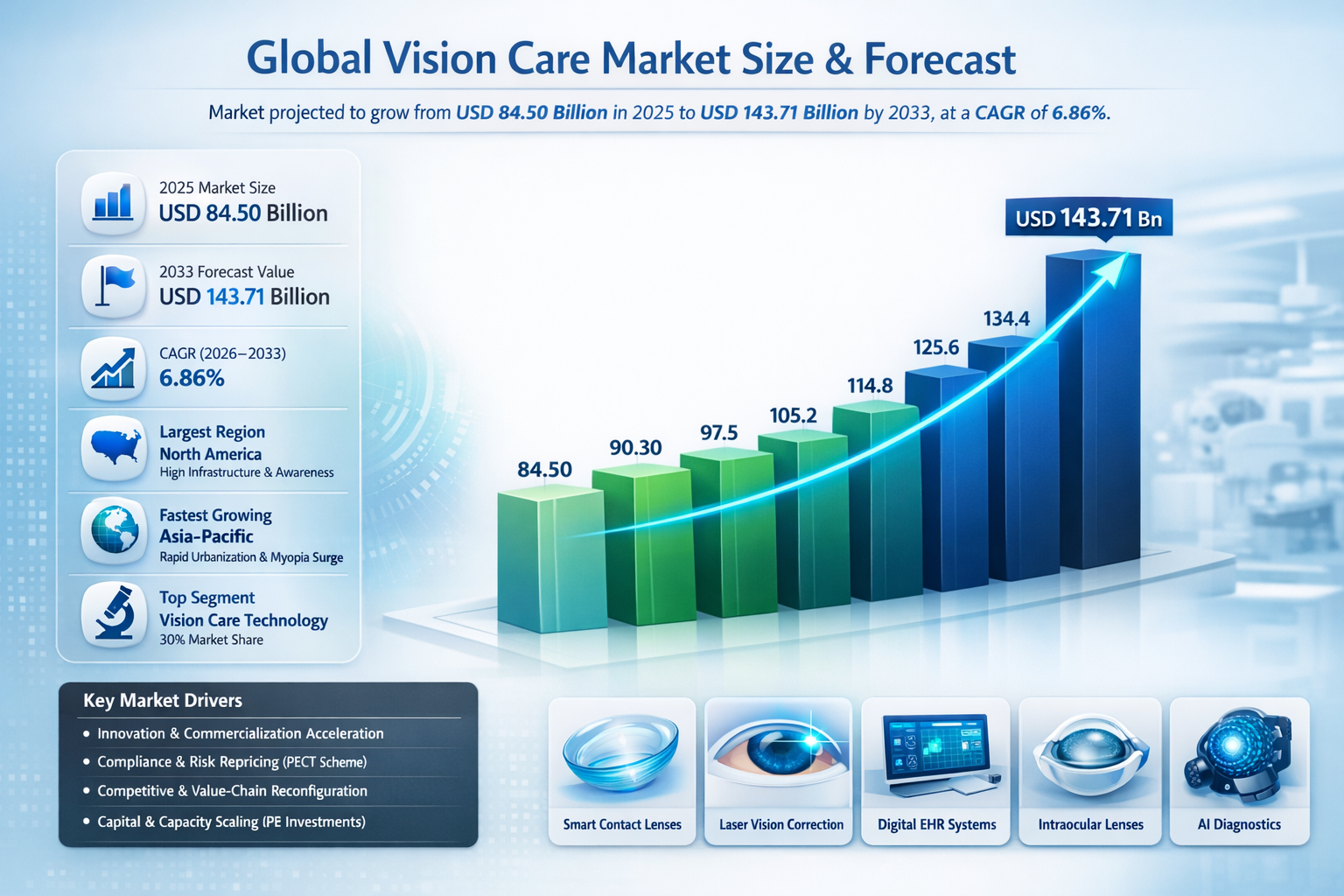
Market Overview
The Vision Care market is characterized by a high level of competitive intensity within a fragmented structure. Despite the presence of Tier 1 players like Stanford Eye Laser Center, Mayo Clinic, and Kaiser Permanente, the market remains competitive, driven by innovation and strategic investments. The competitive landscape is further shaped by factors such as technological advancements, regulatory influences, and evolving consumer demands. Technological innovation is at the forefront of market transformation, with advancements in smart vision technologies, laser vision correction, and electronic health records streamlining both clinical and operational processes. Companies are increasingly investing in emerging technologies to enhance vision care accessibility for underserved populations. For example, smart contact lenses and AI-driven platforms are revolutionizing the way vision impairments are diagnosed and treated, thus expanding the market???s reach and impact. Regulatory changes are also playing a pivotal role in shaping the market environment. The introduction of stringent compliance standards and evolving reimbursement frameworks are compelling companies to adapt and innovate to remain competitive. These regulatory shifts are not only raising the bar for quality and safety standards but also driving the demand for advanced technologies that can meet these new requirements. Investment trends in the Vision Care market show a rising trajectory, with high capital intensity levels observed across various segments. This trend is underscored by recent mergers and acquisitions, which have broadened the scope of services offered by key players and enhanced their market position. The strategic deployment of capital into capacity and process upgrades is facilitating faster scaling in high-demand segments, thereby meeting the increasing consumer demand for vision care solutions.Structural Drivers of Market Growth
The Vision Care market is being reshaped by four primary structural drivers: innovation and commercialization acceleration, compliance and risk repricing, competitive and value-chain reconfiguration, and capital and capacity scaling. Each of these drivers is intricately connected, contributing to the market???s overall growth and evolution. Innovation and Commercialization Acceleration: The rapid maturation of technology and strategic funding allocations are accelerating the pace of innovation in the Vision Care market. This driver is primarily fueled by investments in emerging technologies, which are expanding the applications of vision care solutions and increasing their adoption speed. For instance, the proliferation of AI-driven platforms and the integration of EHR systems are streamlining clinical workflows and enhancing patient outcomes, thereby driving market growth. The market implication of this driver is the emergence of new products and services that cater to the evolving needs of consumers, thereby expanding the market???s reach and appeal. Compliance and Risk Repricing: Regulatory tightening and the repricing of risk are compelling companies to reassess their operational and strategic approaches. The introduction of new compliance standards, such as the PECT scheme, is redefining market dynamics by setting higher benchmarks for quality and safety. This driver is prompting companies to innovate and adapt, thereby fostering a competitive environment that prioritizes compliance and risk management. The market implication of this driver is a shift in product development strategies and an increased focus on delivering solutions that meet regulatory requirements. Competitive and Value-Chain Reconfiguration: The reconfiguration of competitive and value-chain dynamics is reshaping the Vision Care market, driven by strategic investments and acquisitions. The influx of private equity investment is reallocating bargaining power and forcing companies to reposition their portfolios to remain competitive. This driver is also leading to changes in where margin and growth concentrate, with companies focusing on high-demand segments and streamlining their operations. The market implication of this driver is the emergence of new competitive strategies and the consolidation of market power among key players. Capital and Capacity Scaling: The strategic deployment of capital into capacity and process upgrades is enabling faster scaling in high-demand segments of the Vision Care market. This driver is characterized by high capital intensity levels and significant mergers and acquisitions activity, which are enhancing market efficiency and facilitating growth. The market implication of this driver is an increase in market capacity and the ability to meet rising consumer demand for vision care solutions.Market Segmentation Analysis
Top-Level Segment Share Split
- By End User: 20.00% (End users such as ophthalmologists and healthcare providers are key drivers of vision care technology adoption.)
- By Technology: 30.00% (Technological advancements in vision care are rapidly evolving, influencing market dynamics.)
- By Application: 20.00% (Applications in corrective surgeries and digital eye strain solutions are expanding.)
- By Product Type: 15.00% (Product innovations in lenses and surgical equipment are significant market segments.)
- By Distribution Channel: 15.00% (Distribution channels are adapting to new market demands, including online platforms.)
Top-Level Segment Share Split
- By End User (20.00%):
- By Technology (30.00%):
- By Application (20.00%):
- By Product Type (15.00%):
- By Distribution Channel (15.00%):
Regional Market Dynamics
The Vision Care market is characterized by diverse regional dynamics, which play a crucial role in shaping its growth trajectory. As technology and healthcare infrastructure develop at varying paces across different geographies, regional disparities become apparent in market adoption and growth rates.Competitive Landscape
The Vision Care market is characterized by a high level of competitive intensity, with a fragmented structure and several key players vying for market share. The competitive landscape is shaped by strategic moves, technological advancements, and evolving consumer preferences. Stanford Eye Laser Center, Mayo Clinic, and Kaiser Permanente are notable players in this market. Stanford Eye Laser Center is renowned for its cutting-edge technology in laser vision correction, leveraging capabilities like the VISX Star S4 IR and the iDesign Wavefront System to maintain a strong market position. Mayo Clinic's integration of human-centered design (HCD) in healthcare solutions offers a competitive edge, enhancing patient outcomes and satisfaction. Kaiser Permanente's comprehensive healthcare services and innovative delivery models position it as a leader in patient-centered care. Private equity investment in healthcare services has driven significant consolidation in the market, leading to increased competitive intensity. The trend of private equity acquisitions from 2011 to 2021 highlights the growing interest in the Vision Care sector, with investment themes focusing on emerging technologies and healthcare services. This influx of capital has also enabled smaller players to scale operations and compete more effectively. Despite the high level of competition, barriers to entry remain due to the capital-intensive nature of healthcare technology investments and regulatory compliance requirements. Larger players benefit from economies of scale, allowing them to invest in R&D and maintain technological leadership. However, the market's fragmented nature presents opportunities for nimble competitors to differentiate through innovation and niche targeting.Strategic Outlook
The strategic outlook for the Vision Care market is shaped by several key factors, including technological advancements, regulatory changes, and shifting consumer dynamics. Companies operating in this space must navigate a complex landscape to sustain growth and competitive advantage. Technological innovation remains a primary driver of market expansion. Companies investing in advanced vision correction technologies, such as smart contact lenses and laser surgery systems, are well-positioned to capture emerging opportunities. The integration of AI-driven platforms and Electronic Health Records (EHR) is streamlining operations and enhancing patient care, providing a competitive edge. Regulatory frameworks play a crucial role in shaping market strategies. Compliance with evolving regulations, such as the PECT scheme in Europe, is essential for market entry and product commercialization. Companies must remain vigilant in adapting to regulatory changes to mitigate risks and capitalize on new opportunities. Consumer preferences continue to evolve, with increasing demand for personalized and convenient vision care solutions. The rise of e-commerce platforms and direct-to-consumer sales channels is transforming the distribution landscape, offering companies new avenues to reach customers. Leveraging digital marketing strategies and enhancing online presence can help companies engage with tech-savvy consumers and drive brand loyalty. Strategic partnerships and collaborations are vital for expanding market reach and enhancing product portfolios. Companies can benefit from alliances with technology firms and healthcare providers to accelerate innovation and improve service delivery. Additionally, focusing on underserved markets and tailoring offerings to specific demographic needs can unlock new growth potential.Final Market Perspective
The Vision Care market is poised for sustained growth, driven by technological advancements, regulatory support, and evolving consumer preferences. As companies navigate this dynamic landscape, strategic investments in innovation and compliance will be critical to maintaining competitive advantage. The rise of personalized and digital healthcare solutions presents new opportunities for market expansion, while strategic partnerships can enhance capabilities and accelerate growth. Ultimately, companies that effectively integrate technology, adapt to regulatory changes, and address consumer needs will be well-positioned to thrive in the evolving Vision Care market.Research Methodology
This market report on Vision Care employs a comprehensive research methodology, integrating both primary and secondary research to ensure a robust and accurate analysis. Primary research involved conducting interviews with key industry stakeholders, including manufacturers and distributors, hospital and clinic procurement leaders, clinicians, key opinion leaders, and regulatory and quality specialists. These interviews provided critical insights into market dynamics, trends, and challenges, contributing valuable qualitative data to the study. The secondary research adopted a sophisticated triangulated approach, meticulously analyzing data from reputable sources to corroborate and expand upon the findings from primary research. This approach involved cross-referencing information from leading academic publications, government and regulatory bodies, and industry-specific reports. Sources such as the National Center for Biotechnology Information, Harvard???s Digital Journal of Ophthalmology, and the Federal Trade Commission provided comprehensive data on the latest advancements and regulatory developments in vision care. Additionally, market analyses from prominent consulting firms and financial platforms such as BCG and Yahoo Finance offered strategic insights into the economic aspects and competitive landscape of the industry. The triangulation of data sources allowed for a meticulous validation process, ensuring the integrity and accuracy of the market insights presented. This method facilitated a comprehensive understanding of the Vision Care market, covering technological advancements, end-user segmentation, and the evolving landscape of smart vision technologies. As a result, the findings of this report provide a reliable foundation for strategic decision-making and investment considerations in the healthcare sector for the base year of 2025.Table of Contents
Table of Contents
- Executive Summary
- 1.1 Market Forecast Snapshot (2026???2033)
- 1.2 Global Vision Care Market Size & CAGR Analysis
- 1.3 Largest & Fastest-Growing Segments
- 1.4 Region-Level Leadership & Growth Trends
- 1.5 Key Market Drivers
- 1.6 Competitive Landscape Overview
- 1.7 Strategic Outlook Through 2033
- Introduction & Market Overview
- 2.1 Definition of the Vision Care Market
- 2.2 Market Size & Forecast (2026???2033)
- 2.3 Industry Evolution & Market Development
- 2.4 Supply Chain & Distribution Infrastructure
- 2.5 Impact of Consumer Trends (Digital Eye Care & Aesthetic Vision Solutions)
- 2.6 Regulatory & Compliance Landscape
- 2.7 Technology & Innovation Landscape (AI, Smart Lenses, Tele-ophthalmology)
- Research Methodology
- 3.1 Primary Research
- 3.2 Secondary Research
- 3.3 Market Size Estimation Model
- 3.4 Forecast Assumptions (2026???2033)
- 3.5 Data Validation & Triangulation
- Market Dynamics
- 4.1 Drivers
- 4.1.1 Rising Prevalence of Vision Disorders (Myopia, Hyperopia, Astigmatism)
- 4.1.2 Increasing Adoption of Advanced Vision Correction Technologies
- 4.1.3 Growth of Digital Eye Strain & Screen Time Exposure
- 4.1.4 Expansion of Laser Vision Correction Procedures
- 4.1.5 Rising Awareness of Preventive Eye Care
- 4.2 Restraints
- 4.2.1 High Cost of Advanced Vision Correction Procedures
- 4.2.2 Limited Access in Emerging Markets
- 4.2.3 Regulatory Approval Complexity
- 4.2.4 Low Insurance Penetration for Elective Procedures
- 4.3 Opportunities
- 4.3.1 Expansion of Smart Contact Lens Technologies
- 4.3.2 Growth of Tele-ophthalmology Platforms
- 4.3.3 AI-Based Diagnostic & Treatment Planning Systems
- 4.3.4 Emerging Market Expansion (Asia-Pacific & Latin America)
- 4.4 Challenges
- 4.4.1 Supply Chain Constraints for Optical Materials
- 4.4.2 Market Fragmentation
- 4.4.3 Pricing Pressure from Low-Cost Providers
- 4.4.4 Rapid Technology Obsolescence
- 4.1 Drivers
- Vision Care Market Analysis (USD Billion), 2026???2033
- 5.1 Market Size Overview
- 5.2 CAGR Analysis
- 5.3 Regional Revenue Distribution
- 5.4 Segment Revenue Analysis
- 5.5 Distribution Channel Analysis
- 5.6 End-User Impact Analysis
- Market Segmentation (USD Billion), 2026???2033
- 6.1 By End User
- 6.1.1 Hospitals
- 6.1.1.1 Ophthalmology Departments
- 6.1.2 Eye Care & Optometry Clinics
- 6.1.3 Retail Optical Stores
- 6.1.1 Hospitals
- 6.2 By Application
- 6.2.1 Cataract Treatment
- 6.2.2 Refractive Error Correction
- 6.2.3 Vision Enhancement & Eye Strain Management
- 6.3 By Product Type
- 6.3.1 Contact Lenses
- 6.3.2 Intraocular Lenses
- 6.3.3 Spectacles
- 6.3.4 Vision Care Solutions
- 6.4 By Technology
- 6.4.1 Laser Vision Correction Technologies
- 6.4.2 Smart Vision Technologies
- 6.4.3 Conventional Optical Technologies
- 6.5 By Distribution Channel
- 6.5.1 E-Commerce Platforms
- 6.5.2 Optical Retail Stores
- 6.5.3 Hospital & Clinical Distribution
- 6.1 By End User
- Market Segmentation by Geography
- 7.1 North America
- 7.2 Europe
- 7.3 Asia-Pacific
- 7.4 Latin America
- 7.5 Middle East & Africa
- Competitive Landscape
- 8.1 Market Share Analysis
- 8.2 Product Portfolio Benchmarking
- 8.3 Product Positioning Mapping
- 8.4 Distribution & Supply Chain Partnerships
- 8.5 Competitive Intensity & Market Fragmentation
- Company Profiles
- Strategic Intelligence & Pheonix AI Insights
- 10.1 Pheonix Demand Forecast Engine
- 10.2 Supply Chain & Infrastructure Analyzer
- 10.3 Technology & Innovation Tracker
- 10.4 Product Development Insights
- 10.5 Automated Porter???s Five Forces Analysis
- Future Outlook & Strategic Recommendations
- 11.1 Expansion of Smart Vision Technologies
- 11.2 Growth of Digital Eye Care Ecosystem
- 11.3 Regional Expansion Strategies
- 11.4 Cost Optimization & Product Innovation
- 11.5 Long-Term Market Outlook (2033+)
- Appendix
- About Pheonix Research
- Disclaimer
Competitive Landscape
Vision Care Competitive Intensity & Market Structure Overview
The vision care market, characterized by its fragmented structure, presents a complex landscape where competitive intensity is high, driven by various factors that affect market dynamics and strategic positioning. This dimension is crucial to understanding how companies maneuver within the market, determining their strategies and operational decisions. The presence of three Tier 1 players???Stanford Eye Laser Center, Mayo Clinic, and Kaiser Permanente???illustrates a competitive environment where innovation and strategic differentiation are paramount.
In a fragmented market, companies face the challenge of standing out amidst numerous players. The vision care sector, with its diverse range of services and products, encapsulates this challenge. The fragmented nature allows for niche players to thrive, yet it also demands constant innovation and adaptation from incumbents to maintain their market share. This structure leads to high competitive intensity, as companies must continuously seek ways to differentiate themselves and offer unique value propositions to consumers.
The competitive landscape is further intensified by the increasing involvement of private equity in healthcare services. This trend, marked by significant acquisitions from 2011 to 2021, injects capital and spurs innovation, fostering a dynamic environment where established companies must compete not only with peers but also with new entrants who are often backed by substantial financial resources. This influx of capital can lead to rapid technological advancements and service improvements, compelling existing players to adapt swiftly.
Vision Care Competitive Intensity & Market Structure Current Scenario
Leading Company Profiles
Stanford Eye Laser Center: Leader in laser vision correction technology. Pioneering advanced laser technologies for vision correction.
Mayo Clinic: Healthcare provider with innovation in vision care. Adopting human-centered design for improved patient outcomes.
Kaiser Permanente: Integrated managed care consortium. Implementing innovative healthcare solutions, including vision care.
Cole Eye Institute: Vision care research and treatment center. Investing in cutting-edge research and technology for eye care.
LASIK: Provider of laser eye surgery. Widely recognized for corrective eye surgery solutions.
Human-Centered Design: Design methodology for healthcare solutions. Enhancing patient experience and outcomes in vision care.
Participatory co-design: Collaborative design approach. Engaging stakeholders in the development of vision care solutions.
British National Health Service: Public healthcare provider. Implementing patient-centered care models in vision care.
Key Competitive Intensity & Market Structure Signals in Vision Care
Several key signals illuminate the competitive intensity and market structure within the vision care industry. These signals provide insight into the forces shaping the market and illustrate the challenges and opportunities faced by companies operating in this space.
One significant signal is the ongoing trend of private equity investment in healthcare services. The period from 2011 to 2021 witnessed substantial acquisitions, reflecting an increased interest in the vision care sector. This trend highlights the potential for growth and innovation within the industry, as private equity firms often bring significant financial resources and strategic expertise to the companies they invest in. Consequently, this influx of capital can accelerate technological advancements and enhance service offerings, intensifying competition among incumbents striving to maintain their market position.
Another critical signal is the requirement for prescribers to provide copies of prescriptions after performing refraction exams. This regulatory mandate emphasizes patient rights and transparency, compelling providers to adapt their service delivery models to comply with the new requirements. The impact of this regulation extends beyond compliance, as it influences patient-provider relationships and service perceptions, thereby affecting competitive dynamics.
Additionally, the success of 70 percent of healthcare providers in passing on cost increases in 2024, albeit with challenges in achieving growth targets, underscores the importance of pricing strategies in the competitive landscape. This scenario reflects the market’s high competitive intensity, where providers must balance cost management with the need to attract and retain patients. The ability to effectively navigate this pricing conundrum is crucial for sustaining profitability and market share.
Furthermore, the presence of low price elasticity, as signaled by 90 percent of providers, indicates that consumer demand may not be significantly affected by price changes. However, the challenge lies in achieving price targets amid fierce competition and customer resistance. This dynamic underscores the need for providers to differentiate their offerings and deliver value beyond price, thereby enhancing their competitive position.
The vision care market is also characterized by the presence of innovative players such as Stanford Eye Laser Center, Mayo Clinic, and Kaiser Permanente. These entities leverage their expertise and strategic differentiation to enhance their market positioning, setting benchmarks for innovation and patient care. Their actions and strategies provide valuable insights into the competitive dynamics and influence the overall market structure.
In summary, the vision care market is shaped by a combination of regulatory changes, private equity investments, and strategic differentiation by key players. These factors collectively contribute to the high competitive intensity and fragmented market structure, compelling companies to continuously innovate and adapt to maintain their competitive edge.
Strategic Implications of Competitive Intensity & Market Structure in Vision Care
The strategic implications of these signals are profound for entities operating within the vision care market. The fragmented nature of the market, combined with high competitive intensity, necessitates that companies adopt innovative strategies to differentiate themselves. For instance, Stanford Eye Laser Center, renowned for its leadership in laser vision correction technology, showcases how investment in advanced technologies can set a company apart. By pioneering such technologies, Stanford Eye Laser Center not only enhances its service offerings but also reinforces its market position as an industry leader.
Similarly, Mayo Clinic’s adoption of human-centered design (HCD) for improved patient outcomes demonstrates the importance of aligning service delivery with patient needs. By focusing on patient-centric approaches, Mayo Clinic enhances its competitive stance, offering a holistic vision care experience that appeals to a broad customer base. This strategic alignment with patient expectations is crucial in a market where differentiation on service quality can significantly impact market share.
Kaiser Permanente’s implementation of innovative healthcare solutions, including vision care, underscores the strategic importance of integrated service models. By offering a comprehensive range of healthcare services, Kaiser Permanente positions itself as a one-stop solution for patients, thereby increasing customer loyalty and market penetration. This approach not only enhances patient convenience but also streamlines operations, reducing costs and improving service efficiency.
The challenge for vision care providers is to navigate the price sensitivity and competitive pressures that define the market. The fact that 90% of providers experience low price elasticity suggests that companies must focus on value-added services to justify price points and sustain margins. This could include diversifying service offerings, adopting new technologies, or enhancing customer service to create a compelling value proposition.
Vision Care Competitive Intensity & Market Structure Forward Outlook
Looking ahead to the forecast period of 2026-2033, the vision care market is poised for continued evolution, driven by ongoing competitive pressures and structural dynamics. The trend of private equity investment is likely to persist, fueling further consolidation and strategic shifts within the sector. As more capital becomes available, companies that can effectively leverage these resources will be better positioned to lead market innovation and expansion.
The regulatory landscape is also expected to play a crucial role in shaping market dynamics. As patient transparency and rights become increasingly prioritized, companies will need to ensure compliance while also using these regulations as opportunities to enhance their service offerings. This could involve adopting digital solutions to streamline prescription processes or enhancing communication with patients to build trust and loyalty.
Furthermore, the competitive landscape will likely see more players adopting advanced technologies and patient-centered approaches to gain a strategic edge. The integration of technologies such as artificial intelligence and telemedicine into vision care services could redefine how care is delivered, offering new avenues for differentiation and market growth.
In conclusion, the vision care market’s competitive intensity and structure are influenced by a confluence of factors, including private equity investments, regulatory changes, and strategic differentiation by key players. Companies that successfully navigate these dynamics by innovating and adapting their strategies will be well-positioned to capitalize on emerging opportunities and maintain their competitive edge in a fragmented and highly competitive market. The focus on patient-centric solutions and value-driven service offerings will be crucial in achieving sustained growth and profitability in the years to come.
Value Chain
Vision Care Value Chain & Supply Chain Evolution Overview
The vision care market is characterized by a complex value chain that integrates a variety of operational elements, from research and development to patient care. The evolution of this value chain is crucial in understanding how the industry adapts to both technological advancements and shifts in consumer expectations. At its core, the vision care value chain involves several key stages, including inventory tracking, supply management, and reimbursement processing. The market operates under a hybrid primary operational model with a direct-to-consumer distribution structure, reflecting a moderate level of supply chain complexity. This complexity arises due to the necessity of managing diverse product lines and meeting stringent regulatory standards, which are poised to become even more challenging with regulatory developments like the anticipated mandatory implementation of the European Database on Medical Devices (EUDAMED) in 2027.
One of the primary drivers of change within this framework is the increasing integration of technology, particularly in supply chain management. For instance, the use of Electronic Health Records (EHRs) has streamlined administrative tasks, thereby reducing patient documentation and billing errors. This technological infusion has implications for cost management and operational efficiency, as it allows for more precise inventory tracking and rapid identification of potential shortages. The ability to manage inventory effectively is crucial, given the substantial financial investment required to stock an eye unit. This investment is necessary to create a robust purchasing and stock control system, as highlighted by the correlation between efficient supply chain management and the ability of hospitals to track inventory accurately.
Vision Care Value Chain & Supply Chain Evolution Current Scenario
Market-Specific Value Chain
- Research and Development: Innovation and technology development
- Design and Prototyping: Creating patient-centered solutions
- Manufacturing: Production of vision care products
- Distribution: Supply chain and logistics management
- Patient Care: Delivery of vision care services
Company-to-Stage Mapping
- Research and Development: Stanford Eye Laser Center, Mayo Clinic, Cole Eye Institute
- Design and Prototyping: Human-Centered Design
- Manufacturing: LASIK, Stanford Eye Laser Center, Participatory co-design
- Distribution: Kaiser Permanente, British National Health Service
- Patient Care: Mayo Clinic, Kaiser Permanente
Key Value Chain & Supply Chain Evolution Signals in Vision Care
The vision care value chain is influenced by several key signals that highlight both challenges and opportunities within the market. The adaptation of Human-Centered Design (HCD) by institutions such as the Mayo Clinic Center for Innovation and Kaiser Permanente underscores the importance of patient-centered solutions in the design and prototyping stages. These efforts aim to enhance patient experiences and outcomes by incorporating insights from human factors, human-computer interaction, and user-centered design (UCD).
The strategic implications of these developments are significant, as they necessitate a reevaluation of how vision care products are designed, manufactured, and delivered. Companies like LASIK and the Stanford Eye Laser Center are at the forefront of manufacturing, focusing on producing high-quality vision care products that meet evolving consumer expectations. The emphasis on participatory co-design further reflects a commitment to engaging patients and healthcare providers in the innovation process, ensuring that products are both effective and user-friendly.
In terms of distribution, organizations such as Kaiser Permanente and the British National Health Service play crucial roles in managing supply chain and logistics. Their efforts to streamline operations and ensure timely delivery of products and services are vital in maintaining market competitiveness and meeting regulatory requirements.
Overall, the vision care value chain is undergoing significant transformation, driven by technological advancements, regulatory changes, and shifts in consumer expectations. These factors collectively shape the market structure, influencing demand, pricing, and competitive behavior. As the industry continues to evolve, companies must navigate these challenges and opportunities strategically to maintain their market position and ensure sustainable growth.
Key Value Chain & Supply Chain Evolution Signals in Vision Care
The evolution of the vision care value chain is marked by several critical signals that underscore the ongoing changes and challenges within the industry. One of the most prominent signals is the financial dynamics affecting private equity (PE)-affiliated ophthalmologists. Before acquisition, these ophthalmologists received a mean of 18.4 payments totaling $13,948.84 per physician-year, compared to their non-affiliated counterparts, who received 11.8 payments totaling $2,949.75 per physician-year. Post-acquisition, there was a significant decrease in industry payments by $2,505.49 or 18.0% per physician-year. This change indicates a shift in financial incentives and resource allocation within the industry, potentially affecting service delivery and investment in new technologies.
Another key signal is the role of vision care reimbursement as a state benefit, allowing claims for eye exams and lenses with a reimbursement limit of up to $80.00. This reimbursement framework influences the accessibility and affordability of vision care services, impacting demand patterns and the financial viability of service providers. Additionally, the necessity of considerable financial investment when stocking an eye unit highlights the critical role of efficient supply chain management in ensuring the availability of necessary products and equipment.
Supply chain management emerges as a vital component in the vision care value chain, enabling hospitals and healthcare providers to track inventory effectively. This capability allows for the quick identification of potential shortages or issues with product availability, thereby minimizing service disruptions and enhancing patient care.
The integration of patient-centered design and participatory co-design in the creation of vision care solutions is another significant signal, reflecting the industry’s focus on enhancing user experience and product efficacy. Organizations such as the Mayo Clinic Center for Innovation and Kaiser Permanente have adopted human-centered design (HCD) approaches to innovate and improve service delivery, emphasizing the importance of aligning product development with patient needs.
Strategic Implications of Value Chain & Supply Chain Evolution in Vision Care
The strategic implications of these signals are profound, influencing market structure, competitive dynamics, and operational strategies within the vision care industry. The financial dynamics associated with PE-affiliated ophthalmologists suggest a potential reevaluation of incentive structures and resource allocation. As industry payments decrease post-acquisition, there may be a shift towards cost optimization and efficiency improvements to maintain profitability and competitive advantage.
The reimbursement framework for vision care services plays a crucial role in shaping demand and pricing strategies. With state benefits offering limited reimbursement, providers may need to explore alternative revenue streams or cost-effective service models to address the financial constraints faced by patients. This could lead to the development of innovative pricing models or the integration of value-added services to differentiate offerings and enhance patient loyalty.
Efficient supply chain management is essential for mitigating bottlenecks and ensuring timely service delivery. The ability to track inventory and identify potential shortages allows providers to maintain optimal stock levels and reduce the risk of service disruptions. This capability is particularly important in the context of emergency orders and delays in service delivery, which are identified as key bottlenecks in the vision care value chain.
The adoption of patient-centered design and participatory co-design approaches offers strategic advantages by aligning product development with patient needs and preferences. This focus on user experience can enhance patient satisfaction and improve treatment outcomes, ultimately strengthening brand reputation and market position.
Vision Care Value Chain & Supply Chain Evolution Forward Outlook
Looking ahead, the vision care industry is poised for continued evolution, driven by technological advancements, regulatory changes, and shifting consumer expectations. The integration of digital technologies, such as electronic health records (EHRs), is expected to streamline administrative tasks, reduce documentation errors, and enhance overall operational efficiency. This technological shift will likely drive further improvements in service delivery and patient care, reinforcing the importance of digital transformation in the value chain.
Regulatory developments, such as the anticipated mandatory implementation of the European Database on Medical Devices (EUDAMED) around 2027, will also shape the future landscape of the vision care industry. As a centralized hub for information on medical devices, EUDAMED will enhance transparency and facilitate regulatory compliance, impacting the supply chain and distribution strategies of vision care providers.
The prevalence of digital eye strain (DES) and the rising incidence of myopia among children highlight the growing demand for vision care services and products. As digital device usage continues to increase, the industry must adapt to address these emerging health concerns, potentially leading to the development of new treatment options and preventive measures.
In conclusion, the vision care value chain and supply chain are undergoing significant transformation, driven by financial dynamics, reimbursement frameworks, supply chain management, and patient-centered design. These factors collectively influence market structure, demand, pricing, and competitive behavior, requiring companies to navigate challenges and opportunities strategically. By leveraging technological advancements, optimizing supply chain operations, and focusing on patient-centric solutions, vision care providers can enhance their market position and ensure sustainable growth in the evolving industry landscape.
Investment Activity
Vision Care Investment & Funding Dynamics Overview
The investment and funding landscape within the vision care sector is undergoing substantial transformation, driven largely by the integration of emerging technologies and strategic capital allocation. This evolution is characterized by rising investment trends and high capital intensity, as investors increasingly recognize the potential for technological advancements to enhance accessibility and efficiency within the sector. The strategic focus on deploying capital towards innovative solutions is not merely a response to existing market demands but also a proactive approach to shaping the future of vision care. This landscape is further complicated by recent mergers and acquisitions (M&A), highlighting the sector’s dynamic nature and the need for strategic foresight in capital allocation.
Investors are channeling capital into areas that promise significant returns on investment and societal impact. This includes healthcare services, logistics infrastructure, and cutting-edge technologies that could redefine the provision of vision care services. The recent investment by Target, amounting to $550 million in Shipt, a same-day gig delivery company, underscores the importance of logistics in enhancing service delivery efficiency. Such investments are essential in building a robust supply chain infrastructure capable of supporting the evolving demands of the vision care market.
Vision Care Investment & Funding Dynamics Current Scenario
The current scenario in the vision care investment landscape is marked by a surge in private equity investments, particularly in healthcare services. From 2011 to 2021, significant acquisitions have been noted, reflecting a growing trend of consolidations within the sector. This trend is indicative of investors’ confidence in the long-term growth potential of the vision care industry, driven by an aging global population and increasing prevalence of vision-related health issues.
A critical aspect of this current scenario is the focus on emerging technologies that can make vision care more accessible to underserved populations. The integration of these technologies often comes with a hefty price tag, posing challenges for smaller practices that may struggle to afford new interventions. This financial barrier necessitates innovative funding solutions and partnerships to ensure that advanced vision care technologies are accessible to all segments of the population.
Furthermore, the capital intensity within the sector remains high, with considerable financial investment required to stock eye units and maintain efficient purchasing and stock control systems. The capital costs associated with implementing systems like Computerized Physician Order Entry (CPOE) range from $3 million to $10 million, depending on hospital size and existing IT infrastructure. This underscores the need for strategic capital allocation to optimize returns and improve operational efficiencies.
Additionally, funding rounds, such as Series B and C, play a crucial role in financing these capital-intensive projects. With Series B funding amounts typically exceeding $30 million and Series C rounds averaging $50 million, there is a clear emphasis on securing substantial financial support to drive innovation and expansion within the sector. These funding dynamics are pivotal in sustaining the momentum of growth and technological advancement in vision care.
Key Investment & Funding Dynamics Signals in Vision Care
The vision care sector is experiencing several key investment and funding dynamics signals, which are shaping its current and future trajectory. One prominent signal is the rise in private equity investment in healthcare services, with notable acquisitions from 2011 to 2021. This trend highlights a strategic move by investors to consolidate resources and capabilities within the sector, enhancing competitiveness and market reach. The increasing prevalence of private equity in healthcare underscores the sector’s attractiveness due to its resilience and growth potential.
Another critical signal is the investment in emerging technologies aimed at increasing the accessibility of vision care for underserved populations. This focus aligns with broader healthcare trends, where technological innovation is leveraged to address disparities in access and improve overall patient outcomes. By investing in technologies that facilitate remote consultations and advanced diagnostic capabilities, investors are positioning themselves to meet the evolving needs of a diverse patient base.
The Transitional Coverage (Prise en Charge Transitoire or PECT) scheme, established in 2021, provides temporary reimbursement for CE-marked medical devices for up to 12 months before potential permanent inclusion in the List of Reimbursable Products and Services (LPPR). This regulatory framework plays a significant role in shaping investment decisions, as it offers a pathway for new technologies to gain market acceptance and financial support. Such schemes are crucial in reducing the financial risks associated with bringing new products to market, thereby encouraging continued investment in innovation.
Furthermore, the funding landscape is characterized by significant payments to PE-affiliated ophthalmologists, who received a mean of 18.4 payments totaling $13,948.84 per physician-year compared with 11.8 payments totaling $2,949.75 per physician-year for controls before acquisition. These payments reflect the growing influence of private equity in shaping practice patterns and financial incentives within the sector. As PE firms continue to acquire ophthalmology practices, there is an increasing focus on optimizing financial performance and expanding service offerings to capture a larger market share.
In summary, the vision care investment and funding dynamics are driven by strategic capital allocation towards emerging technologies and healthcare services. The focus on consolidation, technological innovation, and regulatory frameworks highlights the sector’s potential for growth and transformation. As investors continue to navigate this complex landscape, the emphasis on strategic foresight and innovation will be critical in shaping the future of vision care.
Strategic Implications of Investment & Funding Dynamics in Vision Care
The investment landscape in vision care, marked by high capital intensity and strategic allocation, presents several strategic implications for market participants. As private equity (PE) investments continue to rise, they bring about significant shifts in practice patterns and competitive dynamics. The influx of PE capital into ophthalmology practices not only influences operational efficiency but also drives consolidation within the sector. This consolidation trend is a strategic move that aims to create economies of scale, enhance bargaining power with suppliers, and streamline operations for improved profitability.
Moreover, the investment in emerging technologies plays a pivotal role in shaping the competitive landscape. Technologies that enhance diagnostic precision, treatment efficacy, and patient outcomes are becoming central to the value proposition of vision care providers. For instance, the integration of advanced imaging technologies and AI-driven diagnostic tools can significantly enhance the quality of care. This technological edge offers a competitive advantage to early adopters, potentially leading to increased market share and patient retention.
From a regulatory perspective, frameworks like the Transitional Coverage (Prise en Charge Transitoire or PECT) scheme further impact investment dynamics. By providing temporary reimbursement for CE-marked medical devices, this scheme encourages innovation and accelerates the adoption of new technologies. The potential for permanent inclusion in the List of Reimbursable Products and Services (LPPR) also provides a financial incentive for manufacturers to invest in compliance and product development. This regulatory environment supports a more robust pipeline of innovative products, which can redefine treatment paradigms in vision care.
However, these strategic opportunities are not without challenges. The high cost associated with implementing new technologies and systems, such as Computerized Physician Order Entry (CPOE) systems, can be prohibitive for smaller practices. These costs necessitate a careful cost-benefit analysis and strategic financial planning to ensure sustainable investment returns. Additionally, the competitive pressure to adopt new technologies may lead to increased financial strain on providers that lack access to capital, potentially exacerbating disparities in care quality and accessibility.
Furthermore, the emphasis on financial performance and return on investment (ROI) may shift focus towards more profitable services, potentially neglecting less lucrative yet essential services for underserved populations. This shift underscores the need for a balanced approach that aligns financial objectives with the overarching goal of improving patient care outcomes.
Overall, the strategic implications of investment and funding dynamics in vision care suggest a need for adaptive strategies that leverage technological innovation while addressing operational efficiencies and regulatory compliance. Market participants must navigate these complexities with a focus on strategic foresight and innovation to remain competitive in an evolving landscape.
Vision Care Investment & Funding Dynamics Forward Outlook
Looking ahead to the forecast period of 2026-2033, the vision care sector is poised for continued transformation driven by strategic investments and funding dynamics. The rising trend of private equity investments is expected to persist, further consolidating the market and driving operational efficiencies. As PE firms continue to acquire ophthalmology practices, the focus will likely shift towards optimizing care delivery models and expanding service offerings.
The integration of emerging technologies will remain a key focus area, with investments directed towards enhancing diagnostic capabilities, treatment modalities, and patient engagement. Technologies such as telemedicine, AI-driven diagnostics, and personalized medicine are anticipated to play a central role in shaping the future of vision care. These innovations have the potential to increase accessibility, reduce costs, and improve patient outcomes, thereby aligning with the broader healthcare objective of value-based care.
Regulatory frameworks will continue to influence investment decisions, with schemes like PECT providing a supportive environment for innovative product development. Manufacturers and providers will need to remain agile in navigating regulatory changes to capitalize on reimbursement opportunities and drive product adoption.
Financially, the sector is expected to experience high capital intensity, with significant investments required for technology acquisition and infrastructure development. While this presents opportunities for growth, it also necessitates strategic financial planning to manage costs and ensure sustainable returns. The emphasis on ROI will drive providers to explore new revenue streams and optimize operational efficiencies to enhance profitability.
Moreover, the focus on expanding access to vision care for underserved populations will likely be a strategic priority. Investments in emerging technologies that address accessibility barriers can create new market opportunities and improve health equity. Providers and investors that prioritize inclusive care models stand to benefit from increased patient volumes and enhanced community reputation.
In conclusion, the forward outlook for vision care investment and funding dynamics underscores the sector’s potential for growth and innovation. As market participants navigate this evolving landscape, strategic foresight and investment in emerging technologies will be critical in shaping the future of vision care. The ability to balance financial objectives with patient care priorities will be a key determinant of success in this dynamic market environment.
Technology & Innovation
Vision Care Technology & Innovation Landscape Overview
The landscape of vision care technology and innovation is marked by dynamic advancements that are reshaping the industry. This market is characterized by a high level of innovation intensity, a moderate level of patent activity, and is currently in the growth stage of technology maturity. The vision care sector is witnessing a significant transformation driven by cutting-edge technologies, such as advanced laser systems, AI-driven platforms, and electronic health records (EHR). These technologies are not just enhancing the precision and outcomes of vision correction procedures but are also improving the accessibility and efficiency of healthcare delivery.
One of the key players in this landscape is the Stanford Eye Laser Center, which has positioned itself as a leader by employing the latest technologies for laser vision correction. The use of sophisticated tools like the VISX Star S4 IR with Active Trak, iDesign Wavefront System, Wavescan Wavefront System, iFS??? Advanced Femtosecond Laser, Visumax Femtosecond Laser, Oculus Pentacam, and Allegretto Wave?? Eye-Q 400 Hz Laser exemplifies the high innovation intensity within this market. These technologies are pivotal in enhancing surgical precision and reducing recovery times, thereby significantly improving patient outcomes.
The adoption of EHR systems is another critical factor shaping the landscape. The proportion of office-based physicians using EHR systems increased dramatically from 18% in 2001 to 82.8% in 2014. This shift reflects the industry’s move towards more streamlined administrative processes, which reduce documentation errors and improve overall efficiency. The widespread adoption of EHRs has also paved the way for better data management and patient care, setting a foundation for further technological advancements in vision care.
Vision Care Technology & Innovation Landscape Current Scenario
The current scenario in the vision care technology and innovation landscape is one of rapid development and integration of new technologies. The industry is seeing a surge in the use of AI-driven platforms and AI-assisted robotic surgeries, which are revolutionizing the way procedures are conducted. AI technologies are enhancing surgical precision by 40%, reducing operative times by 25%, and decreasing intraoperative complications by 30%. These improvements are not only elevating the standard of care but are also making vision correction procedures more accessible to a broader population.
Investment in emerging technologies is another critical driver of change in the vision care market. By investing in these technologies, healthcare providers can increase the accessibility of vision care for underserved populations. This is particularly important in areas where traditional healthcare services are lacking or where the cost of advanced procedures is prohibitive. As more providers adopt innovative technologies, the vision care market is likely to see a shift towards more equitable access to high-quality care.
Moreover, the regulatory environment is evolving to support the integration of digital health solutions. Programs like the Digital Health Applications (DiGA) in Germany are facilitating the accelerated approval and reimbursement of digital health applications. This regulatory support is crucial for fostering innovation and ensuring that new technologies can be quickly and effectively integrated into clinical practice.
The Stanford Eye Laser Center’s use of advanced laser systems is a testament to the industry’s commitment to leveraging technology for better outcomes. By utilizing state-of-the-art equipment, the center is able to offer patients more precise and effective treatments, which translates into higher patient satisfaction and better clinical results. This focus on technology is indicative of a broader trend within the vision care industry towards embracing innovation as a means of enhancing care delivery.
Key Technology & Innovation Landscape Signals in Vision Care
Several key signals are indicative of the ongoing changes in the vision care technology and innovation landscape. Firstly, the significant increase in EHR adoption among healthcare providers highlights the industry’s shift towards more integrated and efficient healthcare systems. This adoption not only streamlines administrative tasks but also facilitates better patient data management, which is crucial for delivering high-quality care.
The investment in emerging technologies is another critical signal, as it demonstrates the industry’s commitment to expanding access to vision care. By investing in new technologies, providers can offer more affordable and accessible treatments, particularly in underserved areas. This investment is essential for bridging the gap in healthcare equity and ensuring that all patients have access to the best possible care.
The regulatory support provided by programs like DiGA in Germany is also a key signal of the industry’s evolution. By facilitating the approval and reimbursement of digital health applications, regulatory bodies are encouraging innovation and enabling the rapid integration of new technologies into clinical practice. This support is crucial for ensuring that the latest advancements in vision care are available to patients in a timely manner.
The Stanford Eye Laser Center’s use of advanced laser systems serves as a concrete example of how technology is being leveraged to improve patient outcomes. By employing the latest laser technologies, the center is able to offer more precise and effective treatments, which translates into better clinical results and higher patient satisfaction. This focus on technology is reflective of a broader trend within the vision care industry towards embracing innovation as a means of enhancing care delivery.
In summary, the vision care technology and innovation landscape is characterized by rapid advancements and a strong focus on integrating new technologies into clinical practice. The industry’s commitment to innovation is evident in the widespread adoption of EHR systems, investment in emerging technologies, and regulatory support for digital health applications. These signals indicate a promising future for the vision care market, as providers continue to leverage technology to improve patient outcomes and expand access to care.
Strategic Implications of Technology & Innovation Landscape in Vision Care
The strategic implications of these technological advancements in vision care are profound. First and foremost, the integration of advanced technologies is reshaping the competitive landscape by enabling providers to differentiate themselves through superior clinical outcomes and enhanced patient experiences. As a result, companies that invest in cutting-edge technologies and prioritize innovation are likely to gain a competitive edge.
The widespread adoption of EHR systems has also led to significant improvements in operational efficiency and cost-effectiveness. By streamlining administrative tasks and reducing documentation errors, EHRs help lower the costs associated with administrative overhead, thereby improving the financial performance of healthcare providers. Additionally, the ability to access comprehensive patient data in real-time supports more accurate and timely clinical decision-making, which can lead to better patient outcomes.
The focus on increasing accessibility to vision care for underserved populations has important strategic implications for market expansion. By investing in affordable and scalable solutions, providers can tap into new markets and serve a broader patient base. This expansion not only enhances the reach of vision care services but also contributes to the overall growth of the industry.
Moreover, the regulatory support for digital health applications, as demonstrated by the DiGA program, is facilitating the rapid adoption of innovative solutions. This support is crucial for companies looking to introduce new technologies to the market, as it reduces the time and cost associated with the approval process. As a result, companies that leverage regulatory frameworks to accelerate the development and deployment of digital solutions are likely to benefit from increased market share and enhanced competitive positioning.
Vision Care Technology & Innovation Landscape Forward Outlook
Looking ahead, the vision care technology and innovation landscape is poised for continued growth and transformation. The ongoing advancements in laser technologies, AI-driven platforms, and digital health applications are expected to drive further improvements in clinical outcomes and patient experiences. As the industry continues to embrace innovation, providers will likely focus on integrating these technologies into their practices to enhance care delivery and expand access to advanced treatments.
The increasing investment in emerging technologies aimed at improving accessibility to vision care for underserved populations is expected to play a crucial role in the industry’s future growth. By deploying affordable and scalable solutions, providers can reach new patient segments and address the growing demand for vision care services. This expansion is likely to contribute to the overall growth of the market and enhance the industry’s ability to deliver high-quality care to a broader audience.
As EHR adoption continues to rise, the benefits of streamlined administrative processes and improved clinical decision-making are expected to become even more pronounced. Providers that effectively leverage EHR systems to enhance operational efficiency and patient care will likely enjoy a competitive advantage in the market.
The regulatory landscape is also expected to evolve, with continued support for digital health applications and innovative solutions. This support will be crucial for companies looking to introduce new technologies to the market, as it will facilitate faster adoption and deployment of cutting-edge solutions. As a result, companies that prioritize innovation and leverage regulatory frameworks to bring new products to market are likely to succeed in the increasingly competitive vision care industry.
In conclusion, the vision care technology and innovation landscape is characterized by rapid advancements and a strong focus on integrating new technologies into clinical practice. As the industry continues to embrace innovation, providers will need to prioritize the adoption of advanced technologies to enhance patient outcomes and expand access to care. By investing in emerging technologies, leveraging regulatory support, and focusing on operational efficiency, providers can position themselves for success in the evolving vision care market.
Market Risk
Vision Care Risk Factors & Disruption Threats Overview
The vision care market is influenced by a variety of risk factors and disruption threats that can significantly reshape its structure and dynamics over the forecast period of 2026 to 2033. The industry’s overall risk level remains moderate, with low geopolitical exposure and substitution risks. However, the presence of specific risk factors, including procedural complications and technological advancements, presents challenges that could impact market positioning and operational stability. This section outlines the key structural drivers that define the risk landscape in vision care, focusing on how these risks affect market structure, pricing power, demand elasticity, and operational resilience.
Within the vision care market, the increasing incidence of myopia and digital eye strain among children is one of the most significant risk factors. The COVID-19 pandemic exacerbated these issues, highlighting a need for adaptive strategies within the industry. The prevalence of digital eye strain symptoms among children rose to 50-60% during the pandemic, primarily due to increased digital device usage. Meanwhile, the incidence of myopia surged to nearly 50%, with accelerated progression rates from 0.3D pre-COVID to 1D during the pandemic. These shifts suggest a growing demand for vision correction solutions, which could strain existing healthcare systems and alter market dynamics.
Another critical risk factor involves the financial implications of adopting new technologies. Many of the latest advancements in healthcare, particularly in vision care, come with substantial costs. Smaller practices may face challenges affording these new interventions, raising broader questions about funding sources and cost-benefit analyses. This scenario could lead to market consolidation, as smaller entities struggle to compete with larger organizations that have the resources to invest in advanced technologies. Consequently, pricing power may shift towards larger players, potentially affecting demand elasticity and market accessibility.
Vision Care Risk Factors & Disruption Threats Current Scenario
Currently, the vision care market is navigating a complex landscape shaped by both technological and procedural risks. One significant procedural risk is the potential for postoperative complications following refractive surgeries. For instance, the use of steroid eye drops post-laser refractive procedures can lead to increased intraocular pressure (IOP), posing a threat to patient safety and clinical outcomes. Furthermore, dry eye disease is a common postoperative condition, affecting over 90% of patients who undergo corneal laser refractive surgery. These complications not only impact patient satisfaction but also increase the likelihood of litigation and regulatory scrutiny, ultimately influencing market stability.
The market is also experiencing a shift in operational dynamics due to private equity (PE) investments. After PE acquisition, the amount of industry payments received by PE-affiliated ophthalmologists decreased by $2,505.49 or 18.0% per physician-year compared with controls. This reduction in payments reflects a broader trend of cost-cutting measures and operational streamlining within PE-backed entities. While such strategies may enhance financial performance, they could also lead to reduced service quality and increased patient dissatisfaction, impacting brand reputation and market positioning.
Technological advancements, while promising, present their own set of risks. Robot-assisted surgeries, for example, have been associated with device failures and patient injuries. The underreporting of robotic surgery complications suggests a gap in regulatory oversight and a potential area for increased scrutiny. As these technologies become more prevalent, companies must invest in robust risk management frameworks to mitigate potential liabilities and maintain consumer trust.
Key Risk Factors & Disruption Threats Signals in Vision Care
The convergence of procedural, financial, and technological risks creates a unique set of challenges for the vision care market. One of the most pressing signals is the financial burden associated with adopting new technologies. Smaller practices, in particular, may find it challenging to incorporate cutting-edge interventions due to their high costs. This financial strain could lead to market consolidation and reduced competition, ultimately affecting pricing strategies and consumer choice.
Moreover, the prevalence of digital eye strain and myopia among children underscores the need for innovative solutions in vision correction. As digital device usage continues to rise, demand for corrective measures such as glasses, contact lenses, and surgical interventions is likely to increase. This trend presents both an opportunity and a risk for the market, as companies must balance innovation with affordability and accessibility.
In addition to these factors, the regulatory landscape is evolving, with increased scrutiny on compliance and safety standards. The Federal Trade Commission (FTC) has issued warning letters to businesses regarding compliance with the Eyeglass Rule, highlighting the importance of adhering to regulatory requirements to avoid potential penalties. Companies must stay abreast of these changes and invest in compliance initiatives to mitigate regulatory risks and maintain market credibility.
The interplay of these factors creates a complex environment for the vision care market, necessitating strategic adaptations to navigate the evolving landscape. Companies must prioritize risk management and innovation to remain competitive and ensure long-term sustainability.
Strategic Implications of Risk Factors & Disruption Threats in Vision Care
The strategic implications of these risk factors and disruption threats are profound and necessitate a proactive approach from industry stakeholders. Companies must develop comprehensive strategies to address the multifaceted challenges and capitalize on emerging opportunities.
Firstly, the rise in myopia and digital eye strain among children presents a significant market opportunity. Vision care companies should invest in research and development to create innovative solutions that address these issues. This could include the development of new corrective lenses, digital eye protection products, and public health initiatives aimed at promoting eye health among children. By positioning themselves as leaders in addressing these growing concerns, companies can enhance their market share and build brand loyalty.
Secondly, the financial dynamics resulting from PE acquisitions highlight the need for strategic financial management. Companies must carefully evaluate the impact of PE involvement on their operations and financial performance. This may involve reassessing compensation structures, optimizing operational efficiencies, and exploring new revenue streams to maintain competitiveness and sustainability in the market.
Additionally, the evolving regulatory landscape necessitates robust compliance strategies. Companies must stay abreast of regulatory changes and invest in compliance initiatives to mitigate risks and avoid potential penalties. This includes enhancing internal compliance processes, engaging with regulatory authorities, and fostering a culture of transparency and accountability.
Finally, the high cost of adopting new healthcare technologies requires a strategic approach to financing and investment. Companies must explore innovative funding models, such as partnerships, joint ventures, and public-private collaborations, to alleviate financial burdens and facilitate access to cutting-edge technologies. By strategically managing their financial resources, companies can enhance their technological capabilities and remain at the forefront of innovation in the vision care market.
Vision Care Risk Factors & Disruption Threats Forward Outlook
Looking forward, the vision care market is poised for a period of dynamic change, driven by the interplay of risk factors and disruption threats. The forecast period of 2026 to 2033 is set to witness significant developments that will shape the future of the industry.
One of the key areas of focus will be the continued management of procedural risks and the development of safer and more effective treatment options. The industry is likely to see increased investment in research and development to address the complications associated with current procedures and to innovate new solutions that enhance patient safety and outcomes.
Technological advancements will continue to play a pivotal role in the evolution of the vision care market. Companies that can leverage these advancements to offer innovative and affordable solutions will be well-positioned to capture market share and drive growth. The integration of digital health technologies, such as telemedicine and AI-driven diagnostics, will further enhance the accessibility and quality of vision care services.
Regulatory compliance will remain a critical consideration for industry stakeholders. As regulatory scrutiny intensifies, companies must prioritize compliance and transparency to maintain market credibility and avoid potential disruptions. This will require ongoing engagement with regulatory authorities and the implementation of robust compliance frameworks.
In conclusion, the vision care market is navigating a complex landscape of risk factors and disruption threats. By strategically addressing these challenges and capitalizing on emerging opportunities, companies can enhance their competitiveness and ensure long-term sustainability in an evolving market. Through innovation, compliance, and strategic financial management, the vision care industry is well-positioned to thrive in the forecast period and beyond.
Regulatory Landscape
Vision Care Regulatory & Policy Environment Overview
The regulatory and policy environment in the vision care market significantly influences market dynamics, shaping barriers to entry, timelines, costs, and competitive behavior. This dimension is critical as it establishes the framework within which companies operate, ensuring compliance with standards that protect consumer interests and promote fair competition. The vision care market is subject to a myriad of regulatory requirements, ranging from product approvals to marketing practices, all governed by entities like the Environmental Protection Agency (EPA) and the Federal Trade Commission (FTC).
Regulatory frameworks such as the Transitional Coverage (Prise en Charge Transitoire or PECT) scheme and the Digital Health Applications (DiGA) program in Germany illustrate how temporary reimbursements and accelerated approval processes can impact the market. These regulations not only influence the financial viability of new products but also affect how quickly innovations can be brought to market. Moreover, compliance with international regulations necessitates a robust compliance management plan, especially for companies operating across borders. This regulatory landscape ultimately dictates the strategic decisions made by companies in the vision care industry, affecting everything from product development to market entry strategies.
Vision Care Regulatory & Policy Environment Current Scenario
The current regulatory environment in the vision care sector is characterized by stringent compliance requirements and evolving policy frameworks that aim to enhance consumer protection and ensure product efficacy. A prominent example is the FTC’s enforcement of the Eyeglass Rule, which has led to the issuance of thirty-seven warning letters to businesses regarding compliance. This indicates the active role of regulatory bodies in monitoring and enforcing standards, ensuring that companies adhere to established guidelines.
Regulatory requirements such as the need for facilities to report the dates and results of intermittent vent process controller monitoring, as specified in ?? 60.5390b(b)(2)(ii), highlight the detailed compliance obligations that companies must meet. These mandates are part of broader efforts to ensure environmental and operational safety, as exemplified by the EPA’s finalized compliance requirements for continuous monitoring and initial performance testing for flares and enclosed combustion devices (ECDs).
Another significant aspect of the current scenario is the focus on emissions reduction, with specific regulations requiring annual reports to include methane emissions data and compliance with control device requirements. This is indicative of a broader trend towards environmental sustainability, which is increasingly influencing regulatory policies. The EPA’s proposal to extend the allowable time for temporary flaring of associated gas during malfunctions from 48 hours to 72 hours further underscores the regulatory flexibility aimed at balancing operational needs with environmental considerations.
The international regulatory landscape also plays a crucial role, with programs like the PECT and DiGA facilitating temporary reimbursement and accelerated approval processes for medical devices and digital health applications, respectively. These initiatives not only impact the financial dynamics of product launches but also influence the strategic focus of companies towards innovation and compliance with evolving international standards.
Key Regulatory & Policy Environment Signals in Vision Care
The vision care market is shaped by several key regulatory signals that have profound implications on market operations and strategies. One of the most significant signals is the Transitional Coverage (Prise en Charge Transitoire or PECT) scheme, which provides temporary reimbursement for CE-marked medical devices for up to 12 months before potential permanent inclusion in the List of Reimbursable Products and Services (LPPR). This scheme not only offers financial relief to manufacturers but also accelerates the market entry of innovative products, thereby enhancing competition and diversity in product offerings.
In Germany, the Digital Health Applications (DiGA) program represents another pivotal signal, offering accelerated approval and reimbursement for certain digital health applications. This program reflects a growing recognition of the role digital technologies play in healthcare and the need for regulatory frameworks to facilitate their adoption. By streamlining the approval process, the DiGA program reduces the time-to-market for digital health solutions, encouraging innovation and competition within the vision care sector.
Compliance with international regulations is another critical signal, as companies must navigate complex requirements related to institutional approval, professional licensure, consumer protection, and data privacy. Developing a comprehensive compliance management plan is essential for maintaining adherence to these regulations, particularly for companies with international operations. This not only mitigates legal risks but also enhances the credibility and market position of companies that demonstrate a commitment to regulatory compliance.
The enforcement actions taken by the FTC, such as the issuance of warning letters related to the Eyeglass Rule, highlight the active monitoring and enforcement of compliance standards. These actions serve as a deterrent against non-compliance and underscore the importance of adhering to regulatory mandates to avoid penalties and safeguard brand reputation.
Overall, these regulatory signals reflect a dynamic and increasingly complex policy environment that shapes the strategic decisions of companies in the vision care market. Understanding and navigating these regulations is crucial for companies seeking to maintain competitive advantage and capitalize on emerging opportunities in the market.
Strategic Implications of Regulatory & Policy Environment in Vision Care
The regulatory and policy environment in the vision care market carries significant strategic implications for companies operating within this space. One of the primary implications is the elevated barrier to entry created by complex compliance requirements and approval processes. Companies must allocate substantial resources to navigate these regulatory landscapes, which can deter new entrants and protect established players with the capabilities to manage compliance efficiently.
The stringent regulatory requirements also impact the timelines and costs associated with bringing new products to market. For instance, the need to comply with emissions reporting and environmental standards can extend the development and approval phases for new technologies. Companies must strategically plan their product pipelines and allocate resources effectively to ensure timely market entry and compliance.
Moreover, the regulatory focus on consumer protection and data privacy shapes competitive behavior by encouraging companies to prioritize transparency and ethical practices. Compliance with these regulations not only mitigates legal risks but also enhances brand credibility and consumer trust, providing a competitive edge in a crowded market.
The international regulatory landscape further influences strategic decisions, as companies must adapt their operations and offerings to comply with diverse regulatory frameworks. The DiGA program in Germany and the PECT scheme for medical devices exemplify opportunities for companies to leverage regulatory pathways for market entry and expansion. By aligning their strategies with these programs, companies can gain a foothold in new markets and capitalize on growth opportunities.
Vision Care Regulatory & Policy Environment Forward Outlook
Looking ahead, the regulatory and policy environment in the vision care market is expected to evolve, with implications for market dynamics and strategic decision-making. As regulatory bodies like the EPA and FTC continue to refine and enforce compliance standards, companies will need to stay agile and proactive in their compliance strategies to navigate the changing landscape.
The trend towards digital health solutions is likely to accelerate, driven by regulatory support for innovative applications and the growing demand for remote healthcare services. Companies that invest in digital health technologies and align their offerings with regulatory frameworks like the DiGA program will be well-positioned to capture market share and drive innovation in the sector.
Furthermore, the emphasis on environmental compliance and sustainability is expected to intensify, with potential implications for operational practices and investment decisions. Companies will need to integrate environmental considerations into their strategic planning, balancing compliance with cost management and competitive positioning.
In conclusion, the regulatory and policy environment in the vision care market presents both challenges and opportunities for companies. By understanding and navigating these regulations, companies can enhance their market position, capitalize on emerging opportunities, and ensure long-term success in a dynamic and complex market landscape.