
Global Rare Biomarkers Specimen Collection and Stabilization Market Report, Size, Share and Forecast 2026–2033
Global Rare Biomarkers Specimen Collection and Stabilization Market Forecast Snapshot (2026???2033)
| Metric | Value |
|---|---|
| Market Size (2025) | USD 1.28 Billion |
| Market Size (2033) | USD 3.54 Billion |
| CAGR (2026???2033) | 13.52% |
| Largest Segment | Blood-Based Specimen Collection & Stabilization Systems |
| Fastest Growing Segment | Liquid Biopsy Sample Preservation Solutions |
| Leading End-Use Segment | Biopharmaceutical & Clinical Research Organizations |
| Key Trend | Precision Medicine Expansion & Advanced Liquid Biopsy Technologies |
| Regulatory Influence | Clinical Sample Handling Standards, Biobanking Regulations & Diagnostic Quality Compliance Requirements |
| Future Outlook | Growth Driven by Precision Diagnostics, Oncology Research & Biomarker-Based Drug Development |
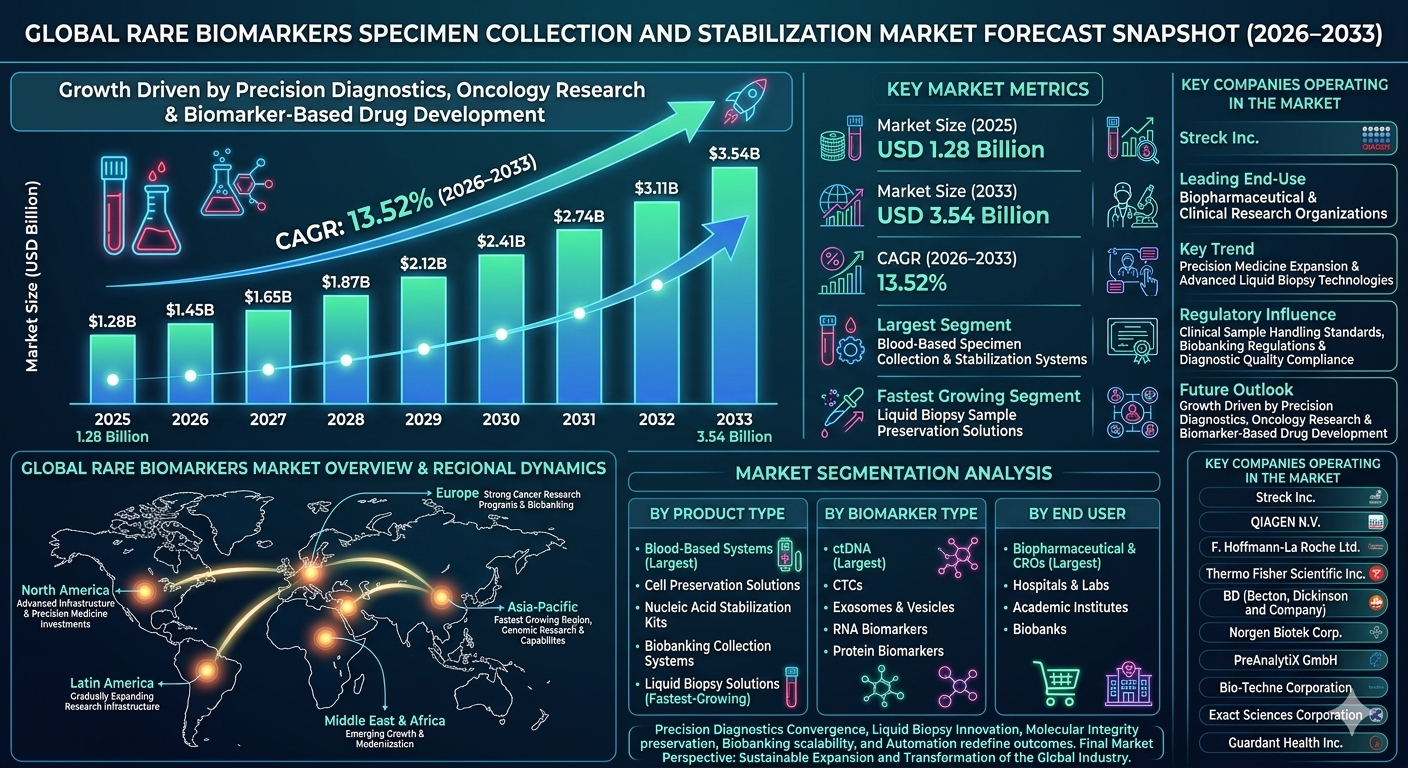
Global Rare Biomarkers Specimen Collection and Stabilization Market Size & Forecast
The Global Rare Biomarkers Specimen Collection and Stabilization Market is expected to witness strong growth during the forecast period from 2026 to 2033. The market was valued at USD 1.28 billion in 2025 and is projected to reach approximately USD 3.54 billion by 2033, registering a CAGR of 13.52%. The market growth is primarily driven by increasing adoption of precision medicine, rising demand for liquid biopsy testing, growing oncology research activities, and expanding biomarker-driven drug development programs. Rare biomarker specimen collection and stabilization technologies play a critical role in preserving the integrity of circulating tumor cells (CTCs), circulating tumor DNA (ctDNA), exosomes, RNA, proteins, and other low-abundance biological markers. In addition, advancements in molecular diagnostics, personalized healthcare, genomic research, and companion diagnostics are supporting long-term market expansion.Global Rare Biomarkers Specimen Collection and Stabilization Market Overview
Rare biomarker specimen collection and stabilization solutions are specialized products and technologies designed to collect, preserve, transport, and maintain biological samples containing low-concentration biomarkers for downstream analysis. The market includes blood collection tubes, liquid biopsy preservation systems, nucleic acid stabilization kits, cell preservation solutions, transport media, and biobanking specimen management products. These solutions are widely utilized across oncology diagnostics, genetic testing, clinical research, pharmaceutical development, translational medicine, and precision healthcare applications. The market is shifting from conventional sample handling approaches toward advanced stabilization technologies capable of preserving molecular integrity over extended periods.Structural Drivers of Market Growth
1. Innovation and Commercialization Acceleration
Rapid innovation in liquid biopsy technologies, molecular preservation systems, genomic testing workflows, and next-generation sequencing (NGS) applications is accelerating market development. Advanced stabilization solutions are enabling higher biomarker recovery rates and improved diagnostic accuracy.Market Implications
Companies investing in novel preservation technologies, liquid biopsy solutions, and molecular diagnostics platforms are expected to strengthen market leadership.2. Compliance and Risk Repricing
Clinical laboratory regulations, specimen handling guidelines, biobanking standards, and diagnostic quality requirements are influencing product development. Healthcare organizations are increasingly prioritizing sample integrity, traceability, and regulatory compliance.Market Implications
Firms offering validated, compliant, and high-performance specimen stabilization solutions are likely to gain stronger market acceptance.3. Competitive and Value-Chain Reconfiguration
The market is highly competitive as diagnostic companies, laboratory solution providers, biobanking firms, and life science technology companies expand their product portfolios. Strategic partnerships between diagnostics developers, pharmaceutical companies, and research institutions are reshaping value-chain dynamics.Market Implications
Companies focusing on integrated sample collection and molecular analysis ecosystems may gain stronger competitive advantages.4. Capital and Capacity Scaling
Rising investments in precision medicine programs, oncology research, biobanking infrastructure, and biomarker discovery initiatives are supporting market expansion. Growing demand for companion diagnostics and personalized therapies is increasing specimen management requirements.Market Implications
Manufacturers scaling advanced specimen preservation technologies and global distribution networks are expected to capture future opportunities.Market Segmentation Analysis
By Product Type
1. Blood-Based Specimen Collection & Stabilization Systems
This remains the largest segment due to widespread use in liquid biopsy and biomarker analysis applications.2. Cell Preservation Solutions
Strong demand for maintaining cellular integrity during transportation and storage.3. Nucleic Acid Stabilization Kits
Widely utilized for DNA and RNA preservation in molecular diagnostics.4. Biobanking Collection Systems
Growing adoption for long-term specimen storage and research applications.5. Liquid Biopsy Sample Preservation Solutions
Fastest-growing segment due to increasing adoption of non-invasive cancer diagnostics.By Biomarker Type
1. Circulating Tumor DNA (ctDNA)
Largest segment driven by expanding oncology diagnostics and precision medicine applications.2. Circulating Tumor Cells (CTCs)
Strong demand for cancer monitoring and disease progression assessment.3. Exosomes & Extracellular Vesicles
Growing utilization in biomarker discovery and therapeutic research.4. RNA Biomarkers
Increasing adoption for molecular profiling and genomic studies.5. Protein Biomarkers
Widely used in clinical diagnostics and drug development.By End User
1. Biopharmaceutical & Clinical Research Organizations
Largest segment due to extensive biomarker-based drug development activities.2. Hospitals & Diagnostic Laboratories
Strong demand for precision diagnostics and oncology testing.3. Academic & Research Institutes
Growing utilization for biomarker discovery and translational research.4. Biobanks
Increasing adoption for specimen preservation and long-term research support.Regional Market Dynamics
North America
North America dominates the global market due to advanced molecular diagnostics infrastructure, strong biopharmaceutical research activity, and significant investments in precision medicine.Europe
Europe remains a major market supported by expanding cancer research programs, biobanking initiatives, and healthcare innovation.Asia-Pacific
Asia-Pacific is the fastest-growing region due to increasing healthcare investments, rising genomic research activities, and expanding diagnostic capabilities.Latin America
Latin America is gradually expanding due to improving clinical research infrastructure and growing awareness of precision diagnostics.Middle East & Africa
The region is witnessing emerging growth driven by healthcare modernization and increasing research collaborations.Competitive Landscape
The Global Rare Biomarkers Specimen Collection and Stabilization Market is highly competitive with diagnostic technology providers, life science companies, and specimen management solution manufacturers expanding globally.Key Companies Operating in the Market Include:
- Streck Inc.
- QIAGEN N.V.
- F. Hoffmann-La Roche Ltd.
- Thermo Fisher Scientific Inc.
- BD (Becton, Dickinson and Company)
- Norgen Biotek Corp.
- PreAnalytiX GmbH
- Bio-Techne Corporation
- Exact Sciences Corporation
- Guardant Health Inc.
Strategic Outlook
The future of the market will be shaped by liquid biopsy innovation, precision oncology, molecular diagnostics advancements, and biomarker-guided therapeutic development. Enhanced preservation technologies, automation of sample workflows, and integration with next-generation sequencing platforms will significantly improve research and diagnostic outcomes. The rise of personalized medicine, early disease detection, and companion diagnostics is expected to create strong long-term growth opportunities.Final Market Perspective
The Global Rare Biomarkers Specimen Collection and Stabilization Market remains a critical segment within precision medicine, molecular diagnostics, and life sciences research ecosystems. Rising demand for high-quality biological samples, biomarker-based therapies, and advanced diagnostic technologies continues driving long-term market growth. Companies capable of delivering reliable, compliant, and technologically advanced specimen stabilization solutions will be best positioned to capture future opportunities. The convergence of liquid biopsy technologies, genomic medicine, and precision diagnostics is expected to redefine the future of biomarker-based healthcare and research.Table of Contents
Table of Contents
- 1. Executive Summary
- 1.1 Global Rare Biomarkers Specimen Collection and Stabilization Market Snapshot (2026???2033)
- 1.2 Market Size & Growth Overview
- 1.3 Key Market Highlights
- 1.4 Largest & Fastest-Growing Segments
- 1.5 Regional Performance Summary
- 1.6 Competitive Landscape Overview
- 1.7 Strategic Outlook Through 2033
- 2. Market Introduction & Overview
- 2.1 Definition of Rare Biomarkers Specimen Collection and Stabilization
- 2.2 Scope of the Global Market
- 2.3 Evolution of Biomarker Preservation Technologies
- 2.4 Specimen Collection & Stabilization Value Chain Analysis
- 2.5 Regulatory & Compliance Framework
- 2.6 Emerging Trends in Precision Medicine & Liquid Biopsy
- 2.7 Role of Biomarker Preservation in Molecular Diagnostics
- 3. Research Methodology
- 3.1 Primary Research Approach
- 3.2 Secondary Research Sources
- 3.3 Market Size Estimation Methodology
- 3.4 Forecasting Assumptions (2026???2033)
- 3.5 Data Validation & Triangulation
- 4. Market Dynamics
- 4.1 Market Drivers
- 4.1.1 Growing Adoption of Precision Medicine
- 4.1.2 Rising Demand for Liquid Biopsy Testing
- 4.1.3 Expansion of Oncology Research Programs
- 4.1.4 Increasing Biomarker-Based Drug Development Activities
- 4.1.5 Advancements in Molecular Diagnostics & Genomic Research
- 4.2 Market Restraints
- 4.2.1 High Costs of Advanced Preservation Technologies
- 4.2.2 Complex Regulatory & Validation Requirements
- 4.2.3 Limited Standardization Across Sample Handling Workflows
- 4.3 Market Opportunities
- 4.3.1 Expansion of Companion Diagnostics Programs
- 4.3.2 Growth in Precision Oncology Applications
- 4.3.3 Increasing Investments in Biobanking Infrastructure
- 4.3.4 Integration with Next-Generation Sequencing (NGS) Platforms
- 4.4 Market Challenges
- 4.4.1 Maintaining Sample Integrity During Transportation
- 4.4.2 Managing Low-Abundance Biomarker Recovery Rates
- 4.4.3 Scalability of Global Specimen Preservation Networks
- 4.1 Market Drivers
- 5. Global Rare Biomarkers Specimen Collection and Stabilization Market Size & Forecast (USD Billion), 2026???2033
- 5.1 Market Revenue Analysis
- 5.2 CAGR Analysis
- 5.3 Demand-Supply Trends
- 5.4 Pricing Analysis
- 5.5 Investment Trends
- 5.6 Future Market Outlook
- 6. Market Segmentation Analysis (USD Billion), 2026???2033
- 6.1 By Product Type
- 6.1.1 Blood-Based Specimen Collection & Stabilization Systems (Largest Segment)
- 6.1.2 Cell Preservation Solutions
- 6.1.3 Nucleic Acid Stabilization Kits
- 6.1.4 Biobanking Collection Systems
- 6.1.5 Liquid Biopsy Sample Preservation Solutions (Fastest-Growing Segment)
- 6.2 By Biomarker Type
- 6.2.1 Circulating Tumor DNA (ctDNA) (Largest Segment)
- 6.2.2 Circulating Tumor Cells (CTCs)
- 6.2.3 Exosomes & Extracellular Vesicles
- 6.2.4 RNA Biomarkers
- 6.2.5 Protein Biomarkers
- 6.3 By End User
- 6.3.1 Biopharmaceutical & Clinical Research Organizations (Largest Segment)
- 6.3.2 Hospitals & Diagnostic Laboratories
- 6.3.3 Academic & Research Institutes
- 6.3.4 Biobanks
- 6.1 By Product Type
- 7. Regional Market Analysis
- 7.1 North America
- 7.2 Europe
- 7.3 Asia-Pacific
- 7.4 Latin America
- 7.5 Middle East & Africa
- 8. Competitive Landscape
- 8.1 Market Share Analysis
- 8.2 Competitive Benchmarking
- 8.3 Strategic Developments
- 8.4 Product Innovation & Precision Medicine Strategies
- 8.5 Partnerships, Acquisitions & Expansion Analysis
- 9. Company Profiles
- 9.1 Streck Inc.
- 9.2 QIAGEN N.V.
- 9.3 F. Hoffmann-La Roche Ltd.
- 9.4 Thermo Fisher Scientific Inc.
- 9.5 BD (Becton, Dickinson and Company)
- 9.6 Norgen Biotek Corp.
- 9.7 PreAnalytiX GmbH
- 9.8 Bio-Techne Corporation
- 9.9 Exact Sciences Corporation
- 9.10 Guardant Health Inc.
- 10. Strategic Intelligence & Pheonix AI Insights
- 10.1 Biomarker Preservation Demand Forecast Model
- 10.2 Liquid Biopsy Adoption Opportunity Analysis
- 10.3 Precision Medicine Growth Tracker
- 10.4 Biobanking & Specimen Management Assessment
- 10.5 Automated Porter???s Five Forces Analysis
- 11. Future Outlook & Strategic Recommendations
- 11.1 Expansion of Liquid Biopsy Applications
- 11.2 Investment in Advanced Stabilization Technologies
- 11.3 Growth Opportunities in Precision Oncology
- 11.4 Strengthening Biobanking & Sample Integrity Infrastructure
- 11.5 Long-Term Market Outlook (2033+)
- 12. Appendix
- 13. About Pheonix Market Research
- 14. Disclaimer
Competitive Landscape
Global Rare Biomarkers Specimen Collection and Stabilization Market Competitive Intensity & Market Structure Overview
The global rare biomarkers specimen collection and stabilization market is moderately consolidated and highly innovation-driven, with competition centered around specialized life sciences companies, molecular diagnostics providers, laboratory solution manufacturers, and specimen preservation technology developers. Competitive intensity is influenced by product performance, biomarker preservation efficiency, regulatory compliance, intellectual property strength, technological innovation, and integration with advanced diagnostic workflows.
Market participants are increasingly investing in next-generation specimen stabilization technologies capable of preserving circulating tumor DNA (ctDNA), circulating tumor cells (CTCs), exosomes, RNA, proteins, and other low-abundance biomarkers under varying transport and storage conditions. As precision medicine and liquid biopsy applications continue to expand, competition is intensifying among companies seeking to improve sample integrity and analytical reliability.
The market structure is evolving from traditional specimen collection products toward comprehensive molecular sample management ecosystems that integrate collection, preservation, transportation, biobanking, and downstream genomic analysis. This transition is creating opportunities for both established diagnostics companies and specialized biomarker technology innovators.
Global Rare Biomarkers Specimen Collection and Stabilization Market Competitive Intensity & Market Structure Current Scenario
Leading Global Rare Biomarkers Specimen Collection and Stabilization Companies
Streck Inc.: A leading provider of specimen collection and stabilization products, widely recognized for preserving cell-free DNA, circulating tumor cells, and other rare biomarkers for liquid biopsy applications.
QIAGEN N.V.: Global life sciences and molecular diagnostics company offering sample collection, nucleic acid stabilization, extraction technologies, and biomarker analysis solutions.
F. Hoffmann-La Roche Ltd.: Major diagnostics and healthcare company actively supporting precision medicine through advanced molecular diagnostics and biomarker-focused testing platforms.
Thermo Fisher Scientific Inc.: Leading life sciences company providing specimen preservation technologies, laboratory consumables, molecular biology tools, and genomic research solutions.
BD (Becton, Dickinson and Company): Global medical technology company offering blood collection systems, specimen management products, and clinical laboratory solutions.
Norgen Biotek Corp.: Specialized biotechnology company focused on nucleic acid preservation, liquid biopsy sample collection, and molecular diagnostics workflows.
PreAnalytiX GmbH: Developer of advanced blood collection and stabilization systems designed to support high-quality genomic and transcriptomic analysis.
Bio-Techne Corporation: Life sciences innovator providing biomarker research tools, molecular diagnostics technologies, and sample processing solutions.
Exact Sciences Corporation: Precision diagnostics company leveraging biomarker technologies and liquid biopsy innovations to support early disease detection and clinical testing.
Guardant Health Inc.: Pioneer in liquid biopsy diagnostics with strong expertise in circulating biomarker analysis, oncology testing, and precision medicine applications.
Key Competitive Intensity & Market Structure Drivers
The growing adoption of liquid biopsy testing and non-invasive diagnostic technologies is increasing demand for highly specialized specimen stabilization solutions capable of preserving biomarker integrity throughout the testing process.
Rapid advancements in precision medicine, companion diagnostics, and next-generation sequencing (NGS) are intensifying competition among companies seeking to improve sample quality and analytical performance.
Strict clinical laboratory regulations, biobanking standards, and diagnostic quality requirements are creating significant barriers to entry and favoring companies with validated, compliant technologies.
The expansion of oncology research and biomarker-guided drug development programs is driving demand for advanced specimen collection products that support reliable molecular analysis.
Strategic collaborations between pharmaceutical companies, diagnostic developers, academic institutions, and biobanks are accelerating innovation and reshaping competitive dynamics across the value chain.
Strategic Implications of Competitive Intensity & Market Structure
Companies investing in proprietary stabilization chemistries, liquid biopsy preservation technologies, and integrated specimen management platforms are expected to gain significant competitive advantages in precision diagnostics and research applications.
Strong intellectual property portfolios covering biomarker preservation technologies and molecular sample handling methods are becoming increasingly important competitive assets.
Partnerships with pharmaceutical developers and clinical research organizations are enabling companies to expand their role in biomarker-based drug development and companion diagnostic programs.
Organizations capable of delivering end-to-end solutions that integrate specimen collection, preservation, transport, and molecular analysis are expected to strengthen customer adoption and long-term market positioning.
Investments in automation, digital sample tracking, and workflow optimization technologies are helping improve operational efficiency and support large-scale precision medicine initiatives.
Global Rare Biomarkers Specimen Collection and Stabilization Market Competitive Intensity & Market Structure Forward Outlook
The competitive landscape of the global rare biomarkers specimen collection and stabilization market is expected to become increasingly innovation-centric as liquid biopsy technologies, precision oncology, and molecular diagnostics continue to expand globally. Future competition will focus on maximizing biomarker recovery, extending specimen stability, and supporting increasingly sophisticated genomic analysis workflows.
Market participants are expected to increase investments in advanced preservation chemistries, automation technologies, integrated biobanking solutions, and next-generation specimen management systems to enhance product differentiation.
North America is expected to remain the leading market due to its advanced molecular diagnostics infrastructure and strong precision medicine investments, while Asia-Pacific is projected to witness the fastest growth driven by expanding genomic research programs, healthcare modernization, and increasing clinical research activity.
Over the forecast period, companies that successfully combine scientific innovation, regulatory compliance, biomarker expertise, and scalable specimen management capabilities will be best positioned to strengthen their leadership within the evolving global rare biomarkers specimen collection and stabilization market.
Value Chain
Global Rare Biomarkers Specimen Collection and Stabilization Market Value Chain & Supply Chain Evolution Overview
The Global Rare Biomarkers Specimen Collection and Stabilization Market is undergoing significant transformation driven by the rapid expansion of precision medicine, liquid biopsy technologies, oncology research, and biomarker-based drug development. The market???s value chain is characterized by a highly specialized and quality-sensitive ecosystem integrating specimen collection technologies, stabilization reagents, molecular diagnostics platforms, biobanking infrastructure, and clinical research networks. This interconnected framework is reshaping sample integrity management, diagnostic reliability, and biomarker discovery workflows worldwide.
A defining feature of this value chain is the convergence of advanced specimen preservation technologies with molecular diagnostics, next-generation sequencing (NGS), liquid biopsy platforms, and precision healthcare applications. Modern stabilization systems are increasingly designed to preserve circulating tumor DNA (ctDNA), circulating tumor cells (CTCs), exosomes, RNA, proteins, and other rare biomarkers with high analytical accuracy throughout transportation and storage processes.
Supply chain complexity remains high due to stringent specimen handling requirements, regulatory compliance obligations, cold-chain logistics, specialized consumables manufacturing, and integration with clinical laboratory workflows. Market participants must coordinate across reagent production, collection device manufacturing, biobanking operations, laboratory processing, and global distribution networks while maintaining biomarker integrity and regulatory compliance.
Manufacturers are increasingly investing in advanced preservation chemistries, automated sample processing technologies, integrated specimen management systems, and scalable global logistics infrastructure to improve diagnostic outcomes and research efficiency. The value chain is evolving into a precision-driven, technology-enabled, and compliance-focused ecosystem centered on sample quality, traceability, and biomarker reliability.
Global Rare Biomarkers Specimen Collection and Stabilization Market Value Chain & Supply Chain Evolution Current Scenario
Market-Specific Value Chain
- Raw Material & Reagent Sourcing: Preservation reagents, stabilization chemicals, collection tube materials, specialty polymers, laboratory consumables, and diagnostic-grade components.
- Manufacturing & Assembly: Blood collection tube manufacturing, specimen stabilization kit production, preservation media formulation, packaging, sterilization, and quality testing.
- Technology Integration: Liquid biopsy platforms, molecular diagnostics systems, NGS workflow compatibility, automated sample processing, and laboratory information management systems (LIMS).
- Regulatory & Compliance Management: Clinical laboratory standards, biobanking regulations, diagnostic quality systems, specimen handling protocols, and healthcare compliance frameworks.
- Distribution & Logistics: Specialized laboratory distributors, healthcare supply chains, cold-chain logistics providers, research supply networks, and direct institutional procurement channels.
- End User Utilization: Biopharmaceutical companies, clinical research organizations (CROs), hospitals, diagnostic laboratories, academic research institutions, and biobanks.
Company-to-Stage Mapping
- Raw Material & Reagent Sourcing: Diagnostic reagent suppliers, specialty chemical manufacturers, laboratory consumables providers.
- Manufacturing & Assembly: Streck Inc., Norgen Biotek Corp., BD (Becton, Dickinson and Company).
- Technology Integration: QIAGEN N.V., Thermo Fisher Scientific Inc., F. Hoffmann-La Roche Ltd., PreAnalytiX GmbH.
- Regulatory & Compliance Management: Clinical laboratory accreditation bodies, healthcare regulators, biobanking certification organizations.
- Distribution & Logistics: Laboratory supply distributors, healthcare procurement organizations, specialty cold-chain logistics providers.
- End User Utilization: Biopharmaceutical companies, hospitals, diagnostic laboratories, academic research institutes, and biobanks.
Key Value Chain & Supply Chain Evolution Signals in Global Rare Biomarkers Specimen Collection and Stabilization Market
Expansion of Liquid Biopsy Testing Infrastructure
Growing adoption of non-invasive cancer diagnostics is increasing demand for advanced specimen collection and preservation technologies capable of maintaining biomarker integrity.
Rising Precision Medicine & Biomarker Research Activities
Expanding precision oncology programs and biomarker-driven therapeutic development are driving investments in high-performance stabilization solutions.
Integration with Molecular Diagnostics & NGS Platforms
Specimen preservation systems are increasingly optimized for compatibility with next-generation sequencing, genomic testing, and advanced molecular analysis workflows.
Growth of Biobanking & Long-Term Sample Preservation
Biobanks are expanding globally, creating strong demand for reliable collection, stabilization, storage, and specimen traceability solutions.
Increasing Regulatory Focus on Sample Integrity
Healthcare regulators and laboratory accreditation organizations are strengthening requirements for specimen quality, handling protocols, and diagnostic reproducibility.
Advancement of Automated Sample Management Technologies
Automation, digital tracking systems, and laboratory workflow integration are improving efficiency, reducing human error, and enhancing sample lifecycle management.
Strategic Implications of Value Chain & Supply Chain Evolution
Investment in Advanced Preservation Technologies
Companies developing next-generation stabilization chemistries and biomarker preservation systems will strengthen competitive positioning within precision diagnostics markets.
Expansion of Integrated Sample-to-Analysis Ecosystems
Integration of collection, preservation, transport, and molecular testing solutions will improve customer value and operational efficiency.
Optimization of Global Distribution & Cold-Chain Infrastructure
Reliable logistics capabilities are becoming critical for maintaining sample quality across geographically distributed research and healthcare networks.
Strengthening Regulatory & Quality Compliance Frameworks
Compliance with laboratory standards, diagnostic regulations, and biobanking requirements is essential for market access and customer trust.
Development of Digital Specimen Tracking Platforms
Advanced sample monitoring, traceability systems, and integrated laboratory information platforms are creating opportunities for workflow optimization and risk reduction.
Localization & Capacity Expansion Strategies
Regional manufacturing, local distribution partnerships, and scalable production capabilities are improving supply chain resilience and responsiveness.
Global Rare Biomarkers Specimen Collection and Stabilization Market Value Chain & Supply Chain Evolution Forward Outlook
Looking ahead, the value chain is expected to evolve into a highly integrated, technology-driven, and precision medicine-focused ecosystem.
Key Future Developments Include:
- Expansion of liquid biopsy specimen preservation technologies for oncology and precision diagnostics.
- Increased adoption of automated sample processing and digital specimen management platforms.
- Growth of integrated collection-to-sequencing workflows supporting genomic and molecular testing.
- Expansion of global biobanking infrastructure and long-term biomarker preservation capabilities.
- Integration of AI-enabled laboratory analytics and specimen quality monitoring systems.
- Advancement of next-generation stabilization reagents for ctDNA, CTCs, exosomes, RNA, and protein biomarkers.
As the market evolves, competitive advantage will increasingly depend on the ability to combine specimen preservation accuracy, regulatory compliance, molecular workflow compatibility, and scalable global distribution capabilities.
Companies that successfully integrate advanced stabilization technologies, precision diagnostics support, automated laboratory workflows, and robust compliance infrastructure will achieve superior market positioning, customer trust, and long-term growth in the Global Rare Biomarkers Specimen Collection and Stabilization Market.
Investment Activity
Global Rare Biomarkers Specimen Collection and Stabilization Market Investment & Funding Dynamics Overview
The Global Rare Biomarkers Specimen Collection and Stabilization Market is experiencing strong investment momentum driven by the rapid expansion of precision medicine, increasing adoption of liquid biopsy technologies, growing oncology research activities, and rising demand for biomarker-guided drug development. Diagnostic technology providers, life sciences companies, biopharmaceutical firms, molecular diagnostics developers, and healthcare investors are actively investing in advanced specimen preservation technologies, liquid biopsy sample stabilization systems, genomic testing infrastructure, molecular diagnostics platforms, and biobanking solutions.
Investment activity is accelerating as healthcare organizations and research institutions seek to improve biomarker integrity, diagnostic accuracy, and reproducibility across clinical and research workflows. Capital deployment is increasingly focused on circulating tumor DNA (ctDNA) preservation technologies, nucleic acid stabilization kits, automated sample handling systems, and next-generation sequencing (NGS)-compatible specimen management solutions.
Additionally, growing investments in precision oncology programs, companion diagnostics development, translational research infrastructure, and advanced biobanking networks are creating significant long-term opportunities across the global market.
Global Rare Biomarkers Specimen Collection and Stabilization Market Investment & Funding Dynamics Current Scenario
Currently, the market is witnessing increasing capital inflows as pharmaceutical companies, diagnostic laboratories, and research institutions expand biomarker-focused initiatives. Leading market participants are investing heavily in liquid biopsy preservation systems, molecular sample stabilization technologies, automated specimen processing platforms, and precision diagnostic workflow optimization.
The market is attracting substantial venture capital, strategic corporate funding, and institutional investments into liquid biopsy innovators, molecular diagnostics startups, genomic research technology providers, and advanced biobanking solution developers. Investors are increasingly supporting technologies that improve sample quality, biomarker recovery rates, and clinical testing reliability.
Furthermore, the industry is witnessing active strategic partnerships, research collaborations, mergers, and acquisitions among diagnostics companies, pharmaceutical organizations, academic institutions, and life sciences technology providers to accelerate innovation and commercialization.
Key Investment & Funding Dynamics Signals in Global Rare Biomarkers Specimen Collection and Stabilization Market
- Growing demand for liquid biopsy testing and non-invasive cancer diagnostics is accelerating investment in advanced preservation technologies.
- Expansion of precision medicine and biomarker-driven therapeutic development is increasing capital deployment across specimen management solutions.
- Rising adoption of next-generation sequencing and molecular diagnostics is supporting investments in sample stabilization infrastructure.
- Strategic investments in ctDNA, CTC, exosome, and RNA biomarker preservation systems are enhancing research and diagnostic capabilities.
- Increasing emphasis on clinical sample quality, regulatory compliance, and reproducibility is strengthening investor confidence.
- Partnerships between biopharmaceutical companies, diagnostics providers, and research institutions are improving innovation scalability and commercialization potential.
- Growing demand for biobanking infrastructure and long-term specimen storage solutions is driving funding activity across healthcare research ecosystems.
Strategic Implications of Investment & Funding Dynamics in Global Rare Biomarkers Specimen Collection and Stabilization Market
- Continuous investment in advanced specimen stabilization technologies and liquid biopsy innovation is essential for maintaining competitive advantage.
- Capital allocation toward molecular preservation systems, automated sample workflows, and genomic research infrastructure will strengthen market positioning.
- Companies offering high-performance, compliant, and clinically validated specimen management solutions are expected to gain stronger adoption.
- Strategic acquisitions and research collaborations will accelerate technology development, product expansion, and market penetration.
- Investments in precision oncology, companion diagnostics, and biomarker discovery platforms will remain major growth priorities.
- Compliance with clinical sample handling standards, biobanking regulations, and diagnostic quality requirements will continue shaping investment strategies.
- Organizations developing integrated specimen collection, preservation, and molecular analysis ecosystems are expected to capture substantial future opportunities.
Global Rare Biomarkers Specimen Collection and Stabilization Market Investment & Funding Dynamics Forward Outlook
Looking ahead, the Global Rare Biomarkers Specimen Collection and Stabilization Market is expected to maintain strong investment growth driven by increasing adoption of precision diagnostics, expanding oncology research programs, and growing utilization of biomarker-based therapies.
Future capital deployment will increasingly focus on next-generation liquid biopsy technologies, AI-enhanced molecular diagnostics workflows, advanced biobanking systems, automated specimen processing platforms, and integrated precision medicine ecosystems.
As healthcare systems continue transitioning toward personalized medicine and early disease detection strategies, investment activity is expected to expand across biomarker research, clinical diagnostics, and genomic medicine infrastructure.
In conclusion, the Global Rare Biomarkers Specimen Collection and Stabilization Market represents a high-growth life sciences investment landscape where precision medicine, liquid biopsy innovation, molecular diagnostics, genomic research, and advanced specimen preservation technologies will define future funding priorities, innovation strategies, and long-term market expansion.
Technology & Innovation
Global Rare Biomarkers Specimen Collection and Stabilization Market Technology & Innovation Landscape Overview
The global rare biomarkers specimen collection and stabilization market is undergoing rapid technological transformation driven by advancements in liquid biopsy technologies, molecular preservation systems, next-generation sequencing (NGS), precision diagnostics, genomic medicine, AI-powered biomarker analytics, and automated specimen management platforms. These innovations are significantly enhancing the collection, preservation, transportation, and analysis of low-abundance biological markers used in advanced diagnostic and therapeutic applications.
Modern specimen collection and stabilization solutions increasingly integrate specialized blood collection systems, nucleic acid preservation technologies, cell-free DNA stabilization platforms, automated sample processing workflows, and digital biobanking infrastructure to improve sample integrity, analytical accuracy, and operational efficiency. These technologies are enabling healthcare and research organizations to generate more reliable biomarker data for precision medicine applications.
The market is also witnessing strong adoption of liquid biopsy preservation technologies, exosome stabilization systems, AI-enabled biomarker discovery platforms, cloud-based specimen tracking systems, and advanced cold-chain logistics solutions, which are improving biomarker recovery rates, diagnostic performance, and research reproducibility across clinical and research settings.
Global Rare Biomarkers Specimen Collection and Stabilization Market Technology & Innovation Current Scenario
Current innovation in the market is primarily centered around liquid biopsy sample preservation, molecular integrity protection, and precision biomarker analysis. Industry participants are increasingly developing advanced stabilization technologies capable of maintaining biological sample quality during transportation, storage, and laboratory processing.
Liquid biopsy preservation systems are being widely adopted to stabilize circulating tumor DNA (ctDNA), circulating tumor cells (CTCs), exosomes, and other rare biomarkers for oncology diagnostics and disease monitoring applications.
Advanced nucleic acid stabilization technologies are enabling extended preservation of DNA and RNA molecules while minimizing degradation and analytical variability during sample handling.
Next-generation sequencing integration is supporting high-throughput genomic analysis by ensuring specimen quality and improving biomarker detection sensitivity across precision medicine workflows.
Automation technologies are increasingly being utilized to streamline specimen collection, processing, labeling, storage, and transportation while reducing human error and improving operational consistency.
Additionally, digital biobanking platforms and cloud-based specimen tracking systems are improving sample traceability, regulatory compliance, and long-term research data management across healthcare and life sciences organizations.
Key Technology & Innovation Trends in Global Rare Biomarkers Specimen Collection and Stabilization Market
- Liquid Biopsy Preservation Technologies: Advanced stabilization systems for ctDNA, CTCs, and exosome-based diagnostics.
- Nucleic Acid Stabilization Solutions: Technologies designed to preserve DNA and RNA integrity during collection and transport.
- Next-Generation Sequencing Integration: Enhanced specimen quality supporting genomic and molecular diagnostic workflows.
- Exosome & Extracellular Vesicle Preservation: Specialized solutions for emerging biomarker research applications.
- AI-Powered Biomarker Analytics: Intelligent analysis platforms supporting biomarker identification and clinical interpretation.
- Automated Sample Processing Systems: Improving workflow efficiency and reducing pre-analytical variability.
- Digital Biobanking Platforms: Centralized management of specimen inventories, storage conditions, and research data.
- Cloud-Based Sample Tracking: Real-time monitoring of specimen collection, transportation, and storage processes.
- Advanced Cold Chain Technologies: Maintaining sample stability and molecular integrity across logistics networks.
- Companion Diagnostics Enablement: Supporting biomarker-driven therapeutic development and personalized medicine initiatives.
Strategic Implications of Technology & Innovation
Technological advancements are transforming the rare biomarkers specimen collection and stabilization industry into a precision-focused, data-driven, and highly regulated ecosystem supporting advanced diagnostics and personalized healthcare.
Companies investing in liquid biopsy innovation, molecular preservation technologies, and automated specimen management solutions are gaining stronger competitive positioning through improved analytical performance and regulatory compliance.
The convergence of genomics, molecular diagnostics, artificial intelligence, and precision medicine is enabling earlier disease detection, more accurate patient stratification, and improved therapeutic decision-making.
Automation and digitalization are improving specimen workflow efficiency while reducing sample degradation risks, operational costs, and laboratory processing errors.
However, regulatory complexity, specimen standardization challenges, high technology costs, and variability in biomarker validation protocols remain significant barriers to broader market adoption.
Global Rare Biomarkers Specimen Collection and Stabilization Market Technology & Innovation Forward Outlook
The future of the market is expected to evolve toward fully integrated, AI-enabled, and precision-driven specimen management ecosystems supported by advanced molecular preservation technologies and next-generation diagnostic platforms.
Emerging innovations include AI-assisted biomarker discovery, smart specimen collection devices, automated liquid biopsy workflows, real-time molecular quality assessment systems, and digitally connected biobanking networks.
Precision medicine adoption is expected to accelerate significantly as biomarker-based diagnostics become increasingly integrated into oncology, rare disease management, and personalized therapeutic development.
The integration of genomic analytics, companion diagnostics, and advanced specimen stabilization technologies will further enhance clinical research outcomes, diagnostic accuracy, and drug development efficiency.
Overall, the global rare biomarkers specimen collection and stabilization market is evolving into a highly sophisticated and technology-intensive ecosystem where liquid biopsy innovation, molecular diagnostics, artificial intelligence, and precision medicine collectively redefine the future of biomarker-driven healthcare and life sciences research.
Market Risk
Global Rare Biomarkers Specimen Collection and Stabilization Market Risk Factors & Disruption Threats Overview
The global rare biomarkers specimen collection and stabilization market operates within a highly specialized and scientifically sensitive environment where sample integrity, regulatory compliance, and technological reliability are critical to market success. The industry plays a foundational role in precision medicine, liquid biopsy diagnostics, oncology research, and biomarker-guided drug development, making it highly dependent on advancements in molecular biology, clinical research infrastructure, and diagnostic innovation.
Despite strong growth prospects, the market faces significant risks related to specimen degradation, evolving regulatory standards, reimbursement uncertainty, laboratory standardization challenges, and the complexity of preserving low-abundance biomarkers. Since biomarker-based diagnostics often rely on highly sensitive biological materials such as circulating tumor DNA (ctDNA), circulating tumor cells (CTCs), RNA, proteins, and exosomes, even minor disruptions in collection, transportation, or storage can compromise analytical outcomes.
Furthermore, the increasing integration of rare biomarker technologies into clinical decision-making and pharmaceutical development introduces heightened quality assurance requirements, regulatory scrutiny, and operational complexity throughout the value chain.
Global Rare Biomarkers Specimen Collection and Stabilization Market Risk Factors & Disruption Threats Current Scenario
The current market environment is characterized by accelerating demand for liquid biopsy testing, precision oncology programs, and genomic medicine initiatives. However, growing adoption has simultaneously increased pressure on specimen collection systems to maintain molecular stability across increasingly complex testing workflows.
One of the primary risks facing the market is specimen degradation during collection, transportation, and storage. Rare biomarkers often exist in extremely low concentrations, making them highly vulnerable to environmental changes, processing delays, and inadequate preservation methods. Any compromise in sample quality can negatively affect diagnostic accuracy, research outcomes, and regulatory compliance.
Regulatory oversight is also intensifying as healthcare authorities and laboratory accreditation bodies implement stricter standards for specimen handling, traceability, biobanking operations, and diagnostic validation. Compliance failures can lead to product recalls, laboratory accreditation issues, delayed approvals, and reduced market acceptance.
In addition, reimbursement variability for advanced biomarker testing and liquid biopsy applications continues to influence adoption rates. Healthcare systems and payers often require substantial clinical evidence before approving reimbursement coverage, creating commercialization challenges for emerging technologies.
Supply chain disruptions affecting laboratory consumables, preservation reagents, specialized collection kits, and cold-chain logistics can further impact specimen integrity and market growth, particularly in international clinical research programs.
Key Risk Factors & Disruption Threats Signals in the Rare Biomarkers Specimen Collection and Stabilization Market
- Specimen Integrity Risk: Biomarker degradation during collection, storage, or transportation can compromise analytical accuracy and clinical reliability.
- Regulatory Compliance Complexity: Evolving standards for diagnostic validation, laboratory accreditation, and specimen handling increase compliance requirements.
- Reimbursement Uncertainty: Limited payer coverage for advanced biomarker testing may restrict adoption across healthcare systems.
- Quality Control Challenges: Variability in sample handling protocols across institutions can affect testing consistency and reproducibility.
- Clinical Validation Requirements: Extensive evidence generation is necessary to support clinical utility and regulatory approvals.
- Supply Chain Vulnerabilities: Dependence on specialized reagents, stabilization media, and laboratory consumables creates procurement risks.
- Cold-Chain Logistics Dependency: Transportation and storage conditions significantly impact specimen preservation and biomarker stability.
- Technology Obsolescence Risk: Rapid innovation in molecular diagnostics may shorten product lifecycles and increase development costs.
- Research Funding Volatility: Changes in government, academic, and pharmaceutical research funding can influence market demand.
- Data Management and Traceability Requirements: Increasing expectations for sample tracking and auditability create additional operational complexity.
Strategic Implications of Risk Factors & Disruption Threats in the Rare Biomarkers Specimen Collection and Stabilization Market
Market participants are increasingly investing in advanced preservation chemistries, automation technologies, and integrated sample management solutions to reduce specimen variability and improve molecular stability. Companies that can demonstrate superior preservation performance and validated analytical outcomes are likely to achieve stronger market differentiation.
Regulatory readiness has become a critical competitive factor. Manufacturers are prioritizing compliance with laboratory standards, biobanking guidelines, and diagnostic quality frameworks to facilitate broader adoption across healthcare and research environments.
Strategic collaborations among diagnostic companies, pharmaceutical developers, biobanks, and research institutions are becoming increasingly important for generating clinical evidence, expanding technology validation, and accelerating commercialization pathways.
In addition, digital specimen tracking systems, automated workflow platforms, and integrated laboratory information management solutions are being deployed to enhance traceability, reduce operational errors, and improve compliance outcomes across specimen management processes.
Global Rare Biomarkers Specimen Collection and Stabilization Market Risk Factors & Disruption Threats Forward Outlook
Looking ahead, the market is expected to experience sustained growth as precision medicine, liquid biopsy testing, companion diagnostics, and biomarker-driven therapeutics become increasingly central to modern healthcare. However, market participants will need to address rising quality expectations, regulatory demands, and technological complexity.
Advances in preservation science are expected to improve the stability of rare biomarkers, enabling longer storage durations, simplified transportation requirements, and broader global access to molecular diagnostics. These innovations will support the expansion of decentralized testing models and international clinical research programs.
Regulatory frameworks are likely to become more standardized as precision diagnostics mature, improving market transparency but also raising compliance thresholds for manufacturers and laboratories. Companies with robust validation data and quality management systems will be better positioned to navigate this environment.
Artificial intelligence, automation, and digital pathology integration are expected to enhance specimen management workflows, improve biomarker discovery efficiency, and reduce operational risks associated with manual processing procedures.
Overall, the global rare biomarkers specimen collection and stabilization market will remain a strategically important enabler of precision healthcare and advanced diagnostics. Organizations that successfully combine scientific innovation, regulatory excellence, operational reliability, and specimen integrity assurance will be best positioned to capitalize on the expanding opportunities within biomarker-driven medicine and life sciences research.
Regulatory Landscape
Global Rare Biomarkers Specimen Collection and Stabilization Market Regulatory & Policy Environment Overview
The regulatory and policy environment governing the Global Rare Biomarkers Specimen Collection and Stabilization Market is becoming increasingly stringent as precision medicine, molecular diagnostics, liquid biopsy testing, and biomarker-driven clinical research gain importance across healthcare systems. Regulatory authorities are primarily focused on ensuring specimen integrity, analytical reliability, patient safety, data traceability, and quality assurance throughout the specimen collection, transportation, storage, and testing process.
Organizations operating in this market must comply with a broad range of clinical laboratory regulations, specimen handling standards, biobanking guidelines, diagnostic quality requirements, and transportation protocols. These frameworks are designed to minimize pre-analytical variability and preserve biomarker stability, which is critical for accurate diagnostic and research outcomes.
As liquid biopsy technologies, genomic medicine, and companion diagnostics continue expanding, regulatory agencies are increasingly emphasizing standardized collection procedures, validated stabilization technologies, and robust quality management systems to support reliable biomarker analysis across healthcare and research environments.
Global Rare Biomarkers Specimen Collection and Stabilization Market Regulatory & Policy Environment Current Scenario
The current regulatory landscape is characterized by growing oversight of specimen collection and preservation processes due to the increasing use of rare biomarkers in oncology, precision medicine, translational research, and pharmaceutical development. Healthcare institutions, diagnostic laboratories, and research organizations are required to follow strict protocols that ensure specimen quality and reproducibility.
Clinical laboratory accreditation frameworks and quality management standards are driving the adoption of validated specimen stabilization technologies capable of maintaining molecular integrity during transportation and storage. Regulatory agencies increasingly require documented evidence demonstrating specimen stability under various handling conditions.
Biobanking regulations are also evolving to strengthen governance over long-term specimen storage, chain-of-custody documentation, informed consent management, and biospecimen traceability. These requirements are supporting greater transparency and reliability within research and clinical testing environments.
The growing adoption of liquid biopsy testing has increased regulatory attention toward preservation systems used for circulating tumor DNA (ctDNA), circulating tumor cells (CTCs), exosomes, RNA biomarkers, and other low-abundance analytes. Validation requirements for these collection systems are becoming more rigorous as liquid biopsy gains broader clinical acceptance.
In parallel, healthcare data protection and patient privacy regulations continue to influence specimen management practices, particularly where biological samples are linked to genomic data, electronic health records, and personalized medicine programs.
Key Regulatory & Policy Environment Signals in Global Rare Biomarkers Specimen Collection and Stabilization Market
- Clinical Sample Handling Standards: Strict requirements governing specimen collection, preservation, transportation, and processing to maintain analytical accuracy.
- Biobanking Regulations: Enhanced oversight of specimen storage, traceability, consent management, and long-term biospecimen preservation.
- Diagnostic Quality Compliance: Increasing validation and quality assurance requirements for molecular diagnostic workflows and biomarker testing.
- Liquid Biopsy Validation Requirements: Greater regulatory scrutiny of collection and stabilization systems used in non-invasive diagnostic applications.
- Laboratory Accreditation Frameworks: Compliance with internationally recognized laboratory quality standards supporting reproducible testing outcomes.
- Patient Data Protection Requirements: Strengthened governance of biological sample information, genomic data management, and patient privacy safeguards.
Strategic Implications of Regulatory & Policy Environment
The evolving regulatory environment is encouraging manufacturers and solution providers to invest heavily in validated stabilization technologies, quality-controlled production processes, and regulatory documentation capabilities. Compliance is increasingly becoming a prerequisite for market access and long-term customer trust.
Growing diagnostic quality requirements are driving demand for specimen collection systems capable of preserving biomarker integrity across extended transportation and storage periods. This is creating competitive advantages for companies with scientifically validated and clinically proven stabilization technologies.
Biobanking regulations are encouraging greater adoption of advanced specimen management platforms, digital tracking systems, and integrated chain-of-custody solutions that improve sample traceability and operational transparency.
Regulatory emphasis on precision medicine and companion diagnostics is also fostering closer collaboration between specimen technology providers, diagnostic companies, pharmaceutical developers, and clinical research organizations to ensure compliance across the biomarker development lifecycle.
Overall, organizations that successfully align product development with evolving regulatory expectations while maintaining specimen quality, reproducibility, and patient data protection standards are expected to strengthen their market position.
Global Rare Biomarkers Specimen Collection and Stabilization Market Regulatory & Policy Environment Forward Outlook
Between 2026 and 2033, the regulatory landscape is expected to become increasingly standardized as precision diagnostics, genomic medicine, and biomarker-based therapies become integral components of healthcare delivery. Regulatory authorities are likely to introduce more harmonized requirements for specimen preservation, biomarker validation, and molecular testing workflows.
Liquid biopsy adoption is expected to drive the development of enhanced validation frameworks for specimen stabilization technologies, particularly for oncology diagnostics, early disease detection, and treatment monitoring applications.
Biobanking regulations will likely become more sophisticated, emphasizing digital specimen traceability, interoperability between research institutions, and stronger governance of biospecimen repositories supporting global research collaborations.
Advancements in automation, artificial intelligence, and digital laboratory management systems are expected to strengthen compliance monitoring capabilities while improving specimen quality control and workflow efficiency.
Overall, regulatory evolution will continue to support market growth by promoting higher quality standards, improved diagnostic reliability, and greater confidence in biomarker-based healthcare solutions. Companies capable of delivering compliant, validated, and technologically advanced specimen collection and stabilization solutions will be best positioned for long-term success in the global market.