
Global Smart Pill Dispenser Market Report, Size and Forecast 2026-2033
Global Smart Pill Dispenser Market Report Size and Forecast 2026???2033
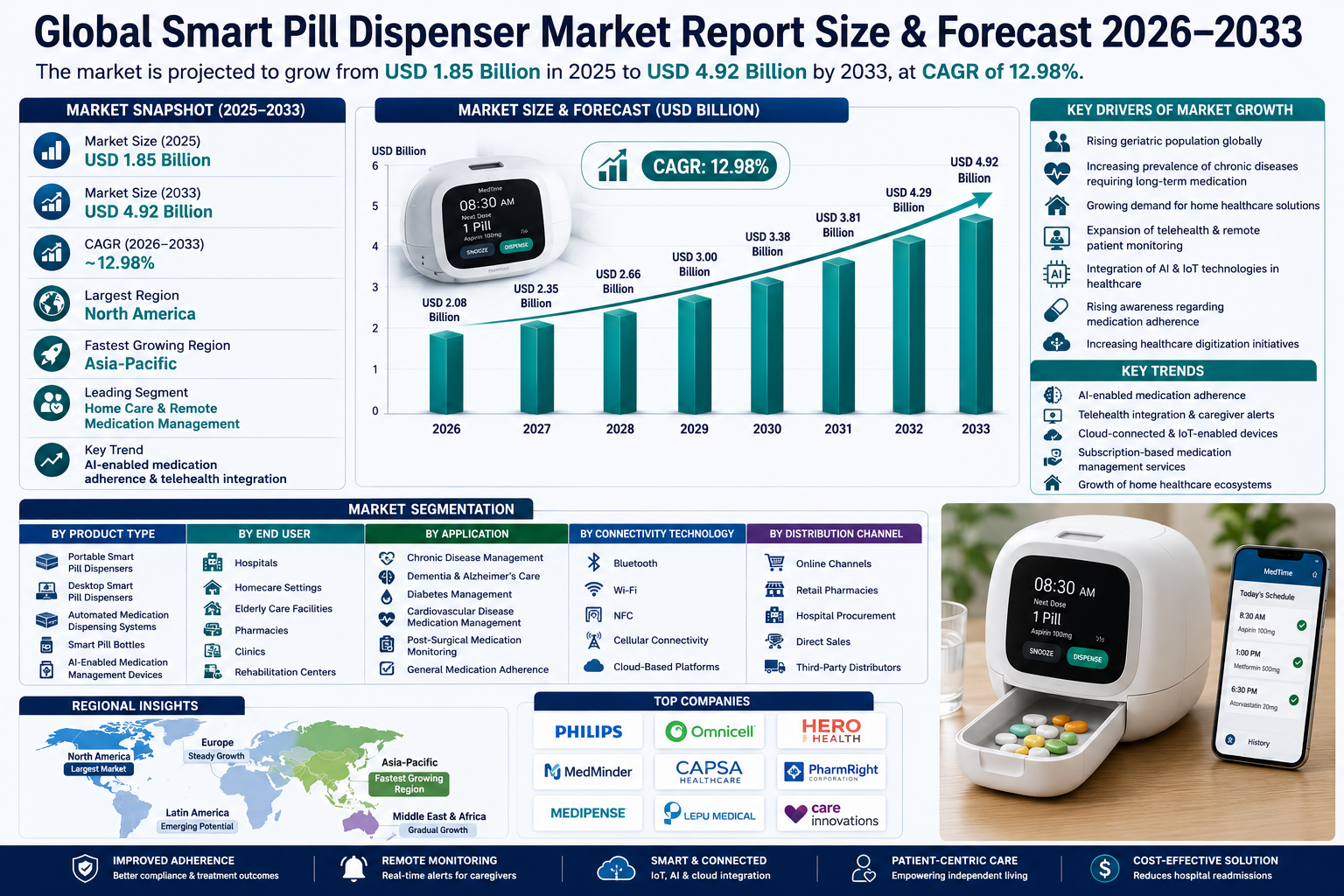
Market Forecast Snapshot (2025???2033)
| Metric | Value |
|---|---|
| Market Size (2025) | USD 1.85 Billion |
| Market Size (2033) | USD 4.92 Billion |
| CAGR (2026???2033) | ~12.98% |
| Largest Region | North America |
| Fastest Growing Region | Asia-Pacific |
| Leading Segment | Home Care & Remote Medication Management |
| Key Trend | AI-enabled medication adherence and telehealth integration |
Market Size & Forecast
The Global Smart Pill Dispenser Market is projected to witness robust growth during the forecast period from 2026 to 2033, driven by increasing adoption of digital healthcare technologies and growing demand for remote patient monitoring solutions. The market is expected to expand from approximately USD 1.85 billion in 2025 to nearly USD 4.92 billion by 2033, registering a CAGR of around 12.98%. The increasing geriatric population, rising prevalence of chronic diseases, and expansion of home healthcare services are major contributors to market growth.Market Overview
The Global Smart Pill Dispenser Market is evolving rapidly with the convergence of healthcare automation, telemedicine, and connected health ecosystems. Smart medication dispensing systems are increasingly integrated with cloud-based monitoring platforms, mobile applications, and caregiver alert systems to enhance treatment compliance. Key companies including Philips, MedMinder, Hero Health, and Omnicell are focusing on AI-driven medication adherence systems and connected healthcare solutions. The market is characterized by increasing investments in digital therapeutics, remote patient monitoring, and home healthcare technologies. The growing preference for aging-in-place healthcare models is significantly accelerating product adoption globally.Key Drivers of Market Growth
- Rising geriatric population globally
- Increasing prevalence of chronic diseases requiring long-term medication
- Growing demand for home healthcare solutions
- Expansion of telehealth and remote patient monitoring
- Integration of AI and IoT technologies in healthcare
- Rising awareness regarding medication adherence
- Increasing healthcare digitization initiatives
Market Restraints
- High initial cost of smart dispensing systems
- Limited awareness in developing regions
- Data privacy and cybersecurity concerns
- Resistance to technology adoption among elderly users
Structural Drivers of Market Growth
1. Innovation and Commercialization Acceleration
Rapid advancements in IoT, AI, cloud connectivity, and mobile healthcare applications are accelerating the commercialization of smart pill dispensing systems. Companies are increasingly developing connected medication adherence platforms with automated alerts and caregiver integration.2. Compliance and Risk Repricing
Healthcare providers are increasingly emphasizing medication safety and adherence monitoring to reduce hospital readmissions and treatment errors. Regulatory focus on patient safety and digital healthcare compliance is driving adoption.3. Competitive and Value-Chain Reconfiguration
Strategic partnerships between healthcare technology companies, pharmacies, and telehealth providers are reshaping market competition. Companies are repositioning portfolios toward connected care ecosystems and subscription-based monitoring services.4. Capital and Capacity Scaling
Increasing investments in digital healthcare infrastructure and homecare services are enabling faster scaling of medication management technologies. Venture capital funding and healthcare technology investments continue to accelerate market expansion.Market Segmentation
By Product Type
- Portable Smart Pill Dispensers
- Desktop Smart Pill Dispensers
- Automated Medication Dispensing Systems
- Smart Pill Bottles
- AI-Enabled Medication Management Devices
By End User
- Hospitals
- Homecare Settings
- Elderly Care Facilities
- Pharmacies
- Clinics
- Rehabilitation Centers
By Application
- Chronic Disease Management
- Dementia & Alzheimer???s Care
- Diabetes Management
- Cardiovascular Disease Medication Management
- Post-Surgical Medication Monitoring
- General Medication Adherence
By Connectivity Technology
- Bluetooth
- Wi-Fi
- NFC
- Cellular Connectivity
- Cloud-Based Platforms
By Distribution Channel
- Online Channels
- Retail Pharmacies
- Hospital Procurement
- Direct Sales
- Third-Party Distributors
Regional Insights
1. North America
North America dominates the market due to advanced healthcare infrastructure, strong telehealth adoption, and favorable reimbursement policies. The United States leads regional demand with high adoption of home healthcare technologies.2. Europe
Europe is witnessing steady growth due to aging populations, medication adherence initiatives, and strong healthcare digitization programs.3. Asia-Pacific
Asia-Pacific is expected to witness the fastest growth due to expanding healthcare infrastructure, increasing chronic disease burden, and growing elderly populations in China, Japan, and India.4. Latin America
The region is gradually adopting medication management technologies with improving healthcare accessibility and digital healthcare initiatives.5. Middle East & Africa
Healthcare modernization initiatives and rising chronic disease prevalence are creating emerging opportunities across the region.Competitive Landscape
Key companies operating in the market include:- Philips
- Omnicell
- Hero Health
- MedMinder
- Capsa Healthcare
- PharmRight Corporation
- Medipense
- Lepu Medical
Strategic Insights & Trends
- Increasing integration with telehealth platforms
- AI-driven medication adherence monitoring
- Growth of home healthcare ecosystems
- Expansion of cloud-connected healthcare devices
- Subscription-based medication management services
- Rising use in elderly and dementia care
Frequently Asked Questions (FAQs)
1. What is driving the growth of the Global Smart Pill Dispenser Market?
The market is driven by rising chronic disease prevalence, aging populations, increasing demand for home healthcare, and growing adoption of telehealth and connected healthcare technologies.2. Which region dominates the Global Smart Pill Dispenser Market?
North America currently dominates the market due to advanced healthcare infrastructure, strong digital healthcare adoption, and favorable reimbursement support.3. What are the major applications of smart pill dispensers?
Major applications include chronic disease management, dementia care, diabetes management, cardiovascular medication adherence, and remote patient monitoring.4. Who are the key players in the Global Smart Pill Dispenser Market?
Major players include Philips, Omnicell, Hero Health, MedMinder, and Capsa Healthcare.Final Market Perspective
The Global Smart Pill Dispenser Market is positioned for strong long-term growth as healthcare systems increasingly shift toward connected care, medication adherence management, and home-based healthcare delivery. Technological advancements in AI, IoT, and cloud healthcare platforms are transforming medication management systems into intelligent healthcare monitoring solutions. Companies investing in interoperability, patient-centric design, and remote healthcare integration will be best positioned to capitalize on future market opportunities.Table of Contents
Executive Summary
1.1 Market Forecast Snapshot (2026???2033)
1.2 Global Market Size & CAGR Analysis
1.3 Largest & Fastest-Growing Segments
1.4 Region-Level Leadership & Growth Trends
1.5 Key Market Drivers
1.6 Competitive Landscape Overview
1.7 Strategic Outlook Through 2033
Introduction & Market Overview
1.1 Definition of the Global Smart Pill Dispenser Market
1.2 Scope of the Study
1.3 Industry Evolution & Market Development
1.4 Supply Chain & Distribution Infrastructure
1.5 Impact of Consumer Trends
1.6 Sustainability & Regulatory Landscape
1.7 Technology & Innovation Landscape
Research Methodology
1.1 Primary Research
1.2 Secondary Research
1.3 Market Size Estimation Model
1.4 Forecast Assumptions (2026???2033)
1.5 Data Validation & Triangulation
Market Dynamics
1.1 Drivers
1.1.1 Rising Geriatric Population Globally
1.1.2 Increasing Prevalence of Chronic Diseases Requiring Long-Term Medication
1.1.3 Growing Demand for Home Healthcare Solutions
1.1.4 Expansion of Telehealth & Remote Patient Monitoring
1.1.5 Integration of AI & IoT Technologies in Healthcare
1.1.6 Rising Awareness Regarding Medication Adherence
1.1.7 Increasing Healthcare Digitization Initiatives
1.2 Restraints
1.2.1 High Initial Cost of Smart Dispensing Systems
1.2.2 Limited Awareness in Developing Regions
1.2.3 Data Privacy & Cybersecurity Concerns
1.2.4 Resistance to Technology Adoption Among Elderly Users
1.3 Opportunities
1.3.1 Expansion of Connected Healthcare Ecosystems
1.3.2 AI-Driven Medication Monitoring Innovation
1.3.3 Growth in Subscription-Based Healthcare Services
1.3.4 Emerging Market Penetration Opportunities
1.4 Challenges
1.4.1 Interoperability Across Healthcare Platforms
1.4.2 Regulatory Compliance & Data Security Requirements
1.4.3 User Adoption & Ease-of-Use Challenges
1.4.4 Competitive Pressure & Pricing Dynamics
Global Smart Pill Dispenser Market Analysis (USD Billion), 2026???2033
1.1 Market Size Overview
1.2 CAGR Analysis
1.3 Regional Revenue Distribution
1.4 Segment Revenue Analysis
1.5 Distribution Channel Analysis
1.6 End-User Impact Analysis
Market Segmentation (USD Billion), 2026???2033
1.1 By Product Type
1.1.1 Portable Smart Pill Dispensers
1.1.1.1 Compact Medication Reminder Systems
1.1.1.1.1 Travel-Friendly Smart Medication Devices
1.1.1.1.1.1 Mobile Adherence Monitoring Systems
1.1.2 Desktop Smart Pill Dispensers
1.1.2.1 Home-Based Medication Dispensing Systems
1.1.2.1.1 Scheduled Dose Management Platforms
1.1.2.1.1.1 Automated Alert Medication Systems
1.1.3 Automated Medication Dispensing Systems
1.1.3.1 Centralized Medication Automation Platforms
1.1.3.1.1 Intelligent Dose Dispensing Systems
1.1.3.1.1.1 AI-Based Medication Administration Systems
1.1.4 Smart Pill Bottles
1.1.4.1 Connected Medication Containers
1.1.4.1.1 Sensor-Based Adherence Monitoring Bottles
1.1.4.1.1.1 Real-Time Medication Tracking Solutions
1.1.5 AI-Enabled Medication Management Devices
1.1.5.1 Predictive Adherence Monitoring Platforms
1.1.5.1.1 AI-Assisted Caregiver Integration Systems
1.1.5.1.1.1 Intelligent Remote Medication Management Solutions
1.2 By End User
1.2.1 Hospitals
1.2.1.1 Inpatient Medication Management Systems
1.2.1.1.1 Automated Hospital Dispensing Platforms
1.2.1.1.1.1 Clinical Medication Adherence Systems
1.2.2 Homecare Settings
1.2.2.1 Remote Patient Medication Support
1.2.2.1.1 Connected Home Medication Platforms
1.2.2.1.1.1 AI-Based Home Adherence Systems
1.2.3 Elderly Care Facilities
1.2.3.1 Assisted Living Medication Systems
1.2.3.1.1 Senior Care Adherence Monitoring Platforms
1.2.3.1.1.1 Dementia Medication Management Solutions
1.2.4 Pharmacies
1.2.4.1 Pharmacy Dispensing Automation Systems
1.2.4.1.1 Retail Medication Adherence Solutions
1.2.4.1.1.1 Pharmacy-Integrated Smart Dispensing Platforms
1.2.5 Clinics
1.2.5.1 Outpatient Medication Monitoring Systems
1.2.5.1.1 Clinical Smart Prescription Management Platforms
1.2.5.1.1.1 Connected Ambulatory Medication Systems
1.2.6 Rehabilitation Centers
1.2.6.1 Recovery Medication Support Systems
1.2.6.1.1 Long-Term Rehabilitation Adherence Platforms
1.2.6.1.1.1 Post-Treatment Medication Management Solutions
1.3 By Application
1.3.1 Chronic Disease Management
1.3.1.1 Long-Term Medication Adherence Systems
1.3.1.1.1 Chronic Care Monitoring Platforms
1.3.1.1.1.1 AI-Based Chronic Therapy Management
1.3.2 Dementia & Alzheimer???s Care
1.3.2.1 Cognitive Support Medication Systems
1.3.2.1.1 Caregiver Alert & Reminder Platforms
1.3.2.1.1.1 Memory Assistance Medication Devices
1.3.3 Diabetes Management
1.3.3.1 Diabetes Medication Monitoring Systems
1.3.3.1.1 Insulin Adherence Tracking Platforms
1.3.3.1.1.1 Connected Diabetes Medication Solutions
1.3.4 Cardiovascular Disease Medication Management
1.3.4.1 Heart Disease Adherence Monitoring Systems
1.3.4.1.1 Cardiovascular Prescription Management Platforms
1.3.4.1.1.1 Remote Cardiac Medication Monitoring Solutions
1.3.5 Post-Surgical Medication Monitoring
1.3.5.1 Recovery Medication Tracking Systems
1.3.5.1.1 Surgical Recovery Adherence Platforms
1.3.5.1.1.1 Connected Post-Operative Medication Solutions
1.3.6 General Medication Adherence
1.3.6.1 Daily Medication Reminder Systems
1.3.6.1.1 Multi-Drug Adherence Platforms
1.3.6.1.1.1 Smart Medication Compliance Solutions
1.4 By Connectivity Technology
1.4.1 Bluetooth
1.4.1.1 Short-Range Connected Medication Devices
1.4.1.1.1 Mobile App Synced Dispensers
1.4.2 Wi-Fi
1.4.2.1 Cloud-Connected Medication Platforms
1.4.2.1.1 Real-Time Remote Monitoring Systems
1.4.3 NFC
1.4.3.1 Contactless Medication Data Systems
1.4.3.1.1 Secure Authentication Medication Platforms
1.4.4 Cellular Connectivity
1.4.4.1 SIM-Enabled Smart Medication Devices
1.4.4.1.1 Remote Healthcare Communication Systems
1.4.5 Cloud-Based Platforms
1.4.5.1 Centralized Medication Data Platforms
1.4.5.1.1 AI-Driven Cloud Healthcare Systems
1.5 By Distribution Channel
1.5.1 Online Channels
1.5.1.1 E-Commerce Healthcare Platforms
1.5.1.1.1 Direct-to-Consumer Smart Medication Devices
1.5.2 Retail Pharmacies
1.5.2.1 Pharmacy-Based Smart Healthcare Solutions
1.5.2.1.1 Consumer Medication Adherence Systems
1.5.3 Hospital Procurement
1.5.3.1 Institutional Medication Automation Contracts
1.5.3.1.1 Clinical Smart Dispensing Procurement Systems
1.5.4 Direct Sales
1.5.4.1 Manufacturer-to-Healthcare Provider Sales
1.5.4.1.1 Enterprise Smart Medication Solutions
1.5.5 Third-Party Distributors
1.5.5.1 Medical Device Distribution Networks
1.5.5.1.1 Regional Connected Healthcare Supply Systems
Market Segmentation by Geography
1.1 North America
1.2 Europe
1.3 Asia-Pacific
1.4 Latin America
1.5 Middle East & Africa
Competitive Landscape
1.1 Market Share Analysis
1.2 Product Portfolio Benchmarking
1.3 Product Positioning Mapping
1.4 Distribution & Healthcare Partnerships
1.5 Competitive Intensity & Differentiation
Company Profiles
1.1 Philips
1.2 Omnicell
1.3 Hero Health
1.4 MedMinder
1.5 Capsa Healthcare
1.6 PharmRight Corporation
1.7 Medipense
1.8 Lepu Medical
Strategic Intelligence & Pheonix AI Insights
1.1 Pheonix Demand Forecast Engine
1.2 Connected Healthcare Infrastructure Analyzer
1.3 AI & IoT Innovation Tracker
1.4 Product Development Insights
1.5 Automated Porter???s Five Forces Analysis
Future Outlook & Strategic Recommendations
1.1 Expansion of Telehealth Integration
1.2 AI-Driven Medication Adherence Platforms
1.3 Home Healthcare Ecosystem Development
1.4 Cloud-Based Patient Monitoring Expansion
1.5 Long-Term Market Outlook (2033+)
Appendix
About Pheonix Research
Disclaimer
Competitive Landscape
Global Smart Pill Dispenser Market Competitive Intensity & Market Structure Overview
The Global Smart Pill Dispenser Market is characterized by a moderately fragmented structure with high competitive intensity, driven by the convergence of healthcare technology, telemedicine, AI, and IoT-enabled medication management systems. The market includes a mix of established healthcare technology companies, digital health startups, and specialized medication adherence solution providers competing across connected healthcare ecosystems.
Leading companies such as Philips, Omnicell, Hero Health, and MedMinder are shaping market dynamics through AI-enabled medication adherence systems, cloud-based monitoring platforms, and telehealth integration capabilities. Companies are increasingly focusing on connected care ecosystems that combine medication dispensing, caregiver alerts, mobile applications, and remote patient monitoring.
Competitive intensity is primarily driven by technological innovation, AI integration, interoperability with telehealth platforms, subscription-based healthcare services, and patient-centric design improvements. The rapid shift toward home healthcare and aging-in-place healthcare models is further intensifying competition across the market.
Global Smart Pill Dispenser Market Competitive Intensity & Market Structure Current Scenario
Leading Company Profiles
- Philips: Global healthcare technology leader focusing on connected healthcare and remote patient monitoring systems.
- Omnicell: Major provider of automated medication management and adherence technologies.
- Hero Health: AI-enabled medication adherence platform specializing in home healthcare ecosystems.
- MedMinder: Specialized provider of connected smart pill dispensing and caregiver alert solutions.
- Capsa Healthcare: Provider of medication management and healthcare automation systems.
- PharmRight Corporation: Focused on automated medication dispensing technologies.
- Medipense: Developer of smart medication adherence systems for elderly and chronic care patients.
- Lepu Medical: Expanding presence in connected healthcare and remote patient monitoring technologies.
Key Competitive Intensity & Market Structure Signals in Global Smart Pill Dispenser Market
Several signals define the competitive dynamics of the market:
- The presence of both established healthcare technology firms and emerging digital health startups indicates a moderately fragmented and innovation-driven market structure.
- Rapid advancements in AI, IoT, cloud connectivity, and telehealth integration are creating continuous innovation pressure among competitors.
- Increasing demand for home healthcare and aging-in-place solutions is expanding competitive opportunities beyond hospitals and clinics.
- Subscription-based monitoring services and recurring software models are creating a hybrid hardware-plus-SaaS competitive ecosystem.
- Integration capabilities with telehealth platforms, caregiver networks, and electronic health records (EHRs) are becoming critical competitive differentiators.
- Regulatory compliance, cybersecurity, and patient data protection requirements are creating operational and technological entry barriers.
Strategic Implications of Competitive Intensity & Market Structure in Global Smart Pill Dispenser Market
The competitive structure leads to several strategic implications:
- Continuous technological innovation is essential, particularly in AI-driven adherence monitoring and predictive healthcare analytics.
- Interoperability and ecosystem integration are critical competitive advantages, enabling seamless remote patient care.
- Subscription-based revenue models are becoming increasingly important, improving recurring revenue stability and customer retention.
- Patient-centric product design is necessary, especially for elderly and cognitively impaired users.
- Cybersecurity and healthcare compliance capabilities are essential, influencing trust and adoption across healthcare providers.
- Strategic partnerships with telehealth providers, pharmacies, and healthcare systems are key growth drivers, expanding market reach and service integration.
Global Smart Pill Dispenser Market Competitive Intensity & Market Structure Forward Outlook
Looking ahead, the Global Smart Pill Dispenser Market is expected to maintain its moderately fragmented structure with sustained high competitive intensity, supported by continued digital transformation in healthcare.
- AI-powered medication adherence and predictive patient monitoring will become central competitive differentiators.
- Expansion of telehealth ecosystems will accelerate demand for connected medication management platforms.
- Growth in elderly populations and chronic disease prevalence will drive long-term adoption of remote medication adherence technologies.
- Companies will increasingly focus on cloud-connected healthcare ecosystems and interoperability with digital health platforms.
- Strategic partnerships, acquisitions, and healthcare ecosystem consolidation may increase as companies seek to strengthen technological capabilities and global presence.
In conclusion, the Global Smart Pill Dispenser Market represents a high-growth, healthcare technology???driven competitive landscape, where AI integration, connectivity, patient experience, and ecosystem partnerships determine long-term success.
Value Chain
Global Smart Pill Dispenser Market Value Chain & Supply Chain Evolution Overview
The Global Smart Pill Dispenser Market is undergoing rapid transformation driven by healthcare digitization, remote patient monitoring, and the expansion of connected care ecosystems. The market???s value chain is characterized by a hybrid operational model, supported by a hybrid distribution structure that combines direct healthcare procurement, retail pharmacy channels, third-party distributors, and digital sales platforms. This multi-channel framework plays a critical role in shaping market accessibility, recurring revenue models, and competitive positioning among technology providers.
A defining feature of this value chain is the integration of hardware, software, and healthcare services into a connected medication management ecosystem. Smart pill dispensers are no longer standalone devices; they are increasingly linked with AI-powered analytics, mobile applications, telehealth platforms, and cloud-based caregiver monitoring systems. This transition is shifting the market toward subscription-based and service-oriented healthcare delivery models.
Supply chain complexity is moderate but technology-intensive and compliance-driven. It involves coordination among electronics manufacturers, software developers, healthcare providers, telecom connectivity partners, and distribution networks. Regulatory compliance, cybersecurity requirements, and interoperability standards are becoming increasingly important due to the sensitive nature of patient data and connected healthcare infrastructure.
Manufacturers are responding by investing in AI-enabled adherence systems, IoT integration, and cloud-based monitoring platforms to improve patient outcomes and reduce medication errors. The value chain is evolving into a digitally integrated, patient-centric, and data-driven ecosystem focused on efficiency, safety, and long-term healthcare engagement.
Global Smart Pill Dispenser Market Value Chain & Supply Chain Evolution Current Scenario
Market-Specific Value Chain
- Component & Hardware Sourcing: Sensors, connectivity modules, dispensing mechanisms, batteries, and electronic components
- Manufacturing & Assembly: Device production, automated dispensing integration, quality assurance, and compliance testing
- Software & Connectivity Integration: AI algorithms, cloud-based monitoring platforms, mobile app integration, and telehealth connectivity
- Distribution: Hospital procurement, retail pharmacies, online platforms, direct sales, and third-party distributors
- Service & Monitoring: Subscription-based medication adherence services, caregiver alerts, remote patient monitoring, and technical support
- End User Utilization: Patients, caregivers, hospitals, elderly care centers, and home healthcare providers
Company-to-Stage Mapping
- Component & Hardware Sourcing: Electronics suppliers, IoT hardware manufacturers, connectivity solution providers
- Manufacturing & Assembly: Philips, Omnicell, Capsa Healthcare
- Software & Connectivity Integration: Hero Health, MedMinder
- Distribution: Hospital procurement systems, pharmacies, digital healthcare marketplaces, third-party distributors
- Service & Monitoring: Telehealth providers, remote healthcare monitoring platforms, subscription healthcare services
- End User Utilization: Elderly patients, chronic disease patients, caregivers, homecare providers
Key Value Chain & Supply Chain Evolution Signals in Global Smart Pill Dispenser Market
- Integration of AI & IoT in Medication Management
AI-driven adherence monitoring and IoT-enabled connectivity are transforming pill dispensers into intelligent healthcare systems. - Growth of Home Healthcare Ecosystems
Rising adoption of aging-in-place healthcare models is expanding demand for remote medication management solutions. - Expansion of Telehealth & Cloud Connectivity
Integration with telemedicine and cloud-based monitoring platforms is enhancing patient engagement and real-time oversight. - Shift Toward Subscription-Based Service Models
Companies are increasingly generating recurring revenues through remote monitoring and adherence management services. - Increasing Focus on Cybersecurity & Data Compliance
Protection of patient data and healthcare compliance standards are becoming critical operational requirements. - Strategic Partnerships Across Healthcare Ecosystems
Collaborations between healthcare providers, pharmacies, and digital health companies are strengthening market expansion.
Strategic Implications of Value Chain & Supply Chain Evolution
- Investment in Connected Healthcare Platforms
Companies must integrate devices with cloud ecosystems and telehealth platforms to remain competitive. - Strengthening Distribution Across Homecare Channels
Expanding accessibility through pharmacies, online channels, and homecare networks is essential for growth. - Enhancing AI & Predictive Monitoring Capabilities
Advanced analytics improve medication adherence, reduce hospital readmissions, and strengthen value propositions. - Cybersecurity & Regulatory Compliance Focus
Compliance with healthcare data regulations is critical for trust, scalability, and market access. - Development of Subscription & Service-Based Revenue Models
Recurring monitoring and support services are becoming key drivers of profitability and customer retention. - Localization & Scalability of Healthcare Solutions
Regional adaptation of healthcare technologies improves adoption and operational efficiency across markets.
Global Smart Pill Dispenser Market Value Chain & Supply Chain Evolution Forward Outlook
Looking ahead, the value chain is expected to evolve into a highly connected, AI-driven, and patient-centric healthcare ecosystem.
Key future developments include:
- Expansion of AI-powered medication adherence and predictive healthcare systems
- Greater integration with telehealth and electronic health record (EHR) platforms
- Increased adoption of cloud-based remote patient monitoring services
- Development of advanced cybersecurity and healthcare compliance frameworks
- Growth of subscription-based digital healthcare ecosystems
As the market evolves, success will depend on the ability to integrate connected healthcare technologies, scalable service models, and secure data management systems.
Companies that effectively combine advanced AI capabilities, strong healthcare partnerships, and integrated digital health platforms will achieve superior patient engagement, operational efficiency, and long-term competitive advantage in the Global Smart Pill Dispenser Market.
Investment Activity
Global Smart Pill Dispenser Market Investment & Funding Dynamics Overview
The investment and funding landscape within the Global Smart Pill Dispenser Market is characterized by rapidly rising investment activity and moderate-to-high capital intensity, driven by the growing convergence of digital healthcare, remote patient monitoring, and connected care ecosystems. Structural drivers such as increasing chronic disease prevalence, aging populations, and the expansion of home healthcare services are attracting significant capital inflows into the market. These investments are primarily directed toward AI-driven medication adherence systems, IoT-enabled healthcare devices, and cloud-based patient management platforms.
A key factor shaping investment dynamics in this sector is the rapid advancement of connected healthcare technologies. Smart pill dispensers are evolving from basic medication reminder systems into intelligent healthcare platforms integrated with telehealth services, caregiver alerts, mobile applications, and AI-powered analytics. This evolution requires substantial capital allocation toward software development, cloud infrastructure, cybersecurity systems, and interoperability capabilities. As a result, companies are increasingly investing in AI-enabled adherence monitoring, predictive healthcare analytics, and remote patient engagement technologies.
Additionally, capital allocation is influenced by the need to address healthcare inefficiencies such as medication non-adherence, hospital readmissions, and rising long-term care costs. Companies are investing in scalable and subscription-based healthcare models to improve patient outcomes while reducing healthcare expenditure.
Global Smart Pill Dispenser Market Investment & Funding Dynamics Current Scenario
In the current scenario, the Global Smart Pill Dispenser Market is witnessing strong investment momentum, supported by rapid healthcare digitization and growing adoption of home healthcare technologies. The market???s moderate-to-high capital intensity reflects investments required for device innovation, cloud connectivity infrastructure, AI integration, and large-scale commercialization.
Investment activity is particularly concentrated in areas such as AI-driven medication adherence monitoring, telehealth integration, and cloud-connected healthcare ecosystems. Companies are allocating capital toward developing smart medication management platforms capable of real-time monitoring, automated dispensing, and caregiver communication.
The market is also experiencing active merger and acquisition (M&A) activity, as healthcare technology firms seek to strengthen digital health capabilities and expand connected care portfolios. Strategic partnerships between healthcare providers, pharmacies, and telehealth companies are further accelerating market expansion and ecosystem integration.
Furthermore, the funding landscape is strongly supported by venture capital and digital health investments, particularly in startups developing remote patient monitoring solutions and subscription-based healthcare platforms. Companies are prioritizing scalability, interoperability, and patient-centric innovation to capture market share in a rapidly evolving healthcare environment.
Key Investment & Funding Dynamics Signals in Global Smart Pill Dispenser Market
The investment and funding dynamics in the Global Smart Pill Dispenser Market are shaped by several key signals reflecting evolving healthcare priorities. One of the primary signals is the increasing demand for medication adherence solutions, particularly among aging populations and chronic disease patients. This is driving continuous investment in automated and AI-enabled medication management systems.
Another critical signal is the rapid expansion of telehealth and remote patient monitoring services. Healthcare providers are increasingly investing in connected healthcare ecosystems that integrate smart pill dispensers with digital monitoring platforms and caregiver communication systems.
The growing adoption of AI and IoT technologies in healthcare is also influencing investment patterns. Companies are allocating substantial resources toward predictive analytics, real-time adherence tracking, and personalized medication management solutions.
Regulatory emphasis on patient safety and healthcare digitization is another important investment signal. Governments and healthcare organizations are encouraging adoption of connected healthcare technologies to improve treatment compliance and reduce hospital readmissions.
Additionally, the emergence of subscription-based healthcare service models is driving investment in scalable cloud-based infrastructure and recurring-revenue business models.
Strategic Implications of Investment & Funding Dynamics in Global Smart Pill Dispenser Market
The current investment dynamics have significant strategic implications for companies operating in the Global Smart Pill Dispenser Market. One of the primary implications is the necessity for continuous innovation to remain competitive in a rapidly evolving digital healthcare landscape. Companies must invest heavily in AI, IoT integration, and cloud connectivity to deliver differentiated and user-friendly solutions.
Moderate-to-high capital intensity also requires strategic capital allocation and long-term investment planning. Companies must balance investments in technology development, regulatory compliance, and cybersecurity with the need to achieve commercial scalability and affordability.
The increasing role of M&A activity highlights the importance of strategic consolidation and ecosystem expansion. Companies are leveraging acquisitions and partnerships to gain access to advanced digital health technologies, expand patient engagement capabilities, and strengthen their market presence.
Furthermore, the shift toward connected care and home healthcare models is reshaping business strategies. Companies are increasingly focusing on interoperable healthcare platforms and recurring service-based models that create long-term customer relationships and recurring revenue streams.
Global Smart Pill Dispenser Market Investment & Funding Dynamics Forward Outlook
Looking ahead, the investment and funding dynamics in the Global Smart Pill Dispenser Market are expected to remain highly robust, driven by continued healthcare digitization, increasing chronic disease burden, and expansion of aging-in-place healthcare models. The ongoing integration of AI, IoT, and telehealth technologies will act as a major catalyst for sustained investment activity.
Technological innovation will remain a central focus, with increasing investment in predictive healthcare analytics, AI-powered adherence systems, and advanced cloud-connected platforms. These advancements are expected to enhance patient compliance, reduce medication errors, and improve overall healthcare outcomes.
Cybersecurity and data privacy will also become increasingly important investment priorities as connected healthcare ecosystems expand globally. Companies are likely to intensify investments in secure cloud infrastructure, compliance systems, and interoperable healthcare platforms.
Additionally, the expansion of subscription-based healthcare models and remote patient monitoring services will drive further investment in scalable digital health infrastructure and integrated care ecosystems.
In summary, the Global Smart Pill Dispenser Market is positioned for sustained and accelerated investment growth, supported by strong healthcare digitization trends and increasing demand for connected care solutions. Companies that strategically invest in AI capabilities, interoperability, patient-centric design, and healthcare ecosystem integration will be best positioned to capture long-term market opportunities.
Technology & Innovation
Global Smart Pill Dispenser Market Technology & Innovation Landscape Overview
The Global Smart Pill Dispenser Market is undergoing rapid technological transformation driven by the convergence of artificial intelligence (AI), Internet of Things (IoT), cloud computing, and telehealth integration. This landscape is characterized by a growth-stage technology maturity and a high level of innovation intensity, reflecting accelerating investments in connected healthcare and medication adherence technologies.
At the center of this transformation are AI-enabled medication adherence systems, which utilize automated scheduling, dosage tracking, and predictive analytics to improve treatment compliance and reduce medication errors. These systems help patients, caregivers, and healthcare providers monitor adherence in real time, particularly in chronic disease and elderly care management.
Another key innovation area is the integration of IoT-enabled connectivity and cloud-based monitoring platforms. Smart pill dispensers are increasingly connected to mobile applications, caregiver dashboards, and healthcare management systems, enabling remote medication supervision and real-time alerts for missed doses or irregular medication behavior.
Additionally, the rise of telehealth and remote patient monitoring ecosystems is reshaping the market. Smart dispensers are becoming part of broader digital healthcare infrastructures, supporting aging-in-place healthcare models and enabling continuous patient engagement outside traditional healthcare settings.
Global Smart Pill Dispenser Market Technology & Innovation Landscape Current Scenario
Currently, the Global Smart Pill Dispenser Market demonstrates a high level of patent activity, driven by strong competition in AI-driven healthcare automation and connected medication management solutions.
- AI-Based Medication Adherence Systems
Increasing adoption of AI algorithms for dosage reminders, adherence analytics, and predictive medication management. - Cloud & Mobile Integration
Widespread integration with cloud platforms and mobile applications for remote monitoring and caregiver notifications. - IoT-Enabled Smart Connectivity
Advanced connectivity technologies such as Wi-Fi, Bluetooth, NFC, and cellular integration enable real-time healthcare communication. - Telehealth Ecosystem Integration
Smart pill dispensers are increasingly integrated with telemedicine and remote patient management platforms. - Patient-Centric & Elderly-Friendly Design
Companies are focusing on intuitive interfaces, voice guidance, and accessibility features to improve adoption among elderly users.
Key Technology & Innovation Landscape Signals in Global Smart Pill Dispenser Market
The market is evolving through several important innovation signals:
- Shift Toward Connected Healthcare Ecosystems
Smart pill dispensers are increasingly functioning as integrated healthcare monitoring devices. - Rapid AI Adoption in Medication Management
Growing use of AI for personalized adherence tracking and automated intervention. - Expansion of Remote Patient Monitoring Solutions
Rising integration with telehealth and home healthcare systems. - Cloud-Native Healthcare Platforms
Increasing reliance on cloud infrastructure for centralized medication monitoring and analytics. - Subscription-Based Digital Healthcare Models
Emergence of service-based healthcare monitoring ecosystems linked to smart dispensing devices.
Strategic Implications of Technology & Innovation Landscape in Global Smart Pill Dispenser Market
The technology landscape is shifting competition toward digital healthcare integration, AI-driven analytics, and patient engagement capabilities. Companies must invest in interoperability, cybersecurity, and user-friendly design to remain competitive in a rapidly evolving connected healthcare environment.
The expansion of home healthcare and aging populations creates significant opportunities for smart medication management systems. Additionally, partnerships with telehealth providers, pharmacies, and healthcare institutions are becoming critical for ecosystem expansion and long-term scalability.
Manufacturers that successfully combine AI-powered adherence monitoring, seamless connectivity, and patient-centric design will gain a strong competitive advantage. Data privacy and regulatory compliance will also remain critical strategic priorities.
Global Smart Pill Dispenser Market Technology & Innovation Landscape Forward Outlook
Looking ahead to 2026???2033, the technology and innovation landscape is expected to evolve toward fully connected, AI-driven, and predictive medication management ecosystems.
Future developments will include advanced AI-powered predictive healthcare analytics, deeper integration with electronic health records (EHRs), and expansion of voice-assisted and autonomous medication management systems. Smart dispensers will increasingly support proactive healthcare interventions by identifying adherence risks before complications occur.
The adoption of 5G-enabled healthcare connectivity, enhanced cybersecurity frameworks, and broader interoperability across healthcare platforms will further strengthen market growth. Additionally, wearable integration and personalized digital therapeutics may become key differentiators.
Overall, companies that invest in AI, cloud healthcare platforms, telehealth integration, and user-centric innovation will be best positioned to lead the next phase of growth in the Global Smart Pill Dispenser Market
Market Risk
Global Smart Pill Dispenser Market Risk Factors & Disruption Threats Overview
The Global Smart Pill Dispenser Market is shaped by a combination of technological, regulatory, operational, and healthcare adoption risks that influence market scalability and long-term stability. As the market increasingly integrates AI, IoT, cloud-based monitoring, and telehealth ecosystems, it becomes more exposed to cybersecurity, interoperability, and digital infrastructure challenges.
The overall market risk level is moderate-to-high, primarily due to rapid technological evolution, data privacy concerns, and dependency on connected healthcare infrastructure. While demand for medication adherence solutions continues to rise, especially among aging populations and chronic disease patients, adoption barriers related to affordability, digital literacy, and healthcare integration remain significant.
Geopolitical exposure in the market is moderate, as smart pill dispensers rely on globally interconnected electronics supply chains, semiconductor availability, cloud infrastructure, and international healthcare technology manufacturing networks. Regulatory changes, trade restrictions, or supply chain disruptions can affect production timelines and device availability.
Substitution risk is moderate, because alternative medication adherence methods???including caregiver supervision, traditional pill organizers, pharmacy blister packs, and mobile reminder applications???remain widely used. However, these alternatives generally lack the automation, remote monitoring, and AI-enabled compliance tracking capabilities offered by smart pill dispensers.
Global Smart Pill Dispenser Market Risk Factors & Disruption Threats Current Scenario
Currently, the market is experiencing rapid growth alongside increasing operational and cybersecurity challenges. One of the primary risks is the high upfront cost of smart medication dispensing systems, which can limit adoption among lower-income consumers and healthcare providers operating under budget constraints.
Another major concern is data privacy and cybersecurity vulnerability. Since smart pill dispensers increasingly rely on cloud connectivity, mobile applications, and remote monitoring systems, they become potential targets for cyberattacks, unauthorized access, and healthcare data breaches.
The market also faces challenges related to technology adoption among elderly populations. Many elderly users???the primary target demographic???may experience difficulty operating connected healthcare devices, reducing adherence to smart healthcare ecosystems despite clinical benefits.
Operationally, the market is exposed to component shortages and semiconductor supply disruptions, which can delay manufacturing and increase hardware costs. Additionally, interoperability limitations between healthcare platforms, telehealth systems, and electronic health records (EHRs) continue to create integration barriers.
Key Risk Factors & Disruption Threats Signals in Global Smart Pill Dispenser Market
Several market signals highlight the evolving risk landscape:
- Cybersecurity & Data Privacy Risks ??? Increasing integration with cloud-based healthcare systems raises concerns regarding patient data protection and compliance.
- Technology Adoption Resistance ??? Elderly patients and non-digital healthcare users may resist transitioning from traditional medication management methods.
- Supply Chain Dependency ??? Dependence on semiconductors, sensors, and connected electronics exposes the market to hardware shortages and cost inflation.
- Regulatory Compliance Complexity ??? Expanding digital healthcare regulations and medical device compliance requirements increase operational complexity.
- Affordability Constraints ??? High initial device costs and subscription-based monitoring models may limit accessibility in cost-sensitive markets.
- Platform Integration Challenges ??? Limited interoperability between healthcare providers, pharmacies, and telehealth ecosystems may reduce implementation efficiency.
Strategic Implications of Risk Factors & Disruption Threats
These risk factors have significant implications for technology providers, healthcare systems, and investors. Companies must prioritize cybersecurity investment and regulatory compliance to maintain trust and ensure long-term scalability.
Manufacturers and software developers are increasingly required to build user-friendly and simplified interfaces that improve usability for elderly and cognitively impaired patients. Ease of use will remain a major competitive differentiator.
From an operational perspective, diversification of semiconductor sourcing and strengthening of supply chain resilience will become critical for mitigating manufacturing disruptions.
Additionally, healthcare providers and technology companies must focus on ecosystem interoperability, ensuring smooth integration with telehealth platforms, pharmacies, caregivers, and electronic health records.
The market also presents strategic opportunities for subscription-based healthcare services, AI-powered medication analytics, and remote patient monitoring ecosystems that improve recurring revenue models.
Global Smart Pill Dispenser Market Risk Factors & Disruption Threats Forward Outlook
Looking ahead to 2026???2033, the market is expected to remain innovation-driven but increasingly regulated and digitally interconnected. Demand for smart medication adherence solutions will continue rising due to aging populations, chronic disease growth, and expansion of home healthcare ecosystems.
Future disruption risks are expected to include:
- Escalating cybersecurity threats targeting connected healthcare devices
- Rising regulatory scrutiny over digital healthcare compliance and patient data protection
- Supply chain volatility for electronic components and semiconductor systems
- Competitive pressure from low-cost digital adherence alternatives
- Rapid technological obsolescence driven by AI and cloud healthcare innovation
At the same time, advancements in AI-powered medication management, predictive healthcare analytics, and telehealth integration are expected to create substantial opportunities for market expansion.
Overall, the Global Smart Pill Dispenser Market represents a high-growth but operationally sensitive healthcare technology segment. Companies that successfully balance security, affordability, interoperability, and user-centric innovation will be best positioned to achieve sustainable long-term growth.
Regulatory Landscape
Global Smart Pill Dispenser Market Regulatory & Policy Environment Overview
The regulatory and policy environment plays a crucial role in shaping the Global Smart Pill Dispenser Market, as these devices combine medical functionality with digital health technologies, cloud connectivity, and patient monitoring systems. Regulatory frameworks establish standards for device safety, software reliability, cybersecurity, and healthcare interoperability, directly influencing product development, approval pathways, and market access.
Regulatory authorities such as the U.S. Food and Drug Administration and the European Commission oversee smart pill dispensers under medical device and digital health regulations. Manufacturers must demonstrate compliance not only for hardware safety and medication dispensing accuracy but also for software validation, data protection, and connectivity reliability.
As smart pill dispensers increasingly integrate AI, IoT, and telehealth capabilities, regulators are expanding oversight to include cybersecurity, remote monitoring standards, and AI-enabled healthcare decision support. This evolving regulatory environment is creating a more complex compliance landscape while also accelerating the adoption of connected healthcare technologies.
Global Smart Pill Dispenser Market Regulatory & Policy Environment Current Scenario
Currently, the Global Smart Pill Dispenser Market operates within a highly regulated and technology-driven compliance environment.
- Medical Device Approval & Certification
Smart pill dispensers are regulated as medical devices in many regions, requiring product approval, technical documentation, and clinical validation before commercialization. - Digital Health & Software Compliance
Connected medication management systems must comply with software validation standards, interoperability requirements, and healthcare IT regulations. - Data Privacy & Cybersecurity Regulations
As these devices collect and transmit patient data, compliance with privacy frameworks such as healthcare data protection laws and cybersecurity standards is becoming increasingly critical. - AI & Remote Monitoring Oversight
AI-enabled medication adherence systems are subject to growing scrutiny regarding algorithm transparency, decision reliability, and patient safety. - Reimbursement & Telehealth Policies
Government healthcare programs and insurance providers are gradually expanding reimbursement support for remote patient monitoring and medication adherence technologies.
Key Regulatory & Policy Environment Signals in Global Smart Pill Dispenser Market
Several evolving regulatory signals are shaping the future of the market:
- Expansion of Digital Health Regulations
Governments are strengthening oversight of connected healthcare devices and cloud-based patient monitoring platforms. - Increasing Focus on Medication Safety
Healthcare authorities are emphasizing adherence monitoring and medication error reduction, driving demand for certified smart dispensing systems. - Growth of Cybersecurity Compliance Requirements
Regulators are introducing stricter cybersecurity standards to protect patient data and connected healthcare ecosystems. - AI Governance in Healthcare Devices
The increasing integration of AI in medication management is prompting development of dedicated AI healthcare regulations and compliance frameworks. - Supportive Telehealth & Homecare Policies
Healthcare systems are increasingly promoting remote care and aging-in-place initiatives, creating favorable policy conditions for smart medication management devices.
Strategic Implications of Regulatory & Policy Environment in Global Smart Pill Dispenser Market
The regulatory environment has major strategic implications for manufacturers and healthcare technology providers. Companies must invest significantly in compliance, cybersecurity infrastructure, software validation, and clinical testing to meet regulatory requirements.
While these regulations increase development costs and approval timelines, they also create strong entry barriers that favor established companies with robust compliance capabilities. Firms that proactively align with digital health and AI regulations can accelerate market access and strengthen trust among healthcare providers and patients.
Additionally, interoperability and reimbursement compliance are becoming critical strategic priorities, particularly as healthcare systems integrate smart pill dispensers into broader remote patient monitoring ecosystems.
Global Smart Pill Dispenser Market Regulatory & Policy Environment Forward Outlook
Looking ahead to 2026???2033, the regulatory environment is expected to become more stringent, interconnected, and technology-focused. Future regulations will likely emphasize AI transparency, cybersecurity resilience, interoperability standards, and real-time patient monitoring compliance.
The expansion of digital therapeutics and connected healthcare ecosystems will further increase regulatory oversight of cloud-based medication management platforms. Governments are also expected to introduce stronger frameworks supporting remote healthcare delivery and elderly care technologies.
Overall, manufacturers that prioritize regulatory readiness, cybersecurity, interoperability, and patient-centric innovation will be best positioned to capitalize on long-term growth opportunities in the Global Smart Pill Dispenser Market.