
Energy & Power / Market Segment
Stationary Energy Storage Systems (ESS)
Segment Overview
The Stationary Energy Storage Systems (ESS) segment covers the technologies, infrastructure, and integrated solutions used to store electrical energy for later use in residential, commercial, industrial, and utility-scale applications. These systems improve grid stability, enable renewable energy integration, enhance power reliability, and support energy management by balancing electricity supply and demand.
This segment operates at the intersection of battery technology, power electronics, renewable energy, grid infrastructure, and energy management systems, making it a critical enabler of the global transition toward low-carbon and resilient energy systems.
Scope of the Stationary Energy Storage Systems (ESS) Segment
This segment includes, but is not limited to:
Battery Energy Storage Systems (BESS)
Lithium-ion, sodium-ion, lead-acid, flow batteries, and other electrochemical storage technologies.
Grid-Scale Energy Storage
Utility-scale storage systems for frequency regulation, peak shaving, load balancing, and renewable integration.
Commercial & Industrial (C&I) ESS
Energy storage solutions for factories, commercial buildings, campuses, and data centers.
Residential Energy Storage
Home battery systems integrated with rooftop solar, backup power, and smart home energy management.
Energy Management & Control Systems
Battery management systems (BMS), energy management software (EMS), power conversion systems (PCS), and monitoring platforms.
Hybrid Renewable Energy Storage
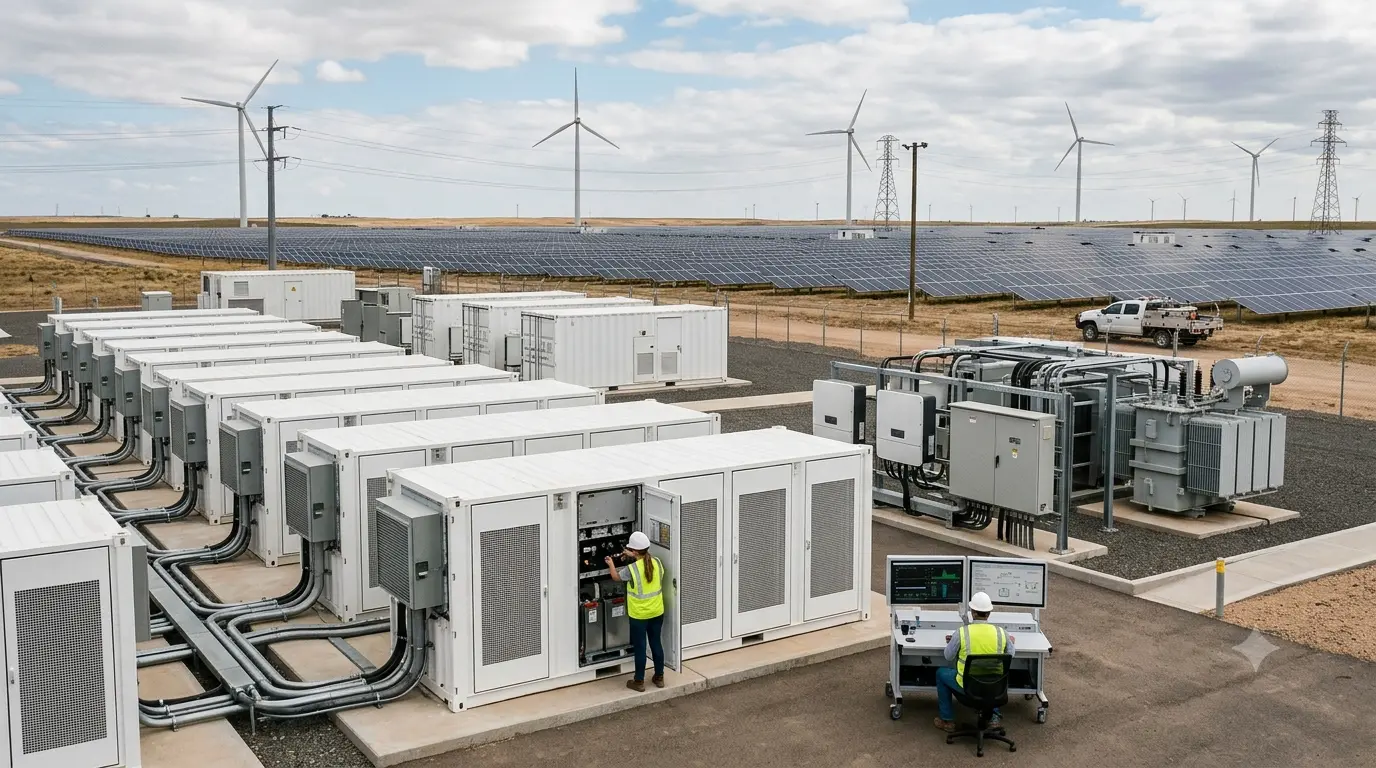
Integrated storage systems paired with solar PV, wind farms, and microgrids for continuous power supply.
Market Characteristics
The Stationary Energy Storage Systems segment is defined by several structural characteristics:
- Strong growth driven by renewable energy deployment and grid modernization
- High capital investment in battery systems and power infrastructure
- Continuous advancements in battery chemistry, safety, and energy density
- Increasing adoption of smart energy management and digital monitoring
- Strong regulatory support for clean energy and decarbonization initiatives
- Growing demand for grid resilience, backup power, and distributed energy resources
- Long operational lifecycles supported by predictive maintenance and system optimization
Value Chain Overview
The segment spans the full stationary energy storage value chain:
- Research & Technology Development: Battery chemistry, power electronics, and system engineering
- Component Manufacturing: Battery cells, modules, inverters, battery management systems, and control equipment
- System Integration: ESS assembly, software integration, and power management configuration
- Deployment & Installation: Residential, commercial, industrial, and utility-scale project implementation
- Operations & Monitoring: Performance optimization, remote monitoring, maintenance, and lifecycle management
- Recycling & Second-Life Applications: Battery refurbishment, material recovery, and sustainable end-of-life management
Each stage contributes to improving energy reliability, efficiency, safety, and sustainability.
Key Market Drivers
- Rapid expansion of renewable energy generation
- Increasing demand for grid flexibility and reliability
- Growth in distributed energy resources and microgrids
- Falling battery costs and technological advancements
- Government incentives supporting clean energy deployment
- Rising need for backup power and energy resilience
Strategic Importance within Energy & Power
Stationary Energy Storage Systems play a foundational role in modern energy infrastructure by enabling renewable energy integration, improving grid stability, and enhancing power reliability. They support the transition from centralized fossil fuel generation to decentralized, intelligent, and low-carbon energy systems.
Upstream, the segment drives demand for battery materials, power electronics, software platforms, and energy infrastructure components. Downstream, it supports electric utilities, renewable energy developers, commercial facilities, industrial operations, residential consumers, and smart grid applications.
As energy systems become increasingly electrified and renewable-based, the Stationary Energy Storage Systems segment remains essential for ensuring energy security, grid resilience, and long-term decarbonization.