
Agriculture & Agritech / Market Segment
Fertiliser
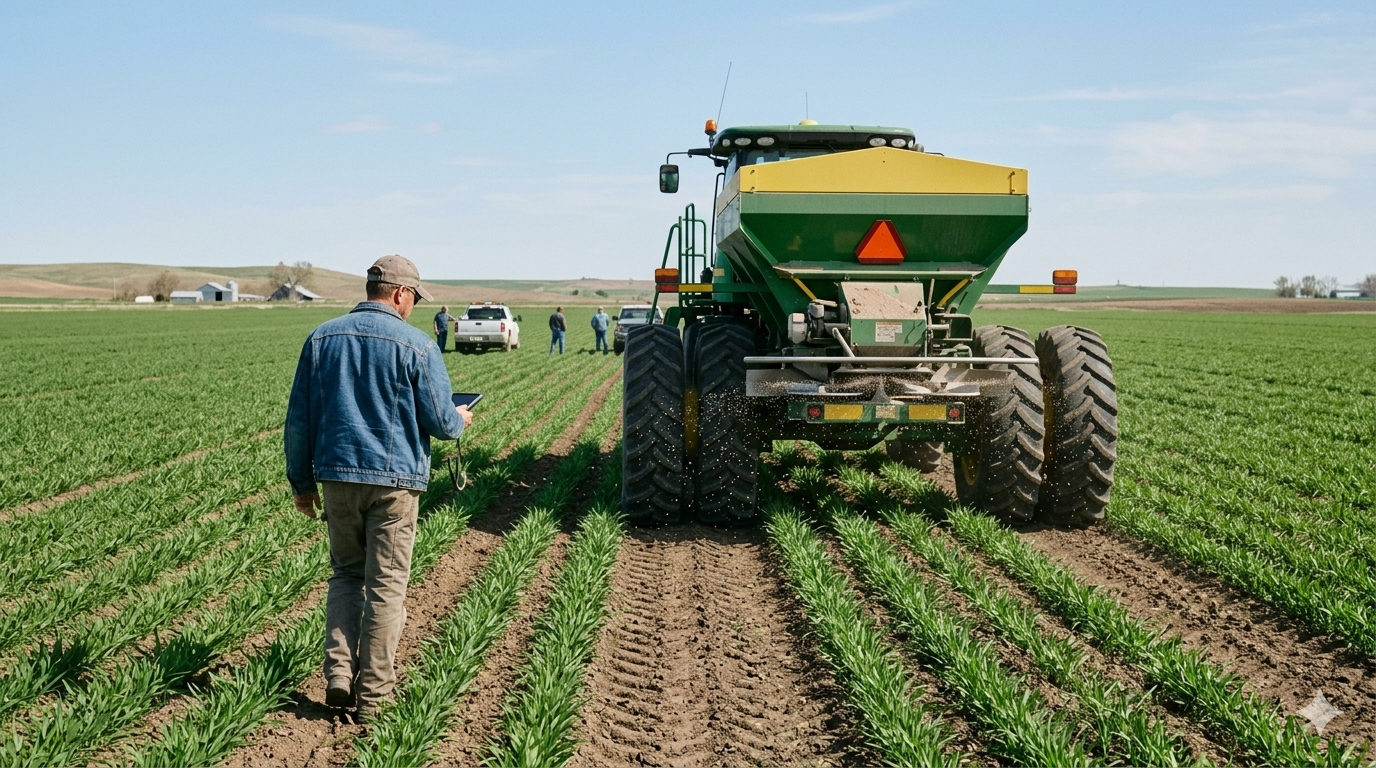
Segment Overview
The Fertiliser segment covers the development, production, distribution, and application of nutrient-based products designed to improve soil fertility, enhance crop growth, and support agricultural productivity across farming systems. It includes organic and inorganic nutrient formulations, specialty crop nutrition products, and advanced fertilization solutions used across commercial agriculture, horticulture, and controlled-environment farming.
This segment operates at the intersection of agricultural science, chemical processing, soil management, and precision farming technologies, making it a foundational input category within the global agriculture industry.
Scope of the Fertiliser Segment
This segment includes, but is not limited to:
Nitrogen fertilizers
Urea, ammonium nitrate, ammonium sulfate, and nitrogen-rich nutrient formulations.
Phosphate fertilizers
Products designed to support root development, flowering, and crop establishment.
Potash fertilizers
Potassium-based nutrient solutions for plant resilience, water regulation, and crop quality enhancement.
Compound and blended fertilizers
Balanced NPK formulations and customized nutrient blends for specific crop requirements.
Specialty fertilizers
Controlled-release, water-soluble, micronutrient-enriched, and foliar fertilizers.
Organic and bio-based fertilizers
Compost-based products, manure-derived nutrients, microbial fertilizers, and biological soil enhancement solutions.
Market Characteristics
The Fertiliser segment is defined by several structural characteristics:
Strong dependence on agricultural production cycles and seasonal demand patterns
High sensitivity to raw material availability and commodity input costs
Significant regulatory oversight related to environmental impact and nutrient application
Increasing integration with precision agriculture and soil-monitoring systems
Demand influenced by crop productivity requirements and land-use efficiency
Ongoing transition toward sustainable and environmentally optimized formulations
Strong linkage to food security and agricultural yield optimization
Value Chain Overview
The segment spans the full fertiliser value chain:
Raw Material Sourcing: Procurement of minerals, natural gas, organic inputs, and nutrient compounds
Chemical Processing & Formulation: Nutrient synthesis, blending, and product formulation
Manufacturing & Packaging: Industrial-scale production and packaging operations
Distribution & Supply Networks: Delivery through agricultural distributors and cooperatives
Field Application & Agronomic Use: Application through traditional and precision farming systems
Environmental Management & Soil Monitoring: Nutrient efficiency assessment and sustainability management
Each stage requires coordination across chemical production, agricultural distribution, and field-level nutrient management systems.
Key Market Drivers
Growth in global food production requirements
Increasing focus on crop yield optimization and soil productivity
Rising adoption of precision agriculture technologies
Expansion of specialty crop cultivation and commercial farming
Growing demand for sustainable and environmentally efficient nutrient solutions
Need to improve nutrient-use efficiency and reduce agricultural input waste
Strategic Importance within Agriculture & Crop Inputs
Fertiliser plays a critical role in sustaining agricultural productivity by supplying essential nutrients required for crop growth, soil health, and long-term farming efficiency.
Upstream, the segment drives demand for mineral extraction, chemical processing, and nutrient formulation technologies. Downstream, it supports crop cultivation, food production, commercial agriculture, and agricultural supply chain resilience.
As global agricultural systems face increasing pressure to maximize productivity while improving sustainability, the Fertiliser segment remains essential for food system stability, soil management, and efficient agricultural output.