
Food & Beverages / Market Segment
Food Processing Equipment
1. Segment Overview
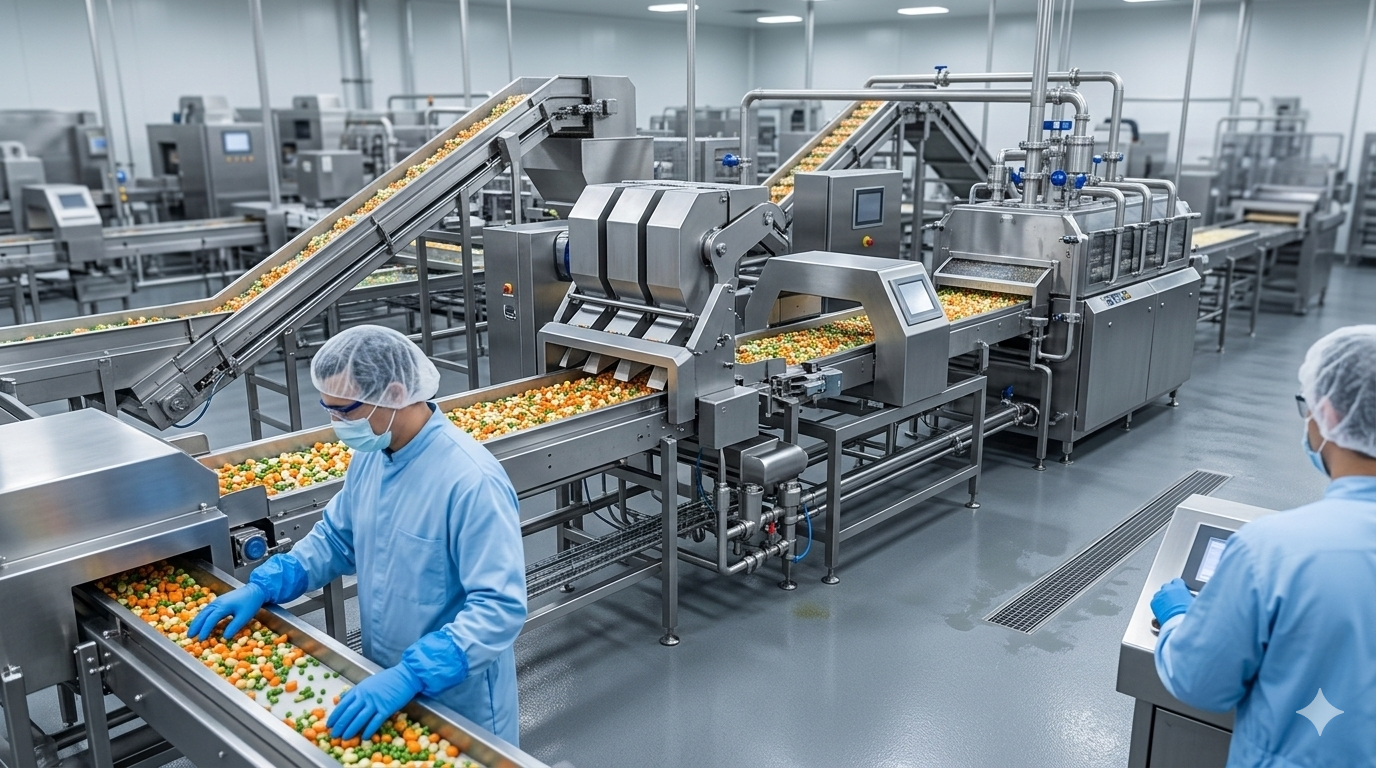
The Food Processing Equipment segment comprises machinery and integrated systems used to transform raw agricultural and food ingredients into processed, packaged, or semi-processed food products. Within the Industrial Equipment industry, this segment functions as the operational backbone of industrial food manufacturing, enabling large-scale production, standardization, and quality control.
The segment exists to perform mechanical, thermal, and biochemical processes such as mixing, cooking, cutting, forming, and packaging. These systems allow food producers to convert raw materials into consumable products while maintaining hygiene standards, production efficiency, and regulatory compliance.
2. Structural Scope of the Segment
-
Preparation and handling equipment (washers, peelers, cutters)
-
Mixing, blending, and grinding machinery
-
Cooking, baking, and thermal processing equipment
-
Extrusion and forming machinery
-
Fermentation and processing tanks
-
Drying, dehydration, and freezing systems
-
Packaging and sealing equipment
-
Food inspection and quality control systems
-
Automated processing and production lines
3. Core Market Characteristics
-
Equipment designed to meet strict food safety and sanitation standards
-
Demand closely tied to food manufacturing expansion and processing capacity
-
Machinery must support high throughput and consistent product quality
-
Customization based on specific food product requirements and processing methods
-
Long equipment lifecycles with maintenance and replacement cycles
-
Increasing integration with automation, sensors, and monitoring systems
-
Strong regulatory oversight related to hygiene, materials, and operational safety
4. Value Chain Overview
-
Inputs: Stainless steel structures, motors, electronic controls, sensors, conveyors, industrial software
-
Manufacturing & Assembly: Equipment fabrication, mechanical assembly, system integration, testing
-
Distribution & Installation: Delivery to food manufacturing plants, installation, calibration, and commissioning
-
Operational Phase: Continuous food processing operations, quality monitoring, maintenance servicing
-
End-of-Life: Equipment refurbishment, component replacement, decommissioning, and recycling of metal parts
5. Key Market Drivers
-
Growth in industrial food production and packaged food demand
-
Expansion of food safety and hygiene regulations
-
Increasing automation within food manufacturing facilities
-
Demand for efficiency, waste reduction, and production scalability
-
Development of new food formats requiring specialized processing technologies
-
Investment in cold chain and preservation infrastructure
6. Strategic Importance within Parent Industry
Food Processing Equipment plays a central role within the Industrial Equipment industry by enabling the industrialization of food production. Upstream, it stimulates demand for mechanical components, sensors, and automation systems. Downstream, it supports food manufacturers, beverage producers, and agricultural processors in delivering standardized products to global markets.
The segment is strategically important because it underpins food supply chain efficiency, product consistency, and compliance with health and safety standards across the global food production ecosystem.