
Food & Beverages / Market Segment
Halal Meat
Segment Overview
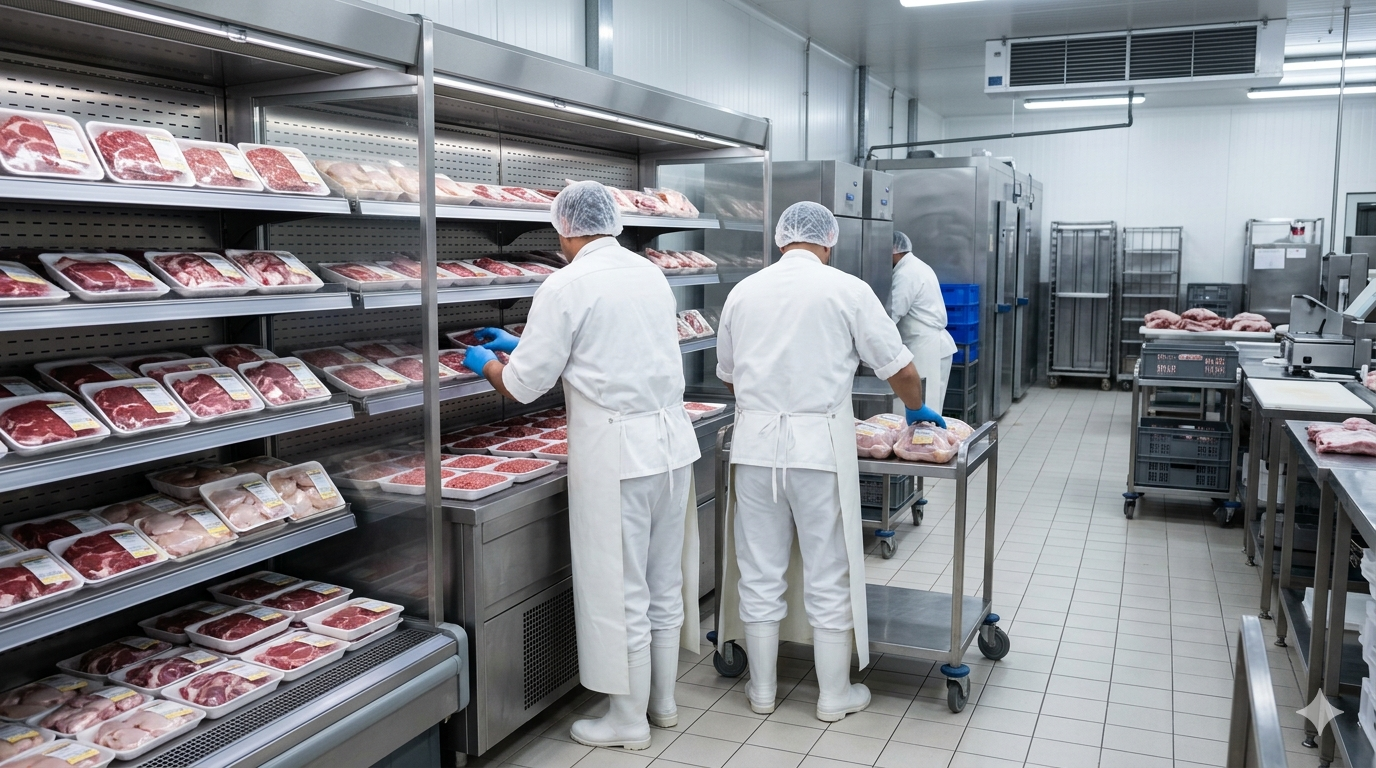
The Halal Meat segment covers the production, processing, certification, distribution, and sale of meat products prepared in accordance with Islamic dietary laws and halal compliance standards. It includes livestock sourcing, slaughtering practices, processing systems, cold-chain logistics, and retail distribution designed to meet religious, quality, and food safety requirements.
This segment operates at the intersection of food processing, livestock management, regulatory certification, and global trade, making it a specialized and culturally significant category within the food and beverage industry.
Scope of the Halal Meat Segment
This segment includes, but is not limited to:
Fresh halal meat products
Freshly processed poultry, beef, lamb, and goat meat certified under halal standards.
Processed halal meat products
Frozen, packaged, marinated, cured, and ready-to-cook halal-certified meat products.
Halal slaughter and processing systems
Facilities and procedures aligned with Islamic slaughtering requirements and compliance protocols.
Halal certification and compliance services
Inspection, verification, labeling, and certification systems ensuring adherence to halal standards.
Cold-chain and logistics infrastructure
Temperature-controlled storage, transportation, and handling systems for halal meat distribution.
Retail and foodservice halal supply channels
Supermarkets, specialty meat retailers, restaurants, catering services, and export distribution networks.
Market Characteristics
The Halal Meat segment is defined by several structural characteristics:
- Strong reliance on certification, traceability, and regulatory compliance systems
- Demand influenced by cultural, religious, and dietary consumption patterns
- High importance of quality assurance and supply chain transparency
- Dependence on cold-chain logistics and controlled processing environments
- Increasing global trade and cross-border certification recognition requirements
- Growing integration with packaged and processed food categories
- Emphasis on hygiene, ethical sourcing, and standardized slaughter practices
Value Chain Overview
The segment spans the full halal meat value chain:
- Livestock Sourcing: Procurement and management of compliant animal supply
- Slaughter & Processing: Halal-compliant slaughtering and meat preparation
- Certification & Inspection: Religious and food safety verification processes
- Packaging & Storage: Controlled packaging and cold storage management
- Distribution & Logistics: Refrigerated transportation and supply chain coordination
- Retail & End Consumption: Delivery through retail, foodservice, and export channels
Each stage requires strict adherence to certification, traceability, and food safety standards.
Key Market Drivers
- Growing global demand for halal-certified food products
- Expansion of Muslim consumer populations and dietary preference adherence
- Increasing international halal trade and export opportunities
- Rising consumer focus on food traceability and quality assurance
- Growth of packaged and processed halal food offerings
- Expansion of halal-certified foodservice and retail channels
Strategic Importance within Food & Beverages
Halal Meat plays a critical role in serving culturally and religiously specific dietary requirements while supporting broader food safety and quality assurance systems.
Upstream, the segment drives livestock farming, certification infrastructure, and meat processing operations. Downstream, it supports food retail, foodservice, export markets, and packaged food manufacturing.
As global food systems become more specialized and consumer demand for certified products increases, the Halal Meat segment remains strategically important for market access, trade expansion, and food supply diversification.