
Global Androgens And Anabolic Steroids Market Report, Size & Forecast 2026-2033
Global Androgens and Anabolic Steroids Market Report, Size, Share and Forecast 2026???2033
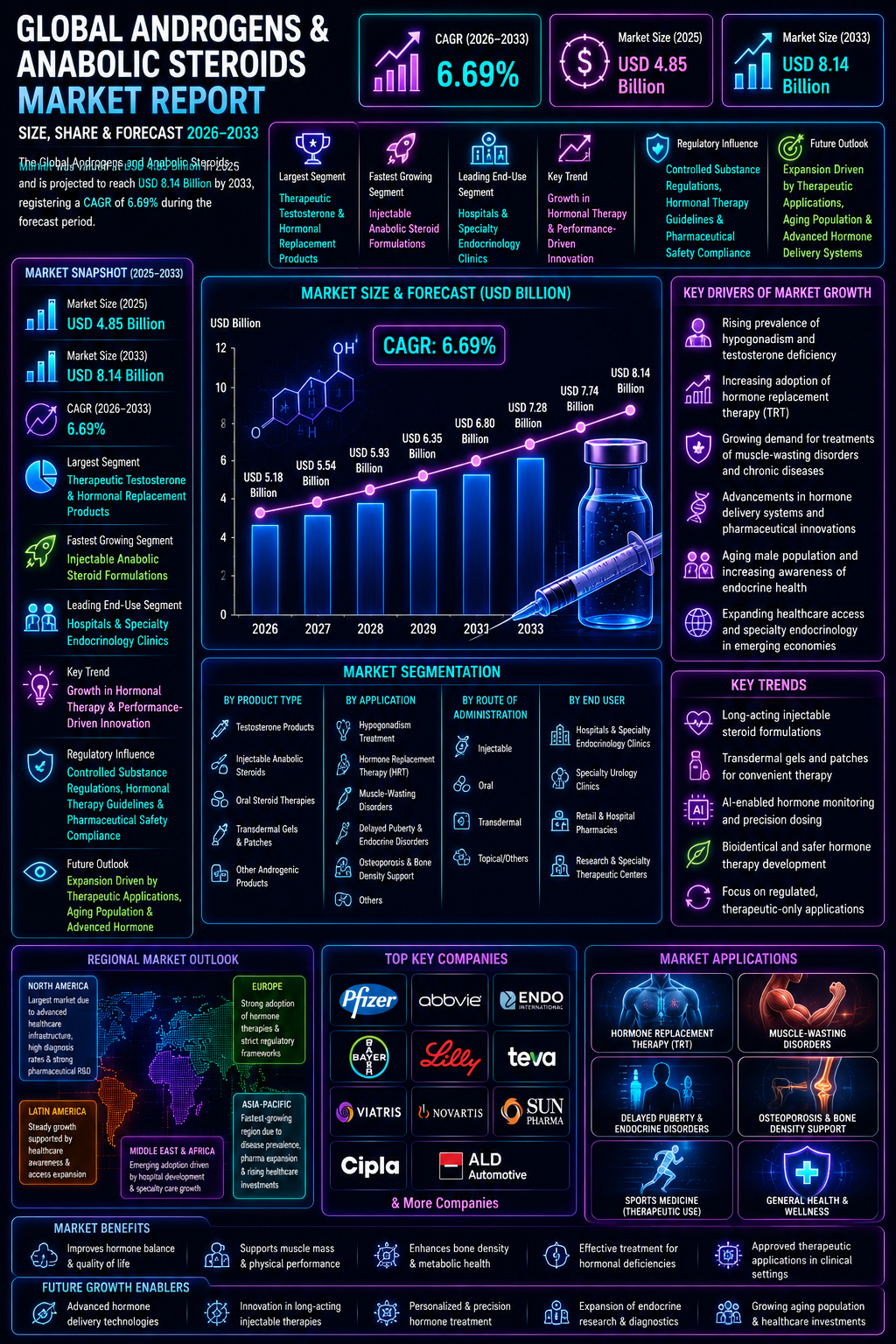
Market Forecast Snapshot (2025???2033)
| Metric | Value |
|---|---|
| Market Size (2025) | USD 4.85 Billion |
| Market Size (2033) | USD 8.14 Billion |
| CAGR (2026???2033) | 6.69% |
| Largest Segment | Therapeutic Testosterone & Hormonal Replacement Products |
| Fastest Growing Segment | Injectable Anabolic Steroid Formulations |
| Leading End-Use Segment | Hospitals & Specialty Endocrinology Clinics |
| Key Trend | Growth in Hormonal Therapy & Performance-Driven Pharmaceutical Innovation |
| Regulatory Influence | Controlled Substance Regulations, Hormonal Therapy Guidelines & Pharmaceutical Safety Compliance |
| Future Outlook | Expansion Driven by Therapeutic Applications, Aging Population & Advanced Hormone Delivery Systems |
Market Size & Forecast
The Global Androgens and Anabolic Steroids Market is expected to witness stable growth during the forecast period from 2026 to 2033. The market was valued at USD 4.85 billion in 2025 and is projected to reach approximately USD 8.14 billion by 2033, registering a CAGR of 6.69%. The market growth is primarily driven by rising cases of hypogonadism, testosterone deficiency, delayed puberty disorders, muscle-wasting conditions, hormone replacement therapies, and increasing demand for advanced endocrine treatment solutions. Androgens and anabolic steroids are widely used in testosterone replacement therapy (TRT), osteoporosis-related muscle loss, anemia management, hereditary angioedema treatment, delayed puberty correction, and chronic disease-associated muscle wasting therapies. In addition, growing aging male populations, pharmaceutical R&D in hormone delivery systems, and advanced injectable and transdermal steroid therapies are supporting long-term market expansion.Global Androgens and Anabolic Steroids Market Overview
Androgens and anabolic steroids are synthetic or naturally derived steroid hormones used primarily in therapeutic medicine for hormonal deficiency management, muscle preservation, and metabolic treatment applications. The market includes testosterone products, oral anabolic steroids, injectable steroid formulations, topical hormonal therapies, transdermal gels, and specialized therapeutic anabolic compounds. These products are widely used across endocrinology, urology, sports medicine (regulated therapeutic use), oncology-associated cachexia management, and hormone deficiency treatments. The market is gradually shifting toward safer controlled therapeutic applications, precision hormonal monitoring, long-acting injectables, and transdermal hormone delivery technologies.Structural Drivers of Market Growth
1. Innovation and Commercialization Acceleration
Rapid innovation in hormone delivery systems, sustained-release injectables, transdermal patches, and bioidentical hormonal formulations is accelerating therapeutic adoption. Advanced endocrine monitoring and targeted dosing technologies are improving treatment outcomes.Market Implications
Manufacturers investing in safer, long-acting, and precision-based hormonal therapies are expected to strengthen market competitiveness.2. Compliance and Risk Repricing
Controlled substance laws, prescription regulations, anti-doping frameworks, pharmaceutical labeling rules, and hormonal therapy safety protocols are strongly shaping the market. Regulators are increasingly emphasizing therapeutic-only use, pharmacovigilance, and adverse-effect monitoring.Market Implications
Companies offering clinically validated, safe, compliant, and prescription-controlled therapies are likely to gain stronger healthcare adoption.3. Competitive and Value-Chain Reconfiguration
Pharmaceutical manufacturers, specialty endocrinology drug firms, biotech companies, and hormonal therapy developers are expanding product offerings. Patent strategies, biologics integration, and personalized hormone treatment models are reshaping market dynamics.Market Implications
Firms focusing on differentiated delivery systems, specialty formulations, and regulated clinical therapies may gain stronger margins.4. Capital and Capacity Scaling
Rising investment in endocrine therapeutics, aging-care pharmaceuticals, and hormone therapy production facilities is supporting market expansion. Emerging economies are also increasing endocrine treatment access.Market Implications
Manufacturers scaling injectable therapies, hormone monitoring solutions, and specialty treatment platforms are expected to capture future opportunities.Market Segmentation Analysis
By Product Type
1. Testosterone Products
This remains the largest segment due to widespread use in testosterone replacement therapy.2. Injectable Anabolic Steroids
Fastest-growing segment due to long-acting and controlled dosing applications.3. Oral Steroid Therapies
Used in therapeutic endocrine treatment applications.4. Transdermal Gels & Patches
Growing due to convenience and reduced invasive administration.By Application
1. Hypogonadism Treatment
Largest application segment due to increasing diagnosis rates.2. Hormone Replacement Therapy (HRT)
Strong demand from aging-related endocrine deficiency.3. Muscle-Wasting Disorders
Used in chronic disease and cachexia treatment.4. Delayed Puberty & Endocrine Disorders
Important pediatric and endocrinology application.5. Osteoporosis & Bone Density Support
Growing therapeutic use.By Route of Administration
1. Injectable
Dominates due to clinical reliability and sustained-release formulations.2. Oral
Used in selective therapeutic treatments.3. Transdermal
Fast-growing due to patient convenience.By End User
1. Hospitals & Specialty Endocrinology Clinics
Largest segment due to clinical hormone management.2. Specialty Urology Clinics
Growing due to testosterone therapies.3. Retail & Hospital Pharmacies
Critical distribution channels.4. Research & Specialty Therapeutic Centers
Used in advanced endocrine treatment programs.Regional Market Dynamics
North America
North America dominates the global androgens and anabolic steroids market due to strong endocrine treatment adoption, aging populations, and advanced pharmaceutical infrastructure.Europe
Europe remains a major market supported by hormone replacement therapies, healthcare access, and regulatory frameworks.Asia-Pacific
Asia-Pacific is the fastest-growing region due to healthcare modernization, rising endocrine disorders, and growing pharmaceutical manufacturing.Latin America
Latin America is gradually expanding due to increasing healthcare awareness and treatment access.Middle East & Africa
The region is witnessing emerging growth due to hospital expansion and specialty care adoption.Competitive Landscape
The Global Androgens and Anabolic Steroids Market is moderately consolidated with pharmaceutical manufacturers, endocrine therapy developers, and specialty hormone companies competing globally. Key companies operating in the market include:- Pfizer Inc.
- AbbVie Inc.
- Endo International
- Bayer AG
- Eli Lilly and Company
- Teva Pharmaceutical Industries
- Viatris Inc.
- Novartis AG
- Sun Pharmaceutical Industries
- Cipla Ltd.
Strategic Outlook
The future of the androgens and anabolic steroids market will be shaped by long-acting hormone therapies, transdermal innovations, endocrine precision medicine, digital hormone monitoring, and personalized testosterone management. Rising demand for aging-care therapeutics, chronic disease-related muscle support, and safer controlled hormone therapy is expected to support long-term expansion. Advanced delivery systems, regulated therapeutic innovation, and precision endocrine care are likely to create major growth opportunities.Final Market?? Perspective
The Global Androgens and Anabolic Steroids Market remains an important segment within endocrine therapeutics, specialty pharmaceuticals, and hormone replacement medicine. Rising demand for testosterone therapy, muscle-preserving therapeutics, and controlled hormone treatment continues driving long-term market growth. Companies capable of delivering compliant, safe, high-efficacy, and precision-based hormone therapies will be best positioned to capture future opportunities. The convergence of therapeutic innovation, aging healthcare, and advanced endocrine delivery systems is expected to redefine the future of the global androgens and anabolic steroids industry.Table of Contents
Table of Contents
1. Executive Summary
1.1 Market Snapshot
1.2 Key Growth Highlights
1.3 Largest Segment Analysis
1.4 Fastest Growing Segment Analysis
1.5 Regional Outlook
1.6 Competitive Landscape Snapshot
1.7 Future Market Outlook
2. Global Androgens and Anabolic Steroids Market Introduction
2.1 Market Definition
2.2 Scope of Study
2.3 Research Assumptions
2.4 Research Methodology
2.5 Forecast Parameters
3. Global Androgens and Anabolic Steroids Market Overview
3.1 Market Evolution
3.2 Industry Ecosystem Analysis
3.3 Value Chain Analysis
3.4 Pricing & Revenue Structure Analysis
3.5 Supply Chain & Pharmaceutical Distribution Overview
3.6 Product & Therapy Landscape
3.6.1 Testosterone Products
3.6.1.1 Hormone Replacement Therapy Products
3.6.1.1.1 Clinical Adoption Trends
3.6.1.1.1.1 Long-Acting Hormone Solutions
3.6.1.1.1.2 Therapeutic Efficacy Trends
3.6.2 Injectable Anabolic Steroid Formulations
3.6.2.1 Sustained-Release Injectable Therapies
3.6.2.1.1 Controlled Dosing Applications
3.6.2.1.1.1 Endocrine Treatment Expansion
3.6.2.1.1.2 Clinical Monitoring & Safety
3.6.3 Oral Steroid Therapies
3.6.3.1 Therapeutic Oral Hormonal Agents
3.6.3.1.1 Drug Absorption & Efficacy
3.6.3.1.1.1 Patient Compliance Trends
3.6.3.1.1.2 Selective Treatment Use
3.6.4 Transdermal Gels & Patches
3.6.4.1 Non-Invasive Hormone Delivery
3.6.4.1.1 Skin-Based Drug Delivery Systems
3.6.4.1.1.1 Patient Preference Shift
3.6.4.1.1.2 Innovation in Topical Hormonal Therapy
3.7 Regulatory Landscape
3.7.1 Controlled Substance Regulations
3.7.1.1 Hormonal Therapy Guidelines
3.7.1.1.1 Prescription Safety & Monitoring
3.7.1.1.1.1 Pharmaceutical Labeling Standards
3.7.1.1.1.2 Pharmacovigilance & Compliance
3.8 Market Trends & Innovation Outlook
3.8.1 Precision Hormonal Monitoring
3.8.1.1 Bioidentical Hormone Therapies
3.8.1.1.1 Personalized Endocrine Care
3.8.1.1.1.1 Digital Hormone Tracking
3.8.1.1.1.2 Long-Term Endocrine Innovation
4. Global Androgens and Anabolic Steroids Market Dynamics
4.1 Market Drivers
4.1.1 Rising Cases of Hypogonadism
4.1.1.1 Increasing Testosterone Deficiency Diagnosis
4.1.1.1.1 Endocrine Treatment Expansion
4.1.1.1.1.1 Therapeutic Adoption Growth
4.1.2 Growth in Hormone Replacement Therapy
4.1.2.1 Aging Population Demand
4.1.2.1.1 Long-Term Hormonal Care
4.1.2.1.1.1 Specialty Treatment Expansion
4.1.3 Increasing Muscle-Wasting Disorder Treatment
4.1.3.1 Chronic Disease Management
4.1.3.1.1 Cachexia & Recovery Support
4.1.3.1.1.1 Clinical Therapeutic Need
4.1.4 Innovation in Hormone Delivery Systems
4.1.4.1 Injectable & Transdermal Solutions
4.1.4.1.1 Sustained-Release Development
4.1.4.1.1.1 Precision Dosing Technologies
4.1.5 Expansion in Endocrine Therapeutics
4.1.5.1 Specialty Pharma Growth
4.1.5.1.1 Personalized Hormonal Medicine
4.1.5.1.1.1 Advanced Treatment Infrastructure
4.2 Market Restraints
4.2.1 Strict Controlled Substance Regulations
4.2.2 Adverse Effect Concerns
4.2.3 Prescription & Monitoring Complexity
4.2.4 High Regulatory Barriers in Therapeutic Approval
4.3 Market Opportunities
4.3.1 Long-Acting Injectable Therapies
4.3.2 Digital Hormone Monitoring Platforms
4.3.3 Emerging Market Endocrine Expansion
4.3.4 Personalized Testosterone Management
4.4 Market Challenges
4.4.1 Safety & Abuse Concerns
4.4.2 Regulatory Compliance Burden
4.4.3 Pricing Pressure & Generic Competition
4.4.4 Clinical Monitoring Requirements
5. Global Androgens and Anabolic Steroids Market Size Analysis (USD Billion), 2026???2033
5.1 Revenue Forecast Analysis
5.2 CAGR Analysis
5.3 Demand-Supply Analysis
5.4 Segment Contribution Analysis
5.5 Pricing Trend Analysis
6. Global Androgens and Anabolic Steroids Market Segmentation Analysis
6.1 By Product Type
6.1.1 Testosterone Products
6.1.2 Injectable Anabolic Steroids
6.1.3 Oral Steroid Therapies
6.1.4 Transdermal Gels & Patches
6.2 By Application
6.2.1 Hypogonadism Treatment
6.2.2 Hormone Replacement Therapy (HRT)
6.2.3 Muscle-Wasting Disorders
6.2.4 Delayed Puberty & Endocrine Disorders
6.2.5 Osteoporosis & Bone Density Support
6.3 By Route of Administration
6.3.1 Injectable
6.3.2 Oral
6.3.3 Transdermal
6.4 By End User
6.4.1 Hospitals & Specialty Endocrinology Clinics
6.4.2 Specialty Urology Clinics
6.4.3 Retail & Hospital Pharmacies
6.4.4 Research & Specialty Therapeutic Centers
7. Regional Market Analysis
7.1 North America
7.1.1 U.S.
7.1.2 Canada
7.1.3 Mexico
7.2 Europe
7.2.1 Germany
7.2.2 U.K.
7.2.3 France
7.2.4 Italy
7.2.5 Spain
7.2.6 Rest of Europe
7.3 Asia-Pacific
7.3.1 China
7.3.2 Japan
7.3.3 India
7.3.4 South Korea
7.3.5 Australia
7.3.6 Rest of Asia-Pacific
7.4 Latin America
7.4.1 Brazil
7.4.2 Argentina
7.4.3 Rest of Latin America
7.5 Middle East & Africa
7.5.1 GCC Countries
7.5.2 South Africa
7.5.3 Rest of Middle East & Africa
8. Competitive Landscape
8.1 Market Share Analysis
8.2 Competitive Intensity Overview
8.3 Strategic Developments
8.4 Product Innovation & Therapy Expansion
8.5 Partnerships, Mergers & Acquisitions
8.6 Endocrine Therapeutics Positioning Analysis
9. Company Profiles
9.1 Pfizer Inc.
9.2 AbbVie Inc.
9.3 Endo International
9.4 Bayer AG
9.5 Eli Lilly and Company
9.6 Teva Pharmaceutical Industries
9.7 Viatris Inc.
9.8 Novartis AG
9.9 Sun Pharmaceutical Industries
9.10 Cipla Ltd.
10. Strategic Intelligence & Pheonix AI Insights
10.1 Pheonix Market Growth Forecast Engine
10.2 Endocrine Therapy Trend Analyzer
10.3 Hormone Delivery Risk Tracker
10.4 Therapeutic Opportunity Mapping
10.5 Automated Porter???s Five Forces Analysis
11. Future Outlook & Strategic Recommendations
11.1 Injectable Therapy Expansion
11.2 Precision Hormonal Monitoring
11.3 Transdermal Innovation Growth
11.4 Emerging Market Expansion Strategies
11.5 Long-Term Market Outlook (2033+)
12. Appendix
12.1 Abbreviations
12.2 Research References
12.3 Data Sources
13. About Pheonix
14. Market Research
15. Disclaimer
Competitive Landscape
Global Androgens and Anabolic Steroids Market Competitive Intensity & Market Structure Overview
The Global Androgens and Anabolic Steroids Market is characterized by a moderately consolidated and regulation-intensive competitive structure, where branded pharmaceutical companies, specialty endocrinology drug manufacturers, and generic therapeutics firms compete through clinical efficacy, delivery innovation, regulatory compliance, and therapeutic specialization. Competition is primarily driven by hormone therapy portfolios, long-acting delivery systems, prescription access, pharmacovigilance strength, manufacturing quality, specialty endocrine positioning, and controlled-substance compliance.
The market is led by major players such as Pfizer Inc., AbbVie Inc., Endo International, Bayer AG, Eli Lilly and Company, Teva Pharmaceutical Industries, Viatris Inc., Novartis AG, Sun Pharmaceutical Industries, and Cipla Ltd., which compete through hormonal therapeutics expertise, branded endocrine drugs, generics scale, injectable platforms, and global healthcare distribution.
Growing demand across hypogonadism treatment, hormone replacement therapy (HRT), muscle-wasting disorders, delayed puberty management, osteoporosis support, endocrinology, urology, oncology-associated cachexia, and specialty hormone care is intensifying competition. Companies are increasingly investing in long-acting testosterone therapies, transdermal hormone systems, precision endocrine monitoring, bioidentical formulations, digital adherence solutions, and safer controlled-delivery innovations.
Global Androgens and Anabolic Steroids Market Competitive Landscape
Leading Company Profiles
- Pfizer Inc. ??? Major pharmaceutical player with broad hormone-related therapeutics and specialty medicine capabilities.
- AbbVie Inc. ??? Strong presence in endocrinology, specialty therapeutics, and advanced pharmaceutical R&D.
- Endo International ??? Key player in hormone therapies, urology-related therapeutics, and specialty branded products.
- Bayer AG ??? Significant presence in hormonal health, endocrine care, and pharmaceutical innovation.
- Eli Lilly and Company ??? Strong life sciences company with expertise in metabolic and specialty therapeutics.
- Teva Pharmaceutical Industries ??? Major generic pharmaceutical leader with strong endocrine drug manufacturing scale.
- Viatris Inc. ??? Broad generic and specialty drug portfolio with hormone therapy distribution strength.
- Novartis AG ??? Active in specialty therapeutics, precision medicine, and advanced pharmaceutical systems.
- Sun Pharmaceutical Industries ??? Major global generic and specialty pharma manufacturer with endocrine exposure.
- Cipla Ltd. ??? Strong player in affordable therapeutics, specialty pharmaceuticals, and emerging market access.
Key Competitive Intensity Signals
- Competition in testosterone replacement therapy (TRT) and hormone replacement products remains highly concentrated.
- Long-acting injectables and transdermal delivery systems are becoming key product differentiators.
- Controlled-substance regulations create strong compliance and market-entry barriers.
- Generic drug expansion is increasing pricing pressure across mature therapeutic segments.
- Precision endocrine monitoring and personalized dosing are reshaping treatment ecosystems.
- Aging population trends are increasing recurring therapeutic demand.
- Hospital, endocrinology, and specialty-clinic partnerships strengthen prescription-channel positioning.
Strategic Implications
- Companies with strong endocrine therapeutic portfolios can maintain higher prescription trust.
- Injectable and long-acting formulations may remain major growth drivers.
- Compliance strength and pharmacovigilance can improve long-term regulatory positioning.
- Transdermal and patient-friendly delivery systems may create premium-margin opportunities.
- Expansion into emerging markets and specialty endocrine care can strengthen volume growth.
Forward Outlook
The Global Androgens and Anabolic Steroids Market is expected to remain moderately consolidated with high competitive intensity, supported by aging demographics, therapeutic hormone demand, and endocrine innovation.
Future competition will increasingly focus on:
- Long-acting hormone therapies
- Injectable testosterone and controlled dosing systems
- Transdermal and non-invasive delivery platforms
- Precision endocrine monitoring
- Bioidentical and advanced hormone formulations
- Safer pharmacovigilance-led therapies
- Specialty endocrine and aging-care treatment ecosystems
The convergence of endocrinology, precision medicine, pharmaceutical innovation, aging healthcare, controlled therapies, and advanced delivery systems will continue reshaping the long-term competitive landscape.
Value Chain
Global Androgens and Anabolic Steroids Market Value Chain & Supply Chain Evolution Overview
The Global Androgens and Anabolic Steroids Market operates through a pharmaceutical-driven therapeutic ecosystem supported by API sourcing, hormone formulation, controlled drug manufacturing, regulatory validation, specialty distribution, and clinical treatment networks. The market is increasingly shaped by precision endocrine therapy, long-acting injectables, transdermal delivery systems, and personalized hormone management.
The value chain depends heavily on steroidal raw materials, active pharmaceutical ingredients (APIs), advanced formulation systems, clinical-grade manufacturing, pharmacovigilance, and prescription-based healthcare delivery.
Supply chain complexity is high due to controlled-substance regulations, API sensitivity, sterile manufacturing, strict pharmaceutical compliance, cold-chain/logistics in some formulations, prescription monitoring, and multi-channel clinical distribution.
Global Androgens and Anabolic Steroids Market Value Chain & Supply Chain Evolution Current Scenario
Market-Specific Value Chain
1. Raw Material & API Sourcing
Steroidal intermediates, testosterone derivatives, hormone precursors, excipients, pharmaceutical-grade solvents, packaging materials, and specialty APIs.
2. Drug Formulation & R&D Development
Injectables, oral therapies, transdermal gels, patches, long-acting formulations, sustained-release systems, and hormone delivery innovation.
3. Pharmaceutical Manufacturing & Packaging
Sterile injectable production, oral dose manufacturing, transdermal assembly, blister packaging, vial filling, labeling, and quality-controlled pharma production.
4. Regulatory Validation & Quality Assurance
Controlled-substance compliance, GMP manufacturing, pharmacovigilance, clinical testing, labeling approval, therapeutic monitoring, and safety validation.
5. Distribution & Healthcare Supply Networks
Hospital procurement, specialty pharma distributors, retail pharmacies, hospital pharmacies, endocrinology supply chains, and prescription-led therapeutic distribution.
6. End-Use Clinical Treatment Ecosystem
Hospitals, endocrinology clinics, urology centers, specialty therapeutic centers, research institutions, and patient hormone therapy management.
Key Value Chain Evolution Signals
1. Shift Toward Long-Acting Injectables
Sustained-release therapies are increasing adoption.
2. Precision Hormone Monitoring
Digital endocrine tracking improves treatment outcomes.
3. Transdermal Delivery Expansion
Non-invasive hormone therapies are growing rapidly.
4. Regulatory Tightening
Controlled therapeutic-only use increases compliance pressure.
5. Specialty Pharma Distribution
Prescription-based and hospital-led channels remain critical.
6. Aging Population Demand
TRT and endocrine therapy adoption continue rising.
Strategic Implications
1. API Security & Quality
Reliable pharmaceutical sourcing strengthens continuity.
2. Advanced Delivery Innovation
Injectables + transdermal systems improve competitiveness.
3. Regulatory Leadership
Strict compliance builds trust and healthcare access.
4. Specialty Clinical Networks
Hospital and endocrinology partnerships improve penetration.
5. Precision Medicine Integration
Personalized dosing and hormone monitoring improve outcomes.
Forward Outlook
The market is expected to evolve toward a more controlled, personalized, and specialty-pharma ecosystem through:
- Long-acting hormone injectables
- Transdermal innovations
- Precision endocrine monitoring
- Safer therapeutic formulations
- Digital hormone tracking
- Specialty care expansion
- Personalized hormone therapy models
Investment Activity
Global Androgens and Anabolic Steroids Market Investment & Funding Dynamics Overview
The Global Androgens and Anabolic Steroids Market is witnessing steady investment momentum driven by expanding hormone replacement therapies, endocrine disorder treatment demand, aging population growth, and innovation in controlled therapeutic delivery systems. Pharmaceutical manufacturers, endocrine therapy developers, specialty drug companies, and healthcare research firms are actively investing in injectable hormone formulations, transdermal delivery systems, sustained-release technologies, and precision endocrine therapeutics.
Investment activity is accelerating due to growing demand for testosterone replacement therapy (TRT), hypogonadism treatment, muscle-wasting disorder management, chronic disease-associated hormonal therapies, and long-acting steroid formulations. The increasing shift toward safer therapeutic use, precision hormonal monitoring, and personalized endocrine care is significantly influencing capital allocation across the market.
Additionally, expanding investments in specialty pharmaceutical manufacturing, hormone monitoring platforms, clinical endocrinology R&D, and regulated therapeutic innovation are strengthening long-term growth opportunities globally.
Global Androgens and Anabolic Steroids Market Investment & Funding Dynamics Current Scenario
Currently, the Global Androgens and Anabolic Steroids Market demonstrates moderate investment activity with medium-to-high capital intensity due to pharmaceutical manufacturing requirements, specialty endocrine R&D, controlled-substance compliance, and advanced hormone delivery infrastructure. Major players are investing in injectable therapies, transdermal gels, bioidentical hormone development, long-acting formulations, and digital endocrine monitoring solutions.
The market is attracting funding into therapeutic innovation, sustained-release injectables, specialty clinical trials, endocrine precision medicine, and patient-adherence technologies. Rising aging-care demand and chronic hormone-deficiency treatment are further supporting investment flow.
The industry is witnessing selective merger, partnership, and acquisition activity as pharmaceutical firms, specialty hormone companies, and biotech developers pursue portfolio expansion, delivery-system innovation, and regulated therapeutic growth.
Key Investment & Funding Dynamics Signals in Global Androgens and Anabolic Steroids Market
- Rising demand for hormone replacement therapy, hypogonadism treatment, and endocrine therapeutics is supporting long-term pharmaceutical investments.
- Expansion of injectable therapies, transdermal delivery systems, and sustained-release formulations is increasing capital deployment.
- Growing focus on precision hormonal monitoring and personalized endocrine care is strengthening therapeutic innovation funding.
- Strategic investments in specialty pharmaceuticals, bioidentical hormones, and long-acting delivery technologies are reshaping treatment priorities.
- Partnerships between pharmaceutical manufacturers, biotech firms, endocrinology specialists, and healthcare providers are improving treatment ecosystem expansion.
- Increasing regulatory focus on controlled-substance laws, therapy safety, and pharmacovigilance compliance is supporting investor confidence.
- Rising demand for clinically validated, safe, and precision-based hormone therapies is accelerating R&D and specialty manufacturing spending.
Strategic Implications of Investment & Funding Dynamics in Global Androgens and Anabolic Steroids Market
- Continuous investment in advanced hormone delivery systems, endocrine therapeutics, and precision treatment models is essential for long-term competitiveness.
- Medium-to-high capital intensity requires strong allocation toward specialty production, clinical research, and compliance-driven manufacturing.
- Companies capable of delivering safe, regulated, and high-efficacy hormone therapies will strengthen market positioning.
- Strategic M&A and specialty pharmaceutical partnerships are improving therapeutic diversification and innovation.
- Investments in long-acting injectables, transdermal systems, and aging-care pharmaceuticals will remain major priorities.
- Compliance with prescription-control laws, safety monitoring, and endocrine treatment protocols is critical for long-term adoption.
- Companies investing in personalized hormone therapy, digital monitoring, and advanced endocrine workflows are expected to capture future growth opportunities.
Global Androgens and Anabolic Steroids Market Investment & Funding Dynamics Forward Outlook
Looking ahead, the Global Androgens and Anabolic Steroids Market is expected to maintain steady investment growth driven by hormone therapy expansion, aging population care, endocrine innovation, and safer controlled therapeutic applications.
Future capital deployment will increasingly focus on long-acting injectables, precision endocrine medicine, digital hormone monitoring, bioidentical formulations, transdermal innovation, and specialty clinical infrastructure. Personalized endocrine care and safer delivery systems are expected to become major long-term innovation priorities.
In conclusion, the Global Androgens and Anabolic Steroids Market represents a stable, therapeutics-driven investment landscape where regulated innovation, endocrine precision, specialty pharmaceuticals, and advanced delivery systems will define future capital strategies.
Technology & Innovation
Global Androgens and Anabolic Steroids Market Technology & Innovation Landscape Overview
The Global Androgens and Anabolic Steroids Market is experiencing gradual technological advancement driven by innovations in long-acting hormone delivery systems, transdermal therapies, precision endocrine monitoring, sustained-release injectables, bioidentical hormone formulations, and digital therapeutic management platforms. The market demonstrates a moderate-to-high innovation intensity level, supported by rising hormone replacement therapy adoption, aging population growth, endocrine disorder prevalence, and expanding pharmaceutical R&D.
At the center of this transformation is the shift from conventional short-duration hormone therapies toward precision-controlled endocrine treatment systems, allowing improved dosing consistency, reduced adverse effects, and better long-term hormonal stability. Companies are increasingly investing in extended-release injectables, optimized testosterone formulations, and targeted endocrine delivery systems to improve therapeutic efficacy.
A major innovation area is advanced hormone delivery technology, where injectable depot systems, transdermal gels, skin patches, and bioabsorbable delivery methods are improving treatment convenience, patient adherence, and pharmacokinetic stability.
The market is also witnessing rapid advancements in digital hormone monitoring and endocrine diagnostics, including biomarker-based hormone tracking, remote therapeutic monitoring, wearable health integration, and AI-supported dose optimization.
Pharmaceutical innovation remains critical, with increasing development of bioidentical androgens, reduced-side-effect anabolic therapies, safer anabolic compounds, and precision hormonal formulations designed for controlled therapeutic use.
Manufacturers are increasingly focusing on pharmacovigilance systems, controlled-release bioengineering, personalized hormone treatment algorithms, and endocrine-specific biologic combinations, improving treatment outcomes and safety compliance.
Additionally, innovation in injectable formulations, oral endocrine therapeutics, and targeted anabolic support therapies is reshaping market competitiveness.
The convergence of precision endocrinology, drug-delivery engineering, digital monitoring, therapeutic safety systems, and personalized hormonal medicine is redefining the future technology landscape of the global androgens and anabolic steroids market.
Global Androgens and Anabolic Steroids Market Technology & Innovation Landscape Current Scenario
Currently, the Global Androgens and Anabolic Steroids Market demonstrates moderate patent activity and stable commercialization across endocrine therapeutics, injectable hormone systems, transdermal therapies, and precision-treatment platforms.
1. Long-Acting Injectable Hormone Systems
Sustained-release therapies are improving dosing stability and treatment adherence.
2. Transdermal Hormone Delivery
Patches, gels, and topical therapies are improving convenience and non-invasive treatment adoption.
3. Precision Endocrine Monitoring
Biomarker tracking and hormone-level analytics are strengthening therapeutic optimization.
4. Bioidentical Hormonal Formulations
Safer and physiologically optimized hormone products are expanding.
5. AI-Assisted Dose Optimization
Digital monitoring tools are improving personalized hormone therapy.
6. Controlled Therapeutic Safety Platforms
Drug safety, pharmacovigilance, and adverse-event monitoring systems are gaining stronger focus.
Key Technology & Innovation Landscape Signals in Global Androgens and Anabolic Steroids Market
Several innovation signals are shaping the market:
1. Rising Demand for Hormone Replacement Precision
Personalized TRT and endocrine therapy are becoming major innovation drivers.
2. Expansion of Long-Acting Injectable Therapies
Sustained-release anabolic and androgen therapies are improving clinical efficiency.
3. Growth in Transdermal Therapeutics
Non-invasive hormonal delivery is strengthening patient adoption.
4. Increasing Digital Hormone Monitoring
Remote endocrine tracking and AI-supported care are expanding.
5. Safer Therapeutic Steroid Development
Reduced-risk anabolic therapies are becoming key R&D priorities.
6. Biomarker-Based Endocrine Management
Precision diagnostics are improving individualized treatment strategies.
7. Personalized Endocrinology Platforms
Integrated therapeutic and monitoring ecosystems are reshaping care models.
Strategic Implications of Technology & Innovation Landscape in Global Androgens and Anabolic Steroids Market
The evolving innovation landscape is significantly reshaping competition across the market. Companies are increasingly competing on drug-delivery precision, hormonal safety, long-acting formulations, digital monitoring, patient adherence, endocrine diagnostics, and regulatory compliance.
Manufacturers investing in extended-release injectables, transdermal systems, bioidentical hormone formulations, AI-based endocrine monitoring, and safer anabolic therapeutic platforms are expected to strengthen long-term market positioning.
Strategic collaborations between pharmaceutical firms, endocrinology specialists, digital health providers, hormone diagnostics companies, biotech developers, and specialty clinics are accelerating commercialization and improving therapeutic ecosystems globally.
The growing convergence of precision endocrinology, pharmaceutical engineering, digital therapeutics, AI monitoring, biomarker analytics, and personalized hormone care is creating strong long-term differentiation opportunities.
Additionally, regulatory emphasis on controlled substance safety, therapeutic-only usage, prescription compliance, pharmacovigilance, and adverse-event monitoring is encouraging stronger innovation and trusted healthcare adoption.
Global Androgens and Anabolic Steroids Market Technology & Innovation Landscape Forward Outlook
Looking ahead to 2026???2033, the Global Androgens and Anabolic Steroids Market is expected to evolve toward safer, more personalized, and digitally supported endocrine therapy ecosystems.
Future technological developments are likely to include:
1. Advanced Long-Acting Hormone Formulations
Improved depot injections and sustained-release systems will strengthen therapy efficiency.
2. Next-Generation Transdermal Delivery
Enhanced absorption patches and gel systems will improve non-invasive treatment.
3. AI-Driven Hormonal Therapy Optimization
Predictive endocrine analytics may improve personalized dosing.
4. Biomarker-Based Precision Endocrinology
Hormonal response tracking will strengthen individualized care.
5. Safer Therapeutic Anabolic Compounds
Reduced-side-effect therapies may become major pharmaceutical priorities.
6. Digital Remote Endocrine Monitoring
Connected health systems will improve adherence and long-term monitoring.
7. Personalized Hormone Therapy Platforms
Integrated diagnostic-treatment ecosystems may reshape endocrine management.
In conclusion, companies capable of combining advanced hormone delivery, therapeutic precision, digital endocrine monitoring, bioengineered formulations, biomarker analytics, and regulated pharmaceutical safety systems will be best positioned to lead the future evolution of the Global Androgens and Anabolic Steroids Market.
Market Risk
Global Androgens and Anabolic Steroids Market Risk & Disruption Analysis
The Global Androgens and Anabolic Steroids Market operates within a high regulatory-sensitivity and moderate disruption environment, driven by controlled-substance oversight, endocrine safety scrutiny, therapeutic substitution risk, patent erosion, misuse concerns, and innovation in hormone delivery systems. While the market demonstrates stable long-term growth due to testosterone deficiency treatment, aging populations, hormone replacement therapy (HRT), and muscle-preserving therapeutics, it remains exposed to regulatory restrictions, pharmacovigilance burden, pricing pressure, and social-medical scrutiny.
A defining structural characteristic of the market is its dependence on strictly regulated therapeutic-use ecosystems, where testosterone products, injectable anabolic therapies, oral formulations, and transdermal solutions operate under prescription-only and safety-monitored healthcare frameworks. Therapeutic testosterone and hormonal replacement products remain dominant by value, while growth is increasingly shifting toward long-acting injectables, precision endocrine dosing, and advanced delivery systems.
The market is also evolving from traditional broad hormone replacement toward personalized endocrine monitoring, long-acting formulations, digital hormone tracking, and safer targeted therapeutic use, increasing R&D and compliance pressure.
Global Androgens and Anabolic Steroids Market Current Risk Environment
The current market environment is characterized by stable medical demand, strict regulatory oversight, and moderate therapeutic transformation.
One of the most significant disruption factors involves controlled-substance regulation and misuse risk. Many androgenic and anabolic steroid products are tightly regulated due to abuse potential, diversion concerns, sports-doping misuse, and non-therapeutic exposure. Prescription controls, monitoring programs, and distribution restrictions directly affect market accessibility.
Another major risk area is clinical safety and pharmacovigilance complexity. Long-term testosterone or anabolic steroid therapy may face scrutiny related to cardiovascular risk, liver toxicity, endocrine imbalance, reproductive effects, and misuse-related adverse events. Safety monitoring increases clinical burden.
The market also faces substitution and treatment optimization pressure. Emerging endocrine therapies, peptide-based approaches, biologics, fertility-linked hormone strategies, and precision metabolic treatments may reduce dependence on select steroid-based therapies in some indications.
Additionally, generic competition and pricing pressure remain relevant, particularly in mature testosterone and steroid therapeutic classes.
In parallel, reimbursement variability, stigma around anabolic compounds, and regional prescribing restrictions may influence treatment penetration.
Key Market Risk & Disruption Signals in Global Androgens and Anabolic Steroids Market
1. Controlled Substance & Prescription Regulation
Strict oversight, anti-diversion controls, and abuse-prevention policies strongly affect market access.
2. Safety Monitoring & Pharmacovigilance Pressure
Cardiovascular, endocrine, hepatic, and reproductive safety concerns increase treatment complexity.
3. Therapeutic Misuse & Reputation Sensitivity
Non-medical use, sports-doping associations, and misuse risks can affect policy and prescribing behavior.
4. Generic Competition & Margin Compression
Mature therapeutic categories face pricing pressure from generic manufacturers.
5. Substitution from Advanced Endocrine Therapies
Precision hormonal approaches, biologics, and non-steroidal therapeutic strategies may alter demand.
6. Reimbursement & Clinical Access Variability
Coverage for HRT and specialty endocrine treatments varies across regions and systems.
7. Supply Chain Dependence on API & Pharma Manufacturing
Steroid APIs, injectable systems, and specialty formulations require controlled production capacity.
8. Long-Term Compliance & Patient Monitoring Burden
Hormone therapy often requires recurring diagnostics, dose tracking, and endocrine supervision.
Strategic Implications of Market Risk & Disruption in Global Androgens and Anabolic Steroids Market
The evolving disruption environment creates stable therapeutic demand alongside elevated regulatory complexity.
One of the most important strategic implications is the increasing need for precision-controlled endocrine therapy ecosystems. Manufacturers increasingly must combine safe formulations, monitoring tools, long-acting delivery systems, and clinical compliance.
Companies are required to invest in long-acting injectables, transdermal innovation, digital hormone monitoring, adverse-event tracking, and differentiated specialty formulations to remain competitive.
Vertical integration across APIs, controlled manufacturing, specialty distribution, diagnostics support, and endocrine-treatment platforms is becoming increasingly valuable.
The convergence of aging healthcare, personalized medicine, digital monitoring, and specialty endocrinology is also reshaping value chains. Firms with stronger clinical validation, treatment adherence systems, and regulated healthcare access may gain stronger long-term positioning.
Additionally, rising hypogonadism diagnosis, chronic disease-linked muscle loss, and aging male therapeutic demand may expand resilient medical use cases.
Companies focusing on regulated therapeutic testosterone, advanced hormone delivery, specialty endocrinology care, safe compliance-driven formulations, and precision endocrine platforms are expected to strengthen long-term market leadership.
Global Androgens and Anabolic Steroids Market Risk & Disruption Forward Outlook
Looking ahead to 2026???2033, the Global Androgens and Anabolic Steroids Market is expected to become increasingly precision-driven, safety-monitored, and clinically specialized.
1. Expansion of Long-Acting Hormone Delivery Systems
Injectables and sustained-release therapies will gain strategic importance.
2. Greater Precision Endocrine Monitoring
Digital tracking and personalized hormone adjustment may improve treatment outcomes.
3. Higher Regulatory Oversight & Anti-Misuse Controls
Controlled-substance scrutiny and prescription regulation may strengthen globally.
4. Growth in Aging-Related Hormonal Therapy
Age-linked endocrine deficiency treatment will remain a major driver.
5. Stronger Safety & Pharmacovigilance Expectations
Clinical monitoring requirements will continue rising.
6. Expansion of Transdermal & Patient-Friendly Formulations
Convenience-based administration will improve adoption.
7. Competitive Consolidation in Specialty Hormone Therapies
M&A and portfolio concentration may intensify among pharma leaders.
8. Broader Use in Precision Chronic Disease Support
Muscle-wasting and endocrine-associated therapeutic niches may expand.
In conclusion, the Global Androgens and Anabolic Steroids Market represents a regulated, clinically sensitive, and moderately evolving pharmaceutical ecosystem, where safety compliance, therapeutic precision, controlled access, specialty innovation, and endocrine monitoring will define long-term competitive success.
Regulatory Landscape
Global Androgens and Anabolic Steroids Market Regulatory & Policy Environment Overview
The regulatory and policy environment plays a highly critical role in shaping the Global Androgens and Anabolic Steroids Market due to strong oversight around controlled substance laws, prescription governance, hormone therapy safety, pharmaceutical manufacturing compliance, and anti-misuse frameworks. Regulatory structures governing therapeutic steroid approval, endocrine treatment protocols, labeling requirements, pharmacovigilance, and restricted distribution significantly influence commercialization, clinical adoption, and long-term market expansion.
Androgens and anabolic steroids are primarily used in therapeutic medicine across hypogonadism treatment, hormone replacement therapy, muscle-wasting disorders, delayed puberty, osteoporosis support, and specialized endocrine care. Because these compounds also carry misuse and abuse risks, regulatory scrutiny is substantially higher than many conventional pharmaceutical segments.
The market is also influenced by evolving hormone therapy guidelines, anti-doping frameworks, adverse-effect monitoring, controlled prescription systems, and long-term endocrine safety regulations. Governments and healthcare regulators are increasingly balancing therapeutic access with abuse prevention, patient safety, and pharmaceutical integrity.
In addition, aging-population healthcare strategies, endocrine treatment modernization, and specialty pharmaceutical oversight are strengthening structured regulatory enforcement globally.
Global Androgens and Anabolic Steroids Market Regulatory & Policy Environment Current Scenario
Currently, the Global Androgens and Anabolic Steroids Market operates under a highly controlled, prescription-intensive, and pharmaceutical-compliance-driven framework involving controlled substance regulations, drug approval systems, hormone therapy protocols, pharmacovigilance, and restricted clinical distribution.
One of the most important regulatory trends is controlled substance oversight. Many androgenic and anabolic steroid therapies require strict prescription-based dispensing, monitoring, and restricted therapeutic use.
Another major regulatory factor involves hormone therapy safety compliance. Manufacturers must ensure dose validation, adverse-effect monitoring, endocrine safety data, and long-term therapeutic efficacy.
Cross-border pharmaceutical control also remains important, especially because anabolic steroid handling, importation, and medical-use rules vary significantly by region.
Sector-specific compliance is especially strong in endocrinology, urology, hospital-based care, specialty hormone clinics, and sports-related therapeutic applications.
Additionally, anti-doping governance and misuse-prevention policies are creating stronger oversight around clinical justification, traceability, and lawful distribution.
Key Regulatory & Policy Environment Signals in Global Androgens and Anabolic Steroids Market
1. Rising Controlled Substance Oversight
Prescription control, restricted access, and therapeutic-only usage remain critical.
2. Expansion of Hormone Therapy Safety Compliance
Long-term endocrine safety, dosing validation, and pharmacovigilance are increasingly important.
3. Growing Cross-Border Pharmaceutical Control
Regional variation in steroid regulation requires jurisdiction-specific compliance.
4. Anti-Doping & Misuse Prevention Frameworks
Traceability and abuse-prevention policies are influencing distribution.
5. Specialty Therapeutic Monitoring & Clinical Governance
Hospitals and endocrine clinics require strong clinical oversight.
Strategic Implications of Regulatory & Policy Environment in Global Androgens and Anabolic Steroids Market
The evolving regulatory environment creates major strategic implications for pharmaceutical manufacturers, endocrine therapy developers, hospitals, specialty clinics, and regulated distributors. One major implication is the growing need for safe, traceable, and clinically validated hormone-therapy ecosystems.
Companies must invest in prescription governance, controlled manufacturing, pharmacovigilance systems, endocrine safety validation, and regulated distribution frameworks to remain globally competitive.
The increasing convergence of hormone replacement therapy, aging healthcare, digital endocrine monitoring, and abuse-prevention systems is also pushing firms toward compliance-led innovation.
Organizations capable of balancing therapeutic efficacy, patient safety, regulatory readiness, and controlled accessibility will likely strengthen long-term market positioning.
Additionally, firms with strong specialty-clinic alignment, long-acting delivery compliance, and prescription-based monitoring strategies will gain stronger competitive advantages.
Global Androgens and Anabolic Steroids Market Regulatory & Policy Environment Forward Outlook
Looking ahead to 2026???2033, the regulatory environment for androgens and anabolic steroids is expected to become increasingly safety-driven, prescription-controlled, and therapeutic-governed as advanced endocrine treatment systems continue expanding.
Future regulations are likely to place stronger emphasis on misuse prevention, endocrine safety, long-term hormonal monitoring, traceable supply chains, and precision hormone therapy governance.
Governments may continue strengthening controlled-substance laws, clinical-use restrictions, pharmacovigilance mandates, prescription monitoring, and therapeutic safety frameworks.
The expansion of long-acting injectables, personalized hormone therapies, digital endocrine care, and specialty treatment platforms may further increase regulatory complexity.
Overall, the regulatory and policy environment will remain a major factor influencing trust, therapeutic adoption, commercialization, safety validation, and competitive positioning within the Global Androgens and Anabolic Steroids Market.