
Automotive & Transportation / Market Segment
Automotive Electrical Systems
1. Segment Overview
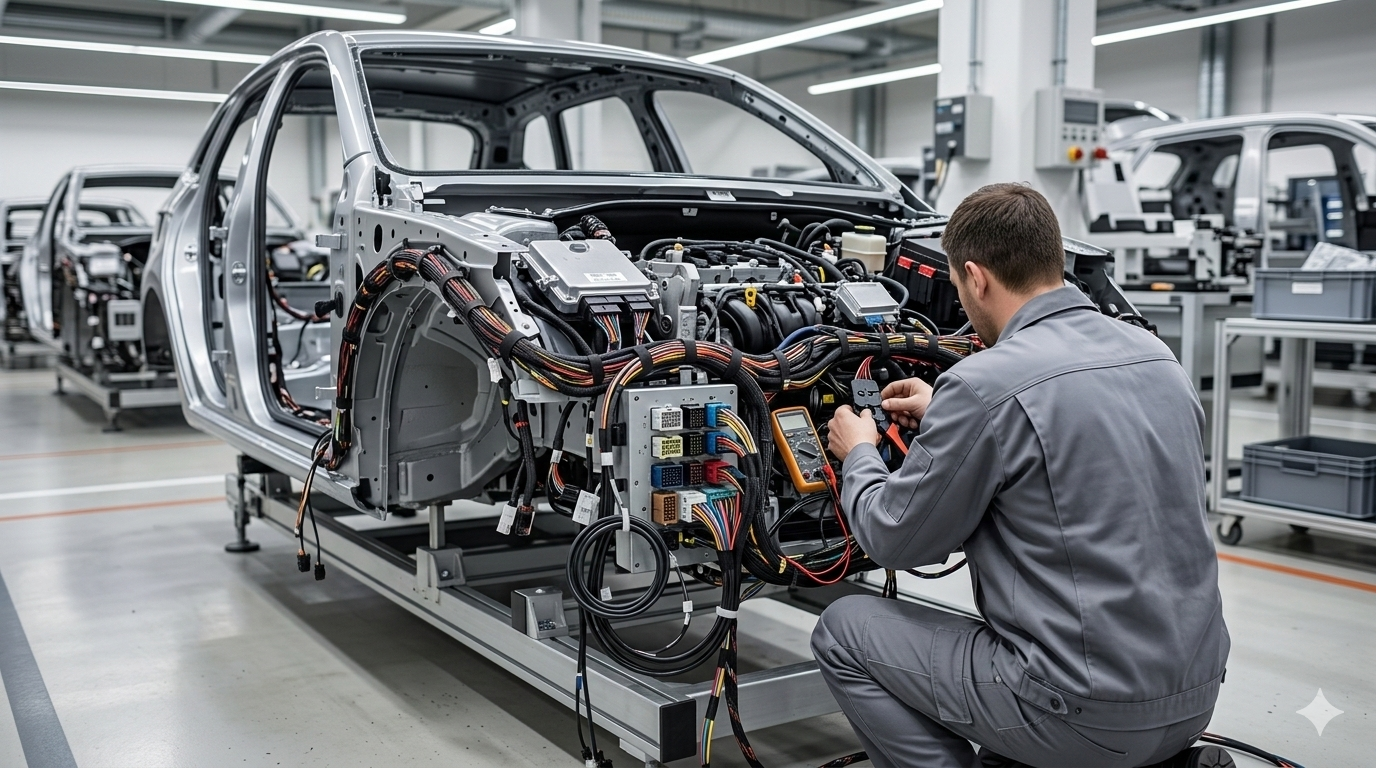
The Automotive Electrical Systems segment comprises the electrical architecture, components, and control networks responsible for distributing electrical power and enabling electronic functionality within vehicles. Within the Automotive and Transportation industry, this segment functions as the internal energy distribution and signal management framework that supports vehicle operation, safety systems, and electronic features.
The segment exists to convert, store, regulate, and distribute electrical energy generated or stored within the vehicle while coordinating communication between electronic control units and connected subsystems. It enables critical functions such as ignition, lighting, climate control, infotainment, and advanced driver assistance systems.
2. Structural Scope of the Segment
-
Vehicle wiring harnesses and electrical connectors
-
Battery systems and power distribution modules
-
Alternators and electrical generators
-
Starter motors and ignition systems
-
Lighting systems and electrical control modules
-
Electronic control units (ECUs) and vehicle controllers
-
Vehicle communication networks and data buses
-
Power management and voltage regulation systems
3. Core Market Characteristics
-
High integration with vehicle electronics and software architecture
-
Strong reliability and safety requirements due to operational dependency
-
Demand linked to vehicle production volumes and model development cycles
-
Increasing electrical complexity driven by electronic features and safety systems
-
Compliance with automotive electrical safety and electromagnetic compatibility standards
-
Long product lifecycles aligned with vehicle platform durations
-
Continuous evolution toward higher voltage architectures and digital communication networks
4. Value Chain Overview
-
Inputs: Copper wiring, electronic components, semiconductors, connectors, sensors, and insulation materials
-
Component Manufacturing: Production of harnesses, power modules, generators, and electronic control units
-
System Integration: Installation within vehicle platforms during manufacturing assembly
-
Operational Use: Distribution of electrical power and coordination of electronic subsystems during vehicle operation
-
Lifecycle & End-of-Life: Maintenance, component replacement, diagnostics, and recycling of electrical components
5. Key Market Drivers
-
Increasing electrification of vehicle systems and components
-
Growth of advanced safety and driver assistance technologies
-
Expansion of infotainment and connectivity features
-
Development of electric and hybrid vehicle architectures
-
Regulatory requirements related to safety, lighting, and emissions control systems
-
Advancements in automotive semiconductor and sensor technologies
6. Strategic Importance within Parent Industry
Automotive Electrical Systems serve as the operational nervous system of modern vehicles within the Automotive and Transportation industry. Upstream, the segment drives demand for semiconductors, sensors, wiring materials, and electronic modules. Downstream, it supports the integration of safety systems, vehicle control technologies, and digital connectivity features.
As vehicles incorporate greater electronic functionality and electrified propulsion systems, this segment becomes increasingly central to vehicle performance, safety, and system integration, reinforcing its strategic importance across automotive engineering and manufacturing.