
Global Clinical Nutrition Products Market Report, Size & Forecast 2026-2033
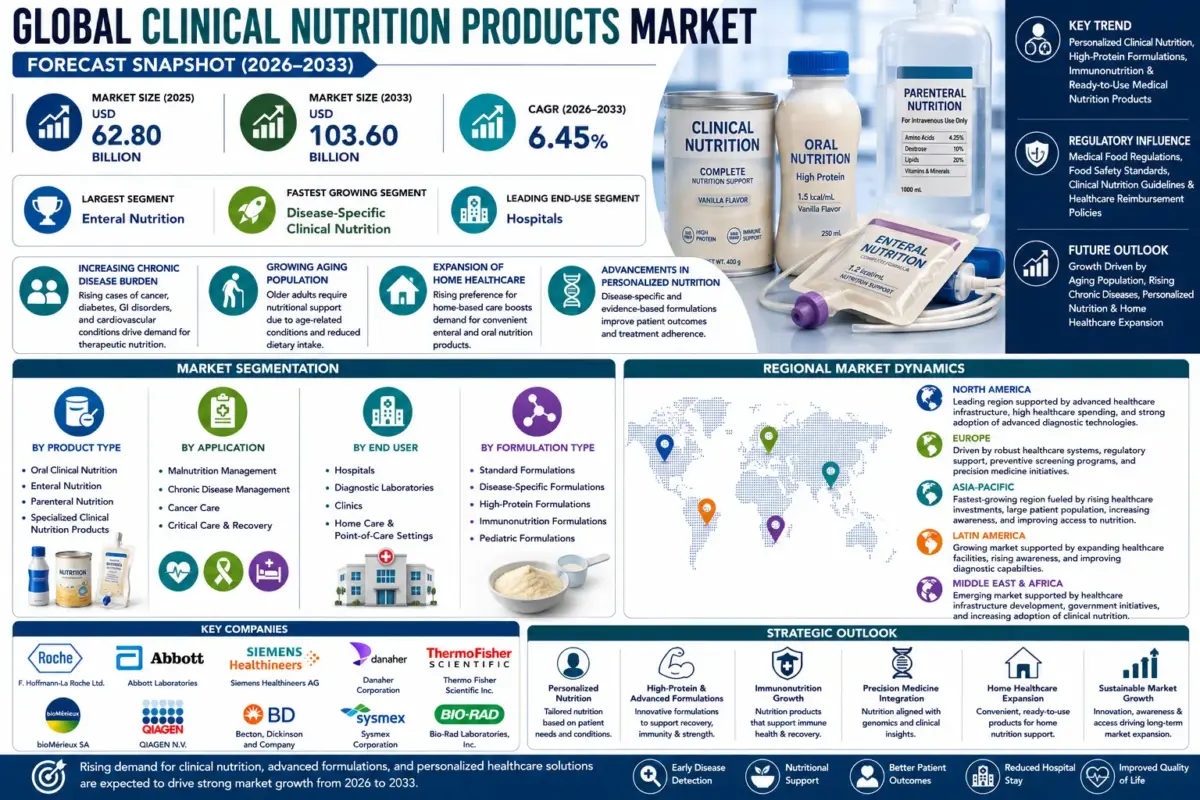
Global Clinical Nutrition Products Market Forecast Snapshot (2026–2033)
| Metric | Value |
|---|---|
| Market Size (2025) | USD 62.80 Billion |
| Market Size (2033) | USD 103.60 Billion |
| CAGR (2026–2033) | 6.45% |
| Largest Segment | Enteral Nutrition |
| Fastest Growing Segment | Disease-Specific Clinical Nutrition |
| Leading End-Use Segment | Hospitals |
| Key Trend | Personalized Clinical Nutrition, High-Protein Formulations, Immunonutrition & Ready-to-Use Medical Nutrition Products |
| Regulatory Influence | Medical Food Regulations, Food Safety Standards, Clinical Nutrition Guidelines & Healthcare Reimbursement Policies |
| Future Outlook | Growth Driven by Aging Population, Rising Chronic Diseases, Personalized Nutrition & Home Healthcare Expansion |
Global Clinical Nutrition Products Market Size & Forecast
The Global Clinical Nutrition Products Market is expected to witness steady growth during the forecast period from 2026 to 2033. The market was valued at USD 62.80 billion in 2025 and is projected to reach approximately USD 103.60 billion by 2033, registering a CAGR of 6.45%. Market growth is primarily driven by the increasing prevalence of chronic diseases, rising geriatric population, growing incidence of malnutrition, expanding surgical procedures, increasing awareness of therapeutic nutrition, and advancements in disease-specific nutritional formulations. The growing adoption of home healthcare and personalized nutrition strategies is further supporting market expansion.Global Clinical Nutrition Products Market Overview
Clinical nutrition products are specialized nutritional formulations designed to support patients with specific medical conditions, nutritional deficiencies, metabolic disorders, and recovery requirements. The market includes enteral nutrition, parenteral nutrition, oral nutritional supplements, pediatric nutrition, and disease-specific nutritional products. These products are extensively used across hospitals, long-term care facilities, rehabilitation centers, home healthcare settings, and specialty clinics. Continuous innovation in protein formulations, immune-support nutrition, personalized medical nutrition, and specialized dietary products continues to strengthen the global clinical nutrition industry.Structural Drivers of Market Growth
1. Increasing Prevalence of Chronic Diseases
Growing incidences of cancer, diabetes, gastrointestinal disorders, neurological diseases, and cardiovascular conditions are increasing the demand for specialized nutritional support. Market Implications: Healthcare providers are incorporating clinical nutrition into comprehensive disease management programs.2. Rapid Growth of the Aging Population
Older adults often require nutritional intervention due to reduced dietary intake, chronic illnesses, and age-related muscle loss. Market Implications: Demand for geriatric nutritional supplements and medical nutrition products continues to rise globally.3. Expansion of Home Healthcare Services
The increasing preference for home-based patient care is driving demand for convenient oral and enteral nutrition products. Market Implications: Home healthcare providers are becoming major consumers of clinical nutrition products.4. Advancements in Personalized Nutrition
Manufacturers are developing disease-specific and patient-specific nutritional formulations supported by clinical evidence. Market Implications: Personalized clinical nutrition is improving treatment outcomes and patient compliance.Global Clinical Nutrition Products Market Segmentation
1. By Product Type
1.1 Oral Clinical Nutrition
1.1.1 Oral Nutritional Supplements (ONS) 1.1.1.1 Standard Oral Supplements 1.1.1.1.1 High-Protein Supplements 1.1.1.1.2 High-Calorie Supplements 1.1.1.1.3 Fiber-Enriched Supplements 1.1.1.1.4 Disease-Specific Oral Supplements 1.1.2 Powdered Nutritional Supplements 1.1.3 Ready-to-Drink Nutritional Beverages 1.1.4 Oral Rehydration Nutrition Products1.2 Enteral Nutrition
1.2.1 Standard Enteral Formula 1.2.2 Disease-Specific Enteral Formula 1.2.3 Peptide-Based Formula 1.2.4 Elemental Formula1.3 Parenteral Nutrition
1.3.1 Total Parenteral Nutrition (TPN) 1.3.2 Peripheral Parenteral Nutrition (PPN) 1.3.3 Lipid Emulsions 1.3.4 Amino Acid Solutions1.4 Specialized Clinical Nutrition Products
1.4.1 Pediatric Nutrition 1.4.2 Geriatric Nutrition 1.4.3 Oncology Nutrition 1.4.4 Metabolic Disorder Nutrition2. By Application
2.1 Malnutrition Management
2.1.1 Protein-Energy Malnutrition 2.1.1.1 Hospital Nutrition Therapy 2.1.1.1.1 Adult Clinical Nutrition 2.1.1.1.2 Pediatric Clinical Nutrition 2.1.1.1.3 Critical Care Nutrition 2.1.1.1.4 Long-Term Nutritional Support 2.1.2 Nutritional Deficiency Management 2.1.3 Recovery Nutrition 2.1.4 Post-Surgical Nutrition2.2 Chronic Disease Management
2.2.1 Diabetes Nutrition 2.2.2 Renal Nutrition 2.2.3 Gastrointestinal Nutrition 2.2.4 Cardiovascular Nutrition2.3 Cancer Care
2.3.1 Chemotherapy Nutrition 2.3.2 Radiation Therapy Nutrition 2.3.3 Immune Support Nutrition 2.3.4 Cachexia Management2.4 Critical Care & Recovery
2.4.1 ICU Nutrition 2.4.2 Trauma Care Nutrition 2.4.3 Burn Care Nutrition 2.4.4 Rehabilitation Nutrition3. By End User
3.1 Hospitals
3.1.1 General Hospitals 3.1.1.1 Clinical Nutrition Departments 3.1.1.1.1 Intensive Care Units 3.1.1.1.2 Surgical Departments 3.1.1.1.3 Oncology Departments 3.1.1.1.4 Internal Medicine Departments 3.1.2 Specialty Hospitals 3.1.3 Academic Medical Centers 3.1.4 Government Hospitals3.2 Home Care Settings
3.2.1 Home Enteral Nutrition 3.2.2 Home Parenteral Nutrition 3.2.3 Elderly Home Care 3.2.4 Chronic Disease Home Management3.3 Long-Term Care Facilities
3.3.1 Nursing Homes 3.3.2 Assisted Living Facilities 3.3.3 Rehabilitation Centers 3.3.4 Hospice Care Centers3.4 Clinics & Ambulatory Care Centers
3.4.1 Nutrition Clinics 3.4.2 Dialysis Centers 3.4.3 Oncology Clinics 3.4.4 Gastroenterology Clinics4. By Age Group
4.1 Pediatric Patients
4.1.1 Infant Nutrition 4.1.1.1 Specialized Pediatric Nutrition 4.1.1.1.1 Premature Infant Nutrition 4.1.1.1.2 Neonatal Nutrition 4.1.1.1.3 Pediatric Disease-Specific Nutrition 4.1.1.1.4 Growth Support Nutrition 4.1.2 Children 4.1.3 Adolescents 4.1.4 Pediatric Critical Care4.2 Adult Patients
4.2.1 Hospitalized Adults 4.2.2 Surgical Patients 4.2.3 Chronic Disease Patients 4.2.4 Rehabilitation Patients4.3 Geriatric Patients
4.3.1 Healthy Aging Nutrition 4.3.2 Sarcopenia Management 4.3.3 Dysphagia Nutrition 4.3.4 Frailty Management4.4 Maternal Nutrition
4.4.1 Pregnancy Nutrition 4.4.2 Postpartum Nutrition 4.4.3 High-Risk Pregnancy Nutrition 4.4.4 Lactation NutritionRegional Market Dynamics
North America
Leading region supported by advanced healthcare infrastructure, high prevalence of chronic diseases, strong reimbursement systems, and widespread adoption of clinical nutrition therapies.Europe
Driven by aging demographics, increasing awareness of medical nutrition, favorable healthcare policies, and strong clinical nutrition research.Asia-Pacific
Fastest-growing region supported by expanding healthcare infrastructure, increasing healthcare expenditure, growing elderly population, and rising awareness regarding therapeutic nutrition.Latin America
Growing market driven by improving hospital infrastructure, increasing nutritional awareness, and expanding healthcare access.Middle East & Africa
Emerging market supported by healthcare modernization, growing chronic disease burden, and increasing investments in hospital nutrition programs.Competitive Landscape
The Global Clinical Nutrition Products Market is highly competitive with multinational nutrition companies, pharmaceutical manufacturers, medical nutrition providers, and specialized healthcare nutrition companies focusing on personalized nutrition, disease-specific formulations, high-protein supplements, and advanced clinical nutrition solutions. Key Companies Operating in the Market Include:- Abbott Laboratories
- Nestlé Health Science
- Danone S.A.
- Fresenius Kabi AG
- Baxter International Inc.
- B. Braun SE
- Meiji Holdings Co., Ltd.
- Ajinomoto Co., Inc.
- Victus, Inc.
- Global Health Products, Inc.
Strategic Outlook
The future of the clinical nutrition products market will be shaped by personalized nutrition, precision medicine, microbiome-based nutrition, immune-support formulations, plant-based medical nutrition, and digital nutrition management platforms. Manufacturers are increasingly investing in research and development, disease-specific nutritional therapies, sustainable ingredient sourcing, and clinically validated formulations to improve patient outcomes and strengthen competitive positioning. Integration of digital health technologies with nutritional monitoring is expected to further enhance clinical nutrition management. Growing emphasis on preventive healthcare, healthy aging, home-based patient care, personalized therapeutic nutrition, and evidence-based nutritional interventions will continue creating significant growth opportunities. Companies focusing on innovation, clinical validation, regulatory compliance, and global market expansion will strengthen their competitive position within the global medical nutrition industry.Final Market Perspective
The Global Clinical Nutrition Products Market continues to expand as healthcare systems increasingly recognize the critical role of nutrition in disease prevention, treatment, and recovery. Rising chronic disease prevalence, expanding elderly populations, continuous product innovation, and growing demand for personalized nutritional support are expected to support sustained market growth throughout the forecast period. Organizations delivering scientifically validated, patient-focused, and innovative clinical nutrition products will be well-positioned to capitalize on long-term opportunities across the global healthcare and medical nutrition market.Table of Contents
1. Executive Summary
1.1 Market Snapshot (2026–2033)
1.2 Key Growth Highlights
1.3 Demand-Supply Overview
1.4 Key Strategic Insights
1.5 Analyst Viewpoint
2. Market Overview
2.1 Introduction to Global Clinical Nutrition Products Market
2.2 Industry Value Chain Analysis
2.3 Market Evolution & Historical Trends
2.4 Macro-Economic Impact Analysis
2.5 Clinical Nutrition Ecosystem & Healthcare Delivery Network
2.6 Personalized Clinical Nutrition, High-Protein Formulations, Immunonutrition & Ready-to-Use Medical Nutrition Trends
3. Global Clinical Nutrition Products Market Forecast Snapshot (USD Billion), 2026–2033
3.1 2025 Market Size
3.2 2033 Market Size
3.3 CAGR (2026–2033)
3.4 Largest Region
3.5 Fastest Growing Region
3.6 Largest Segment
3.7 Key Trend
3.8 Future Outlook
4. Key Drivers of Market Growth
4.1 Increasing Prevalence of Chronic Diseases
4.2 Rapid Growth of the Aging Population
4.3 Expansion of Home Healthcare Services
4.4 Advancements in Personalized Nutrition
4.5 Growing Awareness of Therapeutic Nutrition
5. Market Challenges
5.1 Stringent Medical Food Regulations
5.2 High Cost of Specialized Clinical Nutrition Products
5.3 Limited Awareness in Developing Regions
5.4 Reimbursement & Healthcare Access Challenges
6. Market Segmentation by Product Type (USD Billion), 2026–2033
6.1 Oral Clinical Nutrition
6.1.1 Oral Nutritional Supplements (ONS)
6.1.1.1 Standard Oral Supplements
6.1.1.1.1 High-Protein Supplements
6.1.1.1.2 High-Calorie Supplements
6.1.1.1.3 Fiber-Enriched Supplements
6.1.1.1.4 Disease-Specific Oral Supplements
6.1.2 Powdered Nutritional Supplements
6.1.3 Ready-to-Drink Nutritional Beverages
6.1.4 Oral Rehydration Nutrition Products
6.2 Enteral Nutrition
6.2.1 Standard Enteral Formula
6.2.2 Disease-Specific Enteral Formula
6.2.3 Peptide-Based Formula
6.2.4 Elemental Formula
6.3 Parenteral Nutrition
6.3.1 Total Parenteral Nutrition (TPN)
6.3.2 Peripheral Parenteral Nutrition (PPN)
6.3.3 Lipid Emulsions
6.3.4 Amino Acid Solutions
6.4 Specialized Clinical Nutrition Products
6.4.1 Pediatric Nutrition
6.4.2 Geriatric Nutrition
6.4.3 Oncology Nutrition
6.4.4 Metabolic Disorder Nutrition
7. Market Segmentation by Application (USD Billion), 2026–2033
7.1 Malnutrition Management
7.1.1 Protein-Energy Malnutrition
7.1.1.1 Hospital Nutrition Therapy
7.1.1.1.1 Adult Clinical Nutrition
7.1.1.1.2 Pediatric Clinical Nutrition
7.1.1.1.3 Critical Care Nutrition
7.1.1.1.4 Long-Term Nutritional Support
7.1.2 Nutritional Deficiency Management
7.1.3 Recovery Nutrition
7.1.4 Post-Surgical Nutrition
7.2 Chronic Disease Management
7.2.1 Diabetes Nutrition
7.2.2 Renal Nutrition
7.2.3 Gastrointestinal Nutrition
7.2.4 Cardiovascular Nutrition
7.3 Cancer Care
7.3.1 Chemotherapy Nutrition
7.3.2 Radiation Therapy Nutrition
7.3.3 Immune Support Nutrition
7.3.4 Cachexia Management
7.4 Critical Care & Recovery
7.4.1 ICU Nutrition
7.4.2 Trauma Care Nutrition
7.4.3 Burn Care Nutrition
7.4.4 Rehabilitation Nutrition
8. Market Segmentation by End User (USD Billion), 2026–2033
8.1 Hospitals
8.1.1 General Hospitals
8.1.1.1 Clinical Nutrition Departments
8.1.1.1.1 Intensive Care Units
8.1.1.1.2 Surgical Departments
8.1.1.1.3 Oncology Departments
8.1.1.1.4 Internal Medicine Departments
8.1.2 Specialty Hospitals
8.1.3 Academic Medical Centers
8.1.4 Government Hospitals
8.2 Home Care Settings
8.2.1 Home Enteral Nutrition
8.2.2 Home Parenteral Nutrition
8.2.3 Elderly Home Care
8.2.4 Chronic Disease Home Management
8.3 Long-Term Care Facilities
8.3.1 Nursing Homes
8.3.2 Assisted Living Facilities
8.3.3 Rehabilitation Centers
8.3.4 Hospice Care Centers
8.4 Clinics & Ambulatory Care Centers
8.4.1 Nutrition Clinics
8.4.2 Dialysis Centers
8.4.3 Oncology Clinics
8.4.4 Gastroenterology Clinics
9. Market Segmentation by Age Group (USD Billion), 2026–2033
9.1 Pediatric Patients
9.2 Adult Patients
9.3 Geriatric Patients
9.4 Maternal Nutrition
10. Market Segmentation by Region (USD Billion), 2026–2033
10.1 North America
10.2 Europe
10.3 Asia-Pacific
10.4 Latin America
10.5 Middle East & Africa
11. Regional Market Analysis
11.1 North America – Clinical Nutrition Market Leader
11.2 Asia-Pacific – Fastest Growing Region
11.3 Europe – Advanced Medical Nutrition Market
11.4 Latin America – Expanding Clinical Nutrition Adoption
11.5 Middle East & Africa – Emerging Healthcare Nutrition Market
12. Competitive Landscape
12.1 Market Share Analysis
12.2 Competitive Positioning Matrix
12.3 Strategic Developments (M&A, Product Launches, Partnerships)
12.4 Innovation Benchmarking
12.5 Clinical Nutrition Product Innovation & Healthcare Assessment
13. Company Profiles
13.1 Abbott Laboratories
13.2 Nestlé Health Science
13.3 Danone S.A.
13.4 Fresenius Kabi AG
13.5 Baxter International Inc.
13.6 B. Braun SE
13.7 Meiji Holdings Co., Ltd.
13.8 Ajinomoto Co., Inc.
13.9 Victus, Inc.
13.10 Global Health Products, Inc.
14. Strategic Intelligence & AI-Driven Insights
14.1 Pheonix Demand Forecast Engine
14.2 Clinical Nutrition Market Dashboard
14.3 AI-Powered Nutrition Analytics & Patient Outcome Intelligence
14.4 Personalized Clinical Nutrition Intelligence Engine
14.5 Healthcare Nutrition & Home Care Market Intelligence
15. Investment & Growth Opportunities
15.1 Personalized Clinical Nutrition
15.2 Disease-Specific Clinical Nutrition
15.3 Home Healthcare Nutrition Solutions
15.4 High-Protein & Immunonutrition Products
15.5 Geriatric & Chronic Disease Nutrition
16. Why the Global Clinical Nutrition Products Market Remains Critical
16.1 Rising Chronic Disease Burden
16.2 Expanding Geriatric Population
16.3 Growing Personalized Nutrition Adoption
16.4 Increasing Home Healthcare Demand
16.5 Long-Term Growth Across Healthcare & Medical Nutrition Industry
17. Appendix
18. About Pheonix Research
19. Disclaimer
Competitive Landscape
Global Clinical Nutrition Products Market Competitive Intensity & Market Structure Overview
The Global Clinical Nutrition Products Market is highly competitive and characterized by the presence of multinational nutrition companies, pharmaceutical manufacturers, medical nutrition providers, specialized healthcare nutrition companies, and clinical nutrition innovators. Competitive intensity is driven by personalized clinical nutrition, disease-specific nutritional formulations, high-protein supplements, enteral and parenteral nutrition innovation, immune-support nutrition, and continuous advancements in evidence-based medical nutrition products.
Companies compete across multiple clinical nutrition segments including oral clinical nutrition, enteral nutrition, parenteral nutrition, specialized clinical nutrition products, pediatric nutrition, geriatric nutrition, oncology nutrition, and metabolic disorder nutrition. Growing demand for therapeutic nutrition, increasing prevalence of chronic diseases, expanding home healthcare, rising aging populations, and growing adoption of personalized nutrition strategies are intensifying competition while accelerating product innovation and clinical research.
The market structure is evolving toward personalized clinical nutrition, disease-specific formulations, microbiome-based nutrition, high-protein medical nutrition, plant-based medical nutrition, digital nutrition management, and clinically validated nutritional therapies. Market participants are investing heavily in research and development, sustainable ingredient sourcing, advanced nutritional formulations, and strategic partnerships to strengthen market positioning and improve patient outcomes.
Global Clinical Nutrition Products Market Competitive Intensity & Market Structure Current Scenario
Leading Global Clinical Nutrition Products Companies
- Abbott Laboratories: A global healthcare leader providing comprehensive clinical nutrition products, specialized enteral nutrition, oral nutritional supplements, and disease-specific medical nutrition solutions.
- Nestlé Health Science: A leading medical nutrition company specializing in personalized nutrition, therapeutic nutrition products, disease-specific formulations, and evidence-based nutritional solutions.
- Danone S.A.: A global nutrition company offering specialized clinical nutrition, pediatric nutrition, adult medical nutrition, and advanced nutritional formulations supported by continuous research and innovation.
- Fresenius Kabi AG: A leading provider of enteral nutrition, parenteral nutrition, infusion therapies, and clinical nutrition products designed for hospital and home healthcare settings.
- Baxter International Inc.: A global healthcare company specializing in parenteral nutrition, critical care nutrition solutions, and advanced nutritional support therapies.
- B. Braun SE: A medical technology company providing parenteral nutrition, infusion systems, clinical nutrition products, and comprehensive nutritional care solutions.
- Meiji Holdings Co., Ltd.: A global nutrition manufacturer focused on specialized nutritional products, pediatric nutrition, and clinically supported medical nutrition solutions.
- Ajinomoto Co., Inc.: A leading nutrition company developing amino acid-based medical nutrition products, therapeutic nutrition, and specialized clinical dietary solutions.
- Victus, Inc.: A specialized clinical nutrition company offering innovative medical nutrition products and patient-focused nutritional support solutions.
- Global Health Products, Inc.: A healthcare nutrition provider delivering specialized clinical nutrition products designed to support disease management and patient recovery.
Key Competitive Intensity & Market Structure Drivers
Increasing prevalence of chronic diseases, growing aging populations, expanding home healthcare services, and rising demand for personalized clinical nutrition are intensifying competition among medical nutrition providers worldwide.
Advancements in disease-specific nutritional formulations, personalized nutrition, microbiome-based nutrition, high-protein supplements, immune-support nutrition, and digital nutrition management are becoming major competitive differentiators across the market.
Growing demand for therapeutic nutrition, preventive healthcare, healthy aging, evidence-based nutritional interventions, and clinically validated products is strengthening market competitiveness while accelerating innovation across clinical nutrition solutions.
Strategic collaborations among nutrition companies, hospitals, healthcare providers, research institutions, pharmaceutical companies, and home healthcare organizations are accelerating product innovation, expanding clinical applications, and improving patient outcomes.
Continuous investment in research and development, sustainable ingredient sourcing, disease-specific nutrition, digital health integration, personalized nutritional monitoring, and global manufacturing capabilities is enabling companies to improve operational efficiency and long-term competitiveness.
Strategic Implications of Competitive Intensity & Market Structure
Companies with comprehensive clinical nutrition portfolios, strong clinical research capabilities, personalized nutrition expertise, and global distribution networks are expected to maintain significant competitive advantages.
Investment in personalized nutrition, disease-specific formulations, microbiome-based nutrition, digital nutrition management, clinically validated products, and sustainable manufacturing is becoming increasingly important for long-term market leadership.
Organizations focusing on expanding therapeutic nutrition offerings, strengthening scientific research, improving patient outcomes, and enhancing home healthcare nutrition solutions are likely to increase revenue growth and market share.
Strategic partnerships with hospitals, long-term care facilities, research institutions, healthcare providers, pharmaceutical companies, and home healthcare organizations are supporting innovation, operational efficiency, and international market expansion.
Businesses capable of combining scientific innovation, clinical validation, personalized nutrition expertise, operational scalability, regulatory compliance, and comprehensive medical nutrition portfolios will be best positioned to compete effectively in the evolving global clinical nutrition products market.
Global Clinical Nutrition Products Market Competitive Intensity & Market Structure Forward Outlook
The competitive landscape of the global clinical nutrition products market is expected to become increasingly personalized, evidence-based, and digitally connected as demand for therapeutic nutrition continues to expand worldwide.
Future competition will be shaped by personalized clinical nutrition, precision medicine, microbiome-based nutrition, immune-support formulations, plant-based medical nutrition, digital nutrition management platforms, and evidence-based therapeutic nutrition.
Market participants are expected to increase investments in disease-specific nutritional formulations, personalized nutrition technologies, clinically validated products, sustainable ingredient sourcing, digital health integration, and global market expansion to strengthen competitive positioning.
Over the forecast period, companies that successfully combine scientific innovation, clinical excellence, personalized nutritional solutions, operational scalability, regulatory compliance, and comprehensive clinical nutrition capabilities will be best positioned to lead the evolving global clinical nutrition products market.
Value Chain
Global Clinical Nutrition Products Market Value Chain & Supply Chain Evolution Overview
The Global Clinical Nutrition Products Market operates through a highly integrated value chain comprising raw material sourcing, ingredient manufacturing, nutritional formulation development, clinical product manufacturing, quality assurance, packaging, distribution, healthcare procurement, and patient consumption. The ecosystem includes ingredient suppliers, pharmaceutical-grade raw material manufacturers, clinical nutrition product manufacturers, packaging companies, logistics providers, hospitals, home healthcare providers, pharmacies, specialty clinics, distributors, and regulatory authorities working together to deliver safe, clinically validated, and specialized nutritional products across global healthcare systems.
The market is being driven by the increasing prevalence of chronic diseases, rising geriatric population, growing incidence of malnutrition, expanding surgical procedures, increasing awareness of therapeutic nutrition, and advancements in disease-specific nutritional formulations. Manufacturers are increasingly investing in personalized nutrition, immune-support formulations, high-protein products, ready-to-use medical nutrition products, sustainable ingredient sourcing, and advanced manufacturing technologies to improve patient outcomes, operational efficiency, and regulatory compliance.
The integration of personalized clinical nutrition, digital nutrition management platforms, automated manufacturing systems, advanced quality monitoring, sustainable sourcing, and expanding home healthcare services has significantly strengthened the clinical nutrition value chain. Organizations are enhancing collaboration between ingredient suppliers, contract manufacturers, hospitals, distributors, pharmacies, and home healthcare providers while expanding specialized product portfolios and improving global supply chain resilience.
Advancements in precision nutrition, microbiome-based nutrition, disease-specific formulations, high-protein ingredients, automated production technologies, digital quality management, cold-chain logistics, and healthcare distribution networks are transforming the clinical nutrition supply chain while improving product quality, patient safety, manufacturing efficiency, regulatory compliance, and healthcare accessibility across global medical nutrition markets.
Global Clinical Nutrition Products Market Value Chain & Supply Chain Evolution Current Scenario
Market-Specific Value Chain
- Raw Material Sourcing & Ingredient Manufacturing: Procurement of proteins, amino acids, carbohydrates, lipids, vitamins, minerals, dietary fibers, probiotics, prebiotics, omega fatty acids, specialty ingredients, plant-based proteins, functional nutrients, emulsifiers, stabilizers, and pharmaceutical-grade raw materials.
- Nutritional Formulation & Product Development: Clinical formulation design, disease-specific nutrition development, enteral and parenteral formulation optimization, oral nutritional supplement development, pediatric and geriatric nutrition innovation, clinical validation, personalized nutrition research, and product stability testing.
- Clinical Nutrition Manufacturing: Ingredient blending, sterile manufacturing, liquid and powder formulation, aseptic filling, packaging preparation, automated production, quality inspection, batch monitoring, process validation, and production optimization.
- Quality Assurance & Regulatory Compliance: Raw material inspection, microbiological testing, nutritional composition verification, sterility testing, product quality monitoring, stability studies, Medical Food Regulations compliance, Food Safety Standards, Clinical Nutrition Guidelines, Healthcare Reimbursement Policies, and regulatory documentation.
- Packaging & Supply Chain Distribution: Medical-grade packaging, sterile packaging, labeling, warehousing, inventory management, cold-chain logistics where required, wholesale distribution, hospital procurement, pharmacy distribution, export management, and home healthcare fulfillment.
- Healthcare Delivery & Patient Support: Hospital supply, long-term care facility distribution, rehabilitation center procurement, specialty clinic supply, home healthcare delivery, pharmacy dispensing, nutritional counseling, patient monitoring, and clinical follow-up.
- End User Applications: Supply of clinical nutrition products to hospitals, home care settings, long-term care facilities, clinics & ambulatory care centers, pediatric patients, adult patients, geriatric patients, and maternal nutrition programs.
Company-to-Stage Mapping
- Raw Material Sourcing & Ingredient Manufacturing: Protein ingredient manufacturers, amino acid suppliers, vitamin and mineral manufacturers, lipid emulsion suppliers, specialty nutrition ingredient producers, probiotic manufacturers, plant-based ingredient suppliers, and pharmaceutical raw material companies.
- Nutritional Formulation & Product Development: Clinical research organizations, nutrition scientists, formulation specialists, medical nutrition research teams, clinical validation laboratories, and healthcare innovation centers.
- Clinical Nutrition Manufacturing: Abbott Laboratories, Nestlé Health Science, Danone S.A., Fresenius Kabi AG, Baxter International Inc., B. Braun SE, Meiji Holdings Co., Ltd., Ajinomoto Co., Inc., Victus, Inc., and Global Health Products, Inc.
- Packaging & Supply Chain Distribution: Medical packaging manufacturers, sterile packaging suppliers, logistics providers, healthcare distributors, warehousing companies, pharmaceutical wholesalers, hospital procurement networks, and home healthcare distribution providers.
- Healthcare Delivery & Patient Support: Hospitals, long-term care facilities, rehabilitation centers, specialty clinics, home healthcare providers, pharmacies, nutrition clinics, dialysis centers, oncology clinics, and gastroenterology clinics.
- Quality Assurance & Regulatory Compliance: Food safety authorities, healthcare regulatory agencies, clinical testing laboratories, certification organizations, quality assurance teams, clinical nutrition guideline bodies, reimbursement authorities, and regulatory compliance organizations.
- End User Applications: Hospitals, home care settings, long-term care facilities, clinics & ambulatory care centers, pediatric patients, adult patients, geriatric patients, and maternal healthcare providers.
Key Value Chain & Supply Chain Evolution Signals in Global Clinical Nutrition Products Market
Expansion of Personalized Clinical Nutrition
Manufacturers are increasingly developing disease-specific nutritional formulations, personalized nutrition programs, and clinically validated products to improve therapeutic outcomes and patient compliance.
Growing Adoption of High-Protein and Immune-Support Formulations
The use of high-protein formulations, immunonutrition products, specialized amino acid blends, and disease-specific nutritional therapies is expanding across hospitals, rehabilitation centers, and home healthcare settings.
Increasing Investment in Advanced Manufacturing Technologies
Manufacturers continue investing in automated production systems, sterile processing technologies, digital quality monitoring, and process optimization to improve production efficiency, product consistency, and regulatory compliance.
Strengthening Home Healthcare Distribution Networks
Expansion of home enteral nutrition, home parenteral nutrition, digital healthcare services, and direct-to-patient distribution models is improving accessibility to clinical nutrition products worldwide.
Advancement of Sustainable Ingredient Sourcing
Companies are adopting sustainable sourcing strategies, plant-based nutrition ingredients, environmentally responsible manufacturing practices, and recyclable packaging solutions to strengthen long-term sustainability initiatives.
Integration of Digital Nutrition Management
Digital nutrition monitoring platforms, patient engagement technologies, electronic health records, and clinical decision support systems are improving nutritional management, treatment adherence, and healthcare outcomes.
Strategic Implications of Value Chain & Supply Chain Evolution
Investment in Disease-Specific Product Innovation
Disease-specific formulations, personalized nutrition, immunonutrition products, and clinically validated nutritional therapies strengthen product differentiation while improving patient outcomes.
Expansion of Home Healthcare Services
Home-based nutrition support, digital patient monitoring, remote healthcare services, and specialized home delivery networks strengthen long-term market growth and healthcare accessibility.
Strengthening Supply Chain Efficiency
Integrated procurement, automated manufacturing, digital inventory management, healthcare logistics optimization, and global distribution networks improve operational efficiency and product availability.
Optimization of Clinical Care Delivery
Collaboration among hospitals, nutrition specialists, rehabilitation centers, home healthcare providers, and pharmacies improves patient care coordination and nutritional therapy effectiveness.
Enhancement of Regulatory Compliance and Product Safety
Medical Food Regulations, Food Safety Standards, Clinical Nutrition Guidelines, Healthcare Reimbursement Policies, quality assurance systems, and clinical validation programs improve patient confidence and regulatory adherence.
Leveraging Digital Manufacturing and Healthcare Technologies
Automation, digital quality monitoring, predictive analytics, nutrition management platforms, and integrated healthcare information systems enable manufacturers and healthcare providers to improve operational efficiency and patient care.
Global Clinical Nutrition Products Market Value Chain & Supply Chain Evolution Forward Outlook
Looking ahead, the clinical nutrition products value chain is expected to become increasingly patient-centric, personalized, technology-enabled, and sustainability-focused. Continued advancements in precision nutrition, disease-specific formulations, microbiome-based nutrition, immune-support products, digital nutrition management, automated manufacturing, sustainable ingredient sourcing, and home healthcare expansion will further improve product quality, operational efficiency, regulatory compliance, and long-term market growth.
Key Future Developments Include:
- Expansion of personalized clinical nutrition and disease-specific nutritional formulations.
- Increasing adoption of high-protein formulations, immunonutrition products, and microbiome-based nutrition.
- Greater investment in automated manufacturing, digital quality monitoring, and clinically validated formulations.
- Broader deployment of sustainable ingredient sourcing and environmentally responsible packaging solutions.
- Growing expansion of home healthcare services, digital nutrition management platforms, and remote patient monitoring.
- Strengthening collaboration between ingredient suppliers, clinical nutrition manufacturers, hospitals, pharmacies, healthcare providers, logistics companies, and digital healthcare platforms.
As the market evolves, competitive advantage will increasingly depend on personalized nutrition innovation, clinical validation, disease-specific product development, sustainable manufacturing, digital healthcare integration, advanced supply chain management, and strong regulatory compliance.
Companies that successfully integrate precision nutrition, immune-support formulations, sustainable ingredient sourcing, automated manufacturing technologies, digital nutrition management platforms, home healthcare services, and evidence-based clinical nutrition solutions will be well-positioned to achieve long-term growth in the Global Clinical Nutrition Products Market.
Investment Activity
Global Clinical Nutrition Products Market Investment & Funding Dynamics Overview (2026–2033)
The Global Clinical Nutrition Products Market is witnessing steady investment momentum driven by the increasing prevalence of chronic diseases, rising geriatric population, growing incidence of malnutrition, expanding surgical procedures, increasing awareness of therapeutic nutrition, advancements in disease-specific nutritional formulations, and the growing adoption of home healthcare and personalized nutrition strategies. Clinical nutrition manufacturers, pharmaceutical companies, medical nutrition providers, healthcare organizations, institutional investors, research institutions, and healthcare technology companies are actively investing in personalized nutrition, disease-specific nutritional therapies, immune-support formulations, microbiome-based nutrition, plant-based medical nutrition, clinically validated formulations, digital nutrition management platforms, and global market expansion.
Investment activity is accelerating as companies focus on strengthening research and development, expanding manufacturing capacity, improving product quality, supporting clinical validation, and addressing growing demand for specialized nutritional support. Capital allocation is increasingly directed toward high-protein supplements, enteral nutrition, parenteral nutrition, oral nutritional supplements, disease-specific nutritional formulations, sustainable ingredient sourcing, digital nutritional monitoring technologies, and advanced production capabilities.
Additionally, growing investments in precision medicine, evidence-based nutritional interventions, home healthcare solutions, healthy aging nutrition, clinically validated product development, sustainable ingredient sourcing, and international market expansion are creating substantial long-term opportunities across the global clinical nutrition industry.
Current Investment & Funding Landscape
The current investment landscape reflects active participation from multinational nutrition companies, pharmaceutical manufacturers, medical nutrition providers, healthcare organizations, research institutions, institutional investors, and healthcare technology companies. Industry participants are investing heavily in personalized nutrition, disease-specific formulations, high-protein supplements, immune-support nutrition, manufacturing modernization, digital nutrition management platforms, sustainable ingredient sourcing, and global market expansion.
Significant funding is being directed toward research and development, clinically validated formulations, specialized nutritional therapies, advanced production technologies, digital nutritional monitoring, sustainable manufacturing practices, regulatory compliance, and evidence-based nutritional interventions to improve patient outcomes, strengthen competitive positioning, and support long-term market growth.
Strategic collaborations among nutrition companies, pharmaceutical manufacturers, healthcare providers, research institutions, home healthcare providers, hospitals, and specialty clinics are accelerating product innovation, strengthening clinical validation, improving patient care, and expanding access to specialized clinical nutrition products worldwide.
Key Investment & Funding Dynamics Signals
- Growing investment in personalized nutrition, disease-specific nutritional therapies, and clinically validated formulations is strengthening product innovation and competitive differentiation.
- Expansion of high-protein supplements, enteral nutrition, parenteral nutrition, oral nutritional supplements, and immune-support nutrition is attracting substantial funding to address evolving patient requirements.
- Increasing capital allocation toward research and development, advanced manufacturing technologies, sustainable ingredient sourcing, quality improvement, and production capacity expansion is enhancing operational capabilities.
- Rising investment in digital nutrition management platforms, nutritional monitoring technologies, home healthcare solutions, and personalized therapeutic nutrition is supporting improved patient management and treatment outcomes.
- Strategic funding for clinical validation, precision medicine, microbiome-based nutrition, plant-based medical nutrition, and evidence-based nutritional interventions is strengthening innovation across specialized nutrition products.
- Growing collaboration between nutrition companies, pharmaceutical manufacturers, healthcare providers, hospitals, research institutions, and home healthcare providers is accelerating product development and expanding market accessibility.
- Expansion of global manufacturing capabilities, regulatory compliance programs, sustainable production practices, and international distribution networks is creating attractive long-term investment opportunities across the global clinical nutrition products market.
Strategic Implications of Investment & Funding Dynamics
- Continuous investment in personalized nutrition, disease-specific nutritional therapies, immune-support formulations, and clinically validated products will be essential for maintaining long-term competitive advantage.
- Capital allocation toward research and development, manufacturing modernization, digital nutrition management, sustainable ingredient sourcing, and global distribution infrastructure will strengthen operational efficiency and market expansion.
- Companies developing innovative clinical nutrition products, evidence-based formulations, personalized therapeutic nutrition, and patient-focused nutritional solutions are expected to secure stronger competitive positions.
- Strategic partnerships among nutrition companies, pharmaceutical manufacturers, hospitals, specialty clinics, research organizations, and home healthcare providers will accelerate product innovation and market expansion.
- Investments in advanced production technologies, clinical research, precision medicine, microbiome-based nutrition, sustainable manufacturing, and digital nutritional monitoring will enhance patient outcomes and long-term business performance.
- Compliance with medical food regulations, food safety standards, clinical nutrition guidelines, and healthcare reimbursement policies will continue influencing investment decisions.
- Organizations building integrated capabilities across personalized nutrition, disease-specific formulations, home healthcare, regulatory compliance, clinical validation, and global market expansion are expected to capture significant long-term value.
Forward Outlook
Looking ahead, the Global Clinical Nutrition Products Market is expected to maintain steady investment momentum driven by the aging population, rising chronic diseases, personalized nutrition, and home healthcare expansion.
Future capital deployment will increasingly focus on personalized nutrition, disease-specific clinical nutrition, high-protein formulations, immunonutrition, ready-to-use medical nutrition products, microbiome-based nutrition, plant-based medical nutrition, and digital nutrition management platforms.
As manufacturers continue investing in research and development, clinically validated formulations, sustainable ingredient sourcing, and advanced manufacturing capabilities, investment activity is expected to expand across production facilities, home healthcare solutions, nutritional monitoring technologies, regulatory compliance programs, global distribution networks, and evidence-based nutritional interventions.
In conclusion, the Global Clinical Nutrition Products Market represents an attractive investment landscape where personalized clinical nutrition, disease-specific nutritional therapies, clinically validated formulations, home healthcare expansion, digital nutrition management, and sustainable manufacturing practices will define future funding priorities, competitive differentiation, and long-term market growth.
Technology & Innovation
Global Clinical Nutrition Products Market Technology & Innovation Landscape Overview
The Global Clinical Nutrition Products Market is undergoing significant technological advancement as innovations in personalized clinical nutrition, disease-specific formulations, medical nutrition science, high-protein formulations, immunonutrition, microbiome research, and digital health technologies continue transforming patient care. Clinical nutrition manufacturers, medical nutrition companies, healthcare providers, research organizations, and biotechnology firms are investing extensively in advanced nutritional formulations, evidence-based product development, precision nutrition, and patient-centric therapeutic solutions to improve clinical outcomes, accelerate recovery, and enhance long-term disease management. These innovations are supporting more targeted nutritional interventions across hospitals, long-term care facilities, rehabilitation centers, specialty clinics, and home healthcare settings.
The market is also benefiting from advancements in personalized nutrition, microbiome-based nutritional research, clinically validated formulations, plant-based medical nutrition, digital nutrition monitoring, artificial intelligence-assisted nutritional assessment, and precision medicine. These technologies are improving nutritional screening, patient monitoring, treatment optimization, regulatory compliance, product quality, and healthcare efficiency across chronic disease management, oncology care, critical care, pediatric nutrition, and geriatric healthcare. As healthcare systems increasingly recognize nutrition as an essential component of disease prevention, treatment, and recovery, technological innovation continues to strengthen the long-term growth potential of the global clinical nutrition products market.
Global Clinical Nutrition Products Market Technology & Innovation Current Scenario
Current innovation within the clinical nutrition products market is primarily focused on personalized clinical nutrition, disease-specific nutritional formulations, high-protein supplements, immunonutrition, microbiome-based nutrition, and ready-to-use medical nutrition products. Manufacturers are increasingly utilizing advanced nutritional science, precision medicine approaches, digital nutrition management platforms, and clinically validated ingredients to develop specialized products for patients with chronic diseases, cancer, gastrointestinal disorders, metabolic conditions, and age-related nutritional deficiencies. Personalized therapeutic nutrition is playing an expanding role in improving patient outcomes, treatment adherence, and recovery.
Digital health integration, artificial intelligence-assisted nutritional assessment, remote patient monitoring, clinically supported nutritional analytics, and home healthcare technologies are strengthening clinical nutrition management while improving continuity of care. In addition, advancements in sustainable ingredient sourcing, plant-based medical nutrition, innovative protein technologies, and evidence-based formulation development are accelerating product innovation while supporting evolving healthcare requirements and regulatory standards.
Key Technology & Innovation Trends in Global Clinical Nutrition Products Market
- Personalized Clinical Nutrition: Delivering patient-specific nutritional interventions based on individual medical conditions, metabolic requirements, and treatment goals.
- Disease-Specific Clinical Nutrition: Developing specialized nutritional formulations for oncology, diabetes, renal disorders, gastrointestinal diseases, and critical care patients.
- High-Protein Formulations: Supporting muscle preservation, post-surgical recovery, healthy aging, and rehabilitation through advanced protein-based nutrition products.
- Immunonutrition: Enhancing immune function and recovery using clinically formulated nutrients designed for surgical, critical care, and oncology patients.
- Microbiome-Based Nutrition: Utilizing gut microbiome research to develop targeted nutritional therapies that improve digestive health and clinical outcomes.
- Ready-to-Use Medical Nutrition Products: Expanding convenient oral and enteral nutritional solutions for hospital, rehabilitation, and home healthcare environments.
- Digital Nutrition Management: Supporting nutritional monitoring, patient compliance, and personalized dietary planning through connected healthcare platforms.
- Artificial Intelligence-Assisted Nutritional Assessment: Improving nutritional risk evaluation, treatment planning, and clinical decision-making using AI-powered healthcare analytics.
- Plant-Based Medical Nutrition: Developing sustainable, clinically validated plant-based nutritional formulations that address evolving patient and healthcare preferences.
- Precision Medical Nutrition: Integrating clinical evidence, biomarker analysis, and personalized healthcare strategies to optimize nutritional therapy and patient outcomes.
Strategic Implications of Technology & Innovation
Technological advancements are enabling healthcare providers and nutrition manufacturers to improve patient outcomes, strengthen therapeutic effectiveness, and enhance clinical care delivery. Organizations investing in personalized nutrition, disease-specific formulations, microbiome research, immunonutrition, digital health integration, and precision medical nutrition are improving treatment quality while expanding opportunities across hospital nutrition, long-term care, rehabilitation, and home healthcare settings. Innovation is strengthening product differentiation through clinically validated formulations, advanced nutritional science, and patient-centered healthcare solutions.
As healthcare systems continue emphasizing preventive healthcare, personalized medicine, and evidence-based nutritional interventions, organizations are increasing investments in advanced research, digital nutrition technologies, and clinically supported product development. Companies successfully integrating personalized nutrition, artificial intelligence-assisted nutritional assessment, microbiome science, sustainable ingredients, and precision healthcare technologies are expected to strengthen their long-term competitive position. However, medical food regulations, food safety standards, clinical nutrition guidelines, and healthcare reimbursement policies remain critical factors influencing product development, commercialization, and global market expansion.
Global Clinical Nutrition Products Market Technology & Innovation Forward Outlook
The future of the Global Clinical Nutrition Products Market is expected to be shaped by continued advancements in personalized nutrition, precision medicine, microbiome-based nutrition, artificial intelligence-assisted nutritional management, digital health platforms, immune-support formulations, and sustainable medical nutrition products. Emerging innovations such as biomarker-guided nutritional therapy, digital nutrition ecosystems, connected patient monitoring, advanced protein technologies, personalized dietary interventions, and clinically validated disease-specific formulations are expected to redefine therapeutic nutrition. Manufacturers are likely to increase investments in intelligent nutrition platforms that improve patient recovery, clinical efficiency, regulatory compliance, and healthcare outcomes.
As demand for personalized healthcare, healthy aging, chronic disease management, home healthcare, and evidence-based clinical nutrition continues to increase, technology will play an increasingly important role in driving market expansion. The combination of personalized clinical nutrition, digital health technologies, microbiome research, precision medicine, immunonutrition, and advanced nutritional science is expected to create substantial growth opportunities while strengthening the long-term evolution of the global clinical nutrition products market.
Market Risk
Global Clinical Nutrition Products Market Risk Factors & Disruption Threats Overview
The global clinical nutrition products market is experiencing steady growth as healthcare systems increasingly recognize the importance of nutrition in disease prevention, treatment, recovery, and long-term patient management. Rising prevalence of chronic diseases, expanding geriatric populations, growing awareness of malnutrition, increasing surgical procedures, and the expansion of home healthcare services are supporting demand for specialized nutritional formulations. However, despite favorable market conditions, nutrition manufacturers, healthcare providers, hospitals, and home healthcare organizations face a range of regulatory, operational, supply chain, technological, and reimbursement-related risks that may influence long-term market expansion. Increasing raw material price volatility, evolving medical food regulations, product safety requirements, manufacturing complexity, reimbursement uncertainty, and growing competition continue to reshape the competitive landscape. Companies are investing in personalized nutrition, disease-specific formulations, digital nutrition management platforms, clinically validated products, and sustainable ingredient sourcing to strengthen operational resilience, regulatory compliance, and competitive differentiation.
Global Clinical Nutrition Products Market Risk Factors & Disruption Threats Current Scenario
The current market environment is characterized by growing adoption of enteral nutrition, oral nutritional supplements, parenteral nutrition, pediatric nutrition, geriatric nutrition, and disease-specific clinical nutrition products across hospitals, long-term care facilities, rehabilitation centers, and home healthcare settings. However, organizations continue to face challenges associated with rising healthcare costs, reimbursement limitations, ingredient sourcing disruptions, manufacturing compliance requirements, product quality assurance, and increasing pressure for evidence-based clinical outcomes. Compliance with medical food regulations, food safety standards, clinical nutrition guidelines, labeling requirements, and healthcare reimbursement policies requires continuous investment in research, manufacturing controls, regulatory affairs, and clinical validation activities.
Key Risk Factors & Disruption Threat Signals in Global Clinical Nutrition Products Market
Major risk factors include fluctuations in prices of proteins, amino acids, vitamins, minerals, dairy ingredients, plant-based ingredients, and specialized nutritional components, which may affect production costs and profit margins. Supply chain disruptions involving pharmaceutical-grade ingredients, packaging materials, and global logistics networks may delay product availability and increase operational expenses. Regulatory changes related to medical nutrition claims, product labeling, food safety standards, clinical evidence requirements, and reimbursement eligibility may increase compliance complexity and market entry barriers. Furthermore, rapid advancements in personalized nutrition, microbiome-based therapies, digital health integration, precision medicine, plant-based medical nutrition, and increasing competition from pharmaceutical, nutraceutical, and wellness companies represent significant disruption signals capable of reshaping market dynamics.
Strategic Implications of Risk Factors & Disruption Threats in Global Clinical Nutrition Products Market
Clinical nutrition manufacturers are strengthening business resilience by investing in disease-specific formulations, high-protein products, immune-support nutrition, personalized nutrition platforms, and clinically validated research programs to improve patient outcomes and strengthen product differentiation. Organizations are expanding integration with digital health platforms, remote patient monitoring systems, hospital nutrition management software, and home healthcare services to improve nutritional adherence and clinical effectiveness. Strategic investments in sustainable ingredient sourcing, advanced manufacturing technologies, quality management systems, and evidence-based clinical trials are enabling companies to improve regulatory compliance, product safety, reimbursement positioning, and healthcare provider confidence. Partnerships with hospitals, research institutions, healthcare providers, pharmaceutical companies, and home healthcare organizations continue supporting product innovation, clinical adoption, and global market expansion.
Global Clinical Nutrition Products Market Risk Factors & Disruption Threats Forward Outlook
Looking ahead, the global clinical nutrition products market is expected to maintain steady growth despite evolving regulatory requirements, reimbursement pressures, supply chain challenges, and increasing competition across medical nutrition categories. Continued innovation in personalized nutrition, microbiome-based formulations, immune-support products, plant-based clinical nutrition, digital nutrition management, and precision medicine will create significant opportunities across hospitals, long-term care facilities, rehabilitation centers, and home healthcare settings. However, market participants must continuously monitor changing medical food regulations, ingredient availability, clinical evidence standards, reimbursement policies, and healthcare cost containment initiatives to minimize operational risks. Organizations that prioritize clinically validated nutrition, regulatory compliance, sustainable ingredient sourcing, personalized patient care, digital health integration, and evidence-based product development will be well positioned to navigate future disruptions and capitalize on long-term opportunities across the global clinical nutrition products ecosystem.
Regulatory Landscape
Global Clinical Nutrition Products Market Regulatory Landscape Overview
The Global Clinical Nutrition Products Market operates within a comprehensive regulatory framework shaped by medical food regulations, food safety standards, clinical nutrition guidelines, and healthcare reimbursement policies. As clinical nutrition products continue to evolve through personalized clinical nutrition, high-protein formulations, immunonutrition, ready-to-use medical nutrition products, and disease-specific nutritional therapies, regulatory compliance is becoming increasingly important for ensuring product safety, clinical effectiveness, nutritional quality, and patient care.
Governments and healthcare regulatory authorities worldwide are implementing policies that promote medical food safety, nutritional quality, evidence-based clinical nutrition, healthcare accessibility, patient safety, and responsible product innovation. These regulatory frameworks encourage innovation while supporting standardized manufacturing practices, clinical validation, quality assurance, reimbursement transparency, and sustainable growth across the global medical nutrition industry.
Key Regulatory Areas Influencing the Market
- Medical Food Regulations: Regulatory requirements governing the formulation, manufacturing, labeling, commercialization, and clinical use of medical nutrition products intended for disease-specific dietary management.
- Food Safety Standards: Regulations ensuring product quality, ingredient safety, manufacturing hygiene, contamination prevention, and compliance throughout the clinical nutrition supply chain.
- Clinical Nutrition Guidelines: Standards establishing evidence-based recommendations for nutritional therapy, patient assessment, disease-specific nutrition, enteral nutrition, parenteral nutrition, and oral nutritional supplementation.
- Healthcare Reimbursement Policies: Requirements supporting reimbursement eligibility, insurance coverage, hospital nutrition programs, and patient access to clinically approved nutrition products.
- Quality Management & Good Manufacturing Practices (GMP): Standards supporting consistent manufacturing quality, product traceability, quality assurance, and regulatory compliance across production facilities.
- Nutrition Labeling & Health Claim Regulations: Regulations governing nutritional information, ingredient disclosure, allergen labeling, therapeutic claims, and scientifically supported health benefits.
- Patient Safety & Clinical Compliance Requirements: Guidelines promoting safe clinical use, healthcare professional oversight, post-market monitoring, and continuous evaluation of medical nutrition products.
Regional Regulatory Landscape
North America maintains comprehensive regulatory frameworks supporting medical food regulations, food safety compliance, healthcare reimbursement systems, clinical nutrition guidelines, and innovation in personalized nutrition products.
Europe emphasizes stringent food safety regulations, evidence-based clinical nutrition practices, healthcare quality standards, nutritional labeling requirements, and sustainable medical nutrition manufacturing.
Asia-Pacific is strengthening regulatory oversight through expanding food safety standards, modernization of healthcare systems, increasing adoption of clinical nutrition guidelines, and growing investments in therapeutic nutrition.
Latin America continues improving regulatory support through modernization of healthcare infrastructure, stronger food safety compliance, increasing clinical nutrition awareness, and adoption of international quality standards.
Middle East & Africa is advancing regulatory development through healthcare modernization initiatives, strengthened food safety regulations, expanding hospital nutrition programs, and improving patient access to clinical nutrition products.
Regulatory Impact on Market Growth
- Medical food regulations are supporting the development and commercialization of safe, evidence-based clinical nutrition products.
- Food safety standards are strengthening consumer and healthcare provider confidence while ensuring consistent manufacturing quality.
- Clinical nutrition guidelines are improving treatment consistency, patient outcomes, and adoption of evidence-based nutritional therapies.
- Healthcare reimbursement policies are expanding patient access to clinical nutrition products across hospitals and home healthcare settings.
- Quality management and GMP standards are encouraging investments in advanced manufacturing processes and regulatory compliance.
- Nutrition labeling and health claim regulations are improving transparency and supporting informed clinical decision-making.
- Patient safety and clinical compliance requirements are promoting responsible use, continuous monitoring, and high standards of medical nutrition care.
Future Regulatory Outlook
The regulatory environment for the Global Clinical Nutrition Products Market is expected to increasingly focus on personalized clinical nutrition, medical food regulations, food safety, evidence-based nutritional therapies, healthcare reimbursement, and patient safety. Regulatory authorities will continue strengthening policies that encourage innovation while ensuring product quality, clinical effectiveness, and responsible nutritional care.
Future regulatory developments are expected to expand support for personalized clinical nutrition, disease-specific nutritional formulations, immunonutrition, high-protein formulations, ready-to-use medical nutrition products, home healthcare nutrition, and digital nutrition management. Companies delivering compliant, clinically validated, high-quality, and innovative clinical nutrition products will be well positioned to address evolving regulatory requirements and support the continued transformation of the global medical nutrition industry.