
Global Seaweed Extracts Biostimulant Market Report, Size & Forecast 2026-2033
Global Seaweed Extracts Biostimulant Market Report, Size, Share and Forecast 2026???2033
Market Forecast Snapshot (2025???2033)
| Metric | Value |
|---|---|
| Market Size (2025) | USD 2.45 Billion |
| Market Size (2033) | USD 5.62 Billion |
| CAGR (2026???2033) | 10.93% |
| Largest Regional Market | Europe |
| Fastest Growing Region | Asia-Pacific |
| Leading Segment | Liquid Seaweed Biostimulants |
| Key Trend | Sustainable Organic Crop Enhancement Solutions |
| Regulatory Influence | Organic Farming & Sustainable Agriculture Regulations |
| Future Outlook | Expansion of Climate-Resilient Agricultural Inputs |
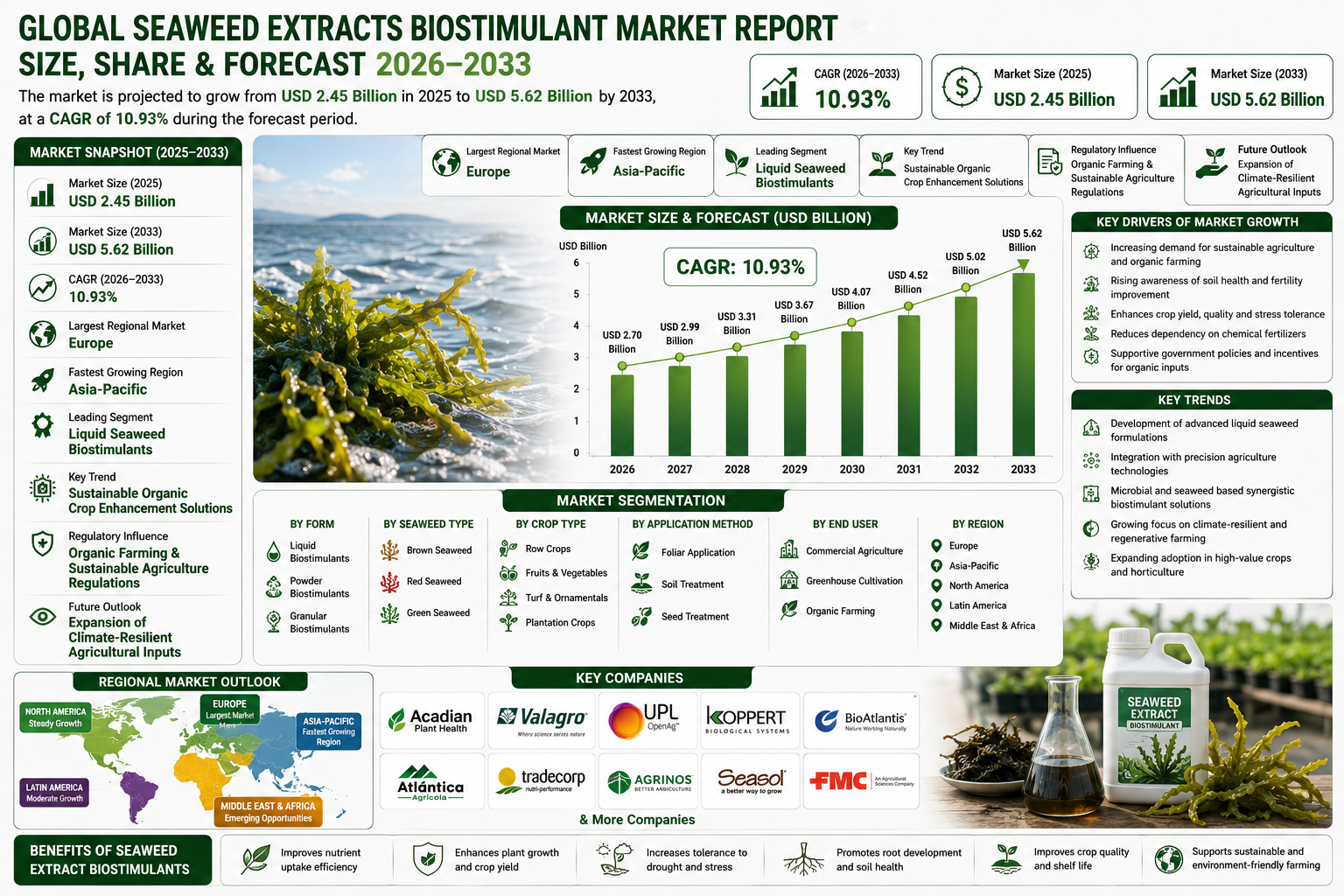
Market Size & Forecast
The Global Seaweed Extracts Biostimulant Market is projected to experience strong growth during the forecast period from 2026 to 2033. The market was valued at USD 2.45 billion in 2025 and is expected to reach approximately USD 5.62 billion by 2033, registering a CAGR of 10.93%. The market growth is primarily driven by the increasing global demand for sustainable agricultural practices, rising adoption of organic farming techniques, and growing concerns regarding soil health degradation. Seaweed extract biostimulants are increasingly being utilized to improve crop productivity, nutrient uptake efficiency, drought resistance, and plant stress tolerance without negatively impacting environmental sustainability. The rising pressure on agricultural systems to improve crop yields under changing climatic conditions is also accelerating the adoption of biostimulants globally. Additionally, the reduction in synthetic fertilizer dependency and the increasing demand for residue-free agricultural produce are supporting long-term market expansion. Governments and agricultural regulatory agencies worldwide are further encouraging sustainable crop management solutions, creating favorable growth opportunities for seaweed-based agricultural inputs.Global Seaweed Extracts Biostimulant Market Overview
Seaweed extract biostimulants are naturally derived agricultural products formulated using marine algae extracts that improve plant growth, crop performance, nutrient absorption, and resistance to environmental stress conditions. These products are increasingly used in horticulture, field crops, fruits, vegetables, turf management, and greenhouse cultivation. The market is undergoing rapid transformation due to the growing convergence of sustainable agriculture, regenerative farming, and precision crop management technologies. Seaweed extracts contain essential micronutrients, phytohormones, amino acids, vitamins, and bioactive compounds that support plant metabolism and crop resilience. Manufacturers are increasingly investing in advanced extraction technologies, formulation optimization, and microbial integration systems to improve the efficacy and consistency of seaweed-based products. Furthermore, innovations in liquid formulations, nano-biostimulants, and controlled-release agricultural inputs are enhancing product performance. The market also benefits from increasing consumer awareness regarding organic food production and environmentally responsible farming methods.Structural Drivers of Market Growth
1. Innovation and Commercialization Acceleration
Advancements in marine biotechnology, extraction processes, and bioactive compound stabilization are accelerating the commercialization of advanced seaweed biostimulant solutions. Manufacturers are developing highly concentrated and crop-specific formulations that improve nutrient efficiency and abiotic stress tolerance. Research into brown algae, red algae, and green algae-derived bioactive compounds is further expanding the commercial potential of seaweed-based agricultural products.Market Implications
Companies investing in biotechnology-driven formulation innovation and crop-specific biostimulant solutions are expected to strengthen market competitiveness.2. Compliance and Risk Repricing
Global regulations promoting sustainable farming and restrictions on excessive chemical fertilizer usage are increasing demand for biological agricultural inputs. Governments and agricultural authorities are encouraging environmentally safe crop enhancement products to reduce soil degradation and water contamination. The growing implementation of organic farming standards and sustainable certification systems is further supporting market expansion.Market Implications
Manufacturers aligned with organic certification requirements and sustainable agriculture regulations are likely to benefit from favorable market positioning.3. Competitive and Value-Chain Reconfiguration
The market is witnessing increasing strategic partnerships between marine biotechnology firms, agricultural input manufacturers, and precision farming technology providers. Companies are focusing on strengthening raw material sourcing networks and expanding production capabilities for marine algae processing. The growing importance of regenerative agriculture is also reshaping supply chain dynamics and product development priorities.Market Implications
Companies focusing on vertically integrated marine biomass sourcing and advanced extraction infrastructure are expected to gain stronger market advantages.4. Capital and Capacity Scaling
Investments in algae harvesting infrastructure, bioprocessing facilities, and sustainable marine cultivation technologies are significantly improving production scalability. Companies are expanding manufacturing capacities to meet rising global demand for sustainable agricultural inputs. The increasing adoption of biostimulants in commercial agriculture and greenhouse farming is further accelerating capital deployment across the industry.Market Implications
Manufacturers capable of scaling production while maintaining sustainable marine sourcing practices are expected to capture substantial growth opportunities.Market Segmentation Analysis
By Form
1. Liquid Biostimulants
Liquid formulations dominate the market due to ease of application, rapid absorption, and compatibility with foliar spraying systems.2. Powder Biostimulants
Powder-based seaweed extracts are increasingly utilized for long-term storage stability and large-scale agricultural applications.3. Granular Biostimulants
Granular formulations are gaining popularity in soil conditioning and controlled nutrient-release applications.By Seaweed Type
1. Brown Seaweed
Brown algae-based biostimulants dominate the market due to high concentrations of alginates, laminarin, and plant growth hormones.2. Red Seaweed
Red seaweed extracts are increasingly utilized for specialty crop applications and stress management formulations.3. Green Seaweed
Green algae products are gaining traction for nutrient enhancement and soil microbial stimulation.By Crop Type
1. Row Crops
Large-scale cultivation of cereals, grains, and oilseeds represents a major application area for biostimulants.2. Fruits & Vegetables
High-value horticultural crops are increasingly utilizing seaweed extracts to improve yield quality and shelf life.3. Turf & Ornamentals
Landscape management and ornamental horticulture applications continue supporting market demand.4. Plantation Crops
Plantation agriculture, including tea, coffee, and sugarcane cultivation, is increasingly adopting biostimulant technologies.By Application Method
1. Foliar Application
Foliar spraying remains the most widely adopted application method due to fast nutrient uptake and stress management benefits.2. Soil Treatment
Soil-based applications are gaining traction for root stimulation and microbial activity enhancement.3. Seed Treatment
Seed coating and priming applications are expanding due to improved germination and early-stage crop development benefits.By End User
1. Commercial Agriculture
Commercial farming operations represent the largest consumer segment due to increasing sustainable agriculture adoption.2. Greenhouse Cultivation
Controlled environment agriculture is increasingly utilizing biostimulants for crop optimization.3. Organic Farming
Organic farming continues to be a major growth driver due to rising demand for chemical-free agricultural inputs.Regional Market Dynamics
Europe
Europe dominates the global market due to strong regulatory support for sustainable agriculture, extensive organic farming adoption, and strict restrictions on synthetic agrochemical usage.Asia-Pacific
Asia-Pacific represents the fastest-growing region due to increasing agricultural modernization, rising food demand, and growing awareness regarding soil health management.North America
North America continues experiencing strong growth driven by precision agriculture adoption and increasing demand for sustainable crop enhancement solutions.Latin America
Latin America is witnessing rising adoption due to expanding commercial agriculture and export-oriented crop production activities.Middle East & Africa
The Middle East & Africa region is gradually adopting seaweed biostimulants to improve crop resilience under water-scarce and arid climatic conditions.Competitive Landscape
The Global Seaweed Extracts Biostimulant Market is moderately fragmented with strong competition among agricultural biotechnology firms and specialty crop input manufacturers. Key companies operating in the market include:- Acadian Plant Health
- Valagro
- UPL Limited
- Koppert Biological Systems
- BioAtlantis
- Atl??ntica Agr??cola
- Tradecorp
- Agrinos
- Seasol International
- FMC Corporation
Strategic Outlook
The future of the global seaweed extracts biostimulant market will be shaped by increasing adoption of regenerative agriculture, precision farming technologies, climate-smart agriculture practices, and biological crop enhancement systems. The convergence of biotechnology, microbial science, and sustainable crop management will continue driving innovation across the industry. Manufacturers are expected to increasingly focus on AI-assisted crop nutrition platforms, precision biostimulant application systems, and advanced marine bioactive extraction technologies. Growing pressure on global agriculture to improve productivity under climate stress conditions is expected to generate substantial long-term demand for natural crop enhancement solutions.Final Market Perspective
The Global Seaweed Extracts Biostimulant Market is entering a high-growth phase driven by sustainable agriculture transformation, increasing organic farming adoption, and rising global food security concerns. Seaweed-based biostimulants are becoming essential agricultural inputs due to their ability to improve crop productivity while supporting environmental sustainability. Manufacturers capable of delivering scientifically validated, crop-specific, and environmentally sustainable biostimulant solutions will be best positioned to capitalize on long-term growth opportunities. The integration of biotechnology, marine science, and regenerative farming practices is expected to redefine the future landscape of sustainable agriculture globally.Table of Contents
Table of Contents
1. Executive Summary
1.1 Market Forecast Snapshot (2026???2033)
1.2 Global Seaweed Extracts Biostimulant Market Size & CAGR Analysis
1.3 Largest & Fastest-Growing Segments
1.4 Region-Level Leadership & Growth Trends
1.5 Key Market Drivers
1.6 Competitive Landscape Overview
1.7 Strategic Outlook Through 2033
2. Introduction & Market Overview
2.1 Definition of the Seaweed Extracts Biostimulant Market
2.2 Market Size & Forecast (2026???2033)
2.3 Industry Evolution & Market Development
2.4 Supply Chain & Distribution Infrastructure
2.5 Impact of Sustainable Agriculture & Organic Farming Trends
2.6 Regulatory & Compliance Landscape
2.7 Technology & Innovation Landscape in Marine Biotechnology & Crop Enhancement
3. Research Methodology
3.1 Primary Research
3.2 Secondary Research
3.3 Market Size Estimation Model
3.4 Forecast Assumptions (2026???2033)
3.5 Data Validation & Triangulation
4. Market Dynamics
4.1 Drivers
4.1.1 Rising Demand for Sustainable Agriculture Practices
4.1.2 Increasing Adoption of Organic Farming
4.1.3 Growing Need for Climate-Resilient Crop Solutions
4.1.4 Regulatory Support for Biological Agricultural Inputs
4.1.5 Advancements in Marine Biotechnology & Precision Agriculture
4.2 Restraints
4.2.1 High Production & Extraction Costs
4.2.2 Limited Standardization Across Biostimulant Products
4.2.3 Regulatory Complexity Across International Markets
4.2.4 Limited Awareness in Developing Agricultural Regions
4.3 Opportunities
4.3.1 Expansion of Regenerative Agriculture
4.3.2 Growth of Precision Farming Technologies
4.3.3 Increasing Adoption in Greenhouse & Controlled Environment Agriculture
4.3.4 Development of Crop-Specific Biostimulant Formulations
4.4 Challenges
4.4.1 Raw Material Supply & Marine Biomass Sustainability
4.4.2 Product Performance Variability
4.4.3 Distribution Network Fragmentation
4.4.4 Competitive Pressure from Alternative Biological Inputs
5. Global Seaweed Extracts Biostimulant Market Analysis (USD Billion), 2026???2033
5.1 Market Size Overview
5.2 CAGR Analysis
5.3 Regional Revenue Distribution
5.4 Segment Revenue Analysis
5.5 Distribution Channel Analysis
5.6 Agricultural Productivity & Sustainability Impact Analysis
6. Market Segmentation (USD Billion), 2026???2033
6.1 By Form
6.1.1 Liquid Biostimulants
6.1.1.1 Foliar Liquid Concentrates
6.1.1.1.1 High-Concentration Seaweed Formulations
6.1.1.1.1.1 Organic Foliar Nutrient Enhancers
6.1.1.1.1.2 Stress Resistance Liquid Biostimulants
6.1.2 Powder Biostimulants
6.1.2.1 Water-Soluble Powder Formulations
6.1.2.1.1 Crop Nutrition Powder Extracts
6.1.2.1.1.1 High-Stability Dry Seaweed Formulations
6.1.2.1.1.2 Controlled Nutrient Release Powders
6.1.3 Granular Biostimulants
6.1.3.1 Soil Conditioning Granules
6.1.3.1.1 Slow-Release Granular Biostimulants
6.1.3.1.1.1 Root Enhancement Granules
6.1.3.1.1.2 Soil Microbial Activation Granules
6.2 By Seaweed Type
6.2.1 Brown Seaweed
6.2.1.1 Kelp-Based Biostimulants
6.2.1.1.1 Ascophyllum Nodosum Extracts
6.2.1.1.1.1 Alginic Acid-Enriched Formulations
6.2.1.1.1.2 Laminarin-Based Crop Enhancers
6.2.2 Red Seaweed
6.2.2.1 Carrageenan-Based Biostimulants
6.2.2.1.1 Specialty Crop Seaweed Extracts
6.2.2.1.1.1 Stress Tolerance Red Algae Solutions
6.2.2.1.1.2 Premium Horticulture Enhancers
6.2.3 Green Seaweed
6.2.3.1 Chlorophyll-Rich Extract Formulations
6.2.3.1.1 Soil Microbial Stimulation Products
6.2.3.1.1.1 Green Algae Nutrient Enhancers
6.2.3.1.1.2 Bioactive Crop Growth Solutions
6.3 By Crop Type
6.3.1 Row Crops
6.3.1.1 Cereal Crop Biostimulants
6.3.1.1.1 Grain Yield Enhancement Solutions
6.3.1.1.1.1 Corn Productivity Enhancers
6.3.1.1.1.2 Wheat Stress Resistance Solutions
6.3.2 Fruits & Vegetables
6.3.2.1 Horticulture Crop Enhancers
6.3.2.1.1 Fruit Quality Improvement Solutions
6.3.2.1.1.1 Shelf-Life Extension Biostimulants
6.3.2.1.1.2 Yield Optimization Formulations
6.3.3 Turf & Ornamentals
6.3.3.1 Landscape Management Solutions
6.3.3.1.1 Ornamental Plant Biostimulants
6.3.3.1.1.1 Turf Resilience Enhancement Products
6.3.3.1.1.2 Decorative Plant Growth Solutions
6.3.4 Plantation Crops
6.3.4.1 Commercial Plantation Crop Solutions
6.3.4.1.1 Tea & Coffee Biostimulants
6.3.4.1.1.1 Sugarcane Productivity Enhancers
6.3.4.1.1.2 Plantation Stress Resistance Products
6.4 By Application Method
6.4.1 Foliar Application
6.4.1.1 Spray-Based Crop Enhancement
6.4.1.1.1 Rapid Nutrient Uptake Systems
6.4.1.1.1.1 Canopy Absorption Technologies
6.4.1.1.1.2 Foliar Stress Management Solutions
6.4.2 Soil Treatment
6.4.2.1 Soil Fertility Enhancement
6.4.2.1.1 Root Zone Biostimulant Systems
6.4.2.1.1.1 Soil Microbial Activation Products
6.4.2.1.1.2 Rhizosphere Development Enhancers
6.4.3 Seed Treatment
6.4.3.1 Seed Priming Technologies
6.4.3.1.1 Germination Enhancement Systems
6.4.3.1.1.1 Early Crop Development Stimulators
6.4.3.1.1.2 Seedling Stress Resistance Products
6.5 By End User
6.5.1 Commercial Agriculture
6.5.1.1 Large-Scale Farming Operations
6.5.1.1.1 Industrial Crop Productivity Systems
6.5.1.1.1.1 Precision Agriculture Biostimulants
6.5.1.1.1.2 Climate-Smart Farming Inputs
6.5.2 Greenhouse Cultivation
6.5.2.1 Controlled Environment Agriculture
6.5.2.1.1 Hydroponic Crop Enhancement Solutions
6.5.2.1.1.1 Greenhouse Yield Optimization Products
6.5.2.1.1.2 Protected Cultivation Biostimulants
6.5.3 Organic Farming
6.5.3.1 Certified Organic Crop Inputs
6.5.3.1.1 Sustainable Farming Biostimulants
6.5.3.1.1.1 Residue-Free Crop Enhancement Products
6.5.3.1.1.2 Regenerative Agriculture Solutions
7. Market Segmentation by Geography
7.1 North America
7.2 Europe
7.3 Asia-Pacific
7.4 Latin America
7.5 Middle East & Africa
8. Competitive Landscape
8.1 Market Share Analysis
8.2 Product Portfolio Benchmarking
8.3 Product Positioning Mapping
8.4 Supply Chain & Distribution Partnerships
8.5 Competitive Intensity & Market Fragmentation
9. Company Profiles
9.1 Acadian Plant Health
9.2 Valagro
9.3 UPL Limited
9.4 Koppert Biological Systems
9.5 BioAtlantis
9.6 Atl??ntica Agr??cola
9.7 Tradecorp
9.8 Agrinos
9.9 Seasol International
9.10 FMC Corporation
10. Strategic Intelligence & Pheonix AI Insights
10.1 Pheonix Demand Forecast Engine
10.2 Agricultural Supply Chain & Infrastructure Analyzer
10.3 Marine Biotechnology & Innovation Tracker
10.4 Crop Productivity & Product Development Insights
10.5 Automated Porter???s Five Forces Analysis
11. Future Outlook & Strategic Recommendations
11.1 Expansion of Regenerative Agriculture Ecosystems
11.2 Biotechnology-Driven Product Innovation Strategies
11.3 Sustainable Marine Biomass Sourcing Strategies
11.4 Regional Expansion & Market Penetration Strategies
11.5 Long-Term Market Outlook (2033+)
12. Appendix
13. About Pheonix Research
14. Disclaimer
Competitive Landscape
Global Seaweed Extracts Biostimulant Market Competitive Intensity & Market Structure Overview
The Global Seaweed Extracts Biostimulant Market is characterized by a moderately fragmented structure with moderate-to-high competitive intensity, driven by increasing demand for sustainable agriculture solutions, organic farming inputs, and climate-resilient crop enhancement technologies. The market includes agricultural biotechnology firms, specialty crop nutrition companies, biological input manufacturers, and marine biotechnology providers competing across commercial agriculture, horticulture, greenhouse cultivation, and regenerative farming applications.
Leading companies such as Acadian Plant Health, Valagro, UPL Limited, Koppert Biological Systems, and FMC Corporation are shaping market dynamics through advanced marine biotechnology, crop-specific formulations, microbial integration systems, and precision agriculture solutions.
Competitive intensity is primarily driven by formulation innovation, bioactive extraction technologies, organic certification compliance, crop performance efficacy, raw material sourcing capabilities, and sustainable agriculture integration. The increasing transition toward regenerative farming and reduction of synthetic fertilizer dependency is further intensifying market competition globally.
Global Seaweed Extracts Biostimulant Market Competitive Intensity & Market Structure Current Scenario
Leading Company Profiles
- Acadian Plant Health: Global leader in seaweed-based crop enhancement technologies and marine bioactive agricultural solutions.
- Valagro: Major provider of biostimulants, crop nutrition systems, and sustainable agricultural technologies.
- UPL Limited: Agricultural solutions provider integrating biological crop enhancement and sustainable farming inputs.
- Koppert Biological Systems: Biological agriculture company focused on integrated crop health and sustainable cultivation systems.
- BioAtlantis: Developer of seaweed-derived stress management and crop resilience biostimulant solutions.
- Atl??ntica Agr??cola: Manufacturer of specialty agricultural inputs and sustainable crop nutrition products.
- Tradecorp: Provider of precision agriculture solutions and advanced crop enhancement formulations.
- Agrinos: Agricultural biotechnology company specializing in biological crop enhancement and soil health systems.
- Seasol International: Producer of seaweed-based plant nutrition and organic crop enhancement products.
- FMC Corporation: Global agricultural sciences company expanding into biological crop inputs and sustainable agriculture technologies.
Key Competitive Intensity & Market Structure Signals in Global Seaweed Extracts Biostimulant Market
Several signals define the competitive dynamics of the market:
- Rapid expansion of organic farming, regenerative agriculture, and sustainable crop management systems is accelerating demand for biological agricultural inputs globally.
- Increasing restrictions on synthetic agrochemicals and fertilizer overuse are strengthening the adoption of environmentally sustainable biostimulant products.
- Competitive differentiation is increasingly based on crop-specific formulations, bioactive compound efficacy, extraction technologies, and climate resilience performance.
- Advancements in marine biotechnology, algae extraction systems, and microbial integration technologies are intensifying product innovation across the market.
- Strategic partnerships between biotechnology firms, agricultural input companies, and precision farming providers are reshaping competitive positioning and value-chain integration.
- Rising demand for drought-resistant, stress-tolerant, and nutrient-efficient crops is increasing adoption of seaweed-based crop enhancement solutions.
- Sustainable marine biomass sourcing and vertically integrated algae processing capabilities are becoming major long-term competitive advantages.
Strategic Implications of Competitive Intensity & Market Structure in Global Seaweed Extracts Biostimulant Market
The competitive structure creates several strategic implications:
- Continuous investment in marine biotechnology, extraction innovation, and crop-specific biostimulant formulations is essential for maintaining market competitiveness.
- Companies capable of delivering scientifically validated and performance-oriented biological crop enhancement solutions will gain stronger adoption across commercial agriculture markets.
- Sustainable marine biomass sourcing and environmentally responsible harvesting practices are becoming increasingly important for long-term regulatory alignment and brand positioning.
- Integration of biostimulants with precision farming technologies, AI-assisted crop analytics, and digital agriculture ecosystems will strengthen competitive differentiation.
- Strategic collaborations with organic farming networks, greenhouse operators, and agricultural distributors are critical for expanding global market penetration.
- Companies focusing on climate-smart agriculture, drought management, and soil regeneration technologies are expected to strengthen long-term growth opportunities.
- Expansion of controlled-environment agriculture and greenhouse cultivation will continue driving demand for advanced seaweed-based crop nutrition systems.
Global Seaweed Extracts Biostimulant Market Competitive Intensity & Market Structure Forward Outlook
Looking ahead, the Global Seaweed Extracts Biostimulant Market is expected to maintain its moderately fragmented structure with sustained moderate-to-high competitive intensity, driven by increasing sustainability requirements and global agricultural transformation.
- Climate-resilient crop enhancement solutions and regenerative agriculture systems will continue driving long-term market expansion globally.
- AI-assisted precision agriculture and digital crop management platforms will increasingly integrate seaweed biostimulant technologies into broader smart farming ecosystems.
- Innovations in nano-biostimulants, microbial integration systems, and controlled-release agricultural formulations will intensify technology competition.
- Regulatory support for sustainable agriculture and organic food production will continue strengthening market demand across developed and emerging economies.
- Strategic acquisitions, biotechnology partnerships, and agricultural input consolidation are expected to reshape competitive dynamics globally.
- Sustainable marine cultivation, algae farming infrastructure, and bioprocessing scalability will become increasingly important for supply chain stability and production efficiency.
- The convergence of marine biotechnology, precision farming, and biological crop nutrition systems will fundamentally redefine future agricultural input markets.
In conclusion, the Global Seaweed Extracts Biostimulant Market represents a high-growth, sustainability-driven, and biotechnology-focused competitive landscape, where scientific validation, crop efficacy, sustainable sourcing, and precision agriculture integration will determine long-term market leadership.
Value Chain
Global Seaweed Extracts Biostimulant Market Value Chain & Supply Chain Evolution Overview
The Global Seaweed Extracts Biostimulant Market is undergoing a major transformation driven by increasing adoption of sustainable agriculture practices, rising organic farming demand, and the global transition toward climate-resilient crop management systems. The market???s value chain is characterized by a hybrid operational model supported by integrated agricultural input distribution networks that connect marine biomass sourcing, biotechnology processing, formulation development, and commercial agricultural deployment.
A defining characteristic of this value chain is its strong dependence on sustainable marine biomass sourcing and biotechnology-driven processing capabilities. Seaweed extracts require specialized harvesting, extraction, stabilization, and formulation systems to preserve bioactive compounds essential for crop enhancement and stress resistance. As a result, supply chain efficiency, marine resource sustainability, and formulation consistency are becoming critical competitive differentiators.
Supply chain complexity is moderate-to-high due to dependence on marine raw materials, seasonal harvesting cycles, biological processing requirements, and regulatory compliance standards related to sustainable agriculture and organic certifications. Additionally, increasing demand for crop-specific formulations, precision agriculture compatibility, and microbial integration technologies is adding further operational complexity across production and distribution networks.
Manufacturers are increasingly investing in vertically integrated algae sourcing systems, advanced extraction technologies, digital agriculture partnerships, and regional production expansion strategies to improve scalability, product consistency, and long-term supply security. The market is evolving into a biotechnology-driven and sustainability-focused agricultural ecosystem aligned with regenerative farming and environmental stewardship goals.
Global Seaweed Extracts Biostimulant Market Value Chain & Supply Chain Evolution Current Scenario
Market-Specific Value Chain
- Marine Biomass Sourcing: Seaweed cultivation, wild algae harvesting, marine biomass collection, and sustainable algae resource management.
- Raw Material Processing: Cleaning, drying, stabilization, extraction, and concentration of bioactive marine compounds.
- Biotechnology & Formulation Development: Development of liquid, powder, granular, microbial-integrated, and crop-specific biostimulant formulations.
- Manufacturing & Quality Control: Industrial-scale blending, formulation standardization, packaging, certification, and regulatory compliance testing.
- Distribution & Agricultural Supply Networks: Agrochemical distributors, agricultural cooperatives, precision farming partners, and regional supply chain channels.
- Farm-Level Application & Crop Integration: Commercial agriculture, greenhouse farming, horticulture, plantation crops, and organic farming applications.
Company-to-Stage Mapping
- Marine Biomass Sourcing: Marine algae cultivators, coastal harvesting operators, and sustainable aquaculture suppliers.
- Raw Material Processing: Seaweed extraction facilities and marine biotechnology processing companies.
- Biotechnology & Formulation Development: Acadian Plant Health, Valagro, and BioAtlantis.
- Manufacturing & Quality Control: UPL Limited, FMC Corporation, and Tradecorp.
- Distribution & Agricultural Supply Networks: Agricultural distributors, agri-retailers, cooperatives, and precision agriculture solution providers.
- Farm-Level Application & Crop Integration: Commercial farms, greenhouse operators, organic farming enterprises, and plantation agriculture companies.
Key Value Chain & Supply Chain Evolution Signals in Global Seaweed Extracts Biostimulant Market
- Growing Dependence on Sustainable Marine Biomass
Sustainable algae harvesting and marine cultivation practices are becoming critical for long-term supply stability and environmental compliance. - Expansion of Biotechnology-Driven Formulations
Advanced extraction technologies and crop-specific formulations are improving product efficiency and differentiation. - Increasing Regulatory Influence on Sustainable Agriculture
Organic farming standards and restrictions on synthetic agrochemicals are accelerating adoption of biological crop enhancement products. - Integration with Precision Agriculture Systems
Biostimulants are increasingly integrated with digital farming, AI-based crop monitoring, and precision nutrient management platforms. - Supply Chain Localization & Capacity Expansion
Manufacturers are expanding regional extraction and processing facilities to improve supply resilience and reduce logistics costs. - Rising Demand for Climate-Resilient Agricultural Inputs
Increasing climate variability and soil degradation are strengthening demand for stress-tolerant crop enhancement solutions. - Shift Toward Controlled Environment Agriculture
Greenhouse cultivation and high-value horticulture are increasing utilization of advanced seaweed biostimulant technologies.
Strategic Implications of Value Chain & Supply Chain Evolution
- Investment in Sustainable Marine Sourcing Infrastructure
Companies must secure reliable algae cultivation and harvesting ecosystems to maintain long-term production scalability. - Strengthening Biotechnology & Extraction Capabilities
Advanced bioactive extraction and formulation technologies are becoming essential for competitive differentiation. - Expansion of Precision Agriculture Partnerships
Collaboration with digital farming platforms and agri-tech providers will strengthen product adoption and application efficiency. - Regulatory Alignment & Organic Certification Compliance
Compliance with sustainable agriculture standards and organic certifications will remain critical for global market expansion. - Localization of Manufacturing & Distribution Networks
Regional production hubs and localized agricultural supply chains will improve operational resilience and responsiveness. - Integration of Climate-Smart Agriculture Solutions
Crop resilience technologies and stress-management formulations will become increasingly important growth drivers. - Focus on High-Value Crop Applications
Companies targeting horticulture, greenhouse farming, and specialty crops are expected to achieve stronger profitability and market positioning.
Global Seaweed Extracts Biostimulant Market Value Chain & Supply Chain Evolution Forward Outlook
Looking ahead, the Global Seaweed Extracts Biostimulant Market is expected to evolve into a highly integrated, biotechnology-driven, and sustainability-focused agricultural ecosystem.
Key future developments include:
- Expansion of vertically integrated marine algae cultivation systems.
- Increasing adoption of AI-assisted precision biostimulant application technologies.
- Growth of microbial-enhanced and nano-biostimulant formulations.
- Development of climate-resilient and crop-specific biological solutions.
- Expansion of regenerative agriculture and sustainable farming ecosystems.
- Integration of digital agriculture platforms with biostimulant management systems.
- Rising investment in controlled-environment and greenhouse agriculture applications.
In conclusion, the Global Seaweed Extracts Biostimulant Market represents a rapidly evolving and innovation-driven agricultural ecosystem where marine biotechnology, sustainable sourcing, precision farming integration, and climate-smart crop management will determine long-term competitive leadership and operational scalability.
Investment Activity
Global Seaweed Extracts Biostimulant Market Investment & Funding Dynamics Overview
The investment and funding landscape within the Global Seaweed Extracts Biostimulant Market is characterized by steadily rising investment activity and moderate capital intensity, driven by increasing global adoption of sustainable agriculture practices, regenerative farming systems, and organic crop enhancement technologies. Structural drivers such as rising soil degradation concerns, growing demand for residue-free food production, climate-resilient agriculture initiatives, and tightening restrictions on synthetic agrochemicals are attracting strong long-term capital inflows into the market. Investments are primarily focused on marine biotechnology, advanced extraction technologies, sustainable algae cultivation infrastructure, and precision biostimulant formulation systems.
A major factor shaping investment dynamics is the increasing scientific and commercial importance of bio-based agricultural inputs. Seaweed extract biostimulants are increasingly integrated into precision agriculture ecosystems due to their ability to improve nutrient uptake, drought tolerance, crop resilience, and soil microbial activity. This evolution is encouraging substantial investments in R&D, marine biomass processing technologies, bioactive compound stabilization, and crop-specific formulation development.
Additionally, regulatory support for sustainable agriculture and organic farming standards is driving investments into environmentally compliant agricultural inputs. Governments, agricultural technology firms, and private investors are increasingly funding biological crop enhancement technologies aimed at improving long-term agricultural productivity while reducing environmental impact.
Global Seaweed Extracts Biostimulant Market Investment & Funding Dynamics Current Scenario
In the current scenario, the Global Seaweed Extracts Biostimulant Market is witnessing strong and strategically targeted investment activity supported by increasing adoption of sustainable crop management practices globally. The market???s moderate capital intensity reflects growing financial commitments toward algae harvesting infrastructure, bioprocessing facilities, formulation innovation, and precision agriculture integration systems.
Investment activity is particularly concentrated in advanced extraction technologies, liquid biostimulant formulations, nano-biostimulants, microbial integration platforms, and climate-resilient crop enhancement solutions. Companies are allocating substantial capital toward improving product consistency, enhancing bioactive concentration efficiency, and developing crop-specific solutions optimized for varying climatic and soil conditions.
The market is also experiencing increasing merger and acquisition (M&A) activity as agricultural biotechnology firms, specialty crop input manufacturers, and sustainable agriculture companies seek to strengthen product portfolios, expand marine biotechnology capabilities, and enhance global distribution networks. Strategic collaborations between marine science companies, agricultural research institutions, and precision farming technology providers are increasingly reshaping the competitive ecosystem.
Furthermore, investments from venture capital firms, sustainability-focused funds, and agritech investors are accelerating commercialization of biological agricultural inputs and expanding global production scalability for seaweed-derived biostimulants.
Key Investment & Funding Dynamics Signals in Global Seaweed Extracts Biostimulant Market
The investment and funding dynamics in the Global Seaweed Extracts Biostimulant Market are shaped by several key signals reflecting ongoing transformation within sustainable agriculture systems. One of the primary signals is the rapid expansion of regenerative agriculture and organic farming practices globally, which is significantly increasing demand for biological crop enhancement products.
Another major signal is the growing investment in marine biotechnology and advanced extraction technologies. Manufacturers are increasingly focusing on improving bioactive compound stability, nutrient efficiency, and stress-resistance performance through scientific formulation optimization.
The rising impact of climate change on agricultural productivity is also strengthening long-term investment confidence within the market. Increasing drought conditions, soil degradation, and water scarcity are accelerating adoption of biostimulants capable of improving crop resilience and nutrient utilization efficiency.
Additionally, tightening global regulations on synthetic fertilizers and agrochemicals are creating favorable investment conditions for biological agricultural solutions. Governments and regulatory agencies are increasingly supporting sustainable crop management initiatives and environmentally safe agricultural inputs.
The emergence of precision agriculture technologies, AI-assisted crop nutrition systems, and smart farming platforms is further driving investments in integrated crop management ecosystems utilizing seaweed-based biostimulants.
Strategic Implications of Investment & Funding Dynamics in Global Seaweed Extracts Biostimulant Market
The current investment dynamics have significant strategic implications for companies operating within the Global Seaweed Extracts Biostimulant Market. One of the primary implications is the increasing importance of scientific validation, biotechnology integration, and crop-specific product innovation to maintain competitive differentiation.
Moderate capital intensity requires companies to strategically allocate investments toward sustainable algae sourcing infrastructure, advanced bioprocessing systems, formulation R&D, and scalable manufacturing capabilities. Companies capable of delivering scientifically validated, highly effective, and environmentally sustainable crop enhancement solutions will strengthen long-term market positioning.
The increasing role of M&A activity highlights the importance of vertical integration and technological expansion. Companies are leveraging acquisitions and partnerships to secure marine biomass supply chains, improve extraction technologies, and strengthen precision agriculture integration capabilities.
Furthermore, the growing convergence of biological crop enhancement, digital agriculture platforms, and climate-smart farming systems is reshaping strategic priorities across the industry. Investments in AI-driven crop analytics, precision application technologies, and integrated soil health management systems are becoming increasingly critical for long-term competitiveness.
Global Seaweed Extracts Biostimulant Market Investment & Funding Dynamics Forward Outlook
Looking ahead, the investment and funding dynamics in the Global Seaweed Extracts Biostimulant Market are expected to remain highly positive, driven by accelerating adoption of regenerative agriculture, climate-smart farming practices, and sustainable food production systems globally.
Future investment activity will increasingly focus on advanced marine bioactive extraction technologies, precision biostimulant formulations, microbial-biostimulant integration systems, and AI-assisted crop nutrition platforms. These innovations are expected to improve crop productivity, nutrient efficiency, and climate resilience while reducing environmental impact.
The continued expansion of organic farming, greenhouse cultivation, and sustainable commercial agriculture is expected to attract substantial long-term investments into scalable seaweed processing infrastructure and precision crop enhancement technologies.
Additionally, increasing government support for sustainable agriculture initiatives, carbon-neutral farming practices, and environmental compliance programs will continue strengthening global market expansion opportunities.
In summary, the Global Seaweed Extracts Biostimulant Market is positioned for sustained long-term investment growth supported by increasing demand for sustainable agriculture solutions, biological crop enhancement technologies, and climate-resilient farming systems. Companies that strategically invest in marine biotechnology, precision agriculture integration, sustainable sourcing infrastructure, and advanced formulation technologies will be best positioned to capitalize on future market opportunities.
Technology & Innovation
Global Seaweed Extracts Biostimulant Market Technology & Innovation Landscape Overview
The Global Seaweed Extracts Biostimulant Market is undergoing rapid technological transformation driven by advancements in marine biotechnology, bioactive extraction technologies, precision agriculture systems, and sustainable crop enhancement solutions. The market is characterized by a high innovation intensity level, supported by increasing global demand for regenerative agriculture, climate-resilient farming inputs, and environmentally sustainable crop productivity solutions.
At the core of this transformation are advanced seaweed extraction technologies that improve the concentration, stability, and bioavailability of plant-growth-promoting compounds. Manufacturers are increasingly utilizing optimized cold extraction, enzymatic hydrolysis, and bioactive stabilization processes to preserve phytohormones, amino acids, alginates, laminarins, vitamins, and micronutrients present in marine algae.
Technological innovation is also accelerating through the development of crop-specific and stress-targeted biostimulant formulations. Companies are increasingly integrating marine bioactives with microbial inoculants, precision nutrient systems, and controlled-release technologies to enhance nutrient uptake efficiency, drought tolerance, root stimulation, and crop resilience under abiotic stress conditions.
The market is further benefiting from advancements in nano-biostimulants, liquid foliar delivery systems, and precision application technologies. AI-assisted crop nutrition platforms, satellite-guided precision farming systems, and sensor-based agricultural analytics are enabling more accurate biostimulant deployment across large-scale farming operations.
Additionally, biotechnology-driven research into brown algae, red algae, and green algae bioactive compounds is significantly expanding commercial application opportunities across horticulture, row crops, greenhouse farming, and regenerative agriculture systems.
The convergence of sustainable agriculture, marine science, microbial biotechnology, and digital farming ecosystems is fundamentally reshaping the future innovation landscape of seaweed-based agricultural inputs globally.
Global Seaweed Extracts Biostimulant Market Technology & Innovation Landscape Current Scenario
Currently, the Global Seaweed Extracts Biostimulant Market demonstrates moderate-to-high patent activity and accelerating commercialization of marine bioactive technologies, crop-specific biostimulant formulations, precision nutrient systems, and sustainable agricultural solutions.
1. Advanced Marine Bioactive Extraction Technologies
Manufacturers are increasingly utilizing optimized extraction methods to improve the stability and efficacy of seaweed-derived phytohormones and bioactive compounds.
2. Crop-Specific Biostimulant Formulations
Companies are developing targeted formulations designed to improve nutrient uptake, stress resistance, root development, and crop productivity across specific crop categories.
3. Precision Agriculture & Digital Farming Integration
AI-assisted crop nutrition systems, sensor-based analytics, and precision application technologies are improving biostimulant deployment efficiency.
4. Nano-Biostimulants & Controlled-Release Technologies
Nano-formulations and advanced delivery systems are enhancing nutrient absorption, bioavailability, and long-term crop performance.
5. Microbial & Biological Synergy Platforms
Biostimulants integrated with beneficial microbes and soil-enhancing biological systems are gaining increasing commercial traction.
6. Sustainable & Climate-Resilient Agricultural Inputs
Manufacturers are prioritizing environmentally sustainable crop enhancement systems aligned with regenerative farming practices and climate adaptation strategies.
Key Technology & Innovation Landscape Signals in Global Seaweed Extracts Biostimulant Market
Several innovation signals are shaping the technological evolution of the market:
1. Rapid Expansion of Regenerative Agriculture Technologies
Farmers and agricultural systems are increasingly adopting biological crop enhancement solutions to improve soil health and sustainability.
2. Increasing Integration of Marine Biotechnology
Marine algae bioactive research is expanding the development of highly specialized crop nutrition and stress management products.
3. Growth of Precision Crop Nutrition Platforms
AI-driven farming systems and precision application technologies are improving biostimulant usage efficiency and crop optimization.
4. Acceleration of Sustainable Input Innovation
Global restrictions on synthetic fertilizers and agrochemicals are driving innovation in biological agricultural inputs.
5. Rising Demand for Climate-Resilient Crop Solutions
Drought resistance, salinity tolerance, and environmental stress management are becoming major product development priorities.
6. Expansion of Controlled Environment Agriculture
Greenhouse farming and precision horticulture systems are increasingly utilizing advanced seaweed-based formulations.
Strategic Implications of Technology & Innovation Landscape in Global Seaweed Extracts Biostimulant Market
The evolving technology landscape is significantly reshaping competitive dynamics across the seaweed biostimulant industry. Companies are increasingly competing on marine biotechnology capabilities, extraction efficiency, crop-specific formulation expertise, precision agriculture integration, biological efficacy, and sustainability alignment rather than traditional agricultural input manufacturing alone.
Manufacturers investing in vertically integrated marine biomass sourcing, advanced extraction infrastructure, biotechnology research, and AI-assisted crop management platforms are expected to gain stronger long-term competitive advantages. Scientific validation, agronomic performance consistency, and regulatory alignment are becoming critical differentiators within the market.
The growing convergence of biotechnology, microbial science, digital agriculture, and climate-smart farming is accelerating innovation across the value chain. Strategic partnerships between marine biotechnology firms, agricultural input companies, precision farming providers, and greenhouse operators are reshaping commercial ecosystems globally.
Increasing pressure on global agriculture to improve productivity while reducing environmental impact is also strengthening long-term demand for biologically derived crop enhancement systems.
Global Seaweed Extracts Biostimulant Market Technology & Innovation Landscape Forward Outlook
Looking ahead to 2026???2033, the Global Seaweed Extracts Biostimulant Market is expected to evolve toward highly advanced, biotechnology-driven, and precision-integrated agricultural ecosystems.
Future technological developments are likely to include:
1. AI-Assisted Precision Biostimulant Systems
AI-powered crop analytics and precision nutrient management platforms will optimize biostimulant application efficiency and crop response prediction.
2. Advanced Marine Bioactive Discovery
Continued research into algae-derived compounds will expand next-generation crop enhancement technologies and stress-resistance formulations.
3. Nano-Biotechnology & Smart Delivery Systems
Nano-biostimulants and controlled-release technologies will improve nutrient bioavailability and long-term crop performance.
4. Integrated Biological Crop Management Ecosystems
Biostimulants combined with microbial inoculants, soil health platforms, and biological crop protection systems will gain broader adoption.
5. Climate-Smart Agricultural Innovation
Technologies supporting drought tolerance, salinity resistance, and carbon-efficient farming will become increasingly important.
6. Sustainable Marine Cultivation Infrastructure
Expansion of sustainable algae cultivation, marine farming systems, and eco-friendly biomass harvesting technologies will improve supply chain scalability.
7. Digital Agriculture & Sensor-Based Optimization
Integration with satellite imaging, IoT sensors, and automated farming systems will enable highly data-driven crop enhancement strategies.
Overall, companies capable of combining marine biotechnology innovation, sustainable sourcing, precision agriculture integration, biological efficacy, scalable production, AI-assisted farming systems, and climate-resilient crop technologies will be best positioned to lead the future evolution of the Global Seaweed Extracts Biostimulant Market.
Market Risk
Global Seaweed Extracts Biostimulant Market Risk & Disruption Analysis
The Global Seaweed Extracts Biostimulant Market is exposed to a moderate-to-high market disruption environment, driven by evolving agricultural regulations, marine biomass sustainability concerns, climate variability, raw material supply fluctuations, and increasing scientific validation requirements. Although long-term market fundamentals remain strong due to the global transition toward sustainable agriculture and regenerative farming systems, the industry faces structural risks related to regulatory harmonization, marine resource availability, and commercialization scalability.
A major structural characteristic of the market is its dependence on natural marine biomass sourcing and biologically derived formulations. This creates exposure to environmental disruptions, seasonal harvesting variability, ocean ecosystem regulations, and geopolitical risks associated with coastal resource management. In addition, varying global regulatory standards surrounding biostimulant classification, product efficacy claims, and organic certification continue to create operational complexity for manufacturers operating across multiple agricultural markets.
The market is also undergoing rapid competitive transformation due to increasing innovation in microbial biostimulants, precision agriculture technologies, synthetic biology, and alternative biological crop enhancement solutions. As agricultural input markets increasingly prioritize sustainability, carbon reduction, and traceability, companies must continuously invest in scientific validation, sustainable sourcing systems, and regulatory compliance frameworks to maintain market competitiveness.
Global Seaweed Extracts Biostimulant Market Current Risk Environment
The current market environment is characterized by increasing regulatory scrutiny, supply chain sensitivity, and rising sustainability-driven competition. Governments and agricultural regulators are strengthening oversight of biological agricultural inputs to ensure product efficacy, environmental safety, and traceable sourcing practices.
One of the most significant market risks involves fluctuations in seaweed biomass availability caused by climate change, marine ecosystem degradation, seasonal variability, and harvesting restrictions. Increasing environmental protection policies surrounding marine biodiversity conservation may limit raw material access in certain regions, impacting production stability and pricing structures.
Another key disruption factor is the evolving standardization of biostimulant regulations globally. Differences in product registration requirements, efficacy testing protocols, labeling frameworks, and organic certification standards across Europe, North America, Asia-Pacific, and Latin America create compliance complexity and commercialization delays.
The market also faces rising competitive pressure from alternative biological crop enhancement technologies, including microbial inoculants, amino acid biostimulants, humic substances, and precision nutrient delivery systems. Continuous innovation is reshaping farmer adoption patterns and intensifying product differentiation requirements.
Additionally, agricultural market volatility, climate-related crop uncertainties, and fluctuating commodity prices may influence farmer spending behavior and adoption rates for premium biological inputs.
Key Market Risk & Disruption Signals in Global Seaweed Extracts Biostimulant Market
1. Marine Biomass Supply & Sustainability Risks
Dependence on seaweed harvesting and marine cultivation creates exposure to climate variability, environmental regulations, ecosystem preservation policies, and raw material supply disruptions.
2. Regulatory Fragmentation & Compliance Complexity
Varying global standards for biostimulant registration, efficacy validation, labeling, and organic certification increase operational and commercialization risks.
3. Rising Competition from Alternative Biological Inputs
Microbial biostimulants, synthetic biological solutions, and precision nutrient technologies are intensifying competitive pressure across sustainable agriculture markets.
4. Climate Change & Agricultural Volatility
Extreme weather conditions, changing crop patterns, and climate-driven agricultural uncertainties may impact farmer purchasing behavior and crop input demand cycles.
5. Scientific Validation & Product Efficacy Requirements
Increasing regulatory and customer emphasis on scientifically validated crop performance is raising R&D costs and commercialization barriers.
6. Raw Material Cost Volatility
Seaweed biomass pricing fluctuations, transportation costs, and marine cultivation expenses may affect profitability and supply chain stability.
7. Sustainable Sourcing & ESG Pressure
Growing emphasis on environmental sustainability, traceability, and carbon-neutral agricultural inputs is increasing pressure on manufacturers to maintain transparent sourcing practices.
Strategic Implications of Market Risk & Disruption in Global Seaweed Extracts Biostimulant Market
The evolving disruption environment creates both operational risks and strategic growth opportunities for market participants. One of the most critical strategic implications is the increasing need for vertically integrated and environmentally sustainable marine biomass supply chains.
Companies must invest heavily in controlled seaweed cultivation systems, traceable sourcing infrastructure, climate-resilient harvesting models, and environmental compliance programs to mitigate raw material supply risks and strengthen long-term operational stability.
Regulatory diversification and international compliance capabilities are becoming increasingly important as global agricultural authorities continue refining biostimulant standards and product approval pathways. Companies with strong scientific validation frameworks and multi-region regulatory expertise will gain significant commercialization advantages.
The growing convergence of regenerative agriculture, precision farming, microbial biotechnology, and AI-assisted crop management is also reshaping competitive dynamics. Manufacturers capable of integrating seaweed-based biostimulants into broader sustainable farming ecosystems will strengthen long-term market positioning.
Additionally, investment in advanced extraction technologies, crop-specific formulations, microbial-enhanced products, and precision nutrient delivery platforms is expected to become increasingly important for competitive differentiation.
Strategic partnerships with agricultural technology providers, organic farming networks, precision agriculture companies, and climate-smart farming initiatives are also likely to accelerate market penetration and product adoption globally.
Global Seaweed Extracts Biostimulant Market Risk & Disruption Forward Outlook
Looking ahead to 2026???2033, the Global Seaweed Extracts Biostimulant Market is expected to experience a progressively more structured, sustainability-driven, and innovation-intensive risk environment.
1. Expansion of Sustainable Marine Cultivation Systems
Controlled seaweed farming and sustainable marine biomass production systems are expected to become increasingly important for supply chain security and regulatory compliance.
2. Greater Harmonization of Global Biostimulant Regulations
International standardization of efficacy validation, product registration, and organic certification frameworks may improve commercialization efficiency across global markets.
3. Increasing Integration with Precision Agriculture
AI-assisted crop management, digital farming platforms, and precision nutrient optimization systems will increasingly incorporate biological crop enhancement technologies.
4. Rising ESG & Carbon-Neutral Agriculture Pressures
Agricultural supply chains will face growing pressure to demonstrate environmental sustainability, carbon reduction, and transparent sourcing practices.
5. Acceleration of Biological Agriculture Innovation
Competition from microbial biostimulants, synthetic biology, and advanced biological crop technologies will continue reshaping industry innovation cycles.
6. Expansion of Climate-Resilient Farming Programs
Governments and agricultural organizations are expected to strengthen incentives supporting regenerative agriculture, soil restoration, and sustainable crop productivity solutions.
7. Increasing Scientific & Data-Driven Validation Requirements
Product efficacy analytics, digital crop performance monitoring, and scientifically validated biological solutions will become central to future market competitiveness.
In conclusion, the Global Seaweed Extracts Biostimulant Market represents a moderately disruptive but structurally resilient agricultural biotechnology ecosystem, where sustainability compliance, marine biomass security, scientific validation, and precision agriculture integration will define long-term competitive success.
Regulatory Landscape
Global Seaweed Extracts Biostimulant Market Regulatory & Policy Environment Overview
The regulatory and policy environment plays a crucial role in shaping the Global Seaweed Extracts Biostimulant Market as governments, agricultural authorities, and environmental agencies increasingly prioritize sustainable agriculture, regenerative farming, and reduction of synthetic agrochemical dependency. Regulatory frameworks governing organic farming certification, biological crop enhancement products, environmental sustainability, and agricultural input safety are significantly influencing product development, commercialization, and market adoption globally.
Agricultural regulators across Europe, North America, and Asia-Pacific are strengthening policies that encourage environmentally sustainable farming practices and biological crop inputs. These policies are designed to improve soil health, reduce chemical fertilizer overuse, enhance food safety standards, and support climate-resilient agricultural systems.
The market is also influenced by evolving regulatory standards related to biostimulant classification, product registration, labeling requirements, environmental impact assessments, and residue-free agricultural production. As seaweed extracts increasingly become part of precision agriculture and regenerative farming ecosystems, authorities are emphasizing scientific validation, product efficacy, traceability, and sustainable marine biomass sourcing.
International harmonization initiatives surrounding sustainable agriculture regulations and organic certification systems are further supporting the commercialization of seaweed-based biostimulants across global agricultural markets.
Global Seaweed Extracts Biostimulant Market Regulatory & Policy Environment Current Scenario
Currently, the Global Seaweed Extracts Biostimulant Market operates within an evolving regulatory environment characterized by increasing support for biological agricultural inputs, stricter agrochemical regulations, and rising emphasis on sustainable farming compliance.
One of the most significant regulatory trends influencing the market is the expansion of organic farming standards and environmentally sustainable agriculture policies. Governments are increasingly promoting biological crop enhancement products as alternatives to synthetic fertilizers and chemical growth stimulants.
Another major regulatory development involves the growing standardization of biostimulant registration and classification frameworks. Agricultural authorities are implementing clearer guidelines regarding product composition, efficacy claims, labeling standards, and environmental safety validation to improve transparency and farmer confidence.
Marine resource sustainability regulations are also becoming increasingly important as demand for seaweed-derived agricultural inputs expands globally. Regulators are emphasizing sustainable harvesting practices, marine biodiversity protection, and traceable biomass sourcing systems to prevent environmental degradation.
In parallel, climate-smart agriculture initiatives and carbon reduction programs are encouraging wider adoption of seaweed biostimulants due to their role in improving nutrient efficiency, soil regeneration, and crop resilience under climate stress conditions.
Additionally, increasing regulatory pressure to reduce agricultural runoff, soil contamination, and water pollution caused by excessive fertilizer usage is accelerating market demand for natural crop enhancement solutions.
Key Regulatory & Policy Environment Signals in Global Seaweed Extracts Biostimulant Market
1. Expansion of Organic Farming & Sustainable Agriculture Policies
Governments worldwide are strengthening regulations supporting organic farming, regenerative agriculture, and environmentally safe crop enhancement products.
2. Increasing Standardization of Biostimulant Regulations
Agricultural authorities are implementing clearer product registration, efficacy validation, and labeling frameworks for biological agricultural inputs.
3. Growing Restrictions on Synthetic Agrochemical Usage
Regulators are tightening controls on chemical fertilizers and crop protection products, encouraging adoption of sustainable biostimulant alternatives.
4. Rising Focus on Marine Biomass Sustainability
Seaweed harvesting and marine cultivation practices are increasingly subject to environmental protection and sustainable sourcing regulations.
5. Climate-Smart Agriculture & Carbon Reduction Initiatives
Governments are promoting biological crop enhancement technologies that improve nutrient efficiency, soil health, and climate resilience.
Strategic Implications of Regulatory & Policy Environment in Global Seaweed Extracts Biostimulant Market
The evolving regulatory landscape creates substantial strategic opportunities for seaweed biostimulant manufacturers, marine biotechnology companies, and sustainable agriculture solution providers. One of the most important implications is the increasing need for compliance with organic certification systems, sustainable sourcing standards, and agricultural input registration requirements.
Manufacturers must invest heavily in scientific validation studies, sustainable marine biomass supply chains, environmental compliance systems, and product efficacy documentation to strengthen regulatory positioning and farmer adoption.
The growing convergence between regenerative agriculture, biotechnology, microbial science, and precision farming is also reshaping competitive dynamics within the market. Companies capable of delivering scientifically validated, environmentally sustainable, and crop-specific biostimulant solutions are expected to secure long-term market advantages.
Regulatory support for climate-smart agriculture and sustainable food production systems is also encouraging investment in advanced extraction technologies, controlled-release formulations, and microbial-enhanced crop nutrition platforms.
Additionally, international harmonization of biostimulant regulations is expected to improve cross-border commercialization opportunities and accelerate adoption across emerging agricultural markets.
Global Seaweed Extracts Biostimulant Market Regulatory & Policy Environment Forward Outlook
Looking ahead to 2026???2033, the regulatory environment for seaweed extracts biostimulants is expected to become increasingly structured, sustainability-focused, and science-driven as global agriculture continues transitioning toward regenerative and climate-resilient farming systems.
Future regulatory frameworks are likely to place stronger emphasis on biological product efficacy validation, sustainable marine cultivation, environmental impact reduction, and transparent agricultural input traceability. Authorities may also introduce stricter standards surrounding marine ecosystem preservation, carbon footprint reporting, and sustainable biomass processing practices.
The increasing integration of precision agriculture technologies, AI-assisted crop management systems, and biological crop enhancement platforms is expected to encourage broader harmonization of biostimulant regulations globally.
Governments and agricultural organizations are also expected to continue expanding incentives and funding programs supporting sustainable farming practices, organic food production, and climate adaptation strategies.
Additionally, rising global food security concerns and pressure to improve agricultural productivity under climate stress conditions are likely to further strengthen regulatory support for environmentally sustainable crop enhancement technologies.
Overall, the regulatory and policy environment will remain a critical factor shaping innovation, commercialization, sustainability practices, and competitive positioning within the Global Seaweed Extracts Biostimulant Market. Companies capable of balancing biotechnology innovation, environmental compliance, sustainable sourcing, and scalable agricultural solutions will be best positioned to capitalize on long-term market growth opportunities.