
Global Cobalt Mining Market Report, Size & Forecast 2026 - 2033
Global Cobalt Mining Market – Forecast Snapshot, 2026–2033
| Metric | Detail |
|---|---|
| Base Year | 2025 |
| Base Market Size | 18.36 billion USD |
| Forecast Window | 2025–2033 |
| Market Direction | Strong positive |
| Baseline CAGR (2025–2033) | 17.65% |
| Optimistic CAGR | 20.15% |
| Conservative CAGR | 15.15% |
| 2033 Baseline Projected Value | 67.37 billion USD |
| Largest Supply Region (2025) | Democratic Republic of Congo (>70% of global mined output) |
| Fastest-Growing Supply Region | Indonesia (+21.2% YoY in 2026, reaching 59,800 t) |
| Top Downstream Segment | Battery cathodes (EV batteries, energy storage) |
| Key Demand Drivers | Gigafactory capacity additions (Hyundai/SK On 35 GWh, AESC 15.8 GWh, PowerCo 20 GWh), CATL market share expansion (40.7% in Q1 2026) |
| Key Supply Constraints | DRC export quotas (96,600 t/yr cap from 2026; Glencore allocation 22.8 kt in 2026), Glencore copper‑first strategy (cobalt production −39% YoY Q1 2026) |
| Key Regulatory Risk | EU Battery Regulation recycling mandates (90% Co recovery by 2027, 95% by 2031; 16% recycled content from 2031) |
Market Overview
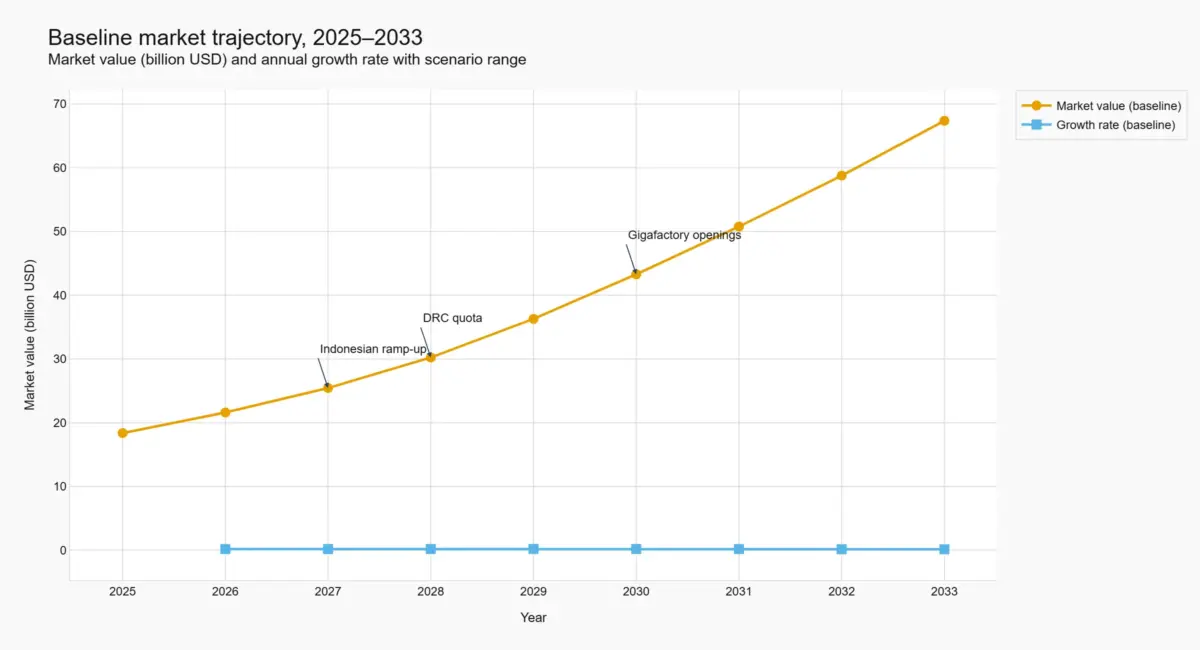
The global cobalt mining market is forecasted to grow from 18.36 billion USD in 2025 to 67.37 billion USD by 2033, at a baseline compound annual growth rate (CAGR) of 17.65%. The market includes all activities from ore extraction and beneficiation through the delivery of cobalt concentrate to downstream refiners. The base year (2025) figure reflects the value of mined cobalt concentrate production, incorporating both industrial and artisanal output, with the Democratic Republic of Congo (DRC) supplying more than 70% of global tonnes. The forecast window (2025–2033) captures a period of rapid EV battery capacity expansion, new supply from Indonesian laterite projects, and evolving regulatory constraints that together drive a front‑loaded growth trajectory.Key Drivers Of Cobalt Mining Market Growth, Restraints, Opportunities, and Threats
1. Indonesian Laterite Supply Ramp‑Up
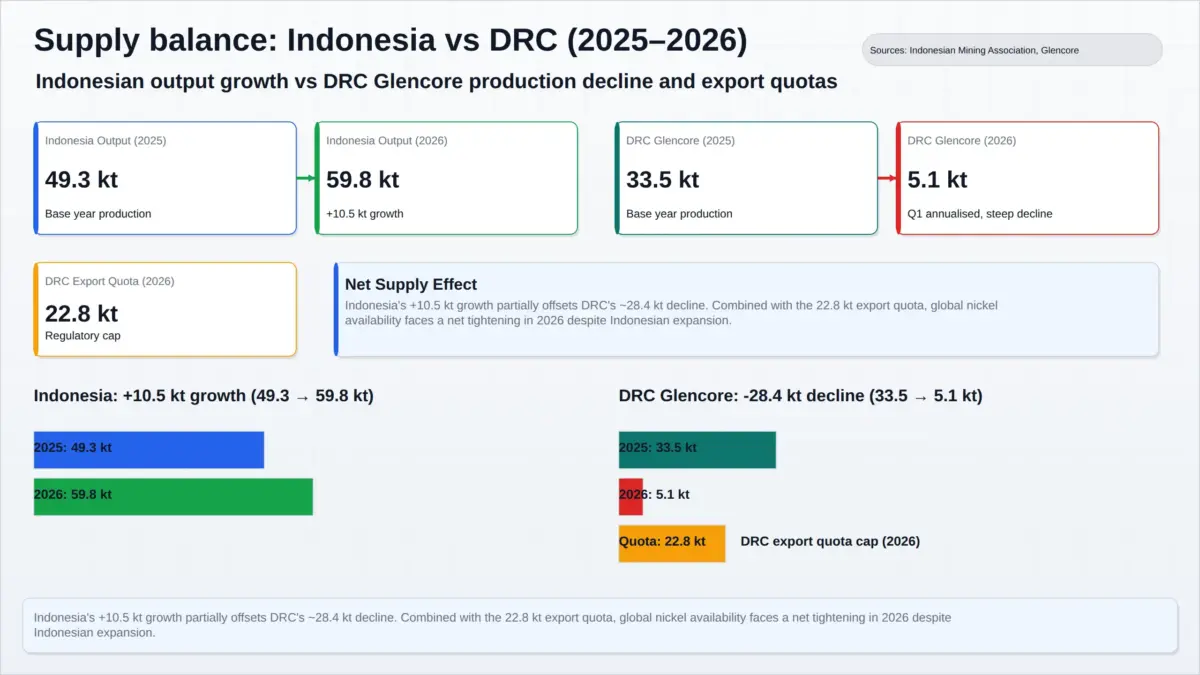
Indonesia’s cobalt output is forecast to grow from an estimated 49,300 tonnes in 2025 to 59,800 tonnes in 2026, a 21.2% annual increase, driven by HPAL (high‑pressure acid leach) facilities. The ramp‑up at Ningbo Lygend’s PT Halmahera Persada Lygend project, the Huafei Cobalt‑Nickel project (started Q1 2024), and the new Pomalaa (jointly owned by Zhejiang Huayou, PT Vale, and Ford) and Morowali projects underpin this supply growth. Indonesia’s share of global cobalt output is rising from approximately 42.6% year‑on‑year growth in 2025, making it the fastest‑growing supply source and a partial offset to DRC constraints.
2. Gigafactory Capacity Additions
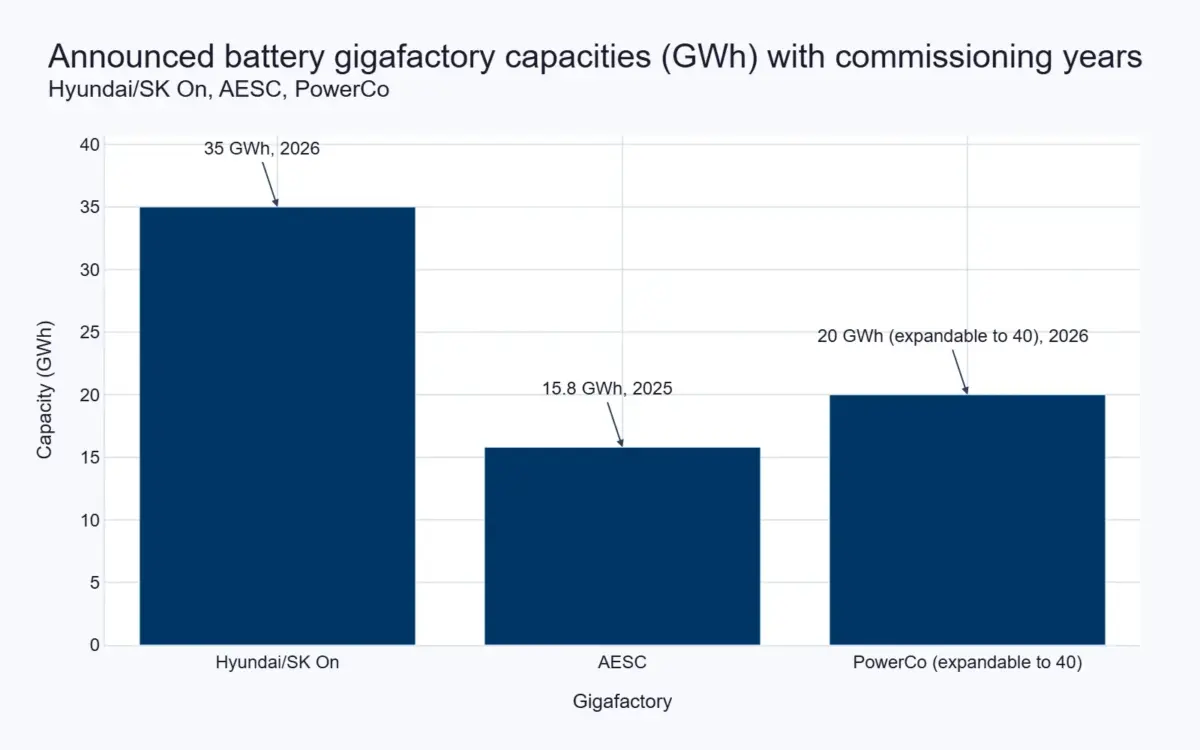
Multiple large‑scale battery cell plants using cobalt‑rich cathode chemistries (NMC) began production or are operating in 2025–2026. The Hyundai Motor Group and SK On joint‑venture plant in Bartow County, Georgia (35 GWh, $5 billion) opened in July 2026. Envision AESC’s Sunderland gigafactory (15.8 GWh) started production in December 2025, supplying cells for the new Nissan Leaf. PowerCo’s Salzgitter gigafactory (initial 20 GWh, expandable to 40 GWh) began unified cell production using NMC in 2026. Together these facilities add over 70 GWh of new annual capacity, directly increasing demand for cobalt‑containing cathodes.
3. CATL Market Leadership
CATL held 40.7% of the global EV battery market in Q1 2026 (up from 38.5% a year earlier), with installations reaching 99.5 GWh. Its dominant position concentrates cobalt demand through a single supply chain node, reinforcing the pull for primary cobalt concentrate as CATL’s production scales with global EV adoption.
4. Investment in New Mining Capacity
Strategic acquisitions and project financing signal confidence in future demand. The US‑backed Orion Critical Mineral Consortium’s proposed $9 billion enterprise‑value stake in Glencore’s DRC assets (Mutanda and KCC) and Chinese state‑owned Chinalco Mining’s $15 million acquisition of the Opuwo project in Namibia illustrate that major capital is flowing into cobalt supply, albeit with geopolitical divergence. Brazil’s BNDES has provided R$100 million ($19 million) for the Piauí nickel‑cobalt project (targeting 900 t Co/yr by 2028–2029), though total capital requirement is $1.4 billion, underscoring the early stage of non‑African supply.
Restraints
1. DRC Export Quotas and Production Shift
The DRC replaced a temporary export ban (February 2025) with a quota system (October 2025) that caps annual exports at 96,600 tonnes from 2026. Glencore’s allocation is 22,800 tonnes in 2026 (including 2025 carryover) and 18,800 tonnes in 2027. In response, Glencore prioritised copper over cobalt, leading to a 39% year‑on‑year decline in African cobalt production in Q1 2026 (to 5,100 tonnes) and zero cobalt output at Mutanda in that quarter. This structural constraint reduces available concentrate from the world’s top supplier.
2. Glencore’s Copper‑First Strategy
Glencore explicitly stated that its DRC assets “are now prioritising copper production as existing finished cobalt inventories are sufficient to fully deliver into near‑term quota levels.” With copper output surging 68% in Q1 2026, the company’s forward cobalt guidance remains withheld, implying continued subdued production as long as quotas are binding.
3. EU Recycling Mandates
EU Battery Regulation 2023/1542 sets material recovery targets for cobalt of 90% by 2027 and 95% by 2031, and a minimum recycled content of 16% for cobalt in new industrial and EV batteries from 2031. These mandates create a structural headwind for primary cobalt demand over the long term, particularly in the conservative scenario where terminal growth is lower.
Opportunities
1. Alternative Extraction Technologies
Recent studies demonstrate oxygen pressure acid leaching achieving 98.2% cobalt recovery from low‑grade pyrite with high selectivity over iron and aluminium, and reductive column leaching attaining >90% recovery with <20% SO₂ loss. While still at research stage, these technologies could unlock value from tailings and complex orebodies, potentially expanding economic resources beyond conventional deposits.
2. Brazilian Nickel‑Cobalt Development
The Piauí project in Brazil, if fully financed, could produce ~900 tonnes of cobalt per year as a by‑product of nickel, offering a geographically diversified, Western‑aligned supply source. Government development bank support (BNDES) signals strategic intent, though the project faces a large capital gap ($1.4 billion total).
Threats
1. Regulatory Instability in the DRC
A proposed overhaul of the DRC mining code (June 2026) targets 40 articles and could introduce government powers to limit production and stockpile strategic minerals. Executives from KoBold Metals and Barrick have warned that such changes would deter investment. Combined with existing quota uncertainty, this creates a volatile operating environment for all DRC‑based miners.
2. Environmental and Social Liability
Independent investigations (Environmental Investigation Agency, 2026) and academic studies have documented widespread air, water, and sediment pollution around large‑scale DRC copper‑cobalt mines, linked to lung disease, cancer, and reproductive harm. Potential legal liability, remediation costs, and reputational damage could disrupt production and increase compliance costs for participants.
3. Downstream Substitution Risk
While not quantified in the supplied data, the EU recycling mandate and ongoing battery chemistry shifts (e.g., LFP penetration) represent a substitution threat to cobalt demand beyond 2030. The conservative scenario (15.15% CAGR) already incorporates lower terminal growth partly due to these factors.
Global Cobalt Mining Market Segmentation
- 1.1 By Mining Method
- 1.1.1 Surface Mining
- 1.1.2 Underground Mining
- 1.1.3 Artisanal & Small-Scale Mining (ASM)
- 1.1.4 Emerging Mining Technologies
- 1.2 By Ore Type
- 1.2.1 Copper-Cobalt Ores
- 1.2.2 Nickel-Cobalt Laterite Ores
- 1.2.3 Primary Cobalt Deposits
- 1.2.4 Secondary & Tailings Resources
- 1.3 By Application
- 1.3.1 Battery Materials
- 1.3.2 Metallurgical Applications
- 1.3.3 Chemical Applications
- 1.3.4 Aerospace & Defense Materials
- 1.4 By End User
- 1.4.1 Battery Manufacturers
- 1.4.2 Automotive Industry
- 1.4.3 Industrial Manufacturing
- 1.4.4 Government & Strategic Stockpile Organizations
Regional Insights
Democratic Republic of Congo
The DRC remains the pivotal supply region, producing more than 70% of global mined cobalt. However, the export quota system (96,600 t/yr cap from 2026) and Glencore’s deliberate shift to copper have tightened concentrate availability. Glencore’s DRC cobalt output fell to 33,500 tonnes in 2025 (−5% YoY) and its Q1 2026 production dropped 39% to 5,100 tonnes. The quota allocation for Glencore is 22.8 kt in 2026 (including carryover) and 18.8 kt in 2027, well below its pre‑ban capacity. CMOC, the world’s largest cobalt producer, maintained its output target of 117,500 tonnes in 2025 and continues to operate its Tenke Fungurume and Kisanfu mines, though export quotas apply to all producers. The DRC’s regulatory environment remains a key source of supply risk.
Indonesia
Indonesia has emerged as the fastest‑growing cobalt supply region, with output rising 42.6% in 2025 to an estimated 49,300 tonnes and projected to reach 59,800 tonnes in 2026 (+21.2%). Growth is driven by HPAL projects processing nickel‑cobalt laterite: PT Halmahera Persada Lygend (Ningbo Lygend), Huafei (Huayou), Pomalaa (Huayou/Vale/Ford), and Morowali. This supply partially offsets DRC constraints and is expected to support the front‑loaded growth shape in the early forecast years.
Europe and North America
Demand from these regions is driven by battery gigafactory capacity. The Hyundai/SK On plant (35 GWh, Georgia, USA) and PowerCo’s Salzgitter plant (20 GWh, Germany) both began production in 2026. Envision AESC’s Sunderland gigafactory (15.8 GWh, UK) started in December 2025. These facilities collectively represent over 70 GWh of new annual NMC capacity, directly increasing demand for cobalt concentrate. No regional demand‑side market sizes are supplied.
Leading Companies in the Global Cobalt Mining Market
| Participant | Cobalt Production (2025, tonnes) | Key Assets | Export Strategy/Status |
|---|---|---|---|
| Glencore | 36,100 (−5% vs 2024) | Mutanda, Kamoto Copper Company (KCC) – 70% Glencore | Prioritising copper; 2026 export quota 22.8 kt; first cargo shipped Dec 2025 |
Why Cobalt Mining Is at a Strategic Inflection Point
The global cobalt mining market is moving decisively higher through 2033, but its trajectory is shaped by countervailing forces that create both opportunity and risk. On the supply side, Indonesian laterite production is adding meaningful volume, but DRC export controls and Glencore’s copper‑first strategy are throttling the world’s largest supply region. On the demand side, the build‑out of gigafactory capacity – over 70 GWh of new NMC cell production in 2025–2026 – and CATL’s expanding market dominance are pulling cobalt consumption upward. Investment flows reflect the geopolitical contest for control of cobalt assets: US‑backed consortia seek stakes in DRC mines while Chinese state‑owned enterprises acquire early‑stage African projects and Brazil uses development bank financing to seed a Western‑aligned alternative. The net effect is a front‑loaded growth path with peak acceleration around 2029, after which regulatory constraints – particularly EU recycling mandates – begin to temper demand for primary cobalt. The market’s criticality stems not just from its growth rate, but from its role as a bottleneck in the EV battery supply chain: without assured cobalt concentrate supply, the gigafactory expansion plans of automakers and battery makers face material risk. Decision‑makers must weight the bullish demand signals against the structural supply and regulatory headwinds that differentiate the optimistic, baseline, and conservative scenarios.Scenario Analysis and Key Sensitivities
The forecast incorporates three scenarios reflecting different assumptions about investment pace, regulatory impact, and supply‑demand balance.| Scenario | CAGR | Total Growth Multiplier (2025→2033) | Distinguishing Driver |
|---|---|---|---|
| Optimistic | 20.15% | 0.5157 | Strong investment and technology signals; minimal regulatory disruption; DRC quota system relaxed after 2027; Indonesian ramp‑up on schedule. |
| Baseline | 17.65% | 0.4257 | Continued EV adoption; DRC quotas persist until at least 2027; Indonesian supply growth; EU recycling targets enforced but phased. |
| Conservative | 15.15% | 0.3357 | Slower EV demand in key markets; stricter DRC regulatory changes (mining law reform); faster substitution away from cobalt in cathodes; full EU recycled content mandate impact from 2031. |
Baseline Path and Year‑by‑Year Growth
The baseline scenario assumes a front‑loaded growth shape with peak annual growth in 2029 (20.02% YoY). This reflects the timing of gigafactory commissioning (2025–2026), Indonesian supply ramp‑up (2026), and the peak of investment and value‑chain signals around 2028–2029. Growth decelerates after 2030 as regulatory constraints and market saturation moderate the expansion.| Year | Market Value (billion USD) | Annual Growth Rate |
|---|---|---|
| 2025 | 18.36 | – (base year) |
| 2026 | 21.60 | 17.65% |
| 2027 | 25.44 | 17.79% |
| 2028 | 30.23 | 18.83% |
| 2029 | 36.29 | 20.02% |
| 2030 | 43.28 | 19.27% |
| 2031 | 50.77 | 17.32% |
| 2032 | 58.76 | 15.72% |
| 2033 | 67.37 | 14.66% |
Decision‑Relevant Implications
- The front‑loaded growth path implies that near‑term supply constraints (DRC quotas, Glencore copper‑first) will be partially mitigated by Indonesian supply growth, but upstream tightness could persist through 2027, benefiting producers with inventory or operational flexibility.
- Gigafactory capacity additions are concentrated in 2025–2026, meaning cobalt demand from battery cathodes will increase sharply in the short term, supporting price and producer margins in the baseline scenario.
- Regulatory divergence – DRC export controls versus EU recycling mandates – creates a dual risk: immediate supply squeeze from DRC, and long‑term demand erosion from recycling. Participants should plan for both higher near‑term prices and eventual substitution away from primary cobalt.
- The concentration of supply in CMOC’s hands (117,500 t in 2025 vs Glencore’s 36,100 t) gives CMOC outsized influence over global concentrate availability; buyers should evaluate supplier diversification strategies.
- Investment flows (US‑backed Orion deal, Chinese Chinalco acquisition, Brazilian BNDES financing) indicate that strategic control of cobalt assets is a priority for major economies, which could further complicate market access and price formation.
Table of Contents
1. Executive Summary
1.1 Market Snapshot
1.2 Key Market Highlights
1.3 Market Size & Forecast (2025–2033)
1.4 Largest Supply Region Analysis
1.5 Fastest-Growing Supply Region Analysis
1.6 Top Downstream Segment Analysis
1.7 Competitive Landscape Snapshot
1.8 Future Market Outlook
2. Global Cobalt Mining Market Introduction
2.1 Market Definition
2.2 Scope of Study
2.3 Research Assumptions
2.4 Research Methodology
2.5 Forecast Parameters
3. Global Cobalt Mining Market Overview
3.1 Market Evolution
3.2 Global Cobalt Mining Ecosystem Analysis
3.3 Value Chain Analysis
3.4 Cobalt Supply Chain & Refining Flow
3.5 Global Mine Production & Resource Distribution
3.6 Cobalt Mining Landscape
3.6.1 Mining Methods
3.6.1.1 Surface Mining
3.6.1.1.1 Underground Mining
3.6.1.1.1.1 Artisanal & Small-Scale Mining (ASM)
3.6.1.1.1.2 Emerging Mining Technologies
3.6.2 Ore Types
3.6.2.1 Copper-Cobalt Ores
3.6.2.1.1 Nickel-Cobalt Laterite Ores
3.6.2.1.1.1 Primary Cobalt Deposits
3.6.2.1.1.2 Secondary & Tailings Resources
3.6.3 Downstream Applications
3.6.3.1 Battery Materials
3.6.3.1.1 Metallurgical Applications
3.6.3.1.1.1 Chemical Applications
3.6.3.1.1.2 Aerospace & Defense Materials
4. Regulatory Landscape
4.1 Mining Regulations & Licensing Frameworks
4.2 Critical Minerals & Export Control Policies
4.3 Environmental & ESG Regulations
4.4 Battery Recycling & Circular Economy Regulations
4.5 Trade Policies & Strategic Mineral Security Initiatives
5. Market Trends & Innovation Outlook
5.1 EV Battery Demand Expansion
5.2 High-Pressure Acid Leach (HPAL) Technology
5.3 Battery Supply Chain Localization
5.4 Sustainable & Responsible Cobalt Mining
5.5 AI & Digital Mine Optimization
5.6 Alternative Extraction Technologies
5.7 Battery Recycling & Urban Mining
5.8 Critical Minerals Investment & Supply Diversification
6. Global Cobalt Mining Market Dynamics
6.1 Market Drivers
6.1.1 Indonesian Laterite Supply Ramp-Up
6.1.2 Gigafactory Capacity Additions
6.1.3 CATL Market Leadership & Battery Demand
6.1.4 Investment in New Mining Capacity
6.2 Market Restraints
6.2.1 DRC Export Quotas & Production Constraints
6.2.2 Glencore’s Copper-First Strategy
6.2.3 EU Battery Recycling Mandates
6.3 Market Opportunities
6.3.1 Alternative Extraction Technologies
6.3.2 Brazilian Nickel-Cobalt Development
6.3.3 Supply Chain Diversification Beyond the DRC
6.3.4 Growth in Energy Storage Applications
6.4 Market Threats
6.4.1 Regulatory Instability in the DRC
6.4.2 Environmental & Social Liability Risks
6.4.3 Battery Chemistry Substitution Risk
6.4.4 Geopolitical Supply Chain Disruptions
7. Global Cobalt Mining Market Size Analysis (USD Billion), 2025–2033
7.1 Revenue Forecast Analysis
7.2 Baseline Forecast (2025–2033)
7.3 Optimistic Scenario Analysis
7.4 Conservative Scenario Analysis
7.5 Year-by-Year Market Growth Analysis
7.6 Investment & Supply-Demand Outlook
8. Global Cobalt Mining Market Segmentation Analysis
8.1 By Mining Method
8.1.1 Surface Mining
8.1.2 Underground Mining
8.1.3 Artisanal & Small-Scale Mining (ASM)
8.1.4 Emerging Mining Technologies
8.2 By Ore Type
8.2.1 Copper-Cobalt Ores
8.2.2 Nickel-Cobalt Laterite Ores
8.2.3 Primary Cobalt Deposits
8.2.4 Secondary & Tailings Resources
8.3 By Application
8.3.1 Battery Materials
8.3.2 Metallurgical Applications
8.3.3 Chemical Applications
8.3.4 Aerospace & Defense Materials
8.4 By End User
8.4.1 Battery Manufacturers
8.4.2 Automotive Industry
8.4.3 Industrial Manufacturing
8.4.4 Government & Strategic Stockpile Organizations
9. Regional Market Analysis
9.1 Democratic Republic of Congo (DRC)
9.1.1 Copperbelt Production
9.1.2 Export Quotas & Regulatory Environment
9.1.3 Major Mining Operations
9.1.4 Investment Outlook
9.2 Indonesia
9.2.1 HPAL Project Expansion
9.2.2 Laterite Mining Development
9.2.3 Production Growth Outlook
9.2.4 Investment Pipeline
9.3 Europe
9.3.1 Battery Manufacturing Demand
9.3.2 Recycling Regulations
9.3.3 Critical Mineral Strategy
9.4 North America
9.4.1 EV Battery Supply Chain Investments
9.4.2 Strategic Mineral Initiatives
9.4.3 Domestic Processing Expansion
9.5 Rest of the World
9.5.1 Brazil
9.5.2 Namibia
9.5.3 Australia
9.5.4 Other Emerging Producers
10. Competitive Landscape
10.1 Market Share Analysis
10.2 Competitive Benchmarking
10.3 Strategic Developments
10.4 Production Capacity Analysis
10.5 Investments, Partnerships & Acquisitions
10.6 Competitive Positioning Matrix
11. Company Profiles
11.1 CMOC Group
11.2 Glencore plc
11.3 Eurasian Resources Group (ERG)
11.4 Zijin Mining Group Co., Ltd.
11.5 Ningbo Lygend Mining Co., Ltd.
11.6 Zhejiang Huayou Cobalt Co., Ltd.
11.7 PT Vale Indonesia Tbk
11.8 Chinalco Mining Corporation International
11.9 Vale S.A.
11.10 Sherritt International Corporation
11.11 Jervois Global Limited
11.12 KoBold Metals
11.13 Lifezone Metals Limited
11.14 First Quantum Minerals Ltd.
11.15 Ivanhoe Mines Ltd.
12. Strategic Intelligence & Pheonix AI Insights
12.1 Pheonix Demand Forecast Engine
12.2 Supply Chain Risk Analyzer
12.3 Investment & Project Tracker
12.4 Critical Minerals Opportunity Dashboard
12.5 Scenario Planning & Sensitivity Analysis
12.6 Porter’s Five Forces Analysis
13. Future Outlook & Strategic Recommendations
13.1 Supply Diversification Strategy
13.2 Battery Materials Investment Outlook
13.3 ESG & Sustainable Mining Roadmap
13.4 Critical Minerals Supply Chain Strategy
13.5 Long-Term Market Outlook (2033+)
14. About Pheonix Market Research
15. Disclaimer
Competitive Landscape
Competition Landscape
The global cobalt mining market is defined by a concentrated rivalry between two corporations—CMOC Group and Glencore—that together account for the majority of mined cobalt supply. Since 2023, CMOC has held the position of the world’s largest cobalt producer, a status it seized from Glencore through strategic acquisitions and capacity expansion in the Democratic Republic of Congo (DRC). The shift in leadership is not static: Glencore’s cobalt output contracted in 2025, while CMOC continued to operate near its full nameplate capacity. This chapter examines the competitive dynamics between these two participants, the structural factors driving their positions, and the regulatory environment that shapes their ability to export product to global markets.
Key Takeaways
-
- CMOC overtook Glencore as the largest mined cobalt producer in 2023 and has maintained that position through 2025.
- CMOC’s Tenke Fungurume mine has a nameplate cobalt capacity of 37,000 tonnes per year, and its Kisanfu mine has a nameplate capacity of 50,000 tonnes per year; Glencore’s 2025 production was 36,100 tonnes.
- Glencore’s cobalt output declined 5% year-on-year in 2025, partly due to proactive planning to prioritise copper production and DRC export restrictions.
- The DRC government’s export quota system, implemented in late 2025, is a competitive variable that affects both companies’ ability to move product to refiners.
- Supported evidence does not enable a defensible ranking of other participants such as Eurasian Resources Group, limiting the competitive scope to the CMOC–Glencore rivalry.
Evidence-Backed Implications
The competitive relationship between CMOC and Glencore is the most decision-relevant axis in the market. CMOC’s rise to leadership is grounded in two acquisitions made at low points in the commodity cycle: the Tenke Fungurume mine, acquired from Freeport-McMoRan in 2016, and the Kisanfu mine, acquired from BHP in 2021. Tenke Fungurume has a nameplate cobalt capacity of 37,000 tonnes per year, while Kisanfu, which holds an estimated 3.1 million tonnes of cobalt metal resource, adds a further nameplate capacity of 50,000 tonnes per year. In fiscal year 2025, CMOC produced 117,500 tonnes of cobalt, equivalent to 107% of its own production guidance. That volume significantly exceeds Glencore’s 2025 output of 36,100 tonnes, which was 2,100 tonnes lower than in 2024.
The production gap reflects more than just installed capacity. Glencore’s decline was a deliberate operational choice: the company’s 2025 production report states that the reduction “mainly reflect[s] proactive planning to prioritise copper production over cobalt, noting the DRC cobalt export restrictions.” This indicates that when regulatory constraints tighten, Glencore allocates resources toward copper—its primary revenue contributor—while CMOC, whose DRC operations are predominantly cobalt-copper assets, continues expanding cobalt production. The DRC export quota system, introduced in October 2025, further complicates the competitive environment. Glencore shipped the first cargo under the new quota framework, while CMOC also initiated exports under the same regulations. Although both companies operate under identical regulatory rules, the impact is more significant for Glencore because of its lower cobalt production volume and stronger strategic focus on copper.
The following table summarises the strongest supported competitive relationships, capacities, production outcomes, and resource positions. The comparison is limited to the two companies for which the available evidence provides directly comparable quantitative data.
Competitive Comparison: CMOC Group vs Glencore in Cobalt Mining
| Participant | Relationship | Competitive Dimension | Product / Asset | Geography | Measured Basis |
|---|---|---|---|---|---|
| CMOC Group | Rival | Nameplate cobalt capacity | Tenke Fungurume Mine | DRC | 37,000 tonnes per year |
| CMOC Group | Rival | Nameplate cobalt capacity | Kisanfu Mine | DRC | 50,000 tonnes per year (reported capacity) |
| CMOC Group | Rival | Actual cobalt production (FY2025) | Mined cobalt | DRC | 117,500 tonnes (107% of guidance) |
| CMOC Group | Rival | Cobalt resource base | Kisanfu Mine | DRC | 3.1 million tonnes of contained cobalt metal |
| CMOC Group | Rival | Market position | — | Global | Largest producer since 2023, overtook Glencore |
| Glencore | Rival | Actual cobalt production (FY2025) | Mined cobalt | Global (primarily DRC) | 36,100 tonnes (5% decline vs. 2024) |
| Glencore | Rival | Production trend | Mined cobalt | Global (primarily DRC) | Down 2,100 tonnes year-on-year; Q4 2025 down 2,000 tonnes vs. Q3 2025 |
| Glencore | Rival | Export strategy | First cobalt cargo under DRC quota | DRC | Initial shipment under new export system (Dec 2025) |
The comparison highlights that CMOC’s competitive advantage is structural. The company controls larger production capacity, a substantially deeper resource base, and significantly higher cobalt output. Glencore’s competitive response is constrained by its copper-cobalt production trade-off and by regulatory export quotas that may limit future shipment volumes. This imbalance has important implications for downstream cobalt consumers, as supply concentration continues shifting toward CMOC while Glencore becomes a comparatively smaller and potentially more variable supplier.
Illustrate the supported competitive strengths, capacities, production outcomes, and DRC regulatory context for the two leading participants. Surviving competition claims and selected evidence from CMOC Group and Glencore public disclosures and news sources. Relative production volumes, nameplate capacities, resource ownership, and the export quota system as a competitive variable.
Outlook
Decision-makers in the cobalt market should monitor three variables that will determine whether the current competitive hierarchy persists or changes.
-
- The DRC export quota system remains in its early stages. Future quota allocations and the utilisation of unused 2025 quotas, carried forward until March 2026, will influence short-term cobalt supply and may either widen or reduce the production gap between CMOC and Glencore.
- Glencore’s guidance for 2026 does not specify a cobalt production target, suggesting the company may continue prioritising copper production. If this strategy continues, CMOC’s leadership position is likely to strengthen further.
- Changes in the copper-to-cobalt price ratio or operational performance at CMOC’s Tenke Fungurume and Kisanfu mines could alter the competitive balance over the coming years.
The available evidence does not support a defensible ranking of other market participants. Eurasian Resources Group is mentioned as a competitor in one source, but no comparable production, capacity, or resource data is available. Likewise, artisanal mining cooperatives and state-owned mining enterprises are not covered within the supplied evidence. Consequently, any competitive assessment beyond the CMOC–Glencore rivalry would require additional verified data. Based on the current evidence, the global cobalt mining market remains fundamentally a two-player competition, with CMOC maintaining a clear structural advantage over Glencore through superior production capacity, larger resource ownership, and higher annual output.
Value Chain
Global Cobalt Mining Market Value Chain & Supply Chain Evolution Overview
The global cobalt mining value chain moves from exploration and ore extraction through beneficiation and concentrate production to delivery to downstream refiners. The Democratic Republic of Congo (DRC) dominates this flow, accounting for more than 70% of global mined cobalt. In 2025–2026, government export controls—a ban followed by a quota system—forced a structural realignment, with major producers rebalancing copper and cobalt output while concentrating inventories at mine sites.
Key Takeaways
-
- DRC export controls (ban from February 2025 and quota system from October 2025) disrupted the value chain. Glencore’s DRC cobalt output fell 5% in 2025 and 39% in Q1 2026, while African copper output surged 68%.
- Glencore was allocated a 22,800-tonne export quota for 2026 (including a 2025 carryover), and shipments restarted in December 2025 after months with no exports.
- CMOC maintained its cobalt production target for 2026 after a record 117,500 tonnes in 2025 while planning up to 11% copper growth, demonstrating a dual-metal production strategy.
- The DRC’s dominance (over 70% of global mined cobalt) and the quota system, which remains in force until at least the end of 2027, create a controlled supply environment that constrains downstream availability and reinforces the need for alternative supply sources.
- Copper-cobalt co-production defines mine economics. Glencore’s prioritization of copper production during the quota period demonstrates operational flexibility supported by sufficient finished-cobalt inventories.
Production Nodes and Corporate Control
Upstream cobalt production is concentrated among three major corporate groups operating large copper-cobalt assets in the DRC’s Lualaba province.
Glencore operates the Mutanda mine with an on-site beneficiation plant and Kamoto Copper Company SA (KCC), which includes open-pit mines (KOV, T17, Mashamba East), the KTO underground mine, the Kamoto concentrator, and the Luilu refinery. KCC is owned by Glencore (70%), Gécamines (25%), and the DRC State (5%). In 2025, Glencore’s own-sourced cobalt production from its DRC operations reached 36,100 tonnes, representing a 5% decline from 2024 due to its strategic prioritization of copper production. During Q1 2026, KCC produced 51,900 tonnes of copper (up 72% year-over-year) and Mutanda produced 16,000 tonnes (up 55%), while Mutanda produced no cobalt.
China Molybdenum Co. Ltd. (CMOC) owns 80% of Tenke Fungurume Mining S.A. (TFM), which has annual production capacity exceeding 450,000 tonnes of copper and 37,000 tonnes of cobalt. CMOC also owns 71.25% of the KFM copper-cobalt mine with copper capacity above 200,000 tonnes. TFM contained estimated reserves of 7.89 million tonnes of copper and 0.82 million tonnes of cobalt as of 2023. CMOC’s combined 2025 production totaled 741,100 tonnes of copper and 117,500 tonnes of cobalt.
Eurasian Resources Group (ERG) owns 90% of Metalkol SA in Kolwezi, producing cobalt hydroxide and copper cathode. Production capacity figures were not disclosed in the available evidence.
Major DRC Cobalt Mining Assets
| Stage | Participant | Activity | Geography | Status |
|---|---|---|---|---|
| Raw Materials | Glencore / Mutanda Mining SARL | Copper-cobalt mine with beneficiation plant; 2025 cobalt production 36,100 tonnes; Q1 2026 cobalt output nil | DRC | In Production |
| Raw Materials | Glencore / Kamoto Copper Company SA | Open-pit and underground mines, concentrator, refinery | Kolwezi, DRC | In Production |
| Raw Materials | CMOC / Tenke Fungurume Mining (TFM) | Open-pit mine; copper capacity >450,000 t/year; cobalt capacity 37,000 t/year | Fungurume, DRC | In Production |
| Raw Materials | CMOC / KFM Mine | Open-pit copper-cobalt mine; copper capacity >200,000 t/year | Bayeke, DRC | In Production |
| Raw Materials | ERG / Metalkol SA | Producer of cobalt hydroxide and copper cathode | Kolwezi, DRC | In Production |
Export Controls and the Shift to Copper Prioritization
In February 2025, the DRC government, through ARECOMS, imposed a four-month cobalt export suspension effective 22 February 2025 to address global oversupply. On 16 October 2025, the suspension transitioned into a quota system comprising an 18,125-tonne Q4 2025 allocation and an annual cap of 96,600 tonnes beginning in 2026. The quota system will remain in effect until at least the end of 2027.
Glencore responded by prioritizing copper production while utilizing existing cobalt inventories to satisfy export quotas. Consequently, Q1 2026 African copper production increased 68% year-over-year to 67,900 tonnes, while cobalt production declined 39% to 5,100 tonnes. Mutanda, which produced 2,900 tonnes of cobalt during Q1 2025, produced no cobalt in Q1 2026.
For full-year 2025, Glencore’s DRC cobalt production declined to 33,500 tonnes, with exports suspended during Q4 2025 due to the government ban.
Glencore received a 2026 export quota of 22,800 tonnes, including unused 2025 allocations that remained valid until 31 March 2026. The company’s first export shipment under the new quota system departed in December 2025 following payment of a 10% royalty.
CMOC adopted a different strategy by maintaining its cobalt production target after producing a record 117,500 tonnes in 2025 while simultaneously targeting copper production growth of up to 11% during 2026.
Producer Responses to Export Controls
| Participant | Copper Output | Cobalt Output | Export Quota (2026) | Strategy |
|---|---|---|---|---|
| Glencore | Q1 2026 copper up 68% to 67,900 tonnes | Q1 2026 cobalt down 39% to 5,100 tonnes | 22,800 tonnes | Copper-first strategy |
| CMOC | 2026 guidance 760,000–820,000 tonnes | Maintained 2025 cobalt production level | Not disclosed | Dual-metal strategy |
Regulatory Timeline
-
- 22 February 2025 – DRC imposed a cobalt export ban.
- 16 October 2025 – Export quota system introduced.
- December 2025 – First Glencore export shipment under quota.
- 31 March 2026 – Deadline for utilization of quota carryover.
- Q1 2026 – Major production shift toward copper observed.
Implications for the Cobalt Value Chain and Downstream Supply
The DRC’s dominance—accounting for more than 70% of approximately 280,000 tonnes of global mined cobalt production in 2025—means that export controls significantly influence worldwide cobalt availability.
Glencore’s reliance on existing cobalt inventories while reducing active mining demonstrates that producers with stockpiled material can temporarily separate exports from ongoing production. However, this approach delays cobalt movement to downstream refiners, battery cathode manufacturers, and electric vehicle battery supply chains.
The contrasting strategies adopted by Glencore and CMOC illustrate differing responses to regulatory constraints. Glencore prioritized copper production due to favorable economics and quota limitations, whereas CMOC pursued simultaneous growth in both copper and cobalt production.
Because the quota system remains effective until at least the end of 2027, global buyers continue to face constrained supply availability, increasing interest in alternative cobalt sources including recycling, nickel-cobalt laterite projects, and mining operations outside the DRC.
Key Supply Metrics (2025–2027)
| Metric | Value |
|---|---|
| Estimated Global Mined Cobalt Production (2025) | 280,000 tonnes |
| DRC Share of Global Production | >70% |
| Glencore DRC Cobalt Production (2025) | 33,500 tonnes |
| CMOC Global Cobalt Production (2025) | 117,500 tonnes |
| Glencore 2026 Export Quota | 22,800 tonnes |
| Quota System Validity | Until at least end-2027 |
Downstream participants—including traders, refiners, cathode manufacturers, and EV battery producers—continue to face uncertainty regarding shipment timing and supply volumes. The export suspension during Q4 2025 delayed cobalt availability outside the DRC despite the later introduction of quota carryovers.
Investment Activity
Global Cobalt Mining Investment Overview
Investment into global cobalt mining in 2025–2026 reveals a clear geopolitical divergence. US-backed consortia are pursuing controlling stakes in established Democratic Republic of Congo (DRC) assets, while Chinese state-owned enterprises are acquiring early-stage projects elsewhere in Africa. Meanwhile, Brazil is emerging as a third investment hub, supported by national development bank financing intended to build a Western-aligned battery-metals supply chain.
Strategic Acquisitions Reshaping Cobalt Asset Ownership
Two publicly reported transactions illustrate the contrasting strategies of US-allied and Chinese investors.
US-Backed Consortium Targets Glencore’s DRC Operations
In February 2026, Glencore announced that it had entered into a non-binding memorandum of understanding with the Orion Critical Mineral Consortium (Orion CMC) for the proposed acquisition of a 40% stake in Glencore’s interests in the Mutanda Mining and Kamoto Copper Company (KCC) projects in the Democratic Republic of Congo. The proposed transaction implies a combined enterprise value of approximately US$9 billion for the assets.
Orion CMC is led by private equity firm Orion Resource Partners in partnership with the US International Development Finance Corporation (DFC). Under the proposed agreement, Orion CMC would have the right to appoint non-executive directors and direct the sale of its share of production to nominated buyers in accordance with the US–DRC Strategic Partnership Agreement. The parties also intend to explore opportunities to expand and further develop the mines in cooperation with the DRC government and Gécamines, Glencore’s joint venture partner in KCC.
Chinese State-Owned Chinalco Acquires Namibia’s Opuwo Project
Celsius Resources concluded a binding share sale agreement with Chinese state-owned Chinalco Mining for the sale of its 95% interest in the Opuwo cobalt-copper project in Namibia for US$15 million.
For the year ended 30 June, the Opuwo project recorded an operating loss of approximately N$421,738 and was carried at a book value of around N$34 million. As part of its commitment, Chinalco Mining agreed to provide a non-refundable exploration commitment comprising at least US$750,000 for exploration activities and US$250,000 for metallurgical test work while the transaction conditions are being satisfied.
The agreement includes a six-month completion period and remains subject to approvals from Celsius shareholders, the Namibian Competition Commission, the Bank of Namibia, and the relevant Chinese regulatory authorities.
Comparison of Two Cobalt Asset Transactions
| Project / Company | Investor / Partner | Geography | Amount / Capacity Implied | Timing | Status |
|---|---|---|---|---|---|
| Mutanda & KCC (Glencore’s DRC assets) | Orion Critical Mineral Consortium (US-backed, led by Orion Resource Partners & US DFC) | Democratic Republic of Congo | 40% stake; enterprise value approx. US$9 billion | February 2026 (MoU); conditions and closing pending | Announced, non-binding |
| Opuwo cobalt-copper project (Celsius Resources) | Chinalco Mining (Chinese state-owned) | Namibia | 95% interest for US$15 million; exploration commitment of US$1 million | June 2026 (binding agreement); six-month completion period | Signed, subject to approvals |
Show the difference in transaction value and implied size between the Orion–Glencore and Chinalco–Celsius transactions. Publicly reported deal values from Glencore, Orion CMC, Celsius Resources, and Chinalco Mining disclosures. Bar chart comparing transaction value (US$9 billion enterprise value for a 40% stake versus US$15 million outright acquisition), ownership percentage, and implied mine scale.
Project Financing and the Development Pipeline
While acquisitions have dominated recent headlines, at least one major greenfield mining project is progressing through state-backed financing, highlighting both the capital intensity and the early-stage nature of non-African cobalt supply development.
Brazilian Nickel Secures First Tranche of Financing for Piauí Project
Brazilian Nickel Ltd., through its Brazilian subsidiary Piauí Níquel Metais, secured R$100 million (approximately US$19 million) in financing from Brazil’s development bank, BNDES, for the Piauí nickel and cobalt project in northeastern Brazil.
The funding has been allocated for machinery, equipment, and industrial services rather than the complete mine construction. Once operational, the project is expected to produce approximately 27,000 tonnes of nickel and 900 tonnes of cobalt annually for electric vehicle battery applications.
However, the full project carries an estimated capital requirement of approximately US$1.4 billion, meaning that the initial BNDES financing represents only a small portion of the total investment needed.
Brazilian Nickel is actively seeking an anchor investor to attract additional equity financing. The company has appointed Rothschild & Co. to advise on global debt and equity fundraising, while Brazilian investment bank Bradesco BBI is supporting efforts to raise approximately US$100 million from domestic investors and investment funds. The company is also pursuing additional funding from Canadian and European government-backed programs as well as future BNDES support.
Current project timelines indicate commercial production could begin in 2028 or 2029, subject to successful completion of financing activities.
Illustrate the US$1.4 billion total capital requirement, the US$19 million secured through BNDES, the US$100 million domestic fundraising target, and the remaining financing requirement. BNDES approval announcements, Bloomberg reporting on the anchor investor search, and project disclosures. Waterfall or stacked bar chart showing secured funding, targeted financing, and the remaining capital requirement to communicate the project’s early development stage.
The pattern across these three transactions indicates an evolving geopolitical landscape. US and Chinese investors are directly acquiring strategic stakes in cobalt assets, while Brazil is leveraging national development finance to establish a domestic battery-metals mining industry.
Key Takeaways
-
- The US-backed Orion consortium’s proposed US$9 billion enterprise value transaction involving Glencore’s DRC mining assets demonstrates a strategic effort to secure long-term cobalt supplies for Western allies, including rights to direct production sales under the US–DRC Strategic Partnership Agreement.
- Chinese state-owned Chinalco Mining’s US$15 million acquisition of the Opuwo project expands China’s presence in emerging African cobalt assets, while its additional US$1 million exploration commitment reflects long-term strategic interest despite the project’s current operating losses.
- Brazilian Nickel’s Piauí project has secured only US$19 million of its estimated US$1.4 billion capital requirement through BNDES financing, highlighting both the early stage of non-African cobalt development and the importance of state-backed financial institutions in supporting strategic mineral projects.
- Collectively, these three transactions demonstrate a geopolitical shift in the cobalt sector, with US and Chinese investors pursuing direct ownership of strategic mining assets while Brazil develops a domestic battery-metals industry through government-supported financing.
Technology & Innovation
Technology Innovations in Cobalt Extraction and Processing
Key Takeaways
-
- Oxygen pressure acid leaching achieves 98.2% cobalt extraction from low-grade pyrite with minimal iron and aluminium dissolution, offering a pathway to recover cobalt from abandoned tailings and complex sulphide resources.
- Reductive column leaching optimized through attainable region analysis achieves over 90% cobalt recovery with less than 20% sulphur dioxide loss, providing a systematic process-design methodology for oxidized ores that improves conventional leaching optimization.
- Laterite ore processing remains technically challenging due to gangue content exceeding 98%, but emerging pre-treatment methods combined with integrated hydrometallurgical routes such as High-Pressure Acid Leaching (HPAL), Atmospheric Leaching (AL), and Resin-in-Moist-Mix (RIMM) demonstrate potential to improve nickel-cobalt extraction efficiency.
- Bioacid-mediated electrowinning enables selective cobalt-nickel separation without relying on organic solvents, representing a promising recycling technology for mixed-metal lithium-ion battery waste where conventional solvent extraction is less effective.
- Based on the available evidence, all technologies remain in the research and laboratory-development stage. No commercial deployment, pilot-scale validation, or large-scale industry adoption has been demonstrated.
This chapter examines emerging extraction and processing technologies for cobalt mining based exclusively on peer-reviewed academic publications published in 2026. The technologies assessed include oxygen pressure acid leaching, reductive column leaching, sustainable laterite processing routes, and electrochemical cobalt-nickel separation technologies. The analysis is limited to published research findings, with no available evidence regarding commercial deployment, production economics, or industrial-scale validation.
Leaching Technologies for Low-Grade and Alternative Ores
Two advanced leaching technologies published during 2026 focus on recovering cobalt from low-grade resources that are traditionally considered uneconomic or discarded as mining waste. Although both technologies demonstrate high laboratory-scale recovery, they utilize fundamentally different processing principles.
Oxygen Pressure Acid Leaching of Cobalt-Bearing Pyrite
A study published in MDPI Minerals investigated selective cobalt recovery from low-grade cobalt-bearing pyrite using oxygen pressure acid leaching.
Under optimized operating conditions:
-
- Oxygen Pressure: 1.5 MPa
- Sulphuric Acid Concentration: 7.36 g/L (0.82 mol/L)
- Temperature: 230°C
- Leaching Time: 120 minutes
- Stirring Speed: 300 rpm
The process achieved:
-
- 98.2% cobalt leaching
- 19.79% iron leaching
- 28.11% aluminium leaching
Thermodynamic analysis using Gibbs free energy calculations confirmed favorable reaction conditions. SEM-EDS, XRD, and XPS characterization demonstrated that elevated temperature and oxygen pressure disrupted the pyrite crystal lattice, releasing cobalt while promoting iron precipitation as hematite or hydronium jarosite. This selective behavior may enable recovery of cobalt from pyrite-rich tailings and complex sulphide resources while minimizing downstream purification requirements.
Reductive Column Leaching of Oxidized Ores
A separate study published through OneMine applied attainable region analysis to optimize reductive column leaching of oxidized cobalt ores using sulphur dioxide and sulphuric acid.
Unlike conventional process optimization based primarily on mass balances, attainable region analysis provides a systematic framework for designing reactor configurations that maximize cobalt recovery while minimizing reagent losses.
Experimental results demonstrated:
-
- Greater than 90% cobalt recovery
- Less than 20% sulphur dioxide loss
Residence time distribution studies confirmed partial plug-flow behavior with dispersion effects. Increasing recirculation ratios improved cobalt recovery while reducing sulphur dioxide consumption. The study proposed staged percolation columns with intermediate mixing zones as potential reactor configurations for future pilot-scale development.
Comparison of Leaching Technologies for Low-Grade Cobalt Ores
| Technology | Source | Performance | Application | Key Finding |
|---|---|---|---|---|
| Oxygen Pressure Acid Leaching | MDPI Minerals | 98.2% Co recovery; Fe 19.79%; Al 28.11% | Low-grade cobalt-bearing pyrite | High cobalt selectivity with reduced impurity dissolution |
| Reductive Column Leaching | OneMine | >90% Co recovery; <20% SO₂ loss | Oxidized cobalt ores | Improved reactor design methodology with reduced reagent losses |
Both technologies remain at laboratory or conceptual research stages. The oxygen pressure process requires high operating temperatures (230°C) and elevated pressures (1.5 MPa), indicating potentially significant capital and energy requirements for future commercialization. The reductive column approach operates under comparatively milder conditions but introduces additional sulphur dioxide handling requirements. Neither study provides techno-economic analysis, energy consumption data, or commercial scalability assessments.
Suggested Figure
Figure: Selective Metal Leaching Performance Under Oxygen Pressure Acid Leaching Conditions
The figure should compare:
-
- Cobalt Leaching Rate: 98.2%
- Iron Leaching Rate: 19.79%
- Aluminium Leaching Rate: 28.11%
under identical operating conditions (1.5 MPa oxygen pressure, 7.36 g/L H₂SO₄, 230°C, 120 minutes), clearly illustrating the high selectivity achieved for cobalt extraction.
Laterite Ore Processing: Challenges and Sustainable Extraction Pathways
Laterite deposits are becoming increasingly important sources of nickel and cobalt as high-grade sulphide reserves continue to decline. Two review articles published in MDPI Minerals and the Journal of Sustainable Metallurgy evaluated current processing challenges and emerging extraction strategies.
The MDPI Minerals review reports that lateritic ores contain more than 98% acid-consuming gangue minerals, including serpentine, kaolinite, smectite, chlorite, quartz, hematite, magnetite, and goethite. These minerals significantly increase acid consumption and processing costs.
The review identifies several promising process improvements, including:
-
- Selective comminution and particle classification to generate nickel-rich fine fractions and cobalt-rich coarse fractions.
- Mechanical activation using stirred-media milling to improve mineral reactivity.
- Thermal calcination to promote goethite dehydroxylation and enhance metal leaching.
- Ore-specific hydrometallurgical processing routes, including:
- High-Pressure Acid Leaching (HPAL)
- Atmospheric Leaching (AL)
- Heap Leaching
- Resin-in-Moist-Mix (RIMM)
The Journal of Sustainable Metallurgy review evaluates these technologies from sustainability and circular economy perspectives, emphasizing carbon reduction, improved resource efficiency, waste minimization, and enhanced battery supply chain sustainability. Cobalt continues to be produced primarily as a by-product of nickel laterite processing.
Both reviews conclude that significant technical and economic challenges remain, and no commercial breakthroughs or large-scale deployment evidence is available for these emerging technologies.
Electrochemical Separation and Recycling Innovations
A Science Advances study published in March 2026 introduced a bioacid-mediated electrowinning process for selective cobalt and nickel separation.
Traditional solvent extraction performs poorly with end-of-life lithium-ion batteries because recycling streams contain multiple dissolved metals—including manganese, lithium, and sodium—that interfere with separation efficiency.
The proposed bioacid-assisted electrowinning process uses electrochemical deposition to selectively recover cobalt and nickel while avoiding large volumes of organic solvents.
The research, conducted by scientists at Johns Hopkins University, demonstrated selective cobalt-nickel separation under laboratory conditions.
Although no quantitative data were reported regarding:
-
- Current efficiency
- Metal purity
- Energy consumption
- Recovery cost
- Throughput capacity
the study highlights the potential of bioacid-mediated electrowinning for improving sustainability in battery recycling.
The technology remains at the research stage with no published pilot-scale demonstrations or commercial deployment timelines.
Market Risk
Risk Boundary and Key Takeaways
The Global Cobalt Mining Market faces elevated risk from two interconnected sources in the Democratic Republic of Congo (DRC), which supplies more than 70% of the world’s cobalt. First, independent investigations and scientific studies have documented widespread air, water, and sediment pollution around large-scale copper-cobalt mines, linking emissions to serious public health harm. Second, a series of DRC government interventions—including an export ban in early 2025, a quota system introduced in October 2025, tighter export conditions in November 2025, and a proposed overhaul of the 2018 Mining Code introduced in June 2026—have constrained concentrate output and triggered warnings that repeated regulatory changes could discourage future investment.
This chapter focuses on risks specific to upstream cobalt mining, including exploration, extraction, beneficiation, and concentrate production, with geographic emphasis on the Democratic Republic of Congo. Downstream risks are discussed only where they directly affect mining supply. The analysis covers the period from 2023 to 2026, with forward-looking implications extending into 2027.
Key Takeaways
-
- Environmental compliance failures at major DRC copper-cobalt mining operations have been documented through a three-year Environmental Investigation Agency (EIA) investigation and multiple independent scientific studies, linking air and water pollution to lung disease, cancer, neurological disorders, and reproductive health impacts.
- DRC cobalt export restrictions—including the transition from an export ban to a quota system—prompted Glencore to prioritize copper production, reducing its African cobalt output by 39% year-on-year during the first quarter of 2026 and lowering concentrate production at the Mutanda and KCC operations.
- A proposed revision of approximately 40 articles within the DRC’s 2018 Mining Code has resulted in an emergency industry meeting and warnings from mining companies that additional regulatory changes could reduce investment attractiveness across the sector.
- The concentration of global cobalt production within the DRC means that regulatory constraints or environmental liabilities affecting only a limited number of major mining operations can have a disproportionate impact on worldwide cobalt availability.
- Production data for other major DRC producers, including CMOC and Zijin, under the export quota system is unavailable in the supplied evidence, limiting assessment of market-wide production disruption.
Environmental and Community Risk
Evidence of Pollution and Health Harm
A three-year investigation conducted by the Environmental Investigation Agency (EIA) connected a major copper-cobalt processing complex in the Democratic Republic of Congo—constructed in 2023 and covering an area comparable to approximately 500 soccer fields—to what the organization described as “a severe public health crisis.” The investigation combined medical record analysis, independent air quality monitoring, geospatial intelligence, and interviews with affected residents, employees, and corporate insiders. According to the findings, long-term air pollution appears to have affected numerous families and workers living near the facility. The processing complex, operated by CMOC Group Ltd., is among Africa’s largest copper-cobalt processing facilities and was developed to meet increasing demand for cobalt hydroxide used in electric vehicle batteries.
Separate independent studies conducted by Source International together with Professors Célestin Banza Lubaba Nkulu and Arthur Kaniki Tshamala of the University of Lubumbashi documented extensive pollution affecting air, water, and sediments surrounding major copper and cobalt mining operations, particularly the Tenke Fungurume Mine and mining areas near Kolwezi and Fungurume. Researchers identified contaminants associated with lung disease, neurological damage, cancer, and reproductive disorders, with children identified as the most vulnerable population. Community members reported worsening health conditions, with one resident stating, “We are being killed slowly.” Source International further noted that particulate matter pollution represents the world’s second-leading environmental risk factor for mortality and is associated with respiratory illness, premature births, and adverse neonatal health outcomes.
Exposed Participants and Timing
The primary affected stakeholders include communities located within Lualaba Province, particularly those surrounding large-scale mining operations owned by CMOC, Glencore, and Zijin. Industrial mining activities are identified as the principal source of the documented pollution. The underlying scientific studies cover the 2023–2025 period, while the Environmental Investigation Agency published its findings in March 2026. Construction of the processing complex was completed during 2023.
Potential consequences for mining companies include legal liabilities, environmental remediation costs, operational disruptions resulting from regulatory enforcement, and reputational risks among customers, investors, and organizations monitoring compliance with OECD due diligence standards.
The available evidence does not quantify potential financial penalties, litigation expenses, or remediation costs. Consequently, the environmental risk should be regarded as an active but currently unquantified risk, with pollution documented but enforcement actions and community litigation not yet reflected within the available data.
Map the sequence of major risk events, including plant construction (2023), publication of pollution studies (2026), export ban (early 2025), quota introduction (October 2025), revised export conditions (November 2025), Glencore’s production shift (2025–2026), mining law reform proposal (June 2026), and industry warning (July 2026). Claims and supporting evidence originate from the Environmental Investigation Agency, independent scientific studies, Reuters, Bloomberg, and Semafor. The visualization should demonstrate the chronological sequence of environmental and regulatory events affecting the DRC cobalt mining market.
Regulatory and Policy Risk
Export Restrictions and Production Impact
The Democratic Republic of Congo introduced a cobalt export ban during early 2025, subsequently replacing it with an export quota system in October 2025. Additional export conditions implemented in November 2025 required mining companies to pre-pay a 10% royalty within 48 hours and obtain compliance certification before exports could proceed. In June 2026, the government further required mining companies to surrender unused export quotas allocated for the first half of the year. Collectively, these policy measures have created persistent uncertainty surrounding planning and execution of cobalt concentrate exports.
The most visible operational impact occurred within Glencore’s DRC mining operations, particularly at the Mutanda and Kamoto Copper Company (KCC) mines. In response to export restrictions, Glencore shifted operational priorities toward copper production during 2025–2026. African cobalt production declined by 39% year-on-year during the first quarter of 2026. Annual cobalt production decreased from 33,500 tonnes in 2024 to 22,800 tonnes in 2025, with production estimated at approximately 18,800 tonnes during 2026. At the Mutanda operation, cobalt production declined 5% year-on-year during 2025 while copper accounted for approximately 68% of total production. The reduction in cobalt concentrate output directly reflects limitations imposed by the export quota system.
Mining Law Reform and Investor Confidence
In June 2026, legislation was introduced proposing amendments to approximately 40 provisions within the DRC’s 2018 Mining Code. The proposed reforms would strengthen government oversight, including authority to limit production and require strategic mineral stockpiling. The legislation entered formal review on 13 June 2026.
The Chamber of Mines subsequently convened an emergency industry meeting in Kinshasa during July 2026 following concerns that the proposed reforms would increase regulatory uncertainty. Executives representing KoBold Metals and Barrick warned that modifying established regulations “in the middle of the game” would discourage future mining investment. Although the DRC government indicated willingness to engage with industry concerns, significant uncertainty surrounding the proposed reforms remains.
The available evidence does not quantify the potential supply impact should the proposed legislation be enacted. Consequently, the mining law reform represents a conditional risk. If implemented substantially as proposed, it could introduce additional production limitations, increase government control over strategic minerals, further constrain cobalt concentrate supply, and increase mining operating costs. No quantitative investor confidence indicators, including project cancellations or equity valuation impacts, are available within the supplied evidence.
Comparison of Two Regulatory Shocks Affecting DRC Cobalt Mining
| Risk | Trigger | Affected Parties | Supply Impact Magnitude | Investor Confidence Signal |
|---|---|---|---|---|
| Export quota system (2025–2026) | DRC government export ban (early 2025), quota system (October 2025), revised export conditions (November 2025), quota surrender order (June 2026) | Glencore (Mutanda & KCC), concentrate traders, downstream refiners | Supported evidence: African cobalt production declined 39% YoY in Q1 2026; annual production decreased from 33,500 t (2024) to 22,800 t (2025) to an estimated 18,800 t (2026) | Negative; persistent uncertainty, operational shift toward copper, constrained concentrate sales |
| Proposed mining law reform (2026) | Bill proposing amendments to 40 articles of the 2018 Mining Code, entered review 13 June 2026; emergency industry meeting July 2026 | All DRC cobalt miners (Glencore, CMOC, Zijin, KoBold Metals, Barrick) | Not quantified within supplied evidence; potential production limits and mandatory stockpiling | Negative; industry executives warned of reduced investment attractiveness and increased regulatory uncertainty |
Show annual production trends (33,500 tonnes, 22,800 tonnes, and 18,800 tonnes) together with the 39% year-on-year decline during the first quarter of 2026. Annotate major regulatory milestones including the export ban (early 2025), quota introduction (October 2025), and production shift (2025–2026). Supporting evidence originates from Bloomberg, Reuters, and Fastmarkets. The visualization should demonstrate the relationship between regulatory interventions and Glencore’s cobalt production decline.
Regulatory Landscape
Scope
This chapter examines two regulatory developments reshaping the Global Cobalt Mining Market, valued at USD 18.36 billion in 2025: the European Union’s Battery Regulation due diligence obligations and the Democratic Republic of Congo’s transition from a temporary export ban to a quota system. It covers the regulatory mechanisms, timelines, affected parties, and market implications. Excluded are other jurisdictions’ regulations, non-cobalt materials, and quantitative market size segmentation beyond the supplied figure.
The chapter also visualizes the sequencing of key regulatory events affecting the market, including:
-
- Adoption of EU Battery Regulation (EU) 2023/1542 (2023)
- Adoption of Regulation (EU) 2025/1561 (July 2025)
- Postponement of the battery due diligence obligations originally scheduled for 18 August 2025
- The DRC’s temporary cobalt export ban during mid-2025
- Introduction of the DRC cobalt export quota system on 16 October 2025
- Implementation of the annual export cap of 96,600 metric tons beginning in 2026
The chronology is based on EU legal acts and Democratic Republic of Congo policy announcements reported by Reuters and EUR-Lex, highlighting the regulatory instruments, implementation timelines, and their implications for the global cobalt mining industry.
Key Takeaways
-
- The EU’s mandatory battery due diligence framework covering cobalt requires economic operators placing batteries on the EU market to establish auditable sourcing policies supported by third-party verification, increasing compliance requirements and supply chain transparency.
- The Democratic Republic of Congo’s quota system, effective from October 2025, introduces an annual export cap of 96,600 metric tons beginning in 2026, tightening supply from the world’s largest cobalt producer and supporting higher global cobalt prices.
- The quota allocation methodology, based on each company’s historical production and shipment data over the previous three years, creates different competitive outcomes. Glencore supports the quota framework, while CMOC has publicly opposed it, indicating potential shifts in market dynamics.
- The EU and DRC regulations affect different stages of the value chain—the EU focuses on downstream supply chain compliance, while the DRC regulates upstream production and exports—creating a dual regulatory environment for global market participants.
EU Battery Due Diligence Regulation
Regulation (EU) 2023/1542 of the European Parliament and of the Council establishes mandatory battery due diligence obligations covering the sourcing, processing, and trading of cobalt, natural graphite, lithium, and nickel used in battery production. These obligations were originally scheduled to apply from 18 August 2025. However, Regulation (EU) 2025/1561, adopted on 18 July 2025, amended the original legislation by postponing the application date to provide additional time for the notification of conformity assessment bodies and to allow economic operators to prepare for compliance.
The regulation requires companies placing batteries on the EU market to adopt, implement, verify, and publicly report battery due diligence policies supported by third-party assessments conducted by notified bodies. Economic operators must ensure that cobalt and other covered minerals are sourced through transparent and auditable supply chains.
Although the legislation does not specify direct compliance costs, companies are expected to invest in due diligence systems, supplier verification, audits, traceability programs, and potentially alternative sourcing strategies to maintain EU market access.
For the global cobalt mining market, the regulation indirectly increases compliance costs throughout battery supply chains and may accelerate investments in responsible sourcing, recycling, and supply chain diversification.
DRC Cobalt Export Quota System
The Democratic Republic of Congo replaced its temporary cobalt export ban with a quota system that became effective on 16 October 2025. Under the new framework, annual export quotas are allocated according to each company’s production and shipment volumes over the preceding three years.
For the fourth quarter of 2025, the allocated export quota totals 18,125 metric tons. Beginning in 2026, total annual cobalt exports are capped at 96,600 metric tons.
As the DRC accounts for more than 70% of global mined cobalt production, estimated at approximately 280,000 metric tons in 2025, the quota system has substantial implications for global supply.
Glencore became the first mining company authorized to export cobalt under the new system after obtaining government clearance and paying the required 10% export royalty. The company supports the quota framework, whereas CMOC has publicly opposed it.
According to President Félix Tshisekedi, the earlier export suspension contributed to a 92% increase in cobalt prices since March 2025, demonstrating the government’s ability to influence global cobalt markets through export controls.
The quota system is expected to tighten global cobalt supply, support higher prices, influence investment decisions, and alter competitive dynamics by favoring producers with stronger historical production records while increasing export costs through the royalty mechanism.
Regulatory Comparison
Comparison of the Two Primary Regulatory Instruments Affecting the Global Cobalt Mining Market
| Jurisdiction | Rule / Standard | Requirement | Effective Date | Affected Participant |
|---|---|---|---|---|
| European Union | Battery Regulation (EU) 2023/1542, amended by Regulation (EU) 2025/1561 | Mandatory due diligence policies covering sourcing, processing, and trading of cobalt, natural graphite, lithium, and nickel, supported by third-party verification | Originally 18 August 2025; application postponed (new date not yet specified) | Economic operators placing batteries on the EU market or putting them into service |
| Democratic Republic of Congo | Cobalt Export Quota System | Annual export quotas based on historical production and shipment data; 10% export royalty | Effective 16 October 2025; annual export cap of 96,600 metric tons from 2026 | Cobalt mining operators in the DRC |
The EU regulation primarily increases downstream compliance obligations by strengthening responsible sourcing and supply chain transparency requirements, while the DRC quota system directly manages upstream cobalt supply through export restrictions. Together, these regulatory measures create a dual regulatory framework requiring market participants to navigate both enhanced supply chain governance and constrained global cobalt availability.