
Global Alzheimer's Disease Market Report, Size & Forecast 2026 - 2033
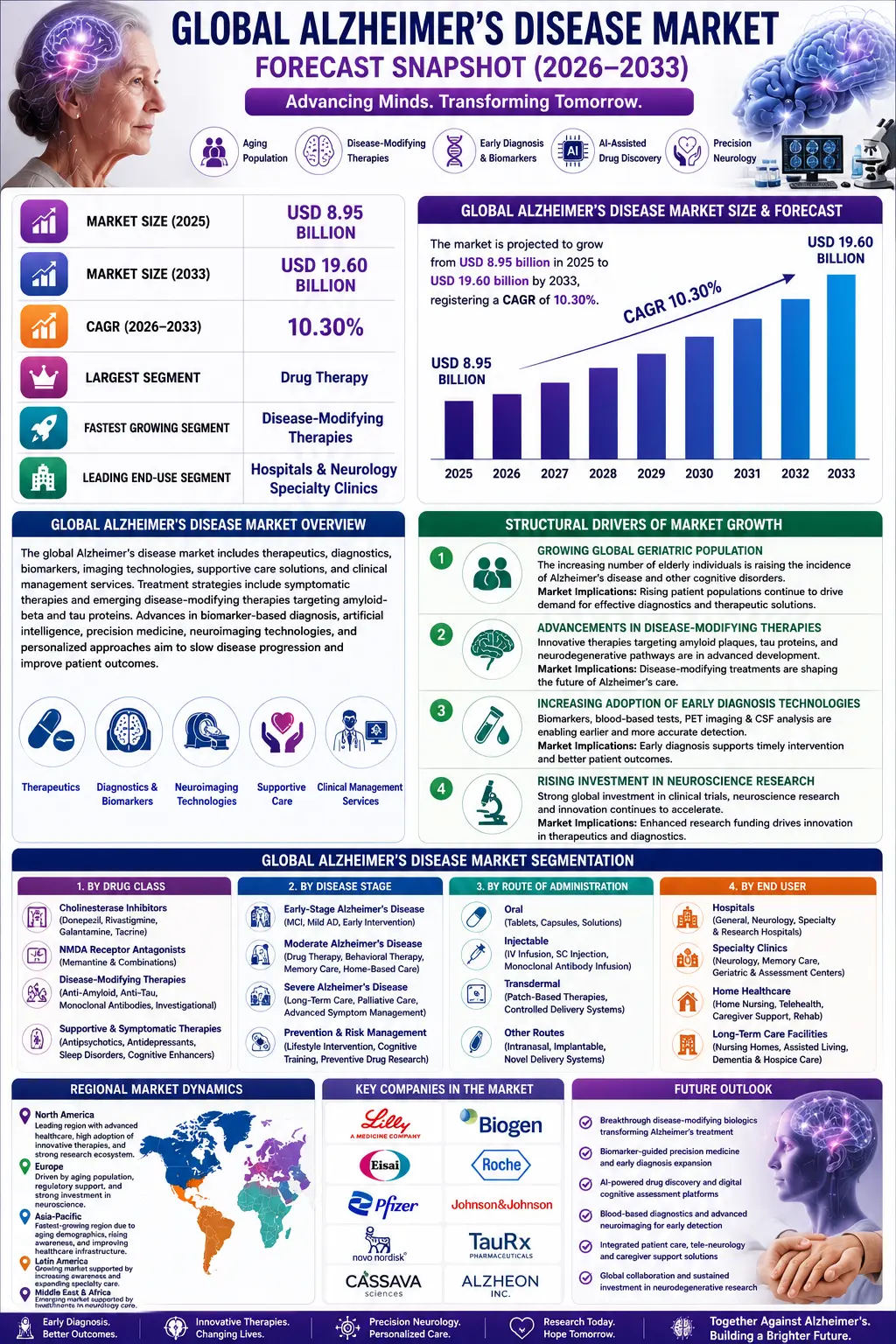
Global Alzheimer's Disease Market Forecast Snapshot (2026–2033)
| Metric | Value |
|---|---|
| Market Size (2025) | USD 8.95 Billion |
| Market Size (2033) | USD 19.60 Billion |
| CAGR (2026–2033) | 10.30% |
| Largest Segment | Drug Therapy |
| Fastest Growing Segment | Disease-Modifying Therapies |
| Leading End-Use Segment | Hospitals & Neurology Specialty Clinics |
| Key Trend | Anti-Amyloid Therapies, Biomarker-Based Diagnosis, AI-Assisted Drug Discovery & Precision Neurology |
| Regulatory Influence | FDA & EMA Approval Pathways, Clinical Trial Regulations, Orphan Drug Policies & Healthcare Reimbursement Frameworks |
| Future Outlook | Growth Driven by Aging Population, Expanding Disease-Modifying Therapies, Early Diagnosis & Advancements in Neurodegenerative Research |
Global Alzheimer's Disease Market Size & Forecast
The Global Alzheimer's Disease Market is expected to witness strong growth during the forecast period from 2026 to 2033. The market was valued at USD 8.95 billion in 2025 and is projected to reach approximately USD 19.60 billion by 2033, registering a CAGR of 10.30%. Market growth is primarily driven by the rapidly aging global population, increasing prevalence of Alzheimer's disease and other dementias, growing awareness regarding early diagnosis, continuous advancements in disease-modifying therapies, expanding investments in neuroscience research, and improving access to specialized neurological care.Global Alzheimer's Disease Market Overview
The Alzheimer's disease market comprises therapeutics, diagnostics, biomarkers, imaging technologies, supportive care solutions, and clinical management services for patients suffering from Alzheimer's disease. Treatment strategies include symptomatic therapies and emerging disease-modifying therapies targeting amyloid-beta and tau proteins. The market is evolving through advances in biomarker-based diagnosis, artificial intelligence-assisted drug discovery, precision medicine, neuroimaging technologies, and personalized treatment approaches aimed at slowing disease progression and improving patient outcomes.Structural Drivers of Market Growth
1. Growing Global Geriatric Population
The increasing number of elderly individuals worldwide is significantly raising the incidence of Alzheimer's disease and age-related cognitive disorders. Market Implications: Rising patient populations continue to drive demand for effective diagnostics and therapeutic solutions.2. Advancements in Disease-Modifying Therapies
Biopharmaceutical companies are developing innovative therapies targeting amyloid plaques, tau proteins, and neurodegenerative pathways. Market Implications: Disease-modifying treatments are transforming the future therapeutic landscape of Alzheimer's disease.3. Increasing Adoption of Early Diagnosis Technologies
Advances in biomarkers, blood-based diagnostics, PET imaging, and cerebrospinal fluid analysis are enabling earlier disease detection. Market Implications: Early diagnosis supports timely intervention and improved patient management.4. Rising Investment in Neuroscience Research
Governments, pharmaceutical companies, and research organizations are increasing investments in neurodegenerative disease research and clinical trials. Market Implications: Strong research funding is accelerating innovation across Alzheimer's therapeutics and diagnostics.Global Alzheimer's Disease Market Segmentation
1. By Drug Class
1.1 Cholinesterase Inhibitors
1.1.1 Donepezil 1.1.1.1 Oral Donepezil Formulations 1.1.1.1.1 Immediate-Release Tablets 1.1.1.1.2 Orally Disintegrating Tablets 1.1.1.1.3 Combination Formulations 1.1.1.1.4 Extended-Release Formulations 1.1.2 Rivastigmine 1.1.3 Galantamine 1.1.4 Tacrine1.2 NMDA Receptor Antagonists
1.2.1 Memantine 1.2.2 Extended-Release Memantine 1.2.3 Combination Therapies 1.2.4 Generic NMDA Antagonists1.3 Disease-Modifying Therapies
1.3.1 Anti-Amyloid Therapies 1.3.2 Anti-Tau Therapies 1.3.3 Monoclonal Antibodies 1.3.4 Investigational Therapies1.4 Supportive & Symptomatic Therapies
1.4.1 Antipsychotic Medications 1.4.2 Antidepressants 1.4.3 Sleep Disorder Medications 1.4.4 Cognitive Enhancement Therapies2. By Disease Stage
2.1 Early-Stage Alzheimer's Disease
2.1.1 Mild Cognitive Impairment (MCI) 2.1.1.1 Early Diagnosis Programs 2.1.1.1.1 Biomarker Testing 2.1.1.1.2 Cognitive Assessment 2.1.1.1.3 Genetic Screening 2.1.1.1.4 Brain Imaging Evaluation 2.1.2 Mild Alzheimer's Disease 2.1.3 Early Therapeutic Intervention 2.1.4 Cognitive Rehabilitation2.2 Moderate Alzheimer's Disease
2.2.1 Drug Therapy 2.2.2 Behavioral Therapy 2.2.3 Memory Care Programs 2.2.4 Home-Based Care2.3 Severe Alzheimer's Disease
2.3.1 Long-Term Care 2.3.2 Palliative Care 2.3.3 Advanced Symptom Management 2.3.4 Institutional Care2.4 Prevention & Risk Management
2.4.1 Lifestyle Intervention 2.4.2 Cognitive Training 2.4.3 Preventive Drug Research 2.4.4 Personalized Medicine3. By Route of Administration
3.1 Oral
3.1.1 Tablets 3.1.1.1 Prescription Oral Medicines 3.1.1.1.1 Immediate-Release Tablets 3.1.1.1.2 Extended-Release Tablets 3.1.1.1.3 Oral Capsules 3.1.1.1.4 Oral Solutions 3.1.2 Capsules 3.1.3 Oral Solutions 3.1.4 Combination Oral Therapies3.2 Injectable
3.2.1 Intravenous Infusion 3.2.2 Subcutaneous Injection 3.2.3 Monoclonal Antibody Infusion 3.2.4 Investigational Injectable Therapies3.3 Transdermal
3.3.1 Patch-Based Therapies 3.3.2 Controlled Drug Delivery Systems 3.3.3 Long-Acting Formulations 3.3.4 Combination Patches3.4 Other Routes
3.4.1 Intranasal Therapies 3.4.2 Implantable Drug Delivery 3.4.3 Novel Delivery Systems 3.4.4 Clinical Trial Formulations4. By End User
4.1 Hospitals
4.1.1 General Hospitals 4.1.1.1 Neurology Departments 4.1.1.1.1 Memory Clinics 4.1.1.1.2 Geriatric Care Units 4.1.1.1.3 Specialized Dementia Centers 4.1.1.1.4 Inpatient Neurology Services 4.1.2 Specialty Neurology Hospitals 4.1.3 Academic Medical Centers 4.1.4 Research Hospitals4.2 Specialty Clinics
4.2.1 Neurology Clinics 4.2.2 Memory Care Clinics 4.2.3 Geriatric Clinics 4.2.4 Cognitive Assessment Centers4.3 Home Healthcare
4.3.1 Home Nursing Services 4.3.2 Telehealth Monitoring 4.3.3 Caregiver Support Services 4.3.4 Rehabilitation Programs4.4 Long-Term Care Facilities
4.4.1 Nursing Homes 4.4.2 Assisted Living Facilities 4.4.3 Dementia Care Centers 4.4.4 Hospice Care FacilitiesRegional Market Dynamics
North America
Leading region supported by advanced healthcare infrastructure, high adoption of innovative therapies, strong clinical research activities, and favorable reimbursement for neurological treatments.Europe
Driven by increasing aging populations, expanding dementia care programs, strong regulatory support, and significant investments in neuroscience research.Asia-Pacific
Fastest-growing region supported by rapidly aging demographics, improving healthcare infrastructure, expanding diagnostic capabilities, and increasing awareness regarding neurodegenerative diseases.Latin America
Growing market driven by improving neurological healthcare services, increasing dementia awareness, and expanding access to specialty care.Middle East & Africa
Emerging market supported by healthcare modernization, growing neurological care infrastructure, and increasing investments in chronic disease management.Competitive Landscape
The Global Alzheimer's Disease Market is highly competitive with pharmaceutical companies, biotechnology firms, diagnostic companies, and research organizations focusing on disease-modifying therapies, biomarker diagnostics, neuroimaging technologies, and precision neurology solutions. Key Companies Operating in the Market Include:- Eli Lilly and Company
- Biogen Inc.
- Eisai Co., Ltd.
- F. Hoffmann-La Roche Ltd.
- Pfizer Inc.
- Johnson & Johnson
- Novo Nordisk A/S
- TauRx Pharmaceuticals Ltd.
- Cassava Sciences, Inc.
- Alzheon, Inc.
Strategic Outlook
The future of the Alzheimer's disease market will be shaped by disease-modifying biologics, biomarker-guided precision medicine, artificial intelligence-assisted drug discovery, blood-based diagnostics, digital cognitive assessment platforms, and next-generation neuroimaging technologies. Pharmaceutical companies are increasingly investing in combination therapies, personalized treatment approaches, and innovative clinical trial designs to improve therapeutic outcomes and accelerate regulatory approvals. Growing emphasis on early diagnosis, preventive neurology, integrated patient care, and global collaboration in neurodegenerative disease research will continue creating significant market opportunities. Organizations focusing on breakthrough therapeutics, advanced diagnostics, digital health integration, and patient-centered care will strengthen their competitive position in the global Alzheimer's disease market.Final Market Perspective
The Global Alzheimer's Disease Market is entering a transformative phase driven by scientific advancements, increasing awareness, and the emergence of innovative disease-modifying therapies. Rising prevalence of Alzheimer's disease, expanding diagnostic capabilities, continuous investments in neuroscience research, and evolving precision medicine approaches are expected to support sustained market growth throughout the forecast period. Companies delivering effective, innovative, and accessible Alzheimer's diagnosis and treatment solutions will be well-positioned to capitalize on long-term opportunities across the global neurodegenerative disease market.Table of Contents
1. Executive Summary
1.1 Market Snapshot (2026–2033)
1.2 Key Growth Highlights
1.3 Demand-Supply Overview
1.4 Key Strategic Insights
1.5 Analyst Viewpoint
2. Market Overview
2.1 Introduction to Global Alzheimer’s Disease Market
2.2 Industry Value Chain Analysis
2.3 Market Evolution & Historical Trends
2.4 Macro-Economic Impact Analysis
2.5 Alzheimer’s Disease Care Ecosystem & Healthcare Delivery Network
2.6 Disease-Modifying Therapies, Biomarker-Based Diagnosis, AI-Assisted Drug Discovery & Precision Neurology Trends
3. Global Alzheimer’s Disease Market Forecast Snapshot (USD Billion), 2026–2033
3.1 2025 Market Size
3.2 2033 Market Size
3.3 CAGR (2026–2033)
3.4 Largest Region
3.5 Fastest Growing Region
3.6 Largest Segment
3.7 Key Trend
3.8 Future Outlook
4. Key Drivers of Market Growth
4.1 Growing Global Geriatric Population
4.2 Advancements in Disease-Modifying Therapies
4.3 Increasing Adoption of Early Diagnosis Technologies
4.4 Rising Investment in Neuroscience Research
4.5 Expanding Access to Specialized Neurological Care
5. Market Challenges
5.1 High Cost of Innovative Alzheimer’s Therapies
5.2 Complex Clinical Trial & Regulatory Approval Processes
5.3 Limited Early Diagnosis in Developing Regions
5.4 Healthcare Infrastructure & Reimbursement Challenges
6. Market Segmentation by Drug Class (USD Billion), 2026–2033
6.1 Cholinesterase Inhibitors
6.1.1 Donepezil
6.1.1.1 Oral Donepezil Formulations
6.1.1.1.1 Immediate-Release Tablets
6.1.1.1.2 Orally Disintegrating Tablets
6.1.1.1.3 Combination Formulations
6.1.1.1.4 Extended-Release Formulations
6.1.2 Rivastigmine
6.1.3 Galantamine
6.1.4 Tacrine
6.2 NMDA Receptor Antagonists
6.2.1 Memantine
6.2.2 Extended-Release Memantine
6.2.3 Combination Therapies
6.2.4 Generic NMDA Antagonists
6.3 Disease-Modifying Therapies
6.3.1 Anti-Amyloid Therapies
6.3.2 Anti-Tau Therapies
6.3.3 Monoclonal Antibodies
6.3.4 Investigational Therapies
6.4 Supportive & Symptomatic Therapies
6.4.1 Antipsychotic Medications
6.4.2 Antidepressants
6.4.3 Sleep Disorder Medications
6.4.4 Cognitive Enhancement Therapies
7. Market Segmentation by Disease Stage (USD Billion), 2026–2033
7.1 Early-Stage Alzheimer’s Disease
7.1.1 Mild Cognitive Impairment (MCI)
7.1.1.1 Early Diagnosis Programs
7.1.1.1.1 Biomarker Testing
7.1.1.1.2 Cognitive Assessment
7.1.1.1.3 Genetic Screening
7.1.1.1.4 Brain Imaging Evaluation
7.1.2 Mild Alzheimer’s Disease
7.1.3 Early Therapeutic Intervention
7.1.4 Cognitive Rehabilitation
7.2 Moderate Alzheimer’s Disease
7.2.1 Drug Therapy
7.2.2 Behavioral Therapy
7.2.3 Memory Care Programs
7.2.4 Home-Based Care
7.3 Severe Alzheimer’s Disease
7.3.1 Long-Term Care
7.3.2 Palliative Care
7.3.3 Advanced Symptom Management
7.3.4 Institutional Care
7.4 Prevention & Risk Management
7.4.1 Lifestyle Intervention
7.4.2 Cognitive Training
7.4.3 Preventive Drug Research
7.4.4 Personalized Medicine
8. Market Segmentation by Route of Administration (USD Billion), 2026–2033
8.1 Oral
8.2 Injectable
8.3 Transdermal
8.4 Other Routes
9. Market Segmentation by End User (USD Billion), 2026–2033
9.1 Hospitals
9.2 Specialty Clinics
9.3 Home Healthcare
9.4 Long-Term Care Facilities
10. Market Segmentation by Region (USD Billion), 2026–2033
10.1 North America
10.2 Europe
10.3 Asia-Pacific
10.4 Latin America
10.5 Middle East & Africa
11. Regional Market Analysis
11.1 North America – Market Leader
11.2 Asia-Pacific – Fastest Growing Region
11.3 Europe – Advanced Neuroscience Research & Dementia Care Hub
11.4 Latin America – Expanding Neurological Healthcare Services
11.5 Middle East & Africa – Emerging Alzheimer’s Care Market
12. Competitive Landscape
12.1 Market Share Analysis
12.2 Competitive Positioning Matrix
12.3 Strategic Developments (M&A, Product Launches, Partnerships)
12.4 Innovation Benchmarking
12.5 Alzheimer’s Therapeutics & Precision Neurology Innovation Assessment
13. Company Profiles
13.1 Eli Lilly and Company
13.2 Biogen Inc.
13.3 Eisai Co., Ltd.
13.4 F. Hoffmann-La Roche Ltd.
13.5 Pfizer Inc.
13.6 Johnson & Johnson
13.7 Novo Nordisk A/S
13.8 TauRx Pharmaceuticals Ltd.
13.9 Cassava Sciences, Inc.
13.10 Alzheon, Inc.
14. Strategic Intelligence & AI-Driven Insights
14.1 Pheonix Demand Forecast Engine
14.2 Alzheimer’s Disease Market Dashboard
14.3 AI-Assisted Drug Discovery & Biomarker Intelligence
14.4 Precision Neurology & Disease Progression Analytics
14.5 Clinical Trial & Neurodegenerative Research Intelligence
15. Investment & Growth Opportunities
15.1 Disease-Modifying Therapies
15.2 Biomarker-Based Diagnostic Technologies
15.3 AI-Assisted Drug Discovery Platforms
15.4 Precision Neurology & Personalized Medicine
15.5 Digital Cognitive Assessment & Early Diagnosis Solutions
16. Why the Global Alzheimer’s Disease Market Remains Critical
16.1 Rising Global Burden of Alzheimer’s Disease
16.2 Growing Adoption of Disease-Modifying Therapies
16.3 Increasing Investment in Early Diagnosis & Neuroscience Research
16.4 Advancements in Precision Neurology & AI-Driven Drug Discovery
16.5 Long-Term Growth Across Alzheimer’s Therapeutics, Diagnostics & Neurodegenerative Healthcare
17. Appendix
18. About Pheonix Research
19. Disclaimer
Competitive Landscape
Global Alzheimer’s Disease Market Competitive Intensity & Market Structure Overview
The Global Alzheimer’s Disease Market is highly competitive and characterized by the presence of global pharmaceutical companies, biotechnology firms, diagnostic companies, neuroscience research organizations, and precision medicine developers. Competitive intensity is driven by disease-modifying therapies, biomarker-based diagnosis, anti-amyloid therapies, AI-assisted drug discovery, precision neurology, and expanding investments in neurodegenerative disease research.
Companies compete across multiple segments including cholinesterase inhibitors, NMDA receptor antagonists, disease-modifying therapies, supportive & symptomatic therapies, biomarker diagnostics, neuroimaging technologies, and personalized treatment solutions. Growing demand for early diagnosis, expanding regulatory approvals, increasing prevalence of Alzheimer’s disease, and continuous advancements in neuroscience research are intensifying competition while accelerating therapeutic innovation and diagnostic development.
The market structure is evolving toward biomarker-guided precision medicine, personalized treatment approaches, blood-based diagnostics, digital cognitive assessment platforms, artificial intelligence-assisted drug discovery, and next-generation neuroimaging technologies. Market participants are investing heavily in innovative biologics, combination therapies, clinical research, precision diagnostics, and strategic collaborations to strengthen competitive positioning and improve patient outcomes.
Global Alzheimer’s Disease Market Competitive Intensity & Market Structure Current Scenario
Leading Global Alzheimer’s Disease Companies
- Eli Lilly and Company: A leading pharmaceutical company investing in disease-modifying therapies, neuroscience research, precision medicine, and innovative Alzheimer’s treatment development.
- Biogen Inc.: A major biotechnology company focused on anti-amyloid therapies, neurological disease research, biomarker innovation, and advanced Alzheimer’s treatment solutions.
- Eisai Co., Ltd.: A global pharmaceutical company strengthening its Alzheimer’s portfolio through disease-modifying therapies, clinical research, and precision neurology initiatives.
- F. Hoffmann-La Roche Ltd.: A global healthcare leader investing in biomarker diagnostics, neuroimaging technologies, personalized medicine, and innovative neuroscience research.
- Pfizer Inc.: A multinational pharmaceutical company expanding neurological research capabilities through strategic investments in innovative therapeutics and precision healthcare.
- Johnson & Johnson: A global healthcare company supporting innovation in neuroscience, advanced therapeutics, and patient-centered neurological care.
- Novo Nordisk A/S: A pharmaceutical company investing in neurodegenerative disease research, innovative treatment approaches, and precision medicine technologies.
- TauRx Pharmaceuticals Ltd.: A biotechnology company focused on innovative therapies targeting neurodegenerative pathways and disease-modifying treatment development.
- Cassava Sciences, Inc.: A biotechnology company advancing Alzheimer’s research through innovative therapeutic platforms and clinical development programs.
- Alzheon, Inc.: A clinical-stage biotechnology company focused on precision therapeutics, disease-modifying approaches, and innovative Alzheimer’s treatment development.
Key Competitive Intensity & Market Structure Drivers
Increasing demand for disease-modifying therapies, biomarker-based diagnosis, precision neurology, and early diagnosis technologies is intensifying competition across the global Alzheimer’s disease market.
Advancements in anti-amyloid therapies, blood-based diagnostics, neuroimaging technologies, artificial intelligence-assisted drug discovery, and personalized treatment approaches are becoming major competitive differentiators.
Growing investments in neuroscience research, innovative clinical trial designs, precision medicine, and digital cognitive assessment platforms are accelerating product development and strengthening market competitiveness.
Strategic collaborations among pharmaceutical companies, biotechnology firms, diagnostic companies, research organizations, and healthcare providers are supporting innovation, regulatory approvals, and broader patient access to advanced Alzheimer’s therapies.
Continuous investment in breakthrough therapeutics, biomarker diagnostics, digital health integration, precision medicine platforms, and global clinical research infrastructure is enabling companies to strengthen long-term competitive positioning.
Strategic Implications of Competitive Intensity & Market Structure
Companies with diversified neuroscience portfolios, strong disease-modifying therapy pipelines, advanced biomarker capabilities, and precision medicine expertise are expected to maintain significant competitive advantages.
Investment in innovative biologics, anti-amyloid therapies, AI-assisted drug discovery, personalized treatment approaches, and early diagnosis technologies is becoming increasingly important for long-term market leadership.
Organizations focusing on expanding therapeutic indications, improving diagnostic accuracy, strengthening neuroscience research capabilities, and accelerating regulatory approvals are likely to increase market share and revenue growth.
Strategic partnerships with research institutions, biotechnology companies, healthcare providers, diagnostic developers, and regulatory stakeholders are supporting innovation, operational efficiency, and commercialization of advanced Alzheimer’s therapies.
Businesses capable of combining scientific innovation, precision diagnostics, scalable clinical development, patient-centered care, and strong global commercialization capabilities will be best positioned to compete effectively in the evolving global Alzheimer’s disease market.
Global Alzheimer’s Disease Market Competitive Intensity & Market Structure Forward Outlook
The competitive landscape of the global Alzheimer’s disease market is expected to become increasingly innovation-driven, precision-focused, and research-intensive as disease-modifying therapies and early diagnosis technologies continue to advance.
Future competition will be shaped by anti-amyloid therapies, biomarker-guided precision medicine, artificial intelligence-assisted drug discovery, blood-based diagnostics, digital cognitive assessment platforms, and next-generation neuroimaging technologies.
Market participants are expected to increase investments in innovative therapeutics, personalized treatment solutions, advanced diagnostics, clinical research, and precision neurology platforms to strengthen long-term competitive positioning.
Over the forecast period, companies that successfully combine breakthrough therapeutics, biomarker innovation, precision medicine, scientific research, and strong commercialization capabilities will be best positioned to lead the evolving global Alzheimer’s disease market.
Value Chain
Global Alzheimer’s Disease Market Value Chain & Supply Chain Evolution Overview
The Global Alzheimer’s Disease Market operates through a highly integrated and research-intensive value chain comprising basic neuroscience research, drug discovery, biomarker development, clinical trials, regulatory approvals, pharmaceutical manufacturing, biologics production, diagnostic technology development, distribution, healthcare delivery, long-term patient management, and post-market surveillance. The ecosystem includes pharmaceutical companies, biotechnology firms, diagnostic technology providers, contract research organizations (CROs), contract manufacturing organizations (CMOs), active pharmaceutical ingredient (API) suppliers, regulatory agencies, hospitals, neurology specialty clinics, memory care centers, distributors, healthcare providers, research institutions, and reimbursement organizations working together to improve early diagnosis, disease-modifying treatment, and long-term management of Alzheimer’s disease.
The market is being driven by the rapidly aging global population, increasing prevalence of Alzheimer’s disease, growing awareness regarding early diagnosis, expanding adoption of disease-modifying therapies, increasing investments in neuroscience research, and continuous innovation in biomarker-based diagnostics and precision neurology. Manufacturers and healthcare organizations are increasingly investing in anti-amyloid therapies, anti-tau therapies, monoclonal antibodies, blood-based biomarkers, PET imaging technologies, artificial intelligence-assisted drug discovery, precision medicine platforms, and digital cognitive assessment solutions to improve therapeutic outcomes and clinical efficiency.
The integration of artificial intelligence, biomarker testing, neuroimaging technologies, genomic research, cloud-based healthcare platforms, digital patient monitoring, precision medicine, and real-world evidence analytics has significantly strengthened the Alzheimer’s disease value chain. Organizations are enhancing collaboration between pharmaceutical manufacturers, biotechnology companies, diagnostic laboratories, hospitals, research institutions, healthcare providers, regulatory authorities, and reimbursement agencies while expanding patient access to innovative therapies and improving long-term disease management.
Advancements in disease-modifying biologics, biomarker-guided diagnosis, AI-assisted drug discovery, precision therapeutics, digital neurology platforms, blood-based diagnostics, innovative drug delivery technologies, and personalized medicine are transforming the Alzheimer’s disease supply chain while improving diagnostic accuracy, regulatory compliance, treatment accessibility, patient safety, healthcare efficiency, and long-term neurological outcomes worldwide.
Global Alzheimer’s Disease Market Value Chain & Supply Chain Evolution Current Scenario
Market-Specific Value Chain
- Basic Research & Drug Discovery: Fundamental neuroscience research, Alzheimer’s disease biology, amyloid-beta research, tau protein research, target identification, biomarker discovery, genomic analysis, artificial intelligence-assisted drug discovery, molecule screening, and therapeutic pipeline development.
- Clinical Development & Regulatory Approval: Preclinical studies, Phase I-IV clinical trials, biomarker validation, patient recruitment, regulatory submissions, FDA & EMA approval pathways, orphan drug programs, pharmacovigilance, and healthcare reimbursement assessment.
- Pharmaceutical Manufacturing & Diagnostics Production: Active pharmaceutical ingredient (API) manufacturing, biologics production, monoclonal antibody manufacturing, oral drug formulation, injectable therapy production, diagnostic kit manufacturing, biomarker assay production, quality assurance, packaging, and commercialization.
- Quality Assurance & Regulatory Compliance: Good Manufacturing Practice (GMP), pharmaceutical quality testing, biologics validation, diagnostic accuracy testing, clinical guideline compliance, product stability testing, regulatory audits, safety monitoring, and healthcare quality management.
- Distribution & Healthcare Supply Chain: Pharmaceutical distribution, biologics cold-chain logistics, diagnostic product distribution, specialty pharmacy networks, hospital procurement, neurology clinic supply, inventory management, reimbursement coordination, and healthcare logistics.
- Diagnosis, Treatment & Patient Management: Biomarker testing, PET imaging, cerebrospinal fluid analysis, blood-based diagnostics, cognitive assessment, precision treatment planning, disease-modifying therapy administration, digital patient monitoring, caregiver support, rehabilitation, and long-term disease management.
- End User Applications: Deployment across hospitals, neurology specialty clinics, memory care centers, academic medical centers, research hospitals, home healthcare providers, long-term care facilities, dementia care centers, and rehabilitation organizations.
Company-to-Stage Mapping
- Basic Research & Drug Discovery: Pharmaceutical companies, biotechnology firms, neuroscience research institutes, academic research centers, genomic research organizations, artificial intelligence drug discovery companies, and biomarker research laboratories.
- Clinical Development & Regulatory Approval: Eli Lilly and Company, Biogen Inc., Eisai Co., Ltd., F. Hoffmann-La Roche Ltd., Pfizer Inc., Johnson & Johnson, Novo Nordisk A/S, TauRx Pharmaceuticals Ltd., Cassava Sciences, Inc., Alzheon, Inc., contract research organizations (CROs), and regulatory agencies.
- Pharmaceutical Manufacturing & Diagnostics Production: API manufacturers, biologics manufacturers, pharmaceutical production facilities, diagnostic kit manufacturers, contract manufacturing organizations (CMOs), packaging companies, and quality assurance laboratories.
- Distribution & Healthcare Supply Chain: Pharmaceutical distributors, specialty pharmacy providers, cold-chain logistics companies, healthcare distributors, hospital procurement organizations, medical wholesalers, and healthcare supply chain providers.
- Diagnosis, Treatment & Patient Management: Hospitals, neurology specialty clinics, memory care clinics, academic medical centers, research hospitals, diagnostic laboratories, telehealth providers, home healthcare organizations, rehabilitation centers, and long-term care facilities.
- Quality Assurance & Regulatory Compliance: FDA, European Medicines Agency (EMA), healthcare regulatory agencies, pharmaceutical quality organizations, clinical trial monitoring agencies, accreditation bodies, and reimbursement authorities.
- End User Applications: Hospitals, neurology specialty clinics, memory care centers, geriatric clinics, academic hospitals, home healthcare providers, nursing homes, assisted living facilities, dementia care centers, and hospice care organizations.
Key Value Chain & Supply Chain Evolution Signals in Global Alzheimer’s Disease Market
Expansion of Disease-Modifying Therapies
Pharmaceutical companies are accelerating investments in anti-amyloid therapies, anti-tau therapies, monoclonal antibodies, and investigational biologics that aim to slow disease progression and improve long-term neurological outcomes.
Growing Adoption of Biomarker-Based Diagnosis
Blood-based biomarkers, cerebrospinal fluid analysis, PET imaging, genetic screening, and advanced neuroimaging technologies are improving early diagnosis, patient stratification, and treatment selection.
Increasing Integration of Artificial Intelligence
Artificial intelligence is improving drug discovery, clinical trial optimization, imaging analysis, biomarker interpretation, digital cognitive assessment, and precision treatment planning across the Alzheimer’s care continuum.
Expansion of Precision Neurology
Personalized medicine, biomarker-guided treatment selection, genomic analysis, and individualized therapeutic strategies are strengthening clinical outcomes while improving patient management.
Strengthening Digital Patient Management
Cloud-based healthcare platforms, remote patient monitoring, digital cognitive assessment tools, electronic health records, and telehealth services are improving long-term patient care and caregiver support.
Growing Investment in Neuroscience Research
Governments, pharmaceutical companies, biotechnology firms, academic institutions, and research organizations continue expanding investments in neurodegenerative disease research, innovative therapeutics, and next-generation diagnostics.
Strategic Implications of Value Chain & Supply Chain Evolution
Investment in Next-Generation Therapeutics
Disease-modifying therapies, monoclonal antibodies, regenerative neuroscience, and precision medicine platforms are improving treatment effectiveness while strengthening long-term market competitiveness.
Expansion of Early Diagnosis Ecosystems
Biomarker-based diagnostics, AI-assisted imaging, blood-based testing, and cognitive assessment platforms support earlier intervention and improved disease management.
Strengthening Pharmaceutical Supply Chains
Advanced biologics manufacturing, cold-chain logistics, specialty pharmaceutical distribution, inventory optimization, and global healthcare partnerships improve treatment accessibility and operational resilience.
Optimization of Patient-Centered Care
Digital health platforms, caregiver support services, telehealth monitoring, personalized treatment planning, and integrated neurological care improve patient outcomes and quality of life.
Enhancement of Regulatory Compliance
FDA and EMA approval pathways, clinical trial regulations, pharmacovigilance systems, healthcare reimbursement frameworks, and quality assurance standards improve patient safety and regulatory confidence.
Leveraging Data-Driven Neurology
Artificial intelligence, predictive analytics, biomarker intelligence, clinical decision support systems, and real-world evidence enable healthcare organizations to optimize diagnosis, treatment, and long-term disease management.
Global Alzheimer’s Disease Market Value Chain & Supply Chain Evolution Forward Outlook
Looking ahead, the Alzheimer’s disease value chain is expected to become increasingly personalized, digitally connected, biomarker-driven, and research-intensive. Continued advancements in disease-modifying therapies, artificial intelligence-assisted drug discovery, blood-based diagnostics, precision medicine, digital cognitive assessment, biomarker-guided treatment selection, and next-generation neuroimaging technologies will further improve early diagnosis, therapeutic effectiveness, patient care, and long-term neurological outcomes.
Key Future Developments Include:
- Expansion of disease-modifying therapies targeting amyloid-beta, tau proteins, and neurodegenerative pathways.
- Increasing adoption of blood-based biomarkers, PET imaging, genomic testing, and precision diagnostics.
- Greater integration of artificial intelligence into drug discovery, clinical trials, neuroimaging, and cognitive assessment.
- Broader deployment of digital patient monitoring, telehealth platforms, and personalized neurological care.
- Growing investment in neuroscience research, biomarker development, precision medicine, and innovative biologics.
- Strengthening collaboration between pharmaceutical companies, biotechnology firms, healthcare providers, research institutions, diagnostic companies, and regulatory agencies.
As the market evolves, competitive advantage will increasingly depend on disease-modifying innovation, biomarker-guided diagnosis, precision neurology, artificial intelligence-assisted research, digital healthcare integration, regulatory excellence, and patient-centered neurological care.
Companies that successfully integrate innovative therapeutics, advanced diagnostics, artificial intelligence, precision medicine, biomarker technologies, digital healthcare platforms, and comprehensive patient management capabilities will be well-positioned to achieve long-term growth in the Global Alzheimer’s Disease Market.
Investment Activity
Global Alzheimer’s Disease Market Investment & Funding Dynamics Overview (2026–2033)
The Global Alzheimer’s Disease Market is witnessing strong investment momentum driven by the rapidly aging global population, increasing prevalence of Alzheimer’s disease, expanding demand for early diagnosis, continuous advancements in disease-modifying therapies, and rising investments in neuroscience research. Pharmaceutical companies, biotechnology firms, diagnostic technology providers, research organizations, venture capital investors, institutional investors, healthcare providers, and academic institutions are actively investing in anti-amyloid therapies, biomarker-based diagnostics, AI-assisted drug discovery, precision neurology, neuroimaging technologies, blood-based diagnostic platforms, and next-generation therapeutic development.
Investment activity is accelerating as organizations focus on improving early disease detection, developing breakthrough therapeutics, strengthening clinical research capabilities, enhancing patient outcomes, and expanding access to specialized neurological care. Capital allocation is increasingly directed toward disease-modifying therapies, monoclonal antibody development, biomarker discovery, precision medicine, digital cognitive assessment platforms, advanced neuroimaging systems, and innovative drug delivery technologies.
Additionally, growing investments in clinical trials, neuroscience research, artificial intelligence, digital health platforms, personalized treatment strategies, caregiver support technologies, and collaborative research initiatives are creating substantial long-term opportunities across the global Alzheimer’s disease ecosystem.
Current Investment & Funding Landscape
The current investment landscape reflects active participation from global pharmaceutical companies, biotechnology firms, diagnostic developers, research institutions, academic medical centers, venture capital firms, institutional investors, government agencies, and healthcare organizations. Industry participants are investing heavily in disease-modifying therapies, biomarker diagnostics, neuroimaging technologies, precision neurology, AI-enabled drug discovery, blood-based diagnostic tests, and digital cognitive assessment solutions.
Significant funding is being directed toward anti-amyloid therapies, anti-tau therapies, monoclonal antibodies, biomarker validation, advanced clinical trials, digital neurology platforms, and next-generation diagnostic technologies to improve therapeutic outcomes, strengthen regulatory compliance, and accelerate commercialization of innovative Alzheimer’s disease solutions.
Strategic collaborations among pharmaceutical companies, biotechnology firms, diagnostic developers, research organizations, hospitals, academic institutions, healthcare providers, and technology companies are accelerating scientific innovation, improving clinical development, and expanding access to advanced Alzheimer’s diagnosis and treatment solutions worldwide.
Key Investment & Funding Dynamics Signals
- Growing investment in disease-modifying therapies, anti-amyloid therapies, and monoclonal antibody development is transforming the future therapeutic landscape of Alzheimer’s disease.
- Expansion of biomarker-based diagnosis, blood-based diagnostic technologies, neuroimaging systems, and cognitive assessment platforms is attracting substantial funding for early disease detection.
- Increasing capital allocation toward AI-assisted drug discovery, precision neurology, personalized medicine, and digital health technologies is accelerating research productivity and clinical innovation.
- Rising investment in clinical trials, neuroscience research, academic collaborations, and translational medicine programs is supporting the development of next-generation Alzheimer’s therapies.
- Strategic funding for digital cognitive monitoring, remote patient management, caregiver support technologies, and integrated neurological care platforms is improving long-term patient management.
- Growing collaboration between pharmaceutical companies, biotechnology firms, diagnostic developers, hospitals, research institutions, academic organizations, and healthcare providers is accelerating innovation and global market expansion.
- Expansion of specialized neurology centers, memory clinics, precision diagnostic infrastructure, and advanced neuroscience research facilities is creating attractive long-term investment opportunities worldwide.
Strategic Implications of Investment & Funding Dynamics
- Continuous investment in disease-modifying therapies, biomarker diagnostics, precision neurology, and artificial intelligence will be essential for sustaining long-term competitive advantage.
- Capital allocation toward clinical research, advanced diagnostics, digital healthcare infrastructure, neuroscience innovation, and personalized treatment approaches will strengthen therapeutic effectiveness and healthcare delivery.
- Companies developing innovative Alzheimer’s therapeutics, advanced biomarker technologies, AI-powered drug discovery platforms, and precision medicine solutions are expected to secure stronger competitive positions.
- Strategic partnerships among pharmaceutical companies, biotechnology firms, research organizations, hospitals, diagnostic companies, academic institutions, and technology providers will accelerate innovation and global commercialization.
- Investments in artificial intelligence, neuroimaging technologies, biomarker research, digital cognitive assessment, precision medicine, and integrated neurological care will enhance clinical outcomes and operational performance.
- Compliance with FDA & EMA approval pathways, clinical trial regulations, orphan drug policies, healthcare reimbursement frameworks, and patient safety standards will continue influencing investment decisions.
- Organizations building integrated capabilities across drug development, diagnostics, neuroscience research, digital health, regulatory compliance, and patient-centered neurological care are expected to capture significant long-term value.
Forward Outlook
Looking ahead, the Global Alzheimer’s Disease Market is expected to maintain strong investment momentum driven by the aging population, expanding disease-modifying therapies, increasing adoption of early diagnosis technologies, and continuous advancements in neurodegenerative disease research.
Future capital deployment will increasingly focus on anti-amyloid therapies, biomarker-based diagnosis, AI-assisted drug discovery, precision neurology, blood-based diagnostics, digital cognitive assessment platforms, and next-generation neuroimaging technologies.
As pharmaceutical companies and research organizations continue investing in scientific innovation and precision medicine, investment activity is expected to expand across advanced neuroscience research, biomarker development, digital neurology platforms, clinical trial infrastructure, personalized therapeutic solutions, and integrated Alzheimer’s disease management systems.
In conclusion, the Global Alzheimer’s Disease Market represents a highly attractive investment landscape where disease-modifying therapies, anti-amyloid therapies, biomarker-based diagnosis, AI-assisted drug discovery, precision neurology, and early diagnosis technologies will define future funding priorities, competitive differentiation, and long-term market growth.
Technology & Innovation
Global Alzheimer’s Disease Market Technology & Innovation Landscape Overview
The Global Alzheimer’s Disease Market is undergoing significant technological transformation as advancements in disease-modifying therapies, biomarker-based diagnosis, artificial intelligence-assisted drug discovery, precision neurology, neuroimaging technologies, and digital cognitive assessment platforms continue to reshape the diagnosis and treatment of neurodegenerative disorders. Pharmaceutical companies, biotechnology firms, diagnostic developers, healthcare providers, and research institutions are investing heavily in innovative therapeutic and diagnostic technologies to improve early detection, enhance treatment outcomes, accelerate drug development, and support personalized patient care. These innovations are driving a new era of precision medicine for Alzheimer’s disease management.
The market is also benefiting from breakthroughs in blood-based biomarkers, monoclonal antibody therapies, PET imaging technologies, cerebrospinal fluid analysis, machine learning algorithms, digital health platforms, and advanced clinical trial methodologies. These developments are improving diagnostic accuracy, patient stratification, treatment monitoring, and research efficiency while supporting the development of next-generation therapies targeting amyloid-beta, tau proteins, and other neurodegenerative pathways. As demand for effective Alzheimer’s diagnosis and treatment continues to grow, technological innovation is becoming a critical driver of industry competitiveness and long-term market expansion.
Global Alzheimer’s Disease Market Technology & Innovation Current Scenario
Current innovation within the Alzheimer’s disease market is primarily focused on anti-amyloid therapies, biomarker-based diagnostics, artificial intelligence-assisted drug discovery, blood-based testing technologies, precision neurology, and advanced neuroimaging solutions. Pharmaceutical and biotechnology companies are increasingly utilizing machine learning, genomic analytics, biomarker identification platforms, and digital clinical trial technologies to improve therapeutic development and accelerate regulatory approvals. Artificial intelligence is playing an expanding role in drug target identification, patient selection, disease progression modeling, and predictive analytics.
Blood-based biomarkers, PET imaging systems, cerebrospinal fluid diagnostics, digital cognitive assessment tools, remote patient monitoring technologies, and personalized treatment platforms are improving early disease detection and supporting more effective clinical decision-making. In addition, advances in monoclonal antibodies, gene-based research, precision medicine approaches, and integrated neurological care platforms are strengthening the industry’s ability to provide targeted interventions and improve long-term patient outcomes across the Alzheimer’s disease treatment ecosystem.
Key Technology & Innovation Trends in Global Alzheimer’s Disease Market
- Anti-Amyloid Therapies: Advancing disease-modifying treatment approaches by targeting amyloid-beta plaque accumulation associated with Alzheimer’s disease progression.
- Biomarker-Based Diagnosis: Improving early detection and patient stratification through blood-based biomarkers, cerebrospinal fluid analysis, and molecular diagnostics.
- AI-Assisted Drug Discovery: Utilizing artificial intelligence and machine learning to accelerate drug development, target identification, and clinical research efficiency.
- Precision Neurology: Supporting personalized treatment strategies through biomarker-guided therapies and patient-specific disease management approaches.
- Advanced Neuroimaging Technologies: Enhancing disease visualization and diagnosis through PET imaging, MRI technologies, and neurodegenerative disease monitoring systems.
- Blood-Based Diagnostic Testing: Expanding accessible and minimally invasive screening solutions for earlier Alzheimer’s disease detection.
- Digital Cognitive Assessment Platforms: Improving cognitive evaluation, disease monitoring, and patient management through digital neurological assessment tools.
- Remote Patient Monitoring: Supporting continuous disease management and caregiver engagement through connected healthcare technologies.
- Innovative Clinical Trial Technologies: Enhancing patient recruitment, monitoring, data collection, and therapeutic evaluation through digital research platforms.
- Combination Therapeutic Development: Exploring multi-target treatment approaches addressing amyloid, tau proteins, inflammation, and neurodegenerative pathways.
Strategic Implications of Technology & Innovation
Technological advancements are enabling pharmaceutical companies, diagnostic developers, and healthcare providers to improve disease detection, therapeutic effectiveness, clinical efficiency, and patient outcomes. Organizations investing in biomarker technologies, artificial intelligence, neuroimaging systems, disease-modifying therapies, and digital health platforms are strengthening their competitive positioning while supporting the transition toward precision neurology. Innovation is accelerating the development of targeted treatment approaches and enabling earlier intervention strategies across the Alzheimer’s disease care continuum.
As Alzheimer’s disease management continues to evolve, companies are increasingly focusing on integrated diagnostic ecosystems, personalized medicine, and advanced research capabilities. Businesses successfully combining biomarker diagnostics, AI-assisted drug discovery, neuroimaging technologies, disease-modifying therapies, and digital healthcare solutions are expected to gain significant competitive advantages. However, FDA & EMA approval pathways, clinical trial regulations, orphan drug policies, and healthcare reimbursement frameworks remain critical factors influencing technology adoption and commercialization.
Global Alzheimer’s Disease Market Technology & Innovation Forward Outlook
The future of the Global Alzheimer’s Disease Market is expected to be shaped by continued advancements in disease-modifying biologics, blood-based diagnostics, biomarker-guided precision medicine, artificial intelligence-assisted research, digital cognitive assessment technologies, and next-generation neuroimaging platforms. Emerging innovations such as AI-powered predictive neurology, digital biomarkers, personalized treatment algorithms, advanced monoclonal antibodies, and integrated neurological care ecosystems are expected to redefine Alzheimer’s disease diagnosis and treatment. Organizations are likely to increase investments in scalable diagnostic and therapeutic platforms that improve clinical outcomes, patient accessibility, and healthcare efficiency.
As demand for early diagnosis, personalized treatment, preventive neurology, and innovative disease-modifying therapies continues to increase, technology will play an increasingly important role in shaping market development. The convergence of artificial intelligence, biomarker science, precision medicine, advanced diagnostics, digital health technologies, and neurodegenerative disease research is expected to create substantial growth opportunities while strengthening the long-term evolution of the Global Alzheimer’s Disease Market.
Market Risk
Global Alzheimer’s Disease Market Risk Factors & Disruption Threats Overview
The global Alzheimer’s disease market is experiencing strong growth as increasing prevalence of neurodegenerative disorders, expanding aging populations, advancements in disease-modifying therapies, and improvements in biomarker-based diagnosis continue to accelerate market development. Despite favorable long-term growth prospects, pharmaceutical companies, biotechnology firms, diagnostic developers, healthcare providers, and research organizations face a range of clinical, regulatory, scientific, operational, and commercial risks that may influence product development and market expansion. Complex clinical trial requirements, evolving regulatory standards, high therapy development costs, reimbursement uncertainties, and manufacturing challenges for biologics continue to reshape the competitive landscape. Companies are investing in anti-amyloid therapies, biomarker diagnostics, AI-assisted drug discovery, precision neurology, digital cognitive assessment platforms, and next-generation neuroimaging technologies to strengthen innovation, improve patient outcomes, and support long-term market growth.
Global Alzheimer’s Disease Market Risk Factors & Disruption Threats Current Scenario
The current market environment is characterized by increasing adoption of disease-modifying therapies, expanding biomarker-based diagnosis, rising neuroscience research investments, and growing awareness regarding early diagnosis and intervention. However, market participants continue to face challenges related to lengthy clinical development timelines, high research and development costs, stringent FDA and EMA approval pathways, patient recruitment complexities for clinical trials, and limited access to advanced diagnostic technologies in developing regions. Compliance with clinical trial regulations, orphan drug policies, healthcare reimbursement frameworks, pharmacovigilance requirements, and quality standards requires continuous investment in scientific validation, regulatory compliance, manufacturing excellence, and post-market surveillance.
Key Risk Factors & Disruption Threat Signals in Global Alzheimer’s Disease Market
Major risk factors include high clinical trial failure rates associated with neurodegenerative drug development, manufacturing complexities for monoclonal antibodies and biologics, supply chain disruptions affecting pharmaceutical production, and increasing treatment costs that may limit patient accessibility. Regulatory changes involving therapeutic approvals, biomarker validation, companion diagnostics, and reimbursement policies may increase commercialization complexity and delay market entry. Furthermore, rapid advancements in precision neurology, AI-assisted drug discovery, blood-based diagnostics, gene therapy research, digital cognitive assessment technologies, and increasing competition among pharmaceutical and biotechnology companies represent significant disruption signals capable of reshaping market dynamics.
Strategic Implications of Risk Factors & Disruption Threats in Global Alzheimer’s Disease Market
Market participants are strengthening business resilience by investing in disease-modifying biologics, biomarker-guided precision medicine, artificial intelligence-assisted drug discovery, advanced neuroimaging technologies, and scalable biopharmaceutical manufacturing capabilities to improve therapeutic outcomes and operational efficiency. Organizations are expanding strategic collaborations with research institutions, diagnostic developers, healthcare providers, and regulatory agencies to accelerate innovation and clinical development. Strategic investments in personalized treatment approaches, blood-based diagnostics, digital health platforms, clinical trial optimization, and integrated patient care models are enabling companies to improve regulatory compliance, treatment accessibility, scientific innovation, and long-term competitive positioning.
Global Alzheimer’s Disease Market Risk Factors & Disruption Threats Forward Outlook
Looking ahead, the global Alzheimer’s disease market is expected to maintain strong growth despite evolving scientific, regulatory, operational, and reimbursement challenges. Continued innovation in anti-amyloid therapies, anti-tau therapies, biomarker-based diagnosis, artificial intelligence-assisted drug discovery, blood-based diagnostics, and precision neurology will create significant opportunities across hospitals, neurology specialty clinics, research institutions, and long-term care facilities. However, market participants must continuously monitor changing regulatory frameworks, clinical evidence requirements, reimbursement policies, manufacturing scalability, and emerging neurodegenerative treatment technologies to minimize operational risks. Organizations that prioritize scientific innovation, regulatory excellence, advanced diagnostics, personalized medicine, and integrated neurological care will be well positioned to navigate future disruptions and capitalize on long-term opportunities across the global Alzheimer’s disease ecosystem.
Regulatory Landscape
Global Alzheimer’s Disease Market Regulatory Landscape Overview
The Global Alzheimer’s Disease Market operates within a comprehensive regulatory framework shaped by FDA & EMA approval pathways, clinical trial regulations, orphan drug policies, and healthcare reimbursement frameworks. As Alzheimer’s disease treatment continues to advance through anti-amyloid therapies, biomarker-based diagnosis, AI-assisted drug discovery, precision neurology, and disease-modifying therapies, regulatory compliance is becoming increasingly important for ensuring patient safety, therapeutic efficacy, product quality, and timely access to innovative treatments.
Governments and healthcare regulatory authorities worldwide are implementing policies that promote drug safety, clinical research excellence, regulatory innovation, early diagnosis, precision medicine, and responsible adoption of advanced neurodegenerative therapies. These regulatory frameworks encourage scientific innovation while supporting patient protection, treatment standardization, accelerated approvals, and sustainable growth across the global Alzheimer’s disease healthcare ecosystem.
Key Regulatory Areas Influencing the Market
- FDA & EMA Approval Pathways: Regulatory frameworks governing the development, evaluation, approval, commercialization, and post-market surveillance of Alzheimer’s disease therapies and diagnostics.
- Clinical Trial Regulations: Regulations ensuring ethical clinical research, patient safety, data integrity, efficacy evaluation, and standardized development of Alzheimer’s disease treatments.
- Orphan Drug Policies: Regulatory incentives supporting research, development, accelerated approvals, and commercialization of innovative therapies targeting neurodegenerative diseases.
- Healthcare Reimbursement Frameworks: Policies supporting reimbursement, patient access, healthcare affordability, and adoption of innovative Alzheimer’s disease therapies and diagnostic technologies.
- Biomarker & Diagnostic Standards: Regulatory guidance supporting validation, clinical application, quality assurance, and standardization of biomarker-based diagnosis, blood-based diagnostics, and neuroimaging technologies.
- Data Privacy & Digital Health Regulations: Regulations governing secure management of patient information, AI-assisted drug discovery, digital cognitive assessment platforms, and precision neurology solutions.
- Pharmacovigilance & Post-Market Safety Requirements: Standards supporting continuous monitoring of therapeutic safety, adverse event reporting, long-term clinical outcomes, and treatment effectiveness.
Regional Regulatory Landscape
North America maintains comprehensive regulatory frameworks supporting accelerated drug approvals, advanced clinical research, favorable reimbursement systems, biomarker innovation, and patient access to Alzheimer’s disease therapies.
Europe emphasizes robust regulatory oversight through EMA approval pathways, clinical research standards, healthcare quality compliance, orphan drug incentives, and neuroscience innovation.
Asia-Pacific is strengthening regulatory oversight through expanding clinical trial capabilities, healthcare modernization initiatives, increasing approval of innovative therapies, and growing investment in neurodegenerative disease research.
Latin America continues improving regulatory support through modernization of healthcare systems, expanding access to neurological care, and increasing adoption of international clinical and regulatory standards.
Middle East & Africa is advancing regulatory development through healthcare infrastructure investments, neurological care expansion, quality assurance programs, and strengthening access to innovative Alzheimer’s disease treatments.
Regulatory Impact on Market Growth
- FDA & EMA approval pathways are accelerating the introduction of innovative disease-modifying therapies and advanced diagnostic technologies.
- Clinical trial regulations are strengthening patient safety while supporting continuous innovation in Alzheimer’s disease therapeutics.
- Orphan drug policies are encouraging investment in neuroscience research and accelerating development of breakthrough therapies.
- Healthcare reimbursement frameworks are improving patient access to innovative treatments and specialized neurological care.
- Biomarker and diagnostic standards are supporting earlier disease detection and improving clinical decision-making.
- Digital health and data privacy regulations are enabling secure AI-assisted drug discovery, digital cognitive assessment, and precision neurology applications.
- Pharmacovigilance requirements are promoting continuous safety monitoring and long-term evaluation of Alzheimer’s disease therapies.
Future Regulatory Outlook
The regulatory environment for the Global Alzheimer’s Disease Market is expected to increasingly focus on disease-modifying therapies, biomarker-guided precision medicine, AI-assisted drug discovery, advanced diagnostics, patient safety, and healthcare reimbursement modernization. Regulatory authorities will continue strengthening policies that encourage scientific innovation while ensuring safe, effective, and accessible Alzheimer’s disease diagnosis and treatment.
Future regulatory developments are expected to expand support for anti-amyloid therapies, blood-based diagnostics, precision neurology, digital cognitive assessment platforms, personalized treatment approaches, and next-generation neuroimaging technologies. Companies delivering compliant, high-quality, and scientifically advanced Alzheimer’s disease solutions will be well positioned to address evolving regulatory requirements and support the continued transformation of the global neurodegenerative disease healthcare industry.