
Global Physical Therapy Market Report, Size, Share and Forecast 2026–2033
Global Physical Therapy Market Forecast Snapshot (2026???2033)
| Metric | Value |
|---|---|
| Market Size (2025) | USD 28.60 Billion |
| Market Size (2033) | USD 44.25 Billion |
| CAGR (2026???2033) | 5.62% |
| Largest Segment | Musculoskeletal Therapy Services |
| Fastest Growing Segment | Neurological Rehabilitation Therapy |
| Leading End-Use Segment | Hospitals & Rehabilitation Centers |
| Key Trend | Tele-rehabilitation, Digital Therapy Platforms & Personalized Recovery Programs |
| Regulatory Influence | Healthcare Reimbursement Policies, Clinical Practice Standards & Patient Safety Regulations |
| Future Outlook | Growth Driven by Aging Population, Sports Injuries & Post-Surgical Rehabilitation Demand |
Global Physical Therapy Market Size & Forecast
The Global Physical Therapy Market is expected to witness steady growth during the forecast period from 2026 to 2033. The market was valued at USD 28.60 billion in 2025 and is projected to reach approximately USD 44.25 billion by 2033, registering a CAGR of 5.62%. The market growth is primarily driven by rising prevalence of musculoskeletal disorders, increasing geriatric population, growing sports injuries, and expanding post-surgical rehabilitation needs. Physical therapy plays a critical role in improving mobility, reducing pain, restoring functional ability, and preventing long-term disability across patients of all age groups. In addition, increasing adoption of tele-rehabilitation platforms, wearable therapy devices, and AI-assisted rehabilitation programs is supporting long-term market expansion.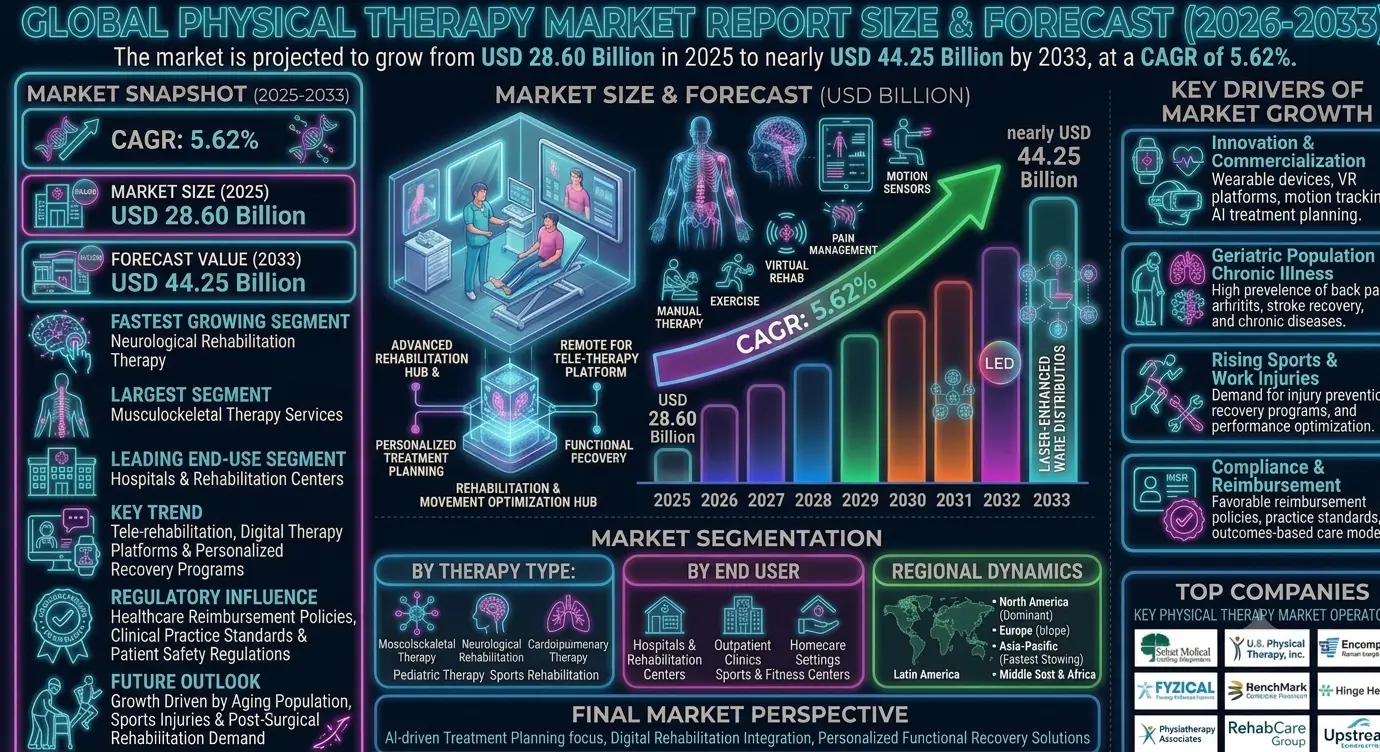
Global Physical Therapy Market Overview
Physical therapy (physiotherapy) involves clinical rehabilitation services designed to restore movement and function through exercise, manual therapy, and physical intervention techniques. The market includes musculoskeletal therapy, neurological rehabilitation, cardiopulmonary therapy, pediatric therapy, geriatric therapy, and sports rehabilitation services. Physical therapy services are widely utilized in hospitals, rehabilitation centers, outpatient clinics, sports facilities, and homecare settings. The market is evolving toward digital rehabilitation platforms, remote therapy monitoring, personalized treatment plans, and technology-assisted recovery solutions.Structural Drivers of Market Growth
1. Innovation and Commercialization Acceleration
Advancements in wearable rehabilitation devices, motion tracking systems, virtual therapy platforms, and AI-based treatment planning are transforming physical therapy delivery. Digital tools are improving patient adherence, recovery speed, and treatment personalization.Market Implications
Providers investing in digital physiotherapy platforms and technology-enabled rehabilitation services are expected to strengthen market competitiveness.2. Compliance and Risk Repricing
Healthcare regulations, insurance reimbursement frameworks, clinical safety standards, and professional licensing requirements are shaping service delivery models. Governments and insurers are increasingly supporting rehabilitation services to reduce long-term healthcare costs.Market Implications
Organizations complying with clinical guidelines and reimbursement policies are likely to gain stronger patient inflow and financial stability.3. Competitive and Value-Chain Reconfiguration
The market is highly fragmented with hospitals, independent clinics, homecare providers, and digital health platforms competing for service delivery. Telehealth integration and outpatient care expansion are reshaping traditional rehabilitation models.Market Implications
Companies focusing on hybrid care models combining in-person and digital therapy may achieve stronger growth.4. Capital and Capacity Scaling
Rising investments in healthcare infrastructure, rehabilitation centers, sports medicine facilities, and digital health platforms are supporting market expansion. Increasing healthcare spending and insurance coverage are improving access to therapy services.Market Implications
Organizations scaling multi-specialty rehabilitation services and digital platforms are expected to capture future opportunities.Market Segmentation Analysis
By Therapy Type
1. Musculoskeletal Therapy
Largest segment due to high prevalence of back pain, arthritis, and orthopedic conditions.2. Neurological Rehabilitation Therapy
Fastest-growing segment driven by stroke recovery, Parkinson???s disease, and spinal cord injuries.3. Cardiopulmonary Therapy
Used for post-cardiac surgery and respiratory condition recovery.4. Pediatric Therapy
Focused on developmental disorders and childhood rehabilitation needs.5. Sports Rehabilitation
Growing demand due to rising sports participation and injury recovery needs.By End User
1. Hospitals & Rehabilitation Centers
Largest segment due to advanced clinical infrastructure and high patient volume.2. Outpatient Clinics
Strong demand for routine therapy and injury recovery treatments.3. Homecare Settings
Fast-growing segment supported by aging population and convenience-based care.4. Sports & Fitness Centers
Increasing adoption of injury prevention and recovery programs.Regional Market Dynamics
North America
North America dominates the physical therapy market due to advanced healthcare systems, strong insurance coverage, and high rehabilitation awareness.Europe
Europe remains a major market supported by aging population, strong public healthcare systems, and rehabilitation-focused care models.Asia-Pacific
Asia-Pacific is the fastest-growing region due to increasing healthcare access, rising chronic disease burden, and expanding medical infrastructure.Latin America
Latin America is gradually growing due to improving healthcare services and increasing rehabilitation awareness.Middle East & Africa
The region is witnessing emerging growth driven by healthcare modernization and expanding hospital infrastructure.Competitive Landscape
The Global Physical Therapy Market is highly fragmented with hospitals, clinic chains, digital health providers, and rehabilitation specialists competing globally.Key Companies Operating in the Market Include:
- Select Medical Holdings Corporation
- U.S. Physical Therapy, Inc.
- Encompass Health Corporation
- ATI Physical Therapy
- FYZICAL Therapy & Balance Centers
- BenchMark Physical Therapy
- Hinge Health
- Physiotherapy Associates
- RehabCare Group
- Upstream Rehabilitation
Strategic Outlook
The future of the physical therapy market will be shaped by digital rehabilitation, AI-driven treatment planning, wearable therapy devices, and hybrid care delivery models. Tele-rehabilitation, remote patient monitoring, and personalized recovery programs will significantly improve access and treatment outcomes. The rising burden of chronic diseases, aging population, and sports-related injuries is expected to create strong long-term growth opportunities.Final Market Perspective
The Global Physical Therapy Market continues to be a vital segment of the global healthcare ecosystem. Increasing demand for rehabilitation services, technological advancements, and expanding healthcare access are driving sustained market growth. Providers capable of delivering integrated, technology-enabled, and patient-centric rehabilitation solutions will be best positioned to capture future opportunities. The convergence of digital health, personalized therapy, and preventive care is expected to redefine the future of physical therapy services worldwide.Table of Contents
Table of Contents
- Executive Summary
- Global Physical Therapy Market Snapshot (2026???2033)
- Market Size & Growth Overview
- Key Market Highlights
- Largest & Fastest-Growing Segments
- Leading End-Use Segment Overview
- Key Market Trends & Digital Transformation
- Strategic Outlook Through 2033
- Market Introduction & Overview
- Definition of Physical Therapy (Physiotherapy)
- Scope of the Global Physical Therapy Market
- Evolution of Rehabilitation & Recovery Services
- Role of Physical Therapy in Healthcare Ecosystem
- Value Chain Analysis of Physical Therapy Services
- Regulatory Influence (Reimbursement, Clinical Standards & Patient Safety)
- Transition Toward Digital & Tele-Rehabilitation Models
- Research Methodology
- Primary Research Approach
- Secondary Research Sources
- Market Size Estimation Methodology
- Forecasting Assumptions (2026???2033)
- Data Validation & Triangulation Process
- Market Dynamics
- Structural Drivers of Market Growth
- Innovation and Commercialization Acceleration in Rehabilitation Technologies
- Compliance and Risk Repricing in Healthcare Systems
- Competitive and Value-Chain Reconfiguration
- Capital and Capacity Scaling in Healthcare Infrastructure
- Market Restraints
- High Cost of Advanced Rehabilitation Services
- Limited Access in Low-Income & Rural Regions
- Shortage of Skilled Physiotherapists
- Market Opportunities
- Expansion of Tele-Rehabilitation Platforms
- Growth in Wearable & AI-Based Therapy Devices
- Rising Demand for Homecare Rehabilitation Services
- Integration of Digital Health Ecosystems
- Market Challenges
- Fragmented Service Delivery Landscape
- Regulatory Complexity Across Regions
- Patient Adherence to Long-Term Therapy Programs
- Structural Drivers of Market Growth
- Global Physical Therapy Market Size & Forecast (2026???2033)
- Market Revenue Analysis
- CAGR Analysis
- Demand-Supply Trends
- Pricing & Reimbursement Analysis
- Investment Trends
- Future Market Outlook
- Market Segmentation Analysis (2026???2033)
- By Therapy Type
- Musculoskeletal Therapy (Largest Segment)
- Neurological Rehabilitation Therapy (Fastest-Growing Segment)
- Cardiopulmonary Therapy
- Pediatric Therapy
- Sports Rehabilitation
- By End User
- Hospitals & Rehabilitation Centers (Largest Segment)
- Outpatient Clinics
- Homecare Settings (Fastest-Growing Segment)
- Sports & Fitness Centers
- By Therapy Type
- Regional Market Analysis
- North America
- Europe
- Asia-Pacific (Fastest-Growing Region)
- Latin America
- Middle East & Africa
- Competitive Landscape
- Market Structure & Fragmentation Analysis
- Key Player Benchmarking
- Strategic Developments
- Digital Rehabilitation & Telehealth Strategies
- Partnerships, Expansion & Acquisition Trends
- Company Profiles
- Select Medical Holdings Corporation
- U.S. Physical Therapy, Inc.
- Encompass Health Corporation
- ATI Physical Therapy
- FYZICAL Therapy & Balance Centers
- BenchMark Physical Therapy
- Hinge Health
- Physiotherapy Associates
- RehabCare Group
- Upstream Rehabilitation
- Strategic Outlook
- Future of Digital Rehabilitation & Tele-Physiotherapy
- AI-Driven Treatment Planning & Personalization
- Expansion of Hybrid Care Delivery Models
- Growth of Preventive & Home-Based Care Systems
- Long-Term Market Outlook (2033+)
- Final Market Perspective
- Appendix
- About Pheonix Market Research
- Disclaimer
Competitive Landscape
Global Physical Therapy Market Competitive Intensity & Market Structure Overview
The Global Physical Therapy Market is highly fragmented and intensely competitive, with the presence of large hospital networks, specialized rehabilitation centers, independent physiotherapy clinics, and rapidly growing digital health platforms. Competition is primarily driven by service quality, clinical outcomes, pricing models, technology adoption, and geographic reach.
The market is undergoing a structural shift from traditional in-clinic rehabilitation services toward hybrid care models that combine in-person therapy with tele-rehabilitation, wearable-based monitoring, and AI-assisted recovery programs. This transition is significantly increasing competitive pressure across both established providers and emerging digital-first companies.
Increasing demand for cost-effective rehabilitation, patient-centric care delivery, and outcome-based treatment models is further intensifying competition among service providers across global markets.
Global Physical Therapy Market Competitive Landscape
Key Companies Operating in the Market
Select Medical Holdings Corporation: A leading provider of specialty hospitals and outpatient rehabilitation services with a strong presence in physical therapy and post-acute care.
U.S. Physical Therapy, Inc.: One of the largest publicly traded physical therapy service providers, operating a network of outpatient clinics across the United States.
Encompass Health Corporation: A major player in inpatient rehabilitation hospitals and home-based healthcare services, focusing on post-acute recovery.
ATI Physical Therapy: A prominent outpatient physical therapy provider offering musculoskeletal and sports rehabilitation services across multiple locations.
FYZICAL Therapy & Balance Centers: A fast-growing franchise-based physical therapy network specializing in balance, vestibular, and orthopedic rehabilitation.
BenchMark Physical Therapy: A leading outpatient rehabilitation provider offering orthopedic and sports injury treatment services.
Hinge Health: A digital health company specializing in virtual musculoskeletal care and AI-powered digital physical therapy programs.
Physiotherapy Associates: A well-established rehabilitation services provider focusing on outpatient physical therapy and wellness programs.
RehabCare Group: A major provider of rehabilitation services integrated within hospitals and skilled nursing facilities.
Upstream Rehabilitation: One of the largest outpatient physical therapy networks in the United States, operating multiple regional clinic brands.
Strategic Competitive Dynamics
Digital transformation is reshaping competitive positioning, with companies investing heavily in tele-rehabilitation platforms, remote monitoring tools, and AI-driven treatment planning systems.
Providers offering hybrid care models that combine in-clinic therapy with virtual rehabilitation services are gaining a strong competitive advantage in both developed and emerging markets.
Partnerships between healthcare providers, insurers, and digital health companies are increasing, enabling expanded access to rehabilitation services and improved reimbursement coverage.
Scalability through clinic networks, franchise models, and digital platforms is becoming a key differentiator in achieving market leadership.
Forward Competitive Outlook
The competitive landscape of the physical therapy market is expected to become increasingly technology-driven, with AI-enabled rehabilitation programs, wearable therapy devices, and data-driven treatment personalization shaping future growth.
Companies that successfully integrate digital health ecosystems with traditional rehabilitation services are expected to strengthen their market position and capture higher patient volumes.
Over the forecast period, competition will intensify as new entrants leverage digital platforms to offer lower-cost, accessible, and outcome-focused physical therapy services globally.
Value Chain
Global Physical Therapy Market Value Chain & Service Delivery Ecosystem Overview
The Global Physical Therapy Market operates through a multi-layered value chain that connects healthcare research, rehabilitation technology development, clinical service delivery, and post-treatment patient support systems. The ecosystem is increasingly shaped by digital health integration, patient-centric care models, and outcome-driven reimbursement structures.
At its core, the value chain is transitioning from traditional in-person therapy delivery toward a hybrid model combining physical clinics, homecare services, and tele-rehabilitation platforms. This shift is improving accessibility, reducing treatment costs, and expanding long-term patient engagement across global healthcare systems.
A key structural evolution in the value chain is the integration of medical device manufacturers, digital health companies, and rehabilitation service providers. Wearable sensors, motion tracking systems, AI-based therapy planning tools, and remote monitoring platforms are now embedded into clinical workflows, enhancing treatment precision and recovery tracking.
The service delivery ecosystem is also influenced by insurance providers, healthcare regulators, and government reimbursement frameworks, which collectively determine pricing structures, service accessibility, and adoption rates across regions.
Physical Therapy Market Value Chain Structure
1. Research & Clinical Development
This stage includes clinical research institutions, rehabilitation science centers, and medical universities focusing on musculoskeletal therapy, neurological rehabilitation, sports medicine, and mobility restoration techniques. It also includes development of evidence-based treatment protocols and rehabilitation methodologies.
2. Medical Device & Rehabilitation Technology Development
Manufacturers design and develop rehabilitation equipment such as physiotherapy machines, electrotherapy devices, wearable motion sensors, robotic rehabilitation systems, and AI-powered therapy platforms. These technologies enable precision-based and data-driven treatment delivery.
3. Digital Health & Tele-Rehabilitation Platforms
Digital platforms provide remote physiotherapy consultations, virtual exercise monitoring, AI-based recovery tracking, and personalized rehabilitation programs. These platforms are rapidly expanding access to care, especially in home-based recovery settings.
4. Clinical Service Delivery
Hospitals, rehabilitation centers, outpatient clinics, and sports medicine facilities deliver hands-on therapy services including musculoskeletal treatment, neurological rehabilitation, cardiopulmonary therapy, and post-surgical recovery care.
5. Homecare & Community-Based Rehabilitation
Home-based physiotherapy services are growing rapidly due to aging populations and patient preference for convenience. This segment includes mobile therapists, remote monitoring solutions, and caregiver-supported rehabilitation programs.
6. Insurance & Reimbursement Framework
Insurance providers and government healthcare programs play a critical role in determining treatment affordability and accessibility. Reimbursement policies strongly influence adoption rates of advanced rehabilitation services and digital therapy platforms.
7. End-User Patient Outcomes & Long-Term Care
The final stage focuses on patient recovery outcomes, mobility restoration, pain management, and long-term disability prevention. Continuous monitoring and follow-up care ensure sustained rehabilitation success.
Key Value Chain Evolution Trends
Integration of Digital Rehabilitation Systems
The incorporation of tele-rehabilitation platforms, wearable sensors, and AI-based therapy tools is transforming traditional therapy delivery into a data-driven healthcare ecosystem.
Shift Toward Hybrid Care Models
Healthcare providers are increasingly combining in-clinic therapy with remote monitoring and home-based rehabilitation services to improve patient adherence and reduce costs.
Expansion of Outcome-Based Healthcare Models
Reimbursement systems are shifting toward value-based care, where treatment effectiveness and patient recovery outcomes determine financial incentives.
Growing Role of Preventive Rehabilitation
Physical therapy is expanding beyond treatment into preventive care, focusing on injury prevention, mobility enhancement, and long-term wellness programs.
Strategic Value Chain Implications
Technology-Driven Competitive Advantage
Companies investing in AI-powered rehabilitation tools, wearable therapy devices, and digital health platforms are gaining stronger positioning in the evolving healthcare ecosystem.
Service Integration Across Delivery Channels
Organizations offering integrated services across hospitals, clinics, and homecare environments are improving patient retention and expanding market reach.
Reimbursement-Linked Market Expansion
Compliance with insurance frameworks and clinical standards is becoming essential for scaling rehabilitation services globally.
Data-Driven Therapy Optimization
Use of patient data analytics, motion tracking, and predictive recovery modeling is enabling more personalized and effective treatment planning.
Future Value Chain Outlook
The physical therapy value chain is expected to evolve into a fully integrated digital-health ecosystem where AI, robotics, remote monitoring, and clinical expertise operate in unison to deliver continuous, personalized rehabilitation care.
Future growth will be driven by expanding tele-rehabilitation adoption, increasing demand for home-based therapy, rising chronic disease burden, and advancements in medical technology integration across healthcare systems.
Investment Activity
Global Physical Therapy Market Investment & Funding Dynamics Overview
The Global Physical Therapy Market is experiencing rising investment activity driven by increasing demand for rehabilitation services, aging populations, growing sports injuries, and expanding post-surgical care needs. Capital inflows are being directed toward rehabilitation clinics, digital physiotherapy platforms, tele-rehabilitation solutions, wearable therapy devices, and AI-assisted recovery systems.
Investors, healthcare providers, private equity firms, insurance-backed healthcare networks, and digital health companies are increasingly focusing on scalable rehabilitation models that combine in-person therapy with remote monitoring and digital care delivery.
Additionally, government healthcare programs and insurance reimbursement expansion are strengthening funding visibility across rehabilitation infrastructure, outpatient care facilities, and home-based therapy services, making the sector more attractive for long-term capital deployment.
Current Investment & Funding Scenario
The market is witnessing steady capital expansion as healthcare systems prioritize cost-effective rehabilitation to reduce long-term disability and hospitalization costs. Hospitals and rehabilitation centers are investing in advanced physiotherapy equipment, robotic rehabilitation systems, motion tracking technologies, and digital therapy platforms.
Venture capital and digital health investors are increasingly funding tele-rehabilitation startups, AI-powered physiotherapy platforms, and wearable-based recovery solutions to improve patient engagement and treatment adherence.
Strategic partnerships between healthcare providers, technology companies, and insurance organizations are further accelerating investment flows into integrated rehabilitation ecosystems and value-based care models.
Key Investment & Funding Dynamics
- Rising demand for tele-rehabilitation platforms and digital physiotherapy services is attracting strong venture capital interest.
- Expansion of rehabilitation infrastructure in hospitals and specialty clinics is driving institutional investments.
- Increasing adoption of wearable rehabilitation devices and motion tracking systems is supporting technology-focused funding.
- Insurance reimbursement expansion for post-acute care and physical therapy services is improving investment confidence.
- Growing focus on homecare-based rehabilitation models is creating new scalable investment opportunities.
- Integration of AI-driven treatment planning and personalized recovery programs is enhancing digital health funding activity.
- Strategic consolidation through clinic acquisitions and rehabilitation network expansion is reshaping market structure.
Strategic Implications of Investment & Funding Dynamics
- Companies investing in hybrid rehabilitation models combining physical and digital therapy are expected to gain stronger market positioning.
- Capital allocation toward automation, AI-based therapy tools, and remote monitoring systems will improve treatment efficiency and scalability.
- Healthcare providers expanding multi-location rehabilitation networks are likely to capture higher patient volumes.
- Digital health platforms focused on personalized and data-driven rehabilitation programs will attract long-term investor interest.
- Compliance with clinical standards, reimbursement frameworks, and patient safety regulations will remain critical for funding access.
- Partnerships between hospitals, insurers, and digital therapy providers will accelerate ecosystem-based growth.
- Organizations leveraging preventive care and long-term recovery management models will gain sustained competitive advantage.
Forward Outlook
Looking ahead, the Global Physical Therapy Market is expected to attract increasing investment as healthcare systems shift toward value-based care, cost reduction, and improved patient outcomes. Demand for scalable rehabilitation solutions will continue to support capital inflows across both traditional and digital care models.
Future funding is likely to concentrate on tele-rehabilitation platforms, AI-powered recovery systems, robotic physiotherapy equipment, and integrated homecare rehabilitation ecosystems.
As aging populations and chronic disease prevalence rise globally, investors are expected to prioritize long-term rehabilitation infrastructure, digital health innovation, and patient-centric care delivery systems.
In conclusion, the Global Physical Therapy Market represents a high-potential healthcare investment landscape where digital transformation, rehabilitation innovation, hybrid care models, and preventive healthcare strategies will define future funding direction and industry growth.
Technology & Innovation
Global Physical Therapy Market Technology & Innovation Landscape Overview
The Global Physical Therapy Market is undergoing a significant technological transformation driven by the integration of digital health platforms, AI-powered rehabilitation systems, wearable therapeutic devices, and remote patient monitoring solutions. The industry is shifting from traditional in-clinic treatment models toward hybrid and fully digital rehabilitation ecosystems that enhance accessibility, personalization, and treatment outcomes.
A key driver of innovation is the growing adoption of tele-rehabilitation platforms that enable physiotherapists to deliver guided recovery programs remotely using video consultations, motion tracking, and real-time feedback systems. This shift is improving patient adherence and expanding access to therapy services beyond urban healthcare centers.
Advancements in wearable rehabilitation technologies, including smart braces, motion sensors, posture correction devices, and biofeedback systems, are enabling continuous monitoring of patient progress and more precise treatment adjustments.
Artificial intelligence and machine learning are increasingly being used to design personalized rehabilitation programs, predict recovery timelines, and analyze patient movement patterns to optimize therapy effectiveness.
Additionally, the integration of virtual reality (VR) and augmented reality (AR) in rehabilitation is enhancing patient engagement by offering immersive therapy environments, particularly for neurological and musculoskeletal recovery.
The convergence of digital therapeutics, data-driven care models, and connected rehabilitation devices is redefining the technological foundation of the global physical therapy market.
Global Physical Therapy Market Technology & Innovation Current Scenario
Currently, the market is characterized by rapid adoption of digital rehabilitation tools, smart therapy devices, and hybrid care delivery models that combine in-person and remote physiotherapy services.
1. Tele-Rehabilitation Platforms
Digital platforms enable remote physiotherapy consultations, guided exercise sessions, and continuous patient monitoring, improving access to care and reducing treatment costs.
2. Wearable Rehabilitation Devices
Smart wearable devices track movement, posture, muscle activity, and recovery progress, providing real-time feedback to both patients and therapists.
3. AI-Driven Therapy Planning
Artificial intelligence is being used to develop personalized rehabilitation programs based on patient history, injury type, and recovery performance data.
4. Virtual Reality (VR) & Augmented Reality (AR) Therapy
Immersive technologies are improving neurological and orthopedic rehabilitation by increasing patient engagement and simulating real-world movement scenarios.
5. Remote Patient Monitoring Systems
Connected health platforms allow continuous tracking of patient progress outside clinical settings, improving treatment adherence and outcomes.
6. Digital Therapeutics & Mobile Health Apps
Mobile applications provide guided exercises, recovery tracking, reminders, and performance analytics for home-based rehabilitation programs.
Key Technology & Innovation Signals in Global Physical Therapy Market
Several innovation trends are shaping the evolution of the physical therapy industry:
1. Expansion of Telehealth Ecosystems
Growing acceptance of virtual care is accelerating the adoption of remote rehabilitation services.
2. Rising Use of Wearable Health Technologies
Demand for real-time movement tracking and performance monitoring is driving wearable device integration in therapy programs.
3. Growth of AI-Based Clinical Decision Support
AI tools are assisting therapists in diagnosis support, recovery prediction, and personalized treatment planning.
4. Increasing Focus on Home-Based Rehabilitation
Patient preference for convenience is supporting the growth of digital and homecare physiotherapy solutions.
5. Integration of Gamification in Therapy
Gamified rehabilitation programs are improving patient motivation and long-term engagement in recovery processes.
6. Advancements in Motion Analysis Technologies
Computer vision and sensor-based systems are improving accuracy in movement tracking and injury assessment.
Strategic Implications of Technology & Innovation Landscape
The rapid digitalization of physical therapy is reshaping competitive dynamics across the healthcare ecosystem. Providers that integrate digital rehabilitation platforms, wearable technologies, and AI-driven treatment systems are gaining a strong competitive advantage.
Healthcare organizations are increasingly forming partnerships with health-tech companies, wearable device manufacturers, and software providers to expand their digital therapy capabilities.
The shift toward hybrid care models combining in-person therapy with remote digital rehabilitation is improving scalability and reducing operational costs.
Additionally, data-driven rehabilitation ecosystems are enabling more precise treatment outcomes, improved patient monitoring, and better long-term recovery management.
Global Physical Therapy Market Technology & Innovation Forward Outlook
Looking ahead, the Global Physical Therapy Market is expected to evolve into a highly digitalized and AI-enabled rehabilitation ecosystem with advanced automation and predictive care capabilities.
Future technological developments are likely to include:
1. Fully AI-Powered Rehabilitation Systems
AI will autonomously design, monitor, and adjust personalized therapy programs based on real-time patient data.
2. Advanced Wearable Biofeedback Systems
Next-generation wearables will provide deeper insights into muscle activity, posture correction, and biomechanical performance.
3. Immersive VR-Based Clinical Rehabilitation
Virtual environments will become standard in neurological and orthopedic recovery programs.
4. Integrated Digital Health Ecosystems
Physical therapy will be fully connected with electronic health records and broader digital healthcare platforms.
5. Predictive Rehabilitation Analytics
Advanced analytics will forecast recovery timelines and optimize treatment pathways with higher accuracy.
6. Expansion of Fully Home-Based Therapy Models
Remote rehabilitation will increasingly replace routine in-clinic visits for non-critical conditions.
Overall, companies that successfully integrate digital health technologies, AI-driven personalization, wearable rehabilitation systems, and hybrid care delivery models will define the future of the global physical therapy market.
Market Risk
Global Physical Therapy Market Risk Factors & Disruption Threats Overview
The Global Physical Therapy Market operates within a highly structured healthcare ecosystem where demand is driven by aging populations, chronic disease prevalence, sports injuries, and post-surgical rehabilitation needs. While the market benefits from stable long-term demand fundamentals and increasing adoption of digital rehabilitation solutions, it is also exposed to regulatory dependency, reimbursement uncertainty, workforce constraints, digital adoption gaps, and variability in patient adherence to treatment programs.
A key structural risk is heavy dependence on healthcare reimbursement systems. Physical therapy services are significantly influenced by insurance coverage policies, government healthcare schemes, and payer reimbursement rates. Any tightening of reimbursement frameworks or changes in coverage eligibility can directly impact provider revenues and patient access to services.
Another major disruption factor is workforce availability and clinical capacity constraints. The market depends on trained physiotherapists, rehabilitation specialists, and support staff, and shortages in skilled professionals can limit service scalability, increase operational costs, and affect care quality.
Additionally, patient adherence and engagement remain critical challenges. Physical therapy outcomes depend heavily on consistent participation in rehabilitation programs, and dropout rates or inconsistent compliance can reduce treatment effectiveness and limit long-term clinical success.
The increasing integration of digital rehabilitation platforms also introduces technology adoption risks, including disparities in access to tele-rehabilitation infrastructure, data privacy concerns, and variability in clinical acceptance of AI-assisted therapy tools.
Global Physical Therapy Market Risk Factors & Disruption Threats Current Scenario
The current market environment is characterized by growing demand for rehabilitation services across hospitals, outpatient clinics, and homecare settings, supported by rising cases of musculoskeletal disorders, neurological conditions, and post-operative recovery needs.
Tele-rehabilitation platforms and digital physiotherapy solutions are gaining traction, particularly in urban and semi-urban regions, enabling remote patient monitoring and hybrid care delivery models.
At the same time, healthcare systems are facing cost pressures, leading insurers and providers to emphasize outcome-based care models and cost-efficient rehabilitation pathways.
Clinical workforce shortages in several regions are placing additional strain on service delivery capacity, particularly in high-demand urban healthcare centers and specialized rehabilitation facilities.
Competition among hospitals, independent clinics, digital health platforms, and homecare providers is intensifying as service models evolve toward integrated and patient-centric care delivery systems.
Key Risk Factors & Disruption Threats Signals in Global Physical Therapy Market
A major disruption signal is the rapid expansion of tele-rehabilitation and AI-assisted therapy platforms, which are reshaping traditional in-person care delivery models.
Another important signal is the shift toward value-based healthcare, where reimbursement is increasingly linked to patient outcomes rather than service volume, impacting provider revenue structures.
The growing adoption of wearable rehabilitation devices, motion tracking systems, and remote monitoring tools is transforming patient engagement and treatment personalization.
Increasing demand for home-based care services reflects a broader shift toward decentralized healthcare delivery models, particularly for elderly and mobility-limited patient populations.
Regulatory emphasis on clinical quality standards, patient safety protocols, and licensing requirements continues to influence operational compliance and service delivery frameworks.
Strategic Implications of Risk Factors & Disruption Threats in Global Physical Therapy Market
Healthcare providers must strengthen integration with reimbursement systems and insurance frameworks to ensure stable revenue streams and improved patient access to therapy services.
Investment in digital rehabilitation platforms, remote monitoring technologies, and AI-driven treatment planning will be essential for improving scalability and treatment efficiency.
Workforce development strategies, including training, retention, and specialization of physiotherapists, will be critical to addressing capacity constraints and maintaining care quality.
Hybrid care delivery models combining in-clinic and tele-rehabilitation services will become increasingly important for expanding patient reach and improving treatment adherence.
Organizations that align clinical excellence with technology adoption, patient engagement strategies, and outcome-based care delivery will be better positioned for long-term competitiveness.
Global Physical Therapy Market Risk Factors & Disruption Threats Forward Outlook
Looking ahead to 2026???2033, the Global Physical Therapy Market is expected to grow steadily, supported by aging populations, increasing chronic disease burden, sports-related injuries, and expanding post-surgical rehabilitation demand.
Tele-rehabilitation, wearable therapy devices, AI-enabled treatment systems, and personalized rehabilitation programs are expected to become mainstream components of care delivery.
Healthcare systems will continue transitioning toward value-based care models, increasing the importance of measurable treatment outcomes and cost-efficient rehabilitation approaches.
Emerging markets in Asia-Pacific and Latin America are expected to drive significant demand growth due to improving healthcare access and expanding medical infrastructure.
Overall, the market will remain structurally resilient but operationally complex, with long-term success increasingly determined by reimbursement alignment, workforce capacity, digital transformation, and the ability to deliver consistent, patient-centric rehabilitation outcomes.
Regulatory Landscape
Global Physical Therapy Market Regulatory & Policy Environment Overview
The regulatory and policy environment governing the Global Physical Therapy Market is evolving as healthcare systems increasingly prioritize rehabilitation services, patient safety, cost containment, and improved long-term clinical outcomes. Physical therapy plays a critical role in recovery, disability prevention, and functional restoration, making it subject to strict clinical governance frameworks and healthcare delivery standards across global markets.
Physical therapy providers, rehabilitation centers, hospitals, outpatient clinics, and digital health platforms must comply with a wide range of regulations covering clinical practice standards, professional licensing, healthcare reimbursement policies, patient safety requirements, and data privacy regulations. As care delivery expands into tele-rehabilitation and digital therapy platforms, regulatory oversight is also extending into virtual care quality, remote monitoring, and digital health compliance frameworks.
The growing burden of chronic diseases, aging populations, sports injuries, and post-surgical rehabilitation needs is encouraging governments and healthcare regulators to strengthen rehabilitation guidelines and integrate physical therapy more deeply into primary and preventive healthcare systems.
Global Physical Therapy Market Regulatory & Policy Environment Current Scenario
The current regulatory environment is characterized by strong emphasis on clinical governance, licensing requirements, reimbursement structures, and patient safety standards. Physical therapists must comply with professional certification requirements and scope-of-practice regulations that vary by country and healthcare system.
Healthcare reimbursement policies play a critical role in shaping service accessibility and adoption. Insurance providers, government healthcare programs, and private payers define coverage rules for rehabilitation services, influencing patient access to musculoskeletal therapy, neurological rehabilitation, and post-operative recovery programs.
Clinical practice guidelines issued by healthcare authorities and professional associations ensure standardized treatment protocols, evidence-based care delivery, and quality assurance across rehabilitation services. These frameworks help maintain consistency in patient outcomes and service quality.
Patient safety regulations are also a key component of the market environment, ensuring that therapy interventions, rehabilitation exercises, and treatment programs are delivered safely and effectively. This includes monitoring of treatment protocols, therapist qualifications, and facility standards.
In addition, data privacy and digital health regulations are becoming increasingly important with the expansion of tele-rehabilitation platforms, wearable therapy devices, and AI-assisted treatment planning systems that collect and process sensitive patient health data.
Key Regulatory & Policy Environment Signals in Global Physical Therapy Market
- Healthcare Reimbursement Policies: Insurance coverage frameworks and government healthcare programs determining access to rehabilitation services and therapy treatments.
- Clinical Practice Standards: Evidence-based guidelines governing treatment protocols, therapist conduct, and rehabilitation methodologies.
- Professional Licensing & Certification: Regulations ensuring therapist qualifications, continuing education, and scope-of-practice compliance.
- Patient Safety Regulations: Standards ensuring safe delivery of physical therapy interventions and rehabilitation procedures.
- Digital Health & Tele-Rehabilitation Compliance: Regulations governing remote therapy delivery, virtual consultations, and digital rehabilitation platforms.
- Data Privacy & Health Information Protection: Laws ensuring secure handling of patient health records and digital therapy data.
Strategic Implications of Regulatory & Policy Environment
The evolving regulatory landscape is encouraging physical therapy providers to adopt standardized, evidence-based, and compliance-driven care delivery models. Regulatory alignment is becoming increasingly important for securing reimbursement eligibility and maintaining patient trust.
Reimbursement policies are directly influencing market expansion by determining the affordability and accessibility of rehabilitation services. Providers that align with insurance requirements and government healthcare frameworks are more likely to achieve stable patient volumes and revenue streams.
Clinical governance standards are driving improvements in treatment quality, encouraging providers to adopt standardized rehabilitation protocols, outcome tracking systems, and performance-based care models.
The expansion of tele-rehabilitation is creating new regulatory considerations around remote care quality, cross-border service delivery, and digital therapy validation. Providers investing in compliant digital platforms are better positioned for scalable growth.
Patient safety and data privacy regulations are reinforcing the importance of secure, ethical, and clinically validated rehabilitation services, particularly as digital health tools become more widely integrated into therapy programs.
Global Physical Therapy Market Regulatory & Policy Environment Forward Outlook
Between 2026 and 2033, the regulatory environment for the global physical therapy market is expected to become more integrated with digital health governance, value-based care models, and outcome-driven reimbursement systems. Governments and insurers are likely to further emphasize rehabilitation as a cost-effective alternative to long-term medical treatment and disability management.
Tele-rehabilitation regulations are expected to evolve significantly, with clearer frameworks for remote patient monitoring, virtual therapy delivery, cross-border consultations, and digital clinical validation standards.
Healthcare reimbursement models are anticipated to shift further toward value-based care, linking payments more closely to patient outcomes, recovery rates, and functional improvement metrics.
Data privacy and cybersecurity requirements will likely become stricter as digital rehabilitation platforms, wearable devices, and AI-driven therapy systems expand their role in patient care ecosystems.
Overall, the future regulatory landscape will be shaped by the convergence of clinical governance standards, digital health transformation, reimbursement reforms, and patient-centric care models. Providers capable of delivering compliant, evidence-based, technology-enabled, and outcome-driven rehabilitation services will be best positioned to succeed in the evolving global physical therapy ecosystem.