
Global Health Tourism Market Size and Share Analysis 2026-2033
Global Health Tourism Market Forecast Snapshot (2026???2033)
| Metric | Value |
|---|---|
| Market Size (2025) | USD 38.7 Billion |
| Market Size (2033) | USD 98.5 Billion |
| CAGR (2026???2033) | 12.4% |
| Largest Segment | Medical Tourism |
| Fastest Growing Segment | Wellness & Preventive Tourism |
| Leading End-Use Segment | Hospitals & Specialty Clinics |
| Key Trend | Integration of Digital Health Platforms with Cross-Border Patient Care Services |
| Dominant Region | Asia-Pacific |
| Fastest Growing Region | Middle East |
| Primary Growth Driver | Rising Demand for Affordable, High-Quality Cross-Border Medical Treatments |
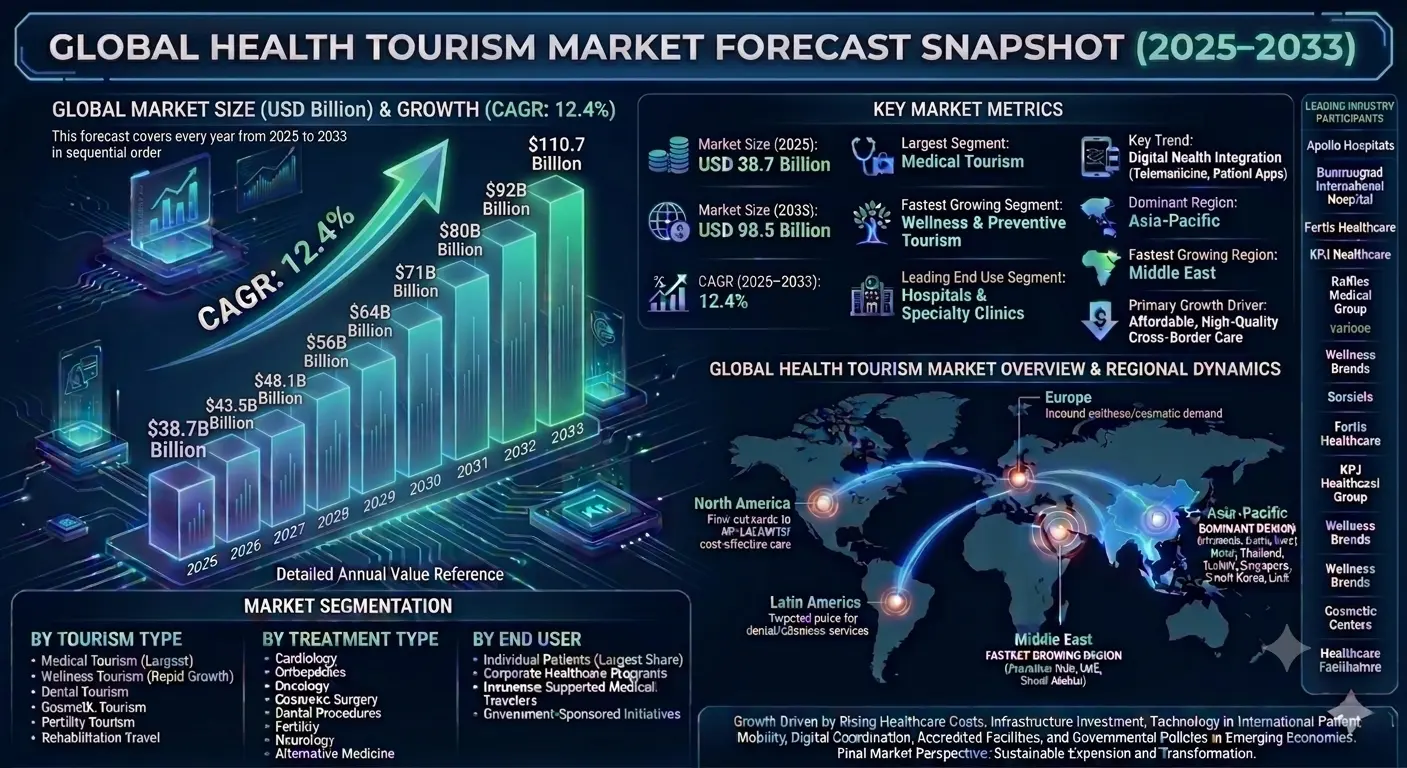
Global Health Tourism Market Size & Forecast
The global health tourism market is projected to witness strong and sustained growth during the forecast period from 2026 to 2033. The market was valued at approximately USD 38.7 billion in 2025 and is expected to reach nearly USD 98.5 billion by 2033, expanding at a CAGR of around 12.4%. This growth is driven by rising healthcare costs in developed countries, increasing demand for affordable medical treatments, expanding international patient mobility, and advancements in healthcare infrastructure across emerging medical tourism destinations. Health tourism, also referred to as medical tourism or wellness tourism, involves traveling across borders to access medical treatment, wellness therapies, cosmetic procedures, rehabilitation services, and preventive healthcare solutions. Patients increasingly seek high-quality healthcare services at lower costs while combining treatment with travel and recovery experiences. The market is benefiting from rising global awareness regarding specialized treatments available in countries such as India, Thailand, Turkey, Singapore, South Korea, Mexico, and the UAE. These destinations offer advanced healthcare facilities, internationally accredited hospitals, experienced medical professionals, and competitive treatment pricing compared to North America and Europe. Technological advancements in telemedicine, digital patient coordination, AI-assisted diagnostics, and online healthcare consultation platforms are further streamlining international patient management and improving healthcare accessibility across borders.Global Health Tourism Market Overview
The health tourism market encompasses a broad range of healthcare-related travel services including medical treatment tourism, wellness tourism, dental tourism, cosmetic surgery tourism, fertility tourism, rehabilitation travel, and preventive healthcare programs. The industry integrates healthcare providers, travel agencies, hospitality companies, insurance providers, wellness centers, and digital healthcare platforms into a connected international ecosystem. Patients are increasingly seeking integrated treatment packages that combine healthcare services, accommodation, transportation, and post-treatment recovery support. Key industry participants include hospitals, specialty clinics, fertility centers, cosmetic surgery centers, wellness resorts, healthcare facilitators, and tourism agencies. Leading healthcare destinations are heavily investing in hospital infrastructure, accreditation programs, and international patient services to strengthen their global competitiveness. Governments in major medical tourism destinations are actively promoting healthcare tourism through favorable visa policies, investment incentives, and international healthcare branding initiatives.Key Drivers of Global Health Tourism Market Growth
Rising Healthcare Costs in Developed Countries
Patients from developed nations are increasingly traveling abroad to access affordable medical treatments, surgeries, and specialized procedures that cost significantly less in emerging healthcare destinations.Expansion of Advanced Healthcare Infrastructure
Many emerging economies are investing heavily in modern hospitals, specialized treatment centers, robotic surgery systems, and internationally accredited healthcare facilities to attract international patients.Growing Demand for Cosmetic and Elective Procedures
Cosmetic surgeries, dental treatments, fertility procedures, and wellness therapies are driving strong demand within the health tourism market due to lower treatment costs and shorter waiting times abroad.Improved International Connectivity and Digital Healthcare Services
Advancements in telemedicine, digital consultation platforms, and global travel connectivity are making international healthcare access more convenient and efficient for patients worldwide.Rising Focus on Wellness and Preventive Healthcare
Consumers are increasingly prioritizing wellness retreats, alternative therapies, rehabilitation programs, and preventive healthcare services as part of holistic health management.Global Health Tourism Market Segmentation
By Tourism Type
The market is segmented into medical tourism, wellness tourism, dental tourism, cosmetic tourism, fertility tourism, and rehabilitation tourism. Medical tourism remains the largest segment, while wellness tourism is witnessing rapid growth globally.By Treatment Type
Treatment categories include cardiology, orthopedics, oncology, cosmetic surgery, dental procedures, fertility treatments, neurology, bariatric surgery, and alternative medicine therapies.By Service Provider
Service providers include hospitals, specialty clinics, wellness centers, rehabilitation centers, and healthcare facilitators. Hospitals account for the largest market share due to the availability of advanced treatment infrastructure.By Booking Channel
The market includes direct hospital booking, medical tourism facilitators, travel agencies, and online healthcare platforms. Digital healthcare platforms are gaining significant traction due to convenience and accessibility.By End User
End users include individual patients, corporate healthcare programs, insurance-supported medical travelers, and government-sponsored healthcare initiatives.Regional Market Dynamics
Asia-Pacific dominates the global health tourism market due to affordable treatment costs, advanced medical infrastructure, and strong international patient inflows into countries such as India, Thailand, Singapore, Malaysia, and South Korea. Europe represents a significant market driven by wellness tourism, rehabilitation services, cosmetic procedures, and cross-border healthcare access within the European Union. North America remains an important outbound market as patients seek cost-effective healthcare alternatives abroad, particularly for elective and uninsured medical procedures. Middle East is emerging as a premium health tourism hub with increasing investments in luxury healthcare facilities and specialized treatment centers in the UAE and Saudi Arabia. Latin America is gaining popularity for dental tourism, cosmetic surgeries, and wellness services, especially in countries such as Mexico, Brazil, and Costa Rica.Competitive Landscape
The global health tourism market is highly fragmented and competitive, involving hospitals, tourism facilitators, wellness resorts, and digital healthcare service providers. Leading participants include Apollo Hospitals, Bumrungrad International Hospital, Fortis Healthcare, KPJ Healthcare, Raffles Medical Group, and various international wellness brands. Healthcare providers are increasingly focusing on international accreditation, multilingual patient support, digital appointment systems, and integrated travel services to strengthen market positioning. Strategic partnerships between hospitals, airlines, hospitality companies, and insurance providers are becoming increasingly common to create seamless healthcare travel experiences for international patients. Competition is driven by treatment affordability, quality of care, technological capabilities, patient experience, and post-treatment support services.Strategic Outlook
The strategic outlook for the health tourism market remains highly positive due to increasing globalization of healthcare services and rising consumer willingness to travel for quality treatment and wellness experiences. Future growth opportunities lie in personalized healthcare tourism packages, AI-enabled patient coordination systems, regenerative medicine tourism, and integrated wellness ecosystems combining medical treatment with preventive healthcare services. Digital healthcare platforms and telemedicine integration are expected to significantly improve patient acquisition, treatment planning, and long-term follow-up care in the coming years.Final Market Perspective
The global health tourism market is entering a transformative phase driven by affordability, healthcare globalization, and rising demand for specialized medical and wellness services. Increasing patient mobility and technological advancements are reshaping how healthcare services are delivered across international borders. As countries continue investing in healthcare infrastructure and international patient services, the market is expected to witness sustained expansion. Providers that combine high-quality treatment, competitive pricing, advanced technology, and superior patient experience will remain strongly positioned in the evolving global health tourism market.Table of Contents
Table of Contents
- 1. Executive Summary
- 1.1 Global Health Tourism Market Snapshot (2026???2033)
- 1.2 Market Size & CAGR Analysis
- 1.3 Largest & Fastest-Growing Segments
- 1.4 Key Regional Insights
- 1.5 Major Market Growth Drivers
- 1.6 Competitive Landscape Overview
- 1.7 Strategic Outlook Through 2033
- 2. Introduction & Market Overview
- 2.1 Definition of Health Tourism
- 2.2 Scope of the Study
- 2.3 Evolution of Global Healthcare Mobility
- 2.4 Medical Tourism Value Chain & Ecosystem
- 2.5 Healthcare Infrastructure & Destination Landscape
- 2.6 Regulatory & Visa Framework Analysis
- 2.7 Digital Health & Telemedicine Integration
- 3. Research Methodology
- 3.1 Primary Research
- 3.2 Secondary Research
- 3.3 Market Sizing Approach
- 3.4 Forecast Modeling (2026???2033)
- 3.5 Data Validation & Triangulation
- 4. Market Dynamics
- 4.1 Drivers
- 4.1.1 Rising Healthcare Costs in Developed Economies
- 4.1.2 Expansion of Affordable Medical Destinations
- 4.1.3 Growth in Cosmetic & Elective Procedures
- 4.1.4 Advancements in Telemedicine & Digital Health
- 4.1.5 Increasing Global Patient Mobility
- 4.2 Restraints
- 4.2.1 Regulatory & Legal Barriers
- 4.2.2 Post-Treatment Continuity Challenges
- 4.2.3 Quality Standard Variations Across Regions
- 4.2.4 Travel & Insurance Limitations
- 4.3 Opportunities
- 4.3.1 AI-Driven Patient Coordination Platforms
- 4.3.2 Integrated Medical-Wellness Packages
- 4.3.3 Expansion of Fertility & Regenerative Tourism
- 4.3.4 Growth of Digital Healthcare Marketplaces
- 4.4 Challenges
- 4.4.1 Cross-Border Data Privacy Concerns
- 4.4.2 Insurance Coverage Complexity
- 4.4.3 Patient Trust & Safety Perception
- 4.4.4 Operational Coordination Across Countries
- 4.1 Drivers
- 5. Global Health Tourism Market Analysis (USD Billion), 2026???2033
- 5.1 Market Size Overview
- 5.2 CAGR Analysis
- 5.3 Regional Revenue Distribution
- 5.4 Treatment Type Revenue Analysis
- 5.5 Medical vs Wellness Tourism Trends
- 5.6 Patient Flow & Demand Analysis
- 6. Market Segmentation (USD Billion), 2026???2033
- 6.1 By Tourism Type
- 6.1.1 Medical Tourism
- 6.1.2 Wellness Tourism
- 6.1.3 Dental Tourism
- 6.1.4 Cosmetic Tourism
- 6.1.5 Fertility Tourism
- 6.1.6 Rehabilitation Tourism
- 6.2 By Treatment Type
- 6.2.1 Cardiology
- 6.2.2 Orthopedics
- 6.2.3 Oncology
- 6.2.4 Cosmetic Surgery
- 6.2.5 Dental Procedures
- 6.2.6 Fertility Treatments
- 6.2.7 Neurology
- 6.2.8 Bariatric Surgery
- 6.2.9 Alternative & Integrative Medicine
- 6.3 By Service Provider
- 6.3.1 Hospitals
- 6.3.2 Specialty Clinics
- 6.3.3 Wellness Centers
- 6.3.4 Rehabilitation Centers
- 6.3.5 Healthcare Facilitators
- 6.4 By Booking Channel
- 6.4.1 Direct Hospital Booking
- 6.4.2 Medical Tourism Facilitators
- 6.4.3 Travel Agencies
- 6.4.4 Online Healthcare Platforms
- 6.5 By End User
- 6.5.1 Individual Patients
- 6.5.2 Corporate Healthcare Programs
- 6.5.3 Insurance-Supported Medical Travelers
- 6.5.4 Government-Sponsored Patients
- 6.1 By Tourism Type
- 7. Market Segmentation by Geography
- 7.1 North America
- 7.2 Europe
- 7.3 Asia-Pacific
- 7.4 Latin America
- 7.5 Middle East & Africa
- 8. Competitive Landscape
- 8.1 Market Share Analysis
- 8.2 Healthcare Destination Benchmarking
- 8.3 Hospital & Clinic Capacity Analysis
- 8.4 Strategic Partnerships & Collaborations
- 8.5 Patient Experience & Service Differentiation
- 9. Company Profiles
- 9.1 Apollo Hospitals
- 9.2 Bumrungrad International Hospital
- 9.3 Fortis Healthcare
- 9.4 KPJ Healthcare
- 9.5 Raffles Medical Group
- 9.6 IHH Healthcare
- 9.7 Medanta
- 9.8 Saudi German Hospitals Group
- 9.9 Cleveland Clinic International
- 9.10 Mayo Clinic International Services
- 10. Strategic Intelligence & Pheonix AI Insights
- 10.1 Patient Demand Forecast Engine
- 10.2 Cross-Border Treatment Flow Analyzer
- 10.3 Healthcare Pricing Benchmark System
- 10.4 Digital Health & Telemedicine Tracker
- 10.5 Automated Porter???s Five Forces Analysis
- 11. Future Outlook & Strategic Recommendations
- 11.1 Expansion of Integrated Medical Tourism Hubs
- 11.2 Growth of AI-Based Patient Management Systems
- 11.3 Rise of Regenerative & Preventive Healthcare Tourism
- 11.4 Expansion of Global Insurance Partnerships
- 11.5 Long-Term Market Outlook (2033+)
- 12. Appendix
- 13. About Pheonix Research
- 14. Disclaimer
Competitive Landscape
Global Health Tourism Market Competitive Intensity & Market Structure Overview
The Global Health Tourism Market is characterized by a highly fragmented and service-driven competitive landscape, shaped by cross-border patient mobility, rising medical cost differentials, and the rapid expansion of internationally accredited healthcare ecosystems. Competition is not limited to hospitals alone but extends across facilitators, wellness operators, insurance intermediaries, and digital healthcare platforms.
Competitive intensity is high due to the growing number of destination countries positioning themselves as global medical hubs. Hospitals and healthcare providers compete on treatment quality, pricing transparency, international accreditation (such as JCI), physician expertise, and end-to-end patient experience, including travel, accommodation, and post-treatment care.
The market structure is moderately fragmented, with a mix of large multi-specialty hospital chains, regional healthcare providers, and specialized treatment centers. Alongside them, medical tourism facilitators and digital platforms play a critical role in patient acquisition and coordination, intensifying competition across the value chain.
Global Health Tourism Market Competitive Intensity & Market Structure Current Scenario
Leading Healthcare Providers & Facilitators
Apollo Hospitals: One of the largest integrated healthcare providers in Asia, offering advanced multi-specialty treatments and strong international patient services network.
Bumrungrad International Hospital: Thailand-based global medical tourism leader known for premium healthcare services and high international patient inflow.
Fortis Healthcare: Strong presence in India with multi-specialty hospitals and competitive treatment pricing for international patients.
Raffles Medical Group: Singapore-based healthcare provider focused on high-quality clinical services and medical travel facilitation.
KPJ Healthcare: Malaysia-based hospital group offering cost-effective treatment solutions and expanding medical tourism services.
IHH Healthcare: One of the largest private healthcare groups in Asia with strong international hospital networks and premium healthcare positioning.
Medicover: European healthcare provider with growing participation in cross-border healthcare and diagnostic services.
Princeton Medical Center Networks (Global Facilitators): Specialized in patient coordination, visa assistance, and international treatment logistics.
PlacidWay / Medical Tourism Platforms: Digital facilitators connecting patients with global hospitals, enabling price comparison and treatment planning.
Local Specialty Clinics (Cosmetic & Dental Tourism Providers): Highly competitive segment across Mexico, Turkey, Thailand, and Latin America focusing on elective procedures.
Key Competitive Intensity & Market Structure Signals in Global Health Tourism Market
A key competitive signal is the rapid rise of destination branding strategies, where countries actively position themselves as premium or cost-effective healthcare hubs. Nations such as India, Thailand, Turkey, and the UAE compete aggressively on infrastructure quality, affordability, and international patient services.
Another major factor is the increasing role of hospital accreditation and service standardization. JCI accreditation, ISO certifications, and international clinical partnerships are becoming essential competitive requirements for attracting high-value patients from developed markets.
Digital transformation is reshaping competition, with telemedicine platforms, AI-based patient matching systems, and online consultation services enabling seamless international patient acquisition and engagement. Facilitators leveraging digital ecosystems are gaining strong competitive advantage.
Wellness tourism integration is also influencing market structure, as hospitals and resorts increasingly combine medical treatment with wellness, rehabilitation, and preventive care offerings to create differentiated service packages.
Additionally, pricing transparency and bundled treatment packages are emerging as key competitive tools. Providers offering all-inclusive packages covering treatment, travel, accommodation, and recovery services are capturing higher international patient volumes.
Strategic Implications of Competitive Intensity & Market Structure in Global Health Tourism Market
Healthcare providers are shifting from purely clinical competition toward experience-based healthcare delivery models, where patient comfort, international coordination, and end-to-end service integration are as important as clinical outcomes.
Strategic collaborations between hospitals, airlines, hospitality groups, and insurance providers are becoming essential to build seamless medical travel ecosystems and improve patient conversion rates from international markets.
Investment in international patient departments, multilingual support teams, digital onboarding systems, and remote consultation platforms is becoming a standard competitive strategy among leading healthcare providers.
Emerging markets are gaining competitive strength by offering high-quality treatment at significantly lower costs, while developed regions are focusing on premium care, advanced procedures, and specialized treatments.
Regulatory alignment, data security compliance, and cross-border healthcare standards are also becoming increasingly important in maintaining competitiveness and ensuring long-term market positioning.
Global Health Tourism Market Competitive Intensity & Market Structure Forward Outlook
The Global Health Tourism Market is expected to become more structured yet increasingly competitive, with stronger participation from digital healthcare platforms, global hospital chains, and integrated wellness ecosystems.
Future competition will be driven by personalized medical tourism packages, AI-powered patient journey management, and integrated digital health ecosystems that streamline diagnosis, treatment planning, travel coordination, and post-care follow-up.
Destination competition will intensify further as countries expand healthcare infrastructure and invest in international branding campaigns to attract high-value medical travelers.
Wellness and preventive healthcare integration is expected to become a major differentiator, with providers offering holistic health tourism experiences combining medical treatment, rehabilitation, and wellness recovery.
Overall, the market will continue to evolve toward a patient-centric, digitally enabled, and globally interconnected healthcare ecosystem. Providers that combine clinical excellence, affordability, seamless logistics, and superior patient experience will lead the Global Health Tourism Market through 2033.
Value Chain
Global Health Tourism Market Value Chain & Supply Chain Evolution Overview
The Global Health Tourism Market value chain is rapidly evolving from traditional hospital-based international treatment services into highly integrated, digitally connected, patient-centric, and experience-driven global healthcare ecosystems. This transformation is being fueled by rising healthcare costs in developed economies, increasing cross-border patient mobility, growing demand for affordable specialized treatments, expansion of wellness tourism, and significant investments in advanced healthcare infrastructure across emerging medical tourism destinations.
Health tourism encompasses a broad range of services including medical tourism, wellness tourism, cosmetic surgery tourism, fertility tourism, dental tourism, rehabilitation tourism, and preventive healthcare travel. Patients increasingly travel internationally not only for cost-effective treatment but also for faster access to specialized procedures, shorter waiting periods, advanced technologies, personalized care, and premium recovery experiences.
The market value chain extends beyond conventional healthcare delivery into digital patient coordination, international insurance processing, medical visa facilitation, telemedicine consultations, hospitality integration, wellness resort management, rehabilitation services, multilingual patient assistance, and AI-powered healthcare support systems. Major healthcare providers such as Apollo Hospitals, Bumrungrad International Hospital, Fortis Healthcare, KPJ Healthcare, Raffles Medical Group, Cleveland Clinic Abu Dhabi, and leading wellness resort operators are actively expanding their international patient ecosystems and digital healthcare capabilities.
The upstream supply chain increasingly depends on advanced hospital infrastructure, pharmaceutical availability, medical devices, robotic surgery systems, diagnostic imaging technologies, digital healthcare software, AI-assisted patient management platforms, and secure healthcare data systems. Healthcare tourism operators are also strengthening collaboration with airlines, hotels, insurance companies, and travel facilitators to create seamless patient experiences.
Operational strategies increasingly focus on international accreditation standards, integrated treatment packages, personalized recovery programs, multilingual communication support, telehealth integration, digital medical record accessibility, and premium hospitality services to improve patient trust and satisfaction.
Key supply chain challenges include international regulatory compliance, healthcare quality standardization, patient data security, visa restrictions, insurance claim complexities, geopolitical instability, healthcare workforce shortages, and maintaining continuity of care across multiple countries and healthcare systems.
Global Health Tourism Market Value Chain & Supply Chain Evolution Current Scenario
The current health tourism ecosystem is shaped by increasing globalization of healthcare services, rising adoption of telemedicine platforms, expanding wellness tourism demand, and strong investments in internationally accredited medical infrastructure.
Healthcare providers across Asia-Pacific, the Middle East, Latin America, and Eastern Europe are aggressively investing in advanced treatment centers, robotic surgery technologies, digital patient engagement platforms, and luxury recovery facilities to strengthen competitiveness in the global medical tourism industry.
Medical tourism facilitators and healthcare travel agencies are increasingly integrating treatment coordination, visa processing, transportation management, hotel bookings, insurance assistance, and post-treatment rehabilitation into comprehensive patient service packages.
Hospitals and specialty clinics are expanding partnerships with airlines, hospitality providers, wellness resorts, pharmaceutical companies, and international insurance networks to create fully integrated healthcare travel ecosystems.
Demand for cosmetic surgery, fertility treatments, orthopedic procedures, cardiology services, dental care, bariatric surgery, and alternative wellness therapies continues to accelerate global patient mobility. In addition, wellness tourism and preventive healthcare retreats are experiencing strong growth due to increasing consumer focus on holistic health management and lifestyle improvement.
AI-powered patient engagement systems, digital medical records, teleconsultation platforms, remote diagnostics, and virtual follow-up services are becoming critical differentiators across leading health tourism destinations.
Key Value Chain & Supply Chain Evolution Signals in Global Health Tourism Market
Several transformative trends are reshaping the global health tourism ecosystem.
First, rising healthcare inflation and long waiting periods in developed countries are significantly increasing outbound patient travel toward affordable healthcare destinations in Asia-Pacific, Latin America, and the Middle East.
Second, technological advancements in telemedicine, AI-assisted diagnostics, digital healthcare coordination, and virtual consultations are streamlining international patient acquisition and improving continuity of care.
Third, wellness tourism is evolving beyond spa and leisure services into medically supervised preventive healthcare programs, mental wellness retreats, rehabilitation therapies, and integrated holistic treatment ecosystems.
Fourth, governments are increasingly supporting medical tourism through healthcare investment incentives, simplified visa programs, international accreditation initiatives, and strategic healthcare branding campaigns to attract global patients.
Fifth, integration between hospitals, hospitality providers, airlines, wellness resorts, insurance companies, and digital healthcare platforms is creating highly connected patient-centric healthcare travel ecosystems focused on convenience and personalized experiences.
Strategic Implications of Value Chain & Supply Chain Evolution in Global Health Tourism Market
Leading healthcare providers such as Apollo Hospitals, Bumrungrad International Hospital, Fortis Healthcare, KPJ Healthcare, Raffles Medical Group, and major wellness tourism operators are strengthening market positioning through infrastructure expansion, digital transformation, specialized treatment capabilities, and international patient service enhancement.
Competitive advantage increasingly depends on clinical quality, international accreditation, pricing competitiveness, advanced medical technologies, multilingual patient support, digital healthcare integration, hospitality partnerships, and seamless patient journey management.
Healthcare providers capable of combining specialized medical expertise with luxury hospitality experiences, AI-enabled patient coordination, wellness integration, and strong international branding are expected to capture premium growth opportunities.
Strategic collaborations between hospitals, insurance companies, airlines, travel agencies, hospitality groups, and digital healthcare technology providers are becoming increasingly important for improving patient acquisition, operational efficiency, and long-term customer retention.
Long-term success will increasingly rely on balancing affordability, treatment quality, digital accessibility, healthcare transparency, patient safety, data privacy compliance, and personalized post-treatment support across global healthcare ecosystems.
Global Health Tourism Market Value Chain & Supply Chain Evolution Forward Outlook
Between 2026 and 2033, the health tourism value chain is expected to become increasingly digitalized, AI-driven, personalized, wellness-integrated, and globally interconnected.
Healthcare providers will increasingly prioritize telemedicine-enabled international consultations, AI-assisted treatment planning, robotic surgery capabilities, integrated wellness programs, multilingual virtual support systems, and cloud-based patient management platforms.
Personalized healthcare tourism packages combining treatment, rehabilitation, wellness therapies, nutrition programs, mental health services, luxury hospitality, and long-term preventive healthcare are expected to become mainstream across leading medical tourism destinations.
Advanced technologies such as AI diagnostics, digital twins for treatment planning, wearable patient monitoring devices, blockchain-based medical records, and virtual follow-up care systems will increasingly shape next-generation international healthcare delivery models.
Wellness tourism, regenerative medicine, fertility tourism, cosmetic surgery tourism, and preventive healthcare retreats are expected to witness strong growth as consumers increasingly prioritize proactive health management and holistic wellness experiences.
Ultimately, the future health tourism value chain will evolve from standalone medical travel services into fully integrated global healthcare and wellness ecosystems combining advanced treatment, digital health management, hospitality excellence, and personalized patient experiences.
Market-Specific Value Chain
- Healthcare Infrastructure & Medical Technology Supply: Hospitals, specialty clinics, diagnostic systems, robotic surgery equipment, pharmaceuticals, healthcare IT infrastructure, medical device suppliers
- Digital Healthcare & Patient Coordination Platforms: Telemedicine systems, AI-powered diagnostics, digital appointment platforms, cloud-based medical records, patient engagement software, multilingual healthcare support
- Treatment & Specialized Healthcare Services: Cardiology, orthopedics, oncology, fertility treatments, cosmetic surgery, dental procedures, rehabilitation services, preventive healthcare programs
- Travel, Hospitality & Wellness Integration: Medical visa processing, airline partnerships, hotel accommodations, wellness resorts, rehabilitation retreats, luxury recovery services
- Insurance & International Patient Management: Insurance coordination, healthcare financing, international billing systems, claims processing, medical tourism facilitators, post-treatment care management
- Long-Term Wellness & Follow-Up Ecosystems: Telehealth follow-up care, remote patient monitoring, wellness coaching, preventive health programs, digital rehabilitation services, chronic care support
Company-to-Stage Mapping
- Healthcare Infrastructure & Medical Technology Supply: Apollo Hospitals, Fortis Healthcare, Bumrungrad International Hospital, Raffles Medical Group
- Digital Healthcare & Patient Coordination Platforms: Practo, Teladoc Health, regional telemedicine providers, healthcare IT platform companies
- Treatment & Specialized Healthcare Services: KPJ Healthcare, Apollo Hospitals, Cleveland Clinic Abu Dhabi, specialty fertility and cosmetic surgery centers
- Travel, Hospitality & Wellness Integration: Wellness resort operators, medical tourism agencies, hospitality groups, airline healthcare partnerships
- Insurance & International Patient Management: International insurance providers, healthcare facilitators, medical travel coordinators, digital healthcare service firms
- Long-Term Wellness & Follow-Up Ecosystems: Telehealth companies, rehabilitation centers, wellness clinics, digital chronic care management providers
Investment Activity
Global Health Tourism Market Investment & Funding Dynamics Overview
Investment and funding dynamics in the Global Health Tourism Market are being driven by rising cross-border patient mobility, increasing demand for affordable high-quality healthcare services, expansion of internationally accredited hospital networks, and the rapid growth of wellness and elective medical procedures. Between 2026 and 2033, capital inflows are expected to focus on hospital infrastructure expansion, digital healthcare platforms, medical tourism facilitators, and integrated patient experience ecosystems.
The market is moderately capital-intensive, with investments flowing into multi-specialty hospitals, fertility centers, cosmetic surgery chains, rehabilitation facilities, wellness resorts, and telemedicine-enabled healthcare coordination platforms. Leading healthcare groups such as Apollo Hospitals, Fortis Healthcare, Bumrungrad International, KPJ Healthcare, and Raffles Medical Group are expanding international patient departments and upgrading clinical infrastructure to attract global medical travelers.
A major structural shift shaping investment flows is the growing integration of healthcare, hospitality, and digital platforms into unified medical travel ecosystems. This is accelerating funding into AI-based patient coordination systems, cross-border teleconsultation platforms, insurance-linked medical tourism products, and end-to-end healthcare travel management solutions.
Global Health Tourism Market Investment & Funding Dynamics Current Scenario
Currently, investment activity is strongly supported by rising demand for cost-effective medical procedures, increasing popularity of cosmetic and elective surgeries, and expansion of internationally accredited hospitals in emerging economies. Governments in Asia-Pacific and the Middle East are actively supporting healthcare infrastructure development through incentives, public-private partnerships, and medical visa facilitation programs.
- Asia-Pacific: Dominates global investment activity due to strong inflow of international patients into India, Thailand, Singapore, Malaysia, and South Korea, supported by low-cost treatment advantages and advanced hospital infrastructure.
- Middle East: Emerging as a premium healthcare tourism hub with heavy investments in luxury hospitals, specialty clinics, and high-end wellness resorts in UAE and Saudi Arabia.
- Europe: Attracts selective investments in wellness tourism, rehabilitation centers, and cross-border healthcare services within the EU healthcare framework.
- Latin America: Sees growing investment in dental tourism, cosmetic surgery clinics, and cost-effective treatment centers targeting North American patients.
Key Investment & Funding Dynamics Signals in Global Health Tourism Market
- Rising demand for cosmetic, fertility, dental, and elective procedures is driving expansion of specialized healthcare facilities targeting international patients.
- Growth of digital health platforms and medical tourism facilitators is attracting venture capital and private equity funding into asset-light healthcare models.
- Integration of hospitality and healthcare services is increasing investment in hospital-linked hotels, recovery resorts, and wellness rehabilitation centers.
- Expansion of telemedicine and AI-driven patient coordination systems is improving cross-border treatment planning and boosting platform-based healthcare investments.
- Insurance-backed medical tourism and healthcare financing solutions are emerging as new funding verticals supporting patient affordability and market expansion.
Strategic Implications of Investment & Funding Dynamics in Global Health Tourism Market
- The investment landscape favors integrated healthcare providers offering end-to-end international patient services, including treatment, travel, and recovery management.
- Technology-enabled healthcare platforms are becoming critical differentiators, particularly in patient acquisition, treatment coordination, and post-care monitoring.
- Strategic partnerships between hospitals, airlines, insurance companies, and hospitality providers are strengthening ecosystem-based healthcare delivery models.
- Regional diversification is essential, with Asia-Pacific leading in volume-driven medical tourism, while the Middle East focuses on premium healthcare experiences.
- Quality accreditation, brand trust, and patient experience are key investment drivers influencing long-term competitiveness in global healthcare tourism markets.
Global Health Tourism Market Investment & Funding Dynamics Forward Outlook
Looking ahead, the Global Health Tourism Market is expected to attract strong and sustained investment driven by globalization of healthcare services, rising cost pressures in developed countries, and increasing patient preference for cross-border medical and wellness treatments.
Future capital allocation will prioritize AI-enabled healthcare platforms, integrated hospital-hospitality ecosystems, regenerative medicine tourism, fertility and cosmetic surgery expansion, and digital patient management infrastructure.
- Asia-Pacific: Will remain the dominant investment hub due to strong cost advantages, advanced hospital infrastructure, and high international patient inflows.
- Middle East: Will continue expanding premium healthcare tourism investments supported by luxury healthcare facilities and government-led healthcare diversification strategies.
- Europe: Will grow steadily in wellness, rehabilitation, and cross-border healthcare integration within the EU framework.
Increasing digitalization, telemedicine integration, and AI-driven healthcare coordination will reshape investment strategies, enabling scalable and efficient global patient management systems.
Overall, the market is expected to maintain strong long-term growth supported by rising medical affordability gaps, improving healthcare infrastructure in emerging economies, and increasing global patient mobility. Investors focusing on integrated healthcare ecosystems, high-margin elective procedures, and technology-enabled medical tourism platforms will be best positioned to benefit from the Global Health Tourism Market through 2033.
Technology & Innovation
Global Health Tourism Market Technology & Innovation Landscape Overview
The technology and innovation landscape of the Global Health Tourism Market is evolving rapidly as healthcare providers, wellness operators, digital health platforms, and international medical facilitators increasingly integrate advanced technologies to improve patient experience, treatment accessibility, operational efficiency, and global healthcare connectivity. Innovation across the market is centered around telemedicine platforms, AI-powered patient coordination systems, digital healthcare ecosystems, robotic surgery technologies, smart hospital infrastructure, and integrated wellness management solutions designed to create seamless healthcare travel experiences for international patients.
The growing digital transformation of healthcare services is significantly reshaping the global health tourism ecosystem. Healthcare providers are increasingly utilizing cloud-based patient management systems, remote consultation platforms, multilingual digital support services, and electronic health record integration to simplify cross-border healthcare access and improve communication between international patients and healthcare professionals. These technologies are helping reduce treatment planning delays, improve transparency, and strengthen patient confidence before traveling abroad for medical procedures.
Artificial intelligence and predictive analytics are also becoming critical innovation areas within the health tourism market. AI-driven systems are being deployed to support diagnostic accuracy, treatment recommendations, patient risk assessment, healthcare scheduling, and personalized recovery planning. These technologies allow healthcare providers to deliver more efficient and customized care pathways while improving operational optimization across hospitals, specialty clinics, and wellness centers serving international patients.
In addition, the integration of robotic-assisted surgeries, minimally invasive treatment systems, advanced imaging technologies, and digital rehabilitation platforms is significantly improving treatment quality and recovery outcomes. Leading medical tourism destinations are increasingly investing in technologically advanced hospitals equipped with smart operating rooms, AI-enabled diagnostics, and precision medicine capabilities to attract international patients seeking high-quality and specialized healthcare services.
The innovation landscape is also expanding toward holistic wellness ecosystems that combine medical treatment, preventive healthcare, mental wellness, fitness programs, rehabilitation therapies, and personalized nutrition planning. Digital wellness applications, wearable health monitoring devices, and virtual follow-up care systems are enabling long-term patient engagement beyond the initial treatment journey, creating more integrated and patient-centric healthcare tourism models globally.
Global Health Tourism Market Technology & Innovation Landscape Current Scenario
Currently, the global health tourism market is experiencing accelerated digitalization and healthcare infrastructure modernization as countries compete to strengthen their international medical tourism capabilities. Major healthcare destinations such as India, Thailand, Singapore, Turkey, South Korea, UAE, and Malaysia are heavily investing in advanced hospital infrastructure, smart healthcare technologies, and international patient management systems to improve competitiveness within the global medical tourism industry.
Telemedicine platforms have become one of the most widely adopted technologies in the market, enabling healthcare providers to conduct virtual consultations, treatment evaluations, second opinions, and post-treatment follow-up care for international patients. These systems are improving accessibility while reducing geographical barriers and helping patients make informed treatment decisions before traveling abroad.
Cloud-based patient coordination platforms are increasingly being used to manage medical records, appointment scheduling, treatment documentation, insurance verification, visa support, travel planning, and multilingual communication. These digital systems are streamlining operational workflows while enhancing convenience and transparency for patients seeking healthcare services across borders.
Advanced robotic surgery systems and minimally invasive treatment technologies are also becoming important competitive differentiators among leading medical tourism hospitals. Hospitals offering robotic-assisted orthopedic procedures, cardiovascular surgeries, oncology treatments, and cosmetic surgeries are attracting growing international patient inflows due to improved surgical precision, faster recovery times, and reduced hospitalization periods.
Artificial intelligence is increasingly being integrated into diagnostic imaging, patient triage systems, treatment planning, and predictive healthcare analytics. AI-supported radiology systems, pathology analysis tools, and personalized treatment recommendation engines are helping hospitals improve diagnostic efficiency and optimize patient outcomes.
Digital wellness technologies are also expanding rapidly across the wellness tourism segment. Wellness resorts and rehabilitation centers are deploying wearable health trackers, personalized mobile wellness applications, virtual fitness coaching systems, and AI-driven nutrition management platforms to provide personalized and data-driven wellness experiences for travelers seeking preventive and holistic healthcare services.
Key Technology & Innovation Trends in Global Health Tourism Market
- Telemedicine & Virtual Healthcare Platforms: Remote consultation systems enabling international treatment planning, second opinions, and post-treatment follow-up care.
- AI-Powered Patient Coordination Systems: Intelligent digital platforms optimizing scheduling, diagnostics, treatment recommendations, and patient communication.
- Robotic-Assisted Surgeries: Advanced robotic surgical systems improving treatment precision, reducing recovery time, and enhancing patient outcomes.
- Cloud-Based Medical Record Integration: Digital healthcare systems enabling secure access to international patient data and seamless cross-border treatment coordination.
- Smart Hospital Infrastructure: Digitally connected hospitals integrating IoT devices, AI monitoring systems, and automated patient management technologies.
- AI-Driven Diagnostic Imaging: Machine learning systems supporting radiology, pathology, and predictive disease analysis for faster clinical decision-making.
- Digital Wellness Ecosystems: Integrated wellness platforms combining fitness, nutrition, rehabilitation, mental health, and preventive healthcare management.
- Wearable Health Monitoring Devices: Real-time patient monitoring systems improving remote healthcare management and recovery tracking.
- Personalized Medicine & Precision Healthcare: Genomics-based treatment planning and individualized healthcare solutions for specialized medical tourism services.
- Blockchain for Medical Data Security: Secure digital systems improving patient privacy, healthcare record management, and international data exchange.
Strategic Implications of Technology & Innovation
Technological innovation is fundamentally reshaping the health tourism market by improving patient accessibility, treatment quality, healthcare transparency, and operational efficiency across international healthcare ecosystems. Digital transformation is enabling healthcare providers to create seamless patient experiences that integrate medical treatment, travel coordination, accommodation management, wellness services, and long-term follow-up care into unified healthcare tourism platforms.
For hospitals and healthcare providers, investment in AI-enabled diagnostics, robotic surgery systems, smart hospital infrastructure, and telemedicine platforms has become a major strategic differentiator. Healthcare organizations leveraging integrated digital healthcare ecosystems are improving patient acquisition, operational scalability, treatment precision, and global brand positioning within the increasingly competitive medical tourism market.
The growing adoption of data analytics and personalized healthcare technologies is also helping providers deliver more customized treatment pathways and wellness experiences tailored to individual patient needs. This shift toward patient-centric healthcare tourism is strengthening customer satisfaction, improving treatment outcomes, and supporting long-term patient retention.
At the same time, innovation in digital healthcare services is expanding access to international medical care for patients in regions with limited healthcare infrastructure or long treatment waiting periods. Online consultation systems, AI-supported healthcare triage, and digital patient coordination platforms are reducing barriers to global healthcare access while increasing treatment transparency and efficiency.
However, cybersecurity risks, international healthcare regulations, data privacy concerns, varying medical standards across countries, and high infrastructure investment requirements remain major challenges affecting technology integration and global market expansion. Providers must continue investing in secure digital systems, compliance frameworks, and standardized international healthcare protocols to maintain patient trust and operational reliability.
Global Health Tourism Market Technology & Innovation Forward Outlook
Looking ahead, the global health tourism market is expected to evolve toward fully integrated digital healthcare ecosystems powered by artificial intelligence, predictive analytics, cloud computing, precision medicine, and connected wellness technologies. Healthcare tourism providers will increasingly utilize intelligent patient engagement systems capable of delivering personalized treatment recommendations, automated healthcare coordination, and real-time multilingual support across the entire patient journey.
Artificial intelligence is expected to play a much larger role in predictive diagnostics, treatment optimization, robotic-assisted procedures, and personalized healthcare management. AI-driven healthcare systems will increasingly support physicians in clinical decision-making while improving treatment efficiency, reducing medical errors, and enhancing patient outcomes across international healthcare facilities.
The convergence of telemedicine, wearable devices, IoT-enabled monitoring systems, and remote rehabilitation platforms will significantly expand virtual healthcare capabilities within the health tourism market. Patients will increasingly receive continuous healthcare monitoring before, during, and after international travel through connected digital care ecosystems.
Precision medicine, regenerative therapies, genomics-based treatment planning, and AI-supported wellness management are also expected to emerge as major innovation areas within premium medical tourism and preventive healthcare services. Countries investing in advanced biotechnology infrastructure and specialized treatment capabilities are likely to gain strong competitive advantages in future healthcare tourism markets.
Smart hospitals equipped with autonomous systems, robotics, AI-powered diagnostics, digital twins, and fully connected healthcare infrastructure are expected to become increasingly common across leading medical tourism destinations. These intelligent healthcare facilities will improve efficiency, optimize patient experiences, and strengthen international healthcare service delivery capabilities.
In conclusion, the Global Health Tourism Market is undergoing a major technological transformation driven by digital healthcare innovation, AI integration, advanced medical technologies, and connected wellness ecosystems. Companies and healthcare providers that successfully combine high-quality treatment capabilities, intelligent patient coordination systems, personalized wellness services, and advanced healthcare infrastructure will lead the future evolution of the global health tourism industry.
Market Risk
Global Health Tourism Market Risk Factors & Disruption Threats Overview
The Global Health Tourism Market is undergoing rapid expansion as patients increasingly travel across borders for affordable medical treatments, wellness therapies, cosmetic procedures, rehabilitation services, and preventive healthcare programs. While the market benefits from rising healthcare costs in developed countries, expanding international patient mobility, and growing investment in healthcare infrastructure across emerging economies, it carries a moderate-to-high strategic risk profile due to regulatory uncertainty, geopolitical instability, healthcare quality concerns, cybersecurity threats, and operational complexity across international healthcare ecosystems. The industry???s dependence on global mobility, healthcare accreditation standards, and cross-border patient coordination creates multiple layers of risk that directly influence patient confidence, institutional reputation, and long-term market sustainability.
One of the primary risk factors is the variation in healthcare quality standards and regulatory compliance across countries. International patients often face uncertainty regarding treatment quality, hospital accreditation, physician qualifications, patient safety protocols, malpractice protection, and post-treatment care continuity. Differences in healthcare regulations, licensing systems, legal accountability frameworks, and medical liability standards create operational and reputational risks for healthcare providers operating in competitive medical tourism destinations. Any incidents involving medical negligence, treatment complications, or unethical healthcare practices can significantly damage patient trust and negatively impact destination competitiveness within the global health tourism market.
Another major disruption factor involves geopolitical instability, travel restrictions, and global public health emergencies that directly affect international patient mobility. Events such as pandemics, regional conflicts, visa policy changes, airline disruptions, and diplomatic tensions can severely impact cross-border healthcare travel demand. The COVID-19 pandemic demonstrated the vulnerability of the health tourism ecosystem to sudden international travel shutdowns, healthcare system overload, and global mobility restrictions. Future geopolitical disruptions or infectious disease outbreaks may continue to create volatility in patient flows, healthcare capacity planning, and investment decisions across major medical tourism hubs.
Cybersecurity and digital patient data protection also represent growing concerns within the evolving healthcare tourism ecosystem. Hospitals, telemedicine providers, digital consultation platforms, and healthcare facilitators increasingly rely on cloud-based patient management systems, AI-assisted diagnostics, electronic medical records, and online healthcare coordination platforms. This digital transformation increases exposure to cyberattacks, ransomware incidents, patient data breaches, and unauthorized access to sensitive medical information. As international healthcare transactions become more digitally integrated, regulatory pressure surrounding patient privacy, data sovereignty, and cybersecurity compliance is expected to intensify significantly.
Additionally, rising competition among healthcare destinations, hospitals, wellness resorts, and medical tourism facilitators is intensifying pricing pressure and increasing operational complexity across the market. Countries are aggressively investing in healthcare branding, hospital infrastructure, luxury patient experiences, and specialized treatment capabilities to attract international patients. This competitive environment is accelerating market fragmentation while creating margin pressure for healthcare providers attempting to balance affordability, advanced technology adoption, quality care delivery, and operational profitability. Failure to maintain consistent treatment outcomes and patient experience standards may reduce long-term competitiveness in the increasingly globalized health tourism industry.
Global Health Tourism Market Risk Factors & Disruption Threats Current Scenario
The current market environment reflects strong international demand for affordable, high-quality healthcare services combined with wellness and recovery experiences. Countries such as India, Thailand, Turkey, Singapore, South Korea, Mexico, and the UAE continue to strengthen their position as leading health tourism destinations through investments in internationally accredited hospitals, advanced treatment technologies, digital patient coordination systems, and integrated hospitality services. Rising global awareness regarding specialized treatments, cosmetic procedures, fertility services, and preventive wellness programs is further supporting patient mobility and healthcare tourism growth worldwide.
However, healthcare providers and tourism facilitators are increasingly facing operational challenges related to patient trust, regulatory compliance, treatment transparency, and healthcare outcome consistency. International patients are becoming more selective regarding healthcare providers, accreditation certifications, physician expertise, and post-treatment support services. Hospitals must continuously invest in advanced medical technologies, multilingual patient services, AI-enabled consultation platforms, and international healthcare standards to remain competitive in the evolving market environment. At the same time, healthcare systems in some emerging destinations are struggling to balance domestic healthcare demand with the rising influx of international medical travelers.
Geopolitical uncertainty and macroeconomic instability continue to create additional disruption risks across the industry. Currency fluctuations, international sanctions, airline capacity limitations, inflationary pressures, and changing visa policies are affecting healthcare travel affordability and patient decision-making. Rising global healthcare inflation is also increasing treatment costs in certain destinations, reducing some of the historical pricing advantages that initially attracted international patients. Furthermore, shortages of skilled healthcare professionals, nurses, and specialized surgeons in several regions are placing pressure on hospital capacity and service quality.
The market is also experiencing rapid digital transformation through telemedicine integration, virtual consultation services, AI-assisted diagnostics, and digital healthcare management platforms. While these technologies improve patient accessibility and operational efficiency, they also increase dependence on secure digital infrastructure and expose healthcare institutions to higher cybersecurity and compliance risks. Hospitals and healthcare facilitators are under growing pressure to ensure data security, maintain patient confidentiality, and comply with international healthcare information regulations while expanding digital healthcare capabilities globally.
Meanwhile, sustainability and ethical healthcare concerns are becoming increasingly important within the health tourism ecosystem. Governments and healthcare organizations are facing scrutiny regarding equitable healthcare access, medical resource allocation, environmental impact from international travel, and ethical commercialization of healthcare services. The balance between serving international patients and maintaining affordable healthcare access for domestic populations is emerging as a major policy and reputational challenge for several leading medical tourism destinations.
Key Risk Factors & Disruption Threats Signals in Global Health Tourism Market
A major disruption signal is the rapid integration of AI-driven healthcare coordination systems, digital diagnostics platforms, and telemedicine technologies across international patient management ecosystems. These technologies are transforming how healthcare services are delivered, enabling remote consultations, predictive treatment planning, automated patient communication, and cross-border medical collaboration. While digital transformation improves efficiency and accessibility, it also intensifies cybersecurity risks and creates operational dependency on complex healthcare IT infrastructure.
Another significant disruption trend involves the growing adoption of personalized wellness tourism, regenerative medicine programs, and preventive healthcare packages that combine traditional medical services with holistic wellness experiences. Consumers are increasingly seeking integrated healthcare journeys that include nutrition programs, rehabilitation therapies, mental wellness services, and lifestyle management support. This shift is reshaping competitive dynamics and encouraging healthcare providers to diversify beyond traditional hospital-based treatment models.
Regulatory scrutiny surrounding international healthcare practices, patient safety standards, fertility tourism, cosmetic surgery procedures, and pharmaceutical compliance is also increasing globally. Governments are implementing stricter licensing requirements, treatment disclosure standards, and healthcare accreditation frameworks to improve patient protection and reduce malpractice risks. These evolving regulations may increase compliance costs and operational complexity for hospitals and healthcare facilitators operating across multiple jurisdictions.
Climate-related disruptions and sustainability concerns are emerging as additional long-term risk factors for the market. Extreme weather events, environmental degradation, water scarcity, and carbon reduction initiatives may impact healthcare infrastructure operations, international travel patterns, and destination attractiveness. Increasing pressure for sustainable tourism and environmentally responsible healthcare operations is expected to influence investment strategies and branding initiatives across the industry.
In addition, rising competition from domestic healthcare modernization in developed countries may gradually reduce outbound medical travel demand for certain procedures. Improvements in telehealth services, shorter treatment waiting times, expanded insurance coverage, and local healthcare infrastructure upgrades in North America and Europe could partially reduce cost-driven international healthcare travel over the long term.
Strategic Implications of Risk Factors & Disruption Threats in Global Health Tourism Market
Market participants must prioritize international accreditation, patient safety assurance, cybersecurity integration, and digital healthcare capabilities to remain competitive in the evolving global health tourism ecosystem. Investments in AI-enabled patient management systems, multilingual digital healthcare platforms, secure telemedicine infrastructure, and predictive healthcare analytics will become increasingly important for improving operational efficiency and patient trust. Hospitals and wellness providers that successfully combine advanced medical capabilities with seamless patient experiences are expected to strengthen long-term market positioning.
Healthcare providers should also strengthen risk management strategies related to geopolitical uncertainty, travel disruptions, and regulatory compliance. Diversification of international patient source markets, expansion of virtual consultation capabilities, and development of flexible treatment coordination systems will help improve resilience against future mobility disruptions and global health emergencies. Strategic partnerships with airlines, hospitality companies, insurance providers, and digital healthcare platforms will further support integrated healthcare travel ecosystems and improve patient retention.
Companies operating within the health tourism market must increasingly focus on transparency, treatment outcome reporting, and post-treatment care continuity to address rising patient expectations and regulatory scrutiny. Investments in international physician training, quality assurance systems, ethical healthcare governance, and digital follow-up care programs will become critical for maintaining institutional reputation and long-term patient confidence.
Healthcare destinations should also prioritize sustainability initiatives, local healthcare integration, and responsible healthcare commercialization strategies to balance international tourism growth with domestic healthcare needs. Governments and healthcare operators that successfully align economic development objectives with equitable healthcare access and environmental sustainability will be better positioned to maintain long-term competitiveness within the global market.
Additionally, innovation in personalized wellness programs, regenerative medicine tourism, preventive healthcare ecosystems, and AI-powered healthcare navigation services will create new revenue opportunities and competitive differentiation. Companies capable of delivering highly customized, technology-enabled, and patient-centric healthcare experiences are expected to gain significant advantages in the increasingly competitive global health tourism landscape.
Global Health Tourism Market Risk Factors & Disruption Threats Forward Outlook
Looking ahead to 2026???2033, the Global Health Tourism Market is expected to evolve toward highly digitalized, personalized, and integrated international healthcare ecosystems. However, long-term market risks will remain closely tied to regulatory harmonization, cybersecurity resilience, geopolitical stability, and healthcare infrastructure scalability. The market???s future growth trajectory will depend on the ability of healthcare providers and governments to balance affordability, treatment quality, patient safety, and technological innovation while navigating increasingly complex global healthcare regulations and mobility frameworks.
AI-powered diagnostics, digital patient coordination systems, robotic-assisted surgeries, predictive healthcare analytics, and telemedicine integration are expected to significantly transform international healthcare delivery models over the forecast period. These technologies will improve patient accessibility, streamline treatment planning, reduce administrative complexity, and enhance long-term healthcare outcomes. At the same time, they will increase reliance on secure digital ecosystems and elevate the importance of healthcare cybersecurity and patient data governance.
The integration of wellness tourism, preventive healthcare, regenerative medicine, and personalized treatment programs is expected to create new growth opportunities across premium healthcare travel segments. Luxury wellness resorts, integrated rehabilitation centers, fertility tourism programs, and advanced longevity therapies are likely to become increasingly important components of future health tourism offerings. Healthcare providers capable of combining clinical excellence with holistic wellness experiences will strengthen their competitive positioning in the global market.
At the same time, environmental sustainability, ethical healthcare access, and responsible tourism practices will become increasingly important strategic priorities for governments, hospitals, and tourism operators. Investments in green healthcare infrastructure, carbon-conscious travel initiatives, sustainable hospitality systems, and equitable healthcare resource management will influence long-term destination attractiveness and regulatory support. Countries that successfully integrate sustainability with healthcare innovation and international patient services are expected to emerge as leading global health tourism hubs.
Overall, while the Global Health Tourism Market presents substantial long-term growth potential supported by healthcare globalization, rising patient mobility, and technological advancement, sustainable competitive advantage will depend on balancing innovation, affordability, operational resilience, regulatory compliance, cybersecurity protection, and patient-centric healthcare delivery across increasingly interconnected global healthcare ecosystems.
Regulatory Landscape
Global Health Tourism Market Regulatory & Policy Environment Overview
The regulatory and policy environment for the Global Health Tourism Market is evolving rapidly as governments, healthcare authorities, tourism agencies, and international healthcare accreditation organizations strengthen frameworks related to cross-border healthcare delivery, patient safety, healthcare quality standards, medical visas, insurance coordination, and digital healthcare integration. Health tourism, which includes medical tourism, wellness tourism, dental tourism, cosmetic tourism, fertility tourism, and rehabilitation travel, operates within a highly regulated ecosystem that combines healthcare services with international travel and hospitality infrastructure.
Governments across major medical tourism destinations are increasingly implementing policies designed to attract international patients through healthcare infrastructure investments, international accreditation programs, favorable visa regulations, and public-private healthcare partnerships. Countries such as India, Thailand, Singapore, Turkey, South Korea, Malaysia, Mexico, and the UAE are actively strengthening regulatory frameworks to improve healthcare quality, patient trust, and global competitiveness.
At the same time, international healthcare regulations concerning patient rights, treatment transparency, medical malpractice liability, clinical safety standards, and data privacy are becoming increasingly important as cross-border healthcare volumes continue to expand. Digital healthcare regulations related to telemedicine, online consultations, AI-assisted diagnostics, and electronic health records are also reshaping the operational environment for healthcare tourism providers globally.
In addition, governments and international organizations are focusing on healthcare accessibility, ethical medical practices, infection control standards, and accreditation compliance to ensure safe and reliable healthcare services for international patients. Regulatory harmonization between healthcare systems, insurance providers, and travel authorities remains a critical challenge, particularly as patient mobility continues to increase across regions.
Global Health Tourism Market Regulatory & Policy Environment Current Scenario
The current regulatory environment for the health tourism market is characterized by increasing internationalization of healthcare services, expansion of healthcare accreditation systems, and growing government involvement in promoting medical tourism as a strategic economic sector. Asia-Pacific remains one of the most active regions in policy development due to strong government support for healthcare infrastructure modernization and international patient attraction programs.
Countries such as India, Thailand, Singapore, and South Korea have introduced streamlined medical visa policies, healthcare investment incentives, and international accreditation initiatives to strengthen their positions as global medical tourism hubs. Healthcare providers in these regions are increasingly required to comply with international quality standards established by organizations such as Joint Commission International (JCI) and other healthcare accreditation bodies.
Europe maintains a highly regulated healthcare environment with strong patient safety frameworks, cross-border healthcare directives, wellness tourism regulations, and strict healthcare quality compliance standards. Regulatory oversight related to healthcare data protection under GDPR and patient rights remains particularly significant across the European health tourism ecosystem.
North America continues to influence global health tourism dynamics through healthcare insurance regulations, outbound medical tourism trends, telemedicine expansion, and increasing cross-border treatment demand for elective and specialized procedures.
The Middle East is rapidly strengthening healthcare tourism regulations through strategic healthcare investment programs, luxury medical infrastructure development, and international hospital accreditation initiatives, particularly in the UAE and Saudi Arabia.
Latin America is gradually improving healthcare quality standards, tourism integration policies, and private healthcare regulations as countries such as Mexico, Costa Rica, and Brazil continue expanding medical and wellness tourism services.
Key Regulatory & Policy Environment Signals in Global Health Tourism Market
- International Healthcare Accreditation Standards: Hospitals and clinics are increasingly required to obtain global accreditations such as JCI certification to attract international patients and ensure treatment quality compliance.
- Medical Visa & Cross-Border Travel Policies: Governments are simplifying medical visa procedures and expanding international travel partnerships to facilitate patient mobility and healthcare access.
- Telemedicine & Digital Healthcare Regulations: Expansion of telehealth services, digital consultation systems, and remote patient monitoring is driving new regulatory frameworks related to online healthcare delivery and patient data security.
- Patient Safety & Clinical Quality Compliance: Regulatory agencies are strengthening oversight regarding infection control, treatment transparency, malpractice accountability, and healthcare ethics for international patients.
- Healthcare Data Privacy & Cybersecurity Rules: Increasing use of electronic health records and digital patient coordination platforms is creating stronger compliance requirements related to healthcare data protection and cybersecurity.
- Insurance & Cross-Border Reimbursement Policies: Insurance companies and governments are gradually expanding international treatment coverage frameworks, influencing patient access to overseas healthcare services.
Strategic Implications of Regulatory & Policy Environment in Global Health Tourism Market
The evolving regulatory environment is transforming the global health tourism market into a more structured, compliance-driven, and internationally standardized industry. Healthcare providers are increasingly investing in accreditation programs, digital healthcare systems, multilingual patient services, and clinical quality management frameworks to strengthen international competitiveness and regulatory compliance.
Medical visa reforms and supportive government policies are significantly improving patient mobility and reducing barriers to international healthcare access. Countries that successfully combine streamlined regulations, advanced healthcare infrastructure, and strong international branding are gaining competitive advantages in attracting global patient inflows.
Telemedicine regulations and digital healthcare compliance requirements are also reshaping patient acquisition, treatment planning, and post-treatment follow-up services. Healthcare organizations are increasingly integrating AI-powered diagnostics, online consultation platforms, and remote patient monitoring systems into cross-border healthcare operations.
At the same time, stricter patient safety regulations, clinical accountability frameworks, and healthcare data protection laws are increasing operational complexity for healthcare providers serving international patients. Providers must maintain strong compliance systems, cybersecurity infrastructure, and transparent treatment protocols to sustain patient trust and regulatory approval.
Wellness tourism and preventive healthcare regulations are also creating new growth opportunities within integrated healthcare ecosystems combining medical treatment, rehabilitation, wellness therapies, and long-term lifestyle management services.
Global Health Tourism Market Regulatory & Policy Environment Forward Outlook
Between 2026 and 2033, the regulatory environment for the Global Health Tourism Market is expected to become increasingly sophisticated, technology-driven, and internationally coordinated as healthcare globalization accelerates. Governments are likely to continue strengthening healthcare accreditation systems, patient protection frameworks, and digital healthcare regulations to improve international treatment standards and patient confidence.
Asia-Pacific is expected to remain highly active in healthcare tourism policy development, with continued investments in smart hospitals, international healthcare branding, AI-enabled healthcare services, and medical infrastructure modernization. Countries such as India, Thailand, Singapore, and South Korea are expected to further expand international patient support systems and digital healthcare integration.
Europe will likely continue strengthening regulatory frameworks related to patient rights, healthcare sustainability, digital health compliance, and wellness tourism quality standards. Cross-border healthcare coordination within the European region is also expected to expand further.
North America is projected to witness increasing policy discussions around international healthcare reimbursement, telemedicine expansion, and healthcare affordability, which may further support outbound medical tourism trends.
The Middle East is expected to continue investing in premium healthcare tourism ecosystems supported by regulatory modernization, international partnerships, and luxury medical infrastructure expansion.
Global regulations related to AI-assisted healthcare, digital patient coordination, remote monitoring systems, and cybersecurity compliance are expected to evolve significantly, creating both operational challenges and innovation opportunities for healthcare tourism providers worldwide.
Overall, the regulatory and policy landscape will play a central role in shaping the long-term evolution of the Global Health Tourism Market. Healthcare providers and tourism facilitators that successfully align with international quality standards, digital healthcare regulations, patient safety frameworks, and integrated wellness strategies will be best positioned to maintain long-term competitiveness in the rapidly expanding global health tourism industry.