
Global Peptide Synthesis Market Report, Size, Share and Forecast 2026–2033
Global Peptide Synthesis Market Forecast Snapshot (2026???2033)
| Metric | Value |
|---|---|
| Market Size (2025) | USD 0.82 Billion |
| Market Size (2033) | USD 1.95 Billion |
| CAGR (2026???2033) | 11.42% |
| Largest Segment | Therapeutic Peptide Synthesis |
| Fastest Growing Segment | Custom Peptide Manufacturing Services |
| Leading End-Use Segment | Pharmaceutical & Biotechnology Companies |
| Key Trend | Growing Demand for Peptide-Based Therapeutics & Precision Medicine |
| Regulatory Influence | GMP Manufacturing Standards, Drug Approval Requirements & Quality Compliance Regulations |
| Future Outlook | Growth Driven by Biopharmaceutical Innovation, Oncology Research & Personalized Healthcare |
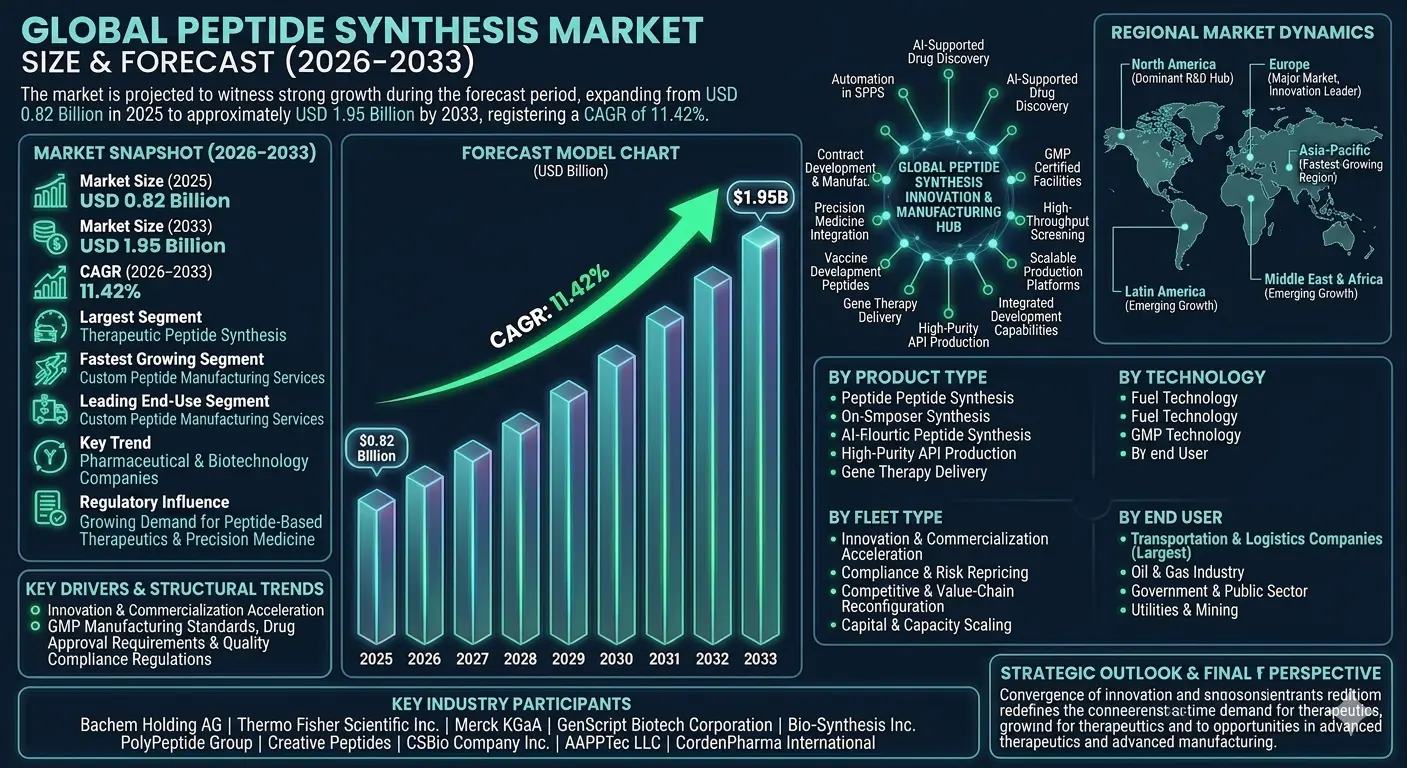
Global Peptide Synthesis Market Size & Forecast
The Global Peptide Synthesis Market is expected to witness strong growth during the forecast period from 2026 to 2033. The market was valued at USD 0.82 billion in 2025 and is projected to reach approximately USD 1.95 billion by 2033, registering a CAGR of 11.42%. The market growth is primarily driven by increasing demand for peptide-based therapeutics, expanding biopharmaceutical research activities, rising prevalence of chronic diseases, and advancements in drug discovery technologies. Peptide synthesis has become a critical component of pharmaceutical development, enabling the production of highly specific therapeutic compounds for oncology, metabolic disorders, infectious diseases, and rare diseases. In addition, growing investments in personalized medicine, contract manufacturing services, and peptide-based drug pipelines are supporting long-term market expansion.Global Peptide Synthesis Market Overview
Peptide synthesis refers to the chemical or biological production of peptides, which are short chains of amino acids used in therapeutics, diagnostics, research applications, and biotechnology products. The market includes therapeutic peptide manufacturing, custom peptide synthesis, peptide libraries, research-grade peptides, and peptide-based active pharmaceutical ingredients (APIs). Peptides are widely utilized across pharmaceutical development, biotechnology research, diagnostics, vaccine development, and academic research applications. The market is evolving from traditional synthesis techniques toward automated, high-throughput, and large-scale peptide manufacturing platforms.Structural Drivers of Market Growth
1. Innovation and Commercialization Acceleration
Rapid advancements in solid-phase peptide synthesis (SPPS), liquid-phase synthesis technologies, automation platforms, and purification techniques are accelerating market growth. Improved synthesis efficiency and scalability are enabling the commercialization of increasingly complex peptide therapeutics.Market Implications
Companies investing in advanced peptide manufacturing technologies and innovative therapeutic pipelines are expected to strengthen market leadership.2. Compliance and Risk Repricing
Good Manufacturing Practice (GMP) requirements, pharmaceutical quality standards, regulatory approvals, and product traceability requirements are shaping industry operations. Manufacturers are increasingly focusing on quality assurance and regulatory compliance throughout peptide production processes.Market Implications
Firms offering GMP-compliant, high-purity, and scalable peptide synthesis services are likely to gain stronger market acceptance.3. Competitive and Value-Chain Reconfiguration
The market is highly competitive as pharmaceutical companies, contract development and manufacturing organizations (CDMOs), biotechnology firms, and research service providers expand peptide production capabilities. Strategic partnerships and outsourcing agreements are reshaping peptide manufacturing value chains.Market Implications
Companies focusing on custom synthesis services, integrated development capabilities, and large-scale manufacturing may gain stronger competitive advantages.4. Capital and Capacity Scaling
Rising investments in peptide manufacturing facilities, automated synthesis platforms, and biopharmaceutical R&D are supporting market expansion. The increasing number of peptide-based drug candidates entering clinical trials is creating substantial production demand.Market Implications
Organizations scaling advanced production capacity and global supply networks are expected to capture future opportunities.Market Segmentation Analysis
By Product Type
1. Therapeutic Peptide Synthesis
This remains the largest segment due to expanding clinical applications and commercialized peptide drugs.2. Research Peptides
Strong demand from academic institutions and biotechnology research organizations.3. Custom Peptide Manufacturing Services
Fastest-growing segment driven by outsourcing trends and specialized research requirements.4. Peptide Libraries
Widely utilized in drug discovery and screening applications.5. Diagnostic Peptides
Growing use in diagnostic assay development and biomarker identification.By Technology
1. Solid-Phase Peptide Synthesis (SPPS)
Largest segment due to efficiency, scalability, and widespread industry adoption.2. Liquid-Phase Peptide Synthesis
Used for large-scale peptide production and specialized applications.3. Hybrid Synthesis Technologies
Growing adoption for complex peptide manufacturing requirements.By End User
1. Pharmaceutical & Biotechnology Companies
Largest segment due to extensive peptide drug development activities.2. Contract Development & Manufacturing Organizations (CDMOs)
Fast-growing segment driven by outsourcing of peptide production.3. Academic & Research Institutes
Strong demand for peptide-based research and innovation programs.4. Diagnostic Laboratories
Increasing use in assay development and clinical testing applications.Regional Market Dynamics
North America
North America dominates the global peptide synthesis market due to strong pharmaceutical R&D capabilities, extensive biotechnology activity, and advanced manufacturing infrastructure.Europe
Europe remains a major market supported by biopharmaceutical innovation, clinical research activities, and favorable regulatory frameworks.Asia-Pacific
Asia-Pacific is the fastest-growing region due to expanding pharmaceutical manufacturing, increasing biotechnology investments, and growing contract research activities.Latin America
Latin America is gradually expanding due to improving healthcare research capabilities and rising pharmaceutical investments.Middle East & Africa
The region is witnessing emerging growth driven by healthcare modernization and increasing life sciences research initiatives.Competitive Landscape
The Global Peptide Synthesis Market is highly competitive with pharmaceutical manufacturers, biotechnology firms, and contract manufacturing organizations expanding globally.Key Companies Operating in the Market Include:
- Bachem Holding AG
- Thermo Fisher Scientific Inc.
- Merck KGaA
- GenScript Biotech Corporation
- Bio-Synthesis Inc.
- PolyPeptide Group
- Creative Peptides
- CSBio Company Inc.
- AAPPTec LLC
- CordenPharma International
Strategic Outlook
The future of the peptide synthesis market will be shaped by peptide-based therapeutics, precision medicine, advanced synthesis technologies, and increasing outsourcing of pharmaceutical manufacturing. Automation, AI-supported drug discovery, high-throughput screening, and scalable production platforms will significantly improve development efficiency and commercialization success. The rise of oncology therapies, metabolic disease treatments, and personalized medicine is expected to create strong long-term growth opportunities.Final Market Perspective
The Global Peptide Synthesis Market remains a critical segment within biopharmaceutical manufacturing, drug discovery, and precision healthcare ecosystems. Rising demand for peptide therapeutics, expanding clinical pipelines, and continuous technological advancements continue driving long-term market growth. Companies capable of delivering high-quality, scalable, compliant, and innovative peptide synthesis solutions will be best positioned to capture future opportunities. The convergence of biotechnology innovation, personalized medicine, and advanced manufacturing technologies is expected to redefine the future of the global peptide synthesis industry.Table of Contents
Table of Contents
- 1. Executive Summary
- 1.1 Global Peptide Synthesis Market Snapshot (2025???2033)
- 1.2 Market Size & Growth Overview
- 1.3 Key Market Highlights
- 1.4 Largest & Fastest-Growing Segments
- 1.5 Regional Performance Summary
- 1.6 Competitive Landscape Overview
- 1.7 Strategic Outlook Through 2033
- 2. Market Introduction & Overview
- 2.1 Definition of Peptide Synthesis
- 2.2 Scope of the Global Peptide Synthesis Market
- 2.3 Evolution of Peptide Manufacturing Technologies
- 2.4 Peptide Synthesis Value Chain Analysis
- 2.5 Regulatory & GMP Compliance Framework
- 2.6 Emerging Trends in Peptide Therapeutics
- 2.7 Role of Peptides in Precision Medicine & Drug Discovery
- 3. Research Methodology
- 3.1 Primary Research Approach
- 3.2 Secondary Research Sources
- 3.3 Market Size Estimation Methodology
- 3.4 Forecasting Assumptions (2026???2033)
- 3.5 Data Validation & Triangulation
- 4. Market Dynamics
- 4.1 Market Drivers
- 4.1.1 Growing Demand for Peptide-Based Therapeutics
- 4.1.2 Expansion of Biopharmaceutical Research Activities
- 4.1.3 Rising Prevalence of Chronic & Rare Diseases
- 4.1.4 Advancements in Peptide Synthesis Technologies
- 4.1.5 Increasing Investments in Precision Medicine
- 4.2 Market Restraints
- 4.2.1 High Manufacturing & Purification Costs
- 4.2.2 Complex Production Processes
- 4.2.3 Regulatory & Quality Compliance Challenges
- 4.3 Market Opportunities
- 4.3.1 Growth of Oncology & Metabolic Disease Therapies
- 4.3.2 Expansion of Custom Peptide Manufacturing Services
- 4.3.3 Outsourcing to CDMOs & Contract Research Organizations
- 4.3.4 AI-Enabled Peptide Drug Discovery Platforms
- 4.4 Market Challenges
- 4.4.1 Scalability of Complex Peptide Production
- 4.4.2 Supply Chain Constraints for Raw Materials
- 4.4.3 Maintaining Product Purity & Stability
- 4.1 Market Drivers
- 5. Global Peptide Synthesis Market Size & Forecast (USD Billion), 2026???2033
- 5.1 Market Revenue Analysis
- 5.2 CAGR Analysis
- 5.3 Demand-Supply Trends
- 5.4 Pricing Analysis
- 5.5 Investment & Capacity Expansion Trends
- 5.6 Future Market Outlook
- 6. Market Segmentation Analysis (USD Billion), 2026???2033
- 6.1 By Product Type
- 6.1.1 Therapeutic Peptide Synthesis (Largest Segment)
- 6.1.2 Research Peptides
- 6.1.3 Custom Peptide Manufacturing Services (Fastest-Growing Segment)
- 6.1.4 Peptide Libraries
- 6.1.5 Diagnostic Peptides
- 6.2 By Technology
- 6.2.1 Solid-Phase Peptide Synthesis (SPPS) (Largest Segment)
- 6.2.2 Liquid-Phase Peptide Synthesis
- 6.2.3 Hybrid Synthesis Technologies
- 6.3 By End User
- 6.3.1 Pharmaceutical & Biotechnology Companies (Largest Segment)
- 6.3.2 Contract Development & Manufacturing Organizations (CDMOs) (Fastest-Growing Segment)
- 6.3.3 Academic & Research Institutes
- 6.3.4 Diagnostic Laboratories
- 6.1 By Product Type
- 7. Regional Market Analysis
- 7.1 North America
- 7.2 Europe
- 7.3 Asia-Pacific
- 7.4 Latin America
- 7.5 Middle East & Africa
- 8. Competitive Landscape
- 8.1 Market Share Analysis
- 8.2 Competitive Benchmarking
- 8.3 Strategic Developments
- 8.4 Technology & Innovation Strategies
- 8.5 Capacity Expansion & Partnership Analysis
- 9. Company Profiles
- 9.1 Bachem Holding AG
- 9.2 Thermo Fisher Scientific Inc.
- 9.3 Merck KGaA
- 9.4 GenScript Biotech Corporation
- 9.5 Bio-Synthesis Inc.
- 9.6 PolyPeptide Group
- 9.7 Creative Peptides
- 9.8 CSBio Company Inc.
- 9.9 AAPPTec LLC
- 9.10 CordenPharma International
- 10. Strategic Intelligence & Pheonix AI Insights
- 10.1 Peptide Demand Forecast Model
- 10.2 Therapeutic Pipeline Opportunity Analysis
- 10.3 CDMO Outsourcing Trend Tracker
- 10.4 Precision Medicine Adoption Assessment
- 10.5 Automated Porter???s Five Forces Analysis
- 11. Future Outlook & Strategic Recommendations
- 11.1 Expansion of Peptide-Based Therapeutics
- 11.2 Investment in Automated Manufacturing Technologies
- 11.3 Growth Opportunities in Oncology & Rare Disease Applications
- 11.4 Strategic Partnerships Across Biopharma Value Chains
- 11.5 Long-Term Market Outlook (2033+)
- 12. Appendix
- 13. About Pheonix Market Research
- 14. Disclaimer
Competitive Landscape
Global Peptide Synthesis Market Competitive Intensity & Market Structure Overview
The global peptide synthesis market is moderately consolidated and highly innovation-driven, characterized by competition among specialized peptide manufacturers, contract development and manufacturing organizations (CDMOs), biotechnology firms, and life sciences technology providers. Competitive intensity is shaped by synthesis expertise, manufacturing scalability, product purity standards, regulatory compliance, technological innovation, and the ability to support increasingly complex peptide development programs.
As peptide-based therapeutics gain broader acceptance across oncology, metabolic disorders, infectious diseases, and rare disease treatments, market participants are expanding production capacities and investing in advanced synthesis technologies. The growing complexity of peptide drug candidates is increasing demand for specialized manufacturing capabilities and high-quality production platforms.
The market structure consists of established peptide manufacturing leaders, integrated pharmaceutical service providers, and emerging biotechnology companies specializing in custom peptide development. Strategic partnerships, outsourcing agreements, and long-term supply contracts are becoming increasingly important in shaping competitive positioning across the industry.
Global Peptide Synthesis Market Competitive Intensity & Market Structure Current Scenario
Leading Global Peptide Synthesis Companies
Bachem Holding AG: One of the world’s leading peptide manufacturers, specializing in therapeutic peptides, active pharmaceutical ingredients (APIs), and large-scale commercial peptide production.
Thermo Fisher Scientific Inc.: Major life sciences company offering peptide synthesis services, analytical technologies, contract manufacturing capabilities, and pharmaceutical development support.
Merck KGaA: Global science and technology company providing peptide synthesis technologies, pharmaceutical ingredients, and research solutions for drug development applications.
GenScript Biotech Corporation: Leading biotechnology company specializing in custom peptide synthesis, biologics development, and contract research services.
Bio-Synthesis Inc.: Specialized provider of custom peptides, oligonucleotides, and molecular biology products supporting pharmaceutical and research applications.
PolyPeptide Group: Global CDMO focused on peptide-based active pharmaceutical ingredients and commercial-scale peptide manufacturing solutions.
Creative Peptides: Provider of peptide synthesis, peptide modification, and custom development services for pharmaceutical and biotechnology customers.
CSBio Company Inc.: Manufacturer of peptide synthesizers, synthesis technologies, and custom peptide production solutions supporting research and commercial applications.
AAPPTec LLC: Specialized peptide synthesis company offering reagents, automated synthesizers, and custom peptide manufacturing services.
CordenPharma International: Integrated CDMO providing peptide development, large-scale manufacturing, and pharmaceutical production capabilities for global clients.
Key Competitive Intensity & Market Structure Drivers
Growing demand for peptide-based therapeutics is increasing competition among manufacturers seeking to expand production capacity and secure long-term pharmaceutical supply agreements.
Advancements in solid-phase peptide synthesis (SPPS), automation technologies, purification systems, and large-scale manufacturing platforms are accelerating innovation across the industry.
Stringent GMP requirements, pharmaceutical quality standards, and global regulatory compliance obligations are creating significant barriers to entry and favoring established manufacturers with proven operational capabilities.
The increasing adoption of outsourcing by pharmaceutical and biotechnology companies is strengthening the role of CDMOs and custom peptide manufacturing providers within the value chain.
Rapid growth in precision medicine, targeted therapeutics, and personalized healthcare is driving demand for highly specialized peptide development and manufacturing services.
Strategic Implications of Competitive Intensity & Market Structure
Companies investing in advanced peptide synthesis technologies, automated manufacturing systems, and high-capacity production facilities are expected to gain significant competitive advantages as commercial demand increases.
The ability to deliver GMP-compliant, high-purity, and complex peptide products at commercial scale is becoming a critical differentiator in securing pharmaceutical partnerships and long-term contracts.
Strategic collaborations between peptide manufacturers, biotechnology innovators, and pharmaceutical companies are accelerating drug development timelines and expanding commercial opportunities.
Organizations offering integrated services spanning peptide discovery, process development, analytical testing, regulatory support, and commercial manufacturing are strengthening their market positioning.
Investment in process optimization, sustainability initiatives, and advanced purification technologies is improving operational efficiency and supporting long-term profitability.
Global Peptide Synthesis Market Competitive Intensity & Market Structure Forward Outlook
The global peptide synthesis market is expected to become increasingly innovation-focused as peptide therapeutics continue gaining importance within modern pharmaceutical pipelines. Competitive intensity will rise as manufacturers seek to address growing demand for complex and highly specialized peptide products.
Future competition will be shaped by advancements in automated synthesis platforms, AI-assisted drug discovery, high-throughput manufacturing technologies, and next-generation peptide engineering capabilities. Companies capable of improving production efficiency while maintaining high quality standards will strengthen their competitive positions.
North America and Europe are expected to remain leading centers for peptide innovation and pharmaceutical development, while Asia-Pacific is projected to emerge as the fastest-growing manufacturing hub due to expanding biopharmaceutical investments and contract manufacturing activity.
Over the forecast period, organizations that successfully combine technological leadership, regulatory excellence, manufacturing scalability, and strategic pharmaceutical partnerships will be best positioned to capture value within the evolving global peptide synthesis market.
Value Chain
Global Peptide Synthesis Market Value Chain & Supply Chain Evolution Overview
The Global Peptide Synthesis Market is undergoing significant transformation driven by increasing demand for peptide-based therapeutics, expanding biopharmaceutical pipelines, advancements in precision medicine, and the growing adoption of outsourced manufacturing services. The market???s value chain spans peptide discovery, sequence design, synthesis, purification, analytical characterization, regulatory compliance, large-scale manufacturing, and commercialization. This interconnected ecosystem is reshaping pharmaceutical innovation, biotechnology research, and advanced therapeutic development worldwide.
A defining characteristic of this value chain is the convergence of peptide chemistry, biotechnology, automation technologies, computational drug design, and advanced manufacturing platforms. Pharmaceutical and biotechnology companies are increasingly utilizing peptides for oncology, metabolic disorders, infectious diseases, rare diseases, and personalized medicine applications due to their high specificity and favorable safety profiles.
Supply chain complexity continues to increase as manufacturers manage raw material sourcing, amino acid procurement, synthesis reagents, purification technologies, GMP compliance requirements, global regulatory standards, and specialized distribution networks. Market participants must coordinate across research institutions, contract development and manufacturing organizations (CDMOs), pharmaceutical companies, analytical laboratories, and healthcare stakeholders while maintaining product quality, scalability, and regulatory compliance.
Industry participants are investing heavily in automated synthesis platforms, high-throughput production technologies, advanced purification systems, and integrated manufacturing facilities to improve efficiency and accelerate commercialization timelines. The value chain is evolving into a technology-driven, quality-focused, and highly scalable ecosystem supporting next-generation peptide therapeutics and precision healthcare solutions.
Global Peptide Synthesis Market Value Chain & Supply Chain Evolution Current Scenario
Market-Specific Value Chain
- Peptide Discovery & Design: Target identification, peptide sequence design, computational modeling, structure optimization, and early-stage research.
- Research & Development: Preclinical evaluation, peptide screening, formulation development, therapeutic validation, and analytical testing.
- Synthesis & Manufacturing: Solid-phase peptide synthesis (SPPS), liquid-phase synthesis, hybrid synthesis technologies, scale-up production, and process optimization.
- Purification & Quality Control: Chromatographic purification, analytical characterization, impurity profiling, stability testing, and batch validation.
- Regulatory & Compliance Management: GMP compliance, quality assurance, regulatory submissions, product documentation, and manufacturing audits.
- Distribution & Commercialization: Pharmaceutical supply chains, CDMO partnerships, research product distribution, healthcare providers, and biotechnology customers.
- End User Utilization: Pharmaceutical companies, biotechnology firms, CDMOs, research institutions, diagnostic laboratories, and healthcare organizations.
Company-to-Stage Mapping
- Peptide Discovery & Design: GenScript Biotech Corporation, Creative Peptides, pharmaceutical R&D organizations, and biotechnology innovators.
- Research & Development: Thermo Fisher Scientific Inc., Merck KGaA, academic research institutions, and biotechnology companies.
- Synthesis & Manufacturing: Bachem Holding AG, PolyPeptide Group, CordenPharma International, CSBio Company Inc., and large-scale peptide manufacturers.
- Purification & Quality Control: Bio-Synthesis Inc., AAPPTec LLC, analytical service providers, and quality testing laboratories.
- Regulatory & Compliance Management: Regulatory authorities, GMP-certified manufacturing facilities, and pharmaceutical quality management teams.
- Distribution & Commercialization: Pharmaceutical distributors, CDMOs, biotechnology supply partners, and global life sciences distribution networks.
- End User Utilization: Pharmaceutical companies, biotechnology firms, research institutes, diagnostic laboratories, and healthcare organizations.
Key Value Chain & Supply Chain Evolution Signals in Global Peptide Synthesis Market
Expansion of Peptide-Based Therapeutic Pipelines
Growing clinical adoption of peptide therapeutics for oncology, metabolic disorders, and rare diseases is increasing demand for advanced synthesis and manufacturing capabilities.
Acceleration of Automated Peptide Manufacturing Technologies
Automation platforms, high-throughput synthesis systems, and digital manufacturing technologies are improving production efficiency, scalability, and consistency.
Growing Outsourcing to CDMOs and Specialized Manufacturers
Pharmaceutical companies are increasingly partnering with specialized peptide manufacturers and CDMOs to accelerate development timelines and reduce capital expenditures.
Advancements in Purification and Analytical Technologies
Innovations in chromatography, mass spectrometry, and analytical characterization are enhancing peptide purity, quality assurance, and regulatory compliance.
Increasing Regulatory Emphasis on GMP Compliance
Stricter quality standards and pharmaceutical manufacturing regulations are driving investment in validated production systems and compliance infrastructure.
Rising Demand for Precision Medicine Applications
Personalized healthcare and biomarker-driven treatment strategies are expanding the use of highly specialized peptide molecules across therapeutic areas.
Strategic Implications of Value Chain & Supply Chain Evolution
Investment in Advanced Synthesis Technologies
Organizations investing in automated peptide synthesis platforms, scalable manufacturing systems, and next-generation production technologies will strengthen competitive positioning.
Expansion of GMP Manufacturing Capacity
Increasing production capacity and maintaining regulatory compliance will be critical to support growing commercial demand for peptide therapeutics.
Strengthening CDMO Partnerships and Outsourcing Models
Strategic collaborations between pharmaceutical companies and specialized peptide manufacturers will improve development efficiency and accelerate commercialization.
Optimization of Global Supply Networks
Diversified sourcing strategies, supply chain digitization, and integrated production planning will enhance resilience and operational performance.
Integration of AI and Digital Drug Discovery Platforms
AI-enabled peptide design, predictive modeling, and computational chemistry tools will significantly improve R&D productivity and innovation speed.
Focus on Quality Assurance and Regulatory Excellence
Companies maintaining high-quality manufacturing standards and strong regulatory capabilities will be better positioned to secure long-term customer relationships.
Global Peptide Synthesis Market Value Chain & Supply Chain Evolution Forward Outlook
Looking ahead, the value chain is expected to evolve into a highly automated, innovation-driven, and precision medicine-oriented ecosystem supported by advanced manufacturing technologies and increasing pharmaceutical demand.
Key Future Developments Include:
- Expansion of peptide therapeutics across oncology, metabolic diseases, infectious diseases, and rare disease treatment areas.
- Increased adoption of automated synthesis platforms and high-throughput manufacturing technologies.
- Growing utilization of AI-driven peptide design and computational drug discovery systems.
- Expansion of GMP-certified manufacturing facilities and global production capacity.
- Strengthening of CDMO partnerships and outsourced peptide development services.
- Integration of advanced analytical characterization, purification technologies, and digital quality management systems.
As the market evolves, competitive advantage will increasingly depend on the ability to combine scientific innovation, manufacturing scalability, regulatory compliance, and supply chain efficiency within a unified peptide development ecosystem.
Companies that successfully integrate advanced peptide synthesis technologies, high-quality manufacturing capabilities, robust regulatory frameworks, and global distribution networks will achieve stronger market positioning and long-term growth in the Global Peptide Synthesis Market.
Investment Activity
Global Peptide Synthesis Market Investment & Funding Dynamics Overview
The Global Peptide Synthesis Market is experiencing robust investment activity driven by the growing demand for peptide-based therapeutics, expanding biopharmaceutical research programs, increasing adoption of precision medicine, and the rising number of peptide drug candidates progressing through clinical development. Pharmaceutical companies, biotechnology firms, contract development and manufacturing organizations (CDMOs), life sciences investors, and research institutions are actively investing in advanced peptide manufacturing facilities, automated synthesis platforms, high-throughput production systems, and next-generation peptide drug development technologies.
Investment momentum is accelerating as peptide therapeutics gain importance across oncology, metabolic disorders, infectious diseases, rare diseases, and personalized healthcare applications. Capital allocation is increasingly focused on solid-phase peptide synthesis technologies, custom peptide manufacturing services, GMP-compliant production infrastructure, and scalable peptide API manufacturing capabilities.
Additionally, growing investments in AI-assisted drug discovery, advanced purification technologies, peptide engineering platforms, and integrated biopharmaceutical development ecosystems are creating significant long-term opportunities across the global peptide synthesis industry.
Global Peptide Synthesis Market Investment & Funding Dynamics Current Scenario
Currently, the market is witnessing substantial capital inflows as pharmaceutical and biotechnology companies expand peptide-based research pipelines and commercialization strategies. Leading industry participants are investing heavily in automated synthesis technologies, large-scale peptide production facilities, custom manufacturing capabilities, and advanced analytical quality control systems.
The market is attracting strong venture capital, institutional funding, and strategic investments into peptide therapeutics developers, CDMOs, biotechnology startups, and specialized peptide technology providers. Investors are prioritizing companies with scalable manufacturing platforms, differentiated peptide technologies, and strong clinical development portfolios.
Furthermore, the industry is witnessing active strategic partnerships, mergers, acquisitions, licensing agreements, and research collaborations among pharmaceutical companies, biotechnology firms, academic institutions, and manufacturing service providers to accelerate innovation and market expansion.
Key Investment & Funding Dynamics Signals in Global Peptide Synthesis Market
- Growing demand for peptide-based therapeutics and targeted treatment solutions is accelerating investment across peptide development programs.
- Expansion of precision medicine and personalized healthcare initiatives is increasing capital deployment toward advanced peptide technologies.
- Rising adoption of custom peptide manufacturing services is supporting investments in outsourcing and CDMO capabilities.
- Strategic investments in automated synthesis platforms, purification systems, and scalable production technologies are improving manufacturing efficiency.
- Increasing focus on oncology, metabolic disorders, and rare disease therapies is driving R&D funding across pharmaceutical pipelines.
- Partnerships between biotechnology companies, pharmaceutical firms, and contract manufacturers are strengthening innovation and commercialization pathways.
- Growing emphasis on GMP compliance, quality assurance, and regulatory readiness is reinforcing investor confidence.
Strategic Implications of Investment & Funding Dynamics in Global Peptide Synthesis Market
- Continuous investment in advanced peptide synthesis technologies and automated manufacturing platforms is essential for maintaining competitive advantage.
- Capital allocation toward large-scale production capacity, custom synthesis capabilities, and integrated development services will strengthen market positioning.
- Companies offering high-purity, GMP-compliant, and scalable peptide manufacturing solutions are expected to gain stronger market adoption.
- Strategic acquisitions and partnerships will accelerate technology development, portfolio expansion, and commercialization opportunities.
- Investments in AI-enabled drug discovery, peptide engineering, and next-generation therapeutic platforms will remain key growth priorities.
- Compliance with GMP manufacturing standards, drug approval requirements, and quality assurance regulations will continue influencing funding decisions.
- Organizations developing end-to-end peptide development and manufacturing ecosystems are expected to capture substantial future value.
Global Peptide Synthesis Market Investment & Funding Dynamics Forward Outlook
Looking ahead, the Global Peptide Synthesis Market is expected to maintain strong investment momentum driven by increasing peptide therapeutic approvals, expanding precision medicine programs, and growing demand for specialized biopharmaceutical manufacturing capabilities.
Future capital deployment will increasingly focus on next-generation peptide therapeutics, AI-supported molecular design, high-throughput synthesis systems, advanced purification technologies, and integrated peptide development platforms.
As pharmaceutical companies continue pursuing targeted therapies and personalized treatment approaches, investment activity is expected to expand across peptide innovation, manufacturing scalability, and global commercialization infrastructure.
In conclusion, the Global Peptide Synthesis Market represents a high-growth biopharmaceutical investment landscape where peptide therapeutics, precision medicine, advanced manufacturing technologies, automation, and biotechnology innovation will define future funding priorities, competitive dynamics, and long-term industry growth.
Technology & Innovation
Global Peptide Synthesis Market Technology & Innovation Landscape Overview
The Global Peptide Synthesis Market is experiencing rapid technological advancement driven by innovations in automated synthesis platforms, solid-phase peptide synthesis (SPPS), high-throughput screening technologies, artificial intelligence-assisted drug discovery, advanced purification systems, and scalable manufacturing solutions. The market demonstrates high innovation intensity as pharmaceutical and biotechnology companies increasingly adopt peptide-based therapeutics for oncology, metabolic disorders, infectious diseases, and personalized medicine applications.
At the center of this technological transformation is the continuous evolution of peptide manufacturing processes designed to improve synthesis efficiency, purity, scalability, and cost-effectiveness. Advanced synthesis technologies are enabling the production of increasingly complex peptide structures while reducing development timelines and manufacturing costs.
A major innovation area is automated peptide synthesis, where next-generation synthesizers, robotics integration, and digital process control systems are improving throughput, reproducibility, and production consistency across research and commercial manufacturing environments.
The market is also witnessing significant advancements in purification and analytical technologies, including high-performance liquid chromatography (HPLC), mass spectrometry-based characterization, continuous purification systems, and real-time quality monitoring platforms.
Manufacturers are increasingly investing in artificial intelligence, machine learning algorithms, predictive process optimization, and digital manufacturing platforms to accelerate peptide discovery, optimize production workflows, and improve manufacturing efficiency.
Product innovation further includes long-acting peptide formulations, peptide-drug conjugates, cyclic peptides, modified amino acid technologies, and targeted delivery systems that are expanding the therapeutic potential of peptide-based medicines.
Additionally, sustainability-focused innovations such as green chemistry approaches, solvent reduction technologies, waste minimization systems, and energy-efficient manufacturing processes are improving operational sustainability across peptide production facilities.
The convergence of automated synthesis technologies, AI-driven drug discovery, advanced purification systems, digital manufacturing platforms, and precision therapeutics is redefining the future technology landscape of the global peptide synthesis market.
Global Peptide Synthesis Market Technology & Innovation Landscape Current Scenario
Currently, the Global Peptide Synthesis Market demonstrates strong patent activity, increasing R&D investment, and rapid commercialization of advanced peptide manufacturing technologies. Industry participants are focusing on production scalability, process automation, product quality enhancement, and accelerated therapeutic development.
1. Automated Peptide Synthesis Platforms
Automated synthesizers equipped with advanced process control systems are improving peptide production speed, reproducibility, and manufacturing efficiency across research and commercial applications.
2. Solid-Phase Peptide Synthesis (SPPS) Innovation
Continuous improvements in SPPS technology, resin chemistry, coupling reagents, and process optimization are enabling efficient production of complex peptide molecules with higher purity levels.
3. Advanced Purification & Analytical Technologies
High-resolution chromatography systems, mass spectrometry, automated purification platforms, and real-time analytical tools are enhancing product quality and regulatory compliance.
4. AI-Driven Peptide Discovery
Artificial intelligence and machine learning technologies are accelerating peptide design, target identification, molecular optimization, and drug candidate selection processes.
5. Large-Scale Manufacturing Technologies
Commercial-scale peptide manufacturing facilities are adopting continuous processing, automated production systems, and advanced process monitoring to improve scalability and cost efficiency.
6. Digital Manufacturing & Quality Control
Smart manufacturing systems, digital batch records, predictive maintenance technologies, and automated quality assurance platforms are improving operational performance and compliance.
Key Technology & Innovation Landscape Signals in Global Peptide Synthesis Market
Several technology and innovation trends are shaping the future development of the market:
1. Rising Adoption of Automated Manufacturing
Automation technologies are increasingly replacing manual synthesis processes to improve productivity, consistency, and operational efficiency.
2. Expansion of Peptide-Based Therapeutics
Growing therapeutic applications in oncology, diabetes, obesity, cardiovascular diseases, and rare disorders are accelerating peptide innovation activities.
3. Growth of AI-Assisted Drug Discovery
AI-driven molecular design and predictive analytics are reducing development timelines and improving peptide candidate selection success rates.
4. Increasing Demand for Custom Peptide Services
Research organizations and pharmaceutical companies are driving demand for specialized custom synthesis capabilities and flexible manufacturing solutions.
5. Development of Complex Peptide Modalities
Peptide-drug conjugates, cyclic peptides, multifunctional peptides, and modified peptide structures are becoming important areas of innovation.
6. Enhanced Purification Technologies
Advanced purification platforms are improving product yield, reducing impurities, and supporting regulatory-grade manufacturing requirements.
7. Sustainable Manufacturing Practices
Manufacturers are increasingly adopting environmentally responsible production methods, solvent recovery systems, and waste reduction initiatives.
Strategic Implications of Technology & Innovation Landscape in Global Peptide Synthesis Market
The evolving technology landscape is significantly reshaping competition across the peptide synthesis industry. Companies are increasingly competing on manufacturing efficiency, synthesis precision, scalability, therapeutic innovation, regulatory compliance, and digital manufacturing capabilities.
Organizations investing in advanced synthesis platforms, AI-assisted peptide discovery, automated purification systems, and GMP-compliant manufacturing infrastructure are expected to strengthen their competitive positioning.
Strategic partnerships between pharmaceutical companies, biotechnology firms, contract development and manufacturing organizations (CDMOs), software providers, and equipment manufacturers are accelerating innovation and commercialization activities.
The growing integration of artificial intelligence, automation, high-throughput screening, advanced analytics, and scalable production technologies is creating new opportunities for operational excellence and market differentiation.
Additionally, increasing regulatory requirements for product quality, process validation, traceability, and manufacturing consistency are encouraging continued investments in digital quality management and advanced production systems.
Global Peptide Synthesis Market Technology & Innovation Landscape Forward Outlook
Looking ahead to 2026???2033, the Global Peptide Synthesis Market is expected to experience significant technological evolution driven by next-generation manufacturing technologies, precision medicine expansion, and growing demand for peptide-based therapeutics.
Future technological developments are likely to include:
1. Next-Generation Automated Synthesis Systems
Fully integrated and highly automated synthesis platforms will improve production flexibility, speed, and manufacturing scalability.
2. AI-Powered Peptide Design Platforms
Advanced machine learning algorithms will accelerate peptide discovery, optimize molecular structures, and improve therapeutic success rates.
3. Continuous Manufacturing Technologies
Continuous peptide production systems will enhance process efficiency, reduce costs, and support large-scale commercial manufacturing.
4. Advanced Peptide Engineering
Novel peptide modifications, conjugation technologies, and targeted delivery mechanisms will expand therapeutic applications and product performance.
5. Smart Manufacturing & Digital Quality Systems
Real-time process monitoring, predictive analytics, digital twins, and automated quality control technologies will improve production reliability and compliance.
6. Sustainable Production Technologies
Green synthesis methods, energy-efficient manufacturing, solvent recycling, and waste minimization solutions will become increasingly important.
7. High-Throughput Discovery & Screening Platforms
Advanced screening technologies will accelerate research productivity and facilitate faster identification of promising peptide candidates.
In conclusion, companies capable of combining advanced peptide synthesis technologies, AI-driven discovery platforms, scalable manufacturing infrastructure, regulatory compliance expertise, and sustainable production capabilities will be best positioned to lead the future evolution of the Global Peptide Synthesis Market.
Market Risk
Global Peptide Synthesis Market: Risk Factors & Disruption Threats Overview
The Global Peptide Synthesis Market operates within a rapidly evolving biopharmaceutical landscape characterized by strong innovation, increasing therapeutic demand, and complex manufacturing requirements. While the market is projected to experience robust growth driven by peptide-based therapeutics and precision medicine, it also faces significant operational, regulatory, technological, and supply chain risks that may influence long-term expansion.
One of the most critical risk factors is manufacturing complexity. Peptide synthesis involves highly specialized production processes, purification technologies, and stringent quality controls. Any deviations in synthesis, contamination events, or process inconsistencies can affect product quality, regulatory compliance, and commercialization timelines.
Regulatory compliance remains another major challenge. Peptide manufacturers must adhere to Good Manufacturing Practice (GMP) standards, quality assurance protocols, product traceability requirements, and pharmaceutical approval regulations. Failure to meet these standards can result in product recalls, regulatory penalties, and delayed market entry.
Supply chain dependency also presents considerable risk. The market relies on specialized amino acids, reagents, solvents, and manufacturing equipment sourced from global suppliers. Disruptions in raw material availability, geopolitical tensions, or transportation bottlenecks can negatively impact production schedules and operational efficiency.
Additionally, high development costs and clinical uncertainty associated with peptide therapeutics can affect investment returns. Drug candidates may fail during clinical development, leading to significant financial losses and reduced commercialization opportunities.
Competitive pressures are intensifying as pharmaceutical companies, biotechnology firms, and contract manufacturing organizations expand peptide production capabilities. This may create pricing pressure and margin challenges, particularly in contract synthesis and research services.
Global Peptide Synthesis Market: Current Risk Scenario
The current market environment reflects strong demand momentum supported by expanding peptide drug pipelines, oncology research, and increasing adoption of personalized medicine. However, operational and regulatory challenges continue to influence market dynamics.
Growing demand for custom peptide manufacturing services is increasing pressure on production capacity and quality management systems. Manufacturers must continuously invest in automation, purification technologies, and scalable infrastructure to meet evolving customer requirements.
Regulatory scrutiny surrounding pharmaceutical manufacturing has intensified globally, requiring companies to maintain comprehensive documentation, validation procedures, and compliance frameworks throughout production processes.
Rising costs of raw materials, skilled labor shortages, and inflationary pressures are also affecting production economics, particularly for highly specialized and complex peptide products.
Furthermore, increasing reliance on outsourced manufacturing creates additional risks related to quality consistency, intellectual property protection, and supply continuity across global production networks.
Key Risk Factors & Disruption Threats Signals
- Manufacturing Complexity: Advanced peptide synthesis and purification processes require strict process control and specialized technical expertise.
- Regulatory Compliance Risk: GMP requirements, pharmaceutical quality standards, and approval regulations create ongoing compliance obligations.
- Supply Chain Vulnerability: Dependence on specialized raw materials and global suppliers may lead to production disruptions and cost fluctuations.
- Clinical Development Failure: Peptide drug candidates face risks of unsuccessful clinical trials, delaying commercialization and reducing returns on investment.
- Capacity Constraints: Growing demand for custom synthesis services may strain manufacturing infrastructure and production timelines.
- Pricing & Competitive Pressure: Increasing competition among CDMOs and peptide manufacturers may impact profit margins and market positioning.
- Intellectual Property Risks: Protection of proprietary peptide sequences, synthesis methods, and therapeutic innovations remains strategically important.
Strategic Implications of Risk Factors & Disruption Threats
The evolving risk landscape is encouraging market participants to strengthen manufacturing resilience, regulatory readiness, and technological capabilities. Companies are increasingly investing in automated synthesis platforms, high-throughput production systems, and advanced purification technologies to improve efficiency and quality consistency.
Strategic expansion of GMP-certified manufacturing facilities and global production networks is becoming essential to meet rising demand from pharmaceutical and biotechnology customers.
Organizations are also focusing on supply chain diversification to reduce dependency on single-source suppliers and improve operational continuity during periods of disruption.
Collaborations between biotechnology companies, pharmaceutical manufacturers, and contract development organizations are expected to play a critical role in reducing development risk and accelerating commercialization timelines.
Global Peptide Synthesis Market: Forward Risk Outlook
Looking ahead, the peptide synthesis market is expected to remain exposed to moderate-to-high operational and regulatory risks as peptide therapeutics become increasingly important in modern medicine. Demand growth will continue to be supported by oncology, metabolic disorders, rare disease treatments, and precision medicine applications.
Advances in automation, artificial intelligence, continuous manufacturing, and high-throughput screening technologies are expected to improve production efficiency and reduce operational risk over time.
Regulatory requirements are likely to become more stringent as peptide-based therapies expand into larger patient populations and more complex therapeutic applications, increasing the importance of quality assurance and compliance capabilities.
Supply chain resilience, manufacturing scalability, and intellectual property protection will remain critical success factors for market participants seeking sustainable growth and competitive differentiation.
Overall, companies that successfully balance innovation, regulatory compliance, production scalability, and cost efficiency will be best positioned to capitalize on the growing opportunities within the global peptide synthesis market while effectively managing emerging disruption threats.
Regulatory Landscape
Global Peptide Synthesis Market Regulatory & Policy Environment Overview
The regulatory and policy environment governing the Global Peptide Synthesis Market is becoming increasingly important as peptide-based therapeutics, precision medicine, and advanced biopharmaceutical products gain wider adoption across healthcare systems. Regulatory authorities are focused on ensuring product quality, manufacturing consistency, patient safety, and therapeutic efficacy throughout the peptide development and commercialization lifecycle.
Companies operating in the peptide synthesis industry must comply with comprehensive regulatory frameworks covering research and development, active pharmaceutical ingredient (API) manufacturing, clinical testing, quality control, product validation, and commercial production. These requirements are particularly critical given the growing role of peptides in oncology, metabolic disorders, rare diseases, and targeted therapies.
As pharmaceutical companies expand peptide-based drug pipelines, regulators are strengthening oversight of manufacturing processes, impurity control, analytical validation, and supply chain traceability to ensure the reliability and safety of peptide products entering global markets.
Global Peptide Synthesis Market Regulatory & Policy Environment Current Scenario
The current regulatory landscape is primarily shaped by Good Manufacturing Practice (GMP) requirements, pharmaceutical quality standards, and stringent drug approval frameworks established by agencies such as the U.S. FDA, European Medicines Agency (EMA), PMDA, and other national health authorities. These agencies require extensive evidence demonstrating product safety, efficacy, purity, and manufacturing consistency before commercialization.
Manufacturers of therapeutic peptides are increasingly required to implement advanced quality management systems, validated synthesis protocols, and comprehensive analytical testing procedures to comply with evolving pharmaceutical regulations. Particular attention is being given to impurity profiling, peptide characterization, and batch-to-batch consistency.
Clinical trial regulations continue to influence peptide development programs, requiring rigorous preclinical evaluation and multi-phase clinical studies before regulatory approval. The increasing complexity of peptide therapeutics is driving greater scrutiny of formulation stability, delivery systems, and long-term safety profiles.
Contract Development and Manufacturing Organizations (CDMOs) are also facing heightened regulatory expectations as pharmaceutical companies increasingly outsource peptide production. Regulatory authorities are emphasizing manufacturing transparency, process validation, and compliance documentation throughout outsourced production activities.
In addition, global regulatory agencies are encouraging greater adoption of data integrity systems, digital quality management platforms, and risk-based manufacturing approaches to improve compliance efficiency and product traceability.
Key Regulatory & Policy Environment Signals in Global Peptide Synthesis Market
- Good Manufacturing Practice (GMP) Standards: Strict requirements governing peptide manufacturing quality, process control, and product consistency.
- Drug Approval Frameworks: Comprehensive regulatory pathways requiring clinical evidence of safety, efficacy, and therapeutic value.
- Quality Compliance Regulations: Enhanced oversight of analytical validation, impurity control, peptide characterization, and batch reproducibility.
- Clinical Trial Governance: Rigorous preclinical and clinical testing requirements supporting peptide therapeutic approvals.
- CDMO Compliance Requirements: Increasing regulatory scrutiny of outsourced peptide development and manufacturing operations.
- Supply Chain Traceability Standards: Greater emphasis on documentation, serialization, and manufacturing transparency across peptide production networks.
Strategic Implications of Regulatory & Policy Environment
The evolving regulatory landscape is encouraging peptide manufacturers to invest in advanced quality assurance systems, automated synthesis technologies, and highly controlled production environments. Regulatory compliance has become a critical factor influencing customer confidence, partnership opportunities, and global market access.
Stringent GMP requirements are driving increased investment in process validation, analytical testing capabilities, and manufacturing infrastructure designed to support commercial-scale peptide production. Companies with strong compliance records are better positioned to secure pharmaceutical contracts and long-term development partnerships.
The growing complexity of peptide therapeutics is also increasing demand for specialized regulatory expertise, particularly in areas such as clinical development strategy, quality documentation, and international product registration. This is creating competitive advantages for organizations capable of navigating multi-regional regulatory requirements.
As outsourcing continues to expand, CDMOs with proven regulatory capabilities, audit readiness, and scalable GMP-certified facilities are expected to benefit from rising pharmaceutical demand for external peptide manufacturing services.
Overall, compliance is evolving from a regulatory obligation into a strategic growth enabler, with companies prioritizing quality, traceability, and regulatory excellence gaining stronger commercial opportunities and industry credibility.
Global Peptide Synthesis Market Regulatory & Policy Environment Forward Outlook
Between 2026 and 2033, the regulatory environment for peptide synthesis is expected to become more sophisticated as peptide therapeutics gain broader clinical acceptance and commercial significance. Regulatory agencies are likely to introduce more specialized guidance addressing complex peptide structures, advanced synthesis technologies, and next-generation therapeutic applications.
The increasing adoption of precision medicine and targeted therapies is expected to drive greater regulatory focus on product characterization, personalized treatment approaches, and manufacturing flexibility. This may lead to enhanced requirements for quality control and analytical validation throughout peptide development programs.
Digital manufacturing systems, automated process monitoring, and data-driven quality management platforms are expected to play a larger role in regulatory compliance, enabling improved traceability and real-time oversight of peptide production activities.
Global regulatory harmonization efforts may also accelerate, helping streamline approval pathways and reduce barriers to international commercialization of peptide-based products. This could improve market access opportunities for manufacturers operating across multiple regions.
Overall, regulatory evolution will continue to support market expansion by promoting higher quality standards, manufacturing reliability, and patient safety. Companies capable of combining technological innovation with strong regulatory compliance, GMP excellence, and scalable production capabilities will be best positioned to succeed in the rapidly growing global peptide synthesis market.