
Global Prescription Drugs Market Report, Size, Share and Forecast 2026–2033
Global Prescription Drugs Market Forecast Snapshot (2026???2033)
| Metric | Value |
|---|---|
| Market Size (2025) | USD 1.42 Trillion |
| Market Size (2033) | USD 2.31 Trillion |
| CAGR (2026???2033) | 6.34% |
| Largest Segment | Small Molecule Drugs |
| Fastest Growing Segment | Biologics & Specialty Drugs |
| Leading Therapeutic Area | Oncology |
| Key Trend | Rise of Specialty Medicines & Personalized Treatment Approaches |
| Regulatory Influence | Drug Approval Frameworks, Pharmacovigilance Regulations & Pricing Policies |
| Future Outlook | Growth Driven by Aging Population, Chronic Disease Burden & Biopharmaceutical Innovation |
Global Prescription Drugs Market Size & Forecast
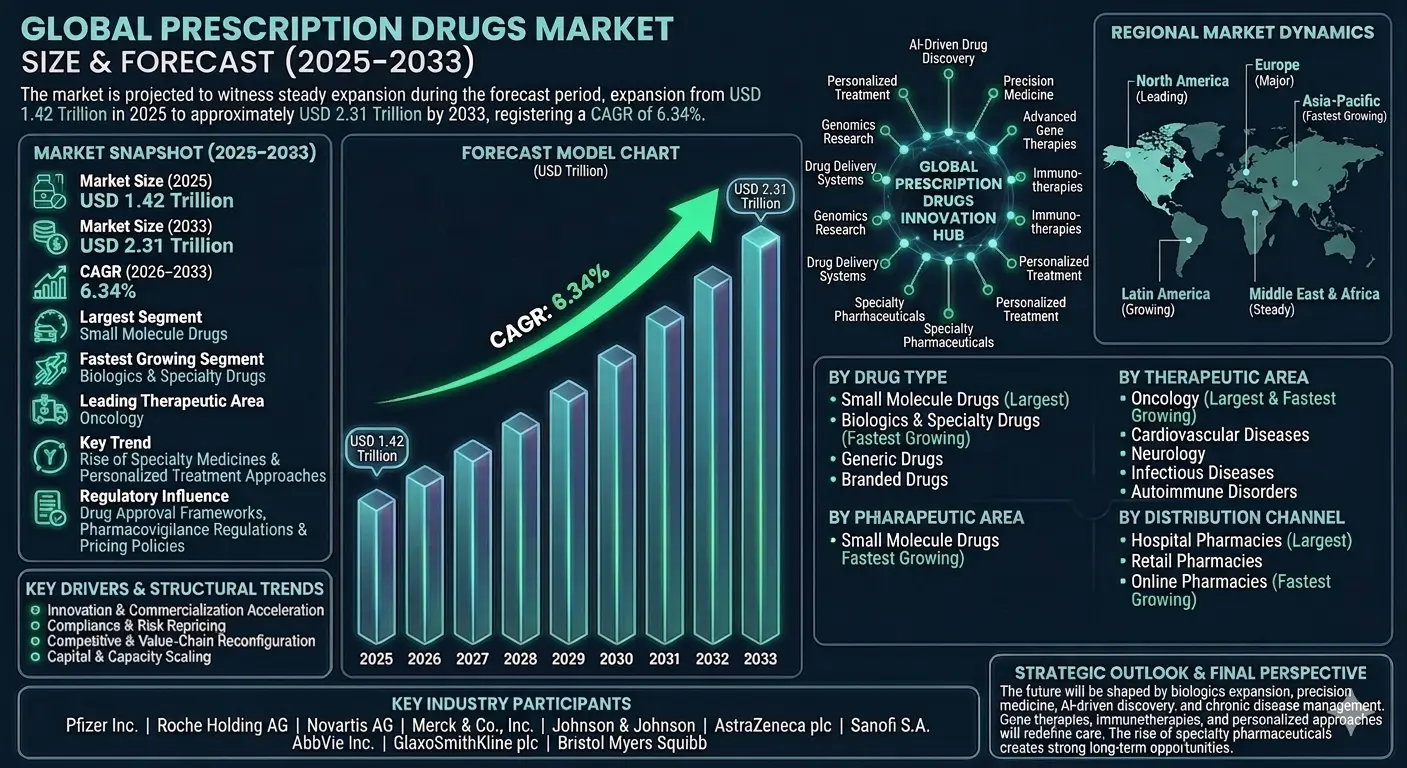
The Global Prescription Drugs Market is expected to witness steady expansion during the forecast period from 2026 to 2033. The market was valued at USD 1.42 trillion in 2025 and is projected to reach approximately USD 2.31 trillion by 2033, registering a CAGR of 6.34%. The market growth is primarily driven by rising prevalence of chronic diseases, increasing geriatric population, expanding access to healthcare services, and continuous pharmaceutical innovation across major therapeutic areas. Prescription drugs play a central role in modern healthcare systems, treating conditions such as cancer, cardiovascular diseases, diabetes, neurological disorders, infectious diseases, and autoimmune conditions. In addition, advancements in drug discovery, biotechnology, precision medicine, and regulatory approvals are supporting long-term market expansion.Global Prescription Drugs Market Overview
Prescription drugs are medications that require authorization from licensed healthcare professionals and are used for the treatment, prevention, or management of diseases and medical conditions. The market includes small molecule drugs, biologics, specialty drugs, generic medicines, branded pharmaceuticals, and biosimilars across multiple therapeutic categories. These medications are widely used in hospitals, clinics, retail pharmacies, and specialty care centers globally. The market is evolving from traditional mass-market pharmaceuticals toward targeted therapies, biologics, and personalized medicine approaches.Structural Drivers of Market Growth
1. Innovation and Commercialization Acceleration
Rapid advancements in biotechnology, genomics, drug delivery systems, and AI-driven drug discovery are accelerating pharmaceutical innovation. New molecular entities and biologics are improving treatment outcomes and expanding therapeutic possibilities.Market Implications
Companies investing in biologics, precision medicine, and AI-enabled drug development are expected to strengthen market leadership.2. Compliance and Risk Repricing
Strict regulatory frameworks for drug approval, clinical trials, pharmacovigilance, and pricing controls are shaping market dynamics. Pharmaceutical companies must ensure safety, efficacy, and compliance across global markets.Market Implications
Firms with strong regulatory capabilities and high-quality clinical pipelines are likely to gain stronger market credibility and approval success rates.3. Competitive and Value-Chain Reconfiguration
The market is highly competitive as pharmaceutical companies, biotech firms, and generic drug manufacturers expand global portfolios. Strategic collaborations, licensing agreements, and mergers are reshaping industry structures.Market Implications
Companies focusing on specialty drugs, biologics, and innovative therapies may gain stronger long-term revenue stability.4. Capital and Capacity Scaling
Rising investment in R&D, clinical trials, manufacturing facilities, and global distribution networks is supporting market expansion. Governments and private sector players are increasing healthcare spending to improve access to medicines.Market Implications
Organizations scaling global production and advanced R&D capabilities are expected to capture future opportunities.Market Segmentation Analysis
By Drug Type
1. Small Molecule Drugs
This remains the largest segment due to widespread usage and cost efficiency.2. Biologics & Specialty Drugs
Fastest-growing segment driven by advanced therapies and targeted treatments.3. Generic Drugs
High demand due to affordability and patent expirations.4. Branded Drugs
Strong adoption driven by innovation and patented formulations.By Therapeutic Area
1. Oncology
Largest and fastest-growing segment due to rising cancer prevalence.2. Cardiovascular Diseases
High demand driven by lifestyle-related conditions.3. Neurology
Growing need for treatments of Alzheimer???s and Parkinson???s diseases.4. Infectious Diseases
Significant demand driven by global health challenges.5. Autoimmune Disorders
Increasing adoption of biologic therapies.By Distribution Channel
1. Hospital Pharmacies
Largest segment due to inpatient and critical care demand.2. Retail Pharmacies
Strong utilization for chronic disease management.3. Online Pharmacies
Fastest-growing segment driven by digital healthcare adoption.Regional Market Dynamics
North America
North America dominates the global prescription drugs market due to advanced healthcare infrastructure, strong pharmaceutical R&D, and high drug consumption rates.Europe
Europe remains a major market supported by universal healthcare systems and strong regulatory frameworks.Asia-Pacific
Asia-Pacific is the fastest-growing region due to rising healthcare access, population growth, and expanding pharmaceutical manufacturing.Latin America
Latin America is gradually expanding due to improving healthcare infrastructure and increasing medicine accessibility.Middle East & Africa
The region is witnessing steady growth driven by healthcare modernization and rising disease burden.Competitive Landscape
The Global Prescription Drugs Market is highly competitive with multinational pharmaceutical and biotechnology companies operating globally.Key Companies Operating in the Market Include:
- Pfizer Inc.
- Roche Holding AG
- Novartis AG
- Merck & Co., Inc.
- Johnson & Johnson
- AstraZeneca plc
- Sanofi S.A.
- AbbVie Inc.
- GlaxoSmithKline plc
- Bristol Myers Squibb
Strategic Outlook
The future of the prescription drugs market will be shaped by biologics expansion, precision medicine, AI-driven drug discovery, and increasing focus on chronic disease management. Advancements in gene therapies, immunotherapies, and personalized treatment approaches will significantly improve healthcare outcomes. The rise of specialty pharmaceuticals and global healthcare access expansion is expected to create strong long-term growth opportunities.Final Market Perspective
The Global Prescription Drugs Market remains a cornerstone of the global healthcare system. Rising disease burden, aging populations, and pharmaceutical innovation continue driving long-term market growth. Companies capable of delivering safe, effective, and innovative therapies across therapeutic areas will be best positioned to capture future opportunities. The convergence of biotechnology, precision medicine, and advanced drug development is expected to redefine the future of global pharmaceutical care.Table of Contents
Table of Contents
- 1. Executive Summary
- 1.1 Global Prescription Drugs Market Snapshot (2025???2033)
- 1.2 Market Size & Growth Overview
- 1.3 Key Market Highlights
- 1.4 Largest & Fastest-Growing Segments
- 1.5 Therapeutic Area Performance Summary
- 1.6 Regional Market Overview
- 1.7 Strategic Outlook Through 2033
- 2. Market Introduction & Overview
- 2.1 Definition of Prescription Drugs
- 2.2 Scope of the Global Prescription Drugs Market
- 2.3 Evolution of Modern Pharmaceuticals
- 2.4 Pharmaceutical Value Chain Analysis
- 2.5 Regulatory & Drug Approval Framework Overview
- 2.6 Emerging Trends in Biopharma & Precision Medicine
- 2.7 Transition Toward Specialty & Targeted Therapies
- 3. Research Methodology
- 3.1 Primary Research Approach
- 3.2 Secondary Research Sources
- 3.3 Market Size Estimation Methodology
- 3.4 Forecasting Assumptions (2026???2033)
- 3.5 Data Validation & Triangulation
- 4. Market Dynamics
- 4.1 Market Drivers
- 4.1.1 Rising Prevalence of Chronic Diseases
- 4.1.2 Increasing Geriatric Population
- 4.1.3 Expansion of Biologics & Specialty Drugs
- 4.1.4 Advances in Drug Discovery & Biotechnology
- 4.1.5 Growth in Global Healthcare Access
- 4.2 Market Restraints
- 4.2.1 High Drug Development Costs
- 4.2.2 Strict Regulatory Approval Processes
- 4.2.3 Pricing Pressure & Reimbursement Challenges
- 4.3 Market Opportunities
- 4.3.1 Expansion of Personalized Medicine
- 4.3.2 Growth in Biologics & Gene Therapies
- 4.3.3 AI-Driven Drug Discovery Innovations
- 4.3.4 Rising Demand for Specialty Pharmaceuticals
- 4.4 Market Challenges
- 4.4.1 Patent Expirations & Generic Competition
- 4.4.2 Clinical Trial Failures
- 4.4.3 Regulatory Complexity Across Regions
- 4.1 Market Drivers
- 5. Global Prescription Drugs Market Size & Forecast (USD Trillion), 2026???2033
- 5.1 Market Revenue Analysis
- 5.2 CAGR Analysis
- 5.3 Demand-Supply Trends
- 5.4 Pricing & Reimbursement Trends
- 5.5 Investment & R&D Pipeline Analysis
- 5.6 Future Market Outlook
- 6. Market Segmentation Analysis (USD Trillion), 2026???2033
- 6.1 By Drug Type
- 6.1.1 Small Molecule Drugs (Largest Segment)
- 6.1.2 Biologics & Specialty Drugs (Fastest-Growing Segment)
- 6.1.3 Generic Drugs
- 6.1.4 Branded Drugs
- 6.2 By Therapeutic Area
- 6.2.1 Oncology (Largest & Fastest-Growing Segment)
- 6.2.2 Cardiovascular Diseases
- 6.2.3 Neurology
- 6.2.4 Infectious Diseases
- 6.2.5 Autoimmune Disorders
- 6.3 By Distribution Channel
- 6.3.1 Hospital Pharmacies (Largest Segment)
- 6.3.2 Retail Pharmacies
- 6.3.3 Online Pharmacies (Fastest-Growing Segment)
- 6.1 By Drug Type
- 7. Regional Market Analysis
- 7.1 North America
- 7.2 Europe
- 7.3 Asia-Pacific
- 7.4 Latin America
- 7.5 Middle East & Africa
- 8. Competitive Landscape
- 8.1 Market Share Analysis
- 8.2 Competitive Benchmarking
- 8.3 Strategic Developments
- 8.4 R&D & Pipeline Strategies
- 8.5 Mergers, Acquisitions & Collaborations
- 9. Company Profiles
- 9.1 Pfizer Inc.
- 9.2 Roche Holding AG
- 9.3 Novartis AG
- 9.4 Merck & Co., Inc.
- 9.5 Johnson & Johnson
- 9.6 AstraZeneca plc
- 9.7 Sanofi S.A.
- 9.8 AbbVie Inc.
- 9.9 GlaxoSmithKline plc
- 9.10 Bristol Myers Squibb
- 10. Strategic Intelligence & Pheonix AI Insights
- 10.1 Drug Demand Forecast Model
- 10.2 Oncology Pipeline Growth Tracker
- 10.3 Biologics Adoption Intelligence
- 10.4 AI-Driven Drug Discovery Impact Assessment
- 10.5 Automated Porter???s Five Forces Analysis
- 11. Future Outlook & Strategic Recommendations
- 11.1 Expansion of Specialty Pharmaceuticals
- 11.2 Investment in Biologics & Gene Therapies
- 11.3 AI-Driven Pharmaceutical Innovation
- 11.4 Personalized & Precision Medicine Growth
- 11.5 Long-Term Market Outlook (2033+)
- 12. Appendix
- 13. About Pheonix Market Research
- 14. Disclaimer
Competitive Landscape
Global Prescription Drugs Market Competitive Intensity & Market Structure Overview
The global prescription drugs market is highly competitive and moderately consolidated, dominated by large multinational pharmaceutical companies, leading biotechnology firms, and a growing base of specialty drug developers and biosimilar manufacturers. Competitive intensity is primarily shaped by R&D productivity, patent portfolios, regulatory approval success rates, clinical pipeline strength, pricing power, and global commercialization capabilities.
Market participants compete across both innovative and generic segments, with increasing emphasis on biologics, specialty medicines, and precision therapies. As chronic disease prevalence rises globally, competition is intensifying in high-value therapeutic areas such as oncology, immunology, cardiovascular diseases, and neurology. Companies are increasingly shifting from volume-driven models to value-based, innovation-led pharmaceutical strategies.
The market structure is evolving from traditional blockbuster drug dominance toward diversified portfolios that include biologics, biosimilars, gene therapies, and personalized medicines. Strategic collaborations, licensing agreements, and mergers and acquisitions are reshaping competitive boundaries and enabling faster access to emerging therapeutic technologies.
Global Prescription Drugs Market Competitive Intensity & Market Structure Current Scenario
Leading Global Prescription Drug Companies
Pfizer Inc.: A global pharmaceutical leader with a strong portfolio across vaccines, oncology, cardiovascular therapies, and innovative small molecule and biologic drugs.
Roche Holding AG: A pioneer in oncology and diagnostics, with a leading position in biologics and personalized medicine-driven therapies.
Novartis AG: A diversified pharmaceutical company focused on innovative medicines, generics (via Sandoz spin-off legacy), and strong pipeline development in specialty therapeutics.
Merck & Co., Inc.: A leading innovator in oncology and infectious disease treatments, with strong immunotherapy capabilities driven by blockbuster biologics.
Johnson & Johnson: A diversified healthcare conglomerate with strong pharmaceutical capabilities in immunology, oncology, and infectious diseases.
AstraZeneca plc: A rapidly growing biopharmaceutical company with strong oncology, respiratory, and cardiovascular drug portfolios.
Sanofi S.A.: A global healthcare leader with strong presence in immunology, rare diseases, vaccines, and specialty pharmaceuticals.
AbbVie Inc.: A specialty pharmaceutical company known for its leadership in immunology and biologic therapies.
GlaxoSmithKline plc (GSK): Focused on vaccines, respiratory medicines, and infectious disease treatments with increasing emphasis on specialty pharmaceuticals.
Bristol Myers Squibb: A major oncology and immunology-focused company with a strong portfolio of innovative cancer and cardiovascular therapies.
Key Competitive Intensity & Market Structure Drivers
Patent expirations and the rapid expansion of biosimilars are increasing competitive pressure on branded pharmaceutical products, particularly in mature therapeutic categories.
The rise of biologics and specialty drugs is shifting competition toward complex, high-value therapies that require advanced manufacturing capabilities and strong clinical evidence generation.
Intensifying regulatory requirements for drug approval, safety monitoring, and pricing transparency are raising barriers to entry and increasing the importance of compliance capabilities.
Advancements in AI-driven drug discovery, genomics, and precision medicine are accelerating innovation cycles and enabling more targeted therapeutic development strategies.
Strategic partnerships between pharmaceutical companies, biotech firms, and academic research institutions are reshaping the innovation ecosystem and improving pipeline productivity.
Strategic Implications of Competitive Intensity & Market Structure
Companies with strong biologics capabilities, advanced clinical pipelines, and differentiated specialty drug portfolios are expected to gain sustained competitive advantages in high-growth therapeutic areas.
Investment in precision medicine, gene therapies, and immuno-oncology platforms is becoming a key driver of long-term value creation and market differentiation.
Robust intellectual property strategies, including patent extensions, formulation improvements, and novel delivery systems, are critical for maintaining revenue stability in a highly competitive environment.
Organizations with strong global regulatory expertise and efficient clinical trial execution capabilities are better positioned to accelerate approvals and commercial launches across multiple geographies.
Expansion into emerging markets, along with strategic acquisitions and licensing deals, is enabling companies to diversify revenue streams and strengthen global market presence.
Global Prescription Drugs Market Competitive Intensity & Market Structure Forward Outlook
The competitive landscape of the global prescription drugs market is expected to become increasingly innovation-driven, with biologics, specialty medicines, and precision therapies playing a central role in future growth. Competition will intensify in oncology and chronic disease segments as demand for advanced therapies continues to rise globally.
Pharmaceutical companies are expected to accelerate investments in AI-powered drug discovery, genomic research, and next-generation biologics development to improve pipeline efficiency and reduce time-to-market.
Emerging technologies such as gene editing, cell therapies, and personalized medicine approaches are expected to redefine treatment paradigms and reshape competitive positioning across the industry.
Over the forecast period, companies that successfully balance innovation, regulatory compliance, global commercialization scale, and cost efficiency will be best positioned to lead the evolving global prescription drugs market.
Value Chain
Global Prescription Drugs Market Value Chain & Supply Chain Evolution Overview
The Global Prescription Drugs Market is undergoing a profound structural transformation driven by rising chronic disease burden, rapid expansion of biologics and specialty therapeutics, advancements in precision medicine, and increasing integration of AI-driven drug discovery platforms. The market???s value chain is highly complex, spanning drug discovery, clinical development, regulatory approval, large-scale manufacturing, global distribution, and multi-channel patient access systems. This interconnected pharmaceutical ecosystem is reshaping therapeutic innovation, healthcare delivery, and global access to medicines.
A defining feature of this value chain is the growing convergence of biotechnology, genomics, computational drug design, and advanced clinical research frameworks. Pharmaceutical innovation is increasingly shifting toward biologics, gene therapies, immunotherapies, and targeted treatments, supported by precision diagnostics and biomarker-driven patient stratification.
Supply chain complexity remains extremely high due to stringent regulatory requirements, temperature-controlled logistics (cold chain), intellectual property protections, global manufacturing networks, and pharmacovigilance systems. Market participants must coordinate across active pharmaceutical ingredient (API) production, formulation development, contract manufacturing organizations (CMOs), clinical trial networks, wholesale distribution, hospital procurement systems, and retail pharmacy networks while ensuring safety, efficacy, and regulatory compliance.
Pharmaceutical companies are increasingly investing in advanced biologics manufacturing facilities, AI-enabled R&D platforms, continuous manufacturing technologies, and integrated global supply chain systems to improve efficiency and accelerate time-to-market. The value chain is evolving into a digitally enabled, science-driven, and patient-centric ecosystem focused on therapeutic precision, scalability, and global accessibility.
Global Prescription Drugs Market Value Chain & Supply Chain Evolution Current Scenario
Market-Specific Value Chain
- Drug Discovery & Research: Target identification, molecular screening, computational chemistry, AI-driven drug discovery, and preclinical research.
- Clinical Development: Phase I???III clinical trials, patient recruitment, biomarker studies, regulatory submissions, and safety evaluation.
- Manufacturing & Production: Active pharmaceutical ingredient (API) production, formulation development, biologics manufacturing, fill-finish operations, and quality assurance.
- Regulatory & Compliance Management: Drug approval processes, pharmacovigilance systems, global regulatory submissions, pricing approvals, and post-market surveillance.
- Distribution & Logistics: Wholesalers, pharmaceutical distributors, hospital supply chains, retail pharmacy networks, and cold-chain logistics providers.
- End User Utilization: Hospitals, clinics, specialty care centers, retail pharmacies, online pharmacies, and patients across therapeutic segments.
Company-to-Stage Mapping
- Drug Discovery & Research: Pfizer Inc., Merck & Co., Novartis AG, AstraZeneca plc.
- Clinical Development: Roche Holding AG, Johnson & Johnson, Bristol Myers Squibb, AbbVie Inc.
- Manufacturing & Production: Sanofi S.A., GSK plc, Pfizer Inc., contract manufacturing organizations (CMOs), and biologics production facilities.
- Regulatory & Compliance Management: Global regulatory authorities, pharmacovigilance agencies, and internal compliance divisions of pharmaceutical firms.
- Distribution & Logistics: Pharmaceutical wholesalers, hospital procurement systems, retail pharmacy chains, and online pharmacy platforms.
- End User Utilization: Hospitals, clinics, specialty care providers, retail pharmacies, and patients globally.
Key Value Chain & Supply Chain Evolution Signals in Global Prescription Drugs Market
Expansion of Biologics and Specialty Drug Manufacturing
Increasing demand for biologics, monoclonal antibodies, and gene therapies is transforming manufacturing infrastructure and requiring highly specialized production capabilities.
Acceleration of AI-Driven Drug Discovery
Artificial intelligence and machine learning are significantly reducing drug discovery timelines and improving target identification accuracy, reshaping early-stage R&D workflows.
Growth of Precision Medicine and Biomarker-Based Therapies
Drug development is increasingly aligned with genetic profiling and biomarker identification, enabling targeted therapies and improved clinical outcomes.
Strengthening of Global Cold-Chain Pharmaceutical Logistics
Biologics and specialty drugs require temperature-controlled distribution networks, increasing demand for advanced cold-chain infrastructure and monitoring systems.
Increasing Regulatory Complexity and Pharmacovigilance Requirements
Stricter global regulatory frameworks are enhancing drug safety monitoring, post-market surveillance, and compliance reporting systems.
Expansion of Digital Pharmacies and Multi-Channel Drug Distribution
Online pharmacies and digital healthcare platforms are reshaping drug accessibility, improving patient convenience and distribution efficiency.
Strategic Implications of Value Chain & Supply Chain Evolution
Investment in Biologics and Advanced Therapy Platforms
Pharmaceutical companies expanding into biologics, gene therapies, and specialty drugs will strengthen long-term competitive positioning and revenue stability.
Integration of AI and Digital R&D Ecosystems
AI-powered drug discovery platforms and computational biology tools will significantly enhance innovation speed and reduce development costs.
Optimization of Global Manufacturing Networks
Distributed manufacturing, continuous production technologies, and localized production hubs will improve supply chain resilience and efficiency.
Strengthening Regulatory and Compliance Infrastructure
Robust pharmacovigilance systems, global regulatory alignment, and compliance automation will be critical for market access and risk mitigation.
Expansion of Patient-Centric Distribution Models
Direct-to-patient delivery systems, specialty pharmacies, and digital health platforms will improve treatment adherence and accessibility.
Strategic Partnerships and Value-Chain Integration
Collaborations between pharmaceutical companies, biotech firms, and contract manufacturers will accelerate innovation and expand global reach.
Global Prescription Drugs Market Value Chain & Supply Chain Evolution Forward Outlook
Looking ahead, the value chain is expected to evolve into a highly integrated, digitally enabled, and precision medicine-driven pharmaceutical ecosystem.
Key Future Developments Include:
- Expansion of biologics, biosimilars, and advanced specialty therapeutics across global markets.
- Increased adoption of AI-driven drug discovery and predictive clinical trial modeling.
- Growth of precision medicine enabled by genomics and biomarker-based treatment pathways.
- Strengthening of global pharmaceutical supply chain resilience and cold-chain infrastructure.
- Expansion of digital healthcare platforms, online pharmacies, and patient-centric distribution systems.
- Integration of real-world evidence (RWE) and data-driven pharmacovigilance systems.
As the market evolves, competitive advantage will increasingly depend on the ability to combine scientific innovation, regulatory excellence, manufacturing scalability, and global distribution efficiency within a unified pharmaceutical ecosystem.
Companies that successfully integrate advanced biologics development, AI-enabled drug discovery, robust clinical pipelines, and resilient global supply chains will achieve superior market positioning, therapeutic impact, and long-term growth in the Global Prescription Drugs Market.
Investment Activity
Global Prescription Drugs Market Investment & Funding Dynamics Overview
The Global Prescription Drugs Market is witnessing strong and sustained investment activity driven by rising chronic disease prevalence, expanding aging populations, accelerating biopharmaceutical innovation, and increasing demand for specialty and targeted therapies. Pharmaceutical companies, biotechnology firms, healthcare investors, venture capital groups, and research institutions are actively investing in biologics development, specialty drug pipelines, precision medicine platforms, AI-driven drug discovery, and advanced pharmaceutical manufacturing capabilities.
Investment momentum is strengthening as global healthcare systems shift toward personalized treatment approaches and high-value therapeutic solutions. Capital allocation is increasingly focused on oncology drug development, immunotherapies, gene therapies, biosimilars, and advanced drug delivery systems, reflecting the transition toward innovation-driven pharmaceutical growth.
Additionally, growing investments in clinical research infrastructure, global drug manufacturing capacity, regulatory compliance systems, and digital health integration are supporting long-term expansion across the prescription drugs ecosystem.
Global Prescription Drugs Market Investment & Funding Dynamics Current Scenario
Currently, the pharmaceutical sector is experiencing robust capital inflows as companies expand R&D pipelines and strengthen global commercialization strategies. Leading players are heavily investing in biologics platforms, oncology therapeutics, rare disease treatments, AI-enabled drug discovery tools, and next-generation clinical trial technologies.
The market is attracting substantial funding into biotechnology startups, specialty pharmaceutical developers, contract research organizations (CROs), and advanced drug manufacturing innovators. Investors are increasingly prioritizing companies with strong clinical pipelines, patented technologies, and scalable production capabilities.
Furthermore, the industry is witnessing active mergers, acquisitions, licensing agreements, and strategic collaborations as pharmaceutical and biotech companies aim to expand therapeutic portfolios, accelerate drug approvals, and strengthen global market presence.
Key Investment & Funding Dynamics Signals in Global Prescription Drugs Market
- Rising demand for biologics and specialty drugs is driving high-value pharmaceutical investments.
- Expansion of oncology therapeutics and immunotherapy pipelines is accelerating R&D funding across global pharma companies.
- Increasing adoption of AI-driven drug discovery and precision medicine platforms is transforming investment strategies.
- Strategic investments in gene therapies, biosimilars, and advanced biologic manufacturing are reshaping competitive positioning.
- Growing emphasis on clinical trial efficiency, regulatory compliance, and pharmacovigilance systems is strengthening institutional confidence.
- Partnerships between pharmaceutical companies, biotech firms, and academic research institutions are accelerating innovation cycles.
- Rising global healthcare expenditure and demand for chronic disease management solutions are supporting sustained capital inflows.
Strategic Implications of Investment & Funding Dynamics in Global Prescription Drugs Market
- Continuous investment in biologics, specialty drugs, and precision medicine is essential for long-term competitive advantage.
- Capital allocation toward AI-enabled drug discovery and advanced clinical research will significantly reduce development timelines and costs.
- Companies with strong pipelines in oncology, cardiovascular, and neurological therapies are expected to achieve sustained revenue growth.
- Strategic acquisitions and licensing agreements will remain key for portfolio expansion and market access acceleration.
- Investments in global manufacturing capacity and supply chain resilience will be critical for commercialization success.
- Compliance with drug approval frameworks, pharmacovigilance regulations, and pricing policies will continue shaping investment decisions.
- Organizations focused on integrated therapeutic ecosystems combining research, development, and commercialization are expected to capture significant future value.
Global Prescription Drugs Market Investment & Funding Dynamics Forward Outlook
Looking ahead, the Global Prescription Drugs Market is expected to maintain strong investment momentum driven by increasing demand for advanced therapies, expansion of personalized medicine, and continued innovation in biotechnology and pharmaceutical sciences.
Future capital deployment will increasingly focus on gene editing technologies, next-generation biologics, AI-powered drug discovery platforms, precision oncology solutions, and advanced therapeutic modalities.
As healthcare systems worldwide prioritize improved treatment outcomes and cost-effective disease management, investment activity is expected to expand across pharmaceutical innovation, clinical development, and global distribution infrastructure.
In conclusion, the Global Prescription Drugs Market represents a high-value healthcare investment landscape where biotechnology innovation, specialty pharmaceuticals, precision medicine, and advanced drug development technologies will define future funding priorities, competitive dynamics, and long-term industry evolution.
Technology & Innovation
Global Prescription Drugs Market Technology & Innovation Landscape Overview
The global prescription drugs market is undergoing a profound transformation driven by advancements in biotechnology, precision medicine, AI-driven drug discovery, gene therapy platforms, and advanced biologics manufacturing. Pharmaceutical innovation is increasingly focused on developing targeted, high-efficacy treatments that improve patient outcomes while reducing side effects and healthcare costs.
Modern drug development ecosystems are integrating computational biology, genomics, high-throughput screening, and AI-enabled molecular modeling to accelerate the identification of new drug candidates. These technologies are significantly reducing development timelines and improving clinical success rates across therapeutic areas.
The market is also witnessing strong adoption of advanced biologics production systems, monoclonal antibody engineering, cell and gene therapy platforms, and mRNA-based drug technologies, which are reshaping treatment approaches for oncology, autoimmune disorders, and rare diseases.
Global Prescription Drugs Market Technology & Innovation Current Scenario
Current innovation in the prescription drugs market is primarily centered around targeted therapies, biologics expansion, and AI-powered drug discovery platforms. The industry is shifting away from traditional one-size-fits-all medications toward highly personalized and precision-based treatment models.
AI and machine learning systems are being widely used to analyze biological datasets, predict drug-target interactions, and optimize clinical trial design, significantly improving R&D productivity.
Biologics and specialty drug platforms are increasingly dominating pipelines due to their ability to address complex diseases such as cancer, autoimmune disorders, and neurological conditions with higher specificity.
Gene and cell therapy advancements are enabling potentially curative treatments by directly modifying genetic material or restoring cellular function in previously untreatable conditions.
Additionally, digital clinical trial systems and decentralized trial models are improving patient recruitment, monitoring, and real-world evidence generation across global studies.
Manufacturing innovation is also advancing through continuous bioprocessing, single-use bioreactors, and automated production systems, improving scalability and product consistency.
Key Technology & Innovation Trends in Global Prescription Drugs Market
- AI-Driven Drug Discovery: Machine learning models for molecule identification, optimization, and target prediction.
- Precision Medicine Platforms: Personalized treatment approaches based on genetic and biomarker profiling.
- Biologics & Monoclonal Antibodies: Advanced therapies targeting complex disease pathways.
- Gene & Cell Therapies: Genetic modification and regenerative treatment technologies.
- mRNA-Based Drug Development: Rapid-response therapies for infectious diseases and oncology.
- Digital Clinical Trials: Remote monitoring, decentralized patient participation, and real-time data collection.
- High-Throughput Screening Systems: Accelerated compound testing and drug validation processes.
- Advanced Drug Delivery Systems: Nanotechnology-based and controlled-release formulations.
- Continuous Biomanufacturing: Automated and scalable pharmaceutical production systems.
- Pharmacogenomics Integration: Linking genetic data with drug response optimization.
Strategic Implications of Technology & Innovation
Technological advancement is reshaping the pharmaceutical industry by transitioning it from a traditional mass-production model to a data-driven, biologics-focused, and precision medicine ecosystem.
Companies investing in AI-enabled R&D, biologics platforms, and gene therapy development are strengthening their competitive positioning through improved innovation speed, higher clinical success rates, and differentiated treatment portfolios.
The convergence of biotechnology, computational science, and advanced clinical research is enabling more effective and targeted therapies, particularly in oncology, immunology, and rare diseases.
Automation in manufacturing and digitalization of clinical trials are improving efficiency, reducing costs, and accelerating time-to-market for new therapies.
However, regulatory complexity, high R&D costs, patent risks, and clinical trial failures remain key challenges impacting commercialization timelines and profitability.
Global Prescription Drugs Market Technology & Innovation Forward Outlook
The future of the prescription drugs market is expected to evolve toward fully personalized, biologics-dominant, and AI-optimized pharmaceutical ecosystems supported by advanced computational drug design and next-generation therapeutic platforms.
Emerging innovations include AI-powered autonomous drug discovery systems, multi-omics integration platforms, next-generation gene editing tools (such as CRISPR-based therapies), and personalized biologic treatment regimens.
The expansion of precision oncology, immunotherapy, and rare disease treatments is expected to significantly reshape global treatment standards and improve patient survival outcomes.
Digital health integration with pharmaceutical ecosystems will further enhance real-world evidence generation, treatment monitoring, and personalized dosage optimization.
Overall, the global prescription drugs market is evolving into a highly advanced, science-driven healthcare ecosystem where biotechnology, AI, genomics, and precision medicine collectively redefine drug discovery, development, and patient care.
Market Risk
Global Prescription Drugs Market: Risk Factors & Disruption Threats Overview
The Global Prescription Drugs Market operates within a highly complex and tightly regulated environment, where innovation, compliance, pricing pressures, and global supply chain dependencies collectively shape market risk. While the sector demonstrates strong long-term growth potential driven by rising disease burden and biopharmaceutical innovation, it is also exposed to structural, regulatory, financial, and geopolitical risks that can significantly influence market performance.
One of the primary risk factors is regulatory intensity. Prescription drugs are subject to strict approval frameworks, pharmacovigilance requirements, and pricing controls across major markets. Delays in clinical trial approvals or changes in reimbursement policies can directly impact product launches and revenue realization timelines.
Intellectual property (IP) expiration and patent cliffs present another major disruption threat. As blockbuster drugs lose exclusivity, rapid entry of generic and biosimilar competitors can significantly erode revenue streams for originator companies, increasing volatility in long-term earnings.
Additionally, high R&D failure rates remain a structural risk. Despite substantial investment in drug discovery and clinical trials, a large proportion of drug candidates fail during development stages, leading to sunk costs and delayed commercialization pipelines.
Pricing pressure from governments, insurers, and healthcare systems further constrains profitability. Cost-containment policies and reference pricing mechanisms in multiple regions continue to limit pricing flexibility, particularly for branded and specialty drugs.
Supply chain vulnerabilities also contribute to market risk. Dependency on global raw material sourcing, API manufacturing, and complex logistics networks exposes the industry to disruptions caused by geopolitical tensions, trade restrictions, and manufacturing bottlenecks.
Global Prescription Drugs Market: Current Risk Scenario
The current market environment reflects a balance between strong demand fundamentals and rising operational complexity. Increasing prevalence of chronic diseases and aging populations continues to support prescription drug consumption; however, cost pressures and regulatory scrutiny are intensifying across global healthcare systems.
Biologics and specialty drugs, while representing the fastest-growing segment, introduce higher manufacturing complexity, cold chain requirements, and stricter regulatory oversight, increasing operational risk exposure.
Inflationary pressures in healthcare systems are also influencing procurement decisions, leading to stricter formulary controls and delayed adoption of high-cost therapies in certain regions.
Furthermore, global disparities in healthcare access and reimbursement systems create uneven market penetration, limiting growth consistency across emerging and developed markets.
Key Risk Factors & Disruption Threats Signals
- Regulatory Approval Delays: Lengthy clinical trial processes and stringent drug approval frameworks can delay commercialization timelines.
- Patent Expiry & Generic Competition: Loss of exclusivity leads to rapid revenue erosion due to biosimilar and generic entry.
- High R&D Failure Rates: Significant investment losses occur due to unsuccessful clinical trials and pipeline attrition.
- Pricing & Reimbursement Pressure: Government-imposed price controls and insurer negotiations reduce profitability margins.
- Supply Chain Disruptions: API shortages, manufacturing delays, and geopolitical instability impact drug availability.
- Biologic Complexity Risks: Advanced therapies require strict storage, handling, and manufacturing conditions, increasing operational vulnerability.
Strategic Implications of Risk Factors & Disruption Threats
The evolving risk landscape is reshaping strategic priorities for pharmaceutical and biotechnology companies. Organizations are increasingly focusing on portfolio diversification, pipeline strength, and geographic expansion to mitigate dependency on single products or markets.
Investment in biologics, gene therapies, and precision medicine is increasing, but companies must also strengthen manufacturing resilience and cold chain infrastructure to support these advanced therapies.
Regulatory expertise and compliance capabilities are becoming critical competitive advantages, enabling faster approvals and smoother market entry across multiple jurisdictions.
Strategic partnerships, licensing agreements, and mergers and acquisitions are also being used to reduce R&D risk and accelerate innovation pipelines.
Global Prescription Drugs Market: Forward Risk Outlook
Looking ahead, the prescription drugs market is expected to remain exposed to a high level of structural and regulatory risk, even as demand fundamentals remain strong. The expansion of specialty medicines and personalized treatments will continue to drive complexity in development and commercialization.
AI-driven drug discovery and digital clinical trials are expected to reduce development timelines, but they will also introduce new regulatory and data governance challenges.
Pricing pressures are likely to intensify globally as governments seek to control rising healthcare expenditures, particularly for high-cost biologics and oncology treatments.
Overall, companies that successfully balance innovation with cost efficiency, regulatory compliance, and supply chain resilience will be best positioned to navigate long-term market disruptions and sustain competitive advantage.
Regulatory Landscape
Global Prescription Drugs Market Regulatory & Policy Environment Overview
The regulatory and policy environment governing the Global Prescription Drugs Market is highly structured and strictly enforced due to the critical role pharmaceuticals play in public health, disease treatment, and patient safety. Regulatory authorities across major regions are primarily focused on ensuring drug safety, efficacy, quality, and accessibility while maintaining control over pricing, approvals, and post-market surveillance.
Pharmaceutical companies must comply with comprehensive regulatory frameworks covering drug discovery, preclinical testing, clinical trials, manufacturing practices, marketing authorization, pharmacovigilance, and lifecycle management. These regulations are designed to ensure that only safe and effective drugs reach patients while minimizing adverse effects and public health risks.
As global healthcare systems increasingly shift toward precision medicine, biologics, and specialty therapies, regulatory bodies are continuously updating approval pathways, safety monitoring systems, and quality standards to accommodate complex and innovative drug classes.
Global Prescription Drugs Market Regulatory & Policy Environment Current Scenario
The current regulatory landscape is characterized by stringent drug approval processes governed by agencies such as the FDA, EMA, PMDA, and other national health authorities. These agencies require extensive clinical evidence demonstrating safety and efficacy across multiple trial phases before granting marketing authorization.
Pharmacovigilance regulations are becoming increasingly important as global drug consumption rises. Regulatory bodies require continuous post-market surveillance to monitor adverse drug reactions, long-term safety outcomes, and real-world effectiveness of prescription medicines.
Pricing and reimbursement policies also play a major role in shaping market access. Governments and healthcare payers are implementing cost-control mechanisms such as reference pricing, value-based pricing, and negotiated reimbursement frameworks, particularly for high-cost specialty drugs and biologics.
In parallel, accelerated approval pathways and orphan drug designations are being expanded to support faster access to treatments for rare diseases, oncology indications, and life-threatening conditions. This is helping balance innovation with timely patient access.
Regulatory frameworks are also increasingly emphasizing Good Manufacturing Practices (GMP), data integrity, and supply chain transparency to ensure consistent drug quality across global production and distribution networks.
Key Regulatory & Policy Environment Signals in Global Prescription Drugs Market
- Drug Approval Frameworks: Multi-phase clinical trial requirements and stringent marketing authorization processes ensuring drug safety and efficacy.
- Pharmacovigilance Regulations: Continuous monitoring of drug safety through adverse event reporting and real-world evidence collection.
- Pricing & Reimbursement Policies: Government-led cost control mechanisms including value-based pricing and insurance reimbursement structures.
- Good Manufacturing Practices (GMP): Strict quality standards governing pharmaceutical production and supply chain integrity.
- Accelerated Approval Pathways: Fast-track mechanisms for critical therapies including oncology, rare diseases, and breakthrough innovations.
- Intellectual Property Regulations: Patent protection frameworks influencing innovation cycles and market exclusivity periods.
Strategic Implications of Regulatory & Policy Environment
The regulatory landscape significantly influences pharmaceutical innovation strategies, with companies increasingly investing in robust clinical trial designs, regulatory intelligence capabilities, and global compliance infrastructure. Strong regulatory alignment has become a key determinant of drug approval success and commercial performance.
Stringent pharmacovigilance requirements are driving increased investment in real-world evidence platforms, safety analytics systems, and post-market surveillance technologies. This is improving long-term drug safety monitoring and regulatory compliance efficiency.
Pricing and reimbursement pressures are encouraging pharmaceutical companies to shift toward value-based healthcare models, where clinical outcomes and cost-effectiveness play a central role in market access decisions. This is particularly important for high-cost biologics and specialty therapies.
Accelerated approval pathways are enabling faster commercialization of innovative therapies, particularly in oncology and rare diseases, while also increasing the importance of post-approval evidence generation.
Overall, companies that effectively navigate complex regulatory environments while demonstrating clinical value, safety, and cost-effectiveness are expected to achieve stronger global market access and long-term competitive advantage.
Global Prescription Drugs Market Regulatory & Policy Environment Forward Outlook
Between 2026 and 2033, the regulatory environment is expected to become more adaptive, data-driven, and globally harmonized to accommodate the rapid growth of biologics, gene therapies, and personalized medicine. Regulatory agencies are likely to enhance collaboration on international standards to streamline drug approvals and improve cross-border access.
The use of real-world evidence, digital clinical trials, and AI-assisted regulatory submissions is expected to increase, improving the efficiency and speed of drug approval processes while maintaining safety standards.
Pharmacovigilance systems will continue to evolve toward predictive safety monitoring using advanced analytics and integrated healthcare data systems, enabling earlier detection of potential drug risks.
Pricing and reimbursement frameworks are expected to further shift toward outcome-based models, where payment is linked to therapeutic effectiveness and patient health outcomes, particularly for high-value specialty medicines.
Overall, regulatory evolution will continue to balance innovation with patient safety and healthcare affordability. Companies that proactively align with evolving global regulatory expectations while investing in clinical innovation, compliance systems, and evidence generation will be best positioned for sustained growth in the global prescription drugs market.