
Agriculture & Agritech / Market Segment
Precision Farming
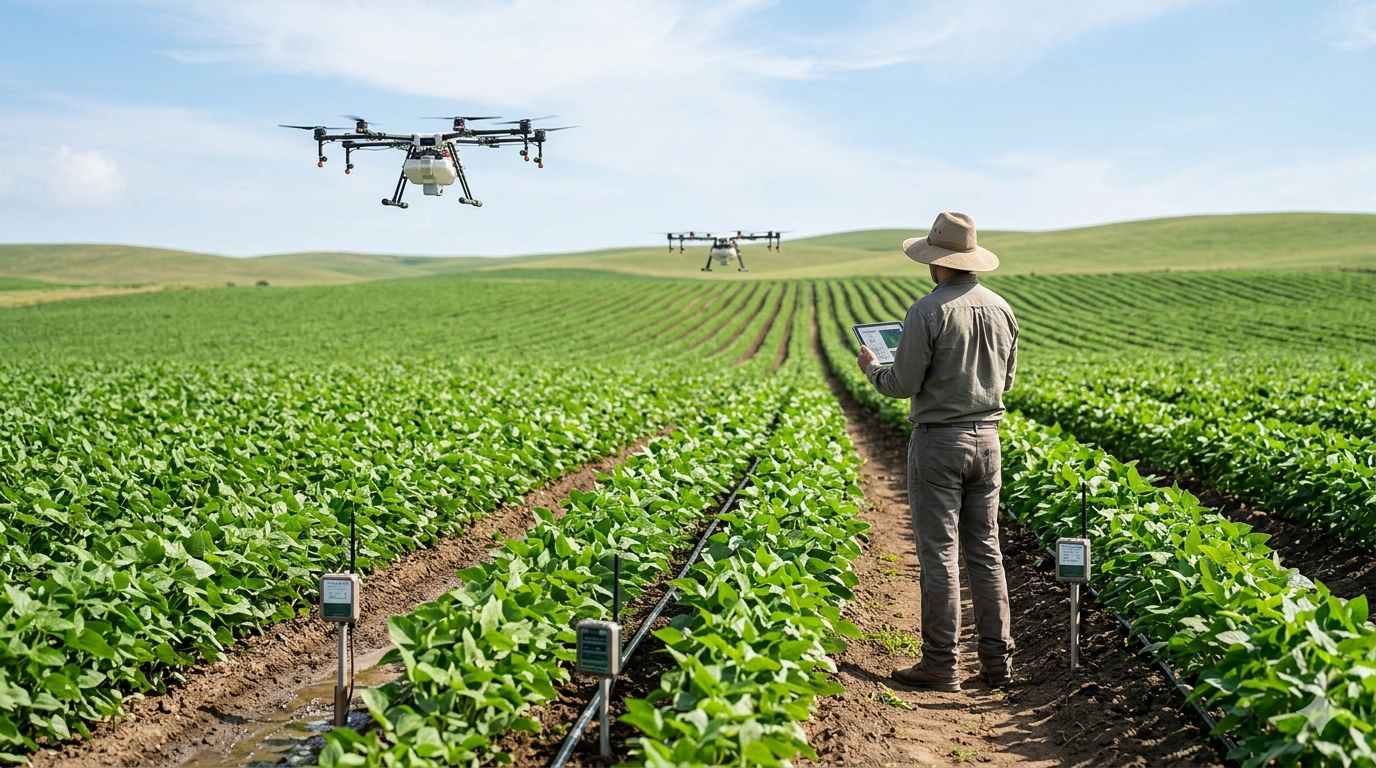
Segment Overview
The Precision Farming segment covers the application of advanced technologies, data analytics, and automated systems to optimize agricultural productivity, resource utilization, and farm management practices. It enables farmers to make data-driven decisions related to soil health, irrigation, fertilization, pest control, and crop monitoring at a highly granular level.
This segment operates at the intersection of agriculture, information technology, remote sensing, and automation, making it a technology-enabled transformation layer within the agricultural industry.
Scope of the Precision Farming Segment
This segment includes, but is not limited to:
Soil and field monitoring systems
Sensors and IoT-based tools for measuring soil moisture, nutrient levels, pH, and environmental conditions.
Satellite and drone-based crop monitoring
Remote sensing technologies used for crop health assessment, yield estimation, and field mapping.
Smart irrigation systems
Automated irrigation solutions using real-time data to optimize water usage.
Farm management software platforms
Digital platforms for planning, monitoring, and analyzing farm operations and productivity.
Variable rate technology (VRT)
Equipment that adjusts input application (seeds, fertilizers, pesticides) based on field variability.
Agricultural robotics and automation
Autonomous tractors, robotic harvesters, and precision spraying systems.
Market Characteristics
The Precision Farming segment is defined by several structural characteristics:
- High reliance on data acquisition from sensors, satellites, and connected devices
- Strong integration of hardware, software, and analytics platforms
- Gradual adoption driven by farm size, capital availability, and technology access
- Focus on optimizing input efficiency such as water, fertilizers, and pesticides
- Dependence on connectivity infrastructure in rural and agricultural regions
- Increasing interoperability between equipment manufacturers and digital platforms
- Demand influenced by productivity needs, climate variability, and resource constraints
Value Chain Overview
The segment spans the full precision farming value chain:
- Data Collection: Soil sensors, drones, satellites, and IoT devices capture agricultural data
- Data Processing & Analytics: AI and cloud platforms analyze field conditions and crop performance
- Decision Support Systems: Insights are generated for irrigation, fertilization, and crop management
- Field Execution: Automated machinery and smart equipment implement precision interventions
- Monitoring & Feedback: Continuous tracking of outcomes to refine models and improve efficiency
Each stage integrates digital intelligence with physical farming operations to enhance agricultural productivity.
Key Market Drivers
- Rising need for higher agricultural productivity to meet global food demand
- Increasing adoption of digital technologies in farming operations
- Water scarcity and need for efficient irrigation management
- Growing emphasis on sustainable and resource-efficient agriculture
- Government initiatives supporting smart agriculture adoption
- Advancements in IoT, AI, satellite imaging, and agricultural robotics
Strategic Importance within Agriculture
Precision Farming plays a critical role in transforming traditional agriculture into a data-driven and technology-enabled system. It improves yield efficiency, reduces input wastage, and supports sustainable farming practices.
Upstream, it enhances decision-making through real-time field intelligence. Downstream, it improves supply chain predictability by enabling better yield forecasting and crop quality management.
As agriculture faces increasing pressure from climate variability, resource constraints, and food security demands, Precision Farming is becoming a foundational enabler of modern agricultural productivity and sustainability.