
Automotive & Transportation / Market Segment
Global Automotive Simulation & Testing Systems Market
1. Segment Overview
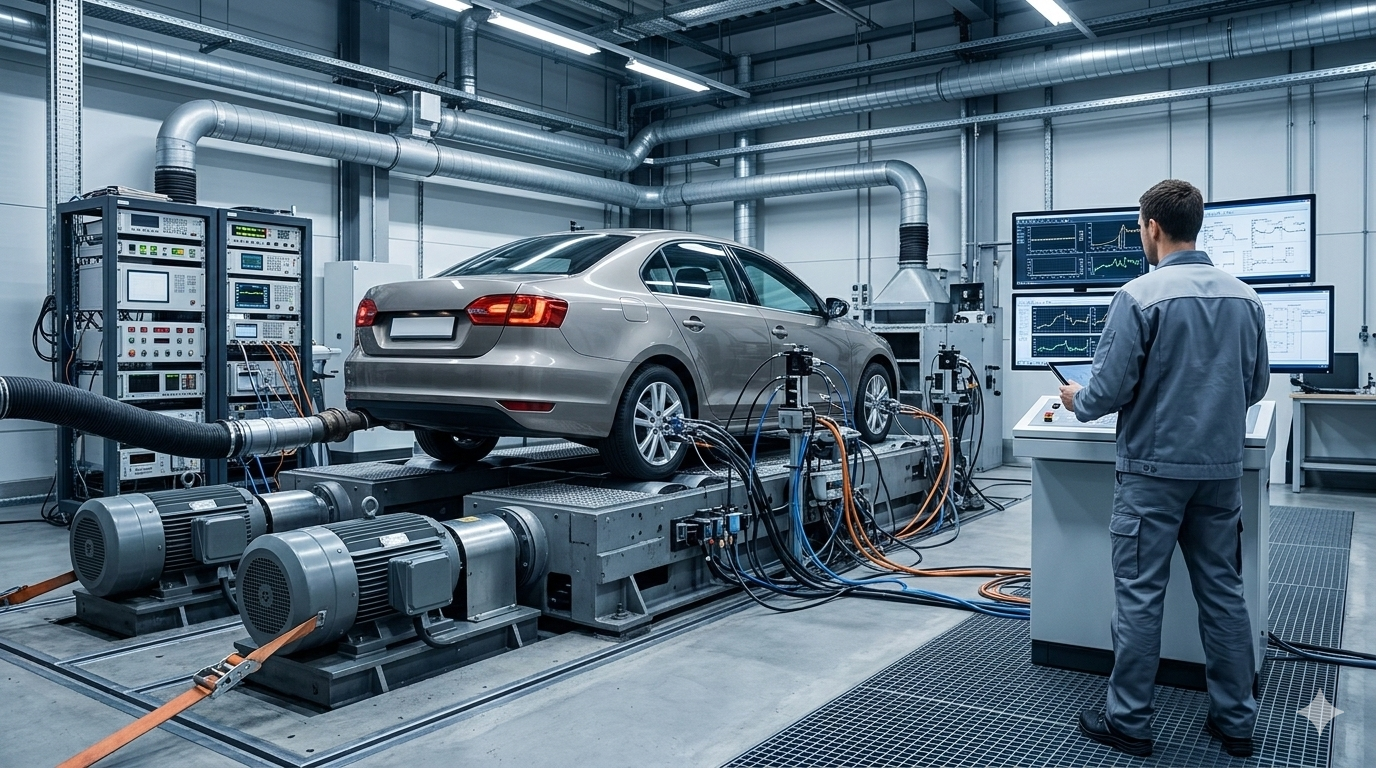
The Automotive Simulation & Testing Systems segment comprises hardware and software platforms used to model, validate, and verify vehicle performance, safety, and system behavior during the development and production lifecycle. Within the Automotive and Transportation industry, this segment functions as a technical validation layer that supports engineering design, regulatory compliance, and product reliability.
The segment exists to allow vehicle manufacturers, suppliers, and engineering organizations to replicate real-world driving conditions, system interactions, and component stresses within controlled environments. By enabling digital simulation and physical testing, these systems help reduce development risk, improve design accuracy, and ensure that vehicles meet operational and safety standards before market deployment.
2. Structural Scope of the Segment
-
Vehicle dynamics simulation platforms
-
Hardware-in-the-loop (HIL) and software-in-the-loop (SIL) testing systems
-
Driving simulators and virtual testing environments
-
Powertrain and engine testing benches
-
Battery and electric drivetrain testing systems
-
Environmental and durability testing chambers
-
Automotive electronics and control unit validation systems
-
Autonomous vehicle simulation and sensor testing platforms
3. Core Market Characteristics
-
Development-oriented demand tied to vehicle engineering cycles
-
High technical complexity requiring integration of mechanical, electronic, and software systems
-
Combination of digital simulation tools and physical test equipment
-
Long procurement cycles with customization based on vehicle platforms and regulatory requirements
-
Strong emphasis on precision measurement, repeatability, and validation accuracy
-
Continuous updates driven by new propulsion technologies and vehicle electronics architectures
-
Increasing integration with digital engineering workflows and model-based development processes
4. Value Chain Overview
-
Inputs: Electronic components, sensors, simulation software, data acquisition systems, mechanical test rigs
-
System Development: Engineering design, software modeling, hardware fabrication, and system integration
-
Deployment: Installation within automotive R&D centers, proving grounds, and testing laboratories
-
Operational Use: Simulation modeling, component testing, system validation, and compliance verification
-
Lifecycle & Upgrades: Software updates, recalibration, hardware replacement, and integration with evolving vehicle technologies
5. Key Market Drivers
-
Increasing complexity of vehicle electronics and software systems
-
Expansion of electric and hybrid vehicle development programs
-
Safety and regulatory compliance requirements for vehicle performance
-
Growth of autonomous driving technologies and sensor validation needs
-
Demand for faster vehicle development cycles and design optimization
-
Adoption of digital engineering and model-based development methodologies
6. Strategic Importance within Parent Industry
Automotive Simulation & Testing Systems play a critical role in the Automotive and Transportation industry by enabling safe, reliable, and compliant vehicle development. Upstream, the segment integrates advanced sensors, electronics, and engineering software technologies. Downstream, it supports vehicle manufacturers and component suppliers in validating designs before large-scale production.
The segment contributes to reduced development risk, improved engineering accuracy, and accelerated innovation across conventional, electric, and autonomous vehicle platforms. Its function as a validation and verification infrastructure makes it essential to the evolution of modern automotive technologies.