
Global Skin Microbiome Market Report, Size & Forecast 2026-2033
Global Skin Microbiome Market Size & Forecast
The global skin microbiome market is projected to witness robust growth during the forecast period from 2026 to 2033. The market was valued at approximately USD 985.4 million in 2025 and is expected to reach nearly USD 2.84 billion by 2033, expanding at a CAGR of around 14.1%. The market growth is driven by increasing consumer awareness regarding skin health, growing demand for personalized skincare solutions, rapid advancements in microbiome-based research, and expanding adoption of probiotic and prebiotic skincare formulations across global beauty and dermatology sectors. The skin microbiome refers to the diverse ecosystem of microorganisms residing on the skin surface that plays a critical role in maintaining skin barrier integrity, immune defense, hydration balance, and protection against pathogens. Skin microbiome-focused products are designed to preserve, restore, and optimize this natural microbial balance to improve overall skin health and address various dermatological concerns. The market is experiencing significant transformation through biotechnology innovation, microbiome sequencing technologies, AI-powered personalized skincare diagnostics, and advanced formulation science. Additionally, increasing prevalence of skin disorders such as acne, eczema, psoriasis, atopic dermatitis, and rosacea is accelerating the demand for microbiome-based therapeutic and cosmetic solutions worldwide.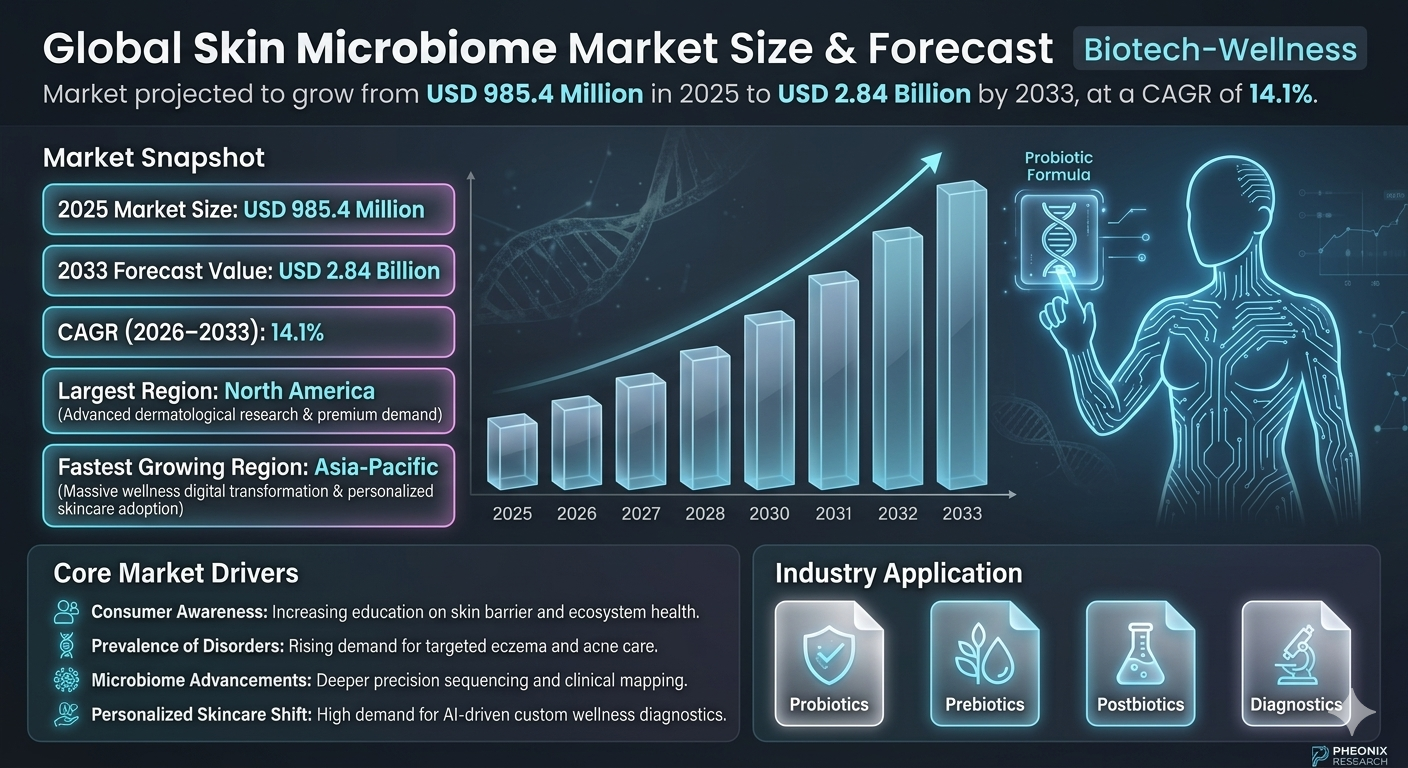
Global Skin Microbiome Market Overview
The skin microbiome market represents a rapidly emerging segment within the global skincare, dermatology, biotechnology, and personalized wellness industries. It combines microbiology, dermatological science, cosmetic chemistry, and digital diagnostics to develop targeted solutions for maintaining healthy skin ecosystems. The market includes probiotic skincare products, prebiotic formulations, postbiotic products, microbiome-friendly cleansers, serums, moisturizers, microbiome diagnostics, and therapeutic skin microbiome interventions. Skincare manufacturers, biotechnology companies, dermatology clinics, and research institutions are increasingly investing in microbiome-based product development to meet evolving consumer preferences for science-backed skincare solutions. Technological advancements in next-generation sequencing, bioinformatics analytics, microbiome mapping, and precision formulation are significantly enhancing product efficacy and customization capabilities. Major market participants include L???Or??al S.A., Johnson & Johnson, Unilever PLC, The Est??e Lauder Companies Inc., Gallin??e Ltd., Mother Dirt, AOBiome Therapeutics, Codex Labs, Esse Skincare, and La Roche-Posay.Key Drivers of Global Skin Microbiome Market Growth
Growing Consumer Awareness of Skin Health
Consumers are becoming increasingly aware of the role of the skin microbiome in maintaining healthy skin and preventing dermatological conditions. This awareness is driving demand for microbiome-friendly skincare products.Rising Prevalence of Skin Disorders
The increasing incidence of acne, eczema, psoriasis, dermatitis, and other inflammatory skin conditions is fueling demand for microbiome-based therapeutic solutions. These solutions offer targeted and gentler approaches to skin management.Advancements in Microbiome Research
Rapid progress in microbiome sequencing and microbial characterization is enabling deeper understanding of skin microbial ecosystems. This is supporting the development of highly effective precision skincare products.Increasing Demand for Personalized Skincare
Consumers are increasingly seeking customized skincare regimens based on individual skin profiles and microbiome composition. AI-powered diagnostics and microbiome testing are enabling personalized product recommendations.Shift Toward Clean and Science-Backed Beauty
The clean beauty movement is driving preference for microbiome-safe, non-disruptive formulations supported by scientific evidence. This trend is accelerating product innovation across premium skincare categories.Global Skin Microbiome Market Segmentation
By Product Type
The market is segmented into probiotic skincare products, prebiotic formulations, postbiotic skincare, microbiome-friendly cleansers, serums, moisturizers, and therapeutic products. Probiotic skincare products account for a significant market share due to increasing consumer familiarity and adoption.By Application
Applications include acne treatment, eczema management, anti-aging skincare, hydration enhancement, sensitive skin care, and skin barrier repair. Acne and sensitive skin management remain leading application segments.By Distribution Channel
The market includes online retail, specialty beauty stores, pharmacies, dermatology clinics, and direct-to-consumer channels. Online retail dominates due to growing digital skincare commerce.By End User
End users include individual consumers, dermatology clinics, medical spas, and cosmetic treatment centers. Individual consumer adoption represents the largest segment globally.Regional Market Dynamics
North America
North America dominates the global skin microbiome market due to high consumer awareness, advanced dermatological research, strong premium skincare demand, and biotechnology innovation. The United States remains the leading regional market.Europe
Europe holds a significant market share supported by strong microbiome research initiatives, regulatory focus on product safety, and rising demand for clean beauty solutions. France, Germany, and the United Kingdom are key regional contributors.Asia-Pacific
Asia-Pacific is the fastest-growing region due to increasing skincare awareness, expanding beauty and wellness markets, and rising adoption of personalized skincare technologies. China, Japan, South Korea, and India are major growth markets.Latin America
Latin America is witnessing gradual growth due to increasing consumer spending on premium skincare products and growing awareness of dermatological wellness. Brazil and Mexico are major contributors.Middle East & Africa
The region is experiencing moderate growth supported by expanding premium beauty markets and increasing adoption of advanced skincare products. Gulf countries remain key emerging markets.Competitive Landscape
The global skin microbiome market is highly competitive and innovation-driven, with skincare giants and specialized biotech startups competing through scientific validation, formulation innovation, and personalized product offerings. Key players include L???Or??al S.A., Johnson & Johnson, Unilever PLC, The Est??e Lauder Companies Inc., Gallin??e Ltd., Mother Dirt, AOBiome Therapeutics, Codex Labs, Esse Skincare, and La Roche-Posay. Companies are increasingly investing in microbiome research partnerships, clinical trials, AI-powered skin diagnostics, and proprietary microbial ingredient development. Strategic collaborations with dermatologists, biotechnology firms, and digital wellness platforms are strengthening competitive positioning.Strategic Outlook
The strategic outlook for the global skin microbiome market remains highly favorable due to growing consumer demand for personalized, science-driven, and microbiome-safe skincare solutions. Future growth opportunities include AI-based microbiome diagnostics, prescription-grade microbiome therapeutics, advanced postbiotic formulations, and fully personalized skincare ecosystems. Clinical validation, regulatory compliance, and consumer education will remain central to long-term market development. Organizations investing in research-driven innovation, microbiome intelligence platforms, and digital consumer engagement are expected to strengthen market leadership.Final Market Perspective
The global skin microbiome market is emerging as a transformative force in modern skincare, dermatology, and precision wellness. Rising awareness of skin ecosystem health, growing demand for personalized beauty solutions, and continuous microbiome science advancements will continue driving strong market expansion throughout the forecast period. Companies that successfully combine microbiological expertise, formulation innovation, and personalized consumer experiences will remain strongly positioned in the evolving global skin microbiome market.Table of Contents
Table of Contents
- 1. Executive Summary
- 1.1 Global Skin Microbiome Market Snapshot (2026???2033)
- 1.2 Market Size & CAGR Analysis
- 1.3 Largest & Fastest-Growing Segments
- 1.4 Key Regional Insights
- 1.5 Major Market Growth Drivers
- 1.6 Competitive Landscape Overview
- 1.7 Strategic Outlook Through 2033
- 2. Introduction & Market Overview
- 2.1 Definition of Skin Microbiome
- 2.2 Scope of the Study
- 2.3 Evolution of Microbiome-Based Skincare
- 2.4 Skin Health Ecosystem Analysis
- 2.5 Regulatory & Scientific Validation Framework
- 2.6 Personalized Skincare Industry Trends
- 2.7 Technology Innovation Landscape
- 3. Research Methodology
- 3.1 Primary Research
- 3.2 Secondary Research
- 3.3 Market Size Estimation Model
- 3.4 Forecast Assumptions (2026???2033)
- 3.5 Data Validation & Market Triangulation
- 4. Market Dynamics
- 4.1 Drivers
- 4.1.1 Growing Consumer Awareness of Skin Health
- 4.1.2 Rising Prevalence of Skin Disorders
- 4.1.3 Advancements in Microbiome Research
- 4.1.4 Increasing Demand for Personalized Skincare
- 4.1.5 Shift Toward Clean and Science-Backed Beauty
- 4.2 Restraints
- 4.2.1 High Product Development Costs
- 4.2.2 Limited Regulatory Standardization
- 4.2.3 Scientific Validation Challenges
- 4.2.4 Consumer Education Gaps
- 4.3 Opportunities
- 4.3.1 AI-Based Microbiome Diagnostics
- 4.3.2 Prescription-Grade Microbiome Therapeutics
- 4.3.3 Expansion of Postbiotic Innovations
- 4.3.4 Personalized Digital Skincare Ecosystems
- 4.4 Challenges
- 4.4.1 Clinical Validation Complexity
- 4.4.2 Microbial Stability in Formulations
- 4.4.3 Scaling Personalized Manufacturing
- 4.4.4 Regulatory Approval Delays
- 4.1 Drivers
- 5. Global Skin Microbiome Market Analysis (USD Million), 2026???2033
- 5.1 Market Size Overview
- 5.2 CAGR Analysis
- 5.3 Regional Revenue Distribution
- 5.4 Product Innovation Trends
- 5.5 Consumer Adoption Analysis
- 5.6 Future Growth Projections
- 6. Market Segmentation (USD Million), 2026???2033
- 6.1 By Product Type
- 6.1.1 Probiotic Skincare Products
- 6.1.2 Prebiotic Formulations
- 6.1.3 Postbiotic Skincare
- 6.1.4 Microbiome-Friendly Cleansers
- 6.1.5 Serums
- 6.1.6 Moisturizers
- 6.1.7 Therapeutic Products
- 6.2 By Application
- 6.2.1 Acne Treatment
- 6.2.2 Eczema Management
- 6.2.3 Anti-Aging Skincare
- 6.2.4 Hydration Enhancement
- 6.2.5 Sensitive Skin Care
- 6.2.6 Skin Barrier Repair
- 6.3 By Distribution Channel
- 6.3.1 Online Retail
- 6.3.2 Specialty Beauty Stores
- 6.3.3 Pharmacies
- 6.3.4 Dermatology Clinics
- 6.3.5 Direct-to-Consumer Channels
- 6.4 By End User
- 6.4.1 Individual Consumers
- 6.4.2 Dermatology Clinics
- 6.4.3 Medical Spas
- 6.4.4 Cosmetic Treatment Centers
- 6.1 By Product Type
- 7. Market Segmentation by Geography
- 7.1 North America
- 7.2 Europe
- 7.3 Asia-Pacific
- 7.4 Latin America
- 7.5 Middle East & Africa
- 8. Competitive Landscape
- 8.1 Market Share Analysis
- 8.2 Product Innovation Benchmarking
- 8.3 Clinical Validation Analysis
- 8.4 Strategic Partnerships & Collaborations
- 8.5 Brand Positioning Strategies
- 9. Company Profiles
- 9.1 L???Or??al S.A.
- 9.2 Johnson & Johnson
- 9.3 Unilever PLC
- 9.4 The Est??e Lauder Companies Inc.
- 9.5 Gallin??e Ltd.
- 9.6 Mother Dirt
- 9.7 AOBiome Therapeutics
- 9.8 Codex Labs
- 9.9 Esse Skincare
- 9.10 La Roche-Posay
- 10. Strategic Intelligence & Pheonix AI Insights
- 10.1 Microbiome Innovation Forecast Engine
- 10.2 Personalized Skincare Analytics Dashboard
- 10.3 Consumer Behavior Intelligence Tracker
- 10.4 Product Efficacy Opportunity Analyzer
- 10.5 Automated Porter???s Five Forces Analysis
- 11. Future Outlook & Strategic Recommendations
- 11.1 Investment in Clinical Validation Programs
- 11.2 Expansion of AI-Powered Diagnostics
- 11.3 Development of Personalized Formulation Platforms
- 11.4 Strengthening Dermatology Partnerships
- 11.5 Long-Term Market Outlook (2033+)
- 12. Appendix
- 13. About Pheonix Research
- 14. Disclaimer
Competitive Landscape
Global Skin Microbiome Market Competitive Intensity & Market Structure Overview
The global skin microbiome market is highly innovation-driven and moderately fragmented, characterized by strong competition among multinational skincare companies, biotechnology firms, dermatology-focused product developers, and emerging personalized skincare startups. Competitive intensity is shaped by scientific validation, proprietary microbial technologies, formulation efficacy, microbiome research capabilities, and digital personalization platforms.
The market structure includes established global beauty conglomerates leveraging large-scale research and distribution networks, alongside specialized microbiome-focused biotech innovators developing targeted therapeutic and cosmetic formulations. Competition is increasingly centered around clinical credibility, personalized skin diagnostics, product differentiation, and microbiome-safe ingredient innovation.
Rising consumer demand for science-backed skincare, growing awareness of skin barrier health, and rapid advances in microbiome sequencing technologies are intensifying competition across the global skin microbiome market.
Global Skin Microbiome Market Competitive Intensity & Market Structure Current Scenario
Leading Global Skin Microbiome Companies
L???Or??al S.A.: Global skincare leader investing heavily in microbiome research, advanced formulation science, and precision beauty technologies.
Johnson & Johnson: Major healthcare and skincare company developing microbiome-based dermatological innovations.
Unilever PLC: Strong participant focused on microbiome-friendly skincare and consumer wellness product innovation.
The Est??e Lauder Companies Inc.: Premium beauty company investing in personalized skincare diagnostics and advanced microbiome formulations.
Gallin??e Ltd.: Specialized microbiome skincare company recognized for probiotic and prebiotic-focused product development.
Mother Dirt: Pioneer in live probiotic skincare solutions and microbiome restoration products.
AOBiome Therapeutics: Biotechnology company focused on therapeutic skin microbiome modulation technologies.
Codex Labs: Science-driven skincare innovator emphasizing clinically validated microbiome-supportive formulations.
Esse Skincare: Premium probiotic skincare company focused on restoring skin microbial diversity.
La Roche-Posay: Leading dermatology-focused skincare brand integrating microbiome science into therapeutic skincare development.
Key Competitive Intensity & Market Structure Drivers
Increasing consumer awareness regarding the importance of microbiome balance for overall skin health is significantly intensifying market competition.
The rising prevalence of inflammatory skin disorders is accelerating demand for targeted microbiome-based therapeutic and preventive skincare solutions.
Rapid advancements in next-generation sequencing and bioinformatics are enabling highly precise product development and scientific differentiation.
Growing demand for personalized skincare experiences is creating strong competition around AI-powered diagnostics and microbiome testing platforms.
The clean beauty movement and consumer preference for non-disruptive formulations are driving innovation in microbiome-friendly ingredients.
Strategic Implications of Competitive Intensity & Market Structure
Companies are increasingly investing in clinical trials and microbiome research partnerships to strengthen scientific credibility and regulatory confidence.
Strategic collaborations between biotechnology firms, dermatologists, and skincare brands are becoming essential for innovation acceleration.
AI-driven skin analysis tools and digital diagnostic ecosystems are emerging as key differentiators in personalized skincare delivery.
Proprietary microbial strains, postbiotic technologies, and advanced formulation patents are strengthening intellectual property-based competition.
Digital consumer education and direct-to-consumer engagement strategies are becoming critical for expanding product adoption.
Global Skin Microbiome Market Competitive Intensity & Market Structure Forward Outlook
The global skin microbiome market is expected to remain highly competitive as personalized beauty, dermatological science, and precision wellness continue to converge.
Future competition will increasingly focus on prescription-grade microbiome therapeutics, AI-powered microbiome diagnostics, postbiotic innovation, and individualized skincare ecosystems.
North America and Asia-Pacific are expected to remain key competitive growth regions due to strong biotech innovation and rapidly expanding premium skincare demand.
Advancements in microbial mapping, computational biology, and adaptive formulation technologies are expected to significantly reshape market dynamics.
Overall, companies that successfully combine microbiological expertise, clinical validation, personalized diagnostics, and consumer-centric digital engagement will remain strongly positioned in the evolving global skin microbiome market.
Value Chain
Global Skin Microbiome Market Value Chain & Supply Chain Evolution Overview
The Global Skin Microbiome Market operates through a biotechnology-driven skincare ecosystem supported by microbial research, ingredient development, formulation science, clinical validation, product manufacturing, digital diagnostics, and consumer skincare distribution. The market is increasingly shaped by microbiome sequencing, AI-powered skin analysis, personalized skincare solutions, and probiotic/prebiotic innovation.
The value chain depends heavily on microbiome research, bioactive ingredient discovery, formulation development, biotechnology partnerships, regulatory compliance, and omnichannel skincare distribution.
Supply chain complexity is moderate to high due to scientific validation requirements, biotechnology integration, ingredient stability challenges, personalized product development, regulatory oversight, and premium skincare manufacturing standards.
Global Skin Microbiome Market Value Chain & Supply Chain Evolution Current Scenario
Market-Specific Value Chain
1. Microbiome Research & Bioactive Ingredient Discovery
Microbial strain identification, microbiome sequencing, probiotic cultures, prebiotic compounds, postbiotic ingredients, biotechnology research, and dermatological studies.
2. Product Development & Formulation Engineering
Microbiome-friendly cleansers, serums, moisturizers, therapeutic formulations, personalized skincare solutions, active ingredient stabilization, and efficacy optimization.
3. Clinical Testing & Scientific Validation
Dermatological testing, microbiome efficacy studies, safety assessments, consumer trials, regulatory documentation, and scientific claims validation.
4. Manufacturing & Packaging
Skincare production, active ingredient blending, sterile processing, sustainable packaging, quality control, and premium cosmetic manufacturing.
5. Distribution & Commercialization Networks
E-commerce platforms, dermatology clinics, pharmacies, specialty beauty retailers, direct-to-consumer (DTC) channels, and wellness marketplaces.
6. End-Use Consumer & Clinical Ecosystem
Individual consumers, dermatologists, medical spas, cosmetic clinics, skincare professionals, and personalized wellness platforms.
Key Value Chain Evolution Signals
1. Personalized Skincare Expansion
AI-driven microbiome diagnostics are accelerating customized skincare adoption.
2. Biotechnology Integration
Advanced microbiome science is becoming central to product differentiation.
3. Probiotic & Postbiotic Innovation
Companies are increasingly developing scientifically validated microbial ingredients.
4. Digital Skin Diagnostics
Consumer-facing microbiome testing and AI-powered recommendations are growing rapidly.
5. Clean Beauty & Skin Barrier Focus
Demand for microbiome-safe and non-disruptive formulations continues increasing.
6. Clinical-Dermatology Collaboration
Partnerships between skincare brands and dermatology experts are strengthening product credibility.
Strategic Implications
1. Research-Driven Innovation
Strong microbiome R&D capabilities improve competitive advantage.
2. Scientific Validation
Clinical evidence and efficacy data enhance brand trust.
3. Personalized Product Ecosystems
Customized skincare platforms create premium market opportunities.
4. Omnichannel Consumer Engagement
Digital commerce and dermatology partnerships improve market reach.
5. Biotechnology Partnerships
Collaborations with microbiome research firms accelerate innovation pipelines.
Forward Outlook
The market is expected to evolve toward a more personalized, biotechnology-driven, and data-enabled skincare ecosystem through:
- AI-powered microbiome diagnostics
- Personalized skincare platforms
- Advanced probiotic formulations
- Postbiotic ingredient innovation
- Precision dermatology solutions
- Microbiome sequencing integration
- Digital wellness ecosystems
- Clinical-grade microbiome therapeutics
Investment Activity
Global Skin Microbiome Market Investment & Funding Dynamics Overview
The global skin microbiome market is witnessing accelerating investment activity driven by growing consumer demand for personalized skincare, increasing adoption of microbiome-based therapeutics, and rapid advancements in biotechnology research. Between 2026 and 2033, funding activity is expected to intensify across microbiome diagnostics, probiotic and postbiotic skincare innovation, AI-powered skin analysis platforms, and precision dermatology technologies.
The skin microbiome market represents a strategically important segment within the broader biotechnology, dermatology, personalized wellness, and clean beauty ecosystem. Venture capital firms, beauty-tech investors, biotechnology funds, strategic skincare corporations, and healthcare-focused private equity investors are increasingly allocating capital toward microbiome-focused companies to capture emerging opportunities in science-backed skincare innovation.
A major structural transformation shaping investment dynamics is the shift from traditional skincare formulations toward biologically active, microbiome-preserving, and personalized skin health solutions. This transition is driving substantial capital deployment into microbial ingredient development, microbiome sequencing platforms, digital diagnostics, and advanced formulation technologies.
Growing convergence between microbiome science, AI-enabled diagnostics, dermatological therapeutics, and personalized beauty platforms is creating substantial cross-sector investment opportunities focused on innovation, scalability, and clinical validation.
Current Investment & Funding Landscape
- North America: Leads global investment activity due to strong biotechnology innovation, premium skincare demand, and robust venture capital participation.
- Europe: Attracting substantial funding through advanced microbiome research initiatives and strong clean beauty market adoption.
- Asia-Pacific: Emerging as a high-growth investment destination driven by beauty-tech expansion and rising consumer demand for personalized skincare.
- Latin America: Witnessing gradual investment growth supported by premium skincare market expansion.
- Middle East & Africa: Selective investments are focused on premium dermatology and advanced skincare innovation.
Key Investment Drivers
- Rising consumer awareness of microbiome-based skin health.
- Increasing prevalence of acne, eczema, psoriasis, and inflammatory skin disorders.
- Growing demand for personalized skincare solutions.
- Rapid advancements in microbiome sequencing and bioinformatics.
- Expansion of clean beauty and science-backed skincare trends.
- Increasing investment in AI-powered dermatology diagnostics.
- Strong clinical research supporting microbiome-targeted formulations.
- Growing strategic interest from major beauty and pharmaceutical companies.
Strategic Investment Areas
- Microbiome Diagnostics: AI-driven skin analysis and microbial mapping platforms.
- Probiotic & Postbiotic Formulations: Development of advanced biologically active skincare products.
- Precision Dermatology: Personalized therapeutic skincare platforms.
- Microbial Ingredient Development: Proprietary bacterial strains and active compounds.
- Digital Skin Health Platforms: Consumer-facing personalized skincare ecosystems.
- Clinical Research Infrastructure: Validation studies and microbiome efficacy trials.
Strategic Investment Implications
- Clinical validation is becoming a key determinant of investor confidence.
- Companies with proprietary microbiome intellectual property attract premium valuations.
- AI integration significantly enhances personalization and scalability potential.
- Strategic partnerships with dermatologists and biotech research institutions strengthen commercial viability.
- Regulatory readiness is critical for sustaining long-term funding activity.
- Brand credibility and scientific transparency are increasingly influencing capital allocation decisions.
Forward Investment Outlook
The global skin microbiome market is expected to remain one of the most attractive beauty-tech and biotechnology investment sectors throughout the forecast period due to rising consumer demand for precision skincare and continued microbiome science advancement.
Future funding activity is expected to prioritize AI-powered skin microbiome analytics, prescription-grade microbiome therapeutics, advanced postbiotic product development, and fully integrated digital skin health ecosystems.
- North America: Will continue leading capital inflows through biotech innovation and premium skincare commercialization.
- Europe: Will maintain strong investment activity centered on clinical microbiome research.
- Asia-Pacific: Will experience accelerated investment growth through beauty-tech innovation and digital personalization trends.
- Emerging Markets: Will attract strategic early-stage investment as premium skincare awareness expands.
Overall, the skin microbiome market represents a high-growth investment opportunity positioned at the intersection of biotechnology, dermatology, precision wellness, and next-generation personalized skincare innovation.
Technology & Innovation
Global Skin Microbiome Market Technology & Innovation Landscape Overview
The global skin microbiome market is undergoing rapid technological transformation driven by advancements in microbiome sequencing, artificial intelligence-powered diagnostics, bioinformatics analytics, and precision skincare formulation science. Innovation is increasingly focused on decoding complex microbial ecosystems, enhancing product personalization, improving therapeutic efficacy, and enabling microbiome-centered skin health management.
Modern skin microbiome technologies are evolving toward highly intelligent and data-driven skincare ecosystems capable of delivering personalized solutions based on individual microbial profiles, skin physiology, and environmental exposure factors. These innovations are significantly improving treatment precision and reshaping preventive and therapeutic skincare approaches.
The integration of next-generation sequencing platforms, machine learning-powered skin analysis, microbiome mapping software, and advanced bioactive ingredient engineering is redefining product development across cosmetic, dermatological, and therapeutic applications.
Global Skin Microbiome Market Technology & Innovation Current Scenario
Currently, innovation in the skin microbiome market is centered around advanced microbiome profiling and precision formulation technologies. Next-generation sequencing is increasingly being used to identify microbial imbalances and support targeted skincare product development.
AI-powered diagnostic platforms are enabling personalized skin assessments by analyzing microbial composition, skin barrier health, inflammation markers, and hydration patterns to recommend customized skincare regimens.
Postbiotic and probiotic formulation science is witnessing substantial advancement through improved microbial stabilization techniques, encapsulation technologies, and bioactive delivery systems that enhance ingredient viability and efficacy.
Cloud-connected digital skin analysis tools are improving consumer accessibility by enabling remote diagnostics, treatment tracking, and personalized skincare monitoring.
Bioinformatics platforms are increasingly being deployed to analyze large-scale microbiome datasets and uncover microbial interactions linked to specific skin conditions.
Additionally, wearable skin sensors and real-time environmental monitoring technologies are emerging as innovative tools for tracking external factors that influence microbiome health and skin performance.
Key Technology & Innovation Trends in Global Skin Microbiome Market
- Next-Generation Microbiome Sequencing: High-resolution microbial profiling for personalized skin analysis.
- AI-Powered Skin Diagnostics: Intelligent systems enabling customized skincare recommendations.
- Bioinformatics Analytics Platforms: Advanced microbial data interpretation and predictive skin modeling.
- Postbiotic Formulation Technologies: Stable bioactive compounds enhancing skin barrier support.
- Microencapsulation Delivery Systems: Improved stability and controlled release of microbiome-friendly ingredients.
- Cloud-Based Skin Monitoring Platforms: Remote tracking and personalized treatment optimization.
- Wearable Skin Sensors: Real-time monitoring of skin health and environmental exposure factors.
- Precision Probiotic Engineering: Customized microbial strain development for targeted therapeutic outcomes.
- Digital Twin Skin Modeling: Virtual simulation of skin microbiome interactions and treatment response.
- Personalized Skincare Algorithms: Adaptive recommendation systems for microbiome-centered skin management.
Strategic Implications of Technology & Innovation
Technological innovation is significantly reshaping competitive dynamics in the skin microbiome market by shifting competition from traditional skincare formulation toward data-driven precision skincare and clinically validated microbiome science.
Companies investing in AI diagnostics, microbial analytics platforms, and proprietary microbiome ingredient technologies are achieving stronger differentiation through superior personalization, measurable outcomes, and scientific credibility.
The integration of digital diagnostics and microbiome intelligence platforms is creating new opportunities for direct-to-consumer engagement, personalized treatment ecosystems, and recurring subscription-based skincare models.
Clinical validation and data transparency are becoming increasingly important for establishing consumer trust and regulatory acceptance.
However, challenges including scientific complexity, regulatory uncertainty, formulation stability issues, and high research costs remain significant barriers to broader market penetration.
Global Skin Microbiome Market Technology & Innovation Forward Outlook
Looking ahead, the skin microbiome market is expected to evolve toward fully personalized, predictive, and AI-orchestrated skincare ecosystems capable of dynamically adapting to individual microbial changes over time.
Future innovation is likely to focus on self-learning skincare platforms, AI-driven microbiome prediction models, and real-time adaptive formulations based on continuous skin monitoring.
Synthetic biology and engineered probiotic strains are expected to enable next-generation therapeutic applications targeting inflammatory and chronic dermatological conditions.
Digital twin technology may enable virtual simulation of treatment outcomes, accelerating personalized skincare optimization and product development.
Blockchain-enabled skincare data management platforms may also improve privacy, transparency, and consumer control over microbiome health information.
Overall, the global skin microbiome market is entering a new era of intelligent skin health innovation characterized by advanced microbial science, digital diagnostics, precision therapeutics, and personalized ecosystem-based skincare solutions that are redefining the future of dermatology and beauty worldwide.
Market Risk
Global Skin Microbiome Market Risk Factors & Disruption Threats Overview
The global skin microbiome market is experiencing rapid expansion driven by growing consumer awareness of skin health, increasing demand for personalized skincare, advances in microbiome science, and rising prevalence of dermatological disorders. Despite its strong long-term growth trajectory, the market faces several risks and disruption threats related to scientific validation challenges, regulatory complexity, consumer skepticism, formulation instability, data privacy concerns, and intensifying competitive pressures.
One of the most significant risks affecting the skin microbiome market is the limited standardization of microbiome science and clinical validation frameworks. Variability in microbial composition across individuals, geographic regions, lifestyles, and environmental exposure makes product efficacy validation highly complex.
Regulatory uncertainty presents another major challenge. Since microbiome-based skincare products often operate at the intersection of cosmetics, therapeutics, and biotechnology, evolving regulatory classifications may create compliance complexity and delay commercialization.
Scientific credibility and consumer trust remain critical risk factors. Unsupported marketing claims, insufficient clinical evidence, and exaggerated efficacy promises may create skepticism and negatively impact brand reputation.
Formulation stability also presents technical challenges, particularly for live probiotic and bioactive microbiome-supporting ingredients that require strict environmental control to maintain effectiveness.
Data privacy and cybersecurity concerns are becoming increasingly relevant as AI-driven skin diagnostics and microbiome testing platforms collect sensitive consumer biological data.
Additionally, competition from conventional dermatological treatments, established skincare brands, and alternative biotechnology-based skin solutions may limit market penetration.
Global Skin Microbiome Market Risk Factors & Disruption Threats Current Scenario
The current skin microbiome market is benefiting from significant research investment, growing premium skincare demand, and increasing collaboration between biotech innovators and established beauty brands.
However, scientific consensus regarding optimal microbiome modulation strategies remains under development, creating uncertainty around long-term product positioning.
Consumer education remains a major challenge, as many buyers have limited understanding of microbiome science and product differentiation.
Clinical substantiation requirements are increasing as regulators and consumers demand stronger evidence supporting microbiome-related claims.
Supply chain constraints affecting specialty active ingredients, fermentation-derived compounds, and precision formulation technologies are creating operational challenges.
Competitive intensity is rising rapidly as both multinational skincare companies and emerging biotech startups expand microbiome-focused product portfolios.
Global Skin Microbiome Market Key Risk Factors & Disruption Threat Signals
- Scientific Validation Challenges: Limited standardized clinical frameworks for measuring microbiome product efficacy.
- Regulatory Classification Uncertainty: Evolving compliance requirements across cosmetics and therapeutic product categories.
- Consumer Skepticism: Limited understanding of microbiome science and potential distrust of unsupported claims.
- Formulation Stability Risks: Challenges maintaining efficacy of live probiotic and sensitive bioactive ingredients.
- Data Privacy Concerns: Risks associated with microbiome diagnostic data collection and AI-powered skin analysis platforms.
- Supply Chain Constraints: Limited availability of specialized microbial strains and advanced bioactive compounds.
- Competitive Market Saturation: Rapid influx of microbiome-branded products creating differentiation challenges.
- High R&D Costs: Significant investment required for microbiome research, testing, and clinical validation.
- Technology Obsolescence: Fast-paced innovation cycles requiring continuous product reformulation.
- Reputation Risk: Potential backlash from overstated efficacy claims or failed consumer expectations.
Strategic Implications of Risk Factors
Market participants must prioritize robust clinical validation and transparent scientific communication to strengthen consumer trust and regulatory confidence.
Investment in formulation stabilization technologies and microbial ingredient preservation systems will be essential for ensuring product reliability.
Strengthening cybersecurity protections and privacy-compliant diagnostic platforms will become increasingly important as personalized microbiome testing expands.
Brands should focus on consumer education initiatives to improve understanding of microbiome science and support informed purchasing decisions.
Strategic collaborations with dermatologists, academic institutions, and biotechnology research partners will remain critical for maintaining scientific credibility and innovation leadership.
Global Skin Microbiome Market Forward Risk Outlook
Looking ahead to 2026???2033, the skin microbiome market is expected to maintain strong growth as personalized skincare and biotechnology-driven beauty solutions gain broader consumer acceptance.
Future disruption will likely emerge from AI-powered microbiome diagnostics, next-generation postbiotic innovations, prescription-grade microbiome therapeutics, and integrated precision skincare ecosystems.
Companies unable to demonstrate scientific rigor, regulatory adaptability, and technological differentiation may face increasing competitive pressure.
The strongest opportunities will emerge for organizations delivering clinically validated, highly personalized, scientifically transparent, and digitally integrated microbiome skincare solutions.
Overall, long-term market leadership will depend on scientific excellence, consumer trust, regulatory readiness, and continuous microbiome innovation.
Regulatory Landscape
Global Skin Microbiome Market Regulatory & Policy Environment Overview
The regulatory and policy environment governing the global skin microbiome market is evolving rapidly as microbiome-based skincare products, therapeutic formulations, and personalized dermatological solutions gain mainstream commercial adoption. Regulatory oversight is primarily shaped by cosmetic safety regulations, microbiological ingredient approval pathways, therapeutic product classification frameworks, consumer labeling standards, clinical substantiation requirements, and data privacy regulations for personalized diagnostic platforms.
As microbiome science advances, regulatory authorities are increasingly focused on ensuring product safety, efficacy validation, microbial strain characterization, and transparency in microbiome-related marketing claims. Regulatory scrutiny is especially intensifying for products positioned at the intersection of cosmetics, therapeutics, and biotechnology.
Policy development is also being influenced by growing consumer demand for science-backed skincare, increasing investment in precision dermatology, and expanding use of AI-driven microbiome diagnostics that require stronger oversight for health data management and algorithmic transparency.
Global Skin Microbiome Market Regulatory & Policy Environment Current Scenario
The current regulatory landscape for the skin microbiome market remains fragmented, with different jurisdictions applying varying standards depending on whether products are classified as cosmetics, cosmeceuticals, medical devices, or therapeutic interventions.
In North America, skin microbiome products are regulated primarily through cosmetic safety standards under the U.S. Food and Drug Administration (FDA), while microbiome-based therapeutic claims require more stringent clinical validation and regulatory approval pathways.
In Europe, microbiome-focused skincare products are governed under the European Union Cosmetics Regulation, with strict requirements related to ingredient safety, scientific substantiation, product labeling, and microbiological testing. The region also demonstrates growing regulatory focus on substantiating microbiome-related efficacy claims.
Asia-Pacific markets such as Japan, South Korea, China, and Australia are strengthening regulatory oversight of biotechnology-based skincare products, with increasing emphasis on ingredient registration, efficacy verification, and consumer protection standards.
Emerging markets across Latin America and the Middle East are progressively aligning with international cosmetic and dermatological regulatory frameworks to support safe commercialization of microbiome-based products.
Key Regulatory & Policy Framework Areas in Global Skin Microbiome Market
- Cosmetic Ingredient Safety Regulations: Regulatory evaluation of probiotic, prebiotic, postbiotic, and live microbial ingredients for topical application safety.
- Product Classification Standards: Clear distinction between cosmetic, therapeutic, and medical-grade microbiome formulations based on intended use and claims.
- Clinical Validation Requirements: Increasing demand for scientific substantiation of microbiome-related efficacy claims through clinical studies and laboratory evidence.
- Microbial Strain Documentation: Requirements for detailed characterization, traceability, and stability validation of microbial ingredients used in formulations.
- Consumer Labeling & Claims Compliance: Regulations governing transparency of microbiome claims, ingredient disclosure, and evidence-based marketing practices.
- Digital Health & Data Privacy Standards: Oversight of AI-powered skin diagnostics and microbiome testing platforms handling personalized consumer health data.
Global Skin Microbiome Market Regulatory Developments & Regional Policy Trends
In the United States, regulatory focus is expanding toward greater scrutiny of microbiome efficacy claims and digital diagnostic tools integrated into personalized skincare platforms.
In Europe, regulators are increasingly emphasizing claim substantiation, microbiological safety testing, and stricter evidence requirements for microbiome-related cosmetic marketing.
Asia-Pacific is witnessing accelerated policy evolution as regional beauty and biotechnology industries expand investment in microbiome innovation, particularly in South Korea and Japan.
Global regulatory agencies are also increasing attention toward harmonized standards for microbial ingredient characterization and biotechnology-driven skincare innovation.
Strategic Implications of Regulatory Environment
The evolving regulatory environment is encouraging skincare companies and biotechnology developers to invest more heavily in clinical validation, regulatory documentation, microbial safety testing, and transparent product substantiation.
Compliance with increasingly stringent evidence requirements is becoming a major competitive differentiator, particularly for brands making advanced therapeutic or microbiome restoration claims.
Regulatory oversight is also accelerating collaboration between cosmetic companies, dermatological researchers, and biotechnology laboratories to support scientifically validated product development.
For digital microbiome diagnostic platforms, adherence to data privacy and algorithm transparency regulations is becoming essential for consumer trust and long-term commercialization.
Global Skin Microbiome Market Regulatory Outlook
Between 2026 and 2033, the regulatory environment for the global skin microbiome market is expected to become significantly more structured, evidence-driven, and internationally standardized.
Regulatory authorities are likely to introduce clearer frameworks for live microbial ingredient usage, microbiome therapeutic classifications, and substantiation of personalized skincare claims.
Digital diagnostic regulation is expected to tighten further as AI-powered microbiome analysis platforms become more prevalent in consumer skincare ecosystems.
International harmonization efforts around microbiome product safety testing and efficacy validation are expected to improve market clarity while raising compliance expectations.
Overall, regulatory and policy developments will play a critical role in shaping long-term market competitiveness, with companies investing in scientific rigor, regulatory readiness, and compliant personalized skincare innovation expected to secure sustained leadership.