
Global Neurofeedback Market Report, Size & Forecast 2026-2033
Global Neurofeedback Market Forecast Snapshot (2026???2033)
| Metric | Value |
|---|---|
| Market Size (2025) | USD 1.52 Billion |
| Market Size (2033) | USD 3.41 Billion |
| CAGR (2026???2033) | 10.6% |
| Base Year | 2025 |
| Forecast Period | 2026???2033 |
| Leading Growth Driver | Increasing prevalence of neurological and mental health disorders |
| Key Technology Trends | AI-powered neurofeedback systems, wearable EEG devices, cloud-connected monitoring platforms, personalized brain training |
| Major Application Areas | ADHD, anxiety, depression, PTSD, epilepsy, sleep disorders, cognitive decline |
| Key Market Opportunity | Expansion of digital therapeutics and cognitive wellness solutions |
| Core Therapy Benefits | Non-invasive brain training, cognitive enhancement, stress management, and neurological disorder treatment |
| Regional Growth Factors | Rising mental health awareness, increasing clinical research, and growing adoption of neurotherapeutic technologies worldwide |
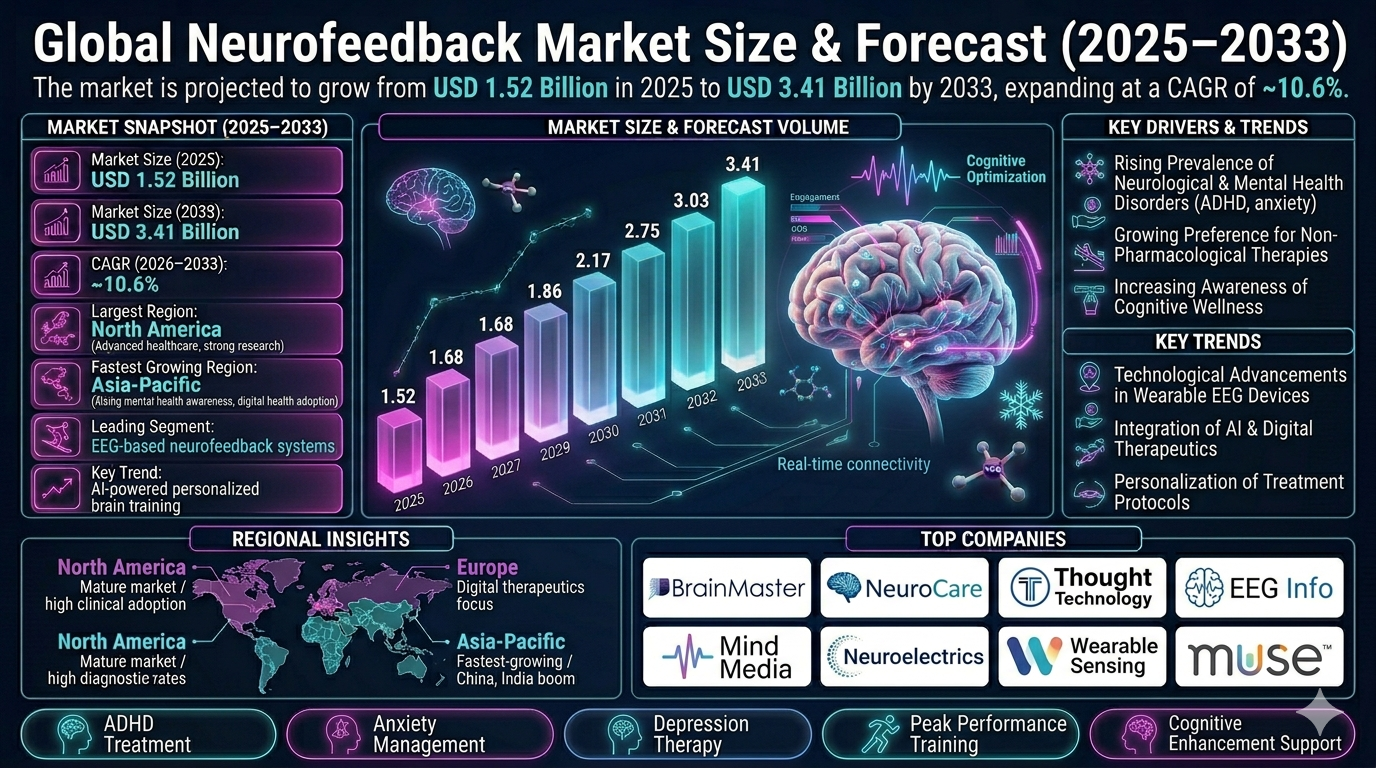
Global Neurofeedback Market Size & Forecast
The global neurofeedback market is projected to witness significant growth during the forecast period from 2026 to 2033. The market was valued at approximately USD 1.52 billion in 2025 and is expected to reach nearly USD 3.41 billion by 2033, expanding at a CAGR of around 10.6%. The market growth is driven by increasing prevalence of neurological and mental health disorders, growing adoption of non-invasive brain training therapies, rising awareness regarding cognitive wellness, and expanding technological advancements in neurodiagnostic and neurotherapeutic systems. Neurofeedback is a non-invasive therapeutic and cognitive training technique that measures brainwave activity and provides real-time feedback to help individuals regulate brain function. It is widely used for the treatment and management of conditions such as ADHD, anxiety, depression, PTSD, epilepsy, sleep disorders, cognitive decline, and stress-related disorders. The market is experiencing rapid transformation through AI-powered neurofeedback systems, wearable EEG devices, cloud-connected cognitive monitoring platforms, and personalized brain training programs. Additionally, growing demand for mental wellness solutions, increasing clinical research, and expanding integration of digital therapeutics are accelerating market expansion globally.Global Neurofeedback Market Overview
The neurofeedback market forms a critical segment of the global neurotechnology, mental health therapeutics, and digital healthcare industry. Neurofeedback systems are increasingly utilized in clinical, research, wellness, rehabilitation, and performance enhancement applications. The market includes EEG-based neurofeedback systems, wearable neurofeedback devices, software platforms, brain-computer interfaces, and clinical neurotherapy services. Healthcare providers and wellness centers are increasingly adopting neurofeedback solutions to provide personalized, non-pharmacological interventions for brain health optimization. Technological advancements in EEG signal processing, machine learning analytics, real-time brain mapping, and portable neural monitoring are significantly enhancing therapeutic outcomes. Major market participants include BrainMaster Technologies Inc., NeuroCare Group AG, Thought Technology Ltd., EEG Info, Mind Media B.V., Brain Scientific Inc., Neuroelectrics, Wearable Sensing, Inc., Muse (InteraXon), and Mitsar Co. Ltd.Key Drivers of Global Neurofeedback Market Growth
Rising Prevalence of Neurological and Mental Health Disorders
The increasing global burden of anxiety, depression, ADHD, PTSD, insomnia, and cognitive disorders is driving demand for non-invasive therapeutic interventions. Neurofeedback is gaining recognition as an effective complementary treatment option.Growing Preference for Non-Pharmacological Therapies
Patients and healthcare providers are increasingly seeking drug-free treatment alternatives for mental and neurological health management. This trend is significantly supporting neurofeedback adoption.Technological Advancements in Wearable EEG Devices
Portable neurofeedback systems and consumer-grade brain monitoring wearables are expanding accessibility for home-based cognitive training. This is creating strong market growth opportunities.Increasing Awareness of Cognitive Wellness
Growing public interest in mental performance enhancement, stress management, and brain optimization is driving demand for neurofeedback-based wellness solutions. Corporate wellness programs and sports performance training are contributing to market expansion.Integration of AI and Digital Therapeutics
Artificial intelligence is improving signal interpretation, personalized treatment protocols, and therapy optimization. Digital therapeutics integration is enhancing neurofeedback effectiveness and scalability.Global Neurofeedback Market Segmentation
By Product Type
The market is segmented into EEG-based neurofeedback systems, wearable neurofeedback devices, software platforms, and clinical service solutions. EEG-based systems dominate the market due to widespread clinical adoption.By Application
Applications include ADHD treatment, anxiety management, depression therapy, PTSD treatment, epilepsy management, sleep disorder treatment, cognitive enhancement, and peak performance training. ADHD and anxiety management account for significant market share.By End User
End users include hospitals, neurotherapy clinics, rehabilitation centers, research institutions, wellness centers, and homecare settings. Clinical neurotherapy centers represent the largest end-user segment.By Technology
The market includes frequency-based neurofeedback, low-energy neurofeedback systems, slow cortical potential neurofeedback, and hemoencephalographic neurofeedback. Frequency-based neurofeedback remains the most widely utilized technology.Regional Market Dynamics
North America
North America dominates the global neurofeedback market due to advanced healthcare infrastructure, strong neurotechnology research, and high awareness regarding mental health treatment options. The United States remains the leading regional market.Europe
Europe holds a significant market share supported by increasing adoption of digital therapeutics, mental healthcare innovation, and favorable clinical research activity. Germany, the United Kingdom, and France are key regional contributors.Asia-Pacific
Asia-Pacific is the fastest-growing region due to rising mental health awareness, expanding healthcare access, and growing adoption of digital health technologies. China, India, Japan, and South Korea are major growth markets.Latin America
Latin America is gradually expanding due to improving healthcare access and increasing awareness regarding alternative neurological therapies. Brazil and Mexico are leading regional markets.Middle East & Africa
The region is witnessing moderate growth supported by healthcare modernization initiatives and increasing investments in digital health solutions. GCC countries are key contributors.Competitive Landscape
The global neurofeedback market is highly competitive and innovation-driven, with companies competing through technology development, clinical efficacy, software capabilities, and therapeutic personalization. Key players include BrainMaster Technologies Inc., NeuroCare Group AG, Thought Technology Ltd., EEG Info, Mind Media B.V., Brain Scientific Inc., Neuroelectrics, Wearable Sensing, Inc., Muse (InteraXon), and Mitsar Co. Ltd. Companies are increasingly investing in AI-enhanced neurofeedback systems, wearable device innovation, cloud-based analytics platforms, and personalized treatment algorithms. Strategic collaborations with research institutions, healthcare providers, and digital health companies are strengthening market positioning.Strategic Outlook
The strategic outlook for the global neurofeedback market remains highly positive due to increasing demand for non-invasive brain health solutions and digital mental wellness technologies. Future growth opportunities include AI-driven adaptive neurofeedback, virtual reality integration, home-based therapeutic ecosystems, and personalized cognitive optimization platforms. Growing emphasis on preventive mental healthcare and digital therapeutics will significantly shape future market evolution. Manufacturers investing in clinical validation, user-friendly wearable systems, and intelligent therapeutic algorithms are expected to strengthen competitive advantage.Final Market Perspective
The global neurofeedback market continues to play a transformative role in mental health therapy, cognitive enhancement, and neurological care worldwide. Rising mental health awareness, technological advancements, and increasing preference for non-pharmacological therapies will continue driving market growth throughout the forecast period. Organizations that successfully combine scientific innovation, clinical efficacy, and digital accessibility will remain strongly positioned in the evolving global neurofeedback market.Table of Contents
Table of Contents
1. Executive Summary
1.1 Market Snapshot
1.2 Key Market Highlights
1.3 Largest Segment Analysis
1.4 Fastest Growing Segment Analysis
1.5 Regional Market Insights
1.6 Competitive Landscape Snapshot
1.7 Future Market Outlook
2. Global Neurofeedback Market Introduction
2.1 Market Definition
2.2 Scope of Study
2.3 Research Assumptions
2.4 Research Methodology
2.5 Forecast Parameters
3. Global Neurofeedback Market Overview
3.1 Market Evolution
3.2 Industry Ecosystem Analysis
3.3 Value Chain Analysis
3.4 Pricing & Revenue Structure Analysis
3.5 Neurotechnology & Digital Therapeutics Infrastructure Overview
3.6 Product & Technology Landscape
3.6.1 EEG-Based Neurofeedback Systems
3.6.1.1 Real-Time Brainwave Monitoring
3.6.1.1.1 Clinical Cognitive Therapy Applications
3.6.1.1.1.1 Personalized Brainwave Regulation
3.6.1.1.1.2 Cognitive Performance Optimization
3.6.2 Wearable Neurofeedback Devices
3.6.2.1 Portable EEG Monitoring
3.6.2.1.1 Home-Based Neurotherapy Systems
3.6.2.1.1.1 Consumer Brain Health Applications
3.6.2.1.1.2 Remote Cognitive Monitoring
3.6.3 Neurofeedback Software Platforms
3.6.3.1 AI-Powered Signal Processing
3.6.3.1.1 Cloud-Based Neuroanalytics
3.6.3.1.1.1 Personalized Therapy Algorithms
3.6.3.1.1.2 Cognitive Wellness Dashboards
3.6.4 Brain-Computer Interface (BCI) Systems
3.6.4.1 Neural Communication Technologies
3.6.4.1.1 Adaptive Brainwave Training
3.6.4.1.1.1 Intelligent Neurotherapy Integration
3.6.4.1.1.2 Real-Time Neural Feedback Systems
3.6.5 Clinical Neurotherapy Services
3.6.5.1 Mental Health Therapy Programs
3.6.5.1.1 Rehabilitation & Cognitive Care
3.6.5.1.1.1 Neurological Disorder Management
3.6.5.1.1.2 Stress & Behavioral Therapy Solutions
4. Regulatory Landscape
4.1 Medical Device Regulations
4.1.1 Neurotechnology Compliance Standards
4.1.1.1 Digital Therapeutics Guidelines
4.1.1.1.1 Clinical Validation Requirements
4.1.1.1.2 Patient Data Privacy Regulations
5. Market Trends & Innovation Outlook
5.1 AI-Powered Neurofeedback Systems
5.1.1 Machine Learning-Based Brain Mapping
5.1.1.1 Personalized Cognitive Therapy
5.1.1.1.1 Adaptive Neurotherapy Algorithms
5.1.1.1.2 Intelligent Mental Wellness Platforms
5.2 Wearable & Portable Neurofeedback Technologies
5.2.1 Home-Based Cognitive Monitoring
5.2.1.1 Mobile Brainwave Analytics
5.2.1.1.1 Cloud-Connected Neurotherapy
5.2.1.1.2 Consumer Wellness Integration
5.3 Digital Therapeutics & Cognitive Wellness Expansion
5.3.1 Preventive Mental Healthcare
5.3.1.1 Virtual Reality Neurotherapy
5.3.1.1.1 Peak Performance Training
5.3.1.1.2 Brain Optimization Solutions
6. Global Neurofeedback Market Dynamics
6.1 Market Drivers
6.1.1 Rising Prevalence of Neurological & Mental Health Disorders
6.1.1.1 Increasing Anxiety & Depression Cases
6.1.1.1.1 ADHD & PTSD Treatment Demand
6.1.1.1.1.1 Cognitive Disorder Management
6.1.2 Growing Preference for Non-Pharmacological Therapies
6.1.2.1 Drug-Free Mental Health Solutions
6.1.2.1.1 Complementary Neurological Therapies
6.1.2.1.1.1 Holistic Cognitive Care
6.1.3 Technological Advancements in Wearable EEG Devices
6.1.3.1 Portable Brain Monitoring Systems
6.1.3.1.1 Consumer Neurotechnology Expansion
6.1.3.1.1.1 Remote Therapy Accessibility
6.1.4 Increasing Awareness of Cognitive Wellness
6.1.4.1 Stress Management Solutions
6.1.4.1.1 Mental Performance Enhancement
6.1.4.1.1.1 Corporate Wellness Programs
6.1.5 Integration of AI & Digital Therapeutics
6.1.5.1 Intelligent Brainwave Analysis
6.1.5.1.1 Automated Therapy Optimization
6.1.5.1.1.1 Cloud-Based Neuroanalytics
6.2 Market Restraints
6.2.1 High Treatment & Equipment Costs
6.2.2 Limited Clinical Standardization
6.2.3 Regulatory & Reimbursement Challenges
6.2.4 Limited Awareness in Developing Markets
6.3 Market Opportunities
6.3.1 Home-Based Neurofeedback Solutions
6.3.2 AI-Driven Personalized Neurotherapy
6.3.3 Expansion of Digital Mental Wellness Platforms
6.3.4 Integration with Virtual Reality & Gamification
6.4 Market Challenges
6.4.1 Variability in Clinical Outcomes
6.4.2 Data Privacy & Cybersecurity Concerns
6.4.3 Complex EEG Signal Interpretation
6.4.4 Competition from Alternative Mental Health Therapies
7. Global Neurofeedback Market Size Analysis (USD Billion), 2026???2033
7.1 Revenue Forecast Analysis
7.2 CAGR Analysis
7.3 Demand-Supply Analysis
7.4 Pricing Trend Analysis
7.5 Technology Adoption Analysis
7.6 Market Share Analysis
8. Global Neurofeedback Market Segmentation Analysis
8.1 By Product Type
8.1.1 EEG-Based Neurofeedback Systems
8.1.2 Wearable Neurofeedback Devices
8.1.3 Software Platforms
8.1.4 Clinical Service Solutions
8.2 By Application
8.2.1 ADHD Treatment
8.2.2 Anxiety Management
8.2.3 Depression Therapy
8.2.4 PTSD Treatment
8.2.5 Epilepsy Management
8.2.6 Sleep Disorder Treatment
8.2.7 Cognitive Enhancement
8.2.8 Peak Performance Training
8.3 By End User
8.3.1 Hospitals
8.3.2 Neurotherapy Clinics
8.3.3 Rehabilitation Centers
8.3.4 Research Institutions
8.3.5 Wellness Centers
8.3.6 Homecare Settings
8.4 By Technology
8.4.1 Frequency-Based Neurofeedback
8.4.2 Low-Energy Neurofeedback Systems
8.4.3 Slow Cortical Potential Neurofeedback
8.4.4 Hemoencephalographic Neurofeedback
9. Regional Market Analysis
9.1 North America
9.1.1 U.S.
9.1.2 Canada
9.1.3 Mexico
9.2 Europe
9.2.1 Germany
9.2.2 U.K.
9.2.3 France
9.2.4 Italy
9.2.5 Spain
9.2.6 Rest of Europe
9.3 Asia-Pacific
9.3.1 China
9.3.2 Japan
9.3.3 India
9.3.4 South Korea
9.3.5 Australia
9.3.6 Rest of Asia-Pacific
9.4 Latin America
9.4.1 Brazil
9.4.2 Mexico
9.4.3 Rest of Latin America
9.5 Middle East & Africa
9.5.1 GCC Countries
9.5.2 South Africa
9.5.3 Rest of Middle East & Africa
10. Competitive Landscape
10.1 Market Share Analysis
10.2 Competitive Benchmarking
10.3 Strategic Developments
10.4 AI & Neurotechnology Innovation Analysis
10.5 Partnerships & Collaborations
10.6 Clinical Validation & Therapy Positioning Analysis
11. Company Profiles
11.1 BrainMaster Technologies Inc.
11.2 NeuroCare Group AG
11.3 Thought Technology Ltd.
11.4 EEG Info
11.5 Mind Media B.V.
11.6 Brain Scientific Inc.
11.7 Neuroelectrics
11.8 Wearable Sensing, Inc.
11.9 Muse (InteraXon)
11.10 Mitsar Co. Ltd.
12. Strategic Intelligence & Pheonix AI Insights
12.1 Pheonix Market Forecast Engine
12.2 Neurotechnology Trend Analyzer
12.3 Cognitive Wellness Opportunity Mapping
12.4 AI-Based Therapy Optimization Framework
12.5 Digital Therapeutics Intelligence Dashboard
12.6 Automated Porter???s Five Forces Analysis
13. Future Outlook & Strategic Recommendations
13.1 AI-Based Neurotherapy Expansion Strategies
13.2 Wearable Neurofeedback Development Roadmap
13.3 Digital Mental Wellness Integration
13.4 Personalized Cognitive Therapy Adoption
13.5 Long-Term Market Outlook (2033+)
14. About Pheonix
15. Market Research
16. Disclaimer
Competitive Landscape
Global Neurofeedback Market Competitive Intensity & Market Structure Overview
The global neurofeedback market is highly innovation-driven and moderately fragmented, characterized by strong competition among neurotechnology companies, digital therapeutics developers, clinical neurotherapy solution providers, and wearable brain-monitoring technology firms. Competitive intensity is shaped by clinical efficacy, technological sophistication, therapeutic personalization, software intelligence, regulatory validation, and accessibility of neurofeedback solutions.
The market structure includes specialized neurofeedback device manufacturers, EEG technology developers, software-based cognitive therapy platforms, clinical neurotherapy service providers, and emerging consumer neurotechnology companies. Competition is driven by system precision, user experience, AI-powered analytics, portability, and integration with broader digital health ecosystems.
Rising global demand for non-pharmacological mental health interventions, increasing adoption of digital therapeutics, and rapid advances in wearable neurotechnology are intensifying competition across the global neurofeedback market.
Global Neurofeedback Market Competitive Intensity & Market Structure Current Scenario
Leading Global Neurofeedback Companies
BrainMaster Technologies Inc.: Established neurofeedback systems provider recognized for advanced clinical EEG-based neurotherapy solutions.
NeuroCare Group AG: Major neurotechnology company focused on personalized brain health therapies and integrated neurofeedback treatment platforms.
Thought Technology Ltd.: Leading provider of biofeedback and neurofeedback solutions with strong clinical and wellness market presence.
EEG Info: Prominent neurofeedback training organization and solution provider supporting therapeutic neurofeedback implementation globally.
Mind Media B.V.: Strong market participant offering advanced neurofeedback and psychophysiological monitoring systems for healthcare professionals.
Brain Scientific Inc.: Innovative neurotechnology company focused on digital EEG and cloud-connected neurodiagnostic solutions.
Neuroelectrics: Advanced neurotechnology firm specializing in wearable EEG systems and AI-enabled brain stimulation solutions.
Wearable Sensing, Inc.: Key wearable EEG technology developer focused on portable brain monitoring and cognitive analytics platforms.
Muse (InteraXon): Leading consumer neurofeedback company known for wearable meditation and cognitive wellness devices.
Mitsar Co. Ltd.: Specialized EEG and neurofeedback systems provider serving clinical and research applications worldwide.
Key Competitive Intensity & Market Structure Drivers
The increasing prevalence of mental health and neurological disorders is significantly intensifying competition among neurofeedback solution providers.
Growing consumer and clinical preference for non-invasive, drug-free therapeutic interventions is accelerating product adoption and market rivalry.
Technological advancements in wearable EEG devices, real-time signal processing, and AI-driven adaptive therapy are creating strong differentiation opportunities.
Expanding demand for home-based digital mental wellness solutions is increasing competition around portability, usability, and remote therapeutic monitoring.
Rising clinical research activity and growing emphasis on evidence-based neurotherapeutic validation are shaping long-term market competitiveness.
Strategic Implications of Competitive Intensity & Market Structure
Companies are increasingly investing in AI-enhanced therapeutic algorithms and adaptive signal analysis to improve treatment personalization and efficacy.
Strategic collaborations with healthcare providers, research institutions, mental health clinics, and digital health companies are becoming essential for market expansion.
Clinical validation studies and regulatory approvals are emerging as critical differentiators for strengthening provider and patient trust.
Cloud-based analytics platforms and connected digital therapeutic ecosystems are enabling scalable deployment and improved treatment monitoring.
Manufacturers are prioritizing wearable design innovation, software usability, and mobile connectivity to expand consumer adoption beyond clinical environments.
Global Neurofeedback Market Competitive Intensity & Market Structure Forward Outlook
The global neurofeedback market is expected to remain highly competitive as digital mental health adoption and personalized brain health solutions continue to expand globally.
Future competition will increasingly focus on AI-adaptive neurofeedback, virtual reality-assisted therapy, home-based therapeutic ecosystems, and integrated cognitive wellness platforms.
North America and Asia-Pacific are expected to remain major competitive growth regions due to rising mental health awareness and increasing digital health investments.
Advancements in wearable neurotechnology, machine learning-based brain analytics, and digital therapeutics integration are expected to significantly reshape market dynamics.
Overall, companies that successfully combine scientific rigor, therapeutic effectiveness, intelligent digital platforms, and consumer accessibility will remain strongly positioned in the evolving global neurofeedback market.
Value Chain
Global Neurofeedback Market Value Chain & Supply Chain Evolution Overview
The global neurofeedback market value chain is undergoing rapid transformation as advances in neurotechnology, digital therapeutics, wearable EEG systems, artificial intelligence, and personalized cognitive healthcare reshape the broader neurological treatment and brain health ecosystem. Neurofeedback has emerged as a highly promising non-invasive therapeutic approach for managing neurological and mental health disorders while enabling cognitive enhancement, emotional regulation, and preventive brain wellness solutions.
The neurofeedback market value chain spans neuro-sensor manufacturing, EEG hardware development, signal processing software engineering, AI-driven analytics development, therapeutic protocol design, cloud-based cognitive monitoring integration, clinical deployment, patient therapy management, and long-term cognitive performance optimization. This interconnected ecosystem includes semiconductor suppliers, medical device manufacturers, neurotechnology developers, software analytics providers, clinical research institutions, healthcare providers, digital therapeutic platforms, and end-user wellness service operators.
Major market participants including BrainMaster Technologies Inc., NeuroCare Group AG, Thought Technology Ltd., EEG Info, Mind Media B.V., Brain Scientific Inc., Neuroelectrics, Wearable Sensing, Inc., Muse (InteraXon), and Mitsar Co. Ltd. are actively investing in AI-powered signal interpretation, wearable EEG innovation, adaptive therapeutic algorithms, cloud-connected neurofeedback platforms, and personalized cognitive training ecosystems to strengthen market leadership.
Upstream supply chain activities depend on biosensor fabrication, EEG electrode manufacturing, microelectronics production, embedded processors, wireless communication modules, and cloud computing infrastructure. Midstream operations focus on neurofeedback system assembly, software platform development, algorithm training, signal calibration, clinical validation, regulatory testing, and therapeutic integration engineering. Downstream activities include healthcare deployment, neurotherapy services, patient monitoring, performance analytics delivery, remote therapy management, and long-term treatment optimization.
Operational priorities across the neurofeedback value chain increasingly emphasize signal accuracy, therapeutic efficacy, real-time neural feedback precision, portability, regulatory compliance, patient usability, treatment personalization, and secure health data management. However, the market continues to face challenges related to clinical standardization, reimbursement limitations, regulatory complexity, practitioner training requirements, and validation across diverse neurological applications.
Global Neurofeedback Market Value Chain & Supply Chain Evolution Current Scenario
The current neurofeedback market is being shaped by rising mental health awareness, growing demand for non-pharmacological interventions, increasing digital therapeutics adoption, and expanding consumer interest in cognitive wellness optimization. Healthcare systems and wellness providers are increasingly integrating neurofeedback solutions into broader neurological care and preventive mental health programs.
North America currently dominates the global neurofeedback market due to advanced healthcare infrastructure, strong clinical neurotechnology research, widespread mental health awareness, and high adoption of digital therapeutic solutions. The United States remains the leading regional market.
Europe maintains a strong market position supported by digital healthcare innovation, expanding clinical research, and increasing demand for personalized neurological interventions. Asia-Pacific is emerging as the fastest-growing region due to expanding healthcare access, increasing mental wellness awareness, and growing adoption of wearable health technologies.
Clinical neurotherapy centers remain the dominant end-user segment, while home-based neurofeedback solutions are rapidly gaining traction due to wearable device innovation and remote digital therapeutic delivery models.
Healthcare providers are increasingly integrating neurofeedback with broader mental health treatment plans to improve patient outcomes through personalized, non-invasive therapy approaches.
Key Value Chain & Supply Chain Evolution Signals in Global Neurofeedback Market
One of the most important transformation signals is the rapid integration of artificial intelligence into neurofeedback systems. AI-driven analytics are improving signal interpretation, adaptive treatment protocols, and personalized therapeutic recommendations.
Wearable EEG devices are significantly reshaping the supply chain by enabling decentralized therapy delivery and expanding access to home-based neurofeedback treatment.
Cloud-connected neurofeedback platforms are becoming increasingly important, allowing continuous monitoring, remote therapy optimization, clinician oversight, and centralized cognitive performance analytics.
Personalized neurofeedback treatment algorithms are emerging as a major innovation area, enabling systems to adapt therapy protocols based on individual brainwave patterns and treatment response.
Integration with digital therapeutics ecosystems is accelerating, positioning neurofeedback as part of broader connected mental health treatment pathways.
Virtual reality-enhanced neurofeedback systems are emerging as next-generation solutions for immersive therapeutic engagement and enhanced patient outcomes.
Strategic Implications of Value Chain & Supply Chain Evolution in Global Neurofeedback Market
Leading neurofeedback companies are increasingly prioritizing AI-enabled software differentiation, clinical validation, wearable device usability, and therapeutic personalization to maintain competitive advantage. Competitive differentiation increasingly depends on clinical efficacy, ease of deployment, signal precision, and scalable digital therapeutic delivery.
Companies capable of delivering integrated end-to-end neurofeedback ecosystems that combine hardware, software analytics, clinician tools, and patient engagement platforms are expected to capture premium market opportunities.
Strategic collaborations between neurotechnology developers, clinical research institutions, healthcare providers, digital health companies, and wellness organizations are becoming essential for accelerating market adoption and regulatory acceptance.
Subscription-based neurotherapy platforms are emerging as important recurring revenue models, shifting market focus from one-time hardware sales toward long-term therapy management services.
Clinical validation and regulatory compliance are becoming increasingly critical strategic differentiators as healthcare providers seek evidence-based neurofeedback solutions.
Manufacturers are increasingly localizing practitioner training and service support capabilities to improve therapy deployment efficiency and strengthen customer retention across regional healthcare systems.
Global Neurofeedback Market Value Chain & Supply Chain Evolution Forward Outlook
Between 2026 and 2033, the neurofeedback value chain is expected to become significantly more intelligent, personalized, decentralized, and integrated with broader digital mental healthcare ecosystems. Neurofeedback will increasingly evolve from specialized clinical intervention toward mainstream cognitive wellness and preventive neurological care.
Advanced AI models will continue improving adaptive treatment optimization, predictive therapy outcomes, and individualized neural performance forecasting.
Wearable neurofeedback devices will become increasingly sophisticated, enabling continuous passive neural monitoring and highly personalized real-time cognitive interventions.
Remote neurotherapy delivery platforms will expand substantially, enabling large-scale access to clinically supervised home-based neurofeedback programs.
Integration with virtual reality, digital therapeutics, and brain-computer interface technologies will create immersive and highly responsive therapeutic ecosystems.
Cloud-native neural analytics platforms will continue expanding enterprise-scale cognitive health monitoring capabilities across healthcare institutions, wellness centers, and performance optimization programs.
Ultimately, the future neurofeedback value chain will evolve into a highly connected, adaptive, and personalized brain health intelligence ecosystem capable of supporting preventive mental healthcare, cognitive optimization, and precision neurological therapy worldwide.
Market-Specific Value Chain
- Neuro-Sensor & Hardware Component Manufacturing: EEG electrodes, biosensors, neural signal processors, wireless modules, wearable electronics, and embedded component production.
- Software Engineering & Algorithm Development: Signal processing software, AI model training, neurofeedback analytics development, adaptive protocol engineering, and therapeutic software design.
- System Assembly & Clinical Validation: Device integration, calibration, regulatory testing, therapeutic validation studies, and quality assurance engineering.
- Clinical Deployment & Therapeutic Integration: Healthcare implementation, neurotherapy center deployment, practitioner training, workflow integration, and treatment program development.
- Patient Monitoring & Cognitive Analytics Delivery: Real-time therapy feedback, cloud monitoring, patient progress analytics, remote clinician oversight, and treatment optimization.
- Long-Term Cognitive Optimization & Digital Brain Health: Predictive neural analytics, preventive mental wellness management, personalized cognitive enhancement, and next-generation neurotherapeutic intelligence.
Company-to-Stage Mapping
- Neuro-Sensor & Hardware Component Manufacturing: Wearable Sensing, Inc., Neuroelectrics, biosensor component suppliers.
- Software Engineering & Algorithm Development: BrainMaster Technologies Inc., Thought Technology Ltd., AI neuroanalytics developers.
- System Assembly & Clinical Validation: Mitsar Co. Ltd., Brain Scientific Inc., Mind Media B.V.
- Clinical Deployment & Therapeutic Integration: NeuroCare Group AG, EEG Info, clinical neurotherapy providers.
- Patient Monitoring & Cognitive Analytics Delivery: Muse (InteraXon), cloud-connected therapy platform providers.
- Long-Term Cognitive Optimization & Digital Brain Health: Advanced digital therapeutics companies, neuro-AI platform developers, personalized cognitive wellness ecosystem providers.
Investment Activity
Global Neurofeedback Market Investment & Funding Dynamics Overview
The global neurofeedback market is witnessing accelerating investment activity driven by rising demand for non-invasive mental health therapies, expanding digital therapeutics adoption, increasing mental wellness awareness, and rapid advancements in neurotechnology innovation. Between 2026 and 2033, funding activity is expected to intensify across AI-powered neurofeedback platforms, wearable EEG technologies, cloud-connected brain monitoring systems, and personalized cognitive optimization solutions.
The neurofeedback market represents a strategically important segment within the broader neurotechnology, digital therapeutics, mental health innovation, and cognitive wellness ecosystem. Venture capital firms, healthcare technology investors, institutional healthcare funds, medtech accelerators, and strategic neuroscience-focused investors are increasingly allocating capital toward neurofeedback companies to capitalize on the growing demand for scalable, non-pharmacological neurological treatment solutions.
A major structural transformation shaping investment dynamics is the shift from traditional clinic-based neurofeedback systems toward portable, AI-enhanced, cloud-enabled, and consumer-accessible neurotherapeutic ecosystems. This transition is driving substantial funding into wearable EEG devices, adaptive neurofeedback software, machine learning-based neural analytics, and digital mental wellness platforms.
Growing convergence between neurofeedback technologies, digital therapeutics, mental health applications, wearable health monitoring, and personalized brain optimization systems is creating substantial cross-sector investment opportunities. Strategic capital deployment is increasingly focused on clinical scalability, user accessibility, and therapeutic personalization.
Current Investment & Funding Landscape
Current investment activity in the neurofeedback market is strongly concentrated around wearable brain monitoring technologies, AI-based signal processing systems, software-driven cognitive therapy platforms, cloud analytics ecosystems, and home-based neurotherapeutic delivery models.
- North America: Leads global investment activity due to strong digital health venture funding, advanced neuroscience research, and high adoption of innovative mental health technologies.
- Europe: Attracting substantial funding through digital therapeutics innovation, neurotechnology research collaborations, and supportive healthcare modernization initiatives.
- Asia-Pacific: Emerging as a rapidly growing investment destination driven by rising mental health awareness, expanding healthcare digitization, and increasing wearable technology adoption.
- Latin America: Witnessing gradual investment growth as digital mental health accessibility expands across regional healthcare systems.
- Middle East & Africa: Select markets are attracting strategic healthcare technology investments supported by digital health transformation initiatives.
Key Investment & Funding Drivers
- Rising prevalence of neurological and mental health disorders globally.
- Growing preference for non-pharmacological and non-invasive therapeutic solutions.
- Increasing adoption of digital therapeutics and remote mental healthcare platforms.
- Rapid advancements in wearable EEG monitoring technologies.
- Expansion of AI-powered adaptive neurofeedback systems.
- Growing consumer demand for cognitive wellness and peak performance optimization solutions.
- Increasing clinical validation and research supporting neurofeedback efficacy.
- Rising healthcare investment in preventive neurological care solutions.
Strategic Investment Areas
- Wearable EEG Devices: Funding for portable, lightweight, consumer-friendly neural monitoring systems.
- AI & Neural Analytics: Investment in adaptive machine learning algorithms for personalized therapy optimization.
- Cloud-Based Neurofeedback Platforms: Capital allocation toward scalable digital therapy ecosystems and remote monitoring capabilities.
- Digital Therapeutics Integration: Funding for software-based clinical neurotherapy delivery platforms.
- Home-Based Cognitive Therapy Solutions: Strategic investments supporting decentralized therapeutic access.
- Virtual Reality Neurofeedback: Emerging funding opportunities in immersive brain training environments.
Strategic Investment Implications
- Companies with strong clinical validation capabilities are attracting greater investor confidence.
- Technology differentiation in signal processing accuracy and therapeutic personalization is becoming a key valuation driver.
- Scalable home-based neurofeedback platforms are increasingly shaping capital allocation decisions.
- Integration with broader digital mental health ecosystems is enhancing long-term investment attractiveness.
- Regulatory readiness and evidence-based therapeutic outcomes remain critical for funding sustainability.
- Cross-disciplinary partnerships with healthcare providers and research institutions significantly strengthen investor confidence.
Forward Investment Outlook
The global neurofeedback market is expected to remain one of the most promising neurotechnology investment sectors throughout the forecast period due to increasing mental health demand, growing digital therapeutics adoption, and continued innovation in personalized brain health solutions.
Future funding activity is expected to prioritize AI-driven adaptive neurofeedback systems, virtual reality-enabled therapy environments, predictive neural diagnostics, consumer-focused cognitive optimization devices, and intelligent home-based brain health ecosystems.
- North America: Will continue dominating capital inflows through digital health innovation and advanced neuroscience commercialization.
- Europe: Will maintain strong investment activity centered on clinical neurotechnology and digital therapeutics integration.
- Asia-Pacific: Will experience accelerating investment due to rising digital health adoption and expanding mental healthcare accessibility.
- Emerging Markets: Will attract strategic early-stage investments as awareness and healthcare digitization continue expanding.
Long-term innovation investments will increasingly focus on personalized neuroadaptive systems, brain-computer interface integration, real-time neural optimization platforms, and preventive cognitive healthcare solutions.
Overall, the neurofeedback market is positioned as a high-growth healthcare technology investment opportunity driven by mental health innovation, digital therapeutics transformation, and next-generation neurotechnology advancement.
Technology & Innovation
Global Neurofeedback Market Technology & Innovation Landscape Overview
The Global Neurofeedback Market is undergoing rapid technological transformation driven by advancements in EEG signal processing, artificial intelligence, wearable neurotechnology, real-time brain analytics, and cloud-connected digital therapeutic platforms. Innovation is increasingly focused on improving therapeutic precision, enhancing patient accessibility, enabling personalized brain training protocols, and expanding the clinical effectiveness of non-invasive neurotherapeutic interventions.
Modern neurofeedback systems are evolving into intelligent neurotechnology ecosystems capable of real-time neural monitoring, adaptive feedback delivery, predictive cognitive analytics, and personalized therapy optimization. These innovations are significantly improving treatment outcomes for neurological and mental health conditions while expanding neurofeedback applications across wellness, cognitive enhancement, rehabilitation, and preventive mental healthcare.
The integration of AI-driven analytics, wearable biosensors, digital therapeutics, and connected healthcare infrastructure is reshaping the neurofeedback landscape by making brain training solutions more scalable, accessible, and data-driven.
Global Neurofeedback Market Technology & Innovation Current Scenario
Currently, the neurofeedback market is experiencing strong innovation through wearable EEG systems that allow portable and home-based brain training, significantly improving accessibility beyond traditional clinical settings.
Artificial intelligence and machine learning algorithms are increasingly being integrated into neurofeedback platforms to improve signal interpretation, automate protocol optimization, and deliver highly personalized therapeutic interventions based on individual neural activity patterns.
Real-time brain mapping technologies are enabling more accurate visualization of neural activity, supporting clinicians in developing targeted treatment strategies for conditions such as ADHD, anxiety, PTSD, depression, and cognitive decline.
Cloud-connected neurofeedback platforms are enhancing remote monitoring, longitudinal therapy tracking, centralized data analysis, and tele-neurotherapy capabilities.
Virtual reality and immersive digital environments are also gaining traction as complementary technologies, enabling more engaging and adaptive neurofeedback experiences for cognitive training and behavioral therapy.
Additionally, advancements in dry electrode technology and lightweight wearable designs are improving patient comfort, reducing setup complexity, and enabling broader consumer adoption.
Key Technology & Innovation Trends in Global Neurofeedback Market
- AI-Powered Neurofeedback Algorithms: Intelligent systems optimizing therapy protocols through adaptive machine learning analysis.
- Wearable EEG Devices: Portable brain-monitoring solutions enabling home-based and mobile neurofeedback therapy.
- Real-Time Brain Mapping: Advanced neural visualization technologies supporting targeted therapeutic interventions.
- Cloud-Connected Neurotherapy Platforms: Remote monitoring and centralized data-driven treatment optimization.
- Virtual Reality Integration: Immersive neurofeedback environments enhancing engagement and therapeutic effectiveness.
- Dry Electrode Sensor Technology: Improved usability and comfort for frequent neurofeedback sessions.
- Brain-Computer Interface Integration: Direct neural interaction systems expanding advanced neurofeedback applications.
- Predictive Cognitive Analytics: AI-driven forecasting of therapy progress and cognitive performance trends.
- Digital Therapeutics Integration: Software-based clinical interventions complementing neurofeedback therapy.
- Personalized Neural Training Systems: Customized treatment pathways based on individual brainwave patterns.
Strategic Implications of Technology & Innovation
Technological innovation is fundamentally reshaping the competitive dynamics of the neurofeedback market by shifting competition toward intelligent, adaptive, and clinically validated neurotherapeutic ecosystems.
Companies investing in AI-driven personalization, wearable accessibility, and cloud-based therapeutic platforms are achieving stronger differentiation through improved clinical outcomes, user convenience, and scalable deployment models.
The expansion of remote neurotherapy solutions is enabling broader access to brain health interventions, particularly in underserved regions and homecare settings.
The integration of immersive technologies and digital therapeutics is creating new opportunities for enhanced patient engagement and long-term treatment adherence.
However, challenges including clinical validation requirements, regulatory complexity, high development costs, signal variability limitations, and reimbursement constraints remain key barriers to large-scale market adoption.
Global Neurofeedback Market Technology & Innovation Forward Outlook
Looking ahead, the neurofeedback market is expected to evolve toward highly intelligent, autonomous, and precision-driven brain training ecosystems capable of continuous neural adaptation and personalized cognitive optimization.
Future innovation will increasingly focus on self-learning neurofeedback systems capable of dynamically adjusting therapeutic protocols in real time based on neural response patterns.
Advanced multimodal neurotechnology combining EEG, biometrics, eye tracking, and physiological monitoring is expected to deliver more comprehensive cognitive and emotional state assessment.
Artificial intelligence will play a central role in predictive mental health analytics, enabling early intervention and proactive cognitive wellness management.
Expanded integration with telehealth ecosystems, virtual reality therapeutics, and mobile health applications is expected to further democratize access to neurofeedback solutions globally.
Overall, the Global Neurofeedback Market is entering a new era of digital neurotherapeutics characterized by intelligent automation, wearable accessibility, real-time neural analytics, and personalized cognitive optimization, positioning the market for sustained long-term technological advancement and clinical relevance.
Market Risk
Global Neurofeedback Market Risk Factors & Disruption Threats Overview
The global neurofeedback market is witnessing strong growth due to increasing mental health awareness, rising demand for non-invasive neurological therapies, technological advancements in wearable EEG systems, and expanding adoption of digital therapeutics. Despite strong long-term growth potential, the market faces several risks and disruption threats related to clinical validation challenges, regulatory uncertainty, reimbursement limitations, technology reliability concerns, and competition from alternative mental health interventions.
One of the most significant risks affecting the neurofeedback market is the ongoing debate surrounding clinical efficacy and scientific standardization. Variability in treatment protocols, inconsistent clinical outcomes, and limited large-scale evidence across certain therapeutic applications can create skepticism among healthcare providers, regulators, and patients.
Regulatory complexity presents another major challenge. Neurofeedback systems often operate at the intersection of medical devices, wellness technologies, and digital therapeutics, creating classification ambiguity across different regulatory jurisdictions.
Limited reimbursement coverage remains a substantial barrier to widespread clinical adoption. In many healthcare systems, neurofeedback therapies are not consistently covered by insurance providers, limiting patient accessibility and slowing adoption within mainstream medical practice.
Technology accuracy and signal reliability are also critical concerns. EEG signal artifacts, calibration issues, environmental interference, and user inconsistency can affect therapeutic performance and reduce treatment effectiveness.
Competition from pharmaceutical treatments, cognitive behavioral therapies, transcranial stimulation technologies, and other digital mental health platforms represents another disruption threat.
Additionally, high device costs, practitioner training requirements, and consumer trust barriers may slow market penetration.
Global Neurofeedback Market Risk Factors & Disruption Threats Current Scenario
The current neurofeedback market is benefiting from rising interest in non-pharmacological mental health solutions and increasing digital wellness adoption.
However, healthcare providers continue to demand stronger clinical evidence and standardized treatment methodologies before broader institutional integration.
Regulatory agencies are increasing scrutiny of neurotechnology claims, particularly for consumer-grade neurofeedback devices marketed for therapeutic outcomes.
The growing popularity of wearable wellness devices is expanding accessibility, but concerns regarding consumer-grade accuracy and oversimplified therapeutic claims remain significant.
Reimbursement challenges continue to limit large-scale clinical deployment, especially within hospital systems and public healthcare environments.
Competition is intensifying as digital mental health startups, AI-based therapeutic platforms, and neuromodulation technologies expand rapidly.
Global Neurofeedback Market Key Risk Factors & Disruption Threat Signals
- Clinical Validation Limitations: Inconsistent scientific evidence across certain treatment applications.
- Regulatory Classification Ambiguity: Varying medical device and wellness technology compliance requirements.
- Limited Insurance Reimbursement: Restricted patient affordability and slower clinical adoption.
- Signal Accuracy Challenges: EEG artifacts and environmental interference affecting therapeutic precision.
- Technology Reliability Concerns: Performance inconsistency across consumer-grade systems.
- Alternative Therapy Competition: Pharmaceutical, behavioral, and neuromodulation treatment substitutes.
- High Device and Implementation Costs: Barriers to broader institutional deployment.
- Practitioner Training Requirements: Limited specialized expertise affecting service scalability.
- Consumer Skepticism: Concerns regarding overstated wellness claims and efficacy expectations.
- Rapid Innovation Pressure: Accelerated product evolution shortening technology lifecycle relevance.
Strategic Implications of Risk Factors
Neurofeedback providers must prioritize robust clinical research and evidence-based validation to strengthen healthcare provider trust and regulatory acceptance.
Investment in standardized treatment protocols and clinically validated AI-driven personalization will become essential for improving therapeutic consistency.
Manufacturers should engage proactively with regulators to clarify classification frameworks and strengthen compliance strategies across international markets.
Developing reimbursement partnerships with healthcare payers and demonstrating measurable treatment outcomes will be critical for broader market penetration.
Improving device usability, signal fidelity, and practitioner training ecosystems will enhance treatment reliability and scalability.
Global Neurofeedback Market Forward Risk Outlook
Looking ahead to 2026???2033, the neurofeedback market will continue to expand as mental health care increasingly embraces digital and non-invasive therapeutic solutions.
Future disruption will likely come from AI-powered neuroadaptive systems, integrated digital therapeutics, brain-computer interface advancements, and hybrid neurostimulation technologies.
Companies unable to demonstrate strong clinical efficacy, regulatory compliance, and measurable treatment outcomes may face adoption limitations.
The strongest opportunities will emerge for providers delivering scientifically validated, user-friendly, scalable, and personalized neurofeedback ecosystems.
Overall, sustained market leadership will depend on clinical credibility, technological precision, regulatory adaptability, and successful integration into broader mental healthcare frameworks.
Regulatory Landscape
Global Neurofeedback Market Regulatory & Policy Environment Overview
The regulatory and policy environment governing the global neurofeedback market is shaped by medical device regulations, digital therapeutics frameworks, neurological treatment standards, patient data privacy laws, clinical validation requirements, and healthcare reimbursement policies. As neurofeedback technologies increasingly bridge the fields of neurotechnology, digital health, and non-pharmacological therapeutics, regulatory oversight is expanding to ensure safety, clinical efficacy, ethical application, and secure patient data management.
Regulatory agencies worldwide oversee neurofeedback systems depending on their intended clinical use, product claims, software functionality, and integration with diagnostic or therapeutic healthcare workflows. Devices marketed for neurological treatment, mental health therapy, or clinical rehabilitation are generally subject to stricter regulatory scrutiny than consumer wellness-oriented cognitive training platforms.
The growing integration of artificial intelligence, cloud-based analytics, wearable EEG systems, and digital therapeutic ecosystems is accelerating policy development around software validation, algorithm transparency, cybersecurity, and clinical evidence standards.
Global Neurofeedback Market Regulatory & Policy Environment Current Scenario
The current regulatory framework for neurofeedback combines medical device governance with digital health oversight, mental healthcare standards, and patient privacy regulations.
In the United States, neurofeedback systems intended for medical or therapeutic use are regulated by the U.S. Food and Drug Administration (FDA) under medical device classification frameworks. Products making clinical treatment claims must demonstrate safety, efficacy, and quality system compliance. HIPAA requirements also govern patient data protection for connected neurofeedback platforms used in healthcare settings.
In Europe, neurofeedback systems are regulated under the Medical Device Regulation (MDR), which requires clinical evaluation, risk management documentation, post-market surveillance, and conformity assessment for therapeutic neurotechnology devices.
Asia-Pacific markets including Japan, China, South Korea, and India are progressively strengthening digital health regulations, medical software oversight, and neurotechnology approval frameworks as adoption expands across clinical and consumer wellness applications.
Emerging markets across Latin America and the Middle East are increasingly aligning with international medical device certification standards while developing broader frameworks for digital therapeutics governance.
Key Regulatory & Policy Environment Signals in Global Neurofeedback Market
- Medical Device Classification Requirements: Clinical neurofeedback systems are increasingly subject to rigorous device approval and therapeutic validation standards.
- Clinical Evidence and Efficacy Validation: Regulatory authorities are placing greater emphasis on scientifically validated treatment outcomes for neurofeedback-based therapeutic claims.
- Digital Therapeutics Governance: Expanding digital health regulations are influencing software validation, algorithm performance documentation, and remote therapy oversight.
- Patient Data Privacy Compliance: Neurofeedback platforms must comply with strict healthcare data security and privacy protection standards.
- AI Transparency and Software Regulation: AI-powered neurofeedback systems face increasing scrutiny regarding algorithm explainability and clinical reliability.
- Healthcare Reimbursement Policies: Reimbursement recognition for neurofeedback therapy is gradually evolving, influencing broader clinical adoption.
Strategic Implications of Regulatory & Policy Environment
The evolving regulatory landscape is encouraging neurofeedback companies to invest heavily in clinical research, regulatory approvals, evidence-based validation, and secure digital platform development.
Regulatory classification significantly influences product positioning strategies, with manufacturers differentiating between wellness-focused cognitive enhancement devices and clinically validated therapeutic systems.
Growing demand for clinical evidence is increasing investment in randomized trials, long-term outcome studies, and peer-reviewed validation of neurofeedback effectiveness across neurological and mental health conditions.
Data privacy and cybersecurity requirements are driving stronger implementation of encrypted neural data transmission, secure cloud infrastructure, and patient consent management systems.
AI governance requirements are also accelerating development of transparent, explainable machine learning models for personalized neurofeedback treatment optimization.
Global Neurofeedback Market Regulatory & Policy Environment Forward Outlook
Between 2026 and 2033, the regulatory environment for the global neurofeedback market is expected to become increasingly structured, evidence-driven, and digitally standardized.
Regulators are likely to introduce clearer classification pathways for neurofeedback technologies, particularly as digital therapeutics and AI-enabled brain training platforms become more widely adopted.
Clinical efficacy requirements are expected to strengthen, with broader emphasis on treatment standardization, measurable therapeutic outcomes, and post-market performance monitoring.
AI-specific healthcare regulations may introduce stricter oversight for adaptive neurofeedback algorithms, automated treatment recommendations, and personalized neural analytics.
Healthcare reimbursement policies may expand in select regions as stronger clinical validation supports broader integration of neurofeedback into mental health treatment protocols.
Overall, regulatory and policy developments will remain a major market influence, with companies investing in clinical validation, secure digital ecosystems, and compliance-ready therapeutic innovation expected to maintain long-term competitive advantage.