
Environmental & Sustainability / Market Segment
Water & Wastewater Management
Segment Overview
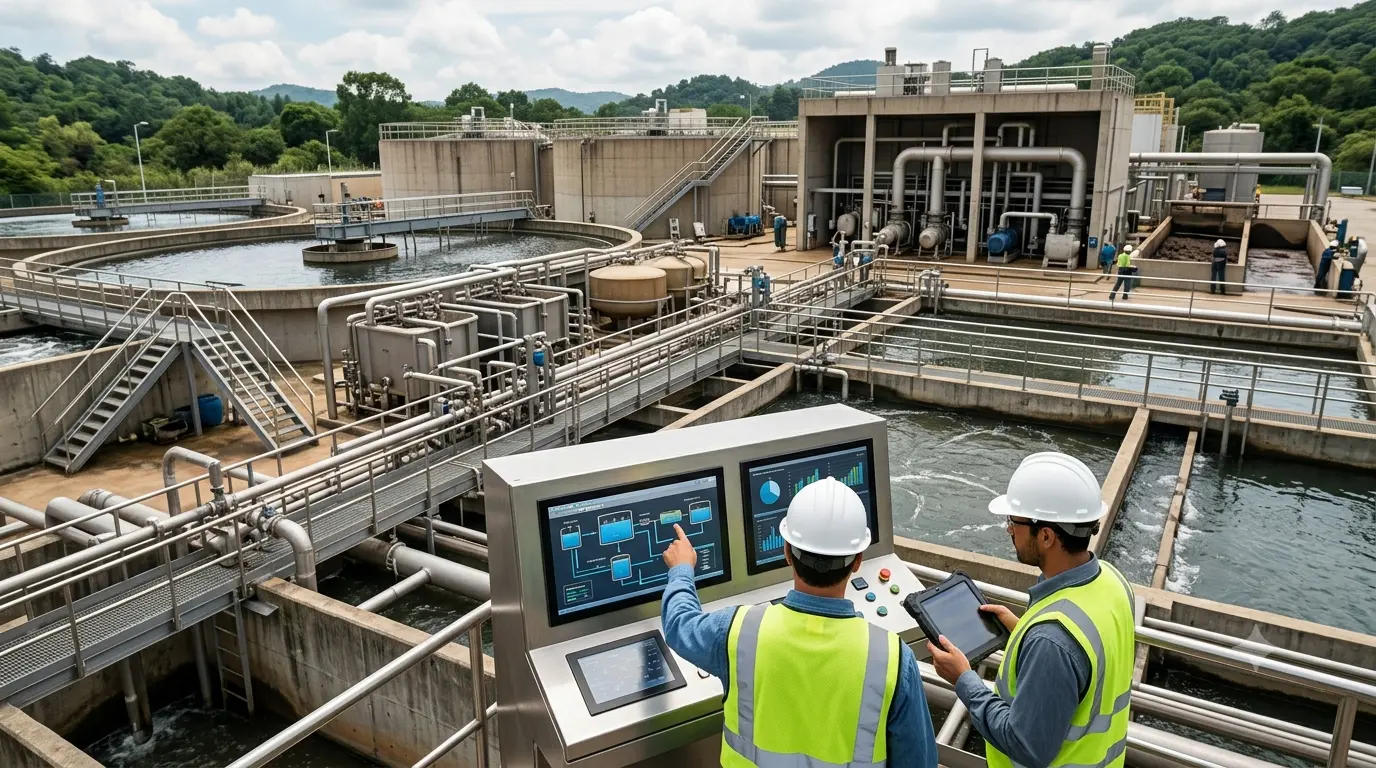
The Water & Wastewater Management segment covers the collection, treatment, distribution, recycling, and management of water and wastewater to ensure safe water supply, environmental protection, and sustainable resource utilization. It includes water treatment systems, wastewater treatment technologies, desalination, water reuse, industrial water management, and supporting infrastructure used across municipal, industrial, commercial, and agricultural applications.
This segment operates at the intersection of environmental engineering, water treatment technologies, public utilities, industrial infrastructure, and sustainability, making it a critical component of global water security, public health, and environmental management.
Scope of the Water & Wastewater Management Segment
This segment includes, but is not limited to:
Water Treatment Systems
Drinking water purification, filtration, disinfection, desalination, and potable water treatment technologies.
Wastewater Treatment
Municipal and industrial wastewater treatment plants, biological treatment, sludge management, and effluent treatment systems.
Water Distribution Infrastructure
Pipelines, pumping stations, reservoirs, smart water networks, and distribution management systems.
Industrial Water Management
Process water treatment, cooling water systems, zero liquid discharge (ZLD), and water recycling solutions.
Water Reuse & Recycling
Water reclamation, greywater recycling, stormwater management, and resource recovery technologies.
Monitoring & Smart Water Technologies
Water quality sensors, IoT-enabled monitoring systems, leak detection, smart metering, and digital water management platforms.
Market Characteristics
The Water & Wastewater Management segment is defined by several structural characteristics:
- Strong regulatory oversight related to water quality and environmental compliance
- High capital investment requirements for infrastructure development and modernization
- Growing demand driven by urbanization, industrialization, and water scarcity
- Increasing adoption of advanced treatment technologies and digital water management
- Strong focus on sustainability, water conservation, and circular economy initiatives
- Integration of automation, IoT, and real-time monitoring technologies
- Long operational lifecycles supported by continuous maintenance and infrastructure upgrades
Value Chain Overview
The segment spans the full water and wastewater management value chain:
- Water Resource Management: Water sourcing, storage, and resource planning
- Treatment & Purification: Water and wastewater treatment processes, filtration, and disinfection
- Infrastructure Development: Construction of pipelines, treatment facilities, and distribution networks
- Distribution & Collection: Water supply, wastewater collection, and utility operations
- Monitoring & Compliance: Water quality testing, environmental monitoring, and regulatory reporting
- Reuse & Resource Recovery: Water recycling, sludge processing, energy recovery, and sustainable water management
Each stage contributes to improving water quality, resource efficiency, environmental protection, and public health.
Key Market Drivers
- Rising global water scarcity and increasing demand for clean water
- Urbanization and expansion of municipal water infrastructure
- Growth in industrial water treatment and wastewater recycling
- Stricter environmental regulations and discharge standards
- Increasing adoption of smart water management technologies
- Investments in sustainable water reuse and circular water economy initiatives
Strategic Importance within Environmental & Sustainability
Water & Wastewater Management plays a fundamental role in protecting public health, preserving water resources, and supporting sustainable economic development. The segment enables reliable access to clean water while minimizing environmental impacts through efficient wastewater treatment and resource recovery.
Upstream, the segment drives demand for engineering services, treatment chemicals, pumps, filtration systems, automation technologies, and environmental monitoring equipment. Downstream, it supports municipalities, industrial facilities, agriculture, commercial buildings, utilities, and environmental protection programs.
As climate change, population growth, and industrial development increase pressure on global water resources, the Water & Wastewater Management segment remains essential for achieving water security, environmental sustainability, and resilient infrastructure.