
Global Household Cleaning Tools and Supplies Market Report, Size, Share and Forecast 2026–2033
Market Forecast Snapshot (2026???2033)
| Metric | Value |
|---|---|
| Market Size (2025) | USD 34.62 Billion |
| Market Size (2033) | USD 56.84 Billion |
| CAGR (2026???2033) | 6.39% |
| Largest Segment | Mops, Brooms & Traditional Cleaning Tools |
| Fastest Growing Segment | Smart Cleaning Devices & Sustainable Cleaning Supplies |
| Leading End-Use Segment | Residential Households |
| Key Trend | Eco-Friendly Cleaning Products & Smart Home Cleaning Integration |
| Regulatory Influence | Consumer Product Safety Standards, Sustainability Regulations & Material Compliance |
| Future Outlook | Growth Driven by Hygiene Awareness, Smart Cleaning Innovation & Sustainable Consumption Trends |
Market Size & Forecast
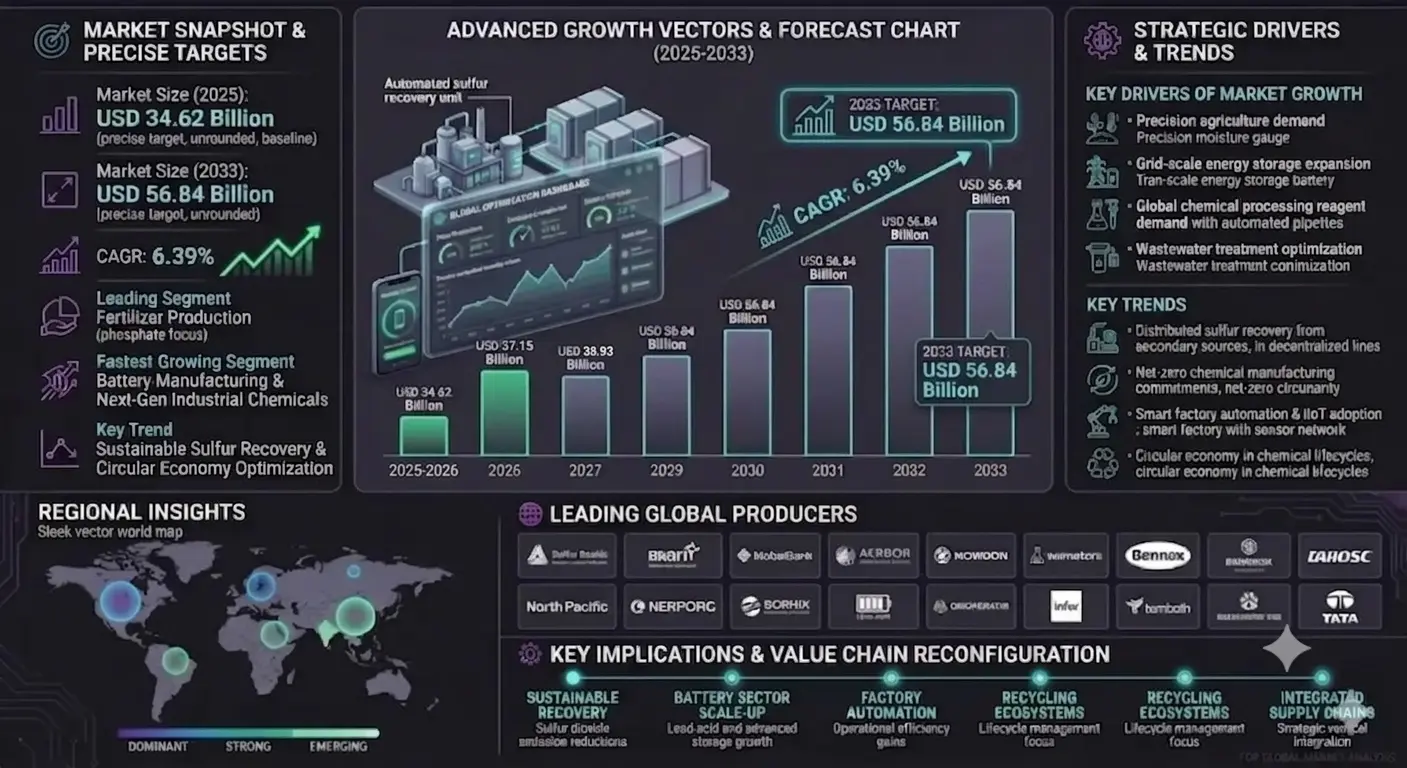
The Global Household Cleaning Tools and Supplies Market is expected to witness steady growth during the forecast period from 2026 to 2033. The market was valued at USD 34.62 billion in 2025 and is projected to reach approximately USD 56.84 billion by 2033, registering a CAGR of 6.39%. The market growth is primarily driven by increasing hygiene awareness, rising urban household formation, growing consumer preference for convenient cleaning solutions, and expanding demand for sustainable home care products. Household cleaning tools and supplies are increasingly essential for maintaining cleanliness, sanitation, and indoor hygiene. Rising adoption of ergonomic tools, microfiber technologies, automated cleaning devices, and eco-friendly disposable products is accelerating market growth. In addition, growth in e-commerce retail, smart home integration, and heightened health consciousness are supporting long-term market expansion.Global Household Cleaning Tools and Supplies Market Overview
Household cleaning tools and supplies include manual and automated products designed for cleaning residential spaces, surfaces, floors, and household fixtures. The market includes brooms, mops, brushes, microfiber cloths, sponges, gloves, wipes, buckets, dusters, robotic cleaning tools, and sustainable cleaning accessories. These products are widely used across residential homes, apartments, shared living spaces, and institutional household environments. The market is shifting from traditional disposable cleaning products toward reusable, sustainable, technologically enhanced, and smart-enabled cleaning solutions.Structural Drivers of Market Growth
1. Innovation and Commercialization Acceleration
Rapid innovation in self-cleaning mop systems, robotic cleaning integration, antimicrobial materials, and microfiber performance technologies is transforming cleaning efficiency. Advanced product designs are improving convenience, durability, and hygiene performance.Market Implications
Manufacturers investing in smart cleaning tools, eco-friendly materials, and ergonomic product innovation are expected to strengthen market leadership.2. Compliance and Risk Repricing
Consumer product safety standards, material sustainability regulations, and waste reduction policies are influencing product development and packaging strategies. Governments are increasingly promoting recyclable and environmentally friendly household products.Market Implications
Firms offering compliant, safe, and sustainable cleaning products are likely to gain stronger consumer trust.3. Competitive and Value-Chain Reconfiguration
The market is highly competitive as consumer goods manufacturers, home care brands, and smart appliance companies expand product portfolios. Direct-to-consumer channels and online retail platforms are reshaping value-chain dynamics.Market Implications
Companies focusing on digital retail expansion, sustainable branding, and smart cleaning ecosystems may gain stronger margins.4. Capital and Capacity Scaling
Rising investment in manufacturing automation, sustainable material sourcing, and digital distribution infrastructure is supporting market growth. Expanding household consumption and global retail accessibility are also increasing demand.Market Implications
Manufacturers scaling efficient production and omnichannel distribution networks are expected to capture future opportunities.Market Segmentation Analysis
By Product Type
1. Mops, Brooms & Traditional Cleaning Tools
This remains the largest segment due to widespread household necessity and affordability.2. Cleaning Cloths, Sponges & Wipes
Strong demand driven by daily cleaning applications.3. Brushes & Surface Cleaning Accessories
Widely used for specialized cleaning requirements.4. Smart Cleaning Devices
Fastest-growing due to automation and convenience.5. Sustainable Cleaning Supplies
Growing rapidly due to eco-conscious consumer preferences.By Distribution Channel
1. Supermarkets & Hypermarkets
Largest segment due to broad product accessibility.2. E-Commerce Platforms
Fastest-growing due to convenience and product variety.3. Specialty Household Stores
Strong demand for premium cleaning products.4. Direct-to-Consumer Channels
Growing through brand-owned digital platforms.By End User
1. Residential Households
Largest segment due to daily cleaning needs.2. Apartment & Shared Living Spaces
Growing demand driven by urban housing expansion.3. Institutional Residential Facilities
Used in dormitories and managed living environments.Regional Market Dynamics
North America
North America dominates the market due to high hygiene awareness, premium product adoption, and strong retail infrastructure.Europe
Europe remains a major market supported by sustainability regulations and eco-friendly household product demand.Asia-Pacific
Asia-Pacific is the fastest-growing region due to rising urbanization, disposable income growth, and expanding middle-class consumption.Latin America
Latin America is gradually expanding due to improving household consumption and retail modernization.Middle East & Africa
The region is witnessing emerging growth driven by urban residential development and rising hygiene standards.Competitive Landscape
The Global Household Cleaning Tools and Supplies Market is highly competitive with consumer goods manufacturers and home care brands expanding globally.Key Companies Operating in the Market Include:
- Procter & Gamble
- 3M Company
- Freudenberg Home and Cleaning Solutions
- SC Johnson
- Libman Company
- O-Cedar
- Rubbermaid Commercial Products
- Unilever
- Clorox Company
- Fuller Brush Company
Strategic Outlook
The future of the household cleaning tools and supplies market will be shaped by smart cleaning automation, antimicrobial materials, reusable product innovation, and sustainable packaging solutions. Integration with smart home ecosystems and advanced ergonomic product designs will significantly improve user convenience. The rise of eco-conscious consumption, digital retail channels, and home automation is expected to create strong long-term growth opportunities.Final Market Perspective
The Global Household Cleaning Tools and Supplies Market remains a vital segment within home care and consumer goods ecosystems. Rising hygiene awareness, product innovation, and sustainable consumption trends continue driving long-term market growth. Companies capable of delivering durable, sustainable, innovative, and user-friendly cleaning solutions will be best positioned to capture future opportunities. The convergence of smart home technology, eco-friendly materials, and digital retail expansion is expected to redefine the future of the global household cleaning industry.Table of Contents
Table of Contents
- 1. Executive Summary
- 1.1 Global Household Cleaning Tools and Supplies Market Snapshot (2026???2033)
- 1.2 Market Size & CAGR Analysis
- 1.3 Largest & Fastest-Growing Segments
- 1.4 Key Regional Insights
- 1.5 Major Market Growth Drivers
- 1.6 Competitive Landscape Overview
- 1.7 Strategic Outlook Through 2033
- 2. Introduction & Market Overview
- 2.1 Definition of Household Cleaning Tools and Supplies Market
- 2.2 Scope of the Study
- 2.3 Evolution of Household Cleaning Solutions
- 2.4 Home Care Product Ecosystem Analysis
- 2.5 Regulatory & Consumer Product Compliance Framework
- 2.6 Emerging Hygiene & Sustainability Trends
- 2.7 Smart Cleaning Innovation Landscape
- 3. Research Methodology
- 3.1 Primary Research
- 3.2 Secondary Research
- 3.3 Market Size Estimation Model
- 3.4 Forecast Assumptions (2026???2033)
- 3.5 Data Validation & Market Triangulation
- 4. Market Dynamics
- 4.1 Drivers
- 4.1.1 Rising Hygiene Awareness
- 4.1.2 Increasing Urban Household Formation
- 4.1.3 Demand for Convenient Cleaning Solutions
- 4.1.4 Growth in Smart Home Adoption
- 4.1.5 Expansion of Sustainable Cleaning Products
- 4.2 Restraints
- 4.2.1 Price Sensitivity in Emerging Markets
- 4.2.2 Availability of Low-Cost Alternatives
- 4.2.3 Product Durability Concerns
- 4.2.4 Environmental Disposal Challenges
- 4.3 Opportunities
- 4.3.1 Smart Cleaning Device Integration
- 4.3.2 Eco-Friendly Material Innovation
- 4.3.3 E-Commerce Expansion
- 4.3.4 Direct-to-Consumer Brand Growth
- 4.4 Challenges
- 4.4.1 Regulatory Material Compliance
- 4.4.2 Sustainability Transition Costs
- 4.4.3 Retail Channel Competition
- 4.4.4 Consumer Preference Shifts
- 4.1 Drivers
- 5. Global Household Cleaning Tools and Supplies Market Analysis (USD Billion), 2026???2033
- 5.1 Market Size Overview
- 5.2 CAGR Analysis
- 5.3 Regional Revenue Distribution
- 5.4 Consumer Demand Trends
- 5.5 Distribution Channel Analysis
- 5.6 Future Growth Projections
- 6. Market Segmentation (USD Billion), 2026???2033
- 6.1 By Product Type
- 6.1.1 Mops, Brooms & Traditional Cleaning Tools
- 6.1.2 Cleaning Cloths, Sponges & Wipes
- 6.1.3 Brushes & Surface Cleaning Accessories
- 6.1.4 Smart Cleaning Devices
- 6.1.5 Sustainable Cleaning Supplies
- 6.2 By Distribution Channel
- 6.2.1 Supermarkets & Hypermarkets
- 6.2.2 E-Commerce Platforms
- 6.2.3 Specialty Household Stores
- 6.2.4 Direct-to-Consumer Channels
- 6.3 By End User
- 6.3.1 Residential Households
- 6.3.2 Apartment & Shared Living Spaces
- 6.3.3 Institutional Residential Facilities
- 6.1 By Product Type
- 7. Market Segmentation by Geography
- 7.1 North America
- 7.2 Europe
- 7.3 Asia-Pacific
- 7.4 Latin America
- 7.5 Middle East & Africa
- 8. Competitive Landscape
- 8.1 Market Share Analysis
- 8.2 Product Innovation Benchmarking
- 8.3 Strategic Partnerships & Expansions
- 8.4 Sustainability Initiatives Analysis
- 8.5 Competitive Positioning Strategies
- 9. Company Profiles
- 9.1 Procter & Gamble
- 9.2 3M Company
- 9.3 Freudenberg Home and Cleaning Solutions
- 9.4 SC Johnson
- 9.5 Libman Company
- 9.6 O-Cedar
- 9.7 Rubbermaid Commercial Products
- 9.8 Unilever
- 9.9 Clorox Company
- 9.10 Fuller Brush Company
- 10. Strategic Intelligence & Pheonix AI Insights
- 10.1 Household Cleaning Demand Forecast Engine
- 10.2 Consumer Behavior Analytics Dashboard
- 10.3 Sustainability Opportunity Tracker
- 10.4 Smart Cleaning Innovation Analyzer
- 10.5 Automated Porter???s Five Forces Analysis
- 11. Future Outlook & Strategic Recommendations
- 11.1 Expansion of Smart Cleaning Technologies
- 11.2 Investment in Sustainable Materials
- 11.3 Omnichannel Distribution Optimization
- 11.4 Product Innovation & Ergonomic Design Strategies
- 11.5 Long-Term Market Outlook (2033+)
- 12. Appendix
- 13. About Pheonix Research
- 14. Disclaimer
Competitive Landscape
Global Household Cleaning Tools and Supplies Market Competitive Intensity & Market Structure Overview
The global household cleaning tools and supplies market is highly competitive and moderately fragmented, characterized by strong competition among consumer goods manufacturers, home care product companies, smart cleaning technology providers, and sustainable household supply brands. Competitive intensity is driven by product innovation, pricing strategy, material sustainability, distribution reach, brand recognition, ergonomic design capabilities, and digital retail penetration.
The market structure consists of established multinational household product manufacturers with diversified cleaning portfolios alongside regional brands and emerging eco-focused innovators specializing in reusable and smart-enabled cleaning solutions. Competition is increasingly shaped by sustainable material adoption, automated cleaning integration, premium product positioning, and omnichannel retail expansion.
Rising hygiene awareness, increasing household cleaning frequency, expanding e-commerce accessibility, and growing consumer demand for eco-friendly and smart cleaning products are significantly intensifying competition across the global household cleaning tools and supplies market.
Global Household Cleaning Tools and Supplies Market Competitive Intensity & Market Structure Current Scenario
Leading Global Household Cleaning Tools and Supplies Companies
Procter & Gamble: Global consumer goods leader with strong household cleaning product portfolios and extensive retail reach.
3M Company: Major innovator in cleaning materials and performance-enhanced household cleaning solutions.
Freudenberg Home and Cleaning Solutions: Leading provider of premium cleaning tools and microfiber-based technologies.
SC Johnson: Established household care company offering diversified home cleaning product solutions.
Libman Company: Key market participant specializing in durable household cleaning tools and traditional cleaning products.
O-Cedar: Recognized leader in advanced mop systems and ergonomic floor-cleaning innovations.
Rubbermaid Commercial Products: Strong player with extensive cleaning tool solutions for household and institutional applications.
Unilever: Major consumer products company with growing sustainable home care product investments.
Clorox Company: Leading cleaning solutions provider with strong brand trust and hygiene-focused product development.
Fuller Brush Company: Established household cleaning tools manufacturer with specialized product offerings.
Key Competitive Intensity & Market Structure Drivers
Rising demand for sustainable and reusable cleaning products is intensifying competition around eco-friendly product innovation.
Smart cleaning device integration is accelerating competition in automated and connected household cleaning ecosystems.
E-commerce expansion is reshaping market accessibility, pricing dynamics, and direct-to-consumer competition.
Consumer preference for ergonomic, multifunctional, and premium-quality tools is strengthening design-based differentiation.
Material safety standards and sustainability compliance are influencing product development and packaging strategies.
Strategic Implications of Competitive Intensity & Market Structure
Manufacturers are increasingly investing in smart cleaning technologies, antimicrobial materials, and sustainable production systems.
Strategic partnerships with digital retail platforms are becoming essential for strengthening product visibility and market reach.
Premium branding through durability, ergonomic innovation, and eco-certification is enhancing competitive differentiation.
Reusable product ecosystems and recyclable packaging initiatives are becoming central to long-term market positioning.
Automation in manufacturing and supply chain optimization is improving operational efficiency and cost competitiveness.
Global Household Cleaning Tools and Supplies Market Competitive Intensity & Market Structure Forward Outlook
The global household cleaning tools and supplies market is expected to remain highly competitive as hygiene awareness and sustainable household consumption continue accelerating.
Future competition will increasingly focus on smart home-integrated cleaning tools, reusable material innovation, antimicrobial product technologies, and connected cleaning automation systems.
North America and Europe will remain major competitive regions, while Asia-Pacific is expected to witness the fastest competitive expansion due to urbanization and rising household consumption.
Advancements in robotic cleaning systems, sustainable fiber technologies, and AI-enabled smart cleaning devices are expected to significantly reshape market dynamics.
Overall, companies that successfully combine product durability, sustainability leadership, smart technology integration, and omnichannel retail strength will remain strongly positioned in the evolving global household cleaning tools and supplies market.
Value Chain
Global Household Cleaning Tools and Supplies Market Value Chain & Supply Chain Evolution Overview
The Global Household Cleaning Tools and Supplies Market value chain is evolving from conventional mass-manufacturing and retail-driven distribution systems into a more innovation-focused, sustainability-led, and digitally integrated consumer products ecosystem. This transformation is being driven by rising hygiene awareness, changing consumer lifestyles, rapid urbanization, increasing demand for convenience-oriented cleaning solutions, and the growing adoption of eco-friendly and smart household products. Manufacturers are increasingly shifting from basic cleaning utility products toward advanced, ergonomic, reusable, and technology-enhanced cleaning solutions.
The value chain is becoming more interconnected through sustainable raw material sourcing, automated manufacturing systems, smart product integration, omnichannel distribution networks, and digital consumer engagement strategies. Companies are investing in product innovation, recyclable materials, antimicrobial technologies, and smart home compatibility to address evolving consumer expectations and strengthen brand competitiveness.
The upstream segment includes raw material sourcing such as plastics, aluminum, microfiber textiles, biodegradable polymers, rubber, recycled packaging materials, and electronic components for automated cleaning devices. Suppliers of sustainable and high-performance materials are becoming increasingly critical as manufacturers focus on product durability, safety, and environmental compliance.
The core manufacturing layer involves component fabrication, product design, automated assembly, performance testing, quality assurance, and packaging optimization. Manufacturers are increasingly deploying robotics, precision molding systems, and automated production technologies to improve consistency, reduce waste, and enhance production efficiency.
The downstream distribution ecosystem includes supermarkets, hypermarkets, specialty household retail stores, e-commerce marketplaces, direct-to-consumer digital channels, and smart home appliance platforms. Digital commerce is becoming increasingly influential in driving product visibility, consumer education, and purchasing decisions through personalized recommendations and subscription-based cleaning product models.
Overall, the household cleaning tools and supplies value chain is transitioning into a highly consumer-centric, sustainability-driven, and digitally enabled ecosystem where innovation, convenience, environmental responsibility, and omnichannel accessibility define competitive advantage.
Global Household Cleaning Tools and Supplies Market Value Chain & Supply Chain Evolution Current Scenario
The current market structure reflects a hybrid ecosystem where traditional manual cleaning tools continue to dominate household consumption, while smart cleaning devices and sustainable cleaning supplies are rapidly gaining momentum. Products such as mops, brooms, brushes, and cloth-based cleaning tools remain essential due to affordability and daily utility, while innovation-driven products such as robotic cleaners, self-cleaning systems, and eco-friendly reusable supplies are expanding rapidly.
Manufacturers are actively integrating ergonomic features, lightweight materials, antimicrobial coatings, and enhanced absorbency technologies into traditional cleaning tools to improve user convenience and product performance. Smart cleaning devices are also benefiting from growing integration with connected home ecosystems and app-based automation capabilities.
Supply chains remain highly globalized, with raw material sourcing and manufacturing concentrated in Asia-Pacific, while demand centers remain strong across North America and Europe. E-commerce-driven demand growth is significantly reshaping distribution models, enabling faster market penetration for both established brands and emerging niche product innovators.
However, the market continues to face challenges including raw material cost volatility, sustainability compliance requirements, packaging waste concerns, and increased competition from private-label and digitally native brands.
Key Value Chain & Supply Chain Evolution Signals in Global Household Cleaning Tools and Supplies Market
Sustainable material adoption is reshaping product development as manufacturers increasingly transition toward recyclable plastics, biodegradable fibers, and reusable cleaning accessories.
Smart cleaning integration is accelerating innovation through robotic cleaning systems, automated maintenance features, and compatibility with connected home ecosystems.
E-commerce channel expansion is transforming distribution by enabling direct consumer access, faster product launches, and personalized shopping experiences.
Product premiumization is driving demand for ergonomic, antimicrobial, and performance-enhanced household cleaning solutions.
Manufacturing automation is improving efficiency, quality consistency, and production scalability across global supply networks.
Strategic Implications of Value Chain & Supply Chain Evolution in Global Household Cleaning Tools and Supplies Market
The evolving household cleaning tools and supplies value chain presents strong strategic opportunities for consumer goods manufacturers, home care brands, sustainable material suppliers, and smart appliance technology providers. Competitive advantage is increasingly determined by product innovation, sustainability credentials, supply chain agility, and digital retail presence.
Companies investing in reusable cleaning technologies, antimicrobial product engineering, smart home integration, and sustainable packaging innovation are expected to strengthen their market positioning. Premiumization trends are also creating higher-margin opportunities for brands that successfully differentiate through performance, convenience, and design excellence.
Strategic collaborations between material suppliers, smart technology developers, and digital retail platforms are becoming increasingly important for accelerating innovation and expanding market reach.
Organizations capable of balancing affordability, durability, sustainability, and digital consumer engagement will be best positioned to capture long-term growth opportunities in this evolving household products ecosystem.
Global Household Cleaning Tools and Supplies Market Value Chain & Supply Chain Evolution Forward Outlook
Between 2026 and 2033, the household cleaning tools and supplies value chain is expected to evolve into a more intelligent, sustainable, and automation-driven ecosystem. Smart cleaning devices with AI-assisted automation, sensor-based performance optimization, and connected household integration are likely to become mainstream across premium consumer segments.
Sustainability will play an increasingly important role, with manufacturers focusing on zero-waste product designs, circular material reuse systems, and environmentally optimized packaging solutions to align with regulatory expectations and consumer preferences.
Advanced manufacturing systems powered by automation and predictive analytics will improve production efficiency, reduce operational costs, and accelerate product innovation cycles.
Digital retail ecosystems will continue reshaping consumer purchasing behavior, with subscription-based supply models, direct-to-consumer channels, and personalized product recommendations becoming central to future market growth.
Ultimately, the future household cleaning tools and supplies value chain will be defined by smart innovation, eco-conscious manufacturing, omnichannel distribution, and consumer-centric product ecosystems.
Market-Specific Value Chain
- Raw Material Sourcing: Plastics, microfiber textiles, biodegradable materials, recycled polymers, electronic components
- Component Manufacturing: Cleaning tool parts, robotic device systems, ergonomic handles, smart sensors
- Product Assembly & Manufacturing: Automated production lines, quality testing facilities, packaging systems
- Technology Integration: Smart cleaning software, IoT connectivity platforms, automation control systems
- Distribution Channels: Retail chains, e-commerce platforms, specialty home care stores, direct-to-consumer networks
- End Users: Residential households, shared living spaces, institutional residential facilities
- After-Sales & Support: Customer support services, replacement parts providers, digital product support platforms
Investment Activity
Global Household Cleaning Tools and Supplies Market Investment & Funding Dynamics Overview
The Global Household Cleaning Tools and Supplies Market is witnessing steady investment momentum driven by rising hygiene awareness, increasing demand for sustainable cleaning products, smart home integration, and evolving consumer preferences for convenient household maintenance solutions. Consumer goods manufacturers, home care brands, smart appliance companies, and sustainable materials innovators are actively investing in smart cleaning devices, eco-friendly product development, manufacturing automation, and omnichannel retail infrastructure.
Investment activity is accelerating due to growing demand for automated cleaning solutions, reusable cleaning tools, antimicrobial materials, sustainable household supplies, and connected smart home cleaning ecosystems. The transition toward environmentally responsible and technology-enabled cleaning products is significantly reshaping capital allocation across the market.
Additionally, increasing investments in advanced microfiber technologies, recyclable packaging solutions, robotic cleaning integration, and ergonomic product innovation are strengthening long-term growth opportunities globally.
Global Household Cleaning Tools and Supplies Market Investment & Funding Dynamics Current Scenario
Currently, the global household cleaning tools and supplies market is experiencing increasing investment activity due to rising capital requirements for product innovation, sustainable material sourcing, manufacturing modernization, and digital retail expansion. Leading companies are heavily investing in smart cleaning systems, reusable product platforms, self-cleaning tool designs, and consumer-centric product engineering.
The market is attracting strong funding into home care product startups, smart cleaning technology developers, eco-friendly materials companies, and direct-to-consumer cleaning brands.
The industry is witnessing active strategic acquisitions, retail collaborations, sustainability partnerships, and product innovation alliances as market participants seek to strengthen brand positioning and capture emerging consumer demand.
Key Investment & Funding Dynamics Signals in Global Household Cleaning Tools and Supplies Market
- Rising demand for eco-friendly household cleaning products is accelerating sustainability-focused investments.
- Expansion of smart cleaning devices and connected home ecosystems is increasing technology-driven capital deployment.
- Growing adoption of reusable and recyclable cleaning supplies is strengthening environmentally driven funding.
- Strategic investments in advanced material science and ergonomic product engineering are reshaping product development priorities.
- Partnerships between consumer goods manufacturers, smart appliance firms, and retail platforms are improving ecosystem scalability.
- Increasing regulatory focus on consumer product safety standards, sustainability compliance, and material certifications is supporting investor confidence.
- Rising demand for premium and user-friendly home cleaning solutions is accelerating R&D spending.
Strategic Implications of Investment & Funding Dynamics in Global Household Cleaning Tools and Supplies Market
- Continuous investment in smart cleaning technologies and sustainable product innovation is essential for long-term competitiveness.
- Capital allocation toward manufacturing automation and recyclable materials will strengthen market positioning.
- Companies delivering durable, innovative, and environmentally compliant cleaning solutions are expected to gain stronger market share.
- Strategic expansion into digital retail and direct-to-consumer distribution channels will accelerate growth.
- Investments in robotic cleaning systems, reusable product lines, and antimicrobial materials will remain major priorities.
- Compliance with safety standards, sustainability regulations, and material compliance frameworks will remain critical for sustained growth.
- Organizations scaling integrated home cleaning ecosystems are expected to capture substantial future opportunities.
Global Household Cleaning Tools and Supplies Market Investment & Funding Dynamics Forward Outlook
Looking ahead, the Global Household Cleaning Tools and Supplies Market is expected to maintain stable investment growth driven by smart home adoption, sustainable consumption trends, hygiene awareness, and digital commerce expansion.
Future capital deployment will increasingly focus on AI-enabled cleaning automation, recyclable material innovation, self-cleaning systems, smart product integration, and next-generation sustainable packaging solutions.
The convergence of home automation, sustainability innovation, and consumer convenience technologies is expected to become a major long-term innovation priority.
In conclusion, the Global Household Cleaning Tools and Supplies Market represents a resilient consumer goods investment landscape where sustainability, smart cleaning automation, product innovation, and omnichannel retail expansion will define future capital strategies.
Technology & Innovation
Global Household Cleaning Tools and Supplies Market Technology & Innovation Landscape Overview
The global household cleaning tools and supplies market is undergoing notable technological transformation driven by advancements in smart cleaning automation, antimicrobial material engineering, ergonomic product innovation, sustainable manufacturing technologies, and connected home integration systems. These developments are reshaping household cleaning solutions from basic manual tools into intelligent, efficient, and environmentally responsible home care systems.
Modern cleaning products are increasingly integrating microfiber performance enhancement technologies, self-cleaning mechanisms, water-saving mop systems, advanced absorbent materials, and robotic automation capabilities. These innovations are significantly improving cleaning efficiency, convenience, durability, and hygiene performance across residential applications.
The market is also witnessing rapid adoption of IoT-enabled cleaning devices, reusable sustainable cleaning materials, sensor-based automation systems, and eco-friendly product engineering. These technologies are supporting the transition toward smart, sustainable, and high-performance household cleaning ecosystems.
Global Household Cleaning Tools and Supplies Market Technology & Innovation Current Scenario
Currently, innovation in the market is centered around improving user convenience, hygiene efficiency, product sustainability, and smart home compatibility. Traditional disposable and manually intensive cleaning products are increasingly being replaced by advanced solutions designed for automation, ease of use, and long-term durability.
Microfiber and advanced textile technologies are becoming a major innovation area, enabling improved dust capture, liquid absorption, and surface protection while reducing the need for harsh cleaning chemicals.
Self-cleaning and automated mop systems are gaining widespread adoption by offering enhanced convenience, improved sanitation, and reduced manual effort. These systems are particularly attractive to urban households seeking time-efficient cleaning solutions.
Smart robotic cleaning devices integrated with navigation sensors, mapping systems, and app-based controls are increasingly becoming part of connected home ecosystems, allowing consumers to automate floor cleaning and optimize household maintenance routines.
At the same time, sustainability-focused innovation is driving the development of biodegradable cleaning materials, recycled plastic components, and reusable product designs aligned with environmentally conscious consumer preferences.
Key Technology & Innovation Trends in the Global Household Cleaning Tools and Supplies Market
- Smart Robotic Cleaning Systems: Enabling automated cleaning through sensor-based navigation and intelligent mapping technologies.
- Advanced Microfiber Technologies: Improving dust capture, absorbency, and cleaning performance without chemical dependency.
- Self-Cleaning Mop Mechanisms: Enhancing sanitation and reducing manual cleaning effort.
- Antimicrobial Material Engineering: Improving hygiene and reducing bacterial growth on cleaning tools.
- Water-Efficient Cleaning Systems: Reducing water consumption while maintaining cleaning effectiveness.
- IoT-Enabled Smart Cleaning Devices: Supporting app-based control and connected home integration.
- Sustainable Material Innovation: Utilizing biodegradable fibers and recycled plastic components.
- Ergonomic Product Design: Improving user comfort and operational ease during cleaning tasks.
- Sensor-Based Dirt Detection: Optimizing cleaning efficiency through targeted surface response.
- Reusable Cleaning Supply Systems: Supporting long-term cost efficiency and reduced environmental waste.
Strategic Implications of Technology & Innovation
Technological advancements are fundamentally reshaping the competitive structure of the household cleaning tools and supplies market by shifting competition from traditional low-cost products toward smart, durable, sustainable, and performance-oriented cleaning ecosystems.
Companies investing in automation technologies, sustainable material development, and connected smart cleaning platforms are gaining stronger market differentiation through enhanced consumer convenience, premium product positioning, and long-term brand loyalty.
The convergence of smart home technologies, ergonomic engineering, and sustainability innovation is enabling manufacturers to create integrated household care ecosystems that align with evolving consumer expectations for convenience and environmental responsibility.
However, challenges including higher production costs, technology integration complexity, and pricing sensitivity in emerging markets remain important barriers to rapid large-scale adoption.
Global Household Cleaning Tools and Supplies Market Technology & Innovation Forward Outlook
The future of the market is expected to evolve toward fully automated, connected, and environmentally optimized cleaning ecosystems that deliver superior hygiene performance with minimal user intervention.
Emerging innovations are likely to include AI-powered cleaning automation systems, adaptive robotic surface response technologies, advanced antimicrobial nano-materials, and circular-economy cleaning product designs.
Smart home integration will continue expanding, enabling cleaning tools to communicate with broader home automation platforms for scheduling, performance tracking, and optimized household maintenance routines.
Overall, the household cleaning tools and supplies market is transitioning toward a highly intelligent and sustainable ecosystem powered by automation, advanced materials, IoT connectivity, and eco-conscious product engineering, redefining the future of household hygiene and home care efficiency.
Market Risk
Global Household Cleaning Tools and Supplies Market Risk & Disruption Analysis
The Global Household Cleaning Tools and Supplies Market operates within an increasingly dynamic consumer goods environment shaped by changing hygiene standards, raw material cost volatility, sustainability regulations, technological innovation, and evolving consumer purchasing behavior. While the market demonstrates stable long-term growth, it remains exposed to supply chain disruption, competitive pricing pressure, regulatory compliance challenges, and rapidly shifting product preferences.
A defining structural characteristic of the market is its dependence on consumer household spending patterns, retail distribution efficiency, material sourcing stability, and product innovation cycles. Profitability is strongly influenced by manufacturing costs, supply chain flexibility, brand differentiation, sustainability positioning, and omnichannel retail performance.
Traditional manual cleaning tools continue to dominate revenue contribution, while future growth is increasingly shifting toward smart cleaning devices, reusable sustainable products, antimicrobial materials, and integrated smart home cleaning solutions.
The market is transitioning from conventional low-cost cleaning supplies toward technologically enhanced, environmentally sustainable, and ergonomically optimized cleaning ecosystems, creating strong innovation pressure for manufacturers.
Current Risk Environment
The current market environment reflects moderate growth potential alongside rising operational and competitive complexity.
One of the most significant disruption factors is raw material cost volatility. Fluctuations in plastic resin prices, microfiber production costs, packaging material inflation, and logistics expenses directly affect manufacturing margins.
Regulatory and sustainability compliance is another critical risk area. Increasing restrictions on single-use plastics, packaging waste, chemical safety standards, and environmental labeling requirements are forcing product redesign and operational adjustments.
The market also faces intense substitution and innovation pressure from automated cleaning technologies, robotic devices, and multifunctional smart cleaning systems that are changing consumer expectations.
Shifting consumer purchasing behavior toward eco-conscious, premium-quality, and digitally discoverable products is disrupting traditional retail strategies and intensifying competition.
In addition, supply chain disruptions, global shipping instability, and sourcing dependency create ongoing operational uncertainty.
Key Risk & Disruption Factors
- Raw Material Price Volatility: Fluctuations in plastic, microfiber, and packaging material costs impact margins.
- Sustainability Compliance Pressure: Environmental regulations are increasing redesign and compliance costs.
- Technology Substitution Risk: Smart and automated cleaning solutions are disrupting traditional product categories.
- Changing Consumer Preferences: Demand is shifting rapidly toward sustainable and premium products.
- Retail Channel Disruption: E-commerce growth is reshaping traditional distribution structures.
- Supply Chain Vulnerability: Logistics delays and sourcing disruptions affect product availability.
- Pricing Competition: Intense brand competition creates margin pressure.
- Product Differentiation Challenges: Limited innovation can reduce brand competitiveness.
Strategic Implications of Market Risk & Disruption
The evolving disruption environment is accelerating investment in sustainable materials, automated product design, and smart cleaning integration.
Manufacturers are increasingly focusing on recyclable materials, antimicrobial technologies, ergonomic design improvements, and smart home compatibility to maintain competitive relevance.
Digital retail optimization, direct-to-consumer distribution, and omnichannel customer engagement are becoming critical strategic priorities.
Companies capable of balancing affordability, innovation, sustainability, and strong supply chain resilience are expected to strengthen long-term market positioning.
Global Household Cleaning Tools and Supplies Market Risk & Disruption Forward Outlook
Looking ahead to 2026???2033, the market is expected to become increasingly sustainability-focused, technology-driven, and digitally distributed.
- Growth of Smart Cleaning Devices: Automated and connected cleaning solutions will gain broader adoption.
- Expansion of Sustainable Product Lines: Reusable and recyclable products will see stronger demand.
- Higher Regulatory Oversight: Product material and environmental compliance standards will intensify.
- Digital Retail Expansion: E-commerce channels will capture larger market share.
- Advanced Material Innovation: Antimicrobial and performance-enhancing materials will gain traction.
- Greater Supply Chain Diversification: Manufacturers will reduce sourcing concentration risk.
- Increased Product Premiumization: Consumers will increasingly prefer value-added cleaning solutions.
Overall, the Global Household Cleaning Tools and Supplies Market remains a resilient but increasingly competitive consumer goods segment where long-term success will depend on sustainability leadership, innovation capability, digital channel strength, and operational adaptability.
Regulatory Landscape
Global Household Cleaning Tools and Supplies Market Regulatory & Policy Environment Overview
The regulatory and policy environment governing the global household cleaning tools and supplies market is shaped by consumer product safety standards, sustainability regulations, material compliance frameworks, packaging waste directives, and environmental protection mandates. As household cleaning products are used daily across residential environments, regulatory authorities place strong emphasis on ensuring product safety, non-toxic material usage, durability standards, and environmentally responsible manufacturing practices. Increasing consumer awareness regarding hygiene, sustainability, and product lifecycle impact is also influencing the evolution of compliance frameworks across major global markets.
Manufacturers of household cleaning tools and supplies must comply with a broad range of regulations covering product safety testing, material composition restrictions, recyclability requirements, labeling compliance, packaging waste reduction standards, and chemical exposure limitations for components such as plastics, coatings, adhesives, and antimicrobial treatments.
The growing adoption of eco-friendly cleaning supplies, reusable materials, biodegradable components, and smart cleaning technologies is accelerating policy development around circular product design, waste minimization, and sustainable consumer goods manufacturing.
Global Household Cleaning Tools and Supplies Market Regulatory & Policy Environment Current Scenario
The current regulatory framework for the household cleaning tools and supplies market combines consumer product safety laws, environmental material restrictions, sustainability compliance mandates, and retail product certification requirements.
In North America and Europe, regulatory agencies enforce strict standards related to product durability, safe material usage, plastic waste reduction, and environmental labeling. Manufacturers are increasingly required to adopt recyclable packaging, eliminate hazardous substances, and ensure transparency in product composition and sustainability claims.
Product safety regulations also focus on mechanical reliability, ergonomic design standards, child-safe product features, and prevention of hazardous material exposure during normal household usage.
Asia-Pacific markets including China, India, Japan, and South Korea are strengthening consumer goods safety regulations and implementing stricter environmental compliance requirements as household consumption and manufacturing capacity continue to expand.
Retail distribution channels and e-commerce platforms are also introducing additional compliance checks related to packaging standards, environmental certifications, and product traceability requirements.
Key Regulatory & Policy Environment Signals in Global Household Cleaning Tools and Supplies Market
- Consumer Product Safety Standards: Regulations ensure durability, usability, and safe operation of household cleaning products.
- Material Compliance Requirements: Restrictions govern the use of hazardous substances in plastics, coatings, and product components.
- Sustainability Regulations: Policies encourage recyclable materials, reusable product designs, and reduced environmental impact.
- Packaging Waste Directives: Manufacturers must comply with waste reduction and recyclable packaging mandates.
- Environmental Labeling Standards: Product claims related to sustainability and eco-friendliness must meet certification requirements.
- Retail Compliance Protocols: Products distributed through global retail networks must meet established certification and traceability benchmarks.
Strategic Implications of Regulatory & Policy Environment
The evolving regulatory landscape is encouraging household cleaning product manufacturers to invest heavily in sustainable material innovation, recyclable packaging systems, and environmentally compliant production processes.
Sustainability compliance requirements are accelerating the adoption of biodegradable fibers, recycled plastics, reusable cleaning accessories, and low-impact manufacturing technologies that align with circular economy objectives.
Consumer safety regulations are also driving greater focus on ergonomic design, antimicrobial material certification, product durability testing, and quality assurance systems that improve long-term product performance.
Environmental transparency requirements are supporting increased investment in certified eco-labeling, supply chain traceability systems, and sustainability-focused product communication strategies.
Manufacturers operating globally compliant, environmentally responsible, and safety-certified product portfolios are expected to gain stronger retail partnerships and consumer trust.
Global Household Cleaning Tools and Supplies Market Regulatory & Policy Environment Forward Outlook
Between 2026 and 2033, the regulatory environment for the global household cleaning tools and supplies market is expected to become increasingly sustainability-driven, material-restricted, and circular-economy focused.
Governments are likely to introduce stricter controls on single-use plastics, broader recycled material mandates, enhanced environmental labeling standards, and stronger product lifecycle accountability requirements.
Smart cleaning devices and connected household products may face increasingly specialized regulatory oversight related to electrical safety, digital connectivity compliance, and consumer data security requirements.
Global harmonization of sustainability certifications and material compliance standards is expected to strengthen as international consumer goods trade becomes increasingly regulated around environmental performance metrics.
Overall, regulatory and policy developments will remain a critical market influence, with companies investing in sustainable innovation, certified material compliance, and environmentally optimized product ecosystems expected to maintain long-term competitive advantage.