
Manufacturing & Industrial Automation / Market Segment
Automation
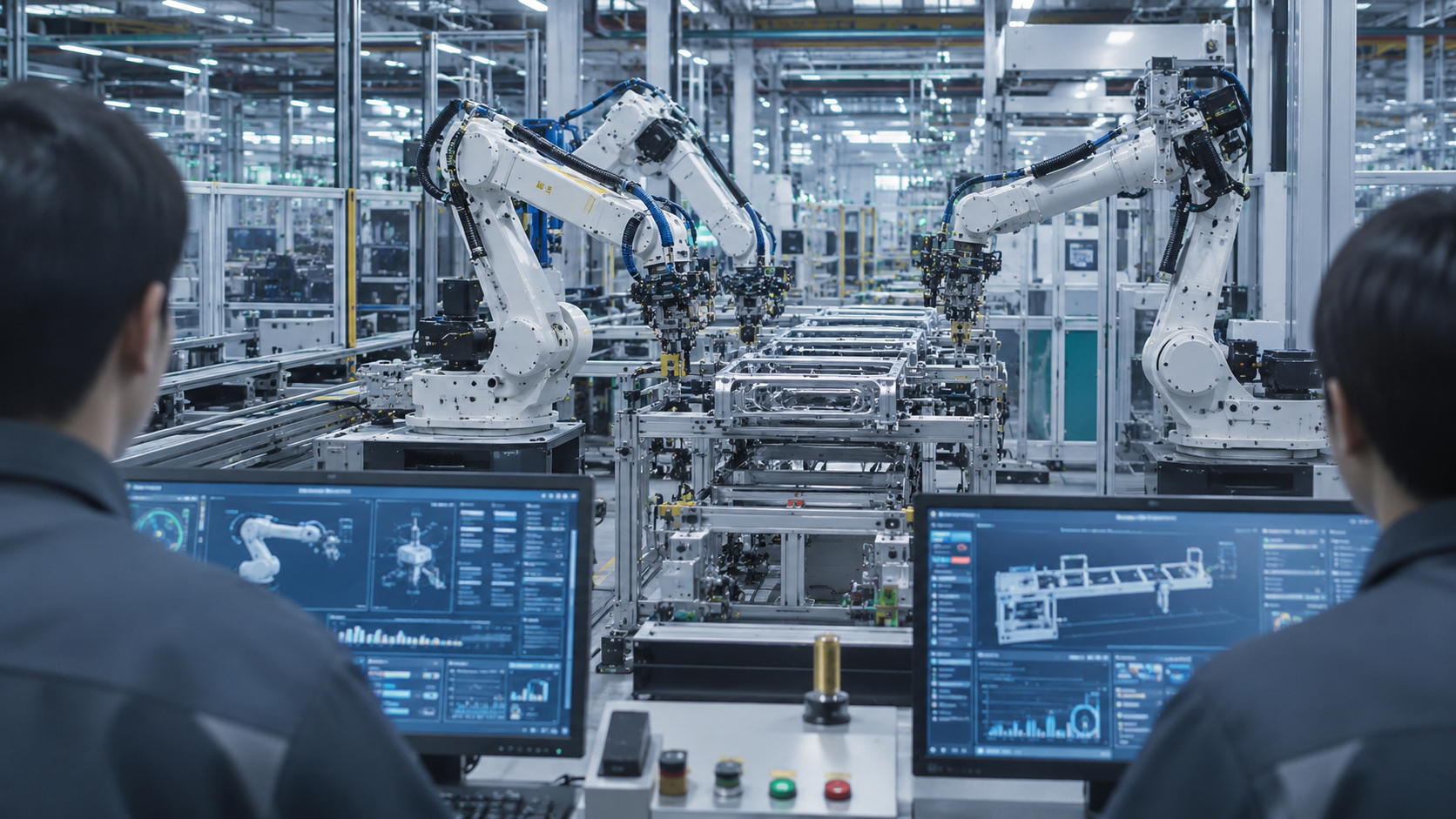
Segment Overview
The Automation segment covers technologies, systems, and solutions designed to perform industrial, commercial, and operational processes with minimal human intervention. It includes hardware, software, and integrated control systems that enable machines, production lines, and digital workflows to execute tasks with precision, consistency, and efficiency.
This segment operates at the intersection of mechanical engineering, electrical systems, robotics, software engineering, and industrial control systems, making it a foundational enabler of modern industrial and digital production environments.
Scope of the Automation Segment
This segment includes, but is not limited to:
Industrial automation systems
Programmable logic controllers (PLCs), distributed control systems (DCS), and industrial control platforms.
Robotics and robotic systems
Industrial robots, collaborative robots (cobots), and automated material handling systems.
Process automation solutions
Automation of manufacturing, assembly lines, packaging, and industrial operations.
Building and facility automation
Smart building systems, HVAC automation, lighting control, and energy management systems.
Software and digital automation tools
Robotic process automation (RPA), workflow automation, and AI-driven decision systems.
Sensors and control instrumentation
Sensors, actuators, and monitoring devices used for real-time system feedback and control.
Market Characteristics
The Automation segment is defined by several structural characteristics:
- High integration of hardware, software, and control engineering systems
- Strong focus on operational efficiency, productivity, and cost reduction
- Increasing adoption across manufacturing, logistics, energy, and services industries
- Dependence on real-time data, sensors, and machine-to-machine communication
- Gradual shift from manual to fully automated and AI-enabled systems
- Capital-intensive deployment with long-term operational benefits
- Continuous innovation driven by robotics, AI, and industrial IoT technologies
Value Chain Overview
The segment spans the full automation value chain:
- System Design & Engineering: Development of automation architecture and control systems
- Hardware Manufacturing: Production of robotics, sensors, controllers, and machinery
- Software Development: Creation of control systems, AI models, and automation platforms
- System Integration: Deployment and integration into industrial and operational environments
- Operation & Monitoring: Real-time control, performance tracking, and system optimization
- Maintenance & Upgrades: Lifecycle management, predictive maintenance, and system modernization
Each stage contributes to increasing efficiency, precision, and scalability of industrial and operational processes.
Key Market Drivers
- Rising demand for industrial efficiency and productivity optimization
- Growth of smart factories and Industry 4.0 transformation initiatives
- Increasing labor cost pressures and workforce optimization needs
- Advancements in robotics, artificial intelligence, and IoT technologies
- Expansion of e-commerce and automated logistics systems
- Demand for precision manufacturing and quality consistency
Strategic Importance within Industrial Systems
Automation plays a critical role in transforming traditional manual processes into efficient, scalable, and technology-driven operations. It enhances productivity, reduces operational costs, and improves accuracy across industrial and service environments.
Upstream, the segment drives demand for sensors, robotics, software platforms, and control systems. Downstream, it enables manufacturing, logistics, energy systems, healthcare operations, and smart infrastructure development.
As industries continue to adopt digital transformation and intelligent systems, the Automation segment remains a core foundation of modern industrial productivity and technological advancement.